Squamarina periculosa (Schaer.) Poelt
Mitt. bot. Staatss. München, 2: 534, 1958. Basionym: Lecanora crassa var. periculosa Dufour ex Schaer. - Enum. Crit. Lich. Eur.: 58, 1850.
Synonyms: Placolecanora crassa var. tricolor B. de Lesd.
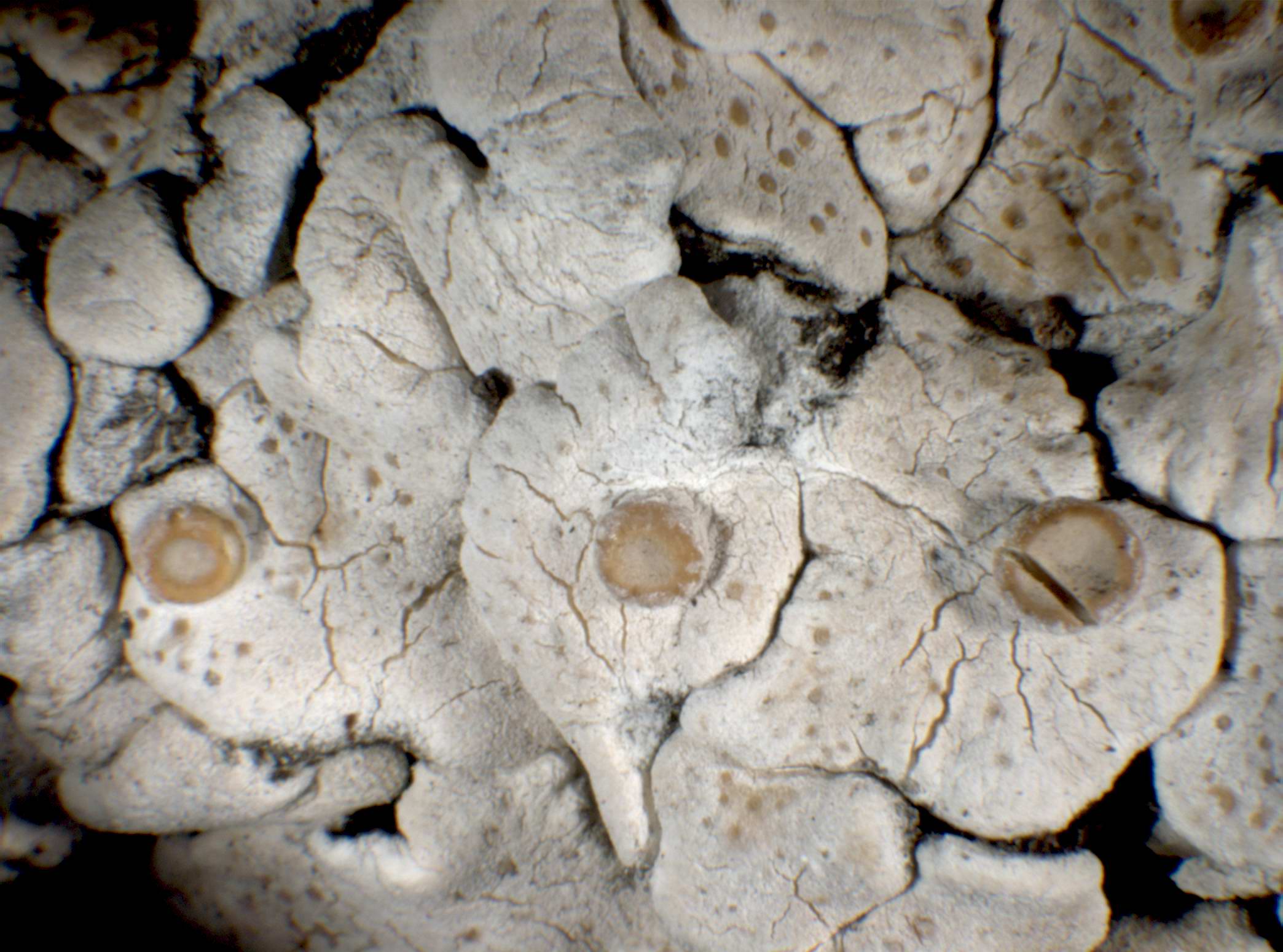
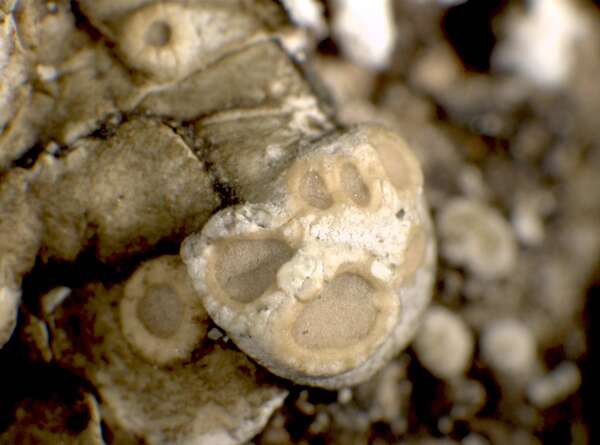
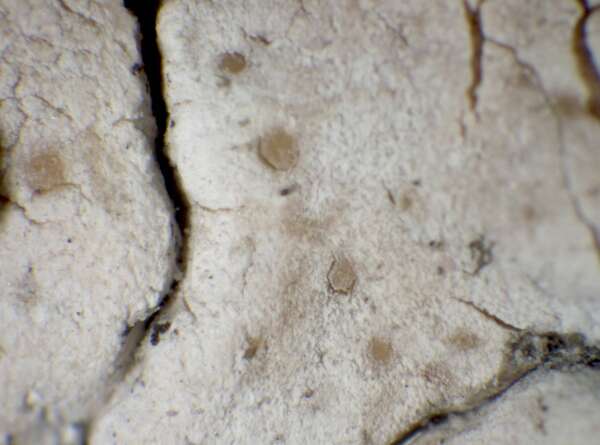
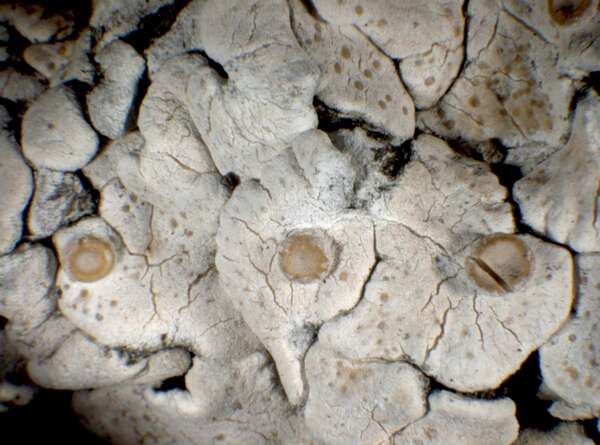
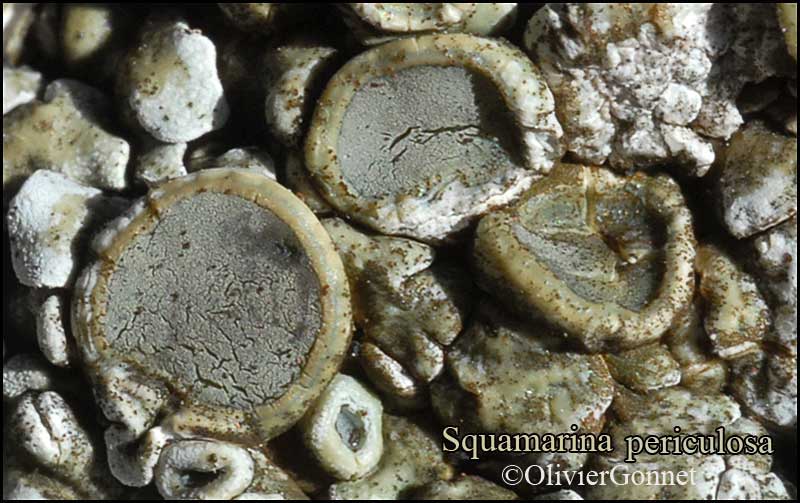
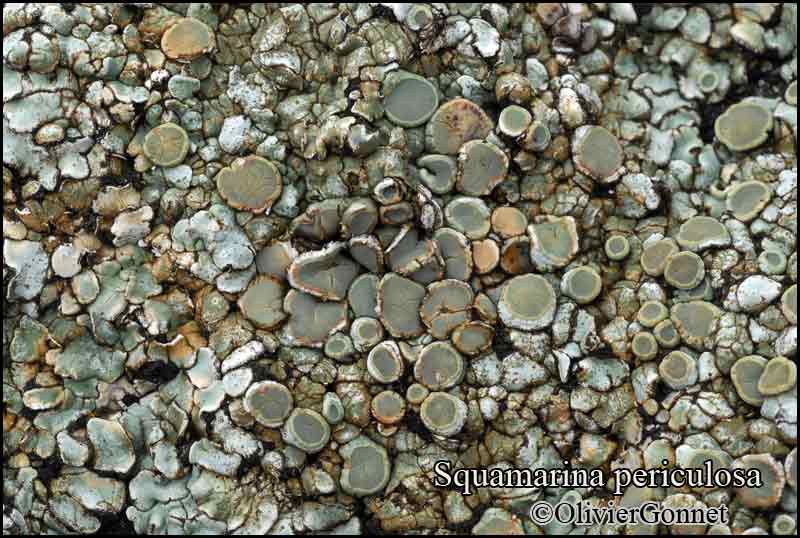
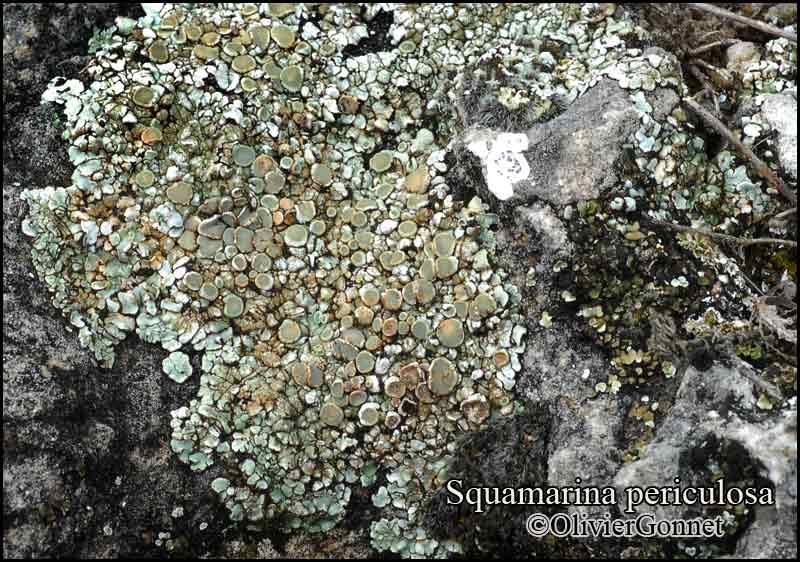
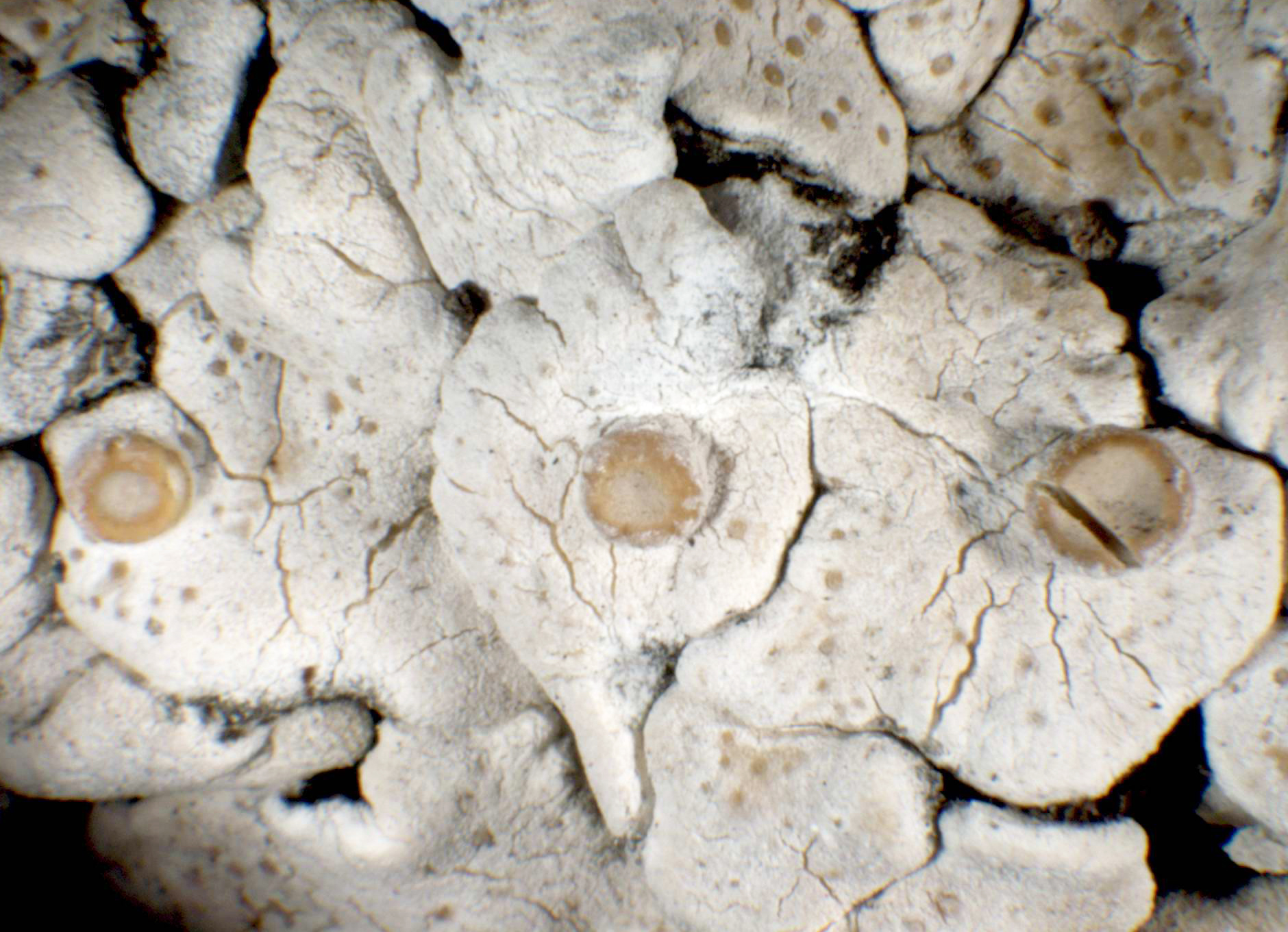
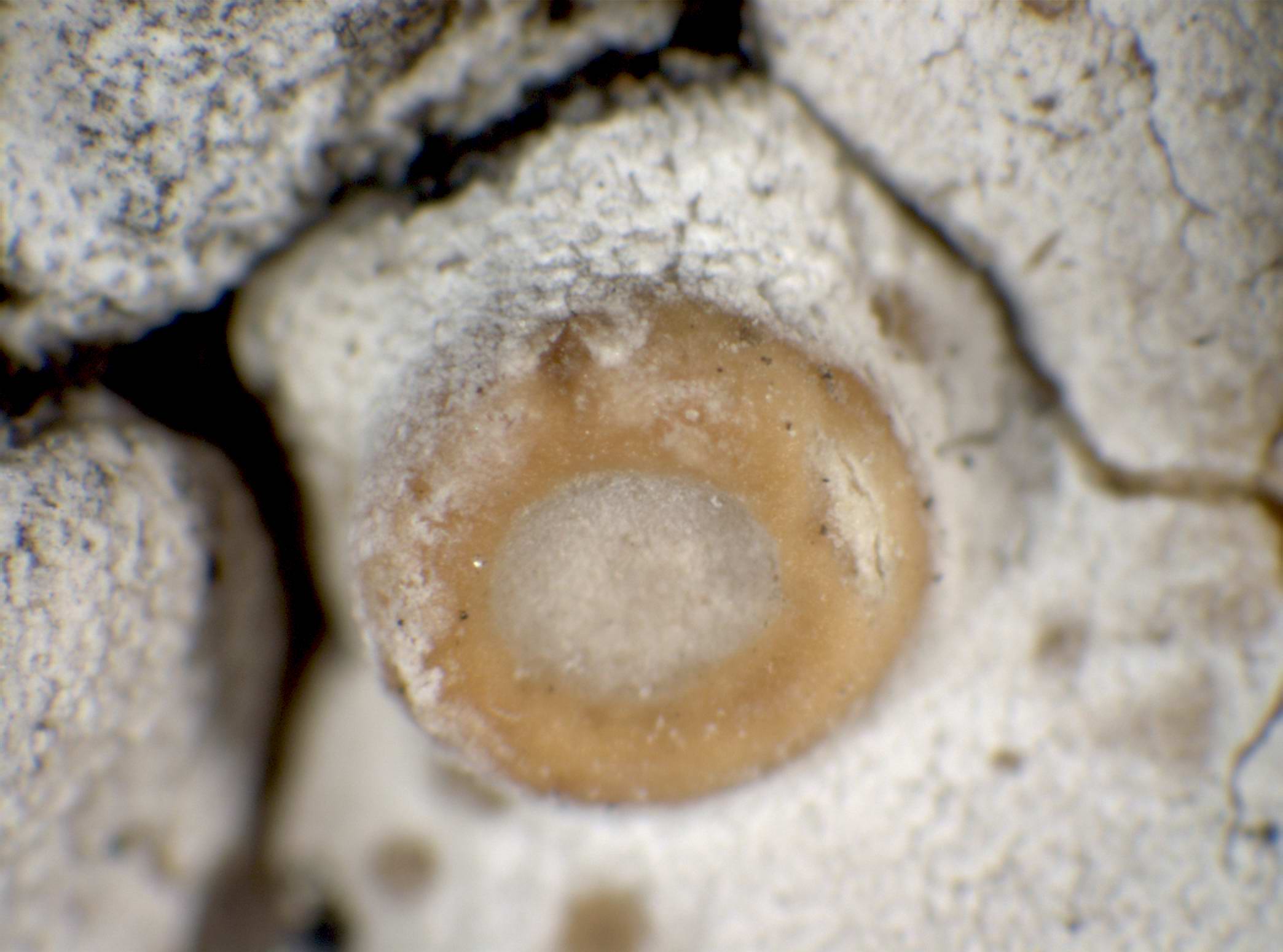
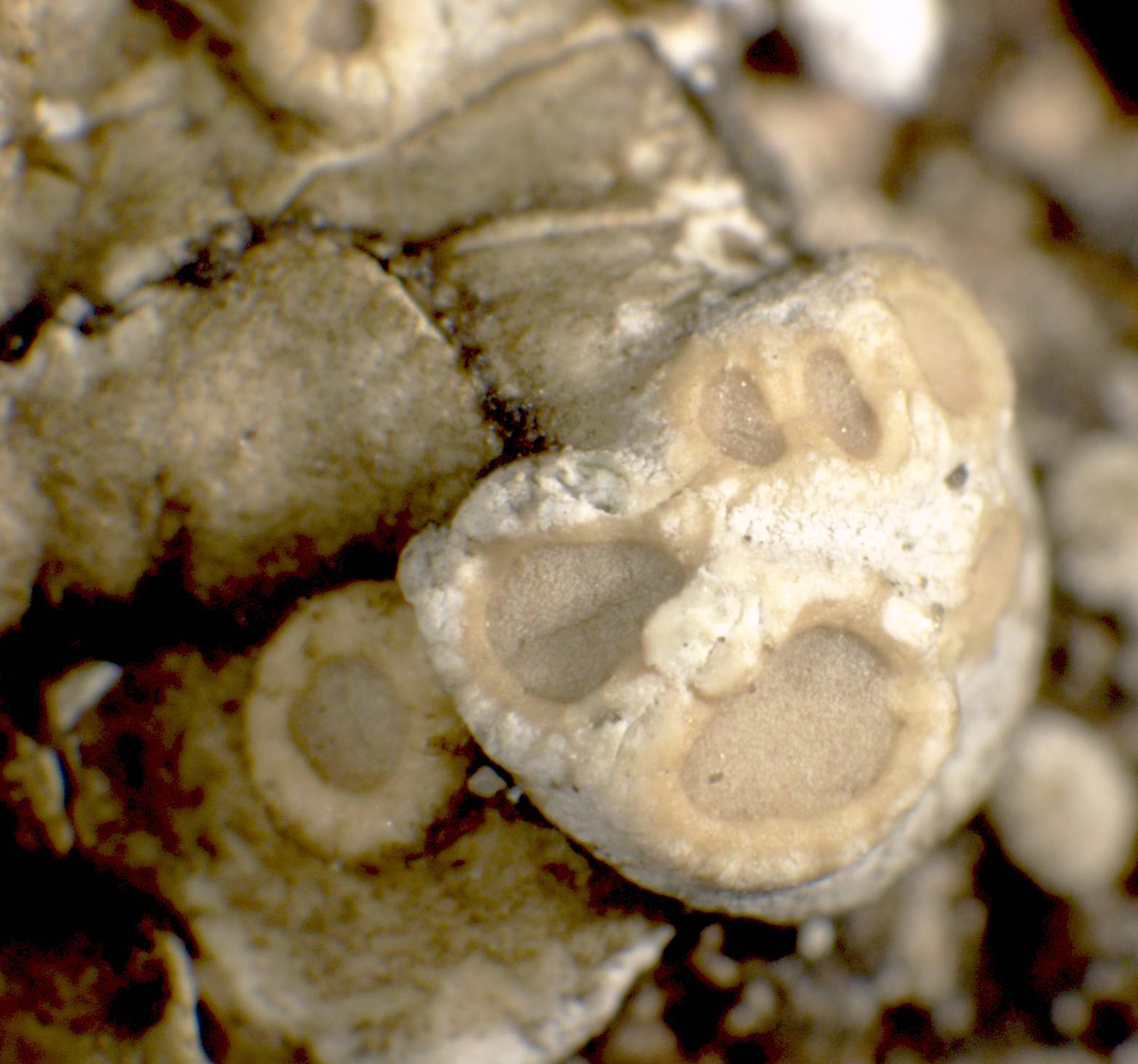
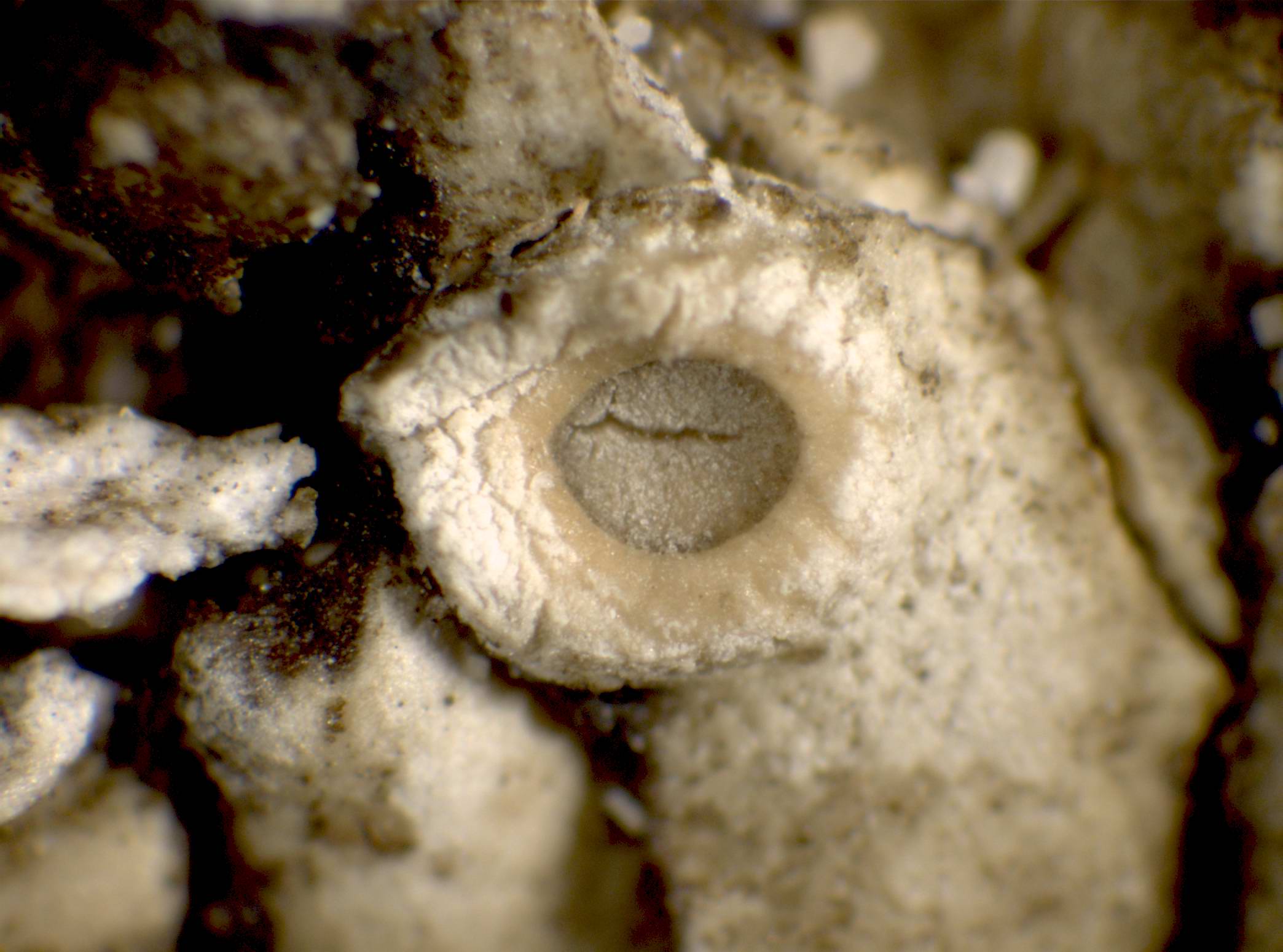
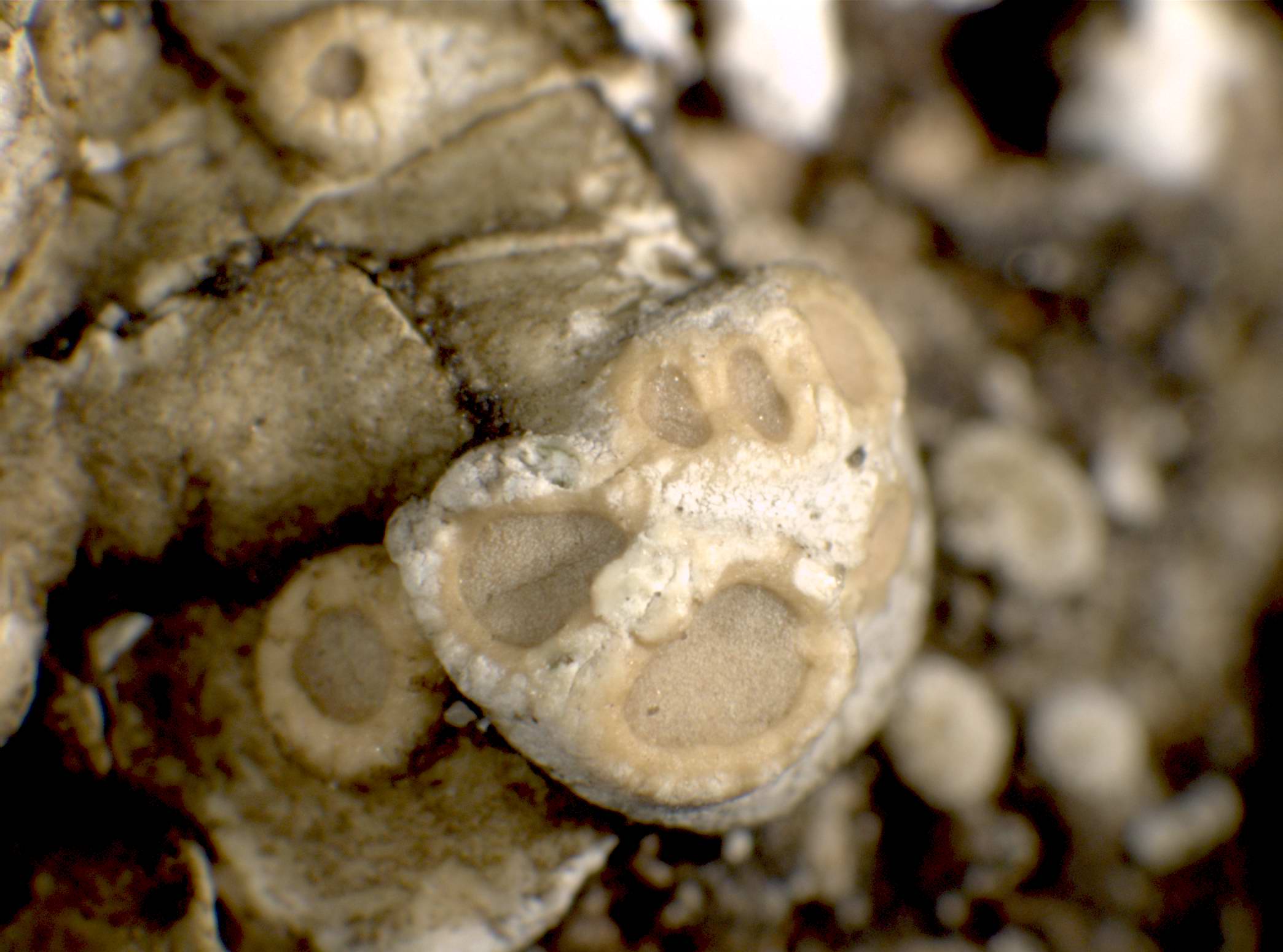
Description: Thallus subcrustose to squamulose, very thick (to 6 mm), pale yellowish green but usually thinly white-pruinose throughout, forming large, more or less regular up to more than 10 cm wide rosettes, the marginal squamules flattened, slightly elongated c. 2-3 mm long, the central ones convex, irregularly imbricate and often subcrustose-areolate; lower surface pale to blackish, with concolorous, poorly evident, thread-like, branched rhizinoid strands. Upper cortex paraplectenchymatous; medulla white, very thick. Apothecia frequent, lecanorine, up to 8 mm across, with a thick, prominent, persistent, strongly pruinose thalline margin, a well-differentiated proper margin and a more or less flat, greenish to pale ochraceous, sometimes yellowish- to bluish-pruinose disc. Epithecium 5-10 μm thick, with a superficial layer of crystals; hymenium colourless, c. 50 μm high, hemiamyloid; hypothecium colourless. Asci 8-spored, elongate-clavate, with a thin, outer amyloid layer and a thickened, amyloid tholus devoid of an ocular chamber, penetrated by an axial tube the sides of which stain I+ deeper blue, approaching the Porpidia-type. Ascospores 1-celled, hyaline, ellipsoid, (12.5-)14-17(-18.5) x (4-)4.5-5.5(-6) μm. Pycnidia common and often abundant, immersed. Conidia thread-like, curved. Photobiont chlorococcoid. Spot tests: upper cortex K-, C-, KC- or KC+ yellowish, P-; apothecial margin P- or rarely P+ yellowish. Chemistry: cortex with usnic and isousnic acids; apothecial margins with or without psoromic and 2ʹ-O-demethylpsoromic acids.
Growth form: Squamulose
Substrata: rocks
Photobiont: green algae other than Trentepohlia
Reproductive strategy: mainly sexual
Commonnes-rarity: (info)
Alpine belt: absent
Subalpine belt: absent
Montane belt: extremely rare
Dry submediterranean belt: very rare
Humid submediterranean belt: very rare
Padanian area: absent
pH of the substrata:
1 2 3 4 5

Solar irradiation:
1 2 3 4 5
Aridity:
1 2 3 4 5
Eutrophication:
1 2 3 4 5
Poleotolerance:
0 1 2 3
Altitudinal distribution:
1 2 3 4 5 6
Rarity
absent
extremely rare
very rare
rare
rather rare
rather common
common
very common
extremely common
Loading data...
Occurrence data
Predictive map
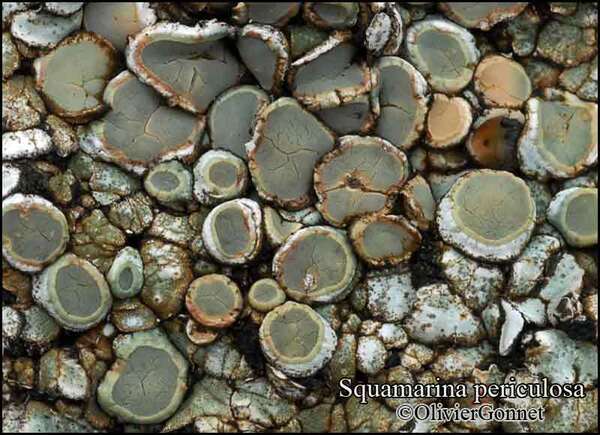
Courtesy Danièle et Olivier Gonnet - Source: https://www.afl-lichenologie.fr/Photos_AFL/Photos_AFL_S/Squamarina_periculosa.htm
France, session AFL 2010 - Hérault
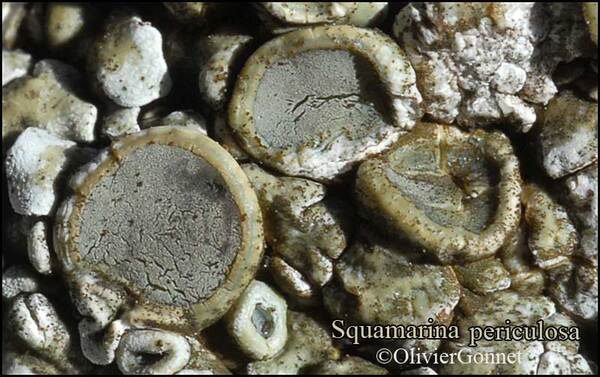
Courtesy Danièle et Olivier Gonnet - Source: https://www.afl-lichenologie.fr/Photos_AFL/Photos_AFL_S/Squamarina_periculosa.htm
France, session AFL 2010 - Hérault
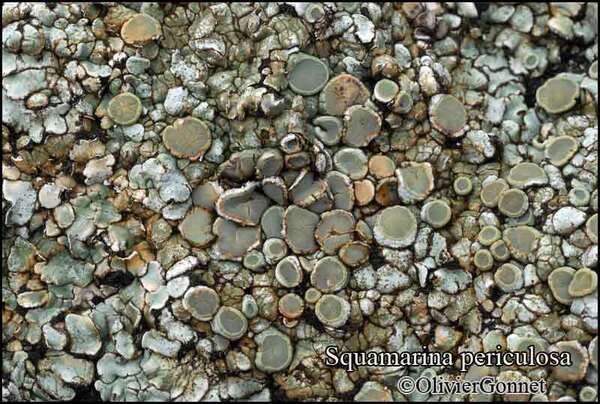
Courtesy Danièle et Olivier Gonnet - Source: https://www.afl-lichenologie.fr/Photos_AFL/Photos_AFL_S/Squamarina_periculosa.htm
France, session AFL 2010 - Hérault
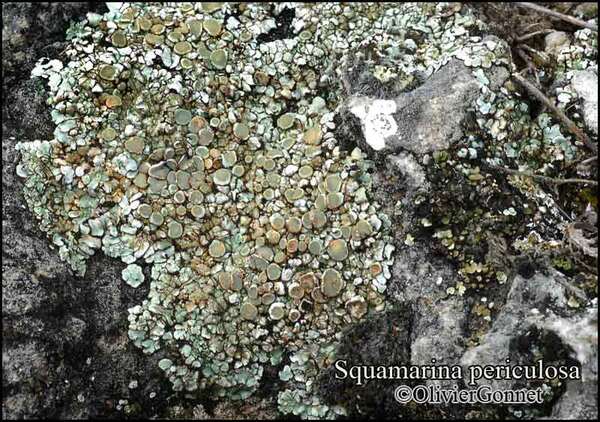
Courtesy Danièle et Olivier Gonnet - Source: https://www.afl-lichenologie.fr/Photos_AFL/Photos_AFL_S/Squamarina_periculosa.htm
France, session AFL 2010 - Hérault
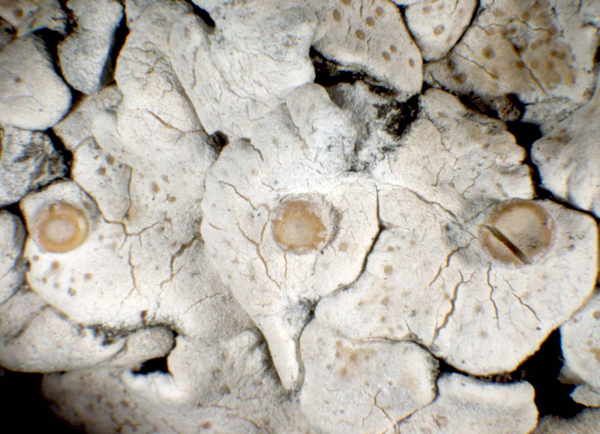
P.L. Nimis CC BY-SA 04
TSB 18144
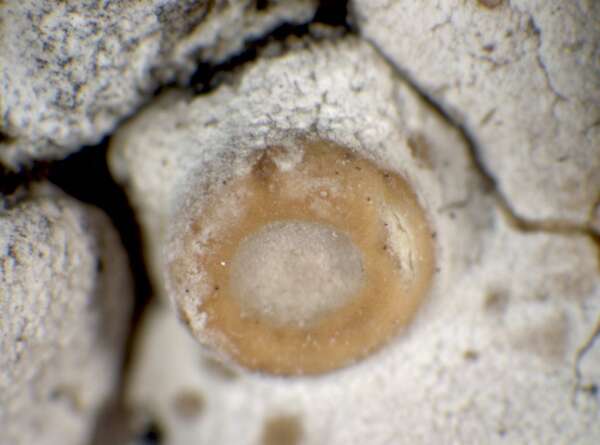
P.L. Nimis; Owner: Department of Life Sciences, University of Trieste
Herbarium: TSB (18144)
2001/12/11
apothecium
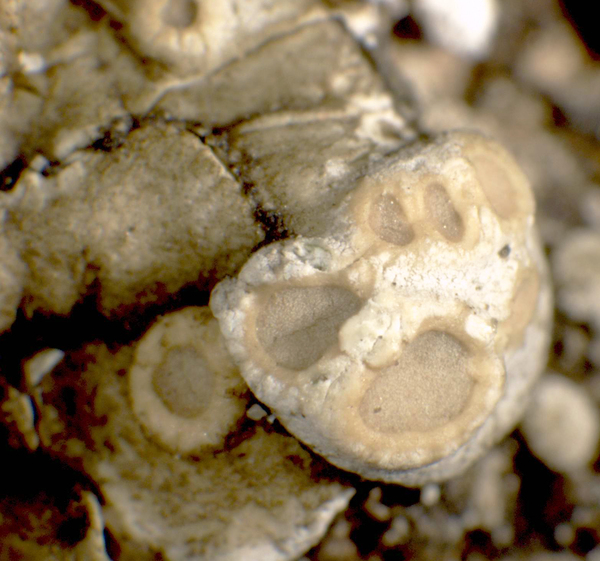
P.L. Nimis CC BY-SA 04
TSB 13222
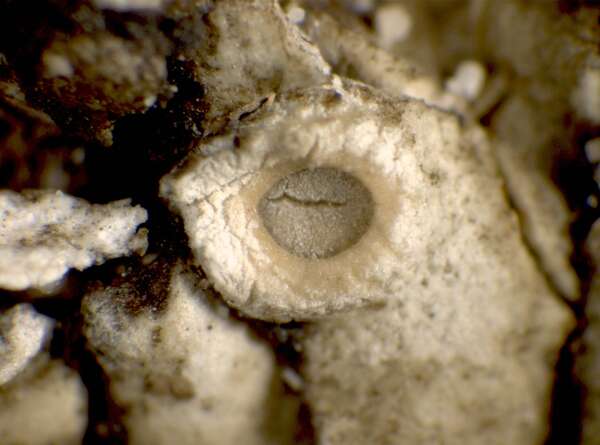
P.L. Nimis; Owner: Department of Life Sciences, University of Trieste
Herbarium: TSB (13222)
2001/11/30
P.L. Nimis; Owner: Department of Life Sciences, University of Trieste
Herbarium: TSB (13222)
2001/11/30
P.L. Nimis; Owner: Department of Life Sciences, University of Trieste
Herbarium: TSB (18144)
2001/12/11
upper surface with pycnidia
P.L. Nimis; Owner: Department of Life Sciences, University of Trieste
Herbarium: TSB (18144)
2001/12/11
Growth form: Squamulose
Substrata: rocks
Photobiont: green algae other than Trentepohlia
Reproductive strategy: mainly sexual
Commonnes-rarity: (info)
Alpine belt: absent
Subalpine belt: absent
Montane belt: extremely rare
Dry submediterranean belt: very rare
Humid submediterranean belt: very rare
Padanian area: absent
pH of the substrata:
| 1 | 2 | 3 | 4 | 5 |
Solar irradiation:
| 1 | 2 | 3 | 4 | 5 |
Aridity:
| 1 | 2 | 3 | 4 | 5 |
Eutrophication:
| 1 | 2 | 3 | 4 | 5 |
Poleotolerance:
| 0 | 1 | 2 | 3 |
Altitudinal distribution:
| 1 | 2 | 3 | 4 | 5 | 6 |
Rarity
absent
extremely rare
very rare
rare
rather rare
rather common
common
very common
extremely common
Loading data...
Occurrence data
Predictive map
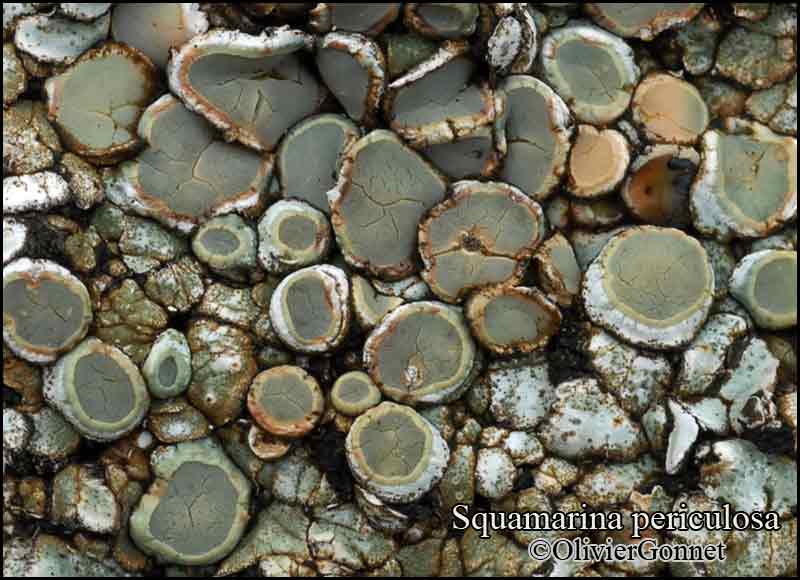
Courtesy Danièle et Olivier Gonnet - Source: https://www.afl-lichenologie.fr/Photos_AFL/Photos_AFL_S/Squamarina_periculosa.htm
France, session AFL 2010 - Hérault
Courtesy Danièle et Olivier Gonnet - Source: https://www.afl-lichenologie.fr/Photos_AFL/Photos_AFL_S/Squamarina_periculosa.htm
France, session AFL 2010 - Hérault
Courtesy Danièle et Olivier Gonnet - Source: https://www.afl-lichenologie.fr/Photos_AFL/Photos_AFL_S/Squamarina_periculosa.htm
France, session AFL 2010 - Hérault
Courtesy Danièle et Olivier Gonnet - Source: https://www.afl-lichenologie.fr/Photos_AFL/Photos_AFL_S/Squamarina_periculosa.htm
France, session AFL 2010 - Hérault
P.L. Nimis CC BY-SA 04
TSB 18144
P.L. Nimis; Owner: Department of Life Sciences, University of Trieste
Herbarium: TSB (18144)
2001/12/11
apothecium
P.L. Nimis CC BY-SA 04
TSB 13222
P.L. Nimis; Owner: Department of Life Sciences, University of Trieste
Herbarium: TSB (13222)
2001/11/30
P.L. Nimis; Owner: Department of Life Sciences, University of Trieste
Herbarium: TSB (13222)
2001/11/30
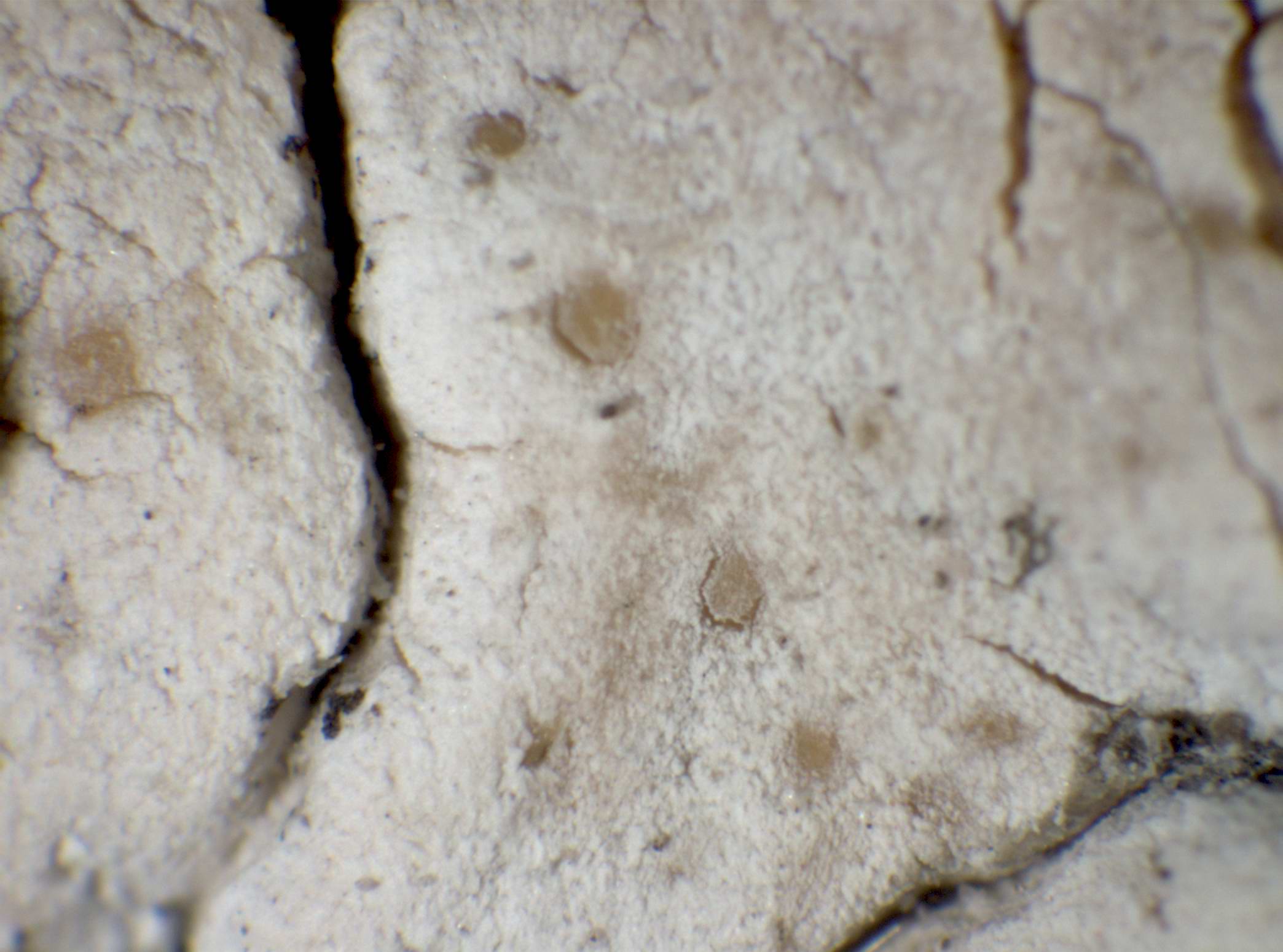
P.L. Nimis; Owner: Department of Life Sciences, University of Trieste
Herbarium: TSB (18144)
2001/12/11
upper surface with pycnidia