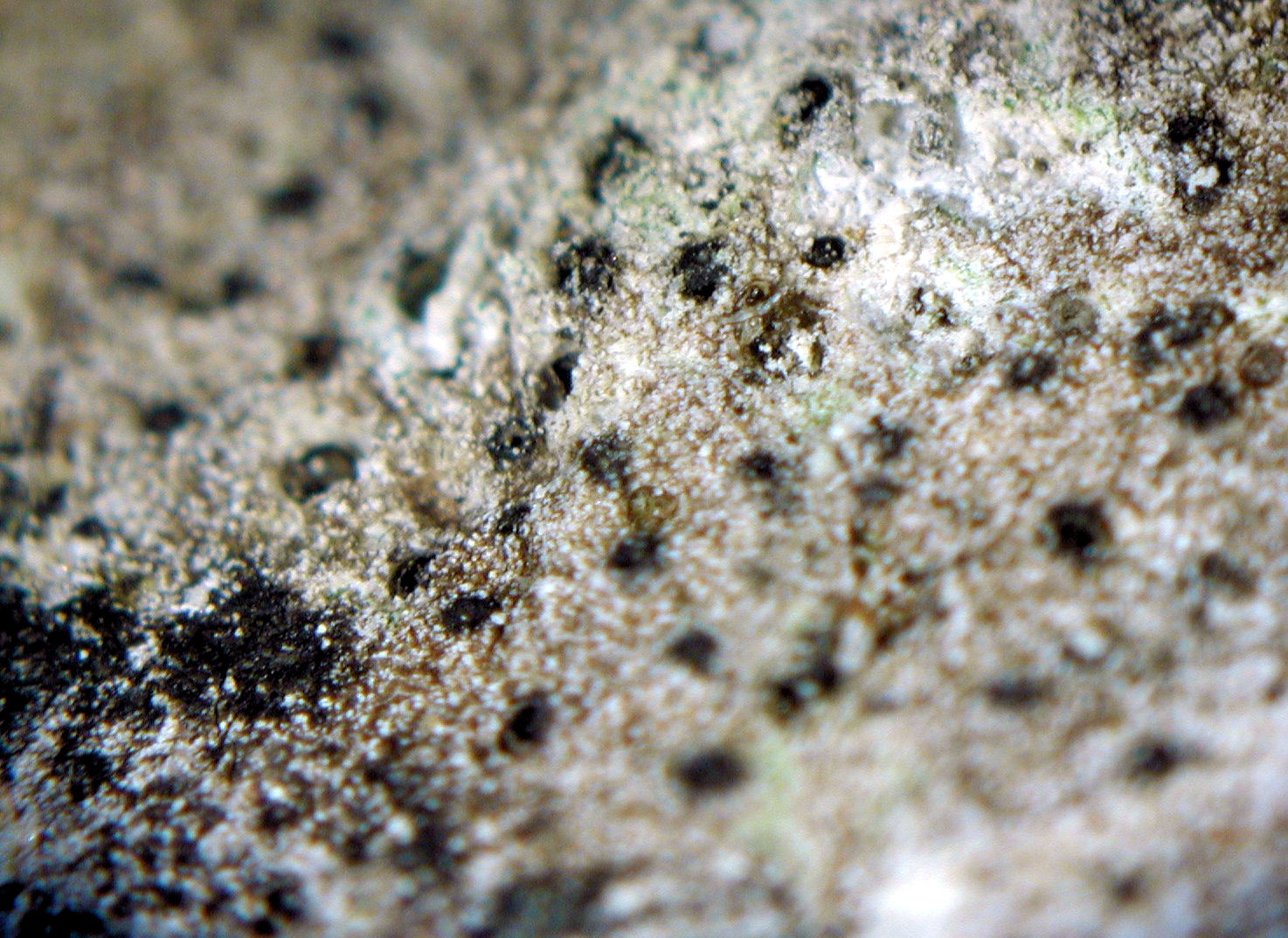
Staurothele rupifraga (A. Massal.) Arnold
Verh. zool.-bot. Ges. Wien, 30: 149, 1880. Basionym: Polyblastia rupifraga A. Massal. - Geneac. Lich.: 24, 1854.
Synonyms: Polyblastia calcarea (Nyl.) Parrique; Polyblastia umbrina var. calcarea (Nyl.) Boistel; Sporodictyon rupifragum (A. Massal.) Trevis.; Verrucaria umbrina var. calcarea Nyl.
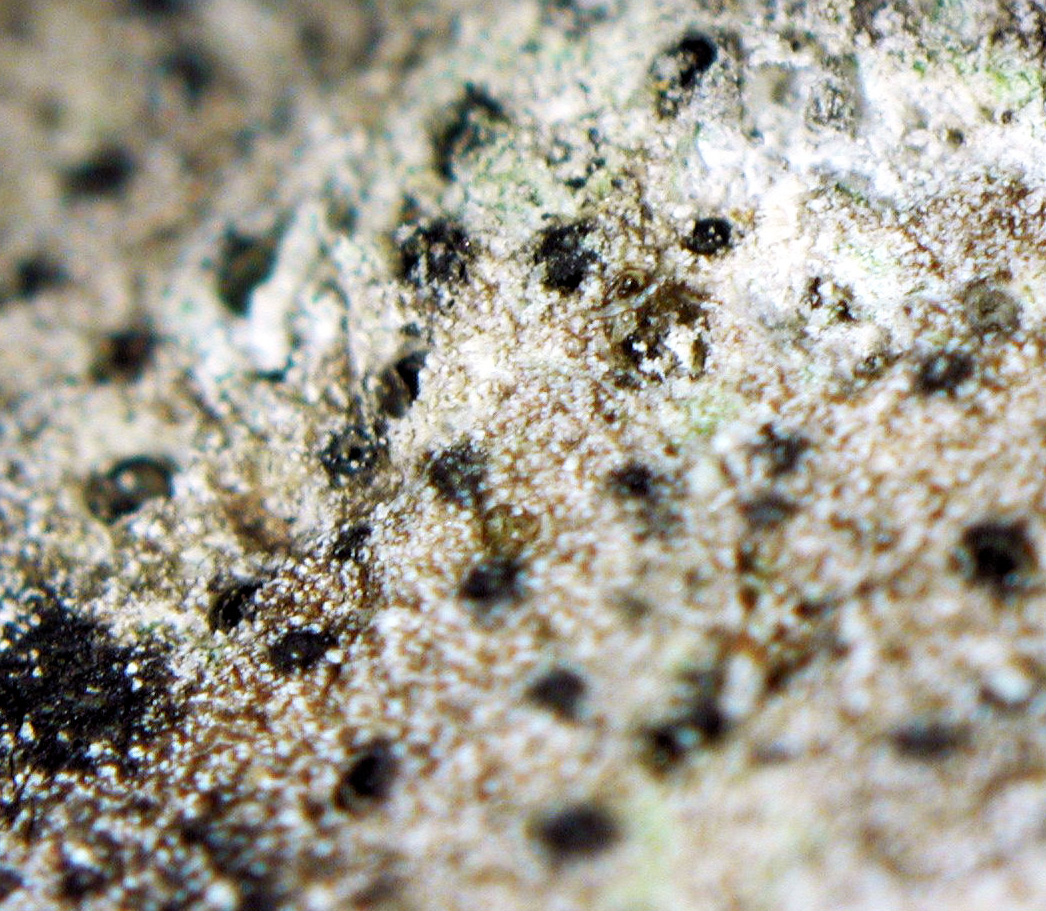
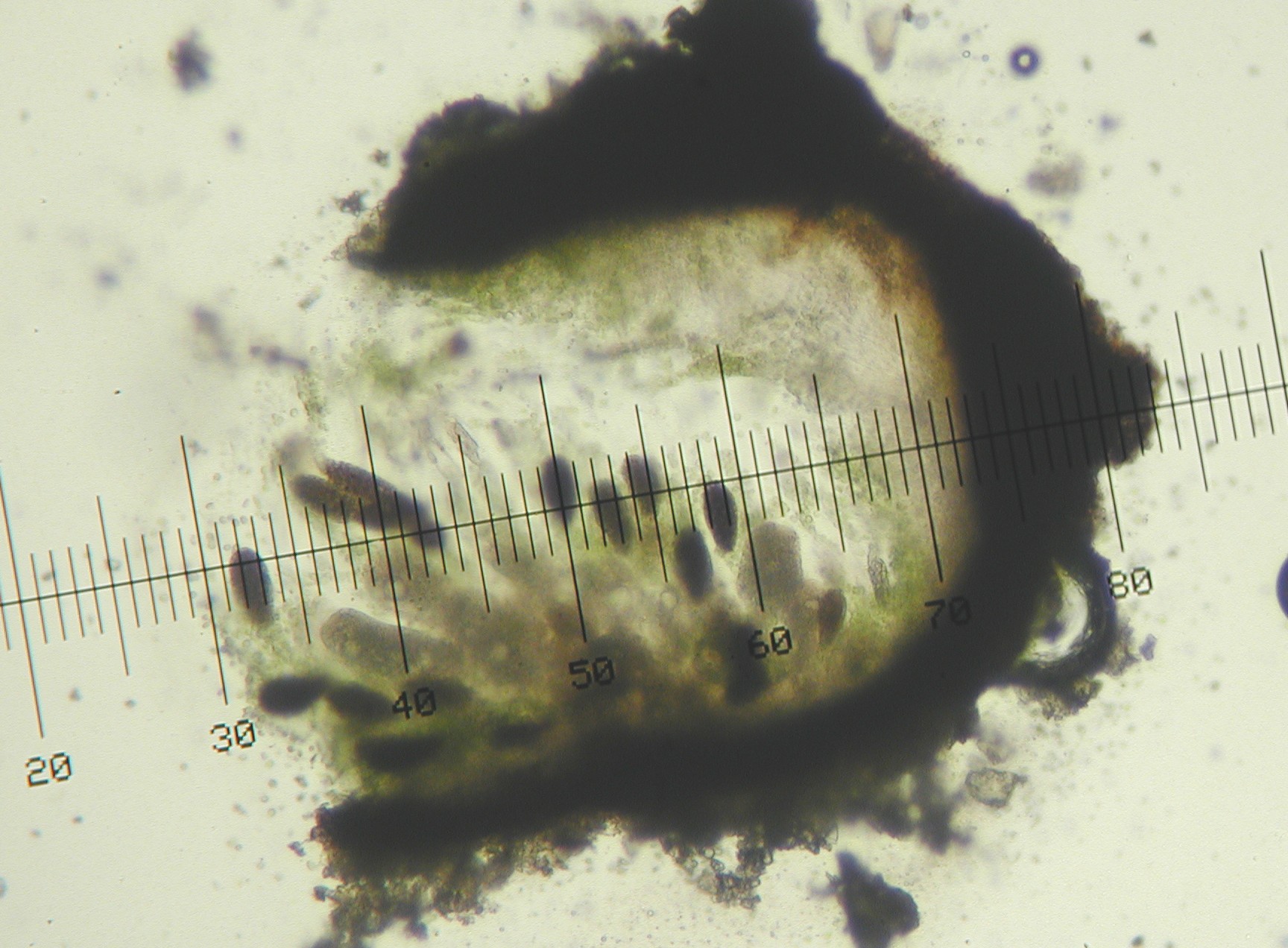
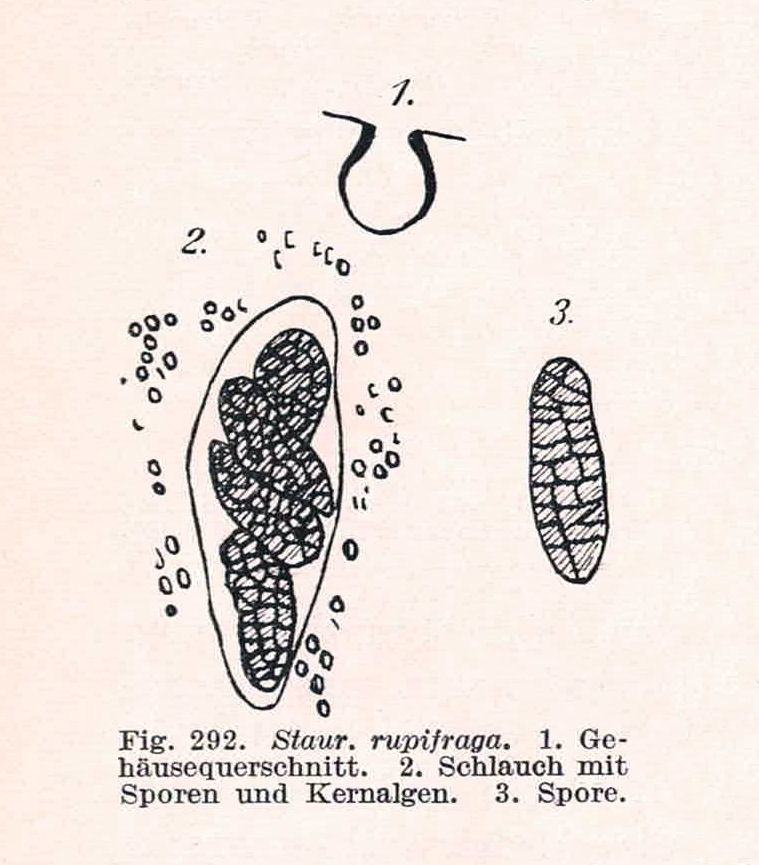
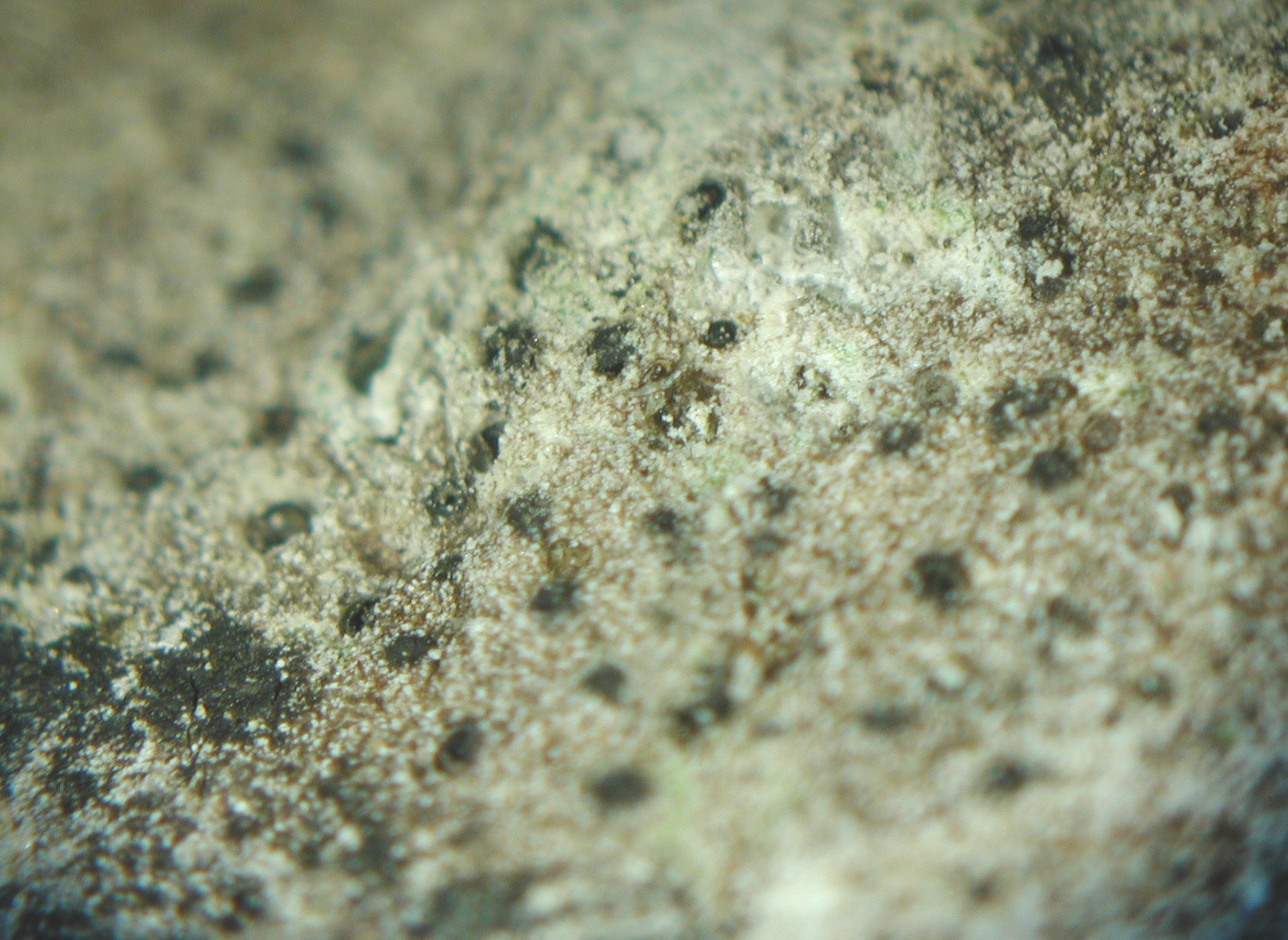
Description: Thallus crustose, mostly endosubstratic, grey-white to pale brownish grey, sometimes with minute brown specks. Perithecia numerous, black, without involucrellum, immersed in pits in the rock, (0.2-)0.3-0.4 mm across. Exciple dark throughout in outer part, colourless within; involucrellum absent; hymenial gel I+ red (I+ blue at very low concentrations of iodine), K/I+ blue; hymenial algae isodiametrical to shortly oblong, 2-5 μm wide; hamathecium of periphyses and periphysoids, interascal filaments absent. Asci 2-4(-5)-spored, clavate, the wall thickened above, with an ocular chamber, after dehiscence with a delicate extruded endotunica, I-, K/I-. Ascospores muriform, soon dark brown to almost black, usually opaque at maturity, with only the peripheral cells visible, ellipsoid to narrowly ellipsoid, (30-)40-62 x 15-27 μm. Photobiont chlorococcoid, present in both thallus and hymenium. Spot tests: K-, C-, KC-, P-, UV-. Chemistry: without lichen substances.
Growth form: Crustose endolithic
Substrata: rocks
Photobiont: green algae other than Trentepohlia
Reproductive strategy: mainly sexual
Commonnes-rarity: (info)
Alpine belt: rather rare
Subalpine belt: rare
Montane belt: absent
Dry submediterranean belt: absent
Humid submediterranean belt: absent
Padanian area: absent
pH of the substrata:
1 2 3 4 5

Solar irradiation:
1 2 3 4 5
Aridity:
1 2 3 4 5
Eutrophication:
1 2 3 4 5
Poleotolerance:
0 1 2 3
Altitudinal distribution:
1 2 3 4 5 6
Rarity
absent
extremely rare
very rare
rare
rather rare
rather common
common
very common
extremely common
Loading data...
Occurrence data
Predictive map
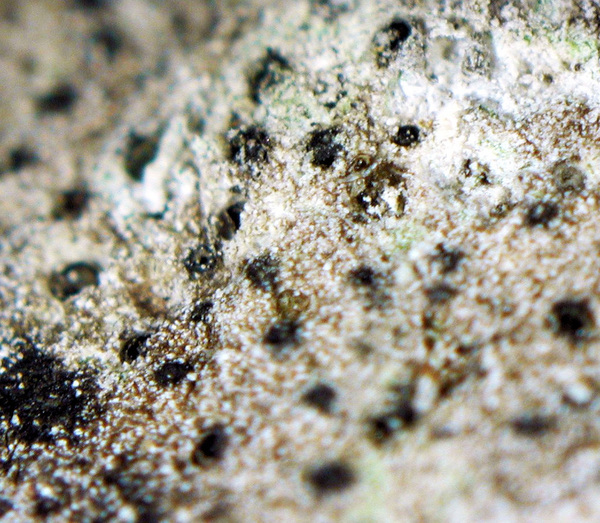
J. Nascimbene CC BY-SA 4.0
Italia, Trentino - Alto Adige
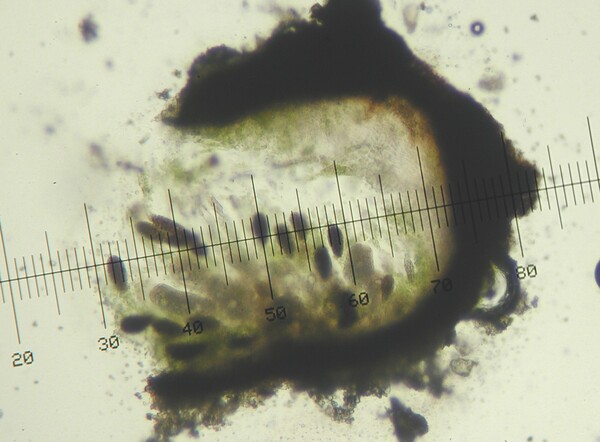
Juri Nascimbene - CC BY-SA 4.0
Italy, Trentino-Alto Adige
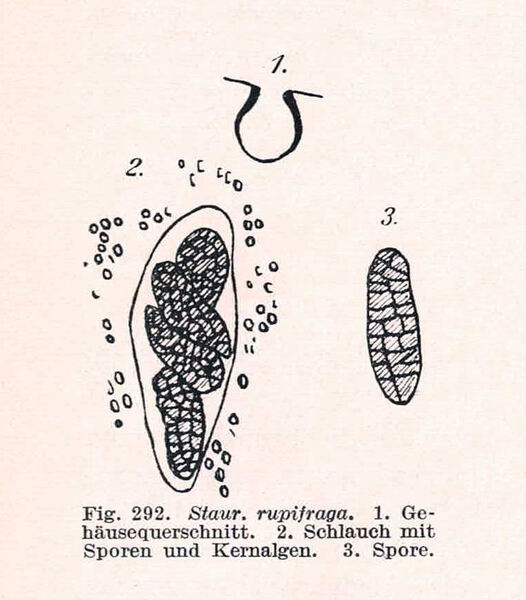
Zschacke, H. (1934) Epigloeaceae, Verrucariaceae und Dermatocarpaceae. In: Dr. L. Rabenhorst‘s Kryptogamen-Flora, Band 9, Abt. 1, Teil 1. Akademische Verlagsgesellschaft, Leipzig, 695 pp. - Public Domain
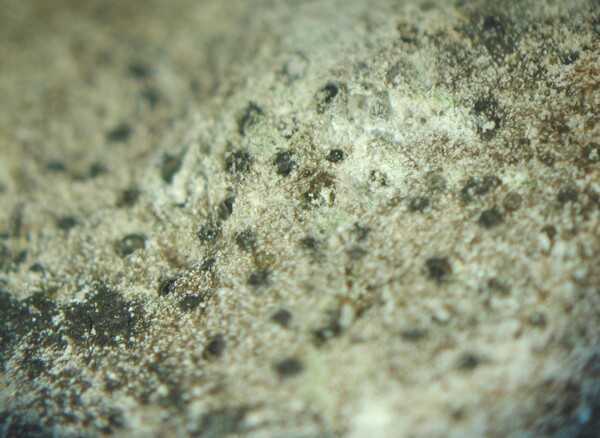
Juri Nascimbene - CC BY-SA 4.0
Italy, Trentino-Alto Adige
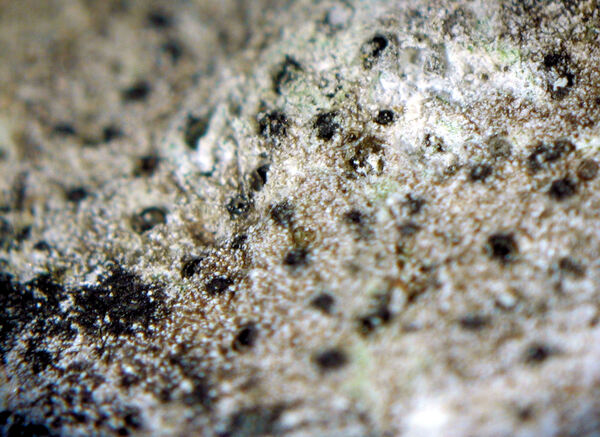
J. Nascimbene CC BY-SA 4.0
Italia, Trentino - Alto Adige
Growth form: Crustose endolithic
Substrata: rocks
Photobiont: green algae other than Trentepohlia
Reproductive strategy: mainly sexual
Commonnes-rarity: (info)
Alpine belt: rather rare
Subalpine belt: rare
Montane belt: absent
Dry submediterranean belt: absent
Humid submediterranean belt: absent
Padanian area: absent
pH of the substrata:
| 1 | 2 | 3 | 4 | 5 |
Solar irradiation:
| 1 | 2 | 3 | 4 | 5 |
Aridity:
| 1 | 2 | 3 | 4 | 5 |
Eutrophication:
| 1 | 2 | 3 | 4 | 5 |
Poleotolerance:
| 0 | 1 | 2 | 3 |
Altitudinal distribution:
| 1 | 2 | 3 | 4 | 5 | 6 |
Rarity
absent
extremely rare
very rare
rare
rather rare
rather common
common
very common
extremely common
Loading data...
Occurrence data
Predictive map
J. Nascimbene CC BY-SA 4.0
Italia, Trentino - Alto Adige
Juri Nascimbene - CC BY-SA 4.0
Italy, Trentino-Alto Adige
Zschacke, H. (1934) Epigloeaceae, Verrucariaceae und Dermatocarpaceae. In: Dr. L. Rabenhorst‘s Kryptogamen-Flora, Band 9, Abt. 1, Teil 1. Akademische Verlagsgesellschaft, Leipzig, 695 pp. - Public Domain
Juri Nascimbene - CC BY-SA 4.0
Italy, Trentino-Alto Adige