Tetramelas papillatus (Sommerf.) Kalb
in Döbbeler & Rambold, Bibl. Lichenol, 88: 323, 2004. Basionym: Lecidea papillata Sommerf. - Suppl. Fl. Lapp.: 154, 1826.
Synonyms: Buellia papillata (Sommerf.) Tuck.; Buellia parasema var. papillata (Sommerf.) Th. Fr.
Description: Thallus crustose, episubstratic, rather thick, white to whitish grey, of convex to bullate, contiguous areoles, without a distinct prothallus. Medulla white, I-. Apothecia usually abundant, lecideine, black, 0.5-1.2(-1.5) mm across, broadly sessile, discrete to confluent, with a flat to strongly convex, rarely initially pruinose disc and a thin, soon excluded proper margin, when young often with an ephemeral thalline rim. Proper exciple dark-pigmented throughout; epithecium brown, N-; hymenium colourless, rarely inspersed with oil droplets, I+ blue; paraphyses branched in upper part, the apical cell swollen, with a brown cap; hypothecium dark brown. Asci 8-spored, clavate to cylindrical-clavate, the apical dome K/I+ dark blue with a pale, conical-pointed apical cushion (axial mass), the wall I-, but the thin outer gel I+ blue, Bacidia-type. Ascospores 1-septate, brown, ellipsoid, often slightly curved, 15-25 x 7-10 µm, Buellia-type, the wall uniformly thickened, finely warted. Photobiont chlorococcoid. Spot tests: thallus K+ pale yellow, C-, KC-, P- or P+ pale yellow, UV-. Chemistry: atranorin.
Growth form: Crustose
Substrata: soil, terricolous mosses, and plant debris
Photobiont: green algae other than Trentepohlia
Reproductive strategy: mainly sexual
Commonnes-rarity: (info)
Alpine belt: very rare
Subalpine belt: extremely rare
Montane belt: absent
Dry submediterranean belt: absent
Humid submediterranean belt: absent
Padanian area: absent
pH of the substrata:
1 2 3 4 5

Solar irradiation:
1 2 3 4 5
Aridity:
1 2 3 4 5
Eutrophication:
1 2 3 4 5
Poleotolerance:
0 1 2 3
Altitudinal distribution:
1 2 3 4 5 6
Rarity
absent
extremely rare
very rare
rare
rather rare
rather common
common
very common
extremely common
Loading data...
Occurrence data
Predictive map
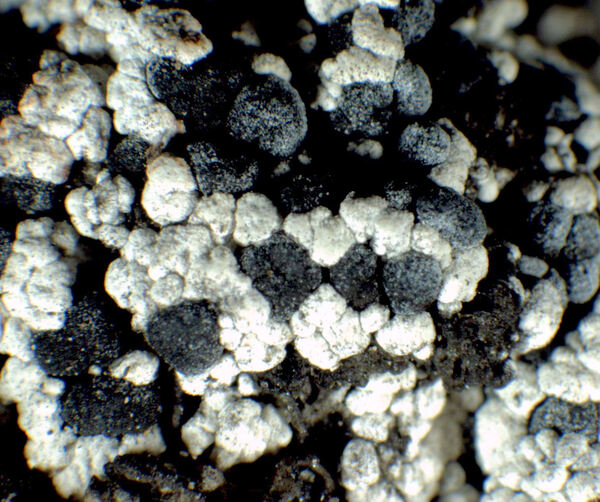
P.L. Nimis CC BY-SA 4.0
TSB 2463
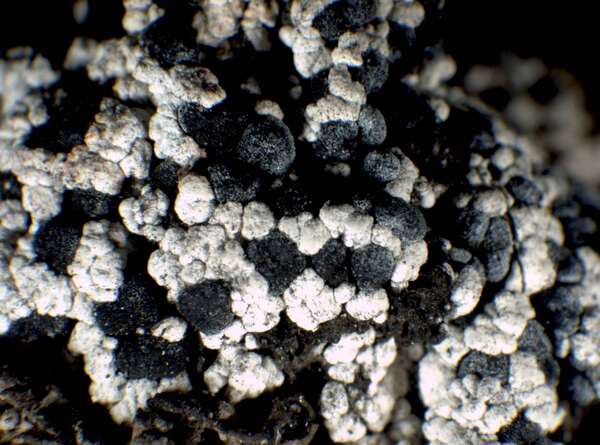
P.L. Nimis; Owner: Department of Life Sciences, University of Trieste
Herbarium: TSB (2463)
2001/11/22
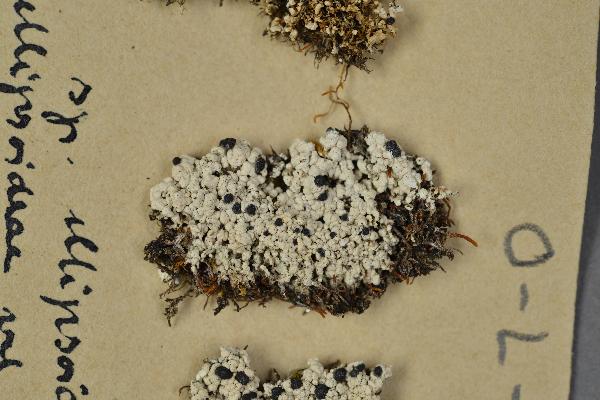
Source: https://nhm2.uio.no/typephotos/lichens/arkiv/O-L-001269d.jpg
NORWAY, NORDLAND, SALTDAL: Saltd., Ravnflauet, 1822.06.00, Sommerfelt, S.C. HOLOTYPE£
Growth form: Crustose
Substrata: soil, terricolous mosses, and plant debris
Photobiont: green algae other than Trentepohlia
Reproductive strategy: mainly sexual
Commonnes-rarity: (info)
Alpine belt: very rare
Subalpine belt: extremely rare
Montane belt: absent
Dry submediterranean belt: absent
Humid submediterranean belt: absent
Padanian area: absent
pH of the substrata:
| 1 | 2 | 3 | 4 | 5 |
Solar irradiation:
| 1 | 2 | 3 | 4 | 5 |
Aridity:
| 1 | 2 | 3 | 4 | 5 |
Eutrophication:
| 1 | 2 | 3 | 4 | 5 |
Poleotolerance:
| 0 | 1 | 2 | 3 |
Altitudinal distribution:
| 1 | 2 | 3 | 4 | 5 | 6 |
Rarity
absent
extremely rare
very rare
rare
rather rare
rather common
common
very common
extremely common
Loading data...
Occurrence data
Predictive map
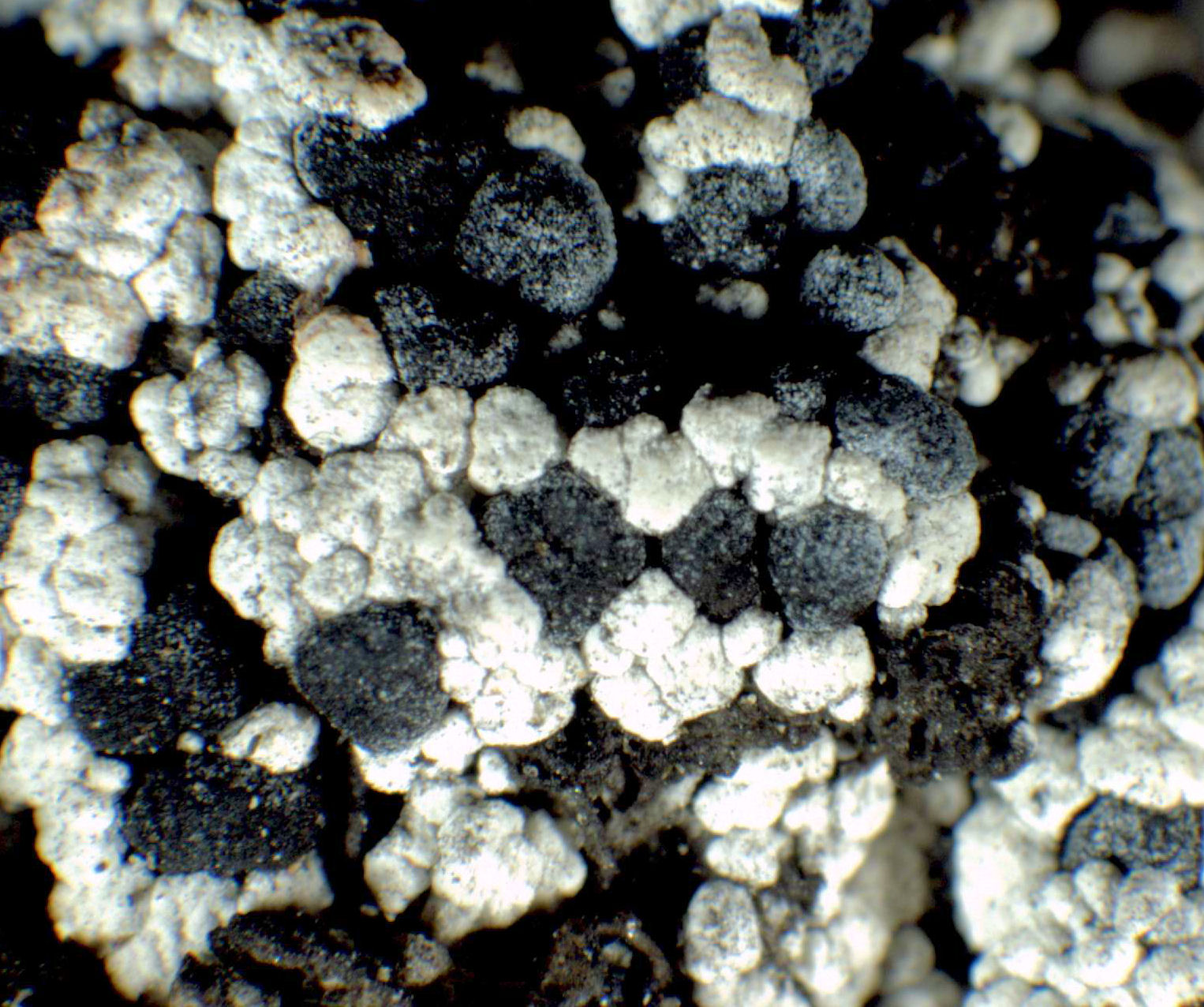
P.L. Nimis CC BY-SA 4.0
TSB 2463
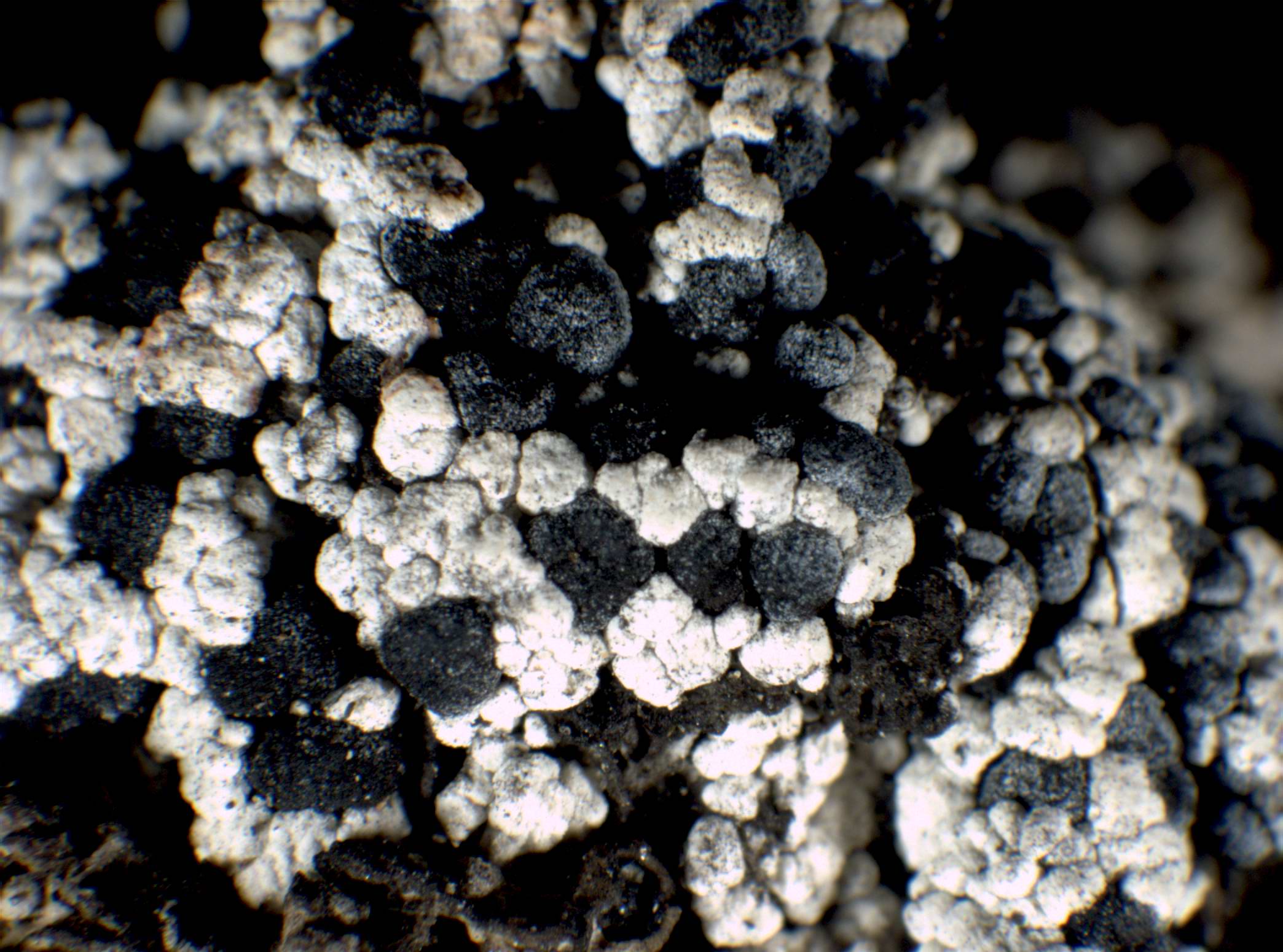
P.L. Nimis; Owner: Department of Life Sciences, University of Trieste
Herbarium: TSB (2463)
2001/11/22