Thelopsis flaveola Arnold
Verh. zool.-bot. Ges. Wien, 23: 505, 1873.
Synonyms:
Description: Thallus crustose, thinly episubstratic, usually continuous, grey-green turning grey-white in the herbarium, sometimes poorly evident. Perithecia yellowish, 0.2-0.3 mm wide, completely to half immersed in the thallus, the ostiole often poorly visible. Exciple c. 30 μm thick, of intertwined hyphae with thick gelatinized walls, the innermost layer of thin-walled hyphae, colourless or brownish in upper part; periphyses septate, well developed in the periostiolar region, up to 20 μm long, c. 2 μm thick, with somehow pointed apical cells; paraphyses clearly septate, 170-230 μm long, 1.5-2 μm thick at base, c. 1 μm thick in upper part; hymenial gel I-. Asci 150-300-spored, cylindrical, tapering towards the apex, the wall thin, I+ light blue, without a tholus. Ascospores 1-celled, hyaline, ellipsoid to ovoid, 4-6 x 3-4 μm, often with a large oil drop in the centre, surrounded by a thin gelatinous perispore. Photobiont trentepohlioid. Spot tests: K-, C-, KC-, P-, UV-. Chemistry: without lichen substances.
Growth form: Crustose
Substrata: bark
Photobiont: Trentepohlia
Reproductive strategy: mainly sexual
In underhangs rarely wetted by rain
Commonnes-rarity: (info)
Alpine belt: absent
Subalpine belt: extremely rare
Montane belt: extremely rare
Dry submediterranean belt: absent
Humid submediterranean belt: extremely rare
Padanian area: absent
pH of the substrata:
1 2 3 4 5

Solar irradiation:
1 2 3 4 5
Aridity:
1 2 3 4 5
Eutrophication:
1 2 3 4 5
Poleotolerance:
0 1 2 3
Altitudinal distribution:
1 2 3 4 5 6
Rarity
absent
extremely rare
very rare
rare
rather rare
rather common
common
very common
extremely common
Loading data...
Occurrence data
Predictive map
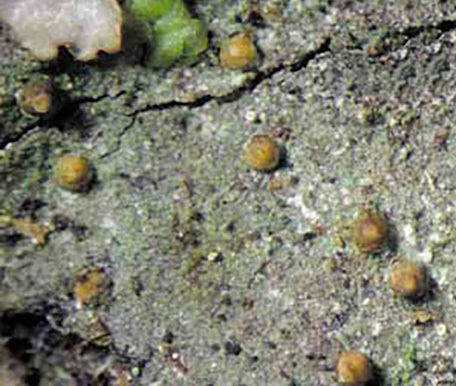
Ulf Arub/Artdatenbanken Sorce: http://artfakta.artdatabanken.se/taxon/1555
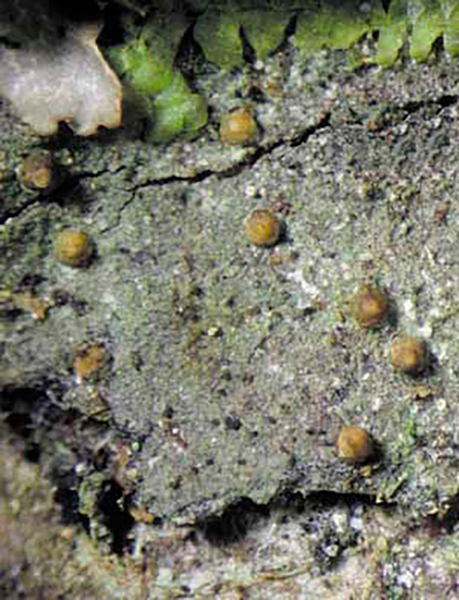
Ulf Arub/Artdatenbanken
Sorce: http://artfakta.artdatabanken.se/taxon/1555
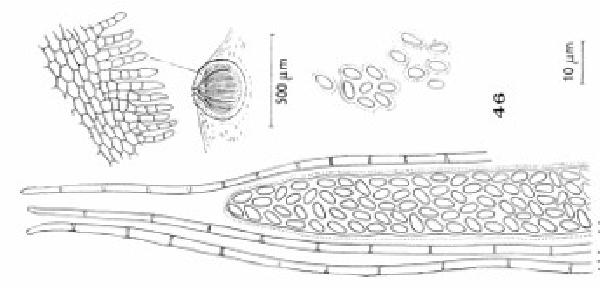
Source: Vězda A. (1968) Fol. Geobot. Phytotax. 3(4): 363-406 Taxonomische Revision der Gattung Thelopsis Nyl. (lichenisierte Fungi).
Growth form: Crustose
Substrata: bark
Photobiont: Trentepohlia
Reproductive strategy: mainly sexual
In underhangs rarely wetted by rain
Commonnes-rarity: (info)
Alpine belt: absent
Subalpine belt: extremely rare
Montane belt: extremely rare
Dry submediterranean belt: absent
Humid submediterranean belt: extremely rare
Padanian area: absent
pH of the substrata:
| 1 | 2 | 3 | 4 | 5 |
Solar irradiation:
| 1 | 2 | 3 | 4 | 5 |
Aridity:
| 1 | 2 | 3 | 4 | 5 |
Eutrophication:
| 1 | 2 | 3 | 4 | 5 |
Poleotolerance:
| 0 | 1 | 2 | 3 |
Altitudinal distribution:
| 1 | 2 | 3 | 4 | 5 | 6 |
Rarity
absent
extremely rare
very rare
rare
rather rare
rather common
common
very common
extremely common
Loading data...
Occurrence data
Predictive map
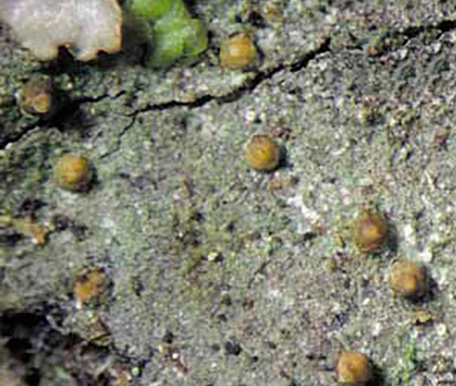
Ulf Arub/Artdatenbanken Sorce: http://artfakta.artdatabanken.se/taxon/1555
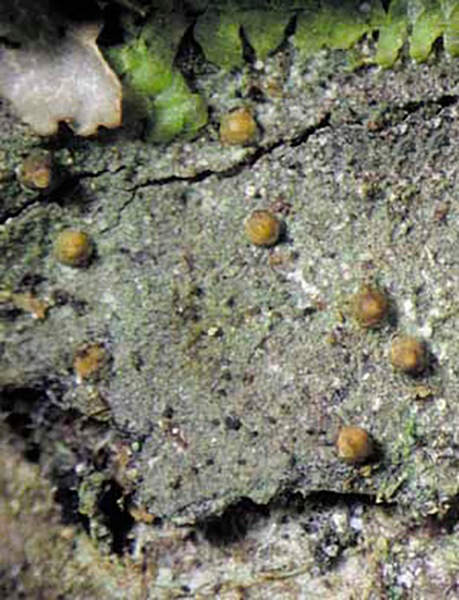
Ulf Arub/Artdatenbanken
Sorce: http://artfakta.artdatabanken.se/taxon/1555