Varicellaria hemisphaerica (Flörke) I. Schmitt & Lumbsch
in Schmitt & al., MycoKeys, 4: 29, 2012. Basionym: Variolaria hemisphaerica Flörke - Deutsche Lich., 2, 2: 6, 1815.
Synonyms: Lecanora parella f. variolosa (Flot.) Anzi; Ochrolechia pallescens f. variolosa (Flot.) Jatta; Pertusaria hemisphaerica (Flörke) Erichsen; Pertusaria hibernica Erichsen; Pertusaria speciosa Høeg
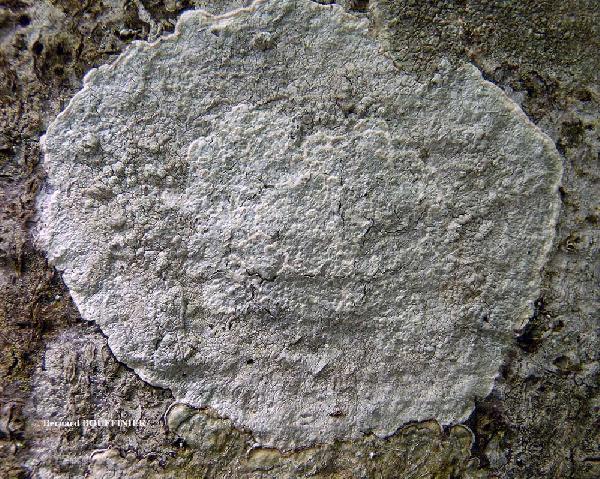
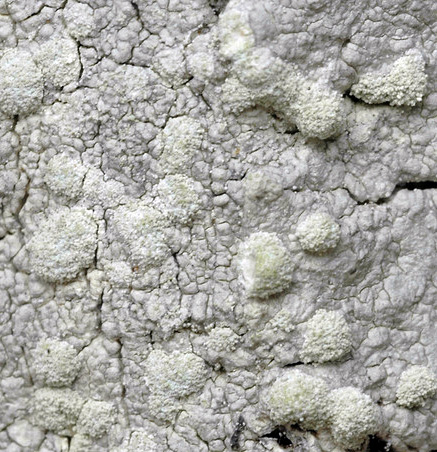
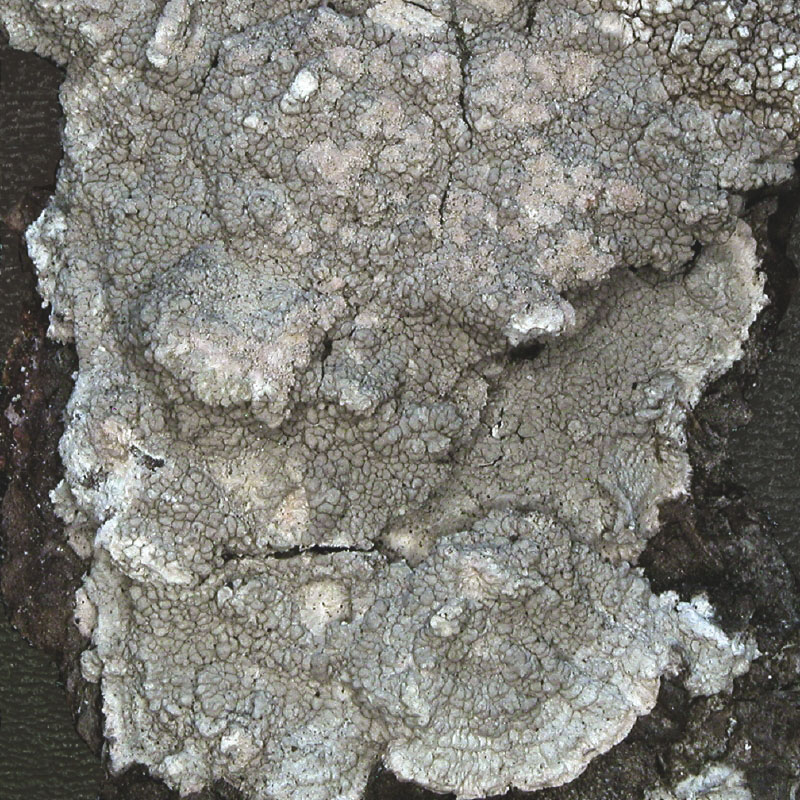
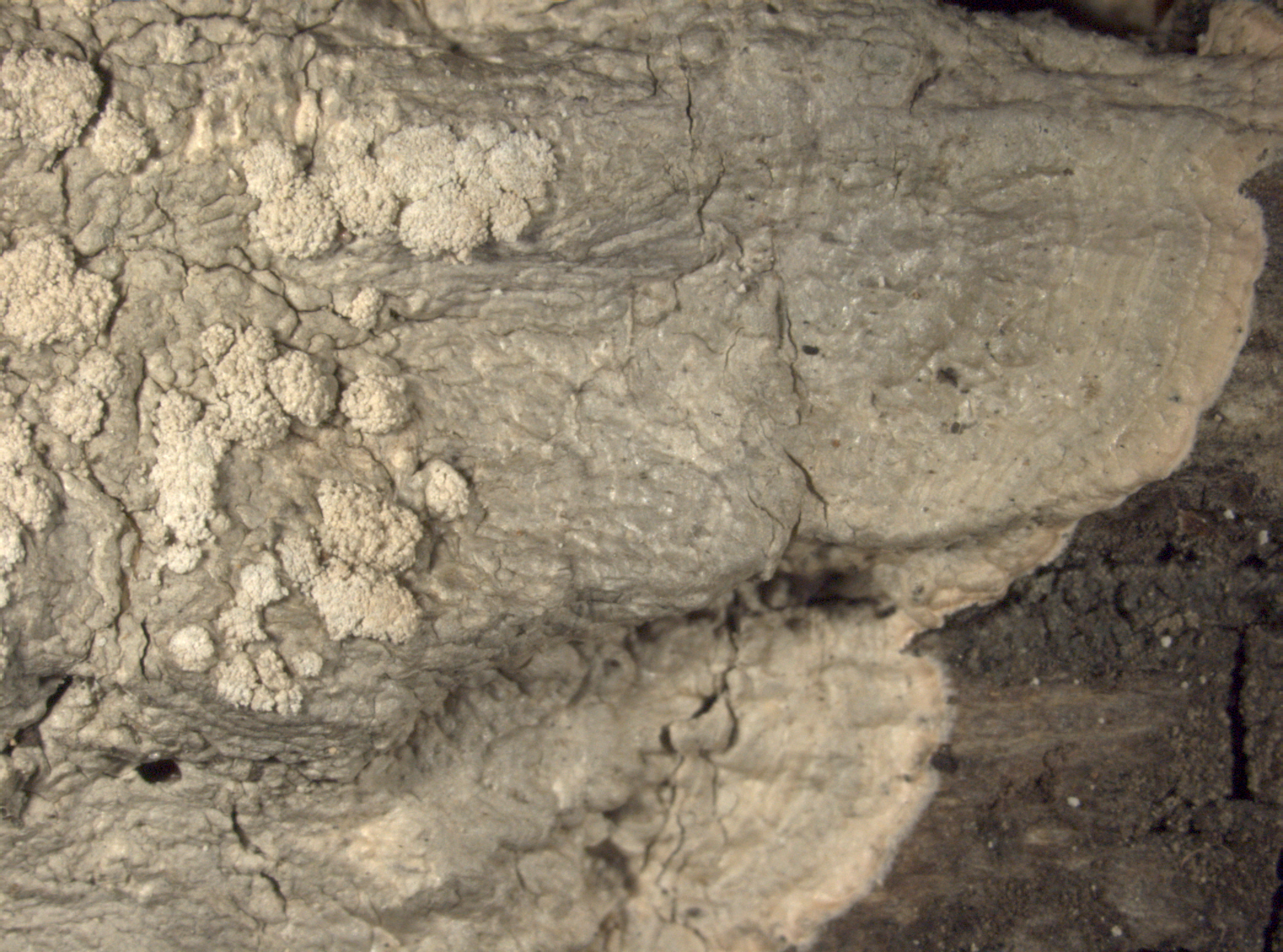
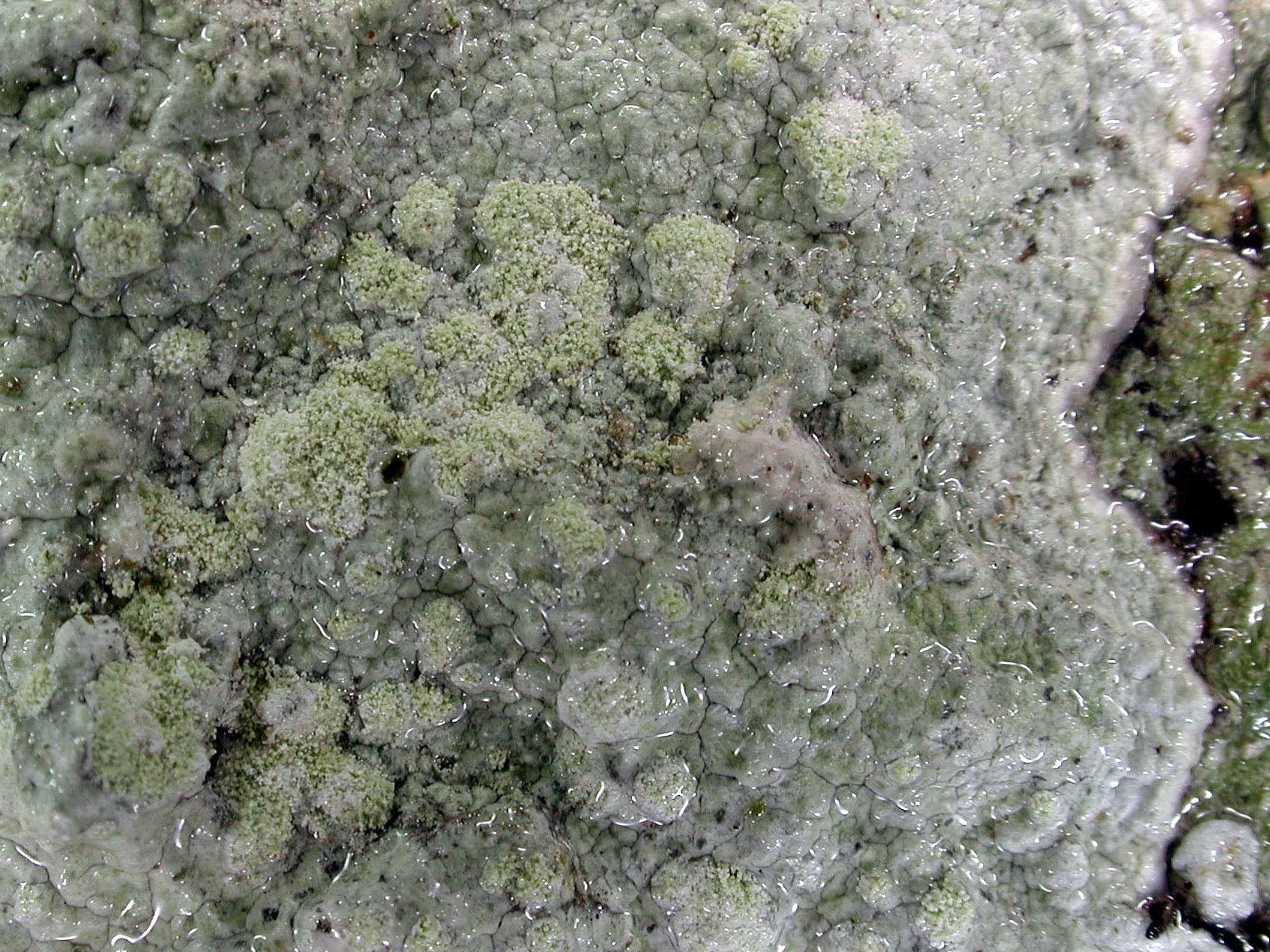
Description: Thallus crustose, rather thick, white-grey to pale grey, often with a bluish tinge, smooth to cracked or slightly warted, sometimes wrinkled, forming large patches delimited by a white, rarely brownish, often zoned prothallus. Soralia rounded, 0.8-1.5(-2) mm across, usually discrete and strongly convex, sometimes coalescing when old, especially in central parts of thallus, not constricted at base, white to pale green-grey, the soralia granular, 40-100 μm in diam. Cortex thin, cartilaginous, paraplectenchymatous, of thick-walled, agglutinated hyphae; medulla white, of periclinally arranged hyphae. Apothecia unknown. Photobiont chlorococcoid. Spot tests: cortex K-, C-, KC-, P; soralia K-, C+ carmine red; KC+ red, P-, UV+ bluish white. Chemistry: lecanoric acid (major), plus additional unknown substances.
Growth form: Crustose
Substrata: bark
Photobiont: green algae other than Trentepohlia
Reproductive strategy: mainly asexual, by soredia, or soredia-like structures (e.g. blastidia)
Commonnes-rarity: (info)
Alpine belt: absent
Subalpine belt: absent
Montane belt: very rare
Dry submediterranean belt: rare
Humid submediterranean belt: rather rare
Padanian area: absent
pH of the substrata:
1 2 3 4 5

Solar irradiation:
1 2 3 4 5
Aridity:
1 2 3 4 5
Eutrophication:
1 2 3 4 5
Poleotolerance:
0 1 2 3
Altitudinal distribution:
1 2 3 4 5 6
Rarity
absent
extremely rare
very rare
rare
rather rare
rather common
common
very common
extremely common
Loading data...
Occurrence data
Predictive map
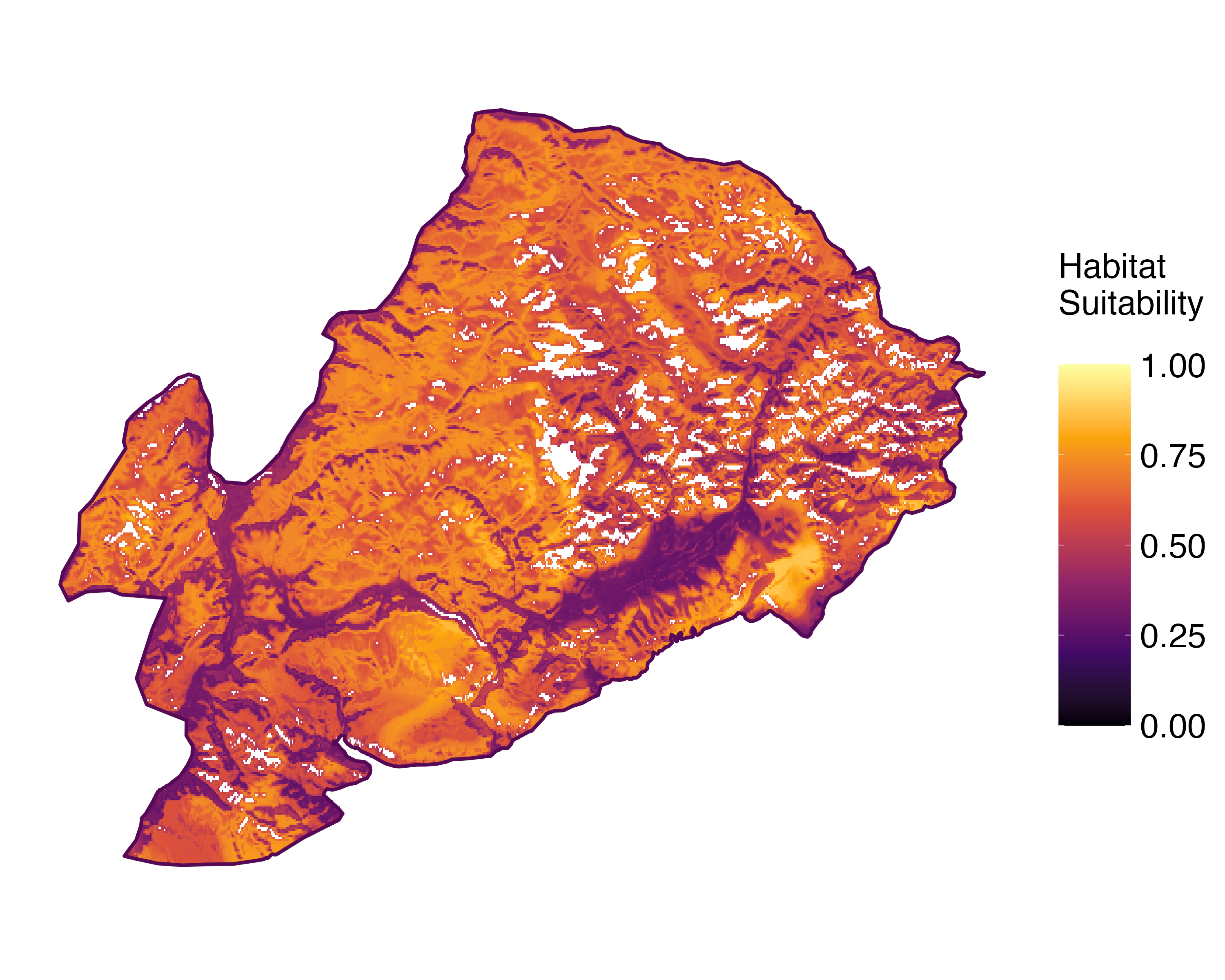 Current prediction (1981-2010)
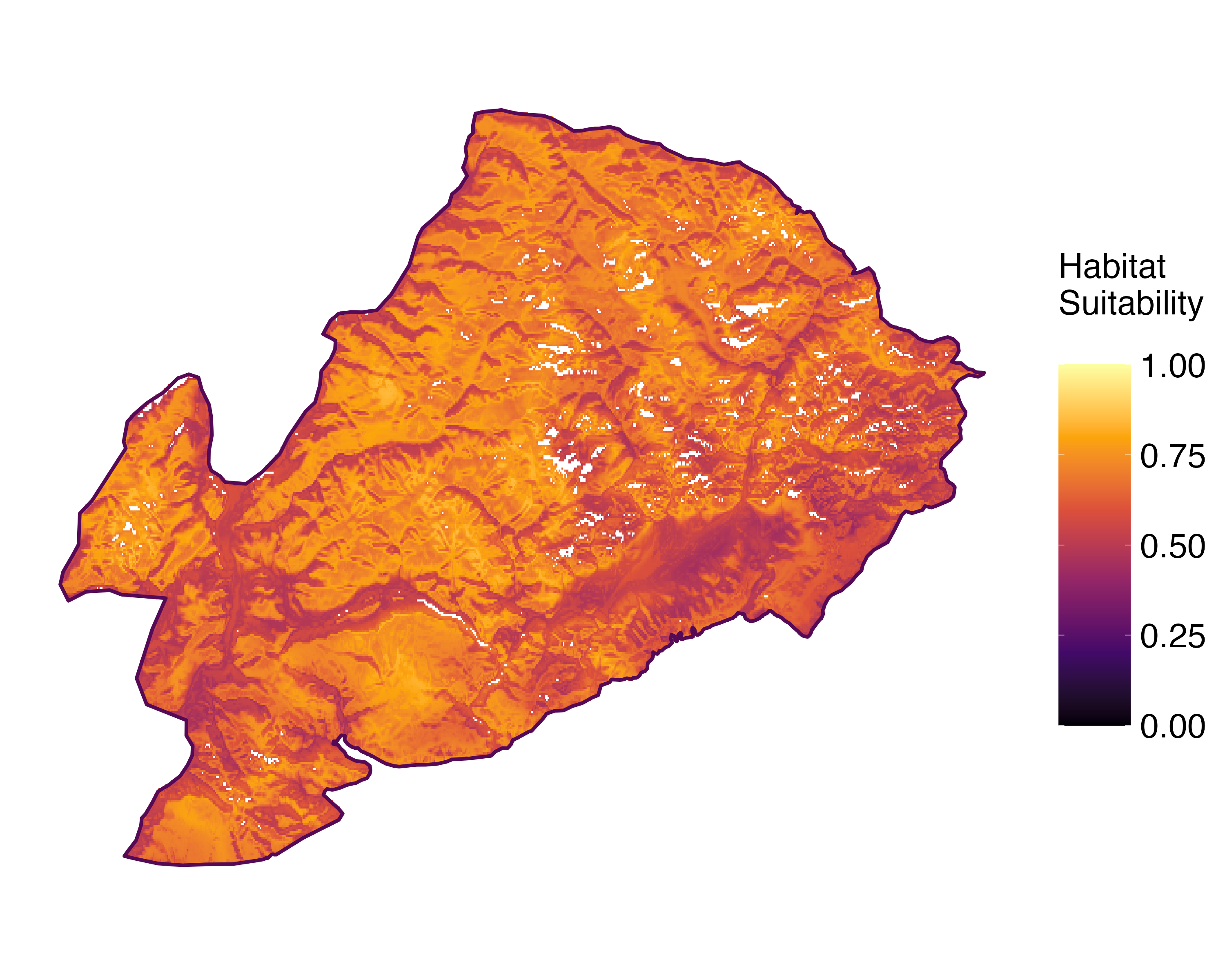 Future prediction (2071-2100) SSP 1-2.6
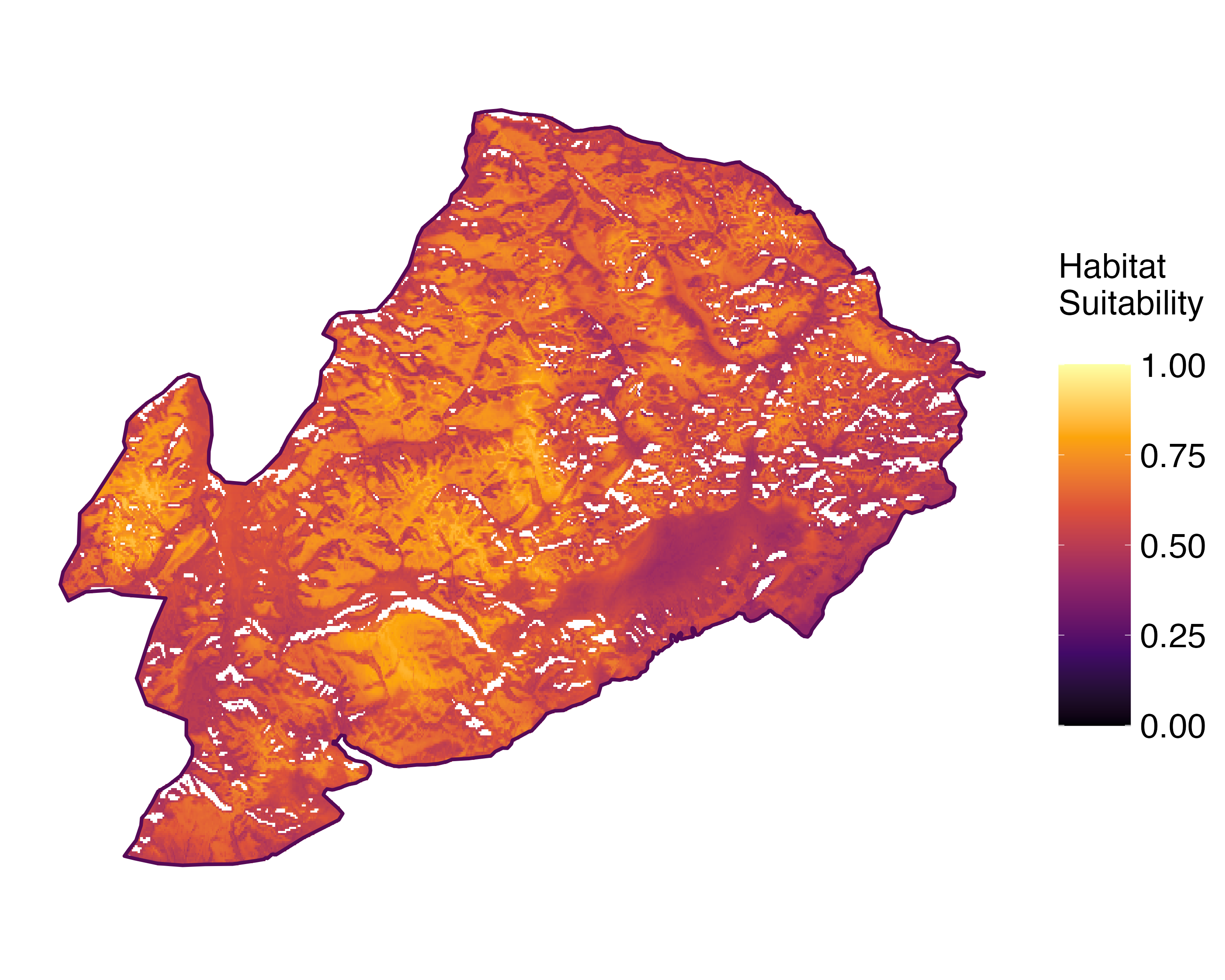 Future prediction (2071-2100) SSP 5-8.5Predictive maps according to Francesconi et al. 2025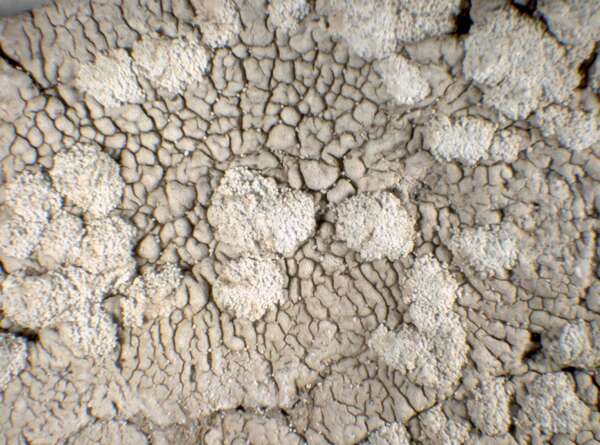
P.L. Nimis; Owner: Department of Life Sciences, University of Trieste
Herbarium: TSB (31541)
2001/12/10
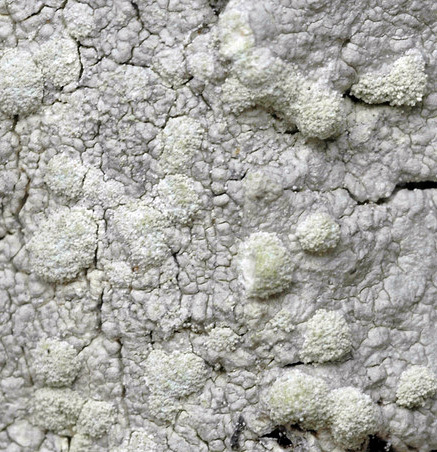
Leif Stridvall - Source: http://www.stridvall.se/la/galleries.php
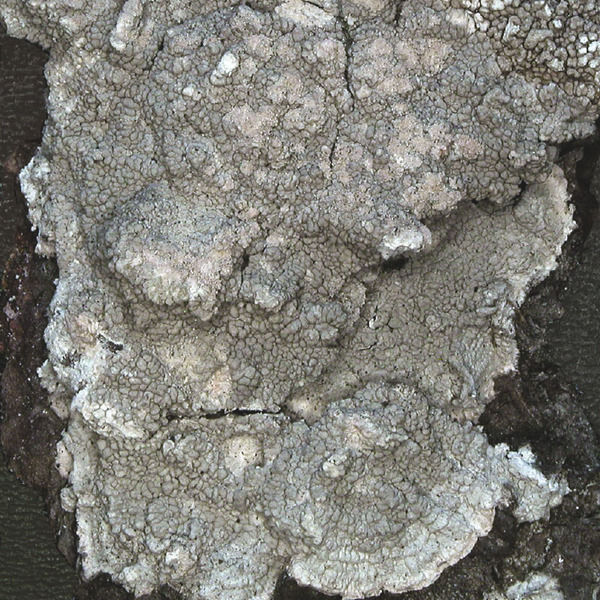
Andres Saag; Owner: University of Tartu
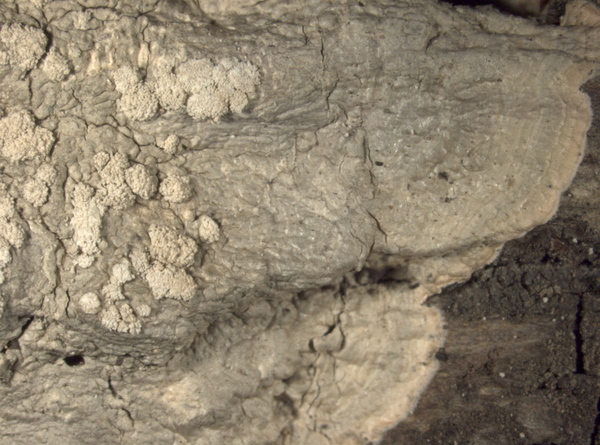
E. Pittao; Owner: Department of Life Sciences, University of Trieste
Herbarium: TSB (TSB 14822)
20.10.2009
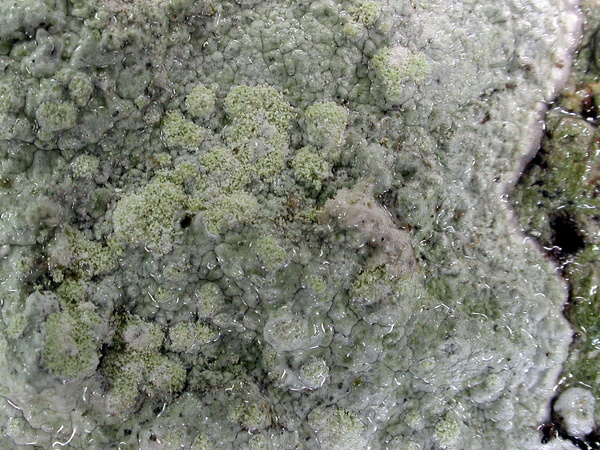
Leif Stridvall - Source http://www.stridvall.se/lichens/gallery/; Owner: Courtesy: Anita Stridvall
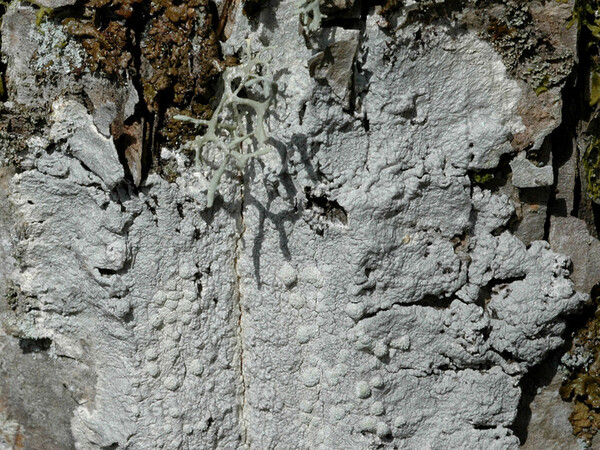
Leif Stridvall - Source http://www.stridvall.se/lichens/gallery/; Owner: Courtesy: Anita Stridvall
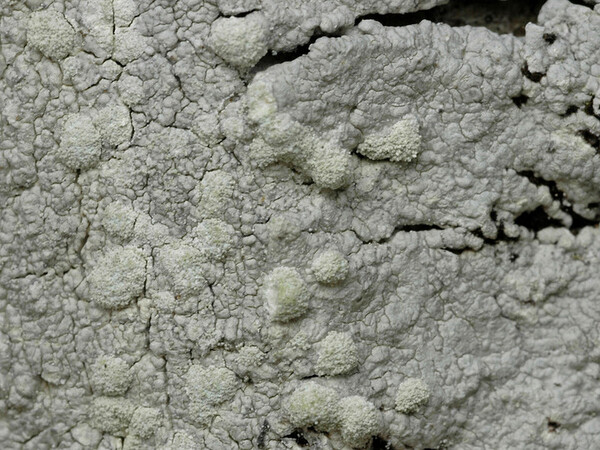
Leif Stridvall - Source: http://www.stridvall.se/la/galleries.php
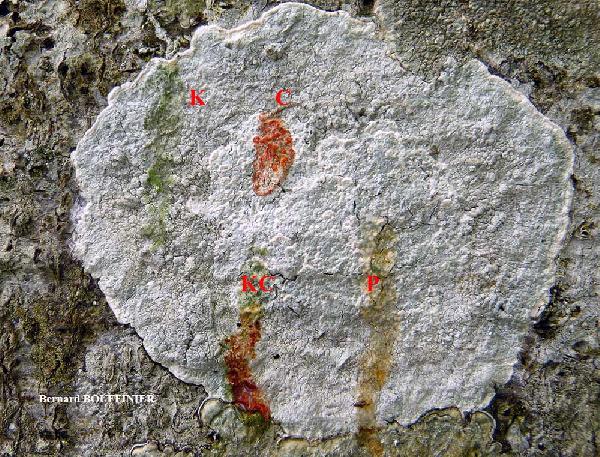
Bernard Bouffinier - Source: http://www.lichensmaritimes.org/index.php?task=fiche&lichen=686&lang=en
France, Forêt d'Iraty sur Fagus
Bernard Bouffinier - Source: http://www.lichensmaritimes.org/index.php?task=fiche&lichen=686&lang=en
France, Forêt d'Iraty sur Fagus
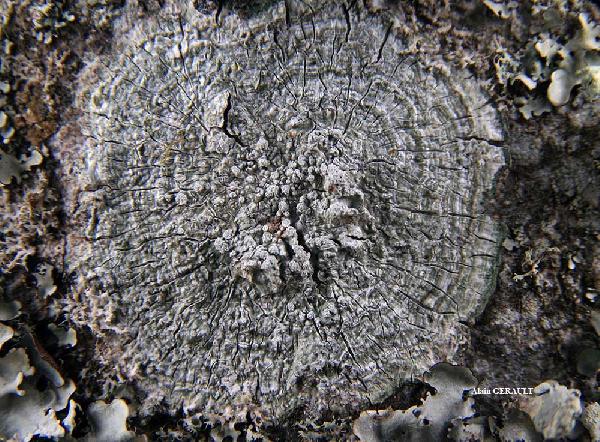
Alain Gerault - Source: http://www.lichensmaritimes.org/index.php?task=fiche&lichen=686&lang=en
France, Huelgoat
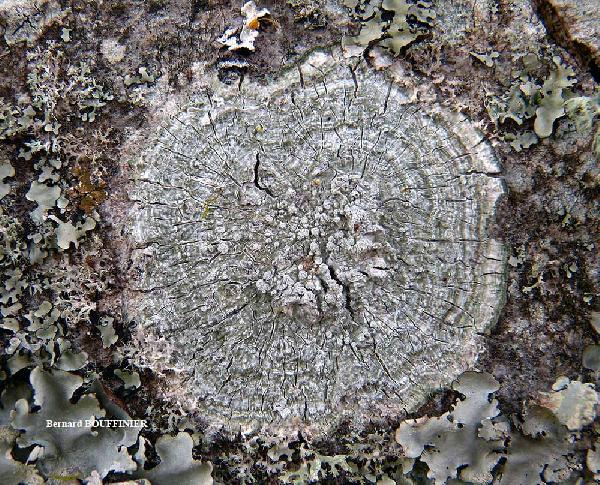
Alain Gerault - Source: http://www.lichensmaritimes.org/index.php?task=fiche&lichen=686&lang=en
France, Huelgoat
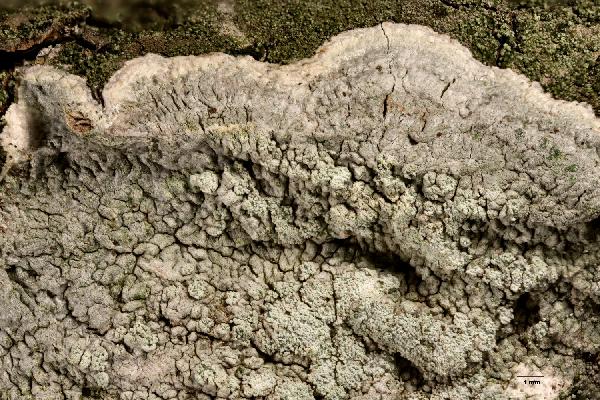
Ulrich Kirschbaum CC BY-SA 4.0 - Source: https://www.thm.de/lse/ulrich-kirschbaum/flechtenbilder
On Pinus halepensis/brutia.
Soralia C+ red, KC+ red, Pd-.
SE Europe; N-Cyprus; SE of Girne; Beşparmak Mountains; between Alevkaya and Antiphonitis Monastery
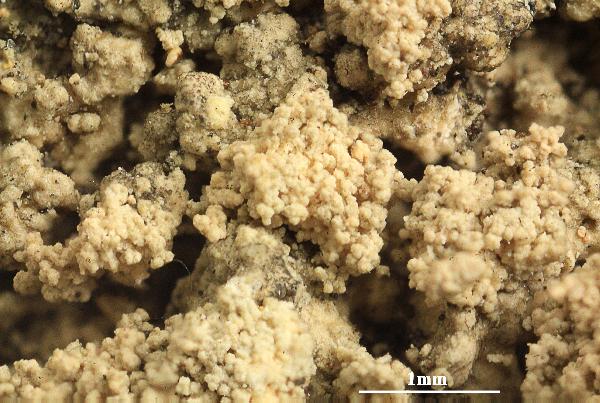
Felix Schumm - CC BY-SA 4.0
[10729], Germany, Baden-Württemberg, Nordschwarzwald, Kreis
Calw, nördlich von Würzbach, ca. 600-700 m, an Nadelbäumen. TK:
7217. Leg. F. Schumm 28.05.1970, det. O. Klement, 1970. - HPLC
(p237/5): lecanoric (maj), Triterpenoide vielleicht aus der Rinde. Thallus
K+ gelb, KC+ rot, P-; Soredien K+ gelb, C+ rot, P-.
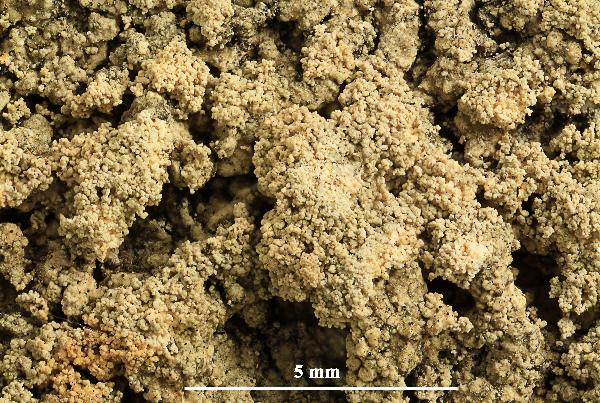
Felix Schumm - CC BY-SA 4.0
[10729], Germany, Baden-Württemberg, Nordschwarzwald, Kreis
Calw, nördlich von Würzbach, ca. 600-700 m, an Nadelbäumen. TK:
7217. Leg. F. Schumm 28.05.1970, det. O. Klement, 1970. - HPLC
(p237/5): lecanoric (maj), Triterpenoide vielleicht aus der Rinde. Thallus
K+ gelb, KC+ rot, P-; Soredien K+ gelb, C+ rot, P-.
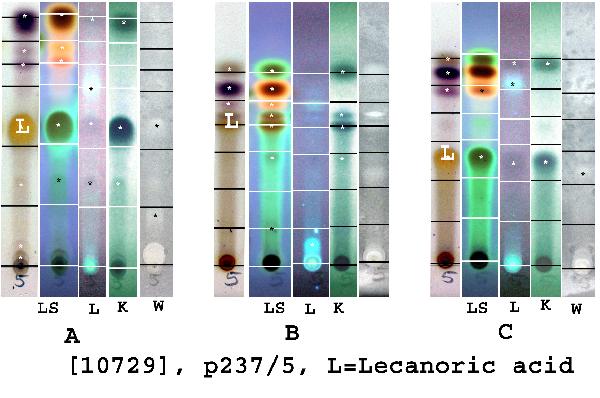
Felix Schumm - CC BY-SA 4.0
[10729], Germany, Baden-Württemberg, Nordschwarzwald, Kreis
Calw, nördlich von Würzbach, ca. 600-700 m, an Nadelbäumen. TK:
7217. Leg. F. Schumm 28.05.1970, det. O. Klement, 1970. - HPLC
(p237/5): lecanoric (maj), Triterpenoide vielleicht aus der Rinde. Thallus
K+ gelb, KC+ rot, P-; Soredien K+ gelb, C+ rot, P-.
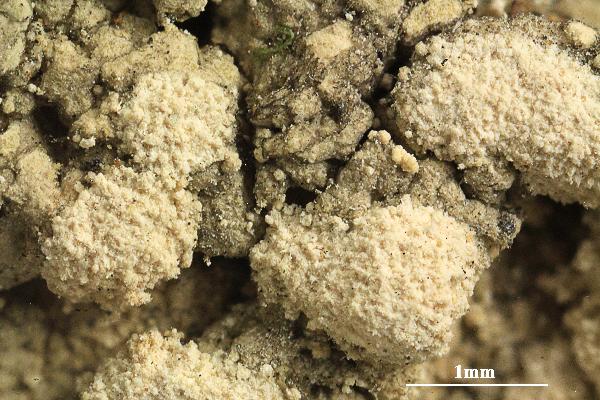
Felix Schumm - CC BY-SA 4.0
[1327], GERMANY: Baden-Württemberg, Stuttgart, Rotwildpark, an
Carpinus. TK: 7220/2. Leg. E. Putzler, 22.09.1947, det. O. Klement. -
HPLC (p237/6): lecanoric (maj). Thallus K- bis dunkel, C+ rot, KC+
rot, P-; Mark: KC+ rot, C+ rot, P-; Soredien: K-, C+ rot, KC+ rot, P-.
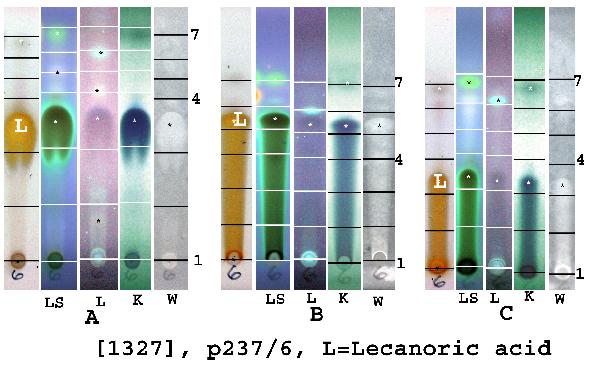
Felix Schumm - CC BY-SA 4.0
[1327], GERMANY: Baden-Württemberg, Stuttgart, Rotwildpark, an
Carpinus. TK: 7220/2. Leg. E. Putzler, 22.09.1947, det. O. Klement. -
HPLC (p237/6): lecanoric (maj). Thallus K- bis dunkel, C+ rot, KC+
rot, P-; Mark: KC+ rot, C+ rot, P-; Soredien: K-, C+ rot, KC+ rot, P-.
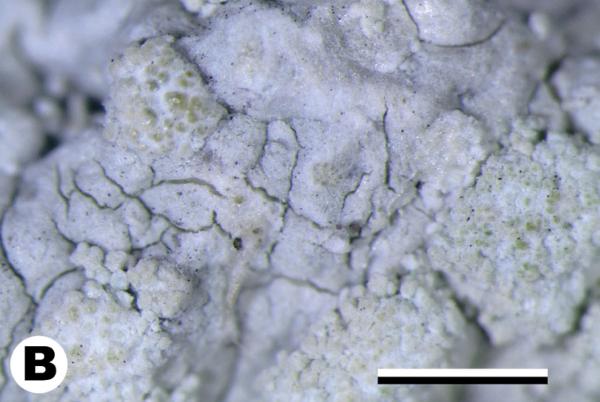
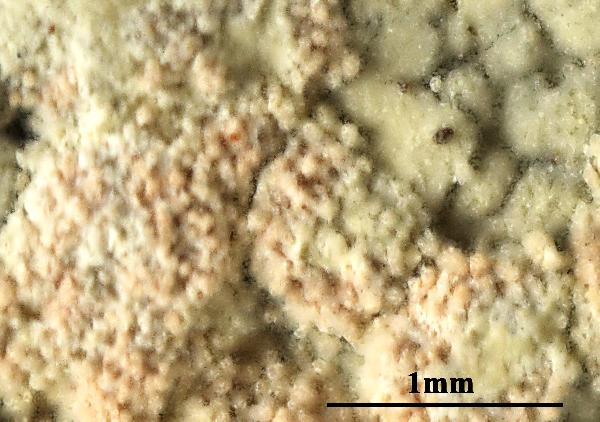
Source: Schmitt I, Otte J, Parnmen S, Sadowska-Deś A, Luecking R, Lumbsch T (2012) A new circumscription of the genus Varicellaria (Pertusariales, Ascomycota). MycoKeys 4: 23-36. - CC BY-4.0
Germany, 15.4.2004, Schmitt (FR)
Scale bar: 1mm. Images were taken with an Olympus SC30 camera under an Olympus SZX7 stereomicroscope.
Felix Schumm - CC BY 4.0
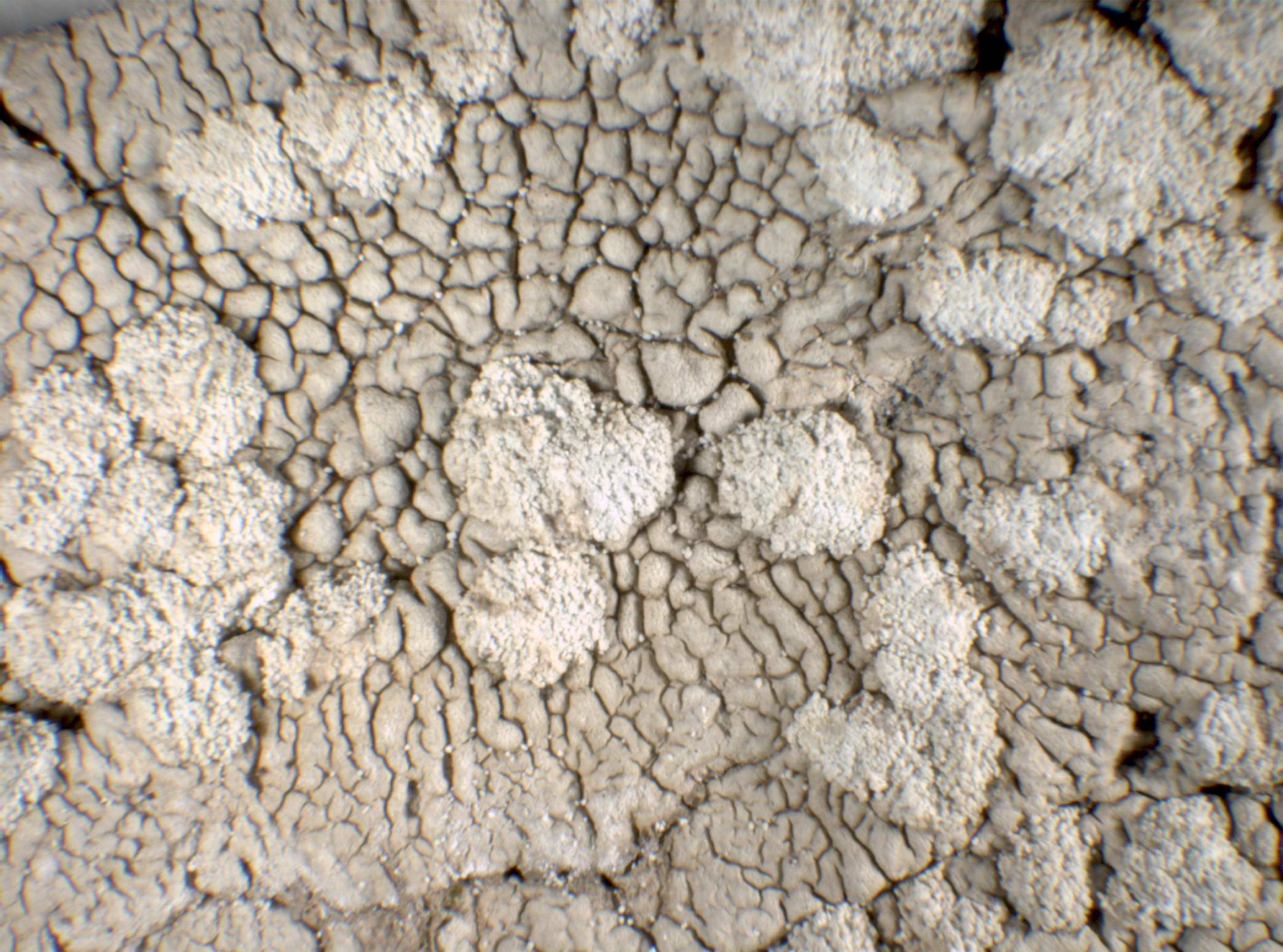
[VZ1717], Magna Britannia. Anglia. Shropshire, Stiperstones. Ad corticem
arborum. Leg. P. W. James 4.1976. -TLC Lecanoric acid anal by
P. W. James. EX A. VEZDA LICHENES SELECTI EXSICCATI NR. 1717. As Pertusaria hemisphaerica
Growth form: Crustose
Substrata: bark
Photobiont: green algae other than Trentepohlia
Reproductive strategy: mainly asexual, by soredia, or soredia-like structures (e.g. blastidia)
Commonnes-rarity: (info)
Alpine belt: absent
Subalpine belt: absent
Montane belt: very rare
Dry submediterranean belt: rare
Humid submediterranean belt: rather rare
Padanian area: absent
pH of the substrata:
| 1 | 2 | 3 | 4 | 5 |
Solar irradiation:
| 1 | 2 | 3 | 4 | 5 |
Aridity:
| 1 | 2 | 3 | 4 | 5 |
Eutrophication:
| 1 | 2 | 3 | 4 | 5 |
Poleotolerance:
| 0 | 1 | 2 | 3 |
Altitudinal distribution:
| 1 | 2 | 3 | 4 | 5 | 6 |
Rarity
absent
extremely rare
very rare
rare
rather rare
rather common
common
very common
extremely common
Loading data...
Occurrence data
Predictive map
Current prediction (1981-2010)Future prediction (2071-2100) SSP 1-2.6Future prediction (2071-2100) SSP 5-8.5Predictive maps according to Francesconi et al. 2025
P.L. Nimis; Owner: Department of Life Sciences, University of Trieste
Herbarium: TSB (31541)
2001/12/10
Leif Stridvall - Source: http://www.stridvall.se/la/galleries.php
Andres Saag; Owner: University of Tartu
E. Pittao; Owner: Department of Life Sciences, University of Trieste
Herbarium: TSB (TSB 14822)
20.10.2009
Leif Stridvall - Source http://www.stridvall.se/lichens/gallery/; Owner: Courtesy: Anita Stridvall
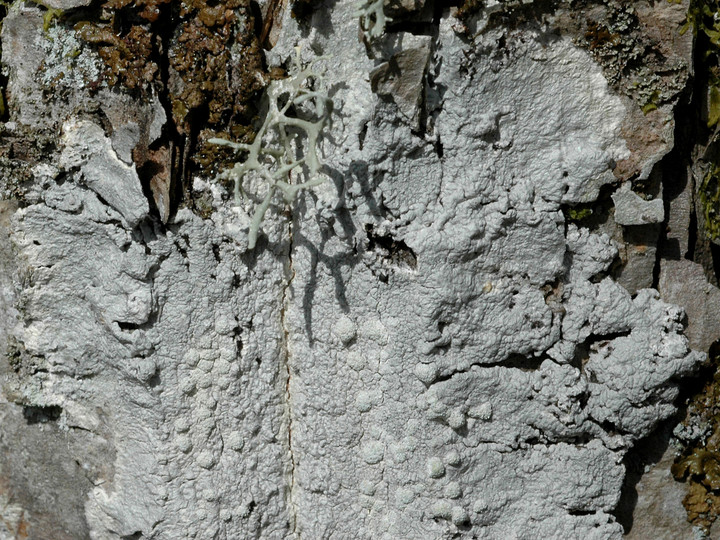
Leif Stridvall - Source http://www.stridvall.se/lichens/gallery/; Owner: Courtesy: Anita Stridvall
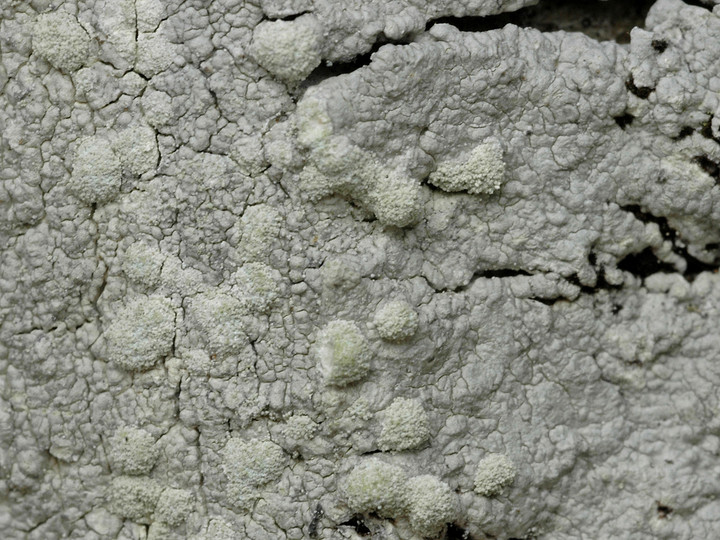
Leif Stridvall - Source: http://www.stridvall.se/la/galleries.php
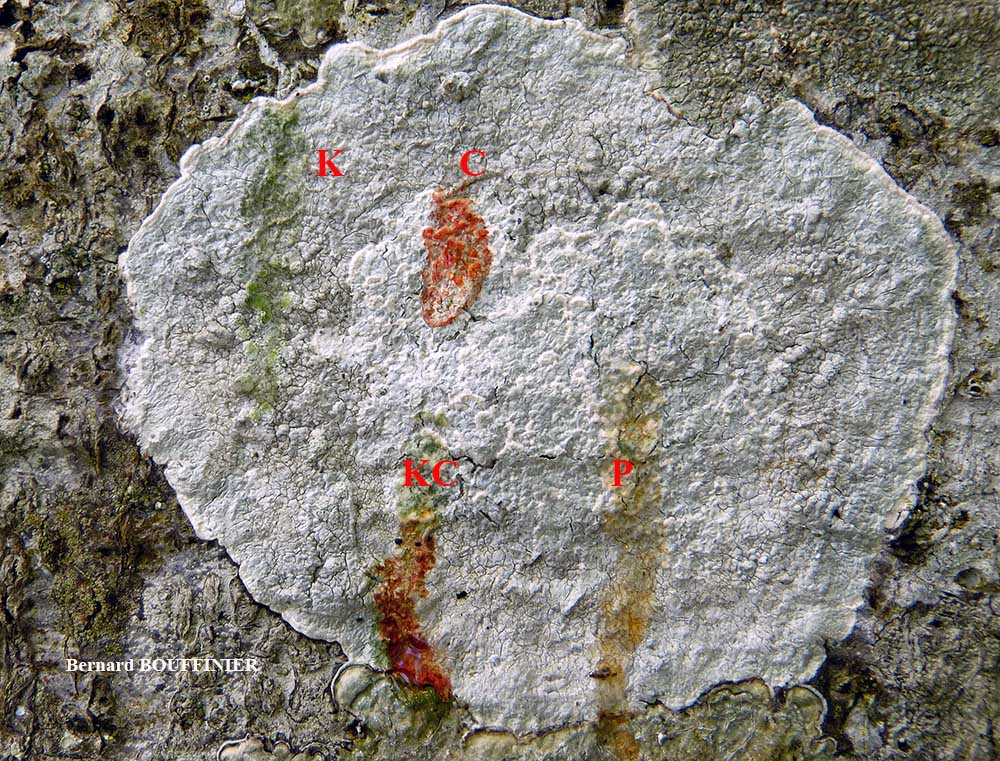
Bernard Bouffinier - Source: http://www.lichensmaritimes.org/index.php?task=fiche&lichen=686&lang=en
France, Forêt d'Iraty sur Fagus
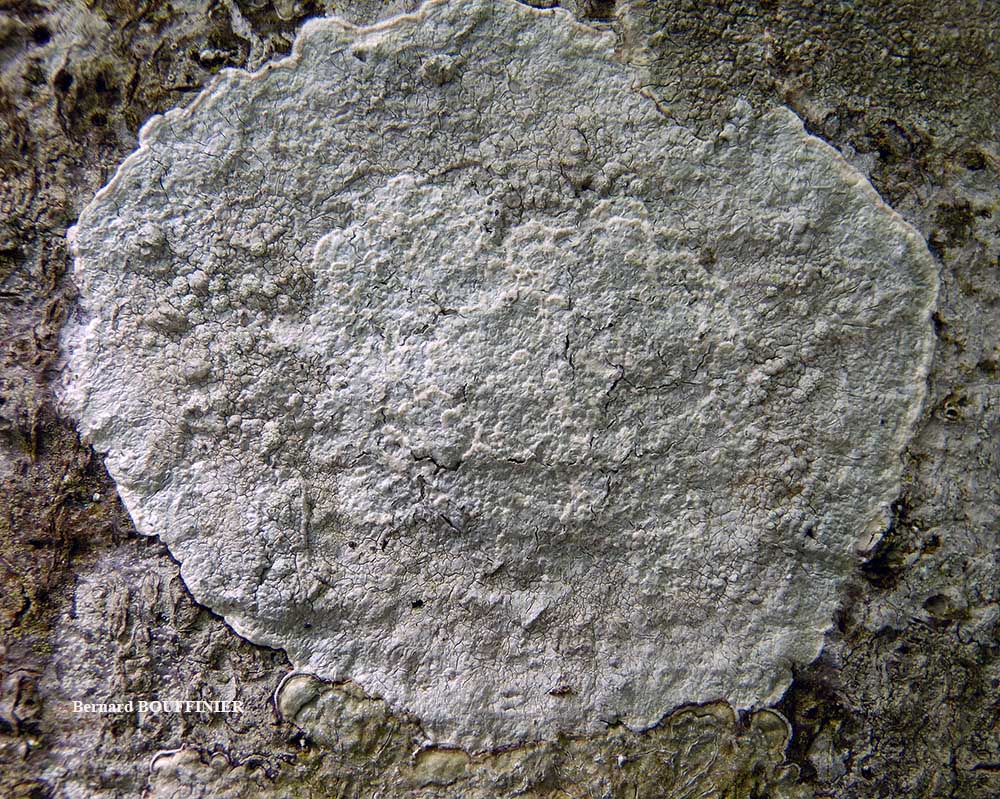
Bernard Bouffinier - Source: http://www.lichensmaritimes.org/index.php?task=fiche&lichen=686&lang=en
France, Forêt d'Iraty sur Fagus
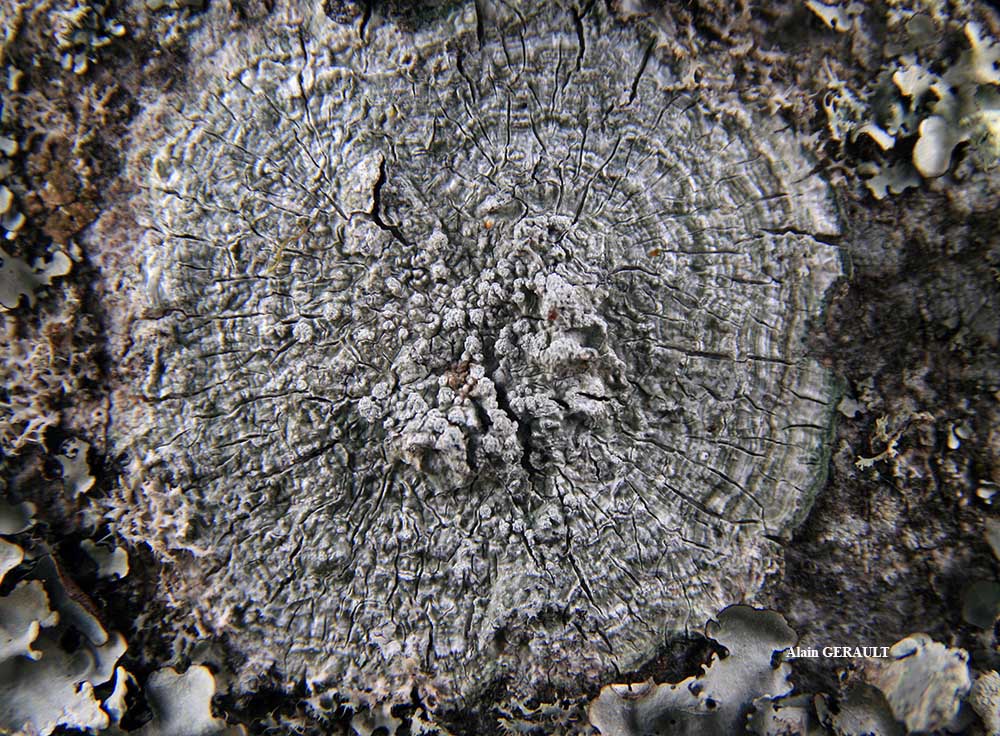
Alain Gerault - Source: http://www.lichensmaritimes.org/index.php?task=fiche&lichen=686&lang=en
France, Huelgoat
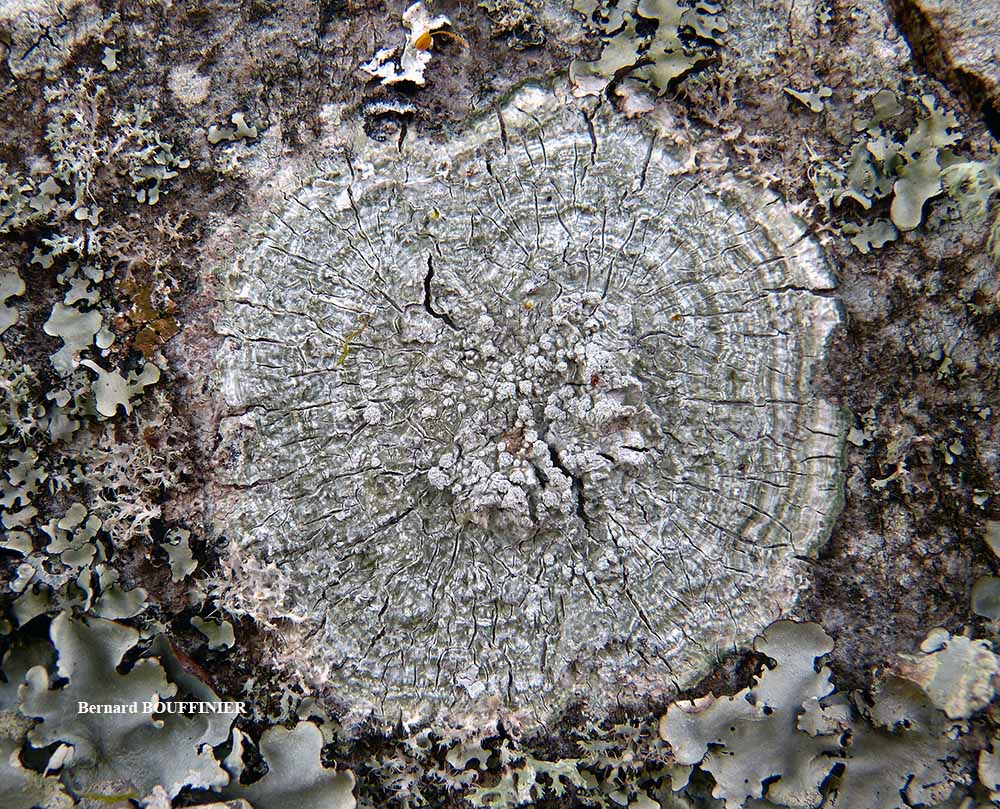
Alain Gerault - Source: http://www.lichensmaritimes.org/index.php?task=fiche&lichen=686&lang=en
France, Huelgoat
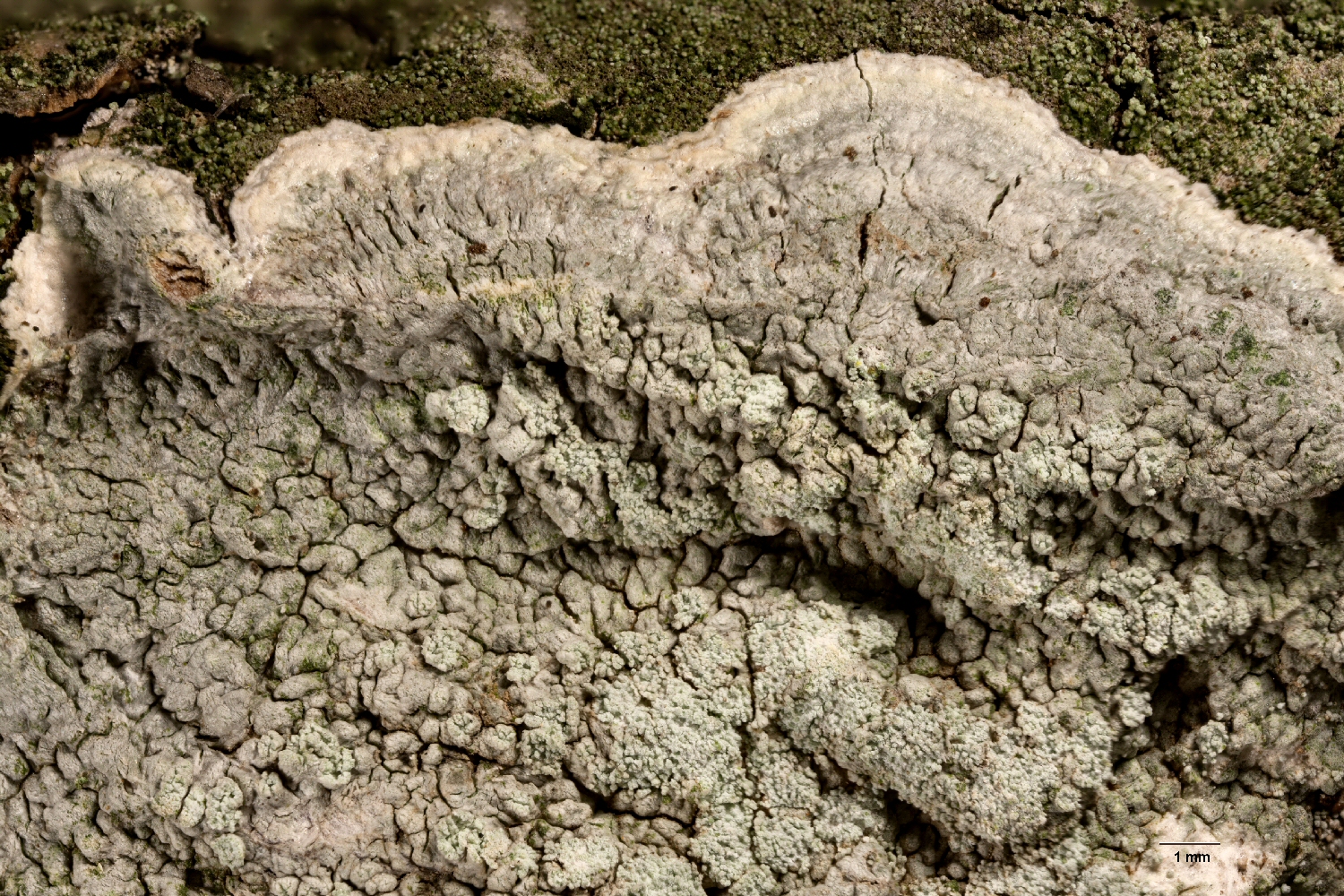
Ulrich Kirschbaum CC BY-SA 4.0 - Source: https://www.thm.de/lse/ulrich-kirschbaum/flechtenbilder
On Pinus halepensis/brutia. Soralia C+ red, KC+ red, Pd-. SE Europe; N-Cyprus; SE of Girne; Beşparmak Mountains; between Alevkaya and Antiphonitis Monastery

Felix Schumm - CC BY-SA 4.0
[10729], Germany, Baden-Württemberg, Nordschwarzwald, Kreis Calw, nördlich von Würzbach, ca. 600-700 m, an Nadelbäumen. TK: 7217. Leg. F. Schumm 28.05.1970, det. O. Klement, 1970. - HPLC (p237/5): lecanoric (maj), Triterpenoide vielleicht aus der Rinde. Thallus K+ gelb, KC+ rot, P-; Soredien K+ gelb, C+ rot, P-.

Felix Schumm - CC BY-SA 4.0
[10729], Germany, Baden-Württemberg, Nordschwarzwald, Kreis Calw, nördlich von Würzbach, ca. 600-700 m, an Nadelbäumen. TK: 7217. Leg. F. Schumm 28.05.1970, det. O. Klement, 1970. - HPLC (p237/5): lecanoric (maj), Triterpenoide vielleicht aus der Rinde. Thallus K+ gelb, KC+ rot, P-; Soredien K+ gelb, C+ rot, P-.

Felix Schumm - CC BY-SA 4.0
[10729], Germany, Baden-Württemberg, Nordschwarzwald, Kreis Calw, nördlich von Würzbach, ca. 600-700 m, an Nadelbäumen. TK: 7217. Leg. F. Schumm 28.05.1970, det. O. Klement, 1970. - HPLC (p237/5): lecanoric (maj), Triterpenoide vielleicht aus der Rinde. Thallus K+ gelb, KC+ rot, P-; Soredien K+ gelb, C+ rot, P-.

Felix Schumm - CC BY-SA 4.0
[1327], GERMANY: Baden-Württemberg, Stuttgart, Rotwildpark, an Carpinus. TK: 7220/2. Leg. E. Putzler, 22.09.1947, det. O. Klement. - HPLC (p237/6): lecanoric (maj). Thallus K- bis dunkel, C+ rot, KC+ rot, P-; Mark: KC+ rot, C+ rot, P-; Soredien: K-, C+ rot, KC+ rot, P-.

Felix Schumm - CC BY-SA 4.0
[1327], GERMANY: Baden-Württemberg, Stuttgart, Rotwildpark, an Carpinus. TK: 7220/2. Leg. E. Putzler, 22.09.1947, det. O. Klement. - HPLC (p237/6): lecanoric (maj). Thallus K- bis dunkel, C+ rot, KC+ rot, P-; Mark: KC+ rot, C+ rot, P-; Soredien: K-, C+ rot, KC+ rot, P-.

Source: Schmitt I, Otte J, Parnmen S, Sadowska-Deś A, Luecking R, Lumbsch T (2012) A new circumscription of the genus Varicellaria (Pertusariales, Ascomycota). MycoKeys 4: 23-36. - CC BY-4.0
Germany, 15.4.2004, Schmitt (FR)
Scale bar: 1mm. Images were taken with an Olympus SC30 camera under an Olympus SZX7 stereomicroscope.