Bacidia rosella (Pers.) De Not.
Giorn. Bot. Ital., 2, 1, 1: 190, 1846. Basionym: Lichen rosellus Pers. - Ann. Bot. (Usteri), 7: 25, 1794.
Synonyms: Biatora alabastrina W. Mann; Lecidea rosella (Pers.) Ach.
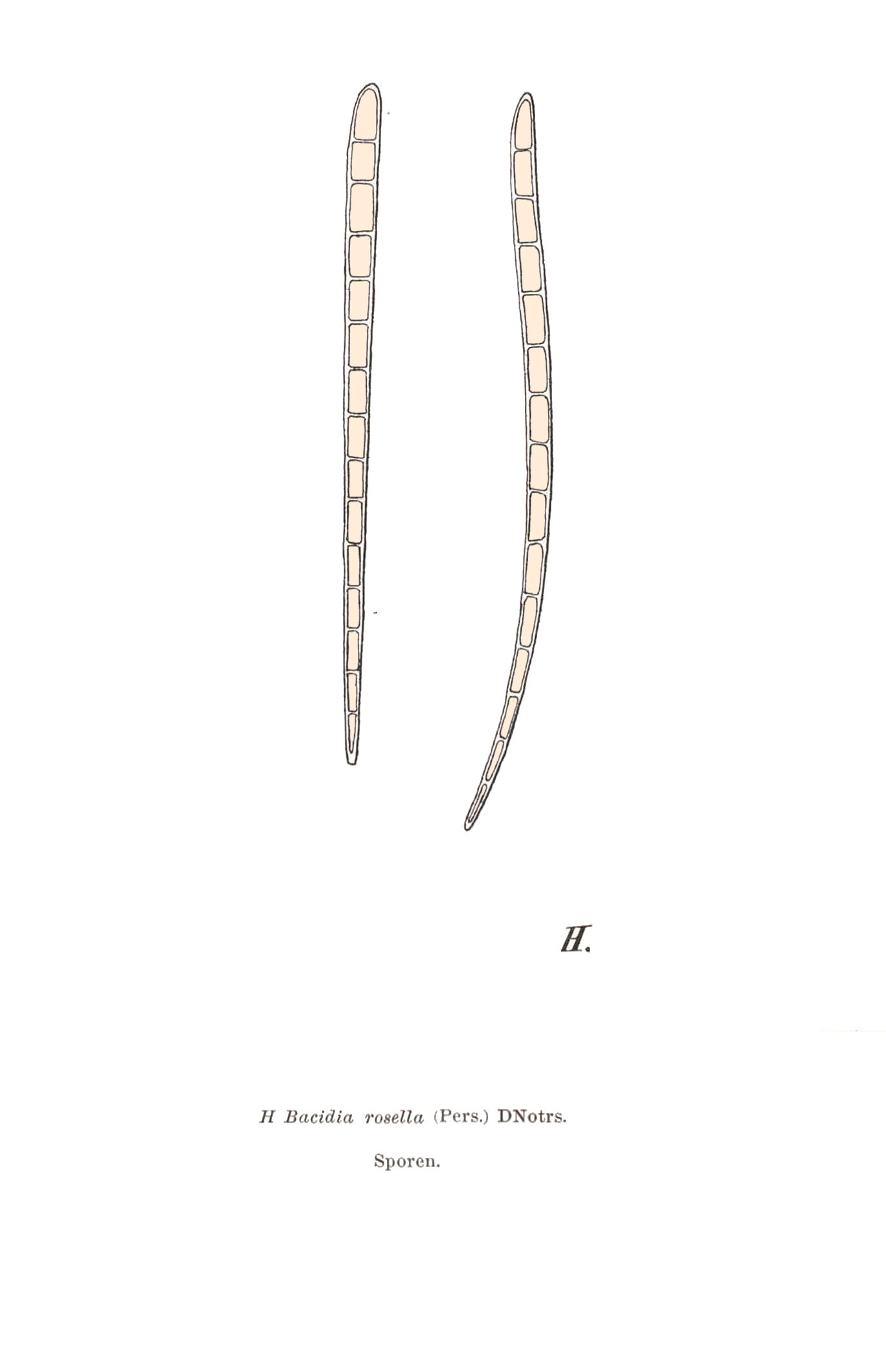
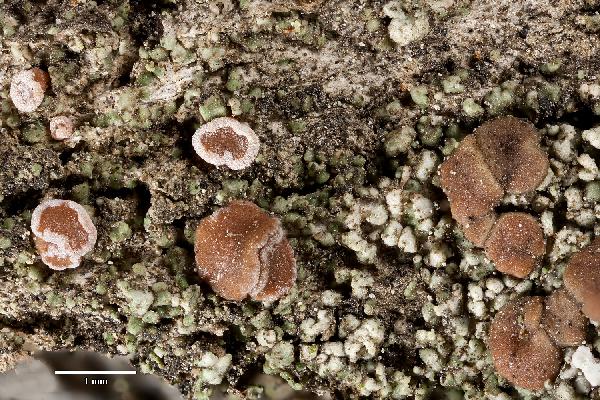
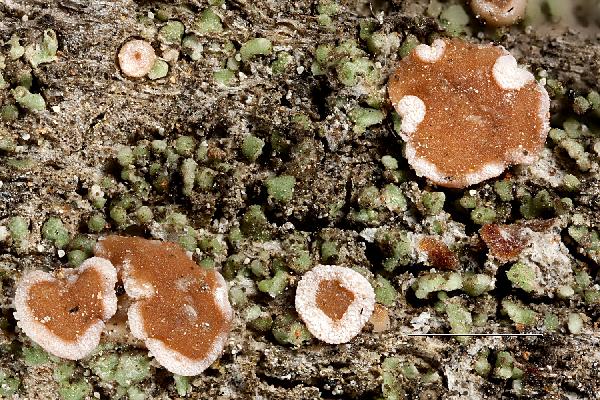
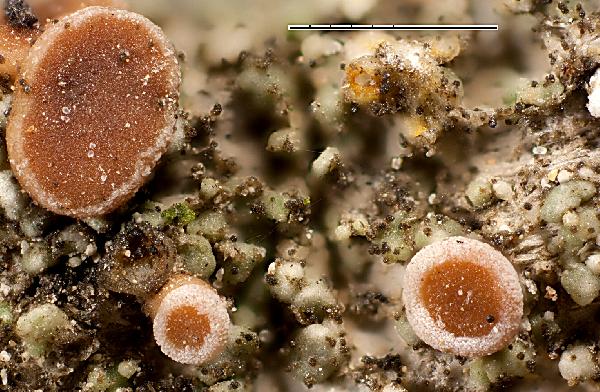
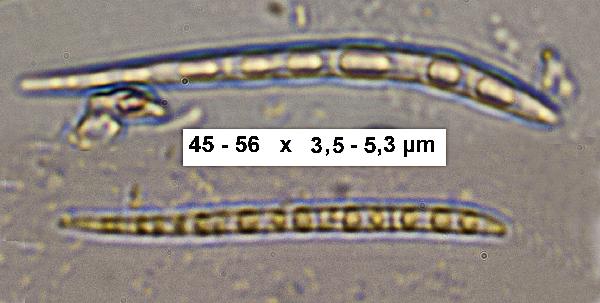
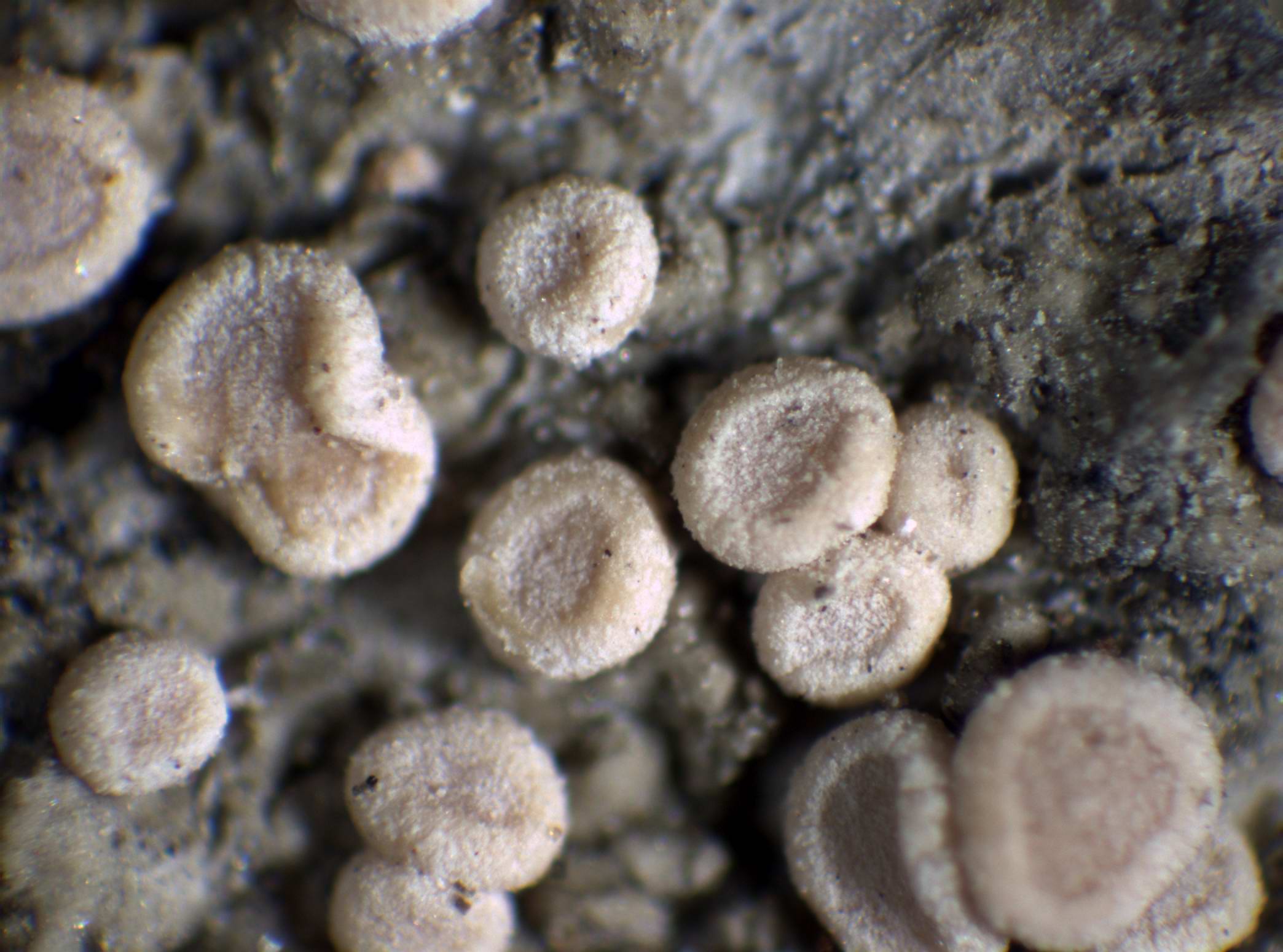
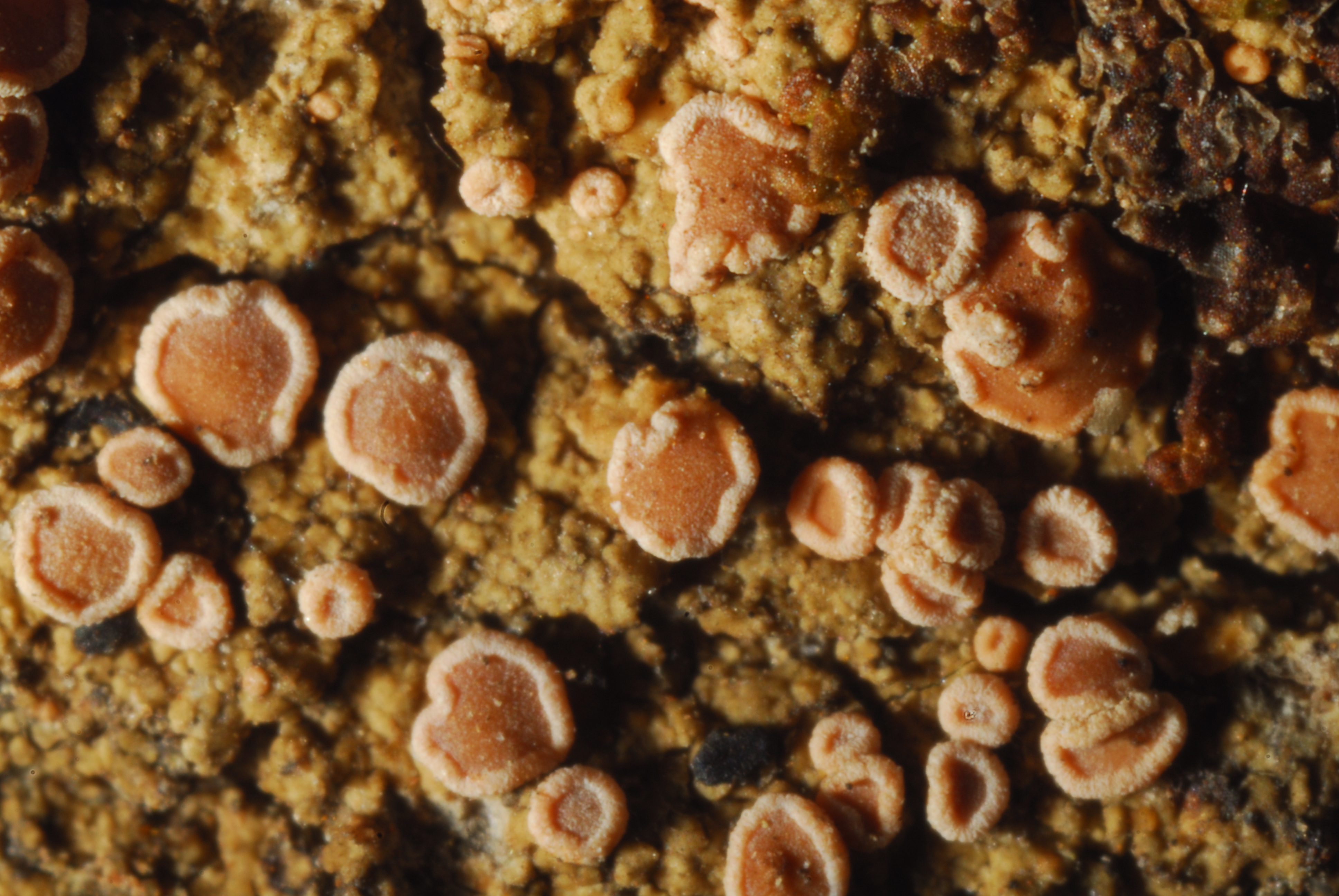
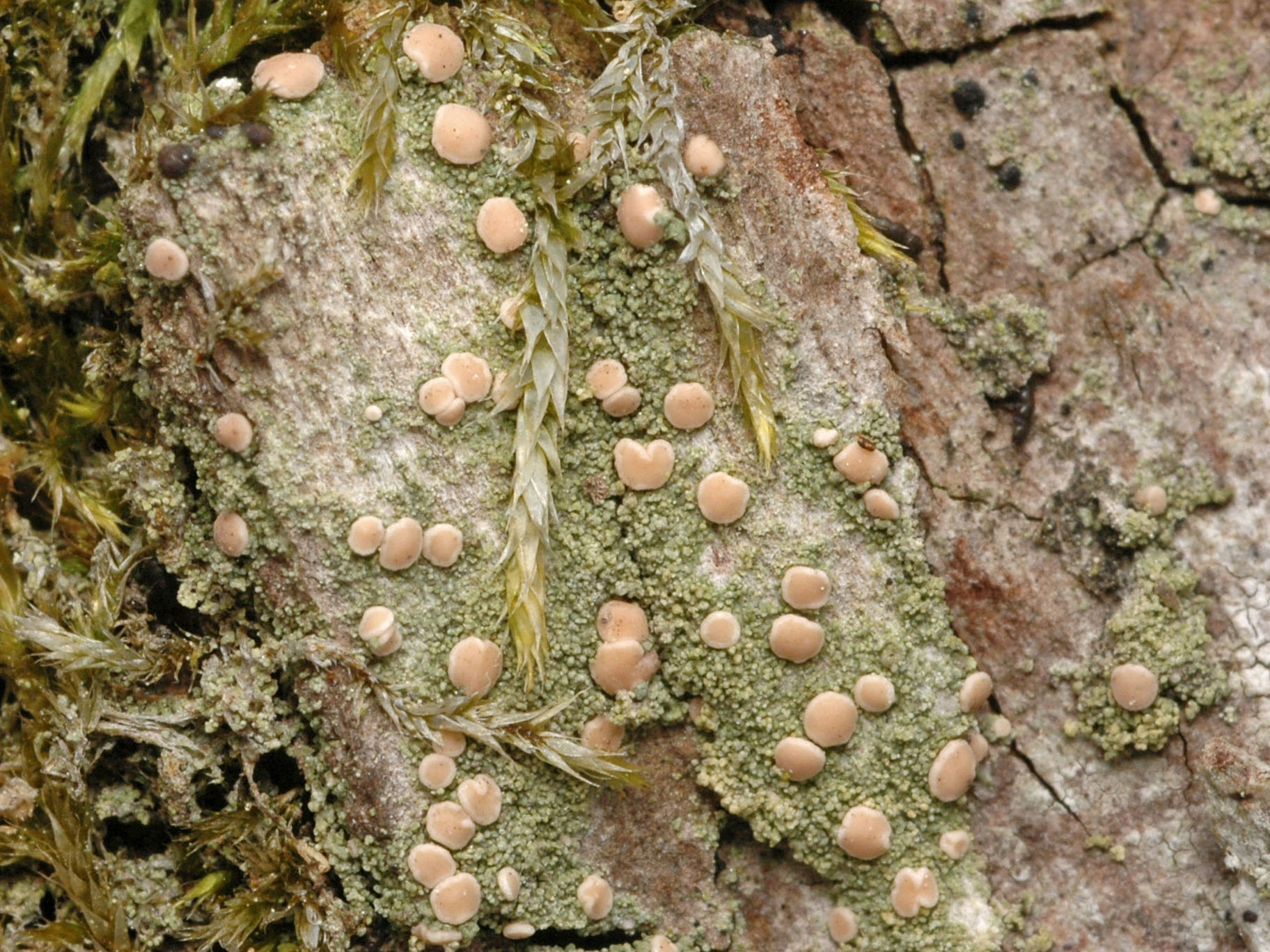
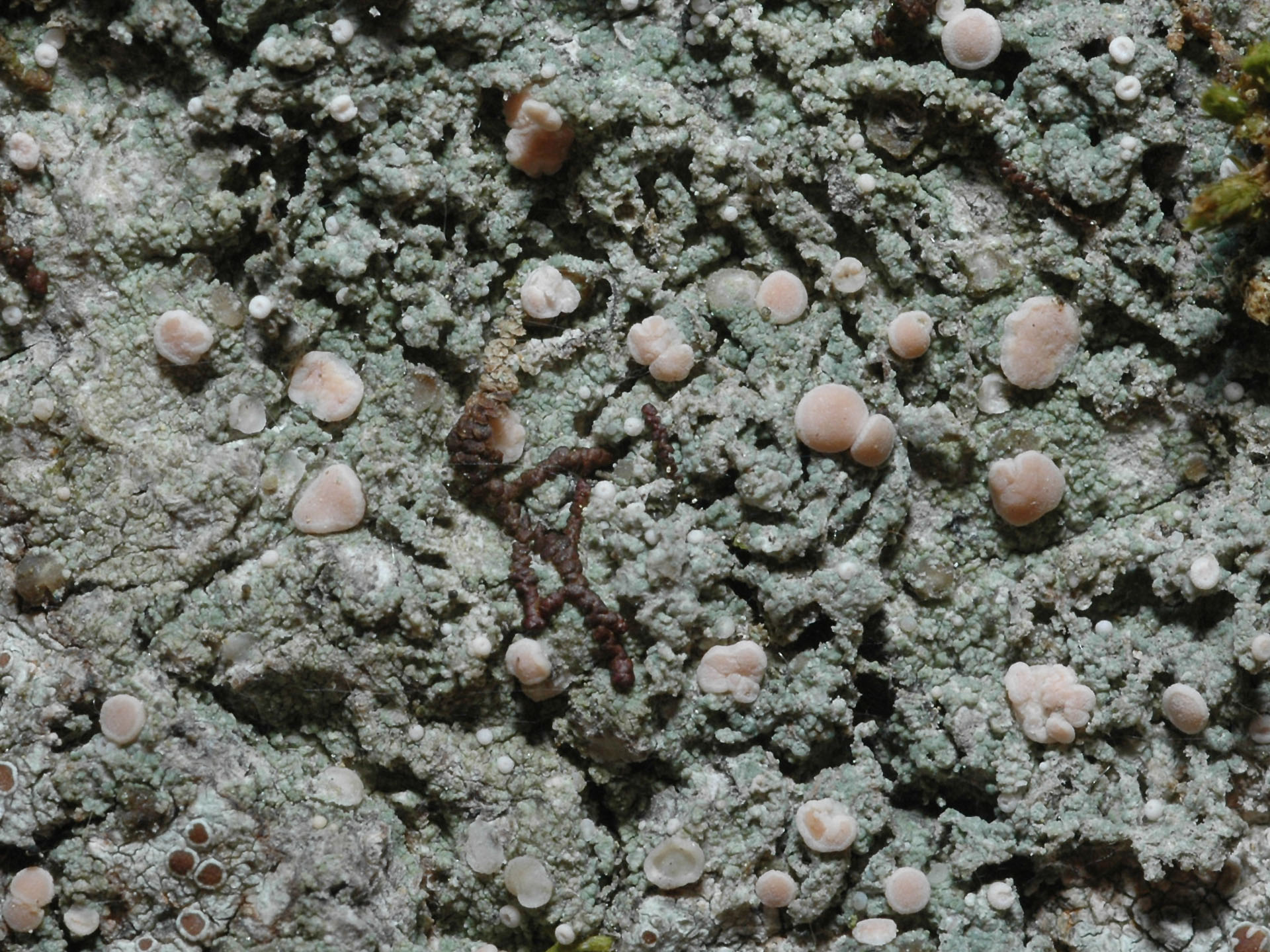
Description: Thallus crustose, thinly episubstratic, continuous, slightly cracked or rarely warted-areolate, mostly finely granulose, pale grey to greenish grey. Apothecia lecideine, 0.6-1.5(-3) mm across, sessile and constricted at base, pale pink, with a flat to finally convex, epruinose or slightly pruinose disc, and thin, usually paler, finally sometimes excluded proper margin. Proper exciple colourless, >80 μm wide laterally, of narrow, not distinctly radiating cell lumina with gelatinized walls which are thicker than the lumina, with evenly dispersed, very small, reddish crystals soluble in K, especially in upper part, the outer rim; epithecium colourless, inspersed with small crystals forming a sharply delimited layer; hymenium colourless, 75-85 μm high; paraphyses 0.8-1.2 μm thick at mid-level, the apical cells more or less clavate, to 3 μm wide; hypothecium colourless or very pale yellow. Asci 8-spored, clavate to cylindrical-clavate, the apical dome K/I+ dark blue with a pale, conical-pointed apical cushion (axial mass), the wall K/I-, but the thin outer gel K/I+ blue, Bacidia-type. Ascospores (3-)5-15-septate, hyaline, acicular, curved or sigmoid, 65-100 x (2.5-)3-4(-5) μm. Pycnidia colourless, half-immersed. Conidia 5-9-septate, hyaline, thread-like, slightly curved, 10-17 x 0.5-0.8 μm. Photobiont chlorococcoid, the cells 5-12 μm in diam. Spot tests: thallus and apothecia K-, C-, KC-, P-, UV-. Chemistry: thallus without lichen substances.
Growth form: Crustose
Substrata: bark
Photobiont: green algae other than Trentepohlia
Reproductive strategy: mainly sexual
Most common in areas with a humid-warm climate (e.g. most of Tyrrenian Italy)
Commonnes-rarity: (info)
Alpine belt: absent
Subalpine belt: absent
Montane belt: extremely rare
Dry submediterranean belt: extremely rare
Humid submediterranean belt: very rare
Padanian area: absent
pH of the substrata:
1 2 3 4 5

Solar irradiation:
1 2 3 4 5
Aridity:
1 2 3 4 5
Eutrophication:
1 2 3 4 5
Poleotolerance:
0 1 2 3
Altitudinal distribution:
1 2 3 4 5 6
Rarity
absent
extremely rare
very rare
rare
rather rare
rather common
common
very common
extremely common
Loading data...
Occurrence data
Predictive map
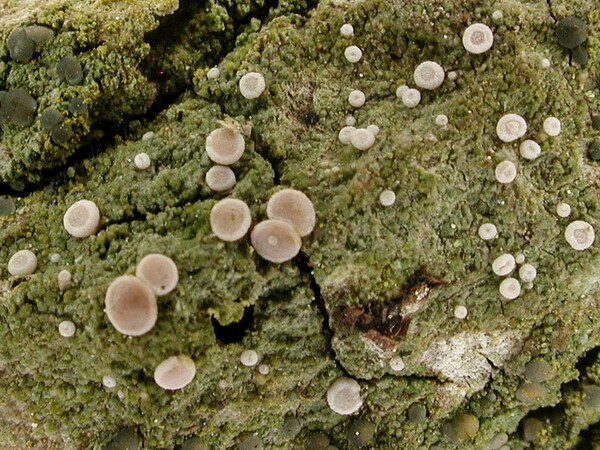
Leif Stridvall - Source: http://www.stridvall.se/la/galleries.php (Courtesy: Anita Stridvall)
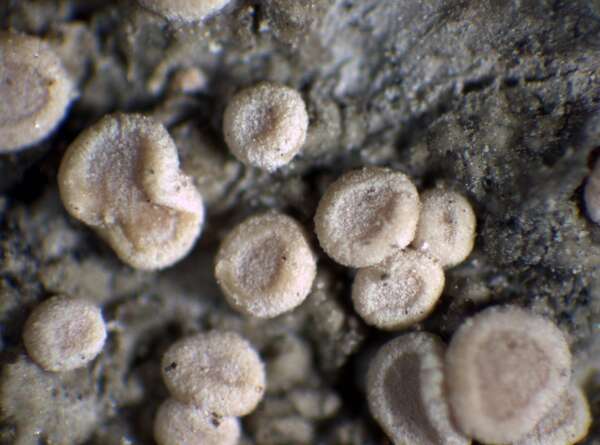
P.L. Nimis; Owner: Department of Life Sciences, University of Trieste
Herbarium: TSB (9158)
2001/11/22
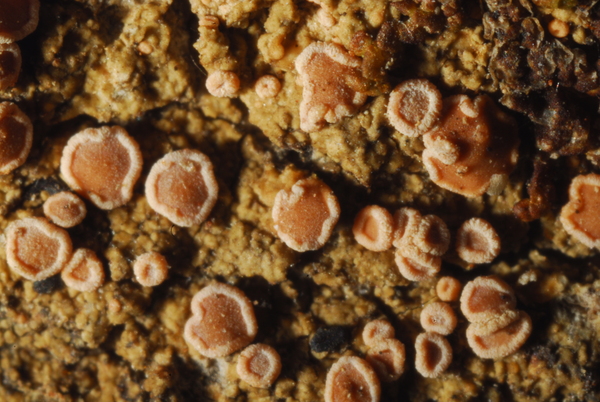
Domenico Puntillo; Owner: Domenico Puntillo
Italy
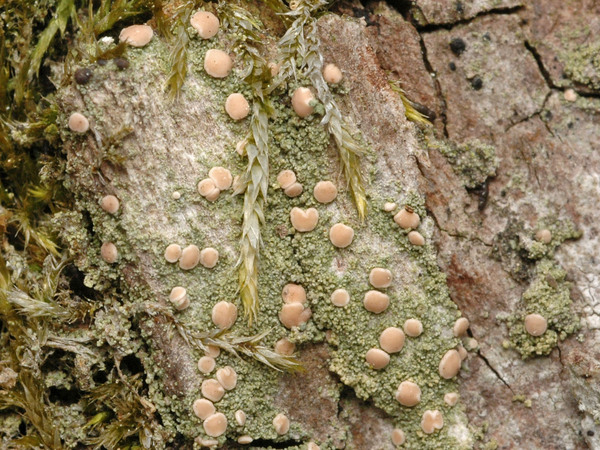
Leif Stridvall - Source: http://www.stridvall.se/lichens/gallery/
Courtesy: Anita Stridvall
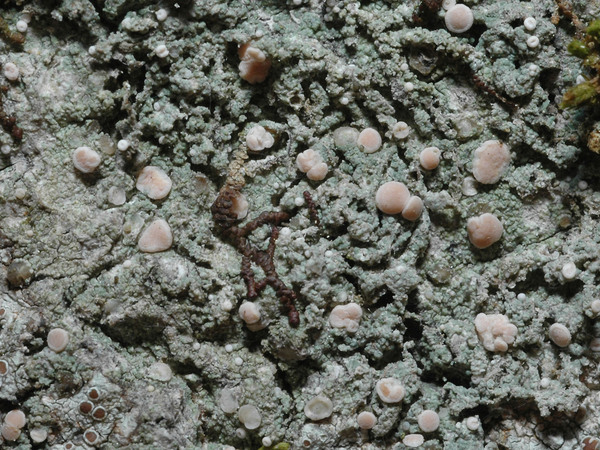
Leif Stridvall - Source: http://www.stridvall.se/lichens/gallery/
Courtesy: Anita Stridvall
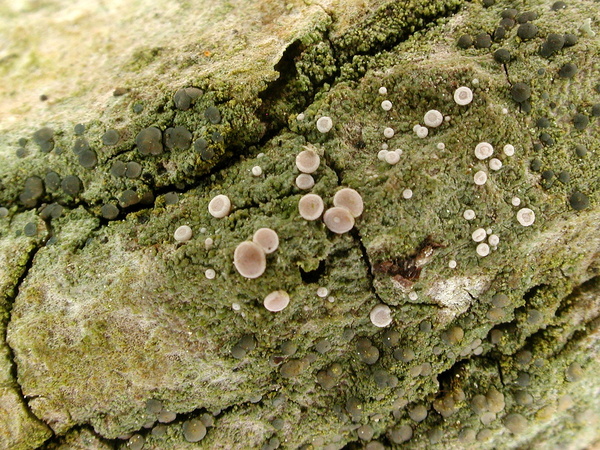
Leif Stridvall - Source: http://www.stridvall.se/lichens/gallery/
Courtesy: Anita Stridvall
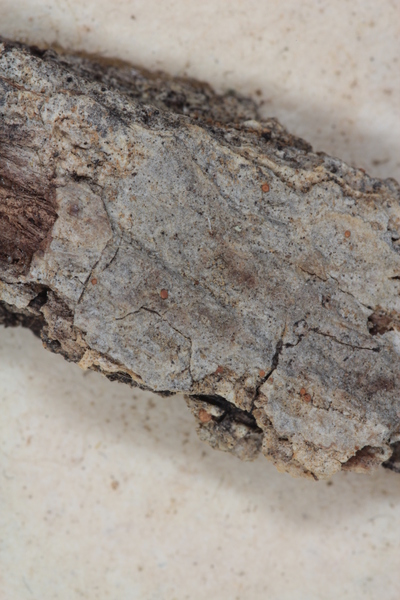
Photo by Maria Zardini, Museo di Storia Naturale di Venezia CC BY-SA 4.0
Ad cort. quercuum in nemore Montello raro.
Trevisan Lichenotheca Veneta 71
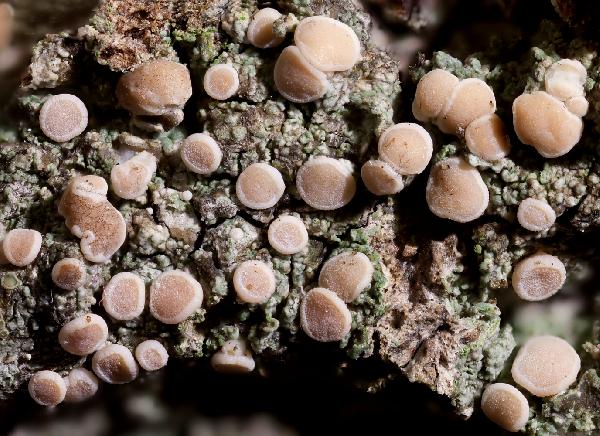
Ulrich Kirschbaum CC BY-SA 4.0 - Source: https://www.thm.de/lse/ulrich-kirschbaum/flechtenbilder
Central Europe; Germany: Hesse; rare.
(Coll/ident: Teuber).
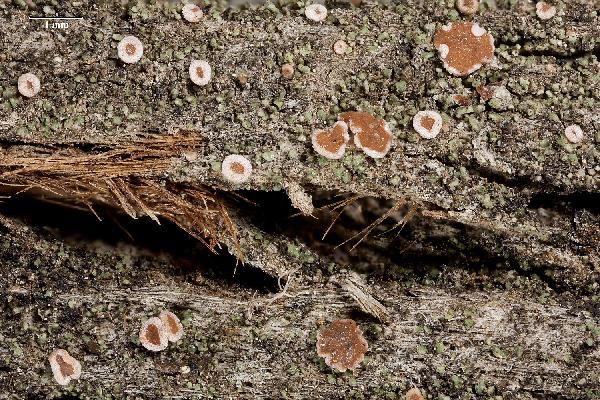
Ulrich Kirschbaum CC BY-SA 4.0 - Source: https://www.thm.de/lse/ulrich-kirschbaum/flechtenbilder
SE Europe; N-Cyprus; SE of Girne; Beşparmak Mountains; between Alevkaya and Antiphonitis Monastery; 8. (Ident. A. Aptroot); on Cupressus sempervirens
Ulrich Kirschbaum CC BY-SA 4.0 - Source: https://www.thm.de/lse/ulrich-kirschbaum/flechtenbilder
SE Europe; N-Cyprus; SE of Girne; Beşparmak Mountains; between Alevkaya and Antiphonitis Monastery; 8. (Ident. A. Aptroot); on Cupressus sempervirens
Ulrich Kirschbaum CC BY-SA 4.0 - Source: https://www.thm.de/lse/ulrich-kirschbaum/flechtenbilder
SE Europe; N-Cyprus; SE of Girne; Beşparmak Mountains; between Alevkaya and Antiphonitis Monastery; 8. (Ident. A. Aptroot); on Cupressus sempervirens
Ulrich Kirschbaum CC BY-SA 4.0 - Source: https://www.thm.de/lse/ulrich-kirschbaum/flechtenbilder
SE Europe; N-Cyprus; SE of Girne; Beşparmak Mountains; between Alevkaya and Antiphonitis Monastery; 8. (Ident. A. Aptroot); on Cupressus sempervirens
Ulrich Kirschbaum CC BY-SA 4.0 - Source: https://www.thm.de/lse/ulrich-kirschbaum/flechtenbilder
SE Europe; N-Cyprus; SE of Girne; Beşparmak Mountains; between Alevkaya and Antiphonitis Monastery; 8. (Ident. A. Aptroot); on Cupressus sempervirens
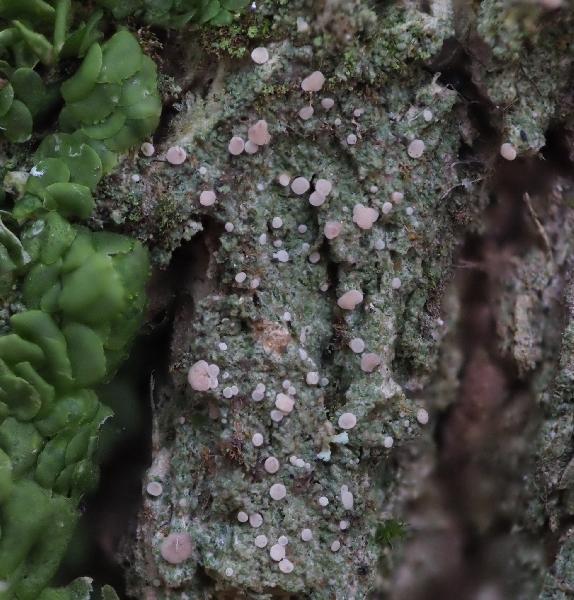
Marko Doboš
34322, Šušnjari, Croatia
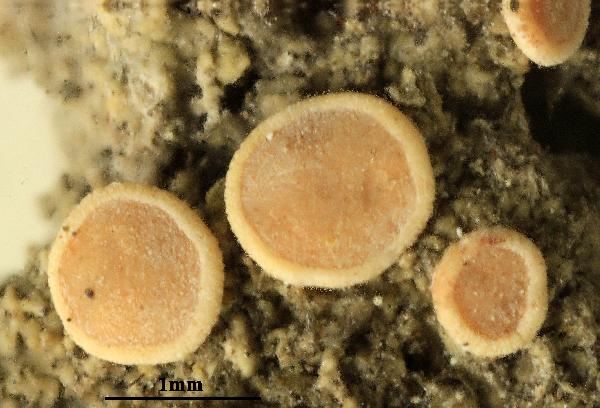
Felix Schumm - CC BY-SA 4.0
[VZ1933], Graecia. Thessalia, Olympos, secus viam inter Litophoron
et Prionia, 1000 m. Ad corticem Abietis. Leg. A. Vezda, 31.7.1983. EX
A. VEZDA: LICHENES SELECTI EXSICCATI NR. 1933.
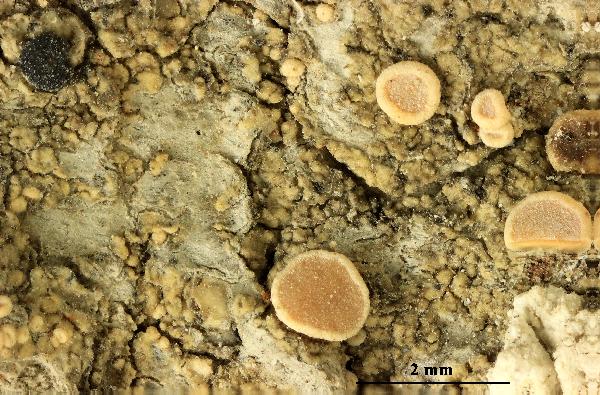
Felix Schumm - CC BY-SA 4.0
[VZ1933], Graecia. Thessalia, Olympos, secus viam inter Litophoron
et Prionia, 1000 m. Ad corticem Abietis. Leg. A. Vezda, 31.7.1983. EX
A. VEZDA: LICHENES SELECTI EXSICCATI NR. 1933.
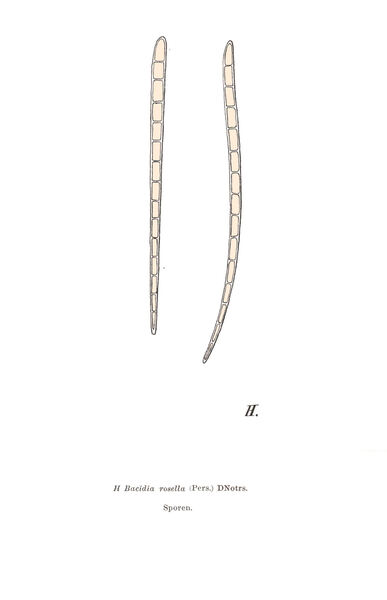
Zahlbruckner A. 1926. Lichenes (Flechten). In: Engler A. (ed.): Die natürlichen Pflanzenfamilien. 2nd ed., vol 8, W. Engelmann, Leipzig, 270 pp.
Growth form: Crustose
Substrata: bark
Photobiont: green algae other than Trentepohlia
Reproductive strategy: mainly sexual
Most common in areas with a humid-warm climate (e.g. most of Tyrrenian Italy)
Commonnes-rarity: (info)
Alpine belt: absent
Subalpine belt: absent
Montane belt: extremely rare
Dry submediterranean belt: extremely rare
Humid submediterranean belt: very rare
Padanian area: absent
pH of the substrata:
| 1 | 2 | 3 | 4 | 5 |
Solar irradiation:
| 1 | 2 | 3 | 4 | 5 |
Aridity:
| 1 | 2 | 3 | 4 | 5 |
Eutrophication:
| 1 | 2 | 3 | 4 | 5 |
Poleotolerance:
| 0 | 1 | 2 | 3 |
Altitudinal distribution:
| 1 | 2 | 3 | 4 | 5 | 6 |
Rarity
absent
extremely rare
very rare
rare
rather rare
rather common
common
very common
extremely common
Loading data...
Occurrence data
Predictive map

Leif Stridvall - Source: http://www.stridvall.se/la/galleries.php (Courtesy: Anita Stridvall)
P.L. Nimis; Owner: Department of Life Sciences, University of Trieste
Herbarium: TSB (9158)
2001/11/22
Domenico Puntillo; Owner: Domenico Puntillo
Italy
Leif Stridvall - Source: http://www.stridvall.se/lichens/gallery/
Courtesy: Anita Stridvall
Leif Stridvall - Source: http://www.stridvall.se/lichens/gallery/
Courtesy: Anita Stridvall
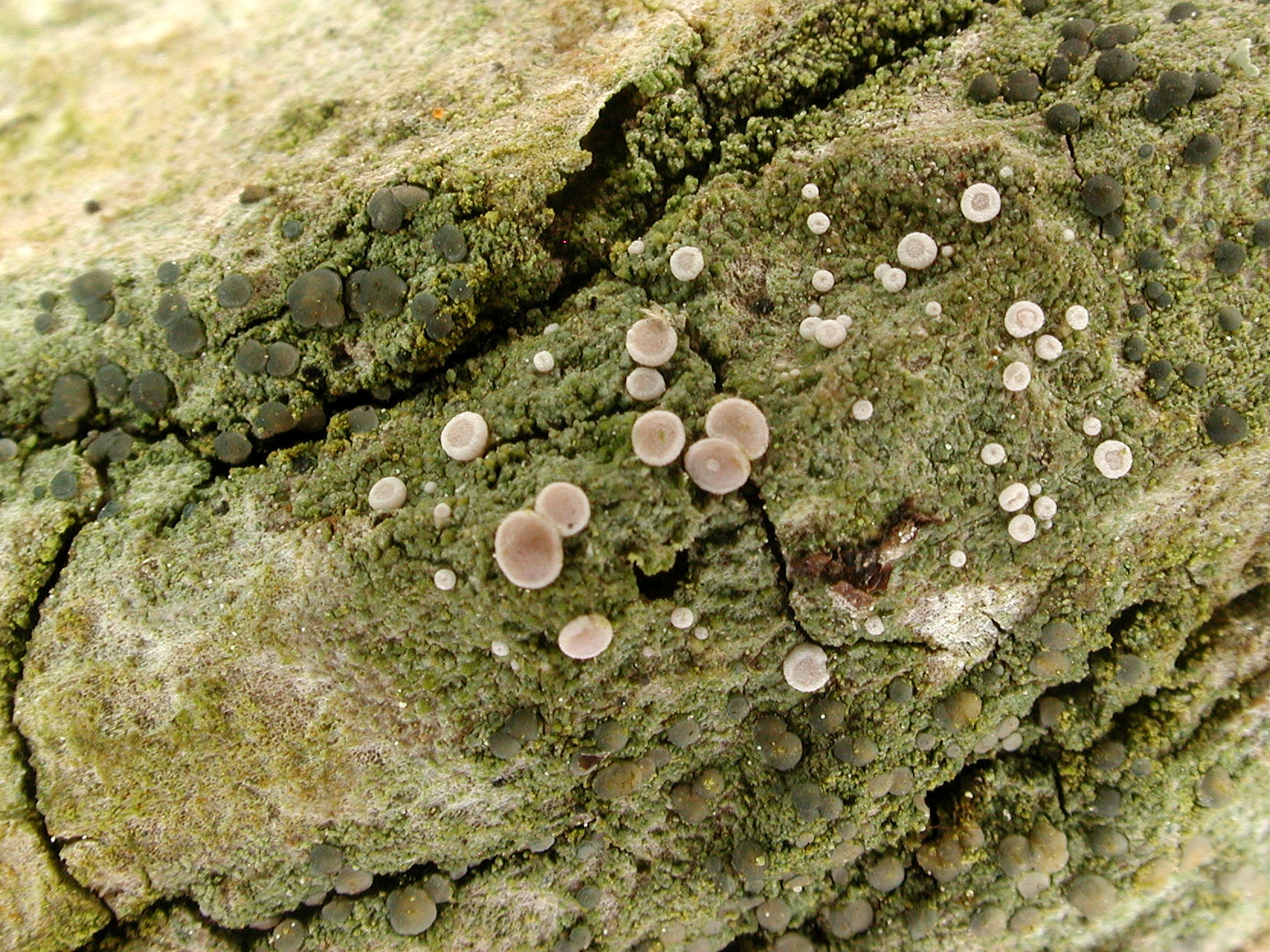
Leif Stridvall - Source: http://www.stridvall.se/lichens/gallery/
Courtesy: Anita Stridvall

Photo by Maria Zardini, Museo di Storia Naturale di Venezia CC BY-SA 4.0
Ad cort. quercuum in nemore Montello raro.
Trevisan Lichenotheca Veneta 71
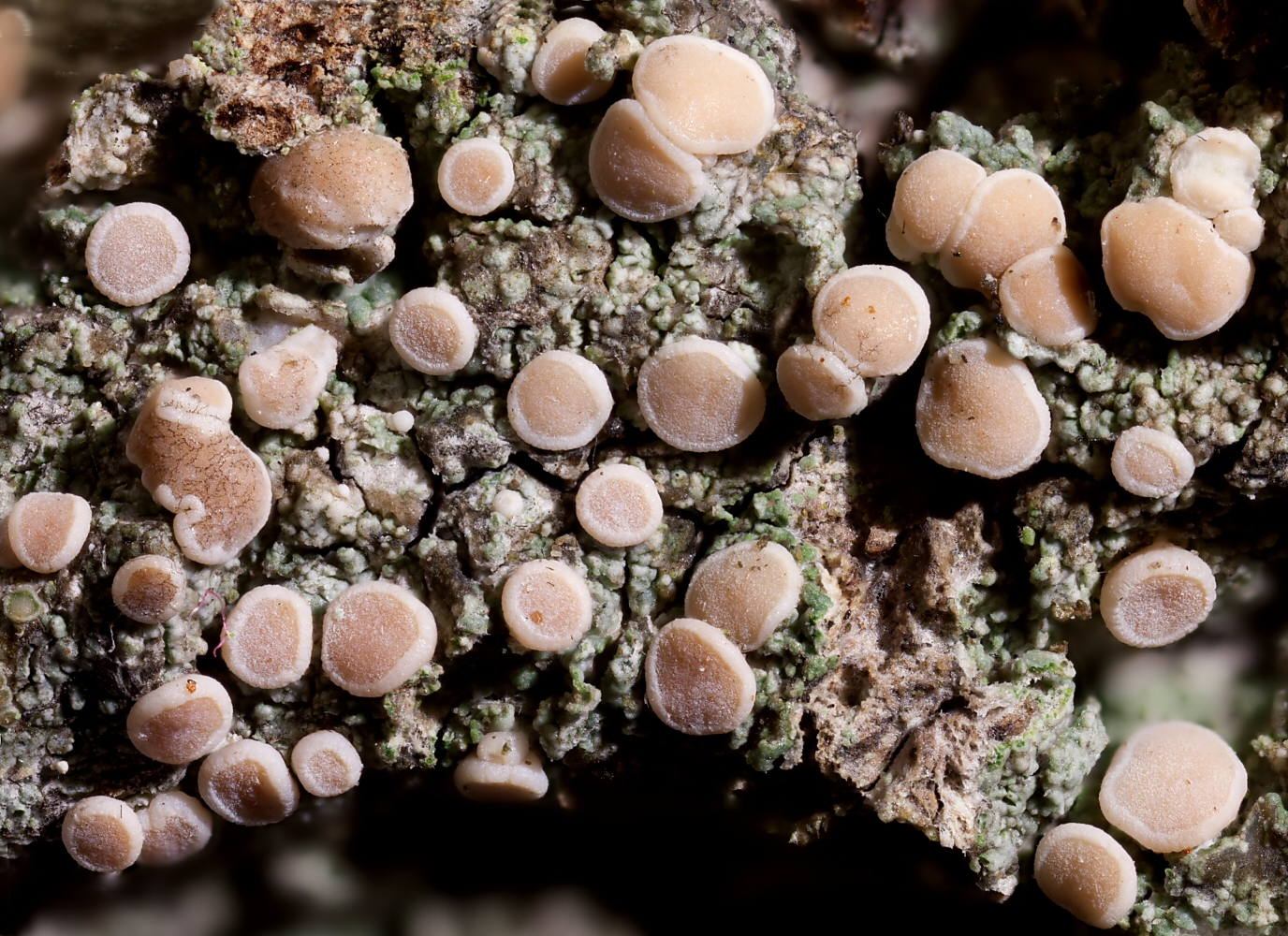
Ulrich Kirschbaum CC BY-SA 4.0 - Source: https://www.thm.de/lse/ulrich-kirschbaum/flechtenbilder
Central Europe; Germany: Hesse; rare. (Coll/ident: Teuber).

Ulrich Kirschbaum CC BY-SA 4.0 - Source: https://www.thm.de/lse/ulrich-kirschbaum/flechtenbilder
SE Europe; N-Cyprus; SE of Girne; Beşparmak Mountains; between Alevkaya and Antiphonitis Monastery; 8. (Ident. A. Aptroot); on Cupressus sempervirens

Ulrich Kirschbaum CC BY-SA 4.0 - Source: https://www.thm.de/lse/ulrich-kirschbaum/flechtenbilder
SE Europe; N-Cyprus; SE of Girne; Beşparmak Mountains; between Alevkaya and Antiphonitis Monastery; 8. (Ident. A. Aptroot); on Cupressus sempervirens

Ulrich Kirschbaum CC BY-SA 4.0 - Source: https://www.thm.de/lse/ulrich-kirschbaum/flechtenbilder
SE Europe; N-Cyprus; SE of Girne; Beşparmak Mountains; between Alevkaya and Antiphonitis Monastery; 8. (Ident. A. Aptroot); on Cupressus sempervirens
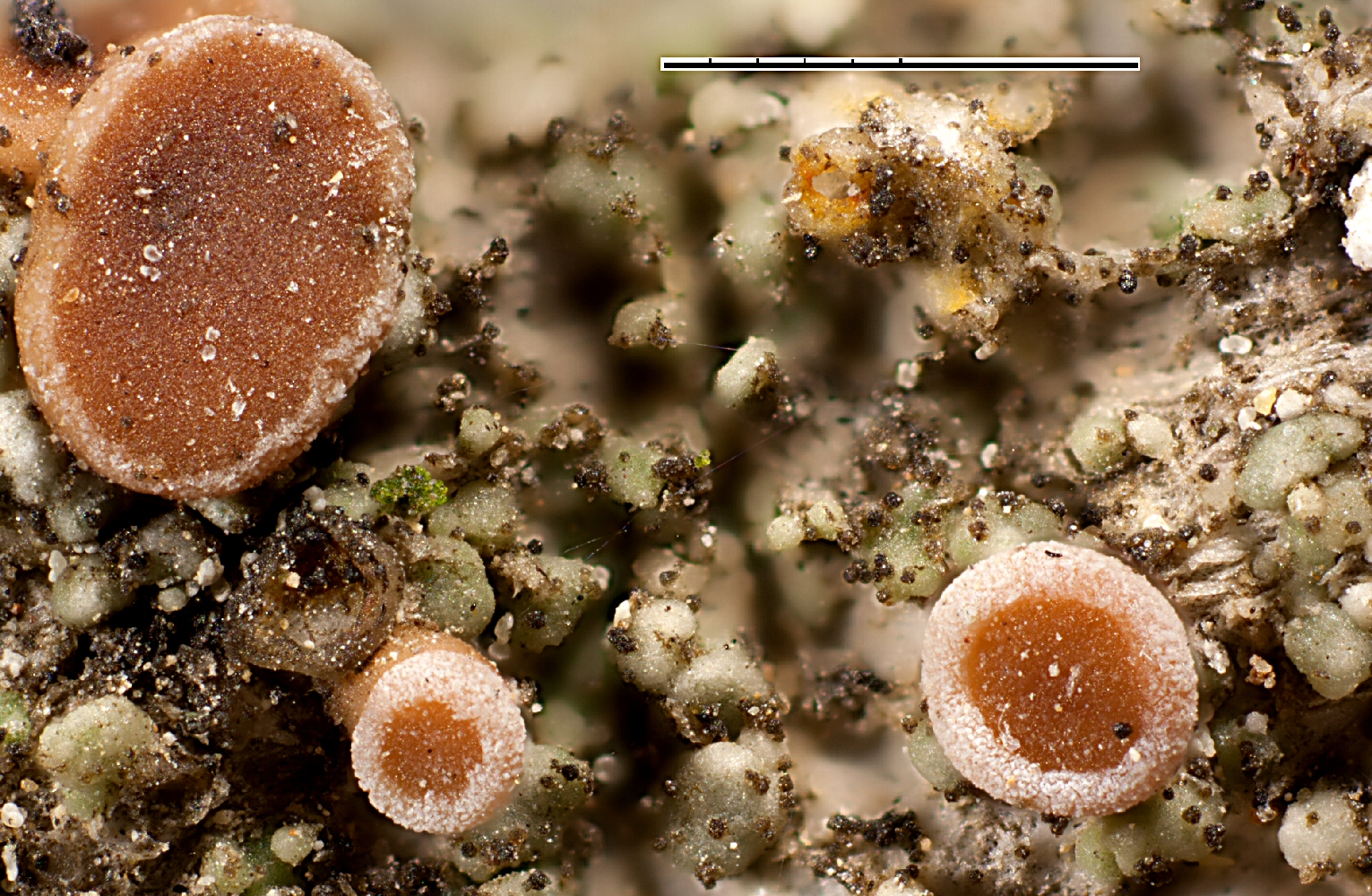
Ulrich Kirschbaum CC BY-SA 4.0 - Source: https://www.thm.de/lse/ulrich-kirschbaum/flechtenbilder
SE Europe; N-Cyprus; SE of Girne; Beşparmak Mountains; between Alevkaya and Antiphonitis Monastery; 8. (Ident. A. Aptroot); on Cupressus sempervirens

Ulrich Kirschbaum CC BY-SA 4.0 - Source: https://www.thm.de/lse/ulrich-kirschbaum/flechtenbilder
SE Europe; N-Cyprus; SE of Girne; Beşparmak Mountains; between Alevkaya and Antiphonitis Monastery; 8. (Ident. A. Aptroot); on Cupressus sempervirens
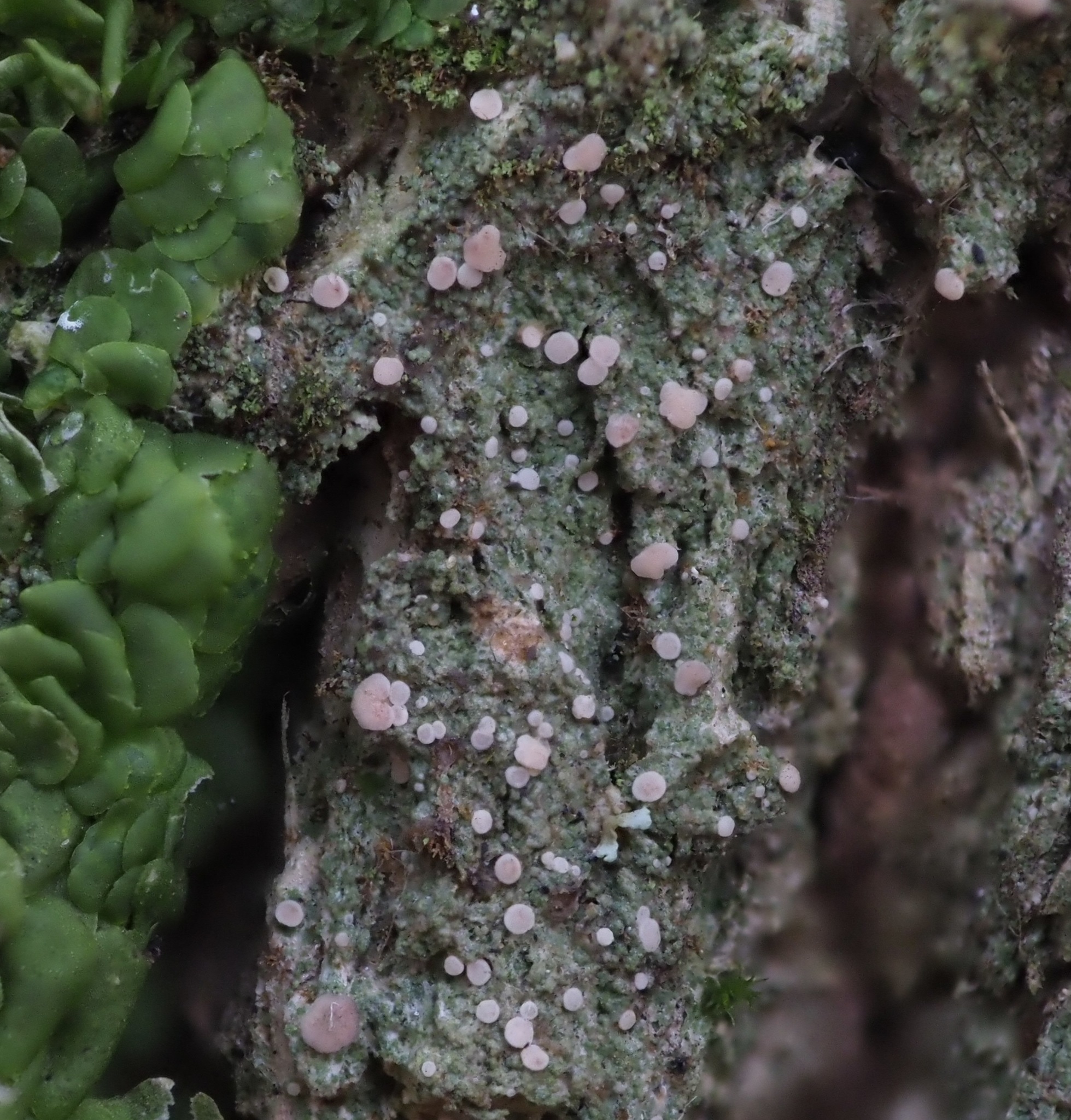
Marko Doboš
34322, Šušnjari, Croatia

Felix Schumm - CC BY-SA 4.0
[VZ1933], Graecia. Thessalia, Olympos, secus viam inter Litophoron et Prionia, 1000 m. Ad corticem Abietis. Leg. A. Vezda, 31.7.1983. EX A. VEZDA: LICHENES SELECTI EXSICCATI NR. 1933.

Felix Schumm - CC BY-SA 4.0
[VZ1933], Graecia. Thessalia, Olympos, secus viam inter Litophoron et Prionia, 1000 m. Ad corticem Abietis. Leg. A. Vezda, 31.7.1983. EX A. VEZDA: LICHENES SELECTI EXSICCATI NR. 1933.