Sphinctrina anglica Nyl.
Mém. Soc. Imp. Sc. Nat. Cherbourg, 5: 334, 1858.
Synonyms: Calicium microscopicum (Anzi) Jatta; Phacotiella microcephala (Sm.) Vain.; Sphinctrina microscopica Anzi; Sphinctrina pinicola Körb.
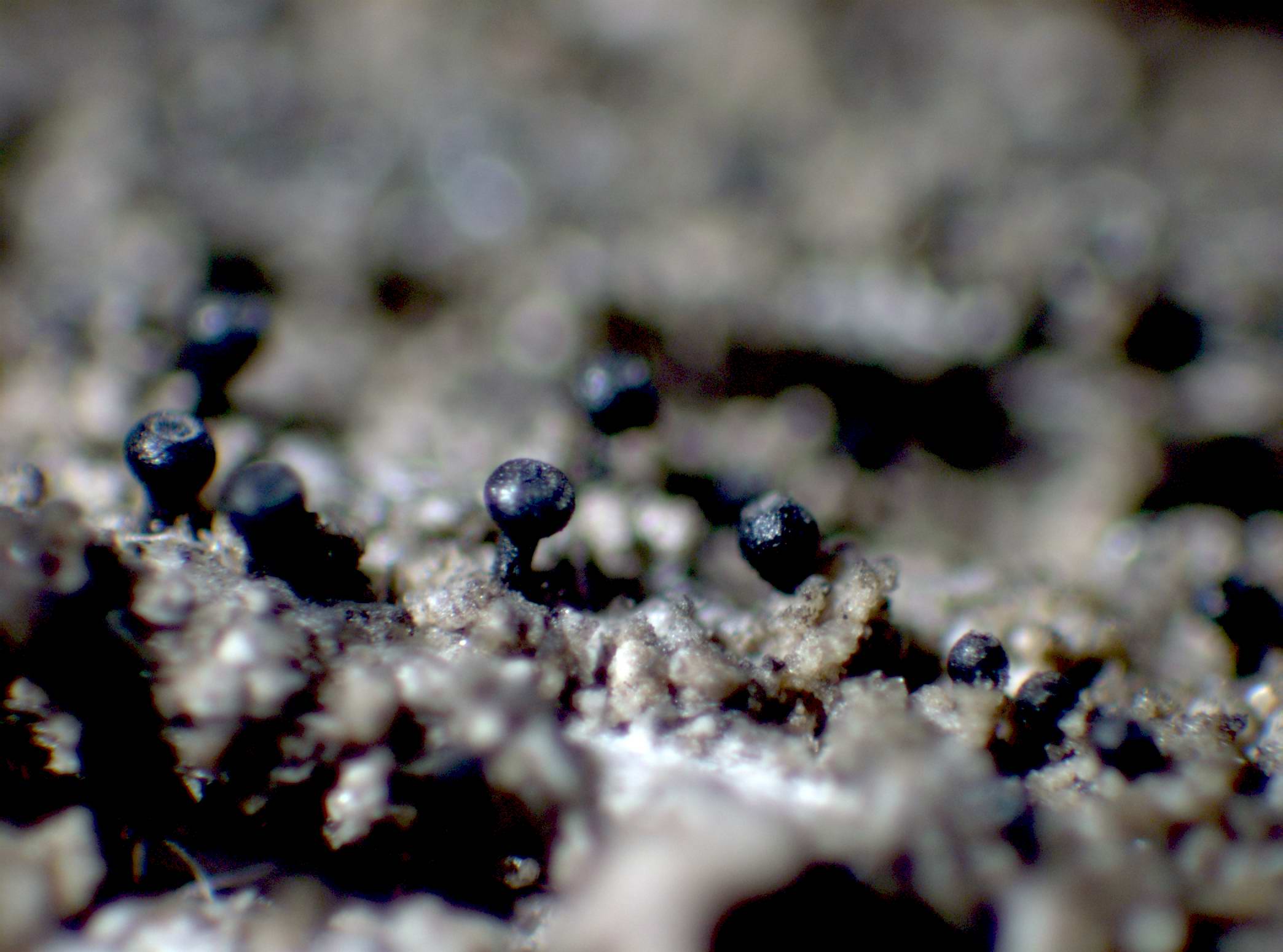
Description: Thallus not evident, not lichenized. Apothecia short-stalked, 0.2-0.45 mm high, black or rarely dark brown. Stalk of periclinally arranged hyphae with strongly gelatinized walls, pale in inner part, dark brown to reddish brown in outermost part, which consists of a layer of isodiametric, sclerotized cells. Capitulum spherical to irregular, 0.1-0.2(-0.3) mm across, shiny black; mazaedium well-developed, black. Exciple well-developed, dull brown, the upper part of more or less isodiametric, periclinally arranged hyphae, the lower part of sclerotized cells; hypothecium colourless to pale brown, 40-50 µm high. Asci 8-spored, cylindrical, formed singly from ascogenous hyphae with croziers, with a single, functional wall layer, K/I-, disintegrating at a rather late stage, with uniseriately arranged spores. Ascospores 1-celled, subglobose, dark brown, 7-10 x 7-9(-10) µm, with a minutely dotted wall. Photobiont absent. Spot tests: all parts of ascomata K-, C-, KC-, P-. Chemistry: without lichen substances.
Growth form: Lichenicolous fungus
Reproductive strategy: mainly sexual
Most common in areas with a humid-warm climate (e.g. most of Tyrrenian Italy)
paras Protoparmelia oleaginea
Commonnes-rarity: (info)
Alpine belt: absent
Subalpine belt: absent
Montane belt: extremely rare
Dry submediterranean belt: absent
Humid submediterranean belt: absent
Padanian area: absent
pH of the substrata:
1 2 3 4 5

Solar irradiation:
1 2 3 4 5
Aridity:
1 2 3 4 5
Eutrophication:
1 2 3 4 5
Poleotolerance:
0 1 2 3
Altitudinal distribution:
1 2 3 4 5 6
Rarity
absent
extremely rare
very rare
rare
rather rare
rather common
common
very common
extremely common
Loading data...
Occurrence data
Predictive map
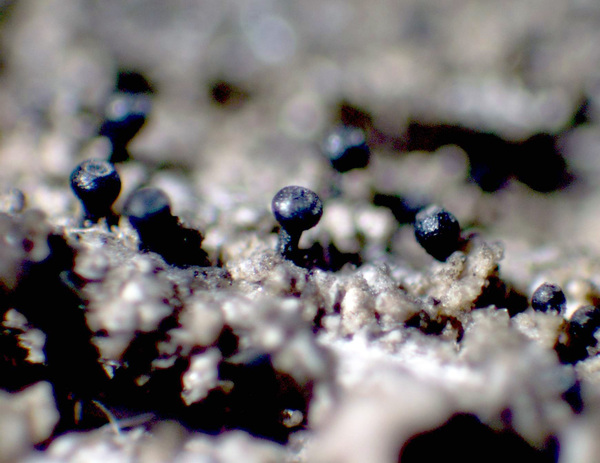
P.L. Nimis CC BY-SA 04
TSB 11902
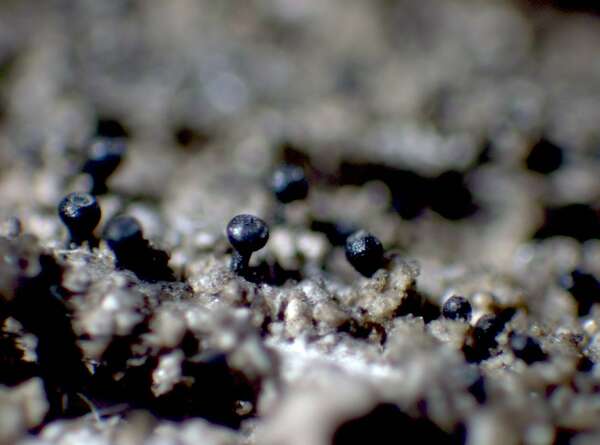
P.L. Nimis; Owner: Department of Life Sciences, University of Trieste
Herbarium: TSB (11902)
2001/11/30
Growth form: Lichenicolous fungus
Reproductive strategy: mainly sexual
Most common in areas with a humid-warm climate (e.g. most of Tyrrenian Italy)
paras Protoparmelia oleaginea
Commonnes-rarity: (info)
Alpine belt: absent
Subalpine belt: absent
Montane belt: extremely rare
Dry submediterranean belt: absent
Humid submediterranean belt: absent
Padanian area: absent
pH of the substrata:
| 1 | 2 | 3 | 4 | 5 |
Solar irradiation:
| 1 | 2 | 3 | 4 | 5 |
Aridity:
| 1 | 2 | 3 | 4 | 5 |
Eutrophication:
| 1 | 2 | 3 | 4 | 5 |
Poleotolerance:
| 0 | 1 | 2 | 3 |
Altitudinal distribution:
| 1 | 2 | 3 | 4 | 5 | 6 |
Rarity
absent
extremely rare
very rare
rare
rather rare
rather common
common
very common
extremely common
Loading data...
Occurrence data
Predictive map
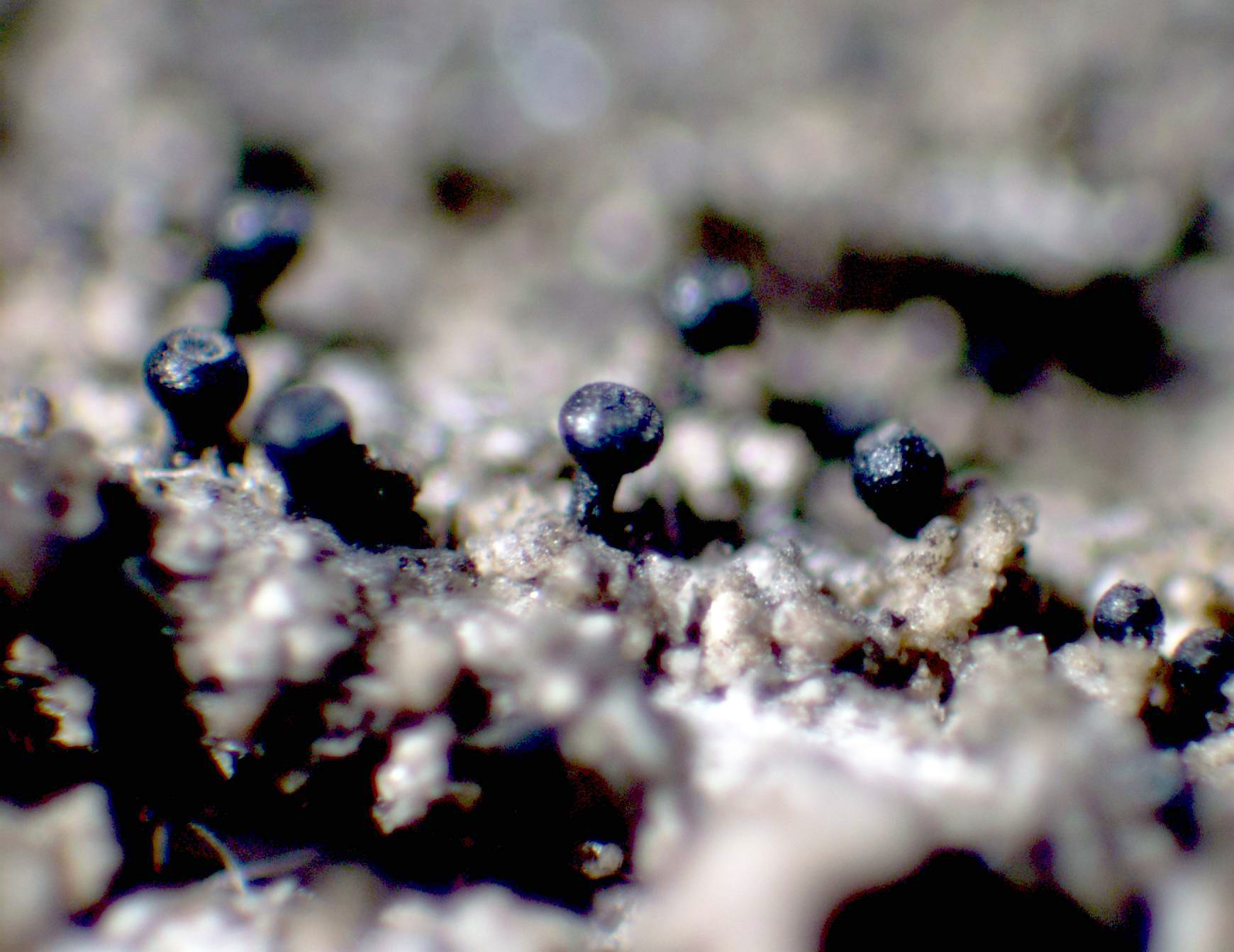
P.L. Nimis CC BY-SA 04
TSB 11902