Blastenia monticola Arup & Vondrák
in Vondrák & al., J. Syst. Evol. 58, 3: 320, 2019.
Synonyms: Caloplaca herbidella auct. ital. p.p.
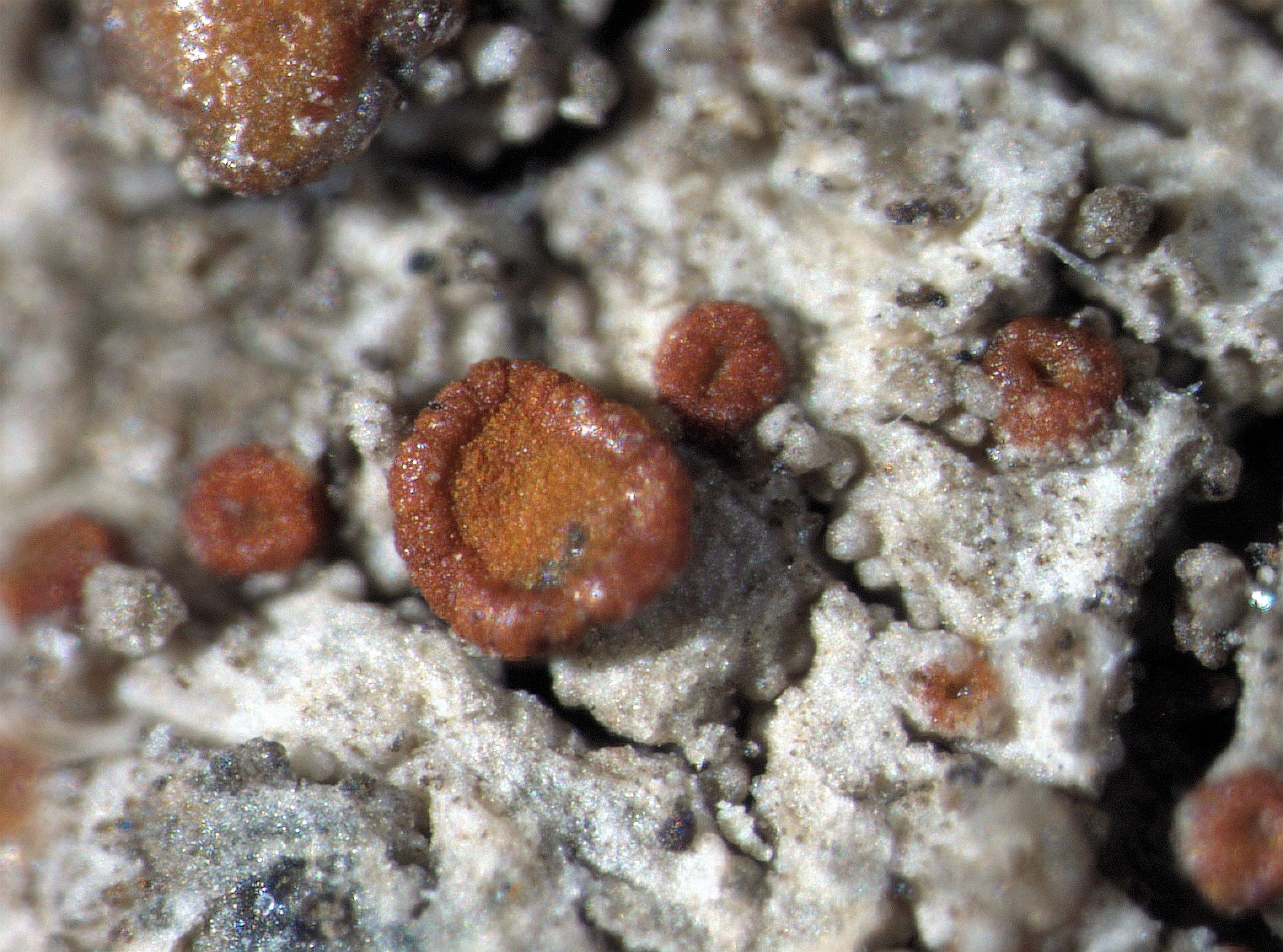
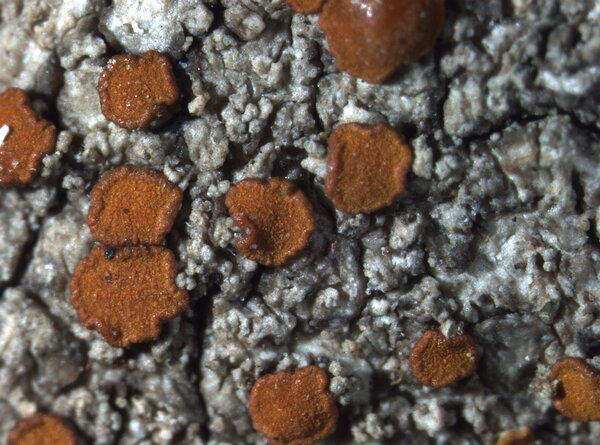
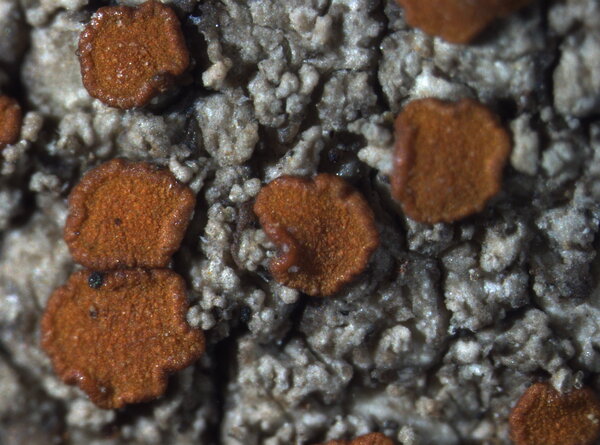
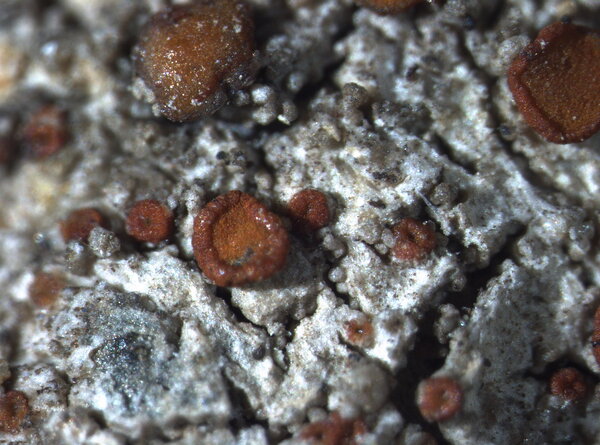
Description: Thallus crustose, episubstratic, grey or rarely pale yellow, usually up to 100 μm thick (but appearing up to 300 μm thick when densely blastidiate/isidiate). Blastidia/isidia granular, 50-200 μm. Apothecia biatorine/zeorine, red, 0.8-1.2 mm across. Proper exciple prosoplectenchymatous, K+ red, C+ red; epithecium orange-brown, granular, K+ red, C-; hymenium colourless, not inspersed with oil droplets; paraphyses simple or sparingly branched and anastomosing, 1.5-3 μm thick in lower part, the apical cells usually wider; hypothecium colourless. Asci 8-spored, clavate, functionally unitunicate, apically thickened with a broad internal beak, the inner part of apex and external cap I+ blue, Teloschistes-type. Ascospores 2-celled, polarilocular, hyaline, ellipsoid, (8-)9.5-15(-17) μm x 6-8 µm, the equatorial thickening (“septum”) c. 5 µm. Pycnidia red. Conidia bacilliform, rarely narrowly ellipsoid, 3-5 x 1-1.5 μm. Photobiont chlorococcoid. Spot tests: thallus K-, C-, KC-, P-; apothecia K+ red, the exciple also C+ red. Chemistry: non-chlorinated anthraquinones in apothecial disc, chlorinated anthraquinones in exciple; thallus without anthraquinones or rarely with traces of anthraquinones; Cinereorufa-green pigment usually in traces in thallus, but accumulated at tips of isidia/blastidia.
Growth form: Crustose
Substrata: bark
Photobiont: green algae other than Trentepohlia
Reproductive strategy: mainly asexual, by isidia, or isidia-like structures (e.g. schizidia)
Commonnes-rarity: (info)
Alpine belt: absent
Subalpine belt: very rare
Montane belt: very rare
Dry submediterranean belt: absent
Humid submediterranean belt: absent
Padanian area: absent
pH of the substrata:
1 2 3 4 5

Solar irradiation:
1 2 3 4 5
Aridity:
1 2 3 4 5
Eutrophication:
1 2 3 4 5
Poleotolerance:
0 1 2 3
Altitudinal distribution:
1 2 3 4 5 6
Rarity
absent
extremely rare
very rare
rare
rather rare
rather common
common
very common
extremely common
Loading data...
Occurrence data
Predictive map

Source: Arup, U., Blom, H. H. & Lindblom, L. 2021. The Gaupne area in Sogn og Fjordane – a hot-spot for lichens in Norway. Graphis Scripta 33 (3): 31–49. Oslo. ISSN 2002-4495. - CC BY-4.0
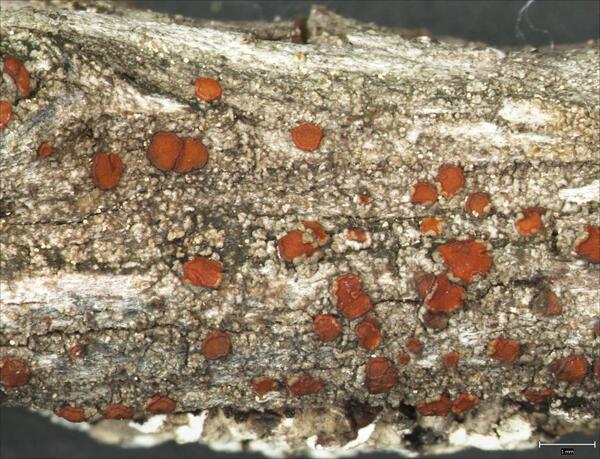
Habit of Blastenia monticola, showing a rather poorly developed, grey thallus with small scattered
isidia-like outgrowths and apothecia typical of the genus with a ferruginous colour. Holien 10782 (TRH). Bar
= 1 mm
P.L. Nimis - CC BY-SA 4.0
TSB42853
Jan Vondrak - Source: https://botanika.prf.jcu.cz/lichenology/index.php?pg=8&cat=32&idx=17317
Russia
holotype
P.L. Nimis - CC BY-SA 4.0
TSB42853
P.L. Nimis - CC BY-SA 4.0
TSB42853
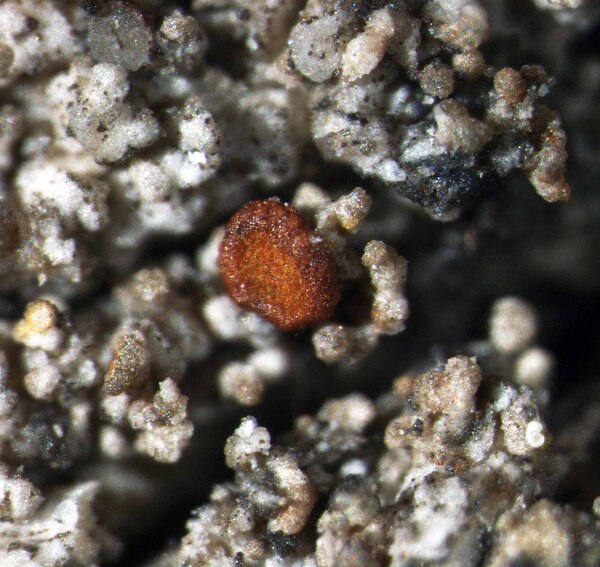
P.L. Nimis CC BY-SA 04
TSB 42853
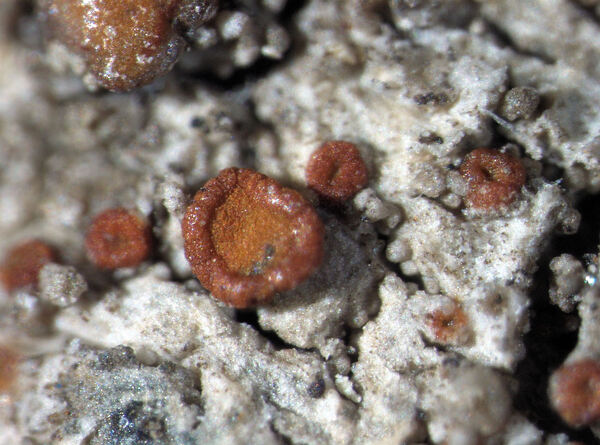
P.L. Nimis CC BY-SA 4.0
TSB 42853
Growth form: Crustose
Substrata: bark
Photobiont: green algae other than Trentepohlia
Reproductive strategy: mainly asexual, by isidia, or isidia-like structures (e.g. schizidia)
Commonnes-rarity: (info)
Alpine belt: absent
Subalpine belt: very rare
Montane belt: very rare
Dry submediterranean belt: absent
Humid submediterranean belt: absent
Padanian area: absent
pH of the substrata:
| 1 | 2 | 3 | 4 | 5 |
Solar irradiation:
| 1 | 2 | 3 | 4 | 5 |
Aridity:
| 1 | 2 | 3 | 4 | 5 |
Eutrophication:
| 1 | 2 | 3 | 4 | 5 |
Poleotolerance:
| 0 | 1 | 2 | 3 |
Altitudinal distribution:
| 1 | 2 | 3 | 4 | 5 | 6 |
Rarity
absent
extremely rare
very rare
rare
rather rare
rather common
common
very common
extremely common
Loading data...
Occurrence data
Predictive map

Source: Arup, U., Blom, H. H. & Lindblom, L. 2021. The Gaupne area in Sogn og Fjordane – a hot-spot for lichens in Norway. Graphis Scripta 33 (3): 31–49. Oslo. ISSN 2002-4495. - CC BY-4.0
Habit of Blastenia monticola, showing a rather poorly developed, grey thallus with small scattered isidia-like outgrowths and apothecia typical of the genus with a ferruginous colour. Holien 10782 (TRH). Bar = 1 mm
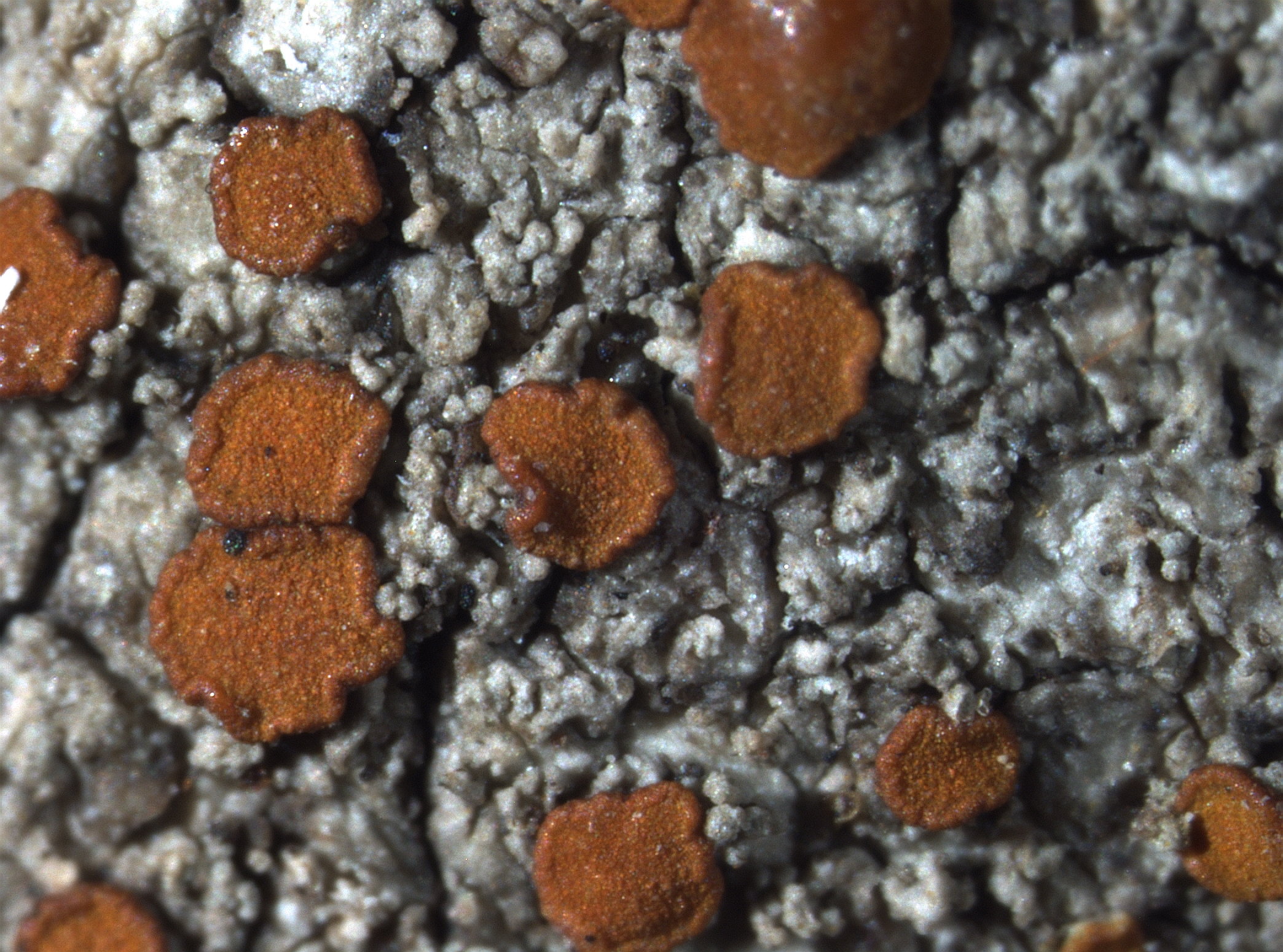
P.L. Nimis - CC BY-SA 4.0
TSB42853
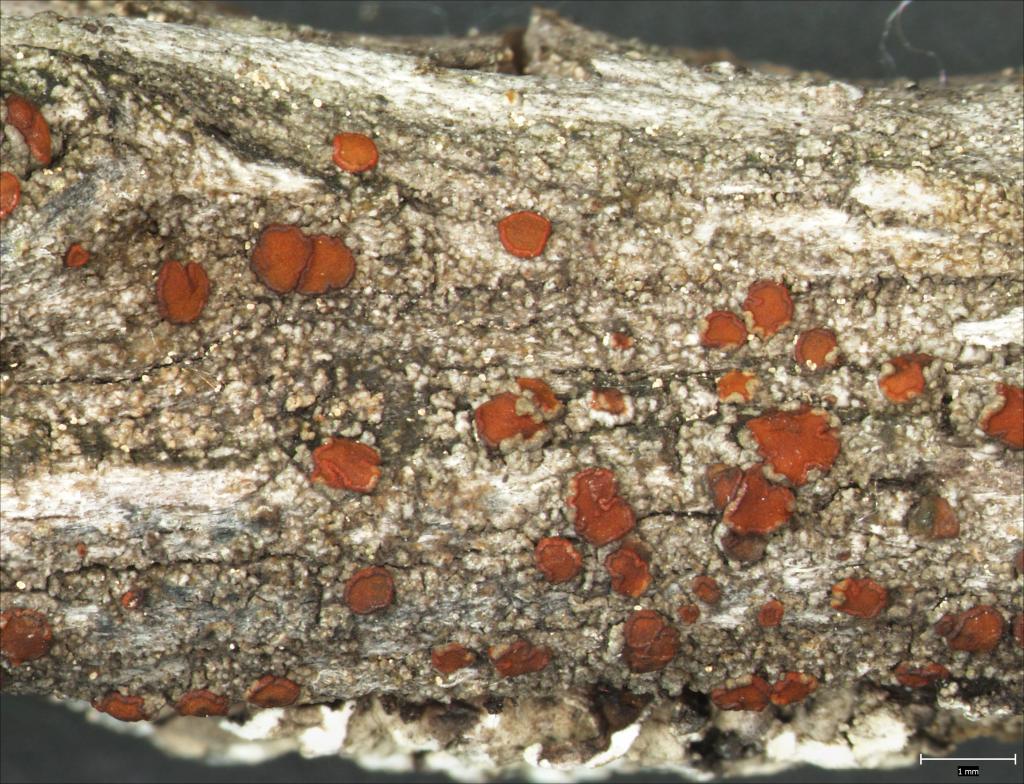
Jan Vondrak - Source: https://botanika.prf.jcu.cz/lichenology/index.php?pg=8&cat=32&idx=17317
Russia
holotype
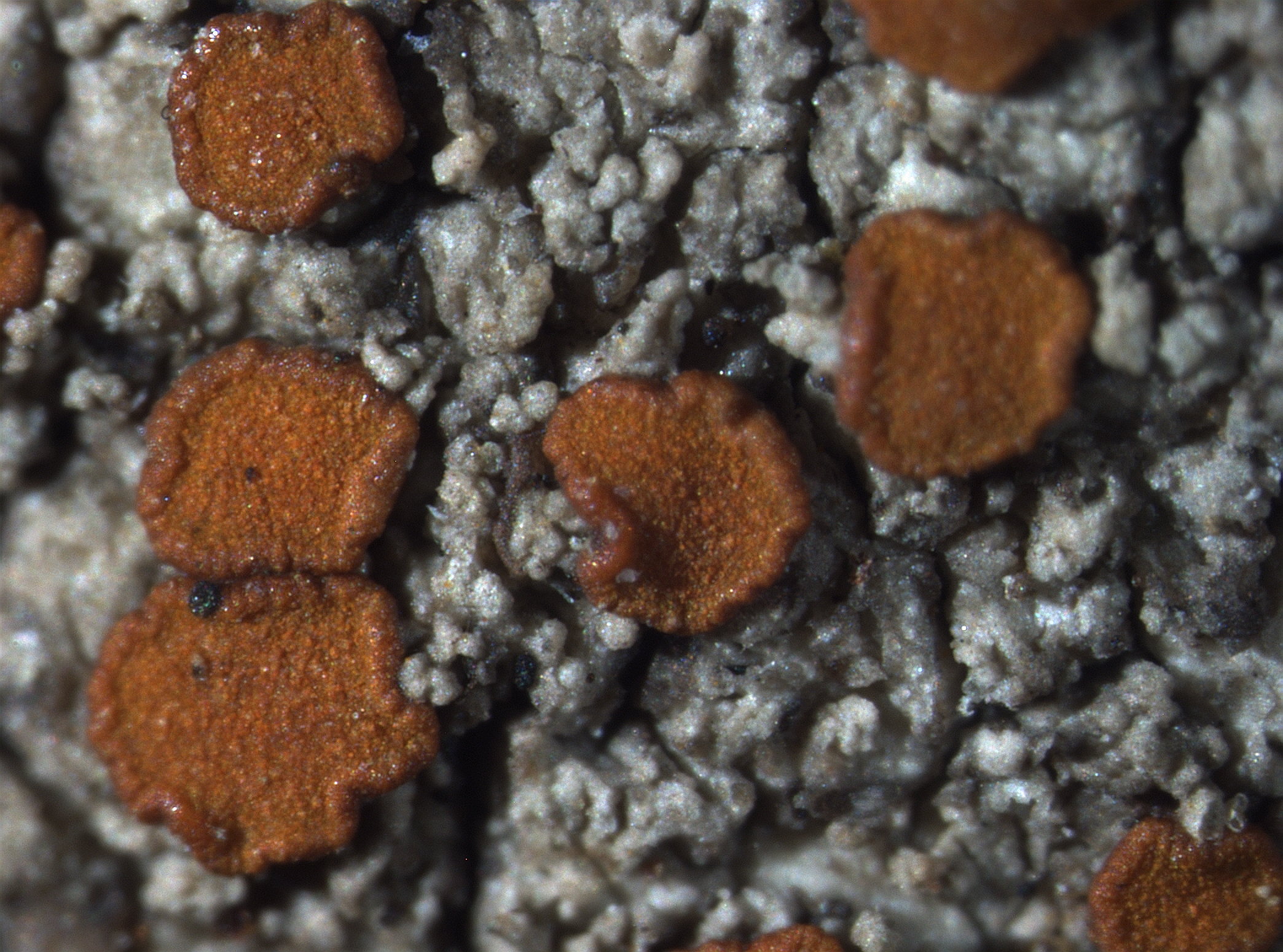
P.L. Nimis - CC BY-SA 4.0
TSB42853
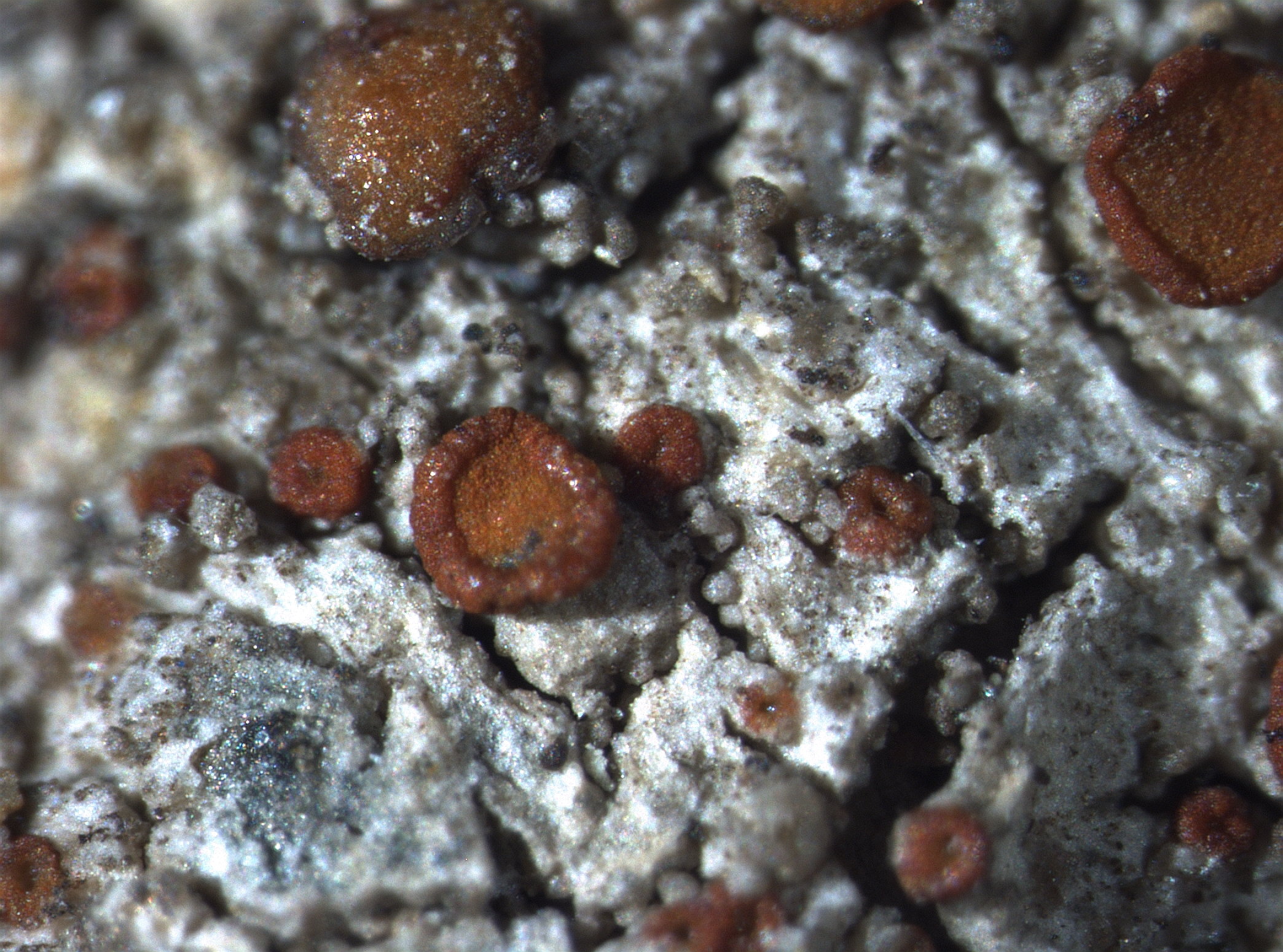
P.L. Nimis - CC BY-SA 4.0
TSB42853
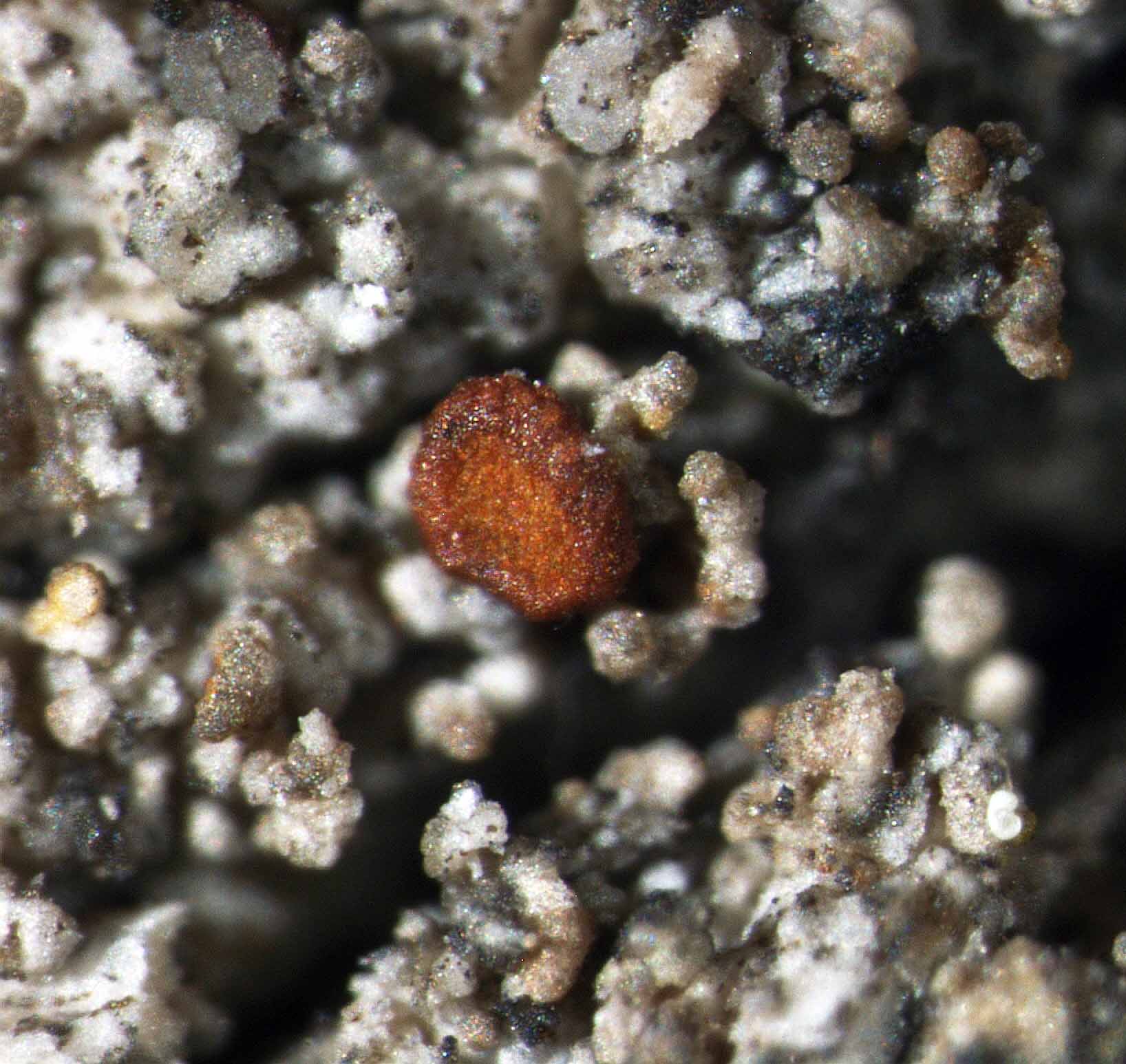
P.L. Nimis CC BY-SA 04
TSB 42853