Protoblastenia siebenhaariana var. alpina (Arnold) Clauzade & Cl. Roux
Bull. Soc. bot. Centre-Ouest, Nouv. sér., num. spec. 7: 828, 1985. Basionym: Biatora rupestris var. alpina Arnold - Verh. zool.-bot. Ges. Wien 19: 643, 1869.
Synonyms:
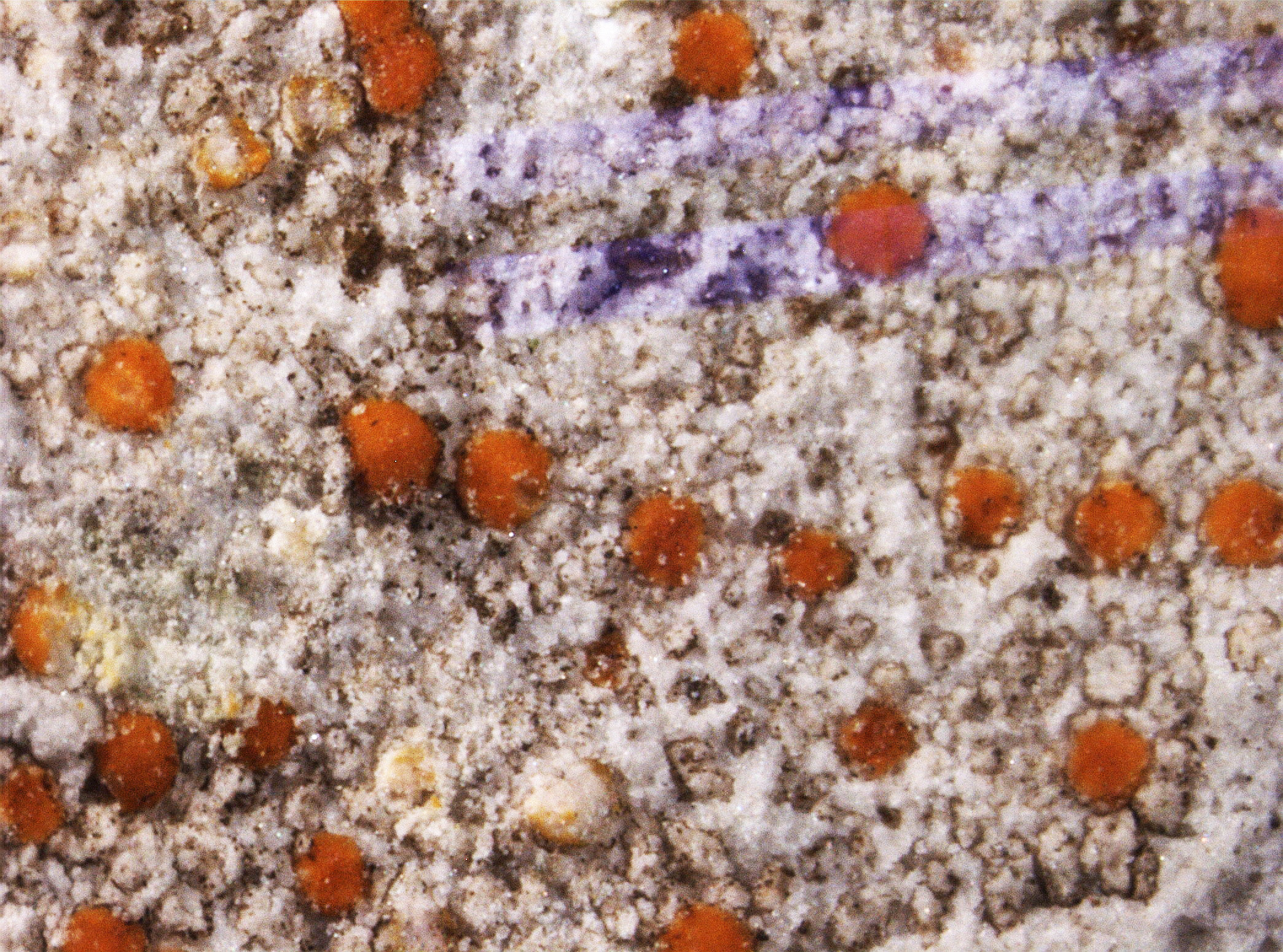
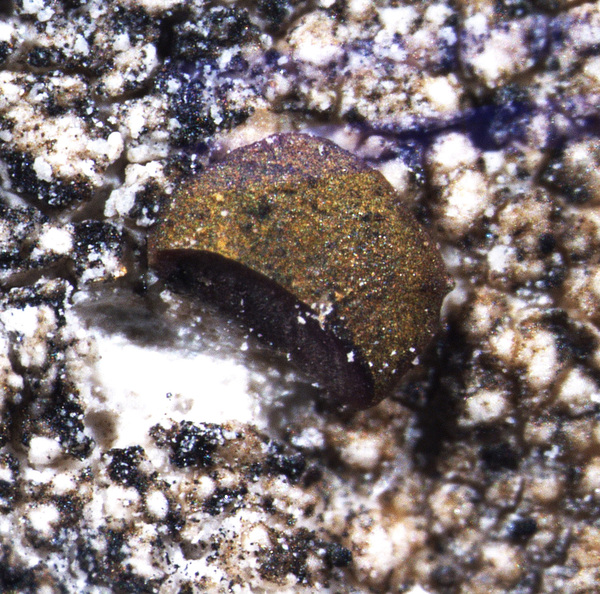
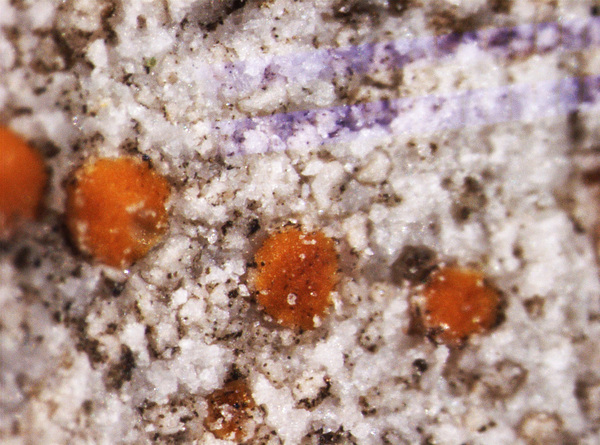
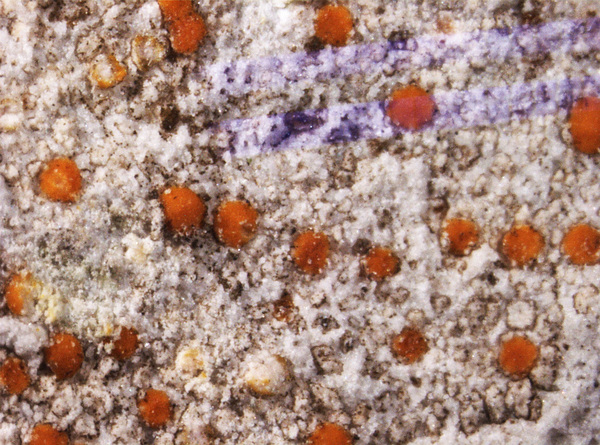
Description: Thallus crustose, usually endosubstratic and poorly evident, sometimes very thinly episubstratic, mostly poorly evident. Apothecia biatorine, not constricted at base, 0.4-1.5 mm across, with a dirty orange to finally brown to dark brown, convex, smooth disc, and a very thin, soon excluded proper margin. Proper exciple poorly developed, of branched hyphae, colourless to orange-brown, patchily pigmented; epithecium brown to orange-brown, 10-20 µm high, with granular crystals reacting K+ red, N-; hymenium colourless to pale orange, 50-135 µm high; paraphyses coherent, sparingly branched and anastomosing, 2.5-4 µm thick, the apical cells hardly swollen, up to 5 µm wide; hypothecium brown, orange-brown or reddish brown, patchily pigmented. Asci 8-spored, clavate, with a well-developed, amyloid tholus containing a more intensely amyloid, indistinct tube structure, without an ocular chamber, approximating the Porpidia- or Psora-types. Ascospores 1-celled, hyaline, ellipsoid to ovoid, thin-walled, 6-11 x 3-6 µm, without a distinct perispore. Photobiont chlorococcoid. Spot tests: thallus K-, C-, KC-, P-; apothecia K+ purple-red. Chemistry: apothecia with anthraquinones, mainly parietin.
Growth form: Crustose endolithic
Substrata: rocks
Photobiont: green algae other than Trentepohlia
Reproductive strategy: mainly sexual
Commonnes-rarity: (info)
Alpine belt: very rare
Subalpine belt: extremely rare
Montane belt: absent
Dry submediterranean belt: absent
Humid submediterranean belt: absent
Padanian area: absent
pH of the substrata:
1 2 3 4 5

Solar irradiation:
1 2 3 4 5
Aridity:
1 2 3 4 5
Eutrophication:
1 2 3 4 5
Poleotolerance:
0 1 2 3
Altitudinal distribution:
1 2 3 4 5 6
Rarity
absent
extremely rare
very rare
rare
rather rare
rather common
common
very common
extremely common
Loading data...
Occurrence data
Predictive map
P.L. Nimis CC BY-SA 04
TSB 38973
P.L. Nimis CC BY-SA 04
TSB 16863
P.L. Nimis CC BY-SA 04
TSB 16863
Growth form: Crustose endolithic
Substrata: rocks
Photobiont: green algae other than Trentepohlia
Reproductive strategy: mainly sexual
Commonnes-rarity: (info)
Alpine belt: very rare
Subalpine belt: extremely rare
Montane belt: absent
Dry submediterranean belt: absent
Humid submediterranean belt: absent
Padanian area: absent
pH of the substrata:
| 1 | 2 | 3 | 4 | 5 |
Solar irradiation:
| 1 | 2 | 3 | 4 | 5 |
Aridity:
| 1 | 2 | 3 | 4 | 5 |
Eutrophication:
| 1 | 2 | 3 | 4 | 5 |
Poleotolerance:
| 0 | 1 | 2 | 3 |
Altitudinal distribution:
| 1 | 2 | 3 | 4 | 5 | 6 |
Rarity
absent
extremely rare
very rare
rare
rather rare
rather common
common
very common
extremely common
Loading data...
Occurrence data
Predictive map
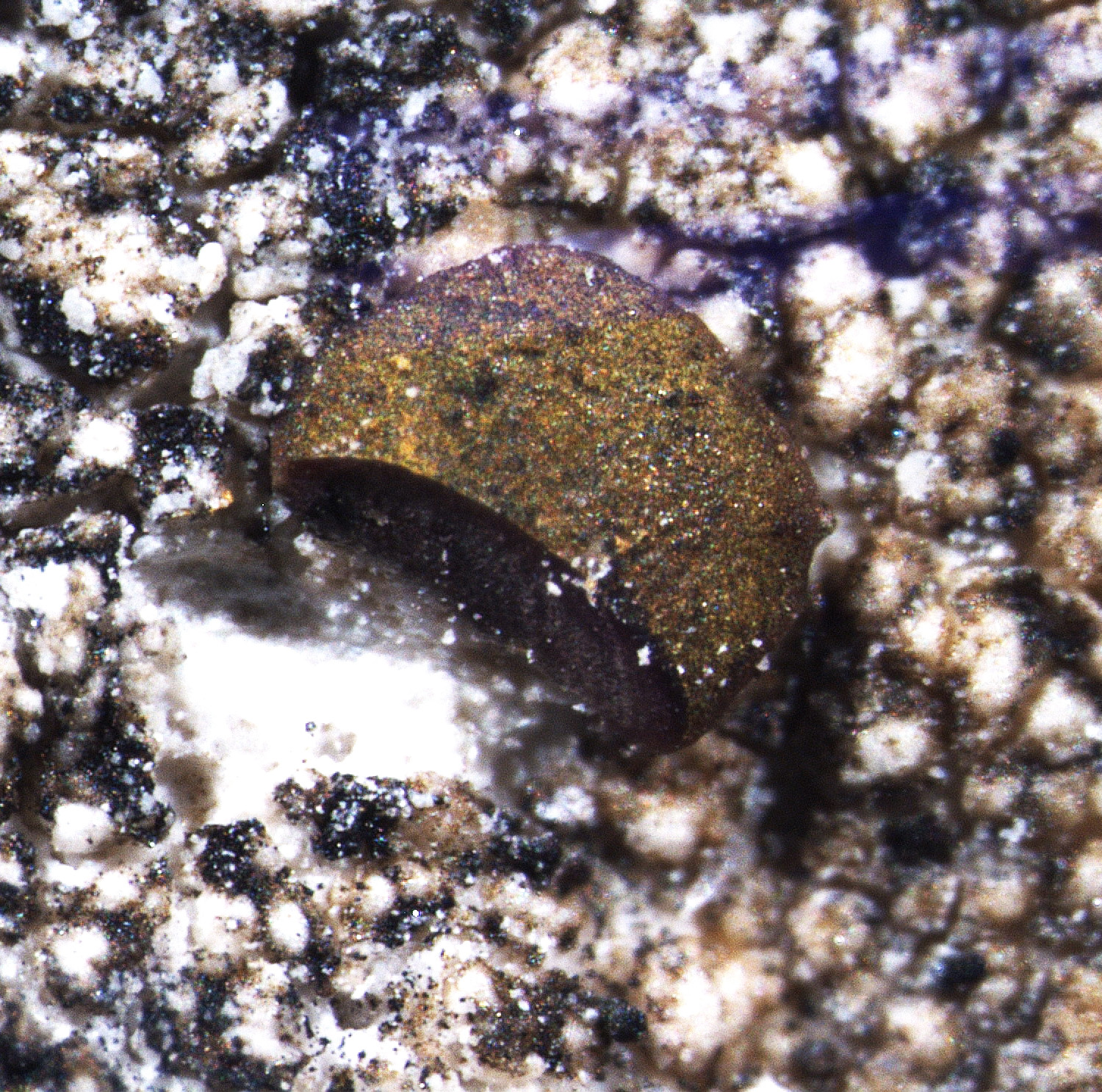
P.L. Nimis CC BY-SA 04
TSB 38973
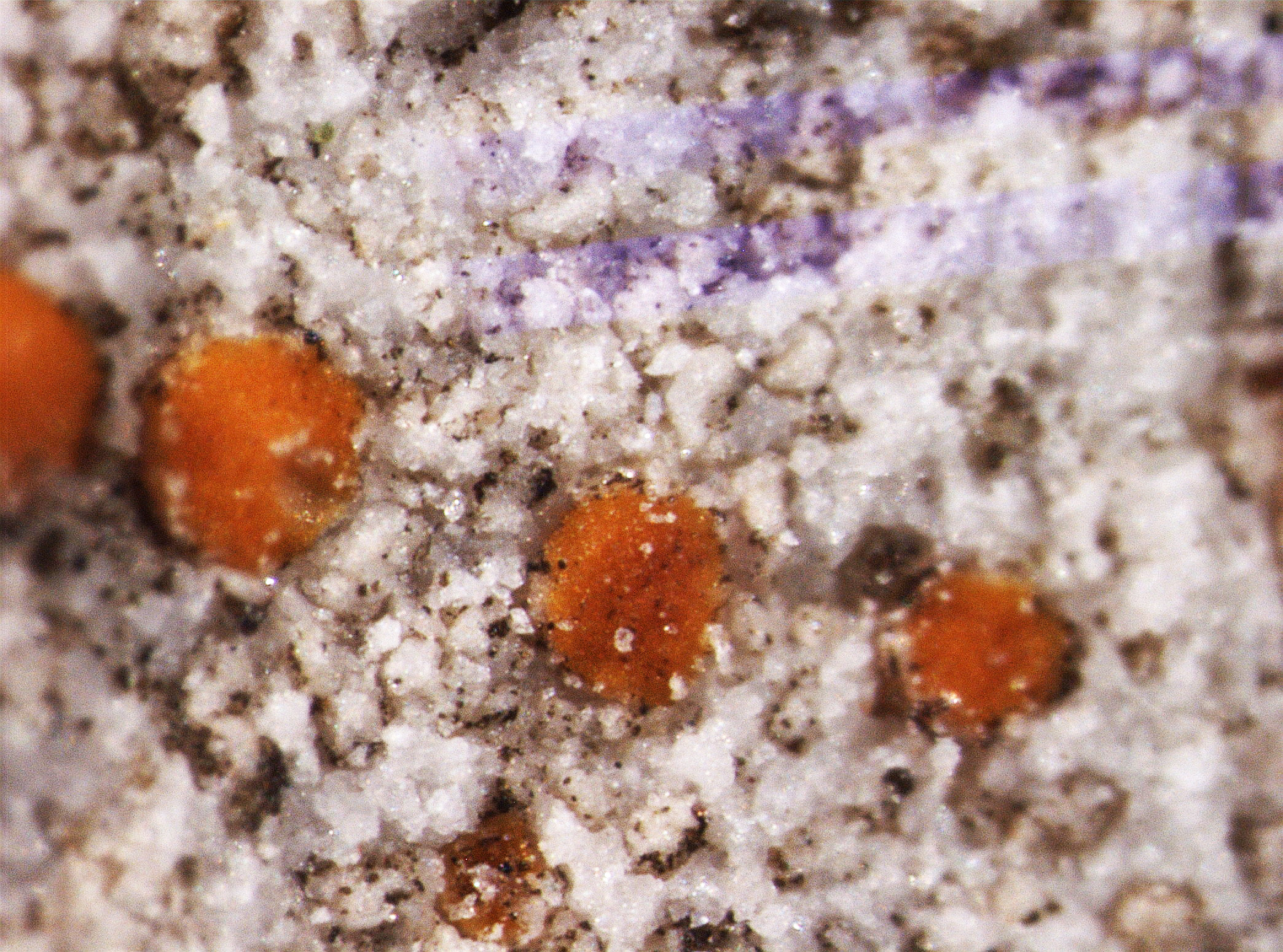
P.L. Nimis CC BY-SA 04
TSB 16863