Lecanora albula (Nyl.) Hue
Bull. Soc. bot. Fr., 44 (sess. extr.): 291, 1900 (1897).. Basionym: Squamaria albula Nyl. - Acta Soc. Sci. Fenn., 7, 2: 396, 1863.
Synonyms:
Description: Thallus crustose, episubstratic, closely adnate, grey-green to yellowish green, but appearing white due to a dense pruina, usually forming irregular rosettes, the central parts irregularly areolate. Cortex poorly differentiated from the medulla, both inspersed with grey crystals. Apothecia abundant and crowded, lecanorine, (0.5-)1-1.5(-2.5) mm across, sessile, with a flat to slightly convex, pale brown to ochraceous disc, and a 0.05-0.15 mm thick, persistent, hardly raised, concolorous to yellowish green thalline margin. Thalline exciple K-; proper exciple colourless, K+ yellow; epithecium colourless to pale brownish green, with granular crystals dissolving in K, N-; hymenium colourless to pale yellow, 60-70 µm high; paraphyses sparingly branched and anastomosing, 1.2-2 µm thick at mid-level, slightly thickened at apex; hypothecium colourless or pale yellowish brown, K+ yellow. Asci 8-spored, Lecanora-type. Ascospores 1-celled, hyaline, ellipsoid to broadly ellipsoid, (7.5-)8-13(-14.5) x (5-)6-8(-9) μm, thin-walled. Pycnidia immersed, with a pale yellow-brown ostiole, Conidia acicular to arcuate, up to 22 µm long. Photobiont chlorococcoid. Spot tests: thallus K- or K+ faintly yellow, C-, KC+ yellow, P-; proper exciple and hypothecium K+ yellow. Chemistry: usnic acid, zeorin, a blue fatty acid, terpenoids.
Growth form: Crustose
Substrata: rocks
Photobiont: green algae other than Trentepohlia
Reproductive strategy: mainly sexual
Commonnes-rarity: (info)
Alpine belt: very rare
Subalpine belt: extremely rare
Montane belt: absent
Dry submediterranean belt: absent
Humid submediterranean belt: absent
Padanian area: absent
pH of the substrata:
1 2 3 4 5

Solar irradiation:
1 2 3 4 5
Aridity:
1 2 3 4 5
Eutrophication:
1 2 3 4 5
Poleotolerance:
0 1 2 3
Altitudinal distribution:
1 2 3 4 5 6
Rarity
absent
extremely rare
very rare
rare
rather rare
rather common
common
very common
extremely common
Loading data...
Occurrence data
Predictive map
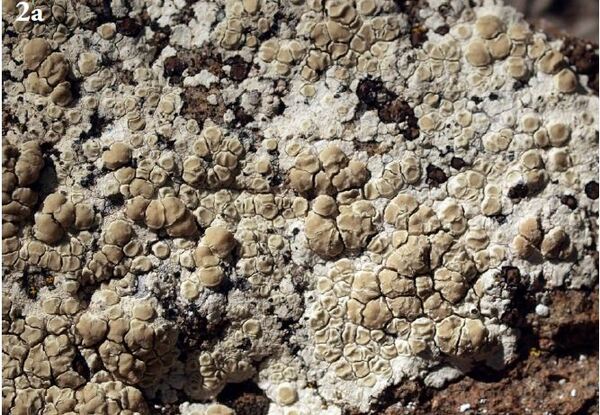
M. Bertrand - Source: Roux C., Bertrand M., Poumarat S., Uriac P. 2022. Quelques espèces nouvelles saxicoles – calcifuges de Lecanora du groupe polytropa (Ascomycota, Lecanoraceae) découvertes en France. Bull. Soc. linn. Provence, 73: 79-120.
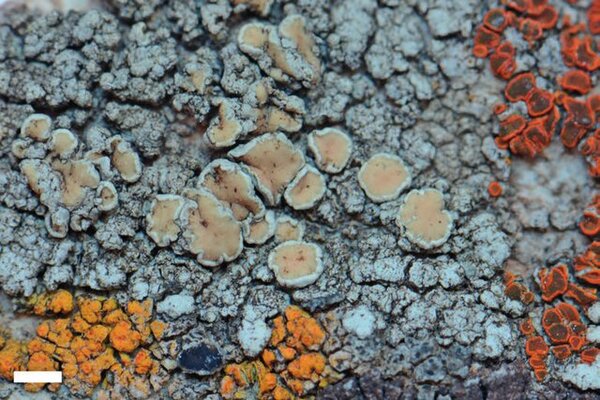
Jiří Malíček, Source: J. Malíček, H. Mayrhofer 2014. Herzogia 30(2):431-444
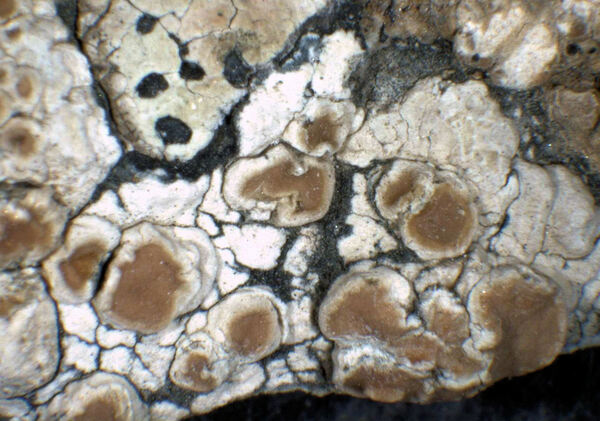
P.L. Nimis CC BY-SA 4.0
Herb. Cl.Roux (1563)
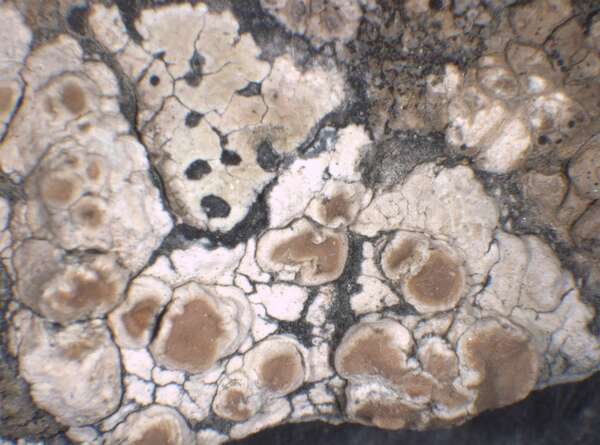
P.L. Nimis; Owner: Department of Life Sciences, University of Trieste
Herbarium: Herb. Cl.Roux (1563)
2002/12/12
Growth form: Crustose
Substrata: rocks
Photobiont: green algae other than Trentepohlia
Reproductive strategy: mainly sexual
Commonnes-rarity: (info)
Alpine belt: very rare
Subalpine belt: extremely rare
Montane belt: absent
Dry submediterranean belt: absent
Humid submediterranean belt: absent
Padanian area: absent
pH of the substrata:
| 1 | 2 | 3 | 4 | 5 |
Solar irradiation:
| 1 | 2 | 3 | 4 | 5 |
Aridity:
| 1 | 2 | 3 | 4 | 5 |
Eutrophication:
| 1 | 2 | 3 | 4 | 5 |
Poleotolerance:
| 0 | 1 | 2 | 3 |
Altitudinal distribution:
| 1 | 2 | 3 | 4 | 5 | 6 |
Rarity
absent
extremely rare
very rare
rare
rather rare
rather common
common
very common
extremely common
Loading data...
Occurrence data
Predictive map
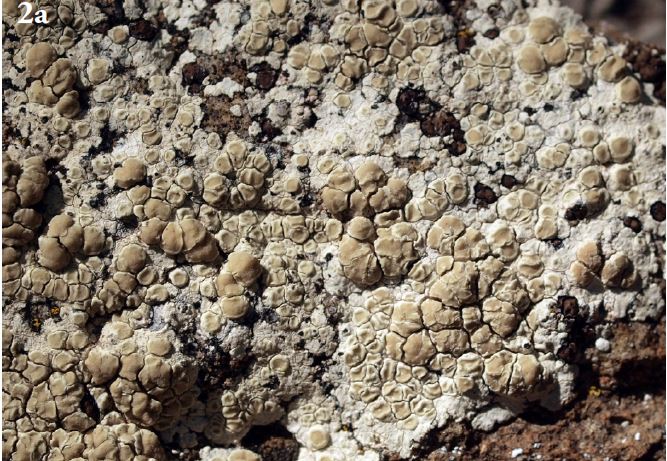
M. Bertrand - Source: Roux C., Bertrand M., Poumarat S., Uriac P. 2022. Quelques espèces nouvelles saxicoles – calcifuges de Lecanora du groupe polytropa (Ascomycota, Lecanoraceae) découvertes en France. Bull. Soc. linn. Provence, 73: 79-120.

Jiří Malíček, Source: J. Malíček, H. Mayrhofer 2014. Herzogia 30(2):431-444
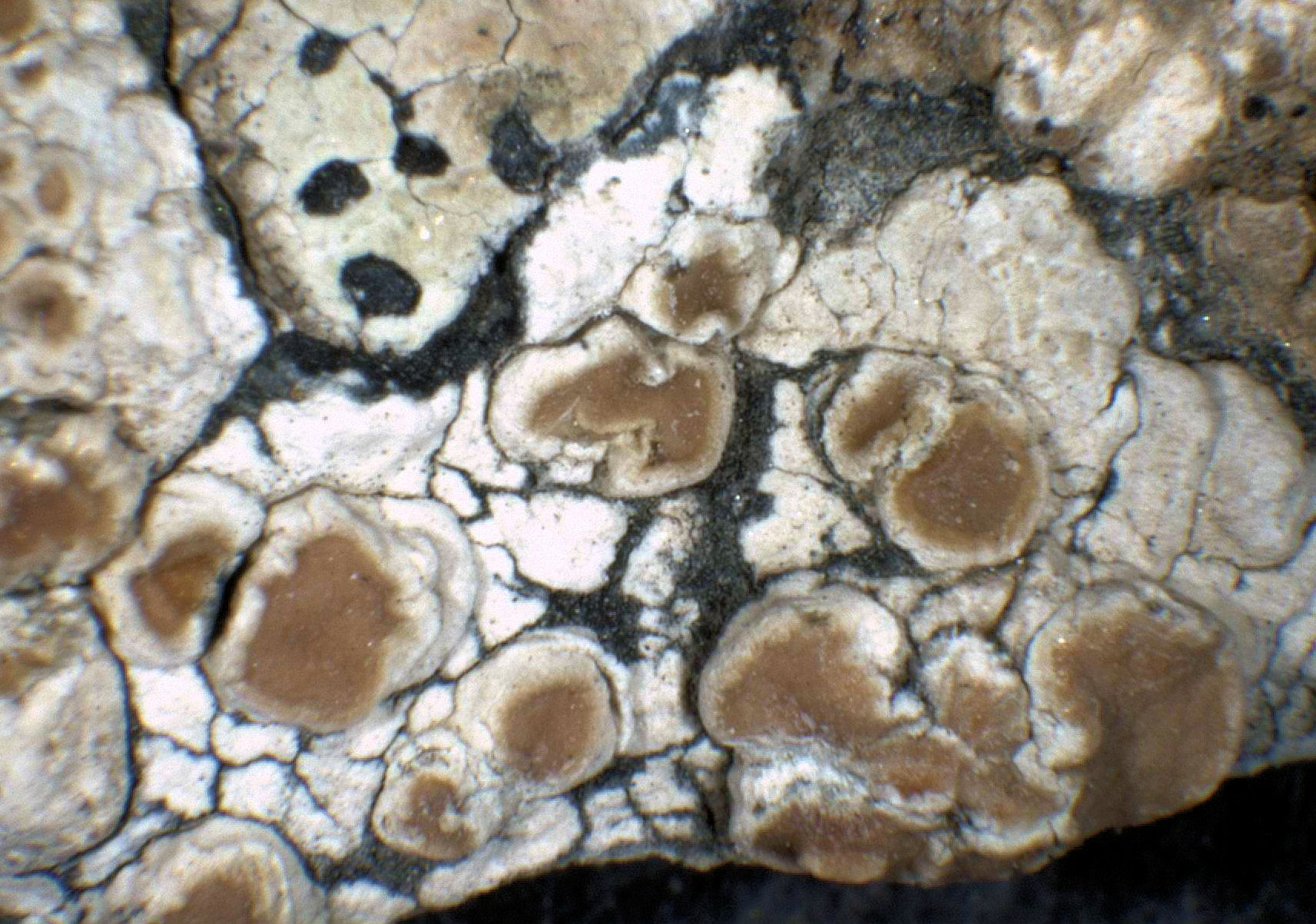
P.L. Nimis CC BY-SA 4.0
Herb. Cl.Roux (1563)