Biatora beckhausii (Körb.) Tuck.
Syn. N. Amer. Lich., 2: 46, 1888. Basionym: Bacidia beckhausii Körb. - Parerga Lichenol.: 134, 1860.
Synonyms: Bacidia beckhausii var. obscurior Th. Fr.; Bacidia beckhausii var. poliaena (Nyl.) Arnold; Bacidia minuscula Anzi; Bacidia stenospora (Hepp) Arnold; Lecidea denigrata var. bacidiella Vain.; Micarea beckhausii (Körb.) Vězda; Micarea minuscula (Anzi) Vězda
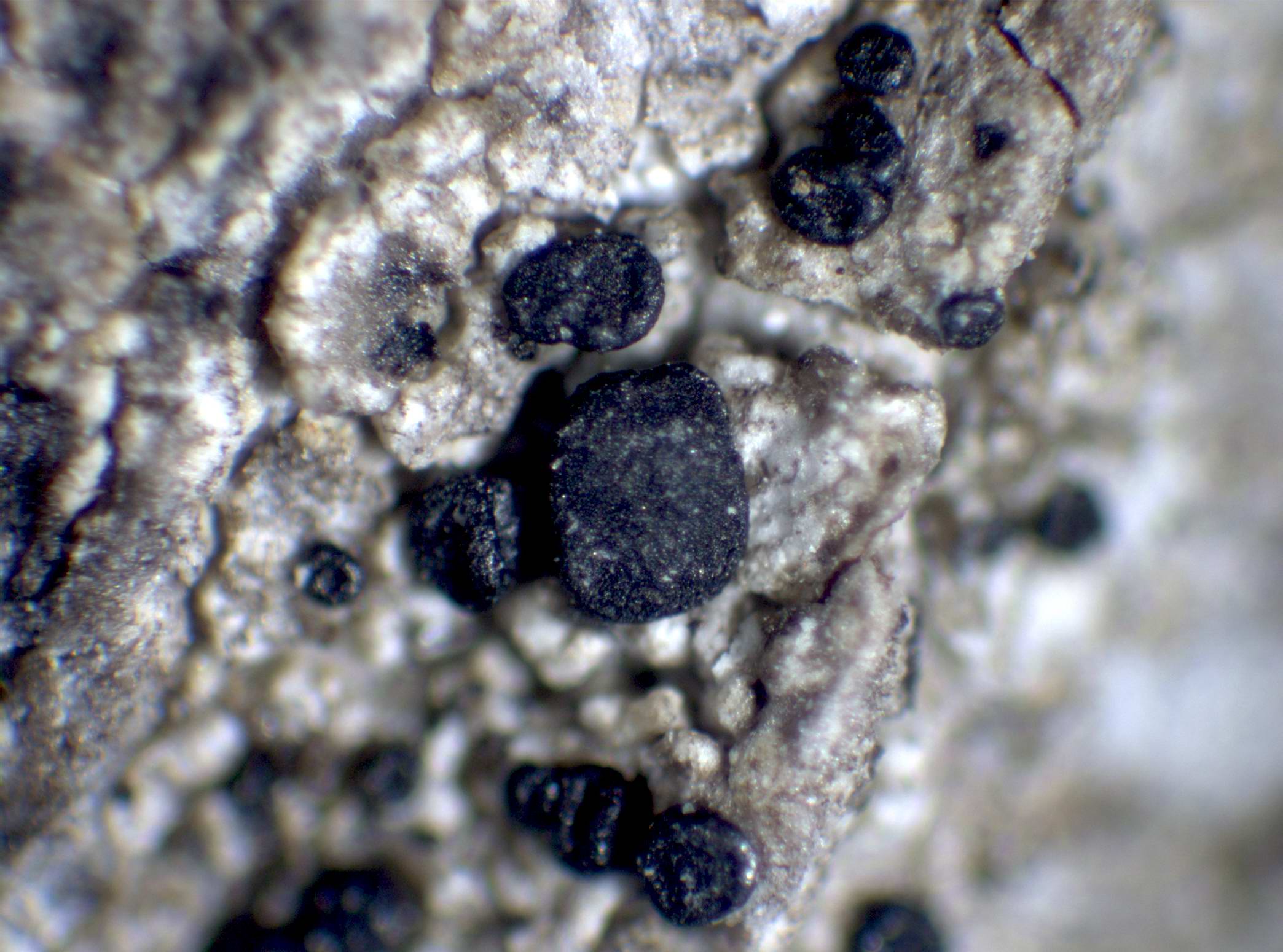
Description: Thallus crustose, endosubstratic or thinly episubstratic, continuous, smooth or slightly warted, pale grey or almost white. Apothecia biatorine, grey to black, often with a bluish tinge when wet, sessile and constricted at base, 0.3-1(-1.5) mm across, with a flat to finally convex, sometimes thinly white-pruinose disc, and thin, often finally excluded proper margin. Proper exciple 15-40 µm wide laterally, usually without crystals, colourless or pale green in upper and outer parts, K+ violet, C+ fleeting violet, N+ red, the edge without cells with enlarged lumina; epithecium olive-green to blue-green, K+ violet, C+ fleeting violet, N+ red, sometimes with small granules dissolving in K; hymenium colourless, sometimes with green vertical streaks, 35-55 µm high; paraphyses simple or sparingly branched in upper part, 1-1.5(-2) µm thick at mid-level, the apical cells to 2.5 µm wide; hypothecium colourless. Asci 8-spored, cylindrical-clavate, with a K/I+ blue apical dome penetrated by a narrow, K/I- apical cushion surrounded by a narrow, deeply K/I+ blue zone, the wall K/I- but surrounded by a I+ red-brown and K/I+ blue outer layer, the ocular chamber small, Biatora-type. Ascospores (1-)3-(7-)septate, hyaline, bacilliform, straight or slightly curved, (15-)17-26(-32) x 1.5-2.7 µm. Pycnidia half-immersed in thallus, black around the ostiole, the wall olive-green, K+ violet. Conidia 1-celled, oblong-ellipsoid, 3-4 x 1-1.5 µm. Photobiont chlorococcoid, the cells 8-14 µm wide. Spot tests: thallus K-, C-, KC-, P-, UV-. Chemistry: thallus without lichen substances.
Growth form: Crustose
Substrata: bark
Photobiont: green algae other than Trentepohlia
Reproductive strategy: mainly sexual
Commonnes-rarity: (info)
Alpine belt: absent
Subalpine belt: extremely rare
Montane belt: very rare
Dry submediterranean belt: extremely rare
Humid submediterranean belt: very rare
Padanian area: absent
pH of the substrata:
1 2 3 4 5

Solar irradiation:
1 2 3 4 5
Aridity:
1 2 3 4 5
Eutrophication:
1 2 3 4 5
Poleotolerance:
0 1 2 3
Altitudinal distribution:
1 2 3 4 5 6
Rarity
absent
extremely rare
very rare
rare
rather rare
rather common
common
very common
extremely common
Loading data...
Occurrence data
Predictive map
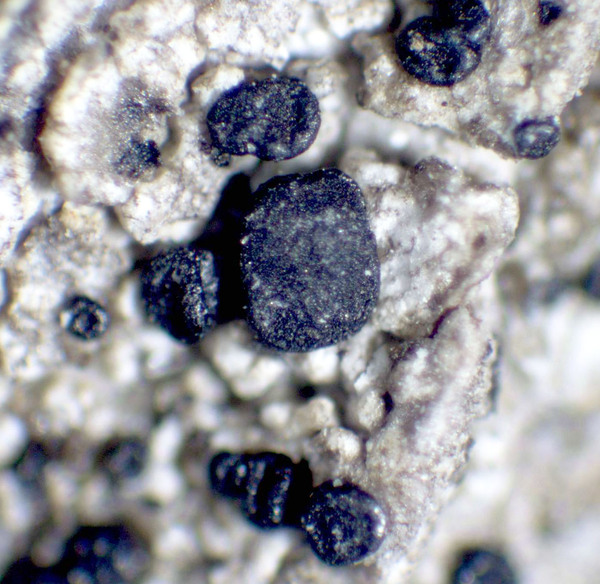
P.L. Nimis CC BY-SA 04
TSB 28078
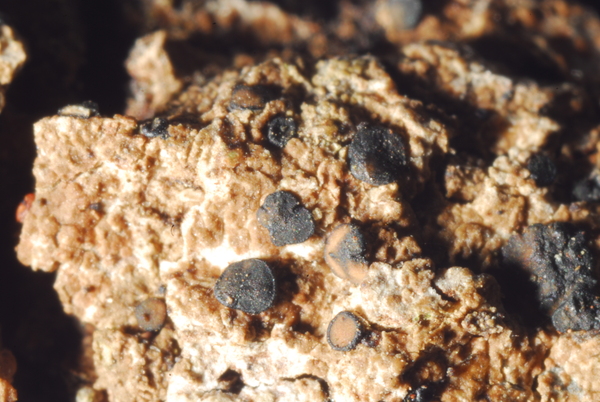
Domenico Puntillo; Owner: Domenico Puntillo
Italy
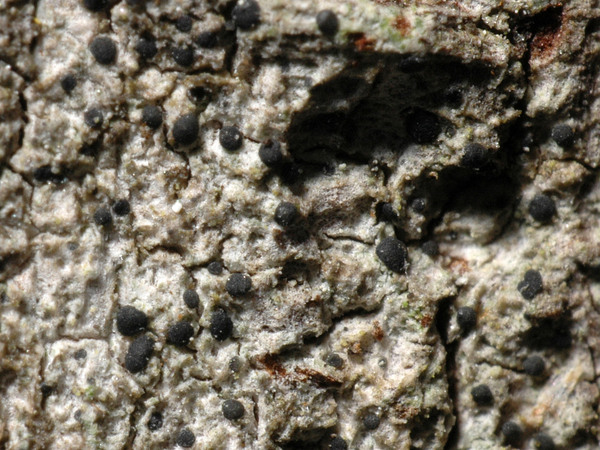
Leif Stridvall - Source: http://www.stridvall.se/lichens/gallery/
Courtesy: Anita Stridvall
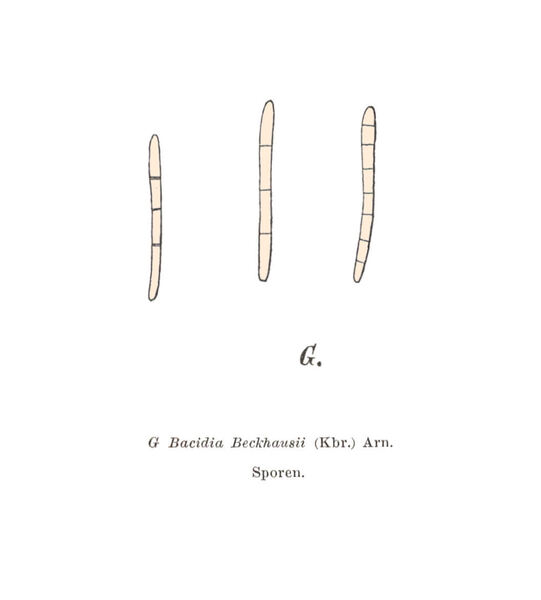
Zahlbruckner A. 1926. Lichenes (Flechten). In: Engler A. (ed.): Die natürlichen Pflanzenfamilien. 2nd ed., vol 8, W. Engelmann, Leipzig, 270 pp.
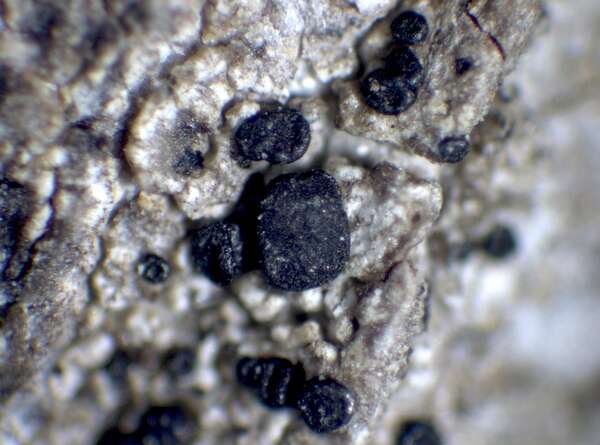
P.L. Nimis; Owner: Department of Life Sciences, University of Trieste
Herbarium: TSB (28078)
2001/11/22
Growth form: Crustose
Substrata: bark
Photobiont: green algae other than Trentepohlia
Reproductive strategy: mainly sexual
Commonnes-rarity: (info)
Alpine belt: absent
Subalpine belt: extremely rare
Montane belt: very rare
Dry submediterranean belt: extremely rare
Humid submediterranean belt: very rare
Padanian area: absent
pH of the substrata:
| 1 | 2 | 3 | 4 | 5 |
Solar irradiation:
| 1 | 2 | 3 | 4 | 5 |
Aridity:
| 1 | 2 | 3 | 4 | 5 |
Eutrophication:
| 1 | 2 | 3 | 4 | 5 |
Poleotolerance:
| 0 | 1 | 2 | 3 |
Altitudinal distribution:
| 1 | 2 | 3 | 4 | 5 | 6 |
Rarity
absent
extremely rare
very rare
rare
rather rare
rather common
common
very common
extremely common
Loading data...
Occurrence data
Predictive map
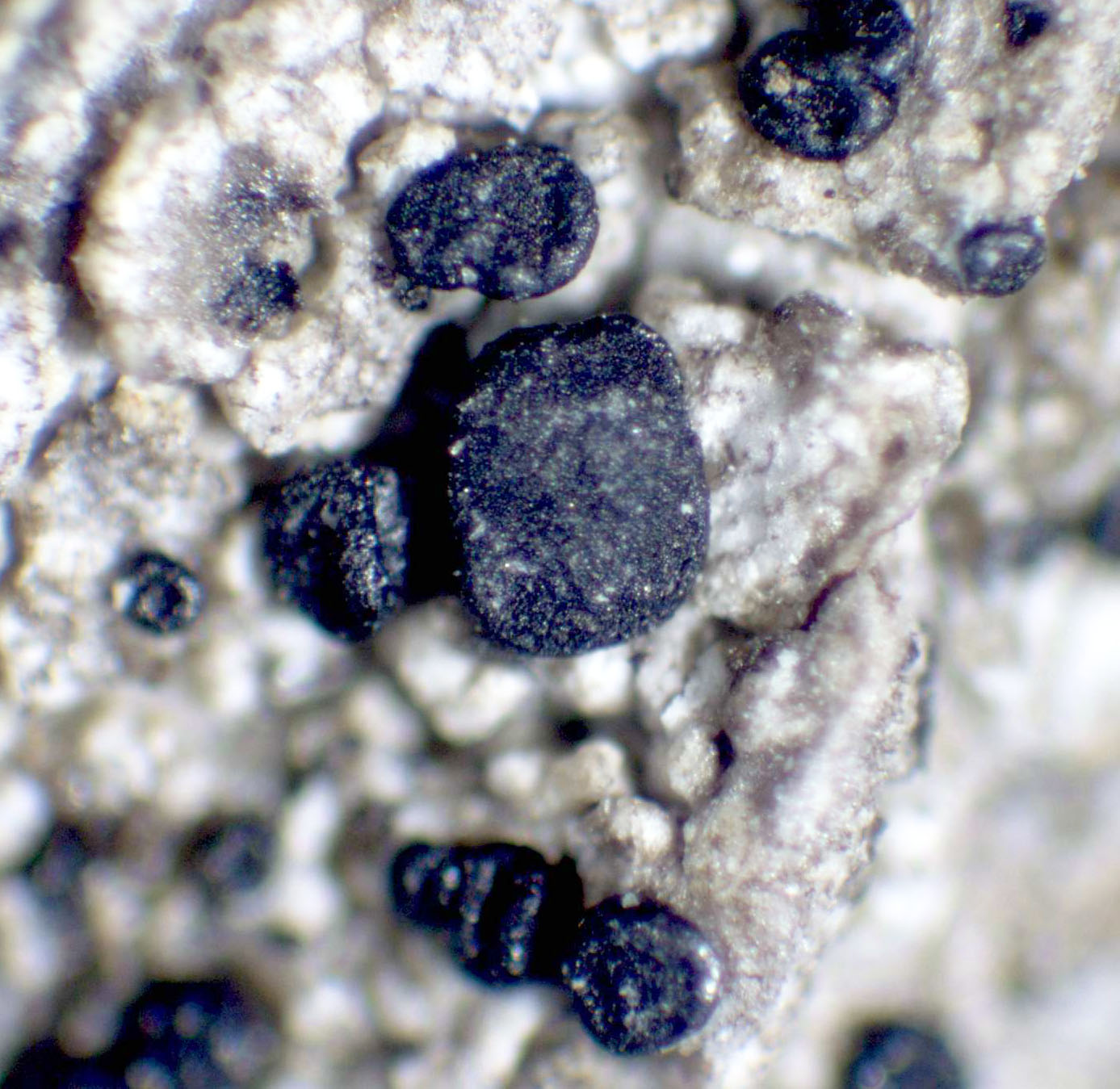
P.L. Nimis CC BY-SA 04
TSB 28078
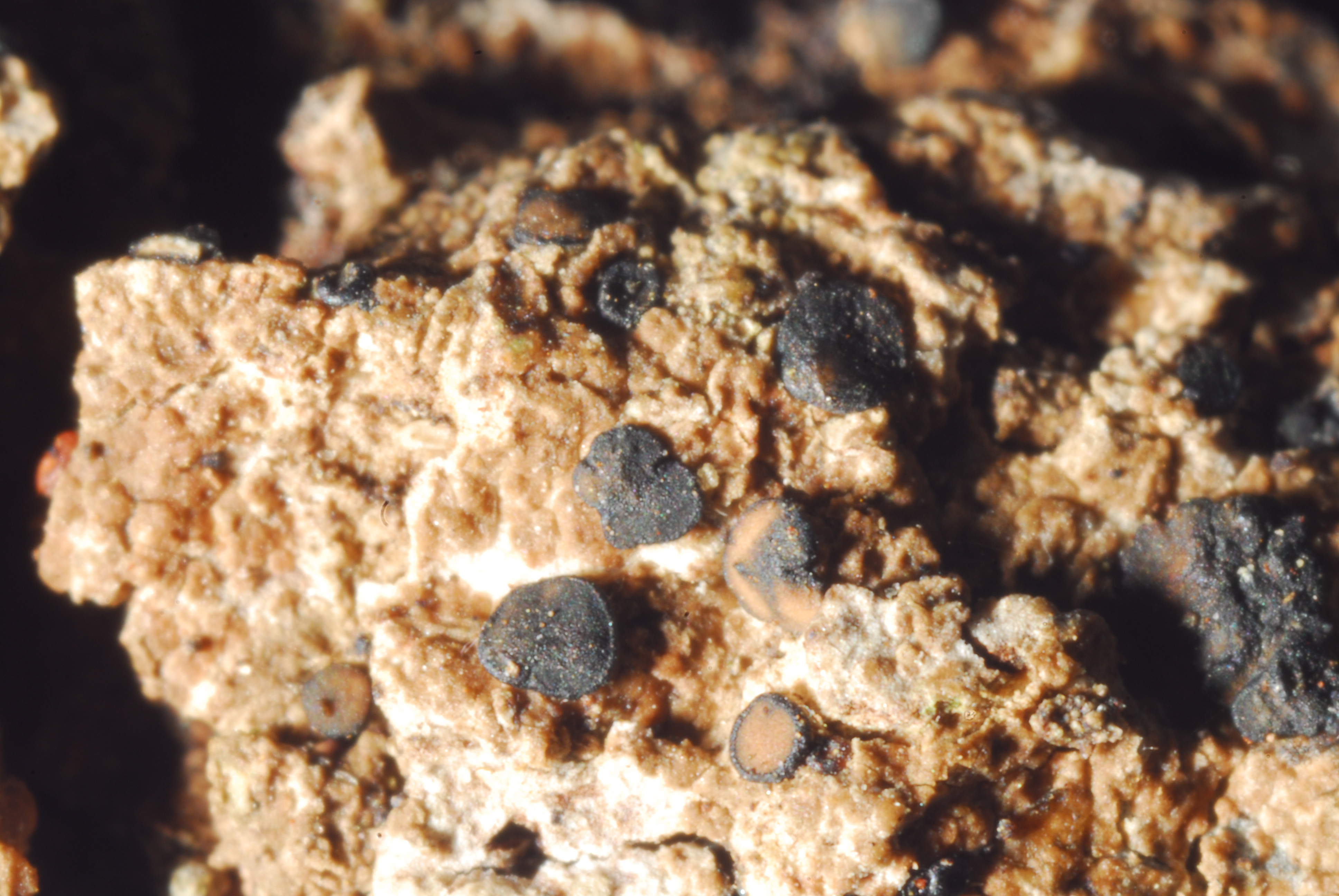
Domenico Puntillo; Owner: Domenico Puntillo
Italy
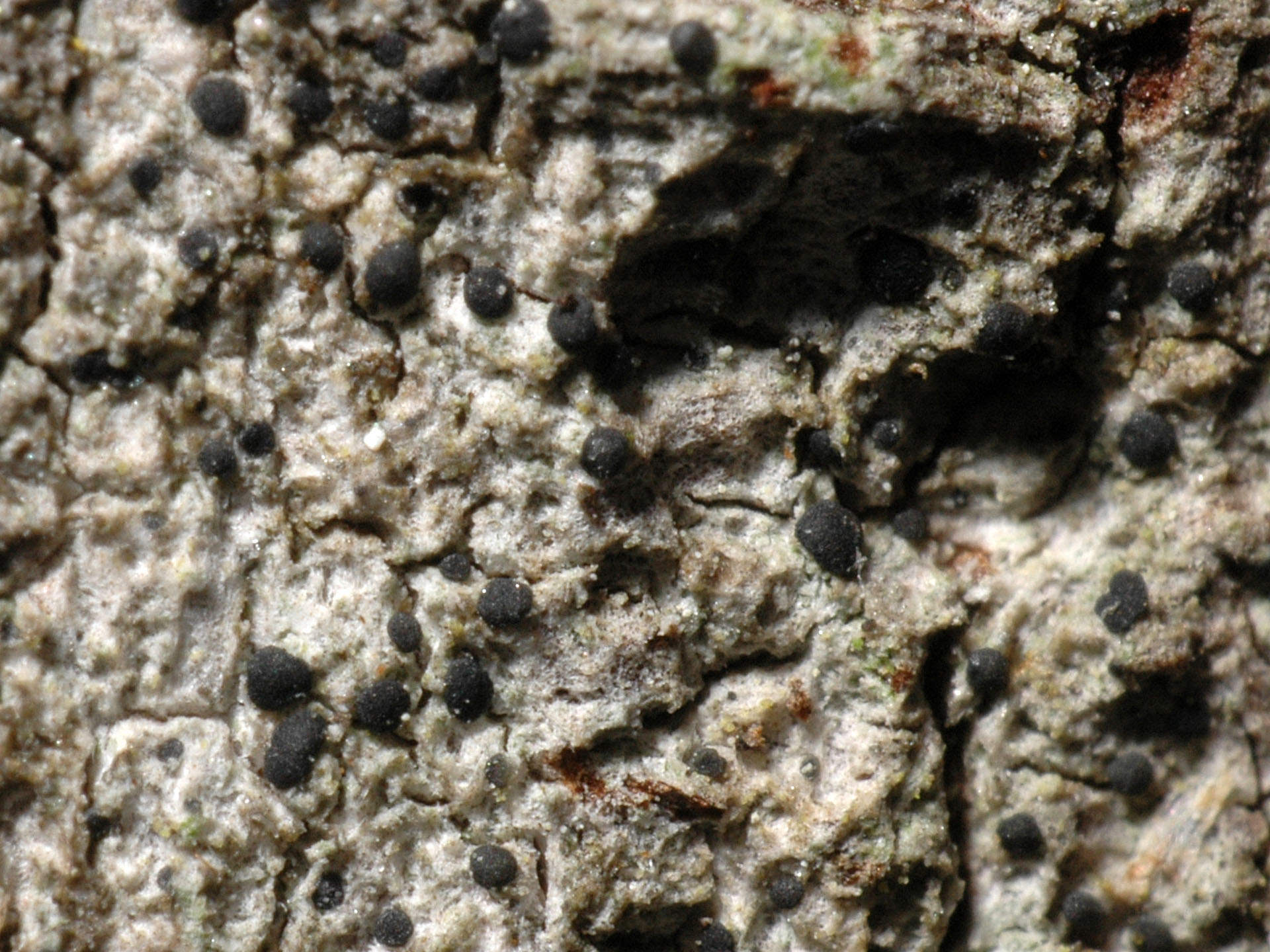
Leif Stridvall - Source: http://www.stridvall.se/lichens/gallery/
Courtesy: Anita Stridvall

Zahlbruckner A. 1926. Lichenes (Flechten). In: Engler A. (ed.): Die natürlichen Pflanzenfamilien. 2nd ed., vol 8, W. Engelmann, Leipzig, 270 pp.