Toensbergia leucococca (R. Sant.) Bendiksby & Timdal
Taxon, 62, 5: 951, 2013. Basionym: Hypocenomyce leucococca R. Sant. - in Moberg, Thunbergia, 2: 3, 1986
Synonyms: Pycnora leucococca (R. Sant.) R. Sant.
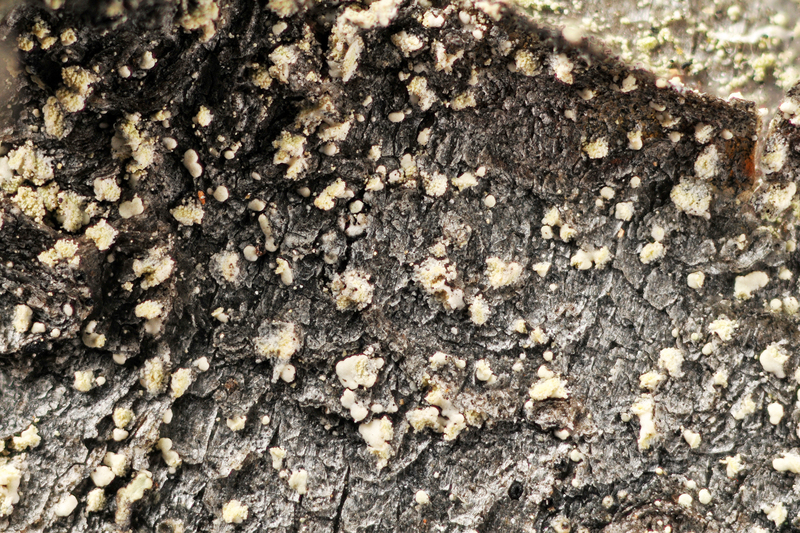
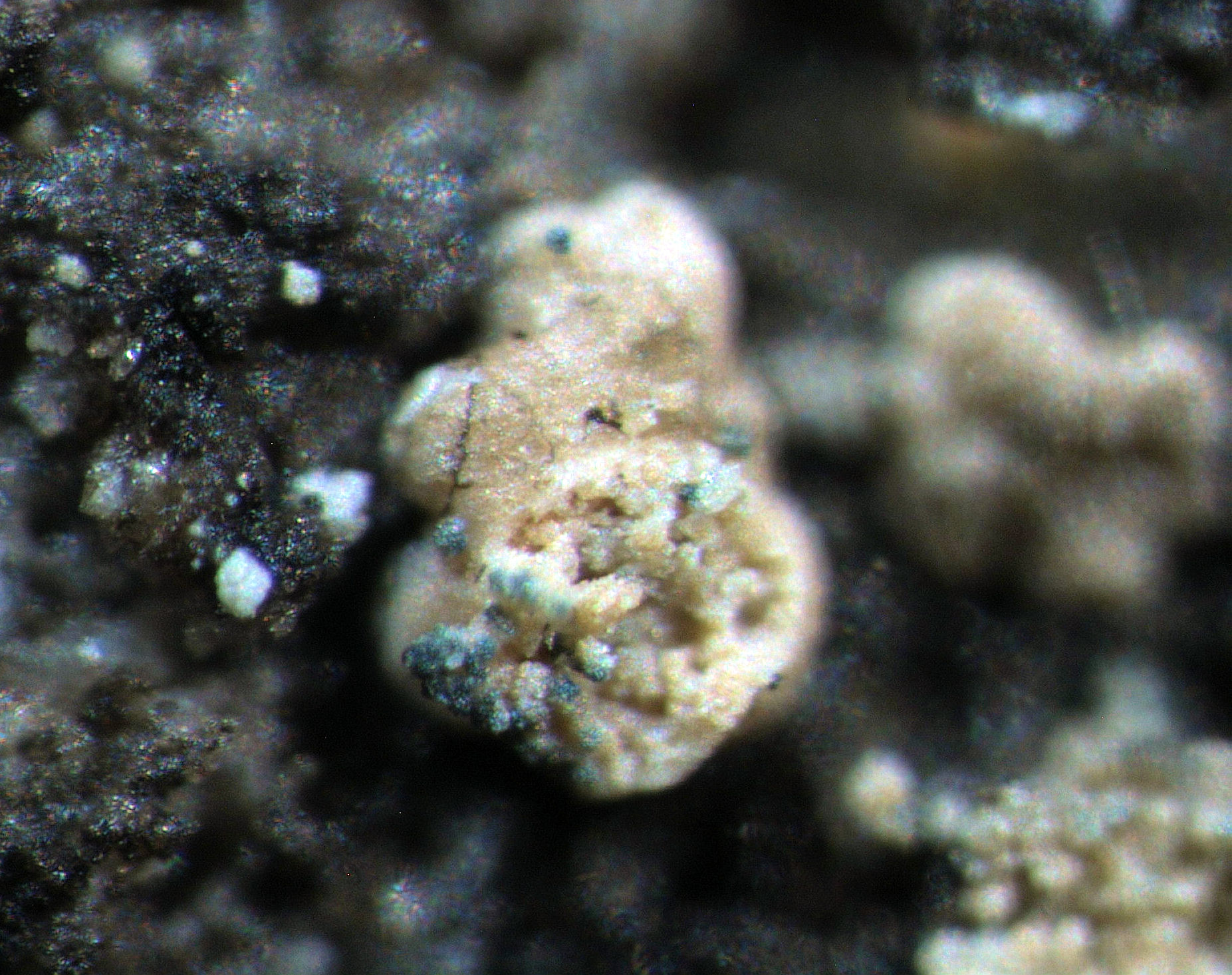
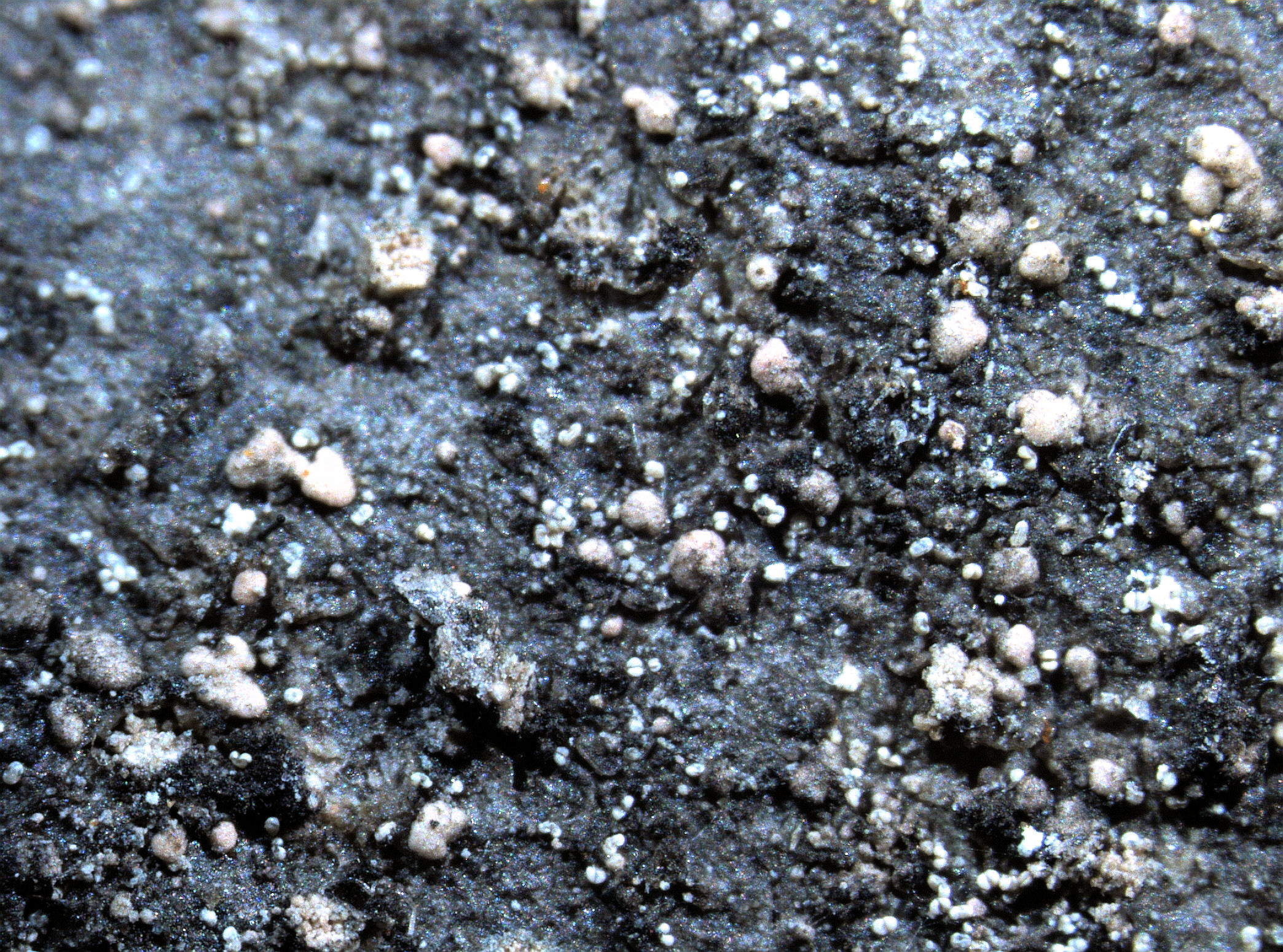
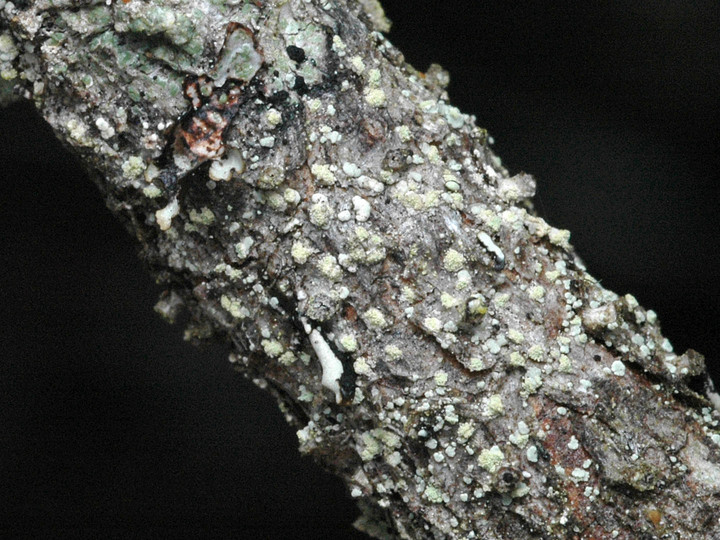
Description: Thallus crustose, areolate, usually forming small patches amongst other lichens, sometimes delimited by a dark prothallus, sorediate, the areoles circular to irregular and elongate, often appearing subsquamulose and distinctly incised and constricted at base, flat to convex, up to 0.4(-1) mm across; esorediate surface usually distinct, smooth, dull, greyish white, pale yellowish green or pale yellowish brown (turning yellowish brown or pink in the herbarium); soralia usually marginal and more or less labriform, sometimes laminal and more or less orbicular, or apical and subcapitate, usually well-delimited, pale green to pale yellow with a brown tinge (often turning yellowish brown in the herbarium), rarely aeruginose due to a pigment fading in K, and reacting N+ brown in the external soredia. Soredia mostly farinose, 20-45 μm in diameter. Medulla distinct, white. Apothecia and pycnidia not known. Photobiont chlorococcoid, the cells up to 15 μm wide. Spot tests: K+ brownish yellow, C+ red, KC+ red, P+ yellow, UV-. Chemistry: alectorialic acid with satellites in trace amounts.
Growth form: Crustose
Substrata: bark
Photobiont: green algae other than Trentepohlia
Reproductive strategy: mainly asexual, by soredia, or soredia-like structures (e.g. blastidia)
Most common in areas with a humid-warm climate (e.g. most of Tyrrenian Italy)
Commonnes-rarity: (info)
Alpine belt: absent
Subalpine belt: very rare
Montane belt: extremely rare
Dry submediterranean belt: absent
Humid submediterranean belt: absent
Padanian area: absent
pH of the substrata:
1 2 3 4 5

Solar irradiation:
1 2 3 4 5
Aridity:
1 2 3 4 5
Eutrophication:
1 2 3 4 5
Poleotolerance:
0 1 2 3
Altitudinal distribution:
1 2 3 4 5 6
Rarity
absent
extremely rare
very rare
rare
rather rare
rather common
common
very common
extremely common
Loading data...
Occurrence data
Predictive map
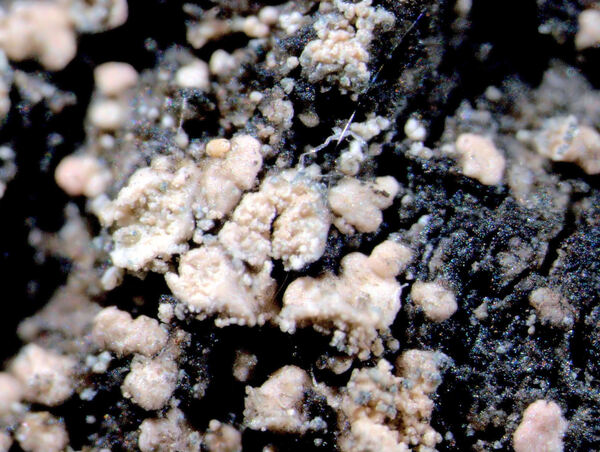
P.L. Nimis CC BY SA 4.0
TSB 38813
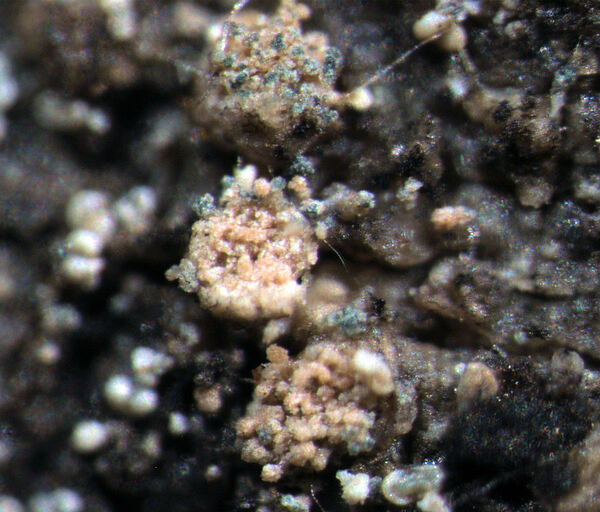
P.L. Nimis CC BY-SA 4.0
TSB 38813
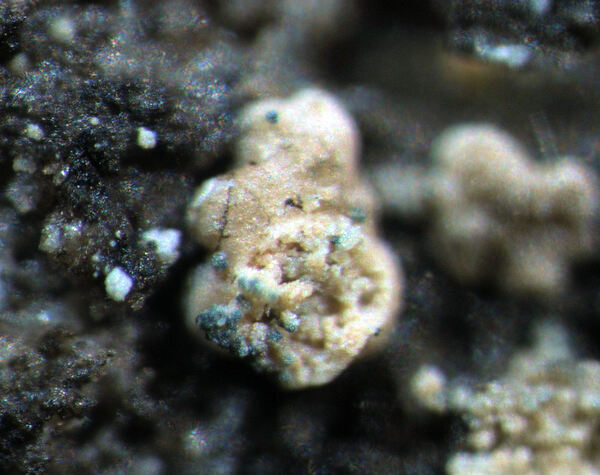
P.L. Nimis CC BY-SA 4.0
TSB 38813
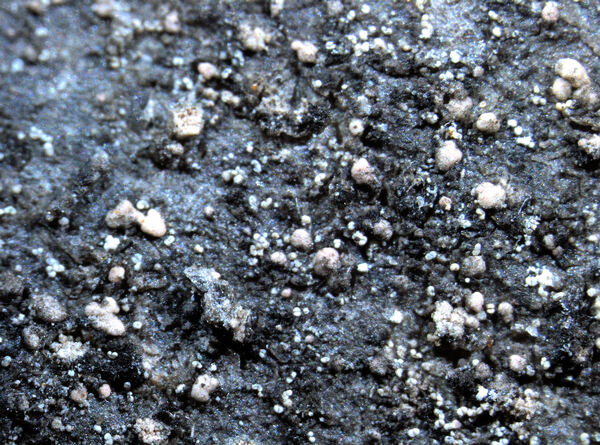
P.L. Nimis CC BY-SA 4.0
TSB 38813
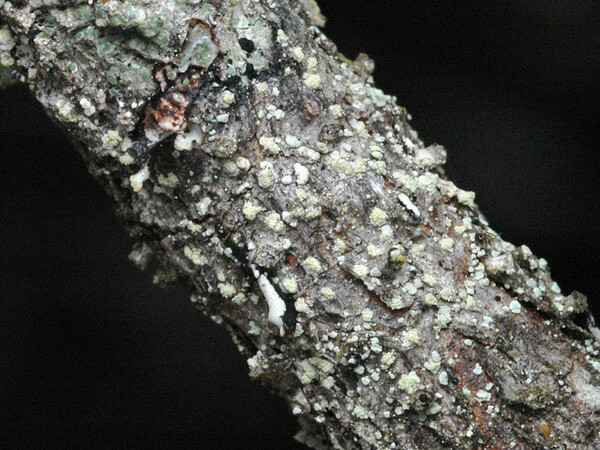
Leif Stridvall - Source: http://www.stridvall.se/la/galleries.php
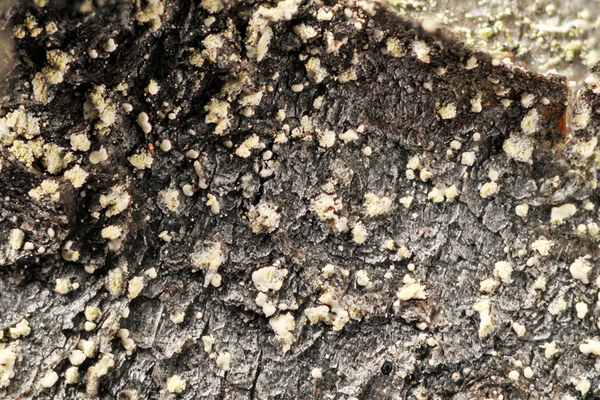
Einar Timdal - Source: http://nhm2.uio.no/lav/web/index.html - CC BY-NC
Growth form: Crustose
Substrata: bark
Photobiont: green algae other than Trentepohlia
Reproductive strategy: mainly asexual, by soredia, or soredia-like structures (e.g. blastidia)
Most common in areas with a humid-warm climate (e.g. most of Tyrrenian Italy)
Commonnes-rarity: (info)
Alpine belt: absent
Subalpine belt: very rare
Montane belt: extremely rare
Dry submediterranean belt: absent
Humid submediterranean belt: absent
Padanian area: absent
pH of the substrata:
| 1 | 2 | 3 | 4 | 5 |
Solar irradiation:
| 1 | 2 | 3 | 4 | 5 |
Aridity:
| 1 | 2 | 3 | 4 | 5 |
Eutrophication:
| 1 | 2 | 3 | 4 | 5 |
Poleotolerance:
| 0 | 1 | 2 | 3 |
Altitudinal distribution:
| 1 | 2 | 3 | 4 | 5 | 6 |
Rarity
absent
extremely rare
very rare
rare
rather rare
rather common
common
very common
extremely common
Loading data...
Occurrence data
Predictive map
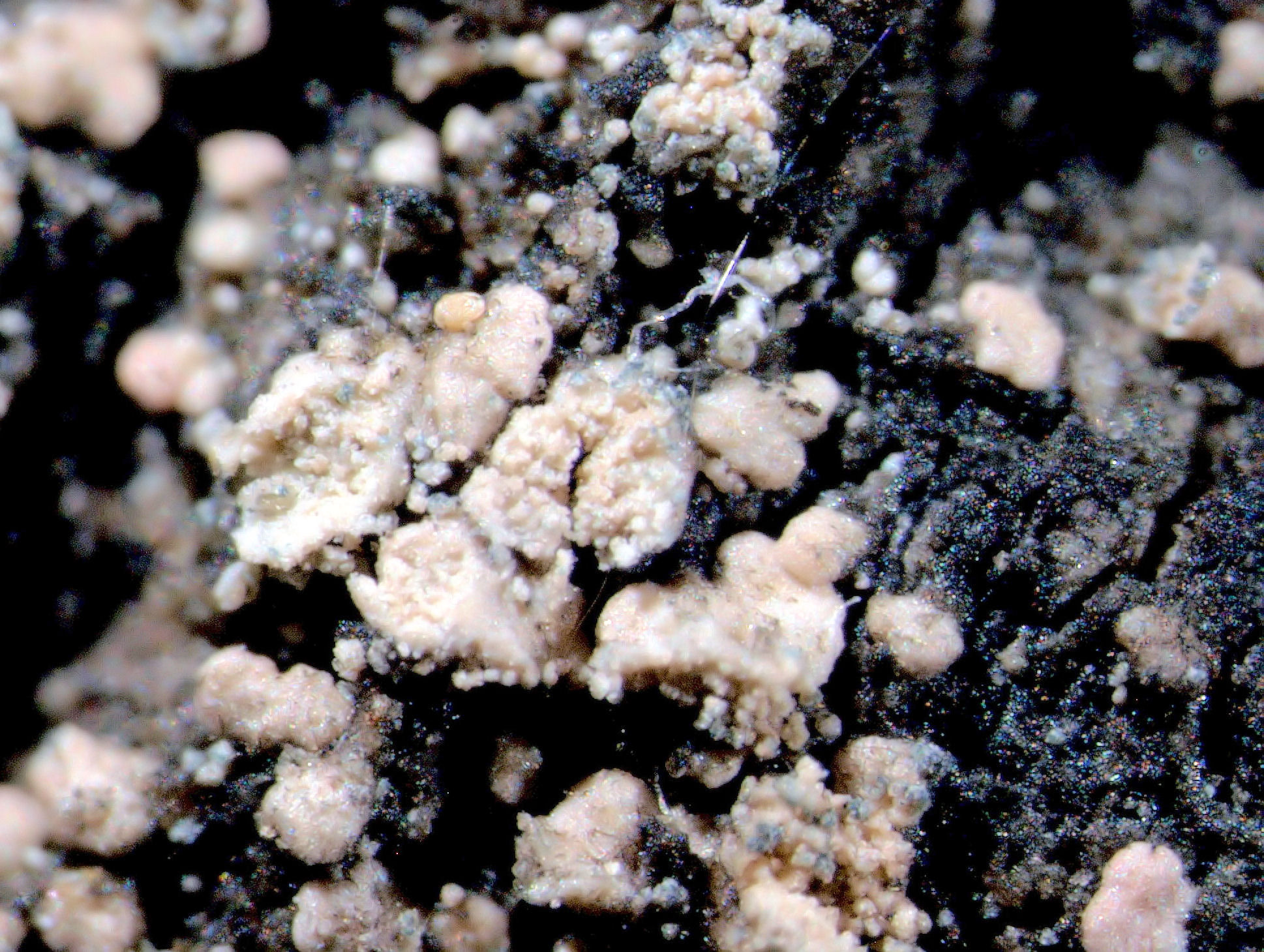
P.L. Nimis CC BY SA 4.0
TSB 38813
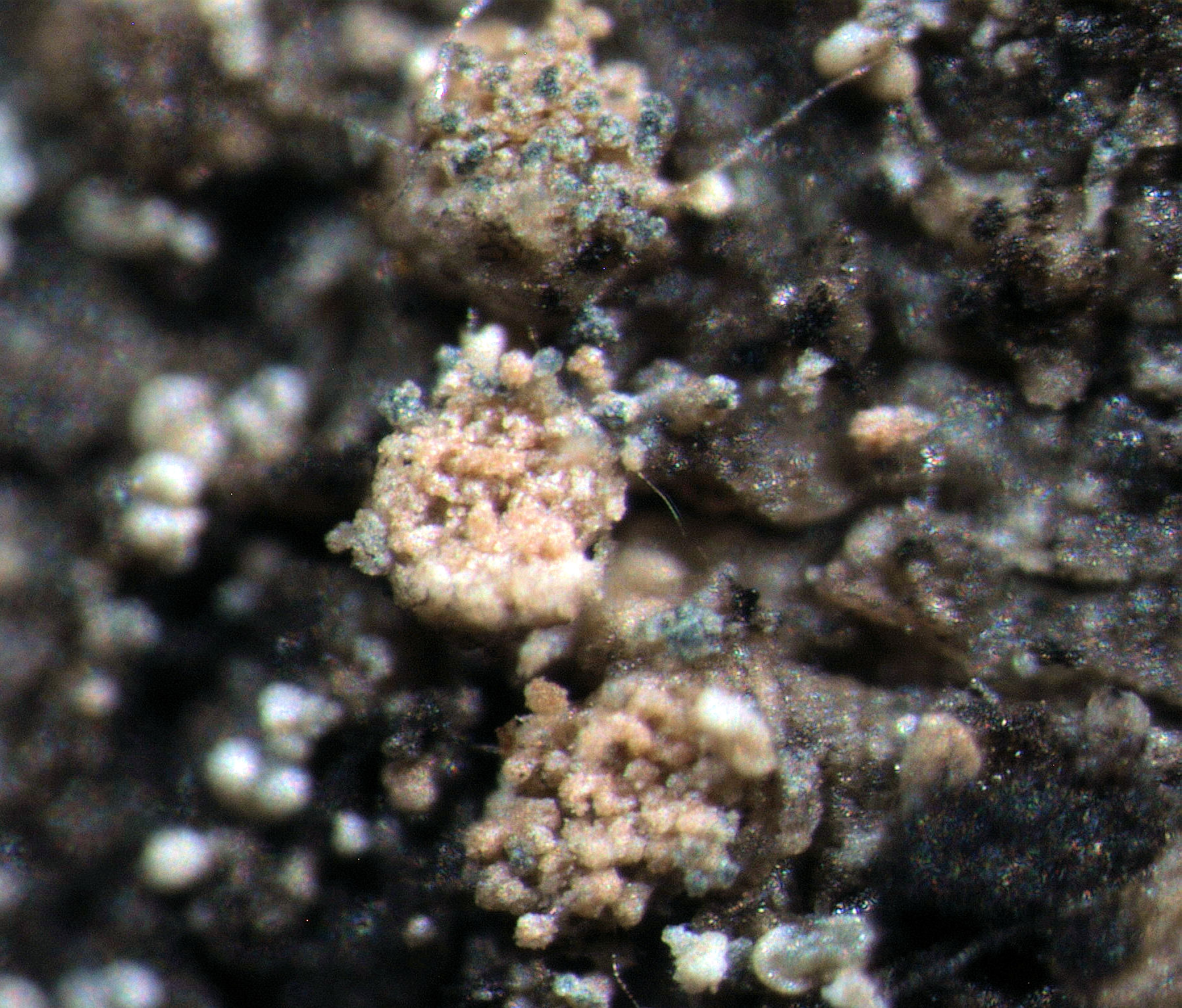
P.L. Nimis CC BY-SA 4.0
TSB 38813
P.L. Nimis CC BY-SA 4.0
TSB 38813
P.L. Nimis CC BY-SA 4.0
TSB 38813
Leif Stridvall - Source: http://www.stridvall.se/la/galleries.php