Arthrorhaphis vulgaris (Schaer.) Frisch, Y.Ohmura, Holien & Bendiksby
Taxon 2022: 21, 2022. Basionym: Lecidea flavovirescens var. vulgaris Schaer. - Lich. Helv. Spic.: 162, 1833
Synonyms: Arthrorhaphis citrinella auct. non (Ach.) Poelt; Bacidia flavovirescens var. detrita Vain.
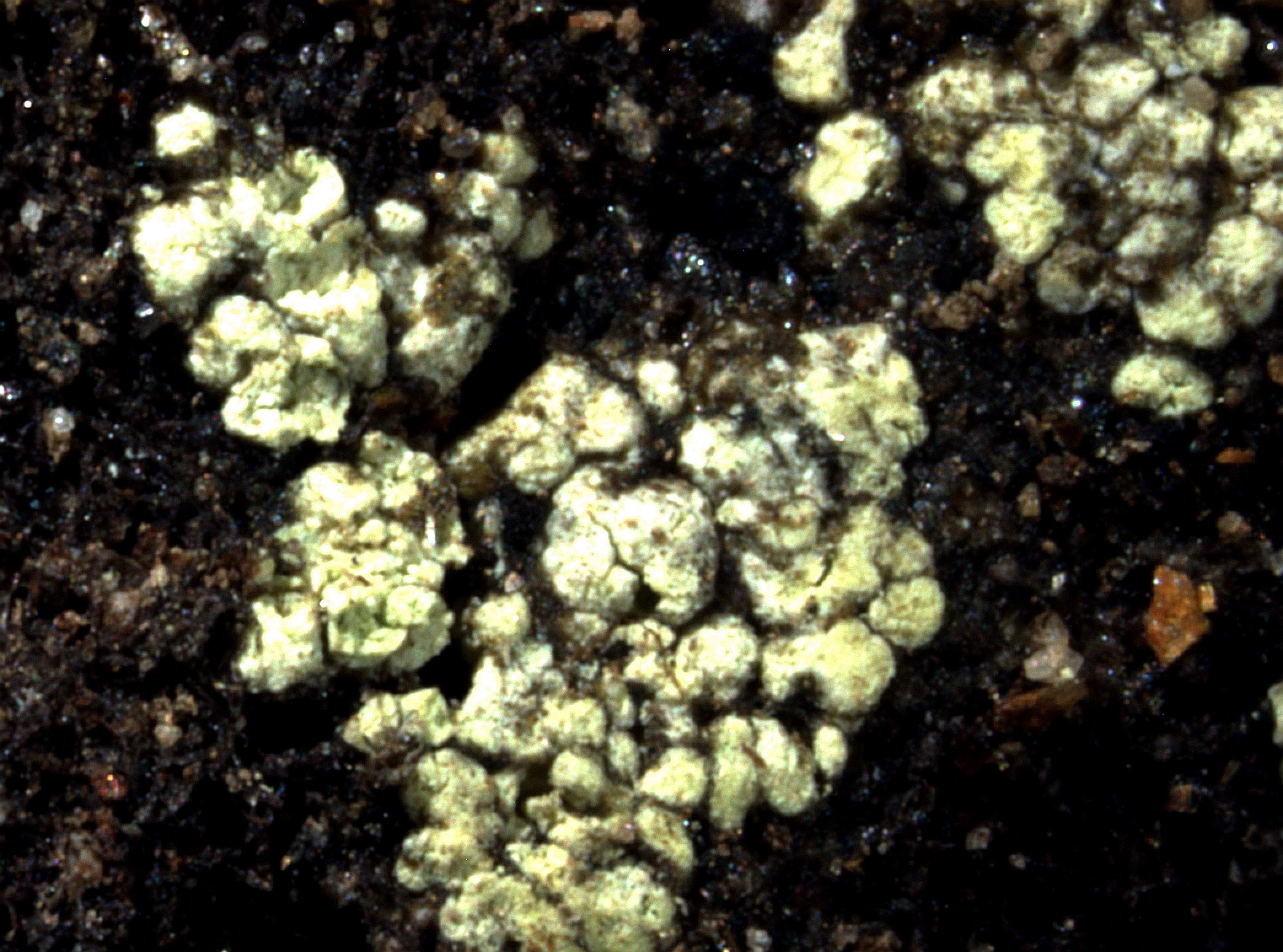
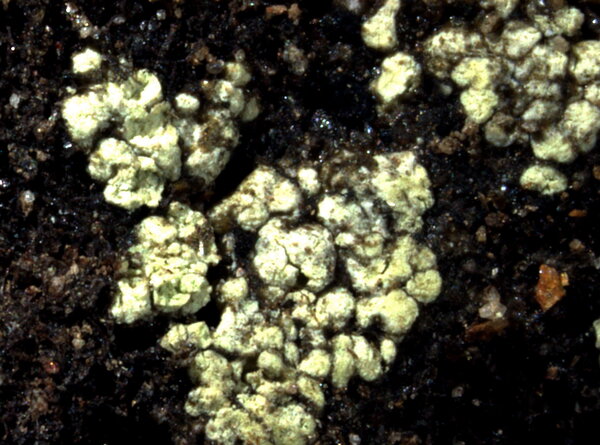
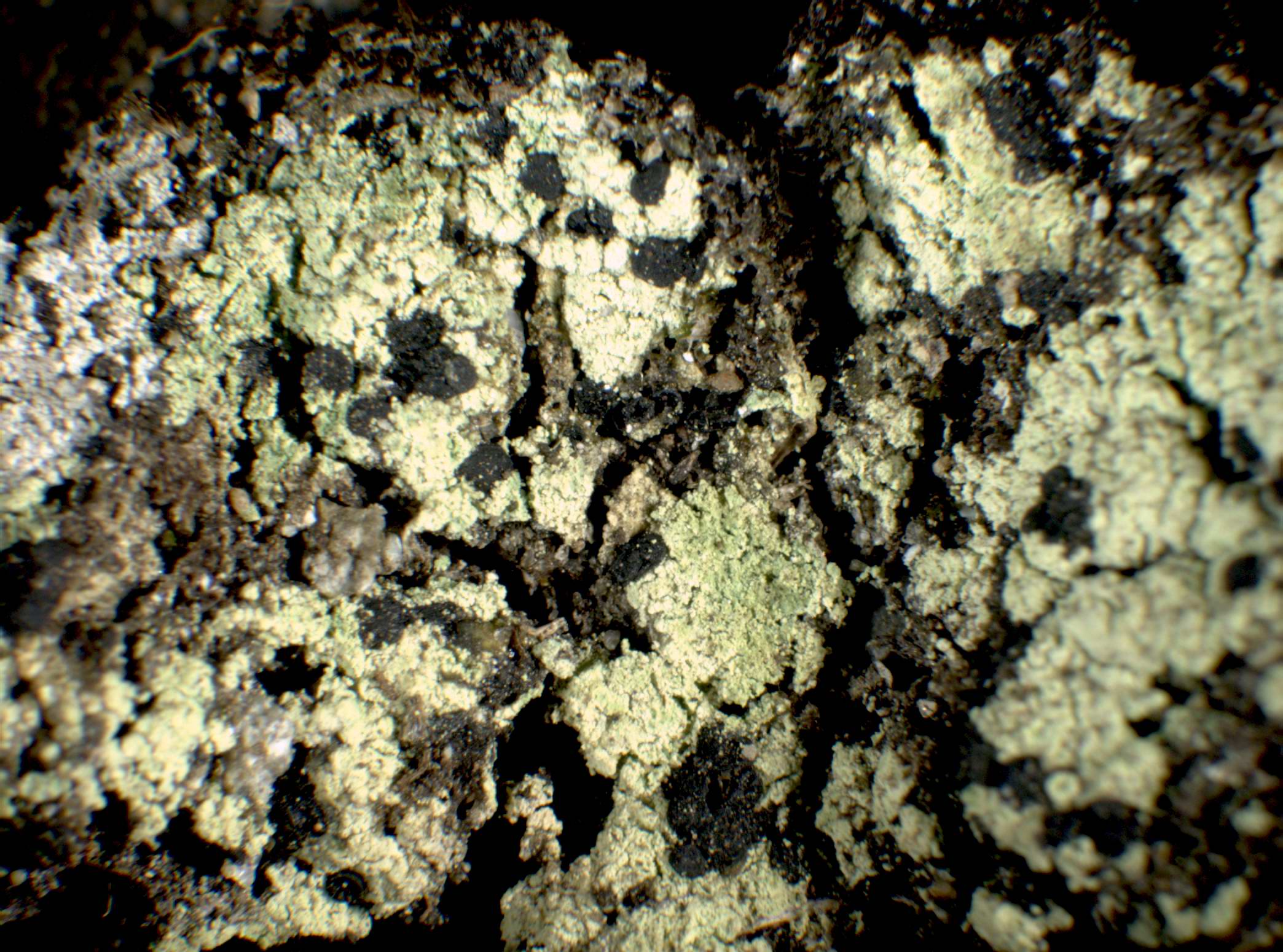
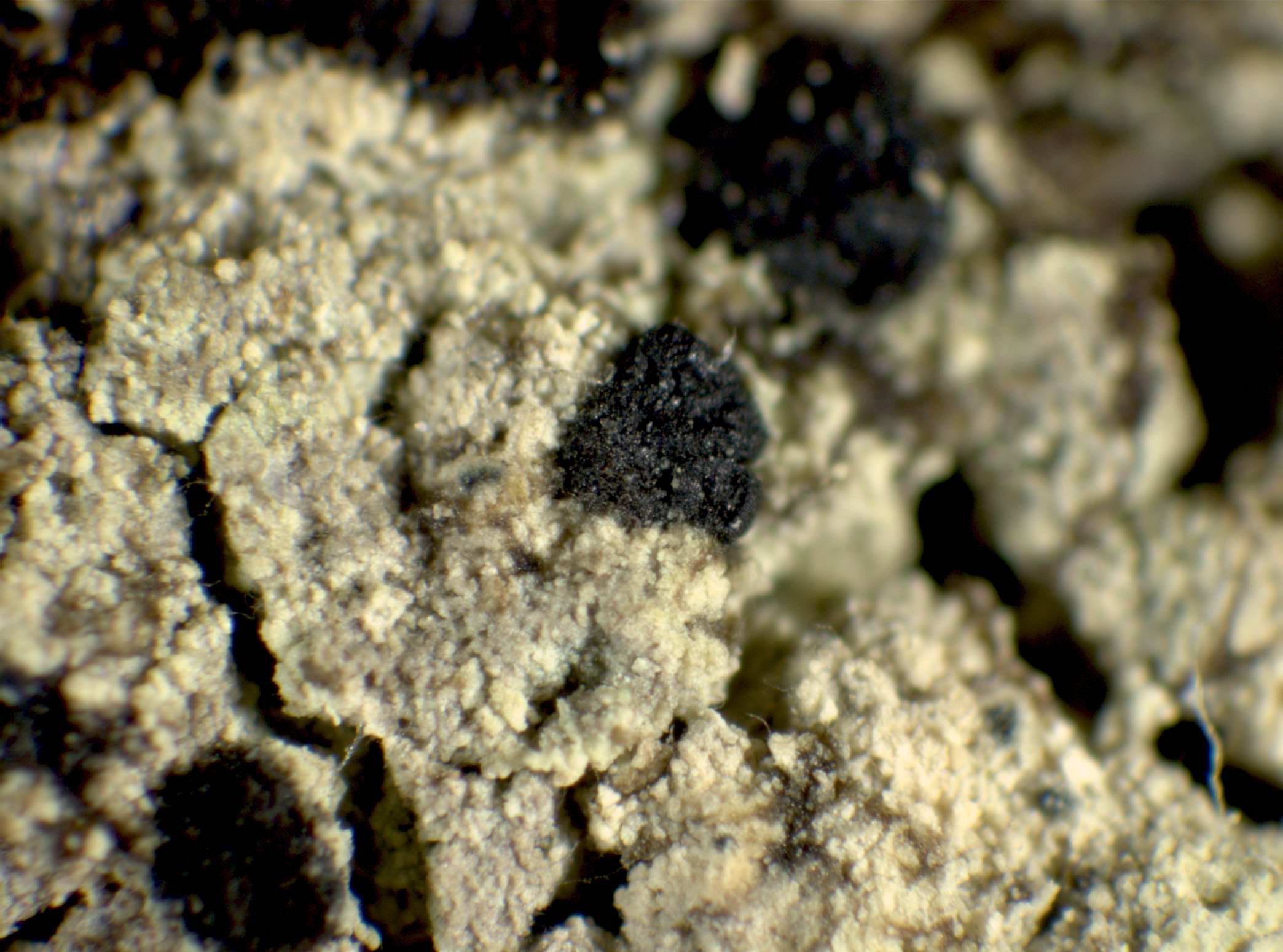
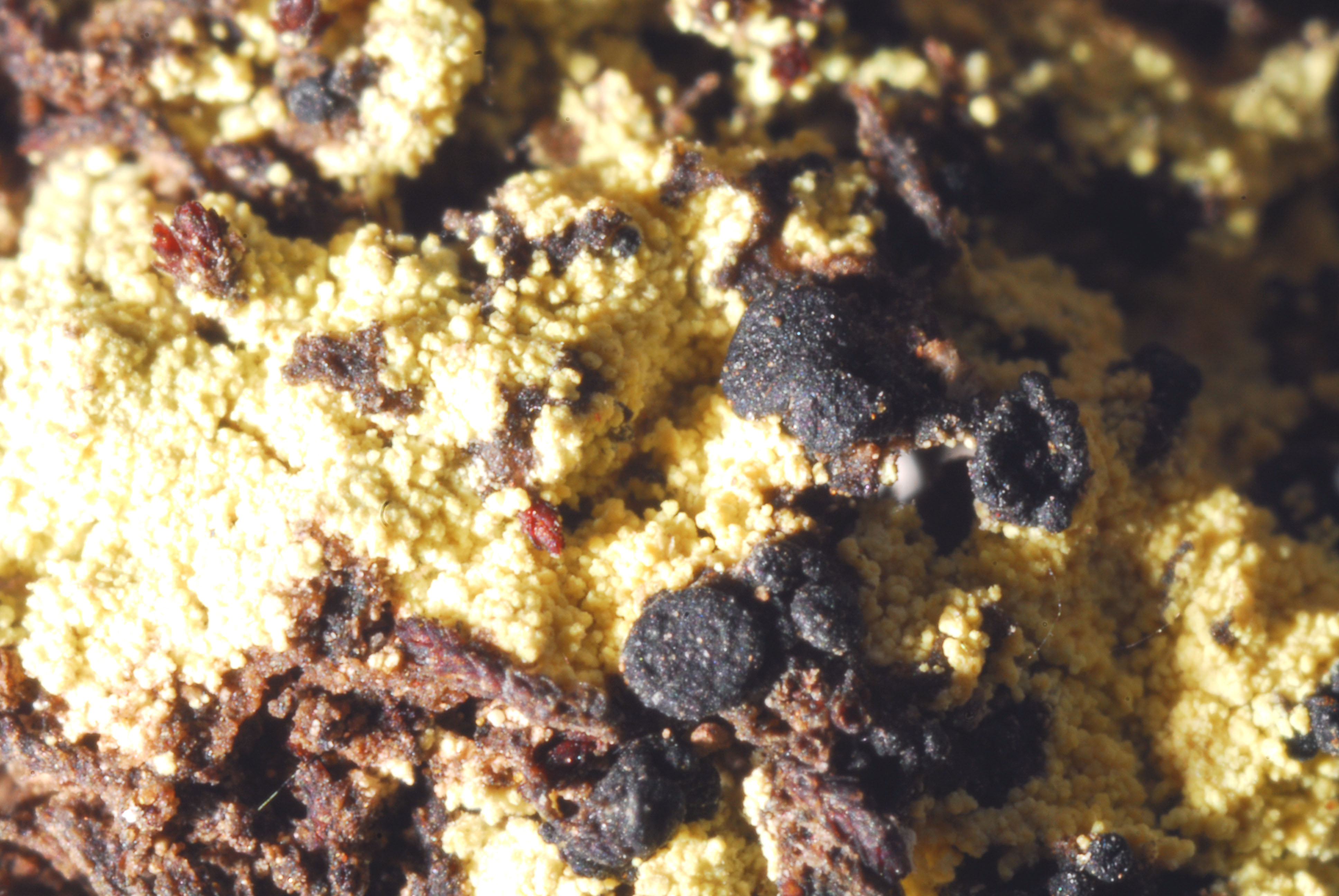
Description: Thallus crustose, episubstratic, areolate, forming small irregular colonies on acidic soils, terricolous bryophytes or plant remains, or starting the life-cycle on species of Baeomyces, up to 6 cm across, the areoles greenish yellow, matt to slightly shiny, discrete to mostly confluent, irregularly rounded to elliptical-lobate, moderately convex to bullate, 0.2-1.7 mm across, smooth to verrucose, the surface entire to cracked or disintegrating into fine to coarsely granular soredia measuring 0.03-0.15 mm. Medulla up to 0.5 mm thick, yellow, often absent, without Ca-oxalate crystals. Apothecia lecideine, black, usually separate from the lichenized thallus, 0.3-1.5 mm across, single or in groups of 2-15, adnate to shortly and broadly stipitate, matt, with a flat to convex, more or less coarsely rugose disc, the margin initially thick and protruding, later level with disc. Proper exciple 40-80 μm wide, dark brownish olive-green, darker towards the outer edge; epithecium brownish olive-green, 12-25 μm high, N+ green; hymenium colourless to pale olive-green, densely inspersed with oil droplets, 80-130 μm high; paraphyses sparingly branched and anastomosing, 1-1.5 μm thick; hypothecium brownish olive-green, 40–75 μm high. Asci 8-spored, bitunicate, clavate, I-, scarcely thickened at apex, with a small ocular chamber, 80-115 x 10-12 μm. Ascospores (5-)7-11(-16)-septate, hyaline, acicular. parallel in the asci, (34-)51-72(-89) x (2-)2.2-3.2(-3.5) μm. Photobiont chlorococcoid. Spot tests: thallus K-, C-, KC-, P-, UV+ orange. Chemistry: rhizocarpic acid (major), epanorin (minor).
Growth form: Crustose
Substrata: soil, terricolous mosses, and plant debris
Photobiont: green algae other than Trentepohlia
Reproductive strategy: mainly asexual, by soredia, or soredia-like structures (e.g. blastidia)
paras Baeomyces spp.
Commonnes-rarity: (info)
Alpine belt: rather common
Subalpine belt: rather rare
Montane belt: extremely rare
Dry submediterranean belt: absent
Humid submediterranean belt: absent
Padanian area: absent
pH of the substrata:
1 2 3 4 5

Solar irradiation:
1 2 3 4 5
Aridity:
1 2 3 4 5
Eutrophication:
1 2 3 4 5
Poleotolerance:
0 1 2 3
Altitudinal distribution:
1 2 3 4 5 6
Rarity
absent
extremely rare
very rare
rare
rather rare
rather common
common
very common
extremely common
Loading data...
Occurrence data
Predictive map
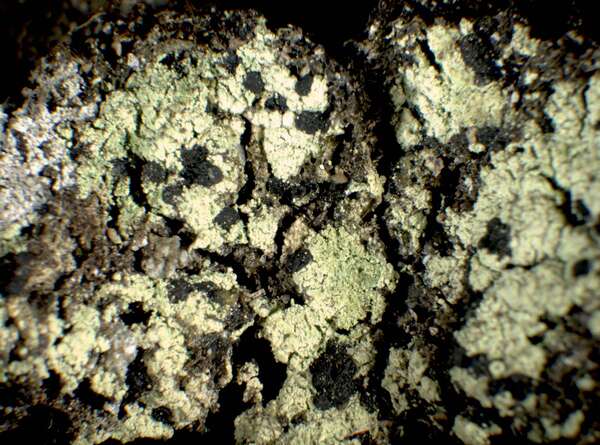
P.L. Nimis; Owner: Department of Life Sciences, University of Trieste
Herbarium: TSB (24570)
2001/12/13
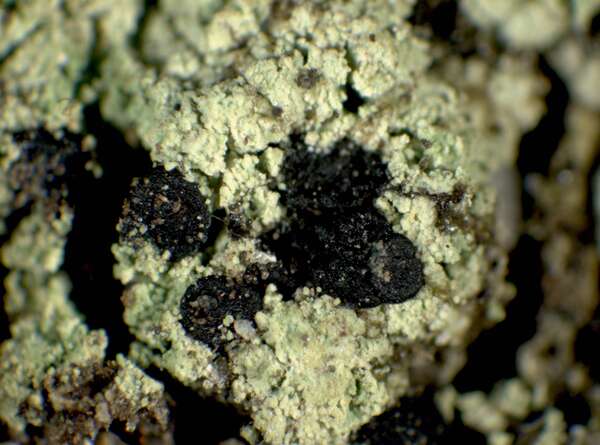
P.L. Nimis; Owner: Department of Life Sciences, University of Trieste
Herbarium: TSB (24570)
2001/12/13
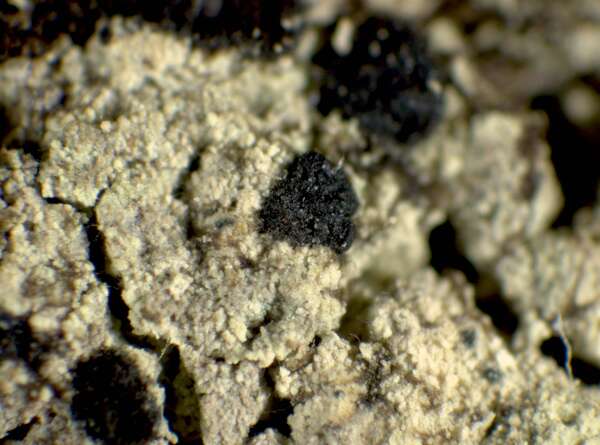
P.L. Nimis; Owner: Department of Life Sciences, University of Trieste
Herbarium: TSB (21138)
2001/12/13
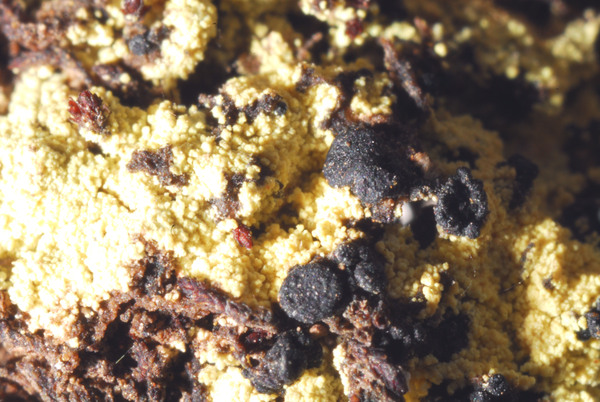
Domenico Puntillo; Owner: Domenico Puntillo
Italy
Pier Luigi Nimis - CC BY-SA 4.0
TSB 38876
Growth form: Crustose
Substrata: soil, terricolous mosses, and plant debris
Photobiont: green algae other than Trentepohlia
Reproductive strategy: mainly asexual, by soredia, or soredia-like structures (e.g. blastidia)
paras Baeomyces spp.
Commonnes-rarity: (info)
Alpine belt: rather common
Subalpine belt: rather rare
Montane belt: extremely rare
Dry submediterranean belt: absent
Humid submediterranean belt: absent
Padanian area: absent
pH of the substrata:
| 1 | 2 | 3 | 4 | 5 |
Solar irradiation:
| 1 | 2 | 3 | 4 | 5 |
Aridity:
| 1 | 2 | 3 | 4 | 5 |
Eutrophication:
| 1 | 2 | 3 | 4 | 5 |
Poleotolerance:
| 0 | 1 | 2 | 3 |
Altitudinal distribution:
| 1 | 2 | 3 | 4 | 5 | 6 |
Rarity
absent
extremely rare
very rare
rare
rather rare
rather common
common
very common
extremely common
Loading data...
Occurrence data
Predictive map
P.L. Nimis; Owner: Department of Life Sciences, University of Trieste
Herbarium: TSB (24570)
2001/12/13

P.L. Nimis; Owner: Department of Life Sciences, University of Trieste
Herbarium: TSB (24570)
2001/12/13
P.L. Nimis; Owner: Department of Life Sciences, University of Trieste
Herbarium: TSB (21138)
2001/12/13
Domenico Puntillo; Owner: Domenico Puntillo
Italy