Variospora velana (A. Massal.) Arup, Søchting & Frödén
in Arup & al., Nordic J. Bot., 31, 1: 77, 2013. Basionym: Callopisma aurantiacum var. velanum A. Massal. - Atti Inst. Veneto Sci. Lett., Arti, Sér. 2, 3, App. 3: 74, 1852
Synonyms: Caloplaca aurantiaca var. velana (A. Massal.) Flagey; Caloplaca velana (A. Massal.) Du Rietz; Lecidea velana (A. Massal.) Hue
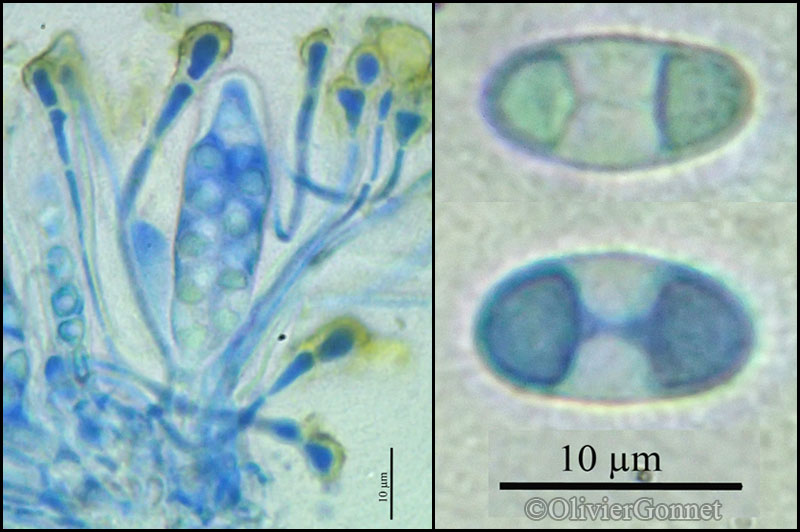
Description: Thallus crustose, episubstratic, starting the life-cycle on the thalli of Pyrenodesmia variabilis, granular to granular-areolate, ochraceous yellow to brownish orange, epruinose, often developed only around the apothecia. Apothecia frequent, zeorine, crowded, 0.5-1.2(-2) mm across, not immersed in the thallus, with an orange disc and a usually paler, persistent margin. Epithecium orange, granular, K+ purple-red; hymenium colourless; paraphyses sparingly branched in upper part, swollen at apex; hypothecium colourless. Asci 8-spored, clavate, functionally unitunicate, apically thickened with a broad internal beak, the inner part of apex and external cap I+ blue, Teloschistes-type. Ascospores 2-celled, polarilocular, hyaline, ellipsoid to broadly ellipsoid, 9-15 x 5-10 μm, the equatorial thickening (“septum”) 3-6 μm (1/4-1/2 of spore length). Photobiont chlorococcoid. Spot tests: thallus and apothecia K+ purple-red, C-, KC-, P-. Chemistry: thallus and apothecia with parietin (major), fallacinal, emodin, teloschistin and parietinic acid (minor), corresponding with chemosyndrome A of Søchting (1997).
Growth form: Crustose
Substrata: rocks
Photobiont: green algae other than Trentepohlia
Reproductive strategy: mainly sexual
Poorly known taxon in need of further study
Commonnes-rarity: (info)
Alpine belt: extremely rare
Subalpine belt: extremely rare
Montane belt: very rare
Dry submediterranean belt: rare
Humid submediterranean belt: rare
Padanian area: absent
pH of the substrata:
1 2 3 4 5

Solar irradiation:
1 2 3 4 5
Aridity:
1 2 3 4 5
Eutrophication:
1 2 3 4 5
Poleotolerance:
0 1 2 3
Altitudinal distribution:
1 2 3 4 5 6
Rarity
absent
extremely rare
very rare
rare
rather rare
rather common
common
very common
extremely common
Loading data...
Occurrence data
Predictive map
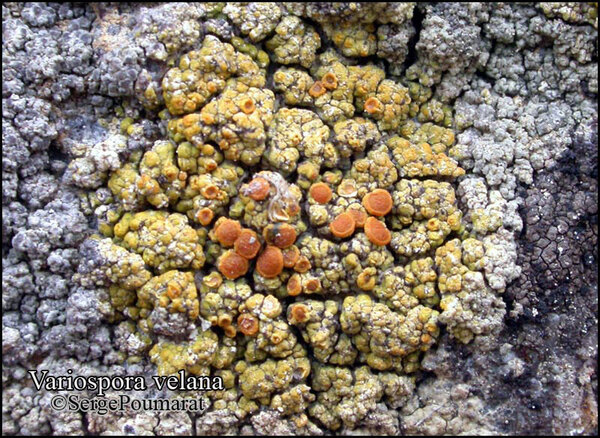
Serge Poumarat - Source: https://www.afl-lichenologie.fr/Photos_AFL/Photos_AFL_V/Texte_V/Variospora_velana.htm
France
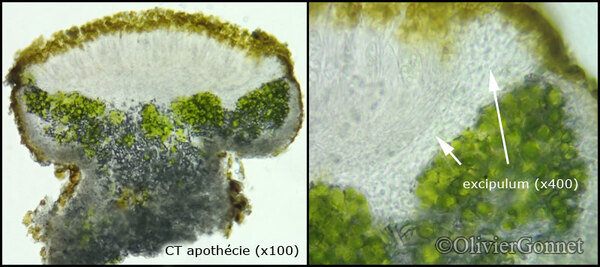
Olivier Gonnet - Source: https://www.afl-lichenologie.fr/Photos_AFL/Photos_AFL_V/Texte_V/Variospora_velana.htm
France
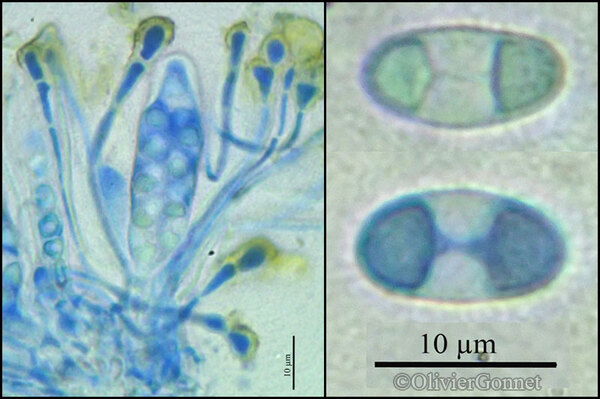
Olivier Gonnet - Source: https://www.afl-lichenologie.fr/Photos_AFL/Photos_AFL_V/Texte_V/Variospora_velana.htm
France
Growth form: Crustose
Substrata: rocks
Photobiont: green algae other than Trentepohlia
Reproductive strategy: mainly sexual
Poorly known taxon in need of further study
Commonnes-rarity: (info)
Alpine belt: extremely rare
Subalpine belt: extremely rare
Montane belt: very rare
Dry submediterranean belt: rare
Humid submediterranean belt: rare
Padanian area: absent
pH of the substrata:
| 1 | 2 | 3 | 4 | 5 |
Solar irradiation:
| 1 | 2 | 3 | 4 | 5 |
Aridity:
| 1 | 2 | 3 | 4 | 5 |
Eutrophication:
| 1 | 2 | 3 | 4 | 5 |
Poleotolerance:
| 0 | 1 | 2 | 3 |
Altitudinal distribution:
| 1 | 2 | 3 | 4 | 5 | 6 |
Rarity
absent
extremely rare
very rare
rare
rather rare
rather common
common
very common
extremely common
Loading data...
Occurrence data
Predictive map
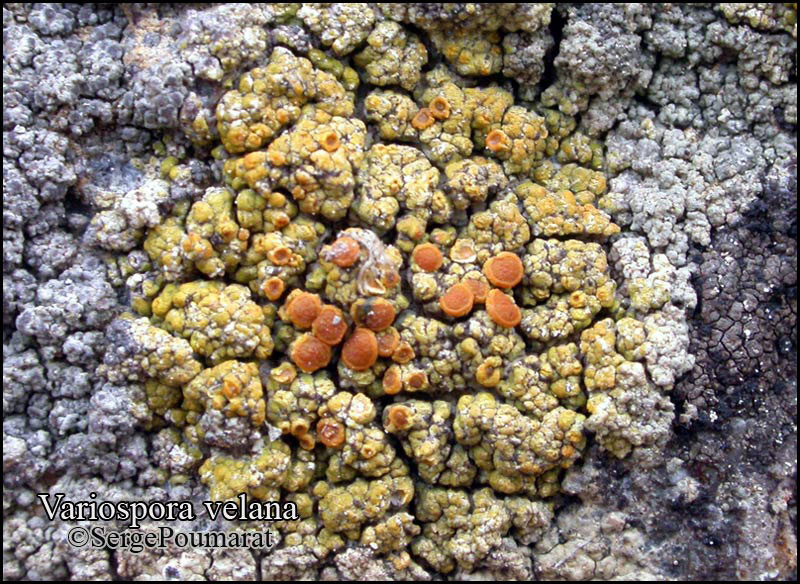
Serge Poumarat - Source: https://www.afl-lichenologie.fr/Photos_AFL/Photos_AFL_V/Texte_V/Variospora_velana.htm
France
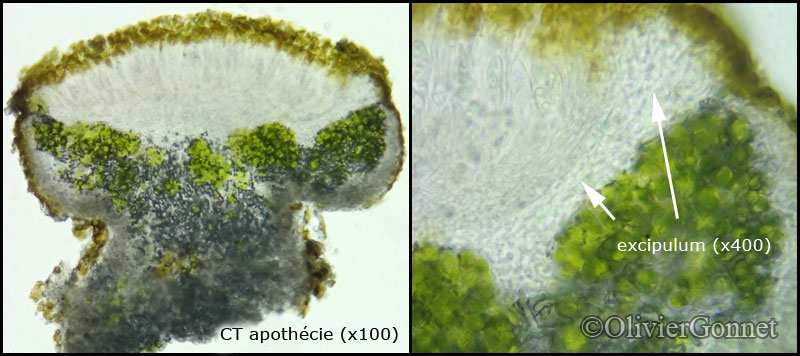
Olivier Gonnet - Source: https://www.afl-lichenologie.fr/Photos_AFL/Photos_AFL_V/Texte_V/Variospora_velana.htm
France