Brianaria lutulata (Nyl.) S. Ekman & M. Svenss.
Lichenologist, 46: 292, 2014. Basionym: Lecidea lutulata Nyl. - Flora, 56: 297, 1873.
Synonyms: Biatora anthrophila (Larbal. ex Leight.) Walt. Watson; Lecidea anthrophila Leight.; Lecidea laxula Nyl.; Lecidea paucula Nyl.; Lecidea poliodes Nyl.; Micarea lutulata (Nyl.) Coppins; Micarea polioides (Nyl.) Vězda; Micarea umbrosa Vězda & V. Wirth
Description: Thallus crustose, episubstratic, continuous to finely rimose, glaucescent white to greenish grey, sometimes yellowish brown or reddish brown when on iron-rich rocks. Apothecia micareoid, brownish, pale lead-grey fuscous brown to black (the paler ones always turning black when wet), 0.2-0.4 mm across, often confluent into tuberculate, up 1 mm wide aggregates, with a convex to globose disc, from the beginning without a proper margin. Proper exciple absent; epithecium colourless, very pale brown or deep green, K-, N-, or (when green) N+ red; hymenium colourless, pale brown or blue-green, often with vertical pigmented streaks, 30-40(-50) µm high; paraphyses scarce, of two types: the majority sparingly branched and 0.5-1.5 μm thick (the apices slightly wider), the others simple, often fasciculate, and 1.5-2 μm thick; hypothecium dark red-brown (appearing brown-black in thick sections) , K- or K+ intensifying red, N-. Asci 8-spored, cylindrical-clavate, the I+ blue tholus with a wide, I+ dark blue tube structure that expands towards the top, without a pale axial body, Psora-type, 30-40 x 8-12 μm. Ascospores 1-celled, hyaline, ellipsoid, (5-)6-7(-9) x 2-3(-4) µm. Pycnidia black, immersed, inconspicuous, the outer wall reddish brown, K-. Conidia cylindrical, not constricted in the middle, 3.8-5.5(-6.5) x 0.9-1.4 µm. Photobiont chlorococcoid, the cells thin-walled, (5-)8-15 μm wide. Spot tests: thallus K-, C-, KC-, P-, UV-. Chemistry: without lichen substances.
Growth form: Crustose
Substrata: rocks
Photobiont: green algae other than Trentepohlia
Reproductive strategy: mainly sexual
In underhangs rarely wetted by rain
Species of metal-rich rocks
Commonnes-rarity: (info)
Alpine belt: absent
Subalpine belt: absent
Montane belt: extremely rare
Dry submediterranean belt: extremely rare
Humid submediterranean belt: absent
Padanian area: absent
pH of the substrata:
1 2 3 4 5

Solar irradiation:
1 2 3 4 5
Aridity:
1 2 3 4 5
Eutrophication:
1 2 3 4 5
Poleotolerance:
0 1 2 3
Altitudinal distribution:
1 2 3 4 5 6
Rarity
absent
extremely rare
very rare
rare
rather rare
rather common
common
very common
extremely common
Loading data...
Occurrence data
Predictive map
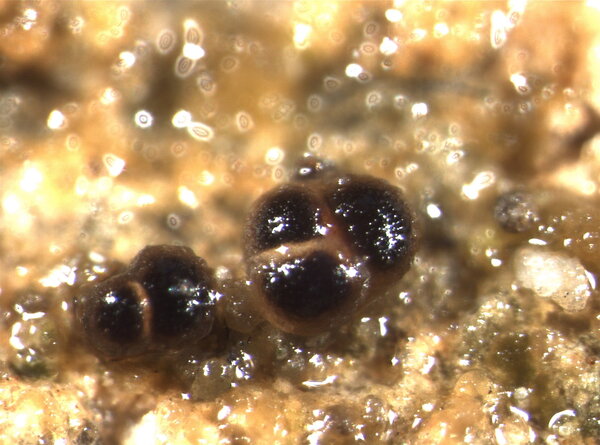
Pier Luigi Nimis - CC BY-SA 4.0
TSB 31402
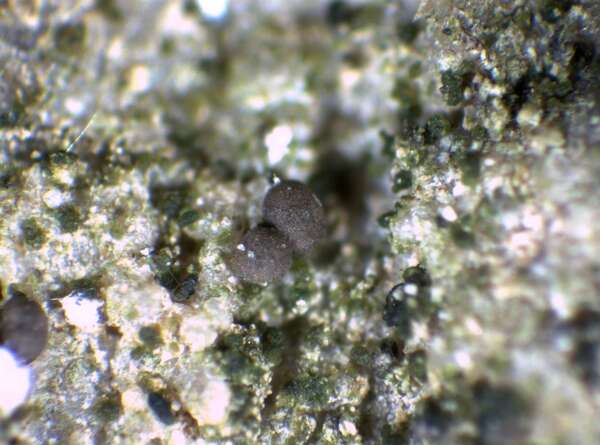
P.L. Nimis; Owner: Department of Life Sciences, University of Trieste
Herbarium: TSB (31402)
2001/11/26
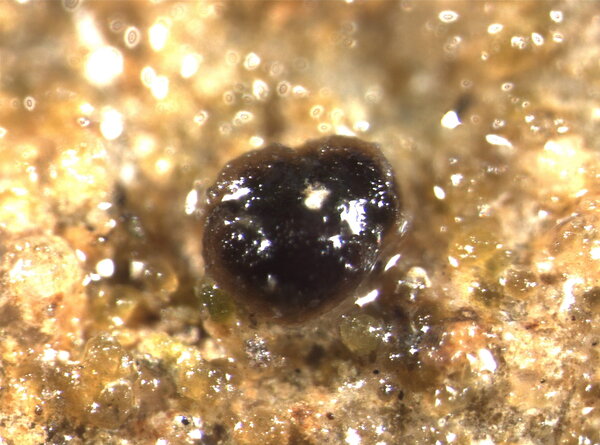
Pier Luigi Nimis - CC BY-SA 4.0
TSB 31402
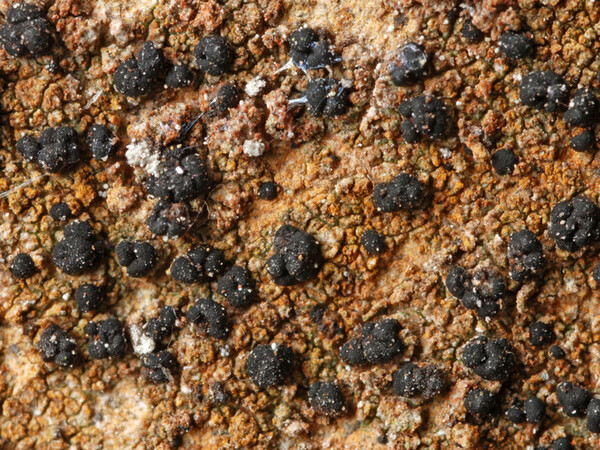
Leif Stridvall - Source: http://www.stridvall.se/la/galleries.php . Courtesy: Anita Stridvall
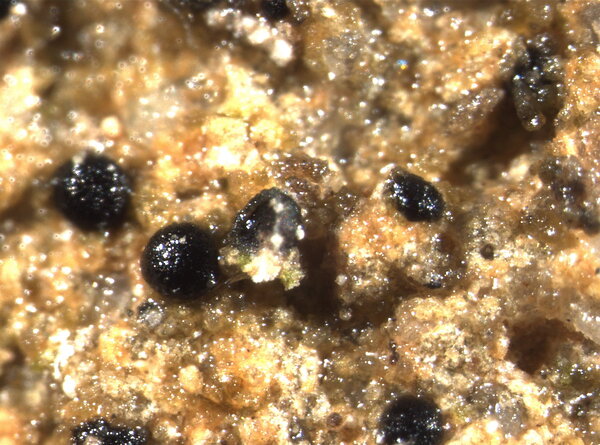
Pier Luigi Nimis - CC BY-SA 4.0
TSB 31402
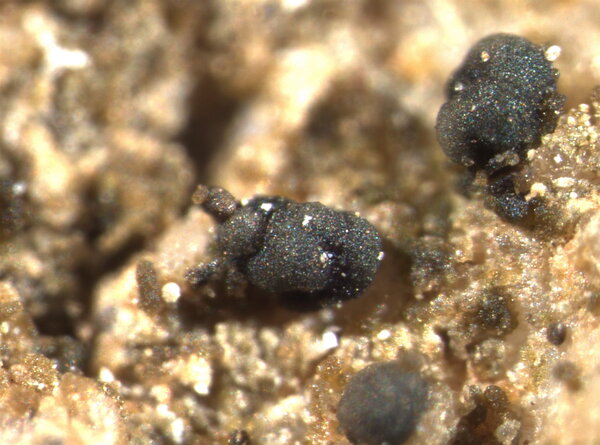
Pier Luigi Nimis - CC BY-SA 4.0
TSB 31402
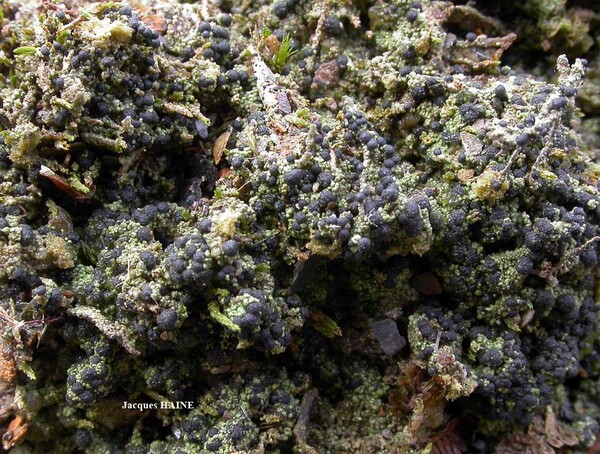
Jacques Haine - Source:http://www.lichensmaritimes.org/index.php?task=fiche&lichen=507&lang=en
France, Rocroi
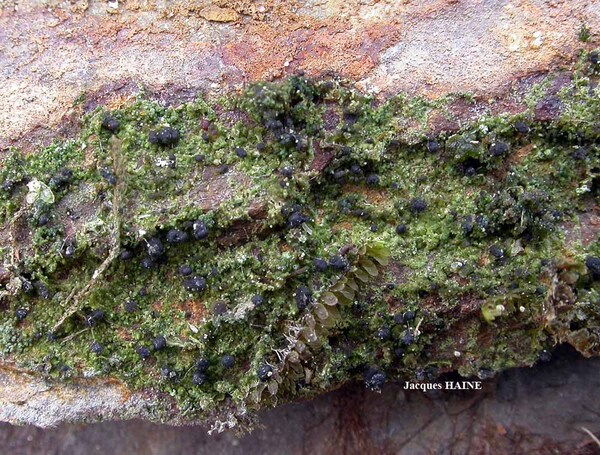
Jacques Haine - Source:http://www.lichensmaritimes.org/index.php?task=fiche&lichen=507&lang=en
France, Rocroi
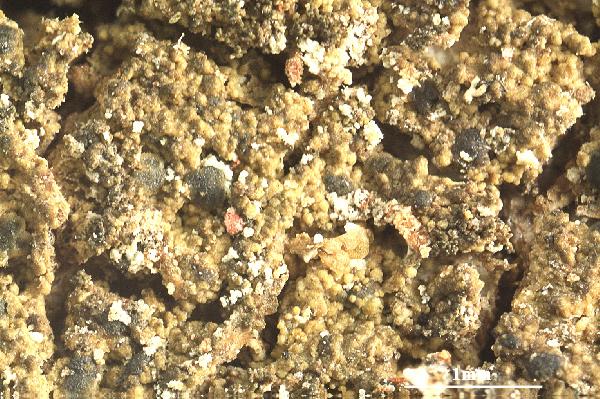
Felix Schumm - CC BY-SA 4.0
[ABL42448], Brazil, Alagoas, Quebrangulo, Pedra Talhada, private
area. In Atlantic rain forest on tree bark. 9°15' S, 36°25'35'' W, 500-700
m. Leg. M. Cáceres & A. Aptroot (no 42448), 21-23 October 2017, det.
A. Aptroot 2017.
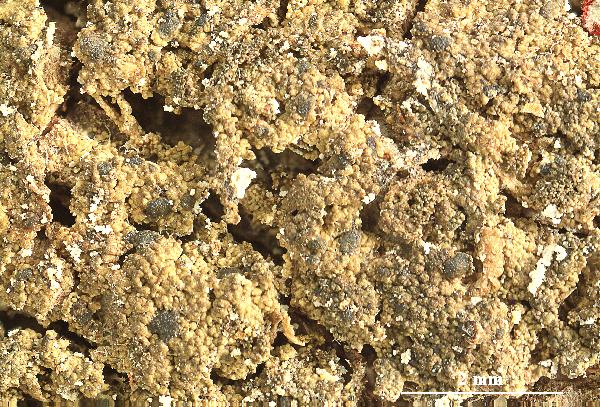
Felix Schumm - CC BY-SA 4.0
[ABL42448], Brazil, Alagoas, Quebrangulo, Pedra Talhada, private
area. In Atlantic rain forest on tree bark. 9°15' S, 36°25'35'' W, 500-700
m. Leg. M. Cáceres & A. Aptroot (no 42448), 21-23 October 2017, det.
A. Aptroot 2017.
Growth form: Crustose
Substrata: rocks
Photobiont: green algae other than Trentepohlia
Reproductive strategy: mainly sexual
In underhangs rarely wetted by rain
Species of metal-rich rocks
Commonnes-rarity: (info)
Alpine belt: absent
Subalpine belt: absent
Montane belt: extremely rare
Dry submediterranean belt: extremely rare
Humid submediterranean belt: absent
Padanian area: absent
pH of the substrata:
| 1 | 2 | 3 | 4 | 5 |
Solar irradiation:
| 1 | 2 | 3 | 4 | 5 |
Aridity:
| 1 | 2 | 3 | 4 | 5 |
Eutrophication:
| 1 | 2 | 3 | 4 | 5 |
Poleotolerance:
| 0 | 1 | 2 | 3 |
Altitudinal distribution:
| 1 | 2 | 3 | 4 | 5 | 6 |
Rarity
absent
extremely rare
very rare
rare
rather rare
rather common
common
very common
extremely common
Loading data...
Occurrence data
Predictive map
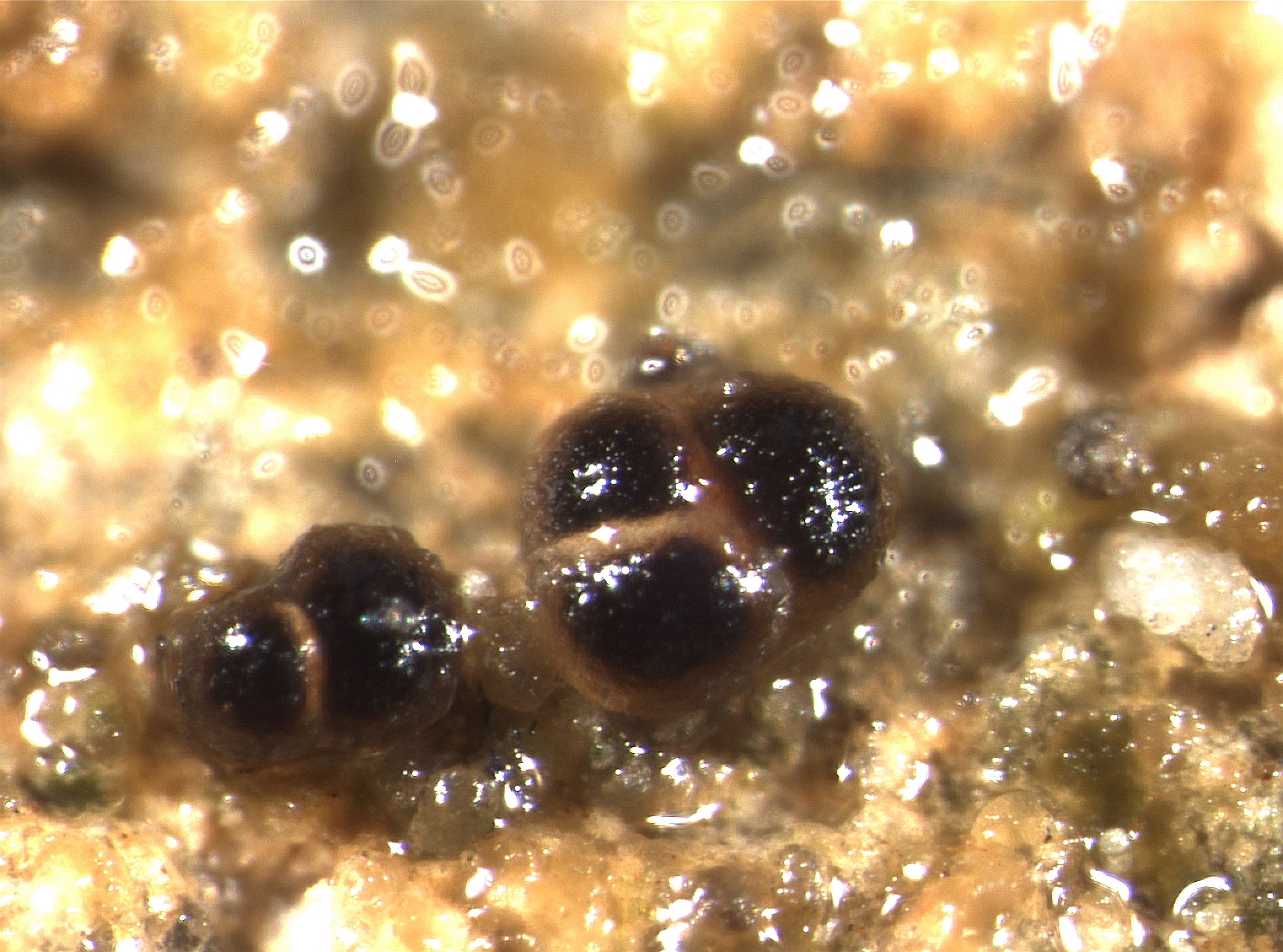
Pier Luigi Nimis - CC BY-SA 4.0
TSB 31402
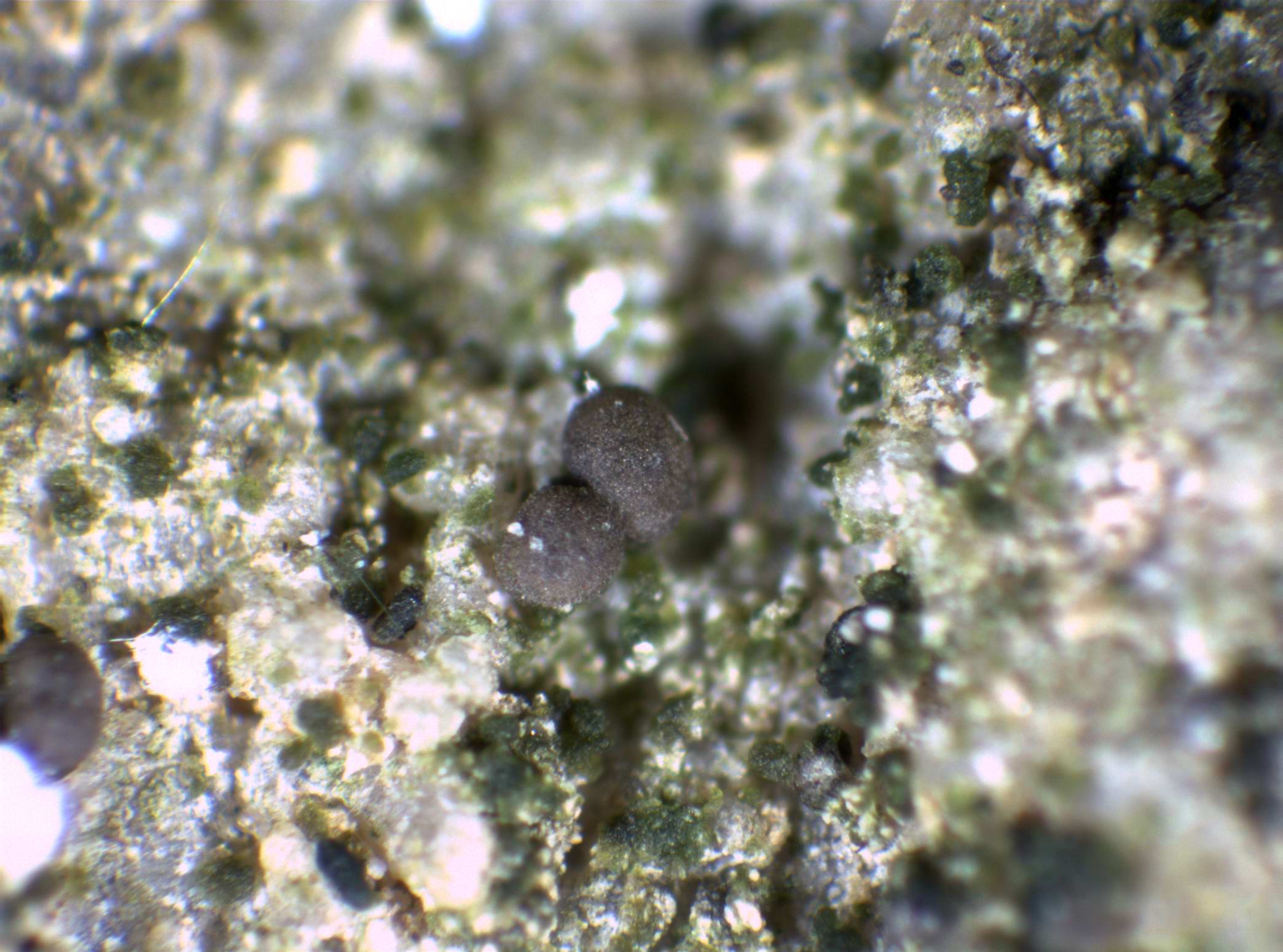
P.L. Nimis; Owner: Department of Life Sciences, University of Trieste
Herbarium: TSB (31402)
2001/11/26
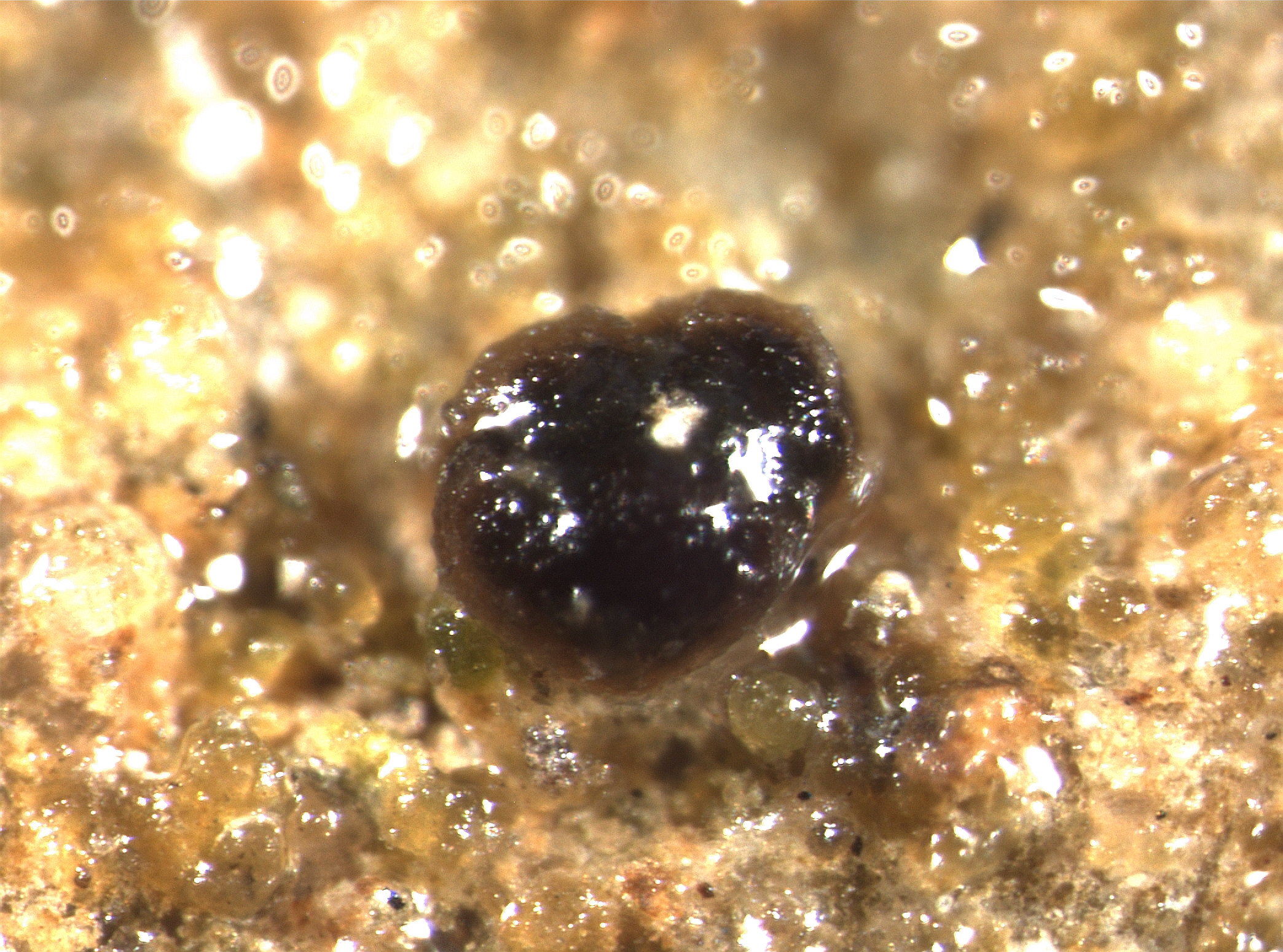
Pier Luigi Nimis - CC BY-SA 4.0
TSB 31402
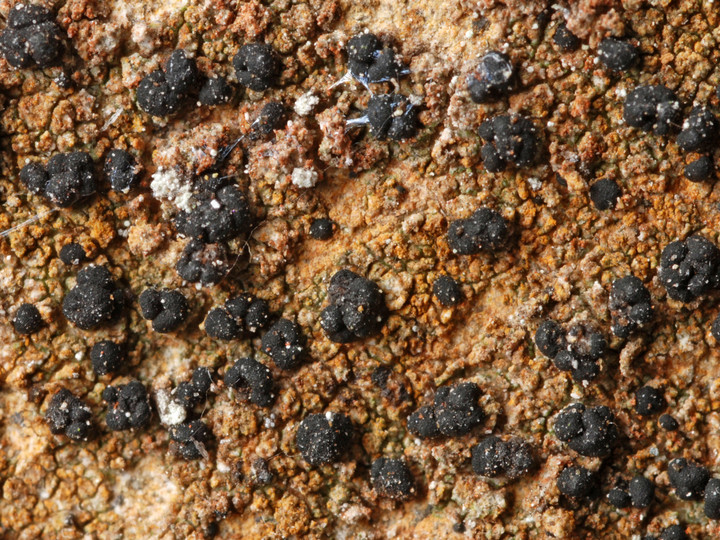
Leif Stridvall - Source: http://www.stridvall.se/la/galleries.php . Courtesy: Anita Stridvall

Pier Luigi Nimis - CC BY-SA 4.0
TSB 31402
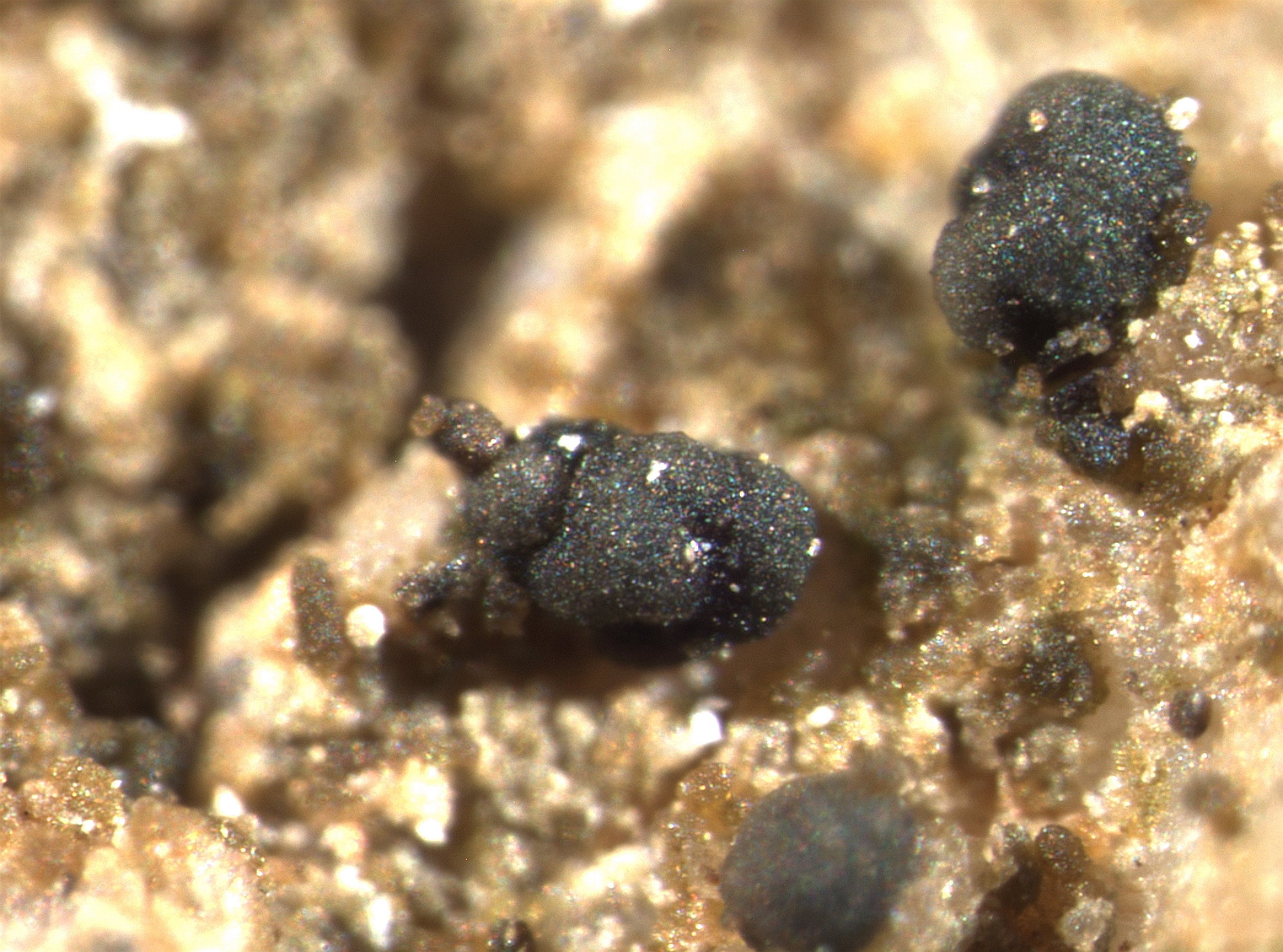
Pier Luigi Nimis - CC BY-SA 4.0
TSB 31402
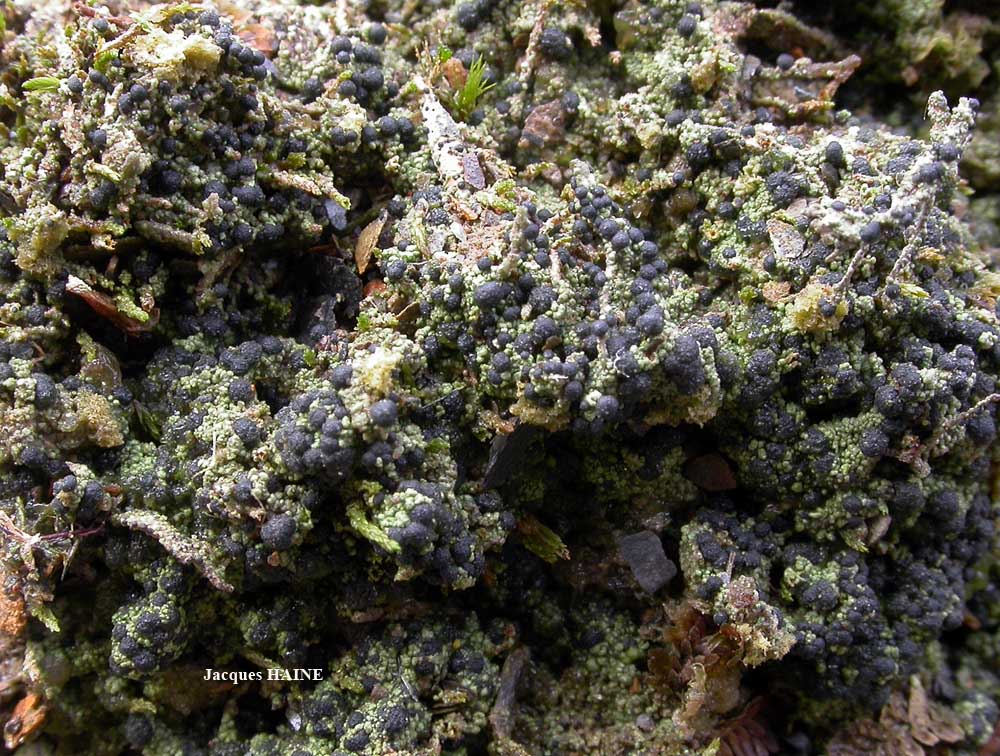
Jacques Haine - Source:http://www.lichensmaritimes.org/index.php?task=fiche&lichen=507&lang=en
France, Rocroi
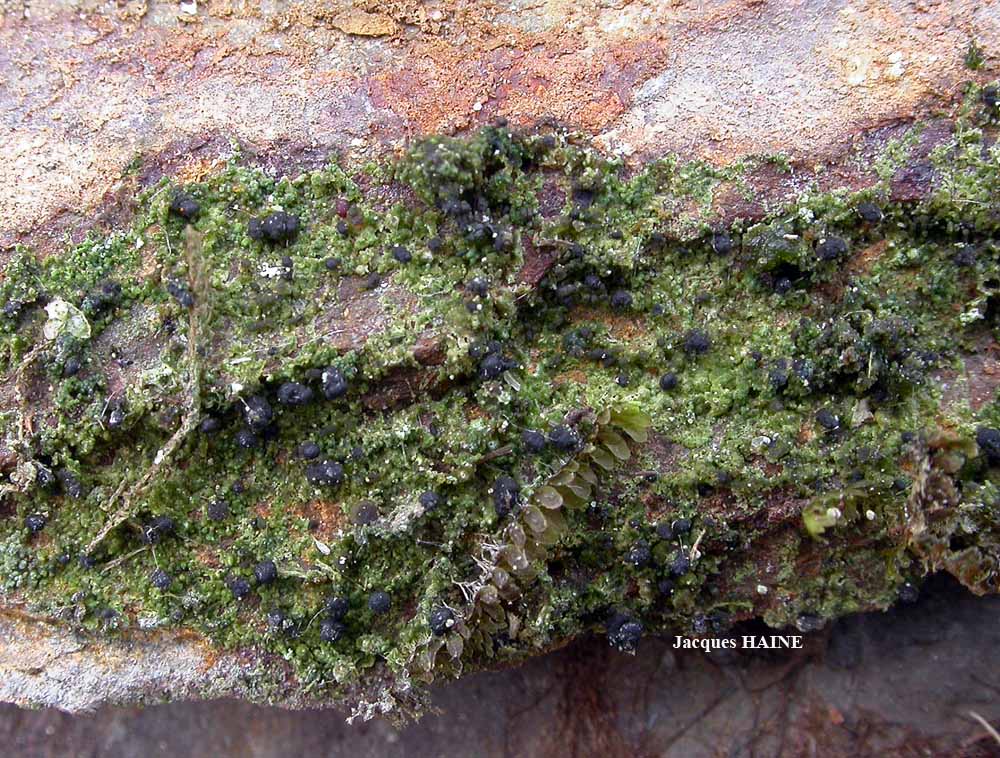
Jacques Haine - Source:http://www.lichensmaritimes.org/index.php?task=fiche&lichen=507&lang=en
France, Rocroi

Felix Schumm - CC BY-SA 4.0
[ABL42448], Brazil, Alagoas, Quebrangulo, Pedra Talhada, private area. In Atlantic rain forest on tree bark. 9°15' S, 36°25'35'' W, 500-700 m. Leg. M. Cáceres & A. Aptroot (no 42448), 21-23 October 2017, det. A. Aptroot 2017.