Bryoria fuscescens (Gyeln.) Brodo & D. Hawksw.
Opera Bot., 42: 83, 1977. Basionym: Alectoria fuscescens Gyeln. - Nytt Mag. Naturvid., 70: 55, 1932.
Synonyms: Alectoria achariana Gyeln.?; Alectoria catharinae Räsänen; Alectoria chalybeiformis (L.) Röhl.; Alectoria crispa Motyka; Alectoria haynaldii Gyeln.; Alectoria implexa (Hoffm.) Röhl.; Alectoria jubata auct. p.p.; Alectoria jubata var. lanestris Ach.; Alectoria kuemmerleana Gyeln.; Alectoria lanestris (Ach.) Gyeln.; Alectoria osteola Gyeln.; Alectoria positiva (Gyeln.) Motyka?; Alectoria prostratosteola Gyeln.; Alectoria subachariana Gyeln.; Alectoria valparolae Sambo; Alectoria zopfii Asahina; Bryopogon implexus (Hoffm.) Elenkin; Bryopogon jubatus (L.) Link; Bryopogon lanestris (Ach.) Gyeln.; Bryoria chalybeiformis (L.) Brodo & D. Hawksw.; Bryoria fuscescens var. positiva (Gyeln.) Brodo & D. Hawksw.; Bryoria implexa (Hoffm.) Brodo & D. Hawksw.; Bryoria intricans (Vain.) Brodo & D. Hawksw.; Bryoria kuemmerleana (Gyeln.) Brodo & D. Hawksw.; Bryoria lanestris (Ach.) Brodo & D. Hawksw.; Bryoria osteola (Gyeln.) Brodo & D. Hawksw.; Bryoria positiva (Gyeln.) Bystrek; Bryoria subcana (Nyl. ex Stizenb.) Brodo & D. Hawksw.; Evernia jubata (L.) Fr.; Lichen chalybeiformis L.
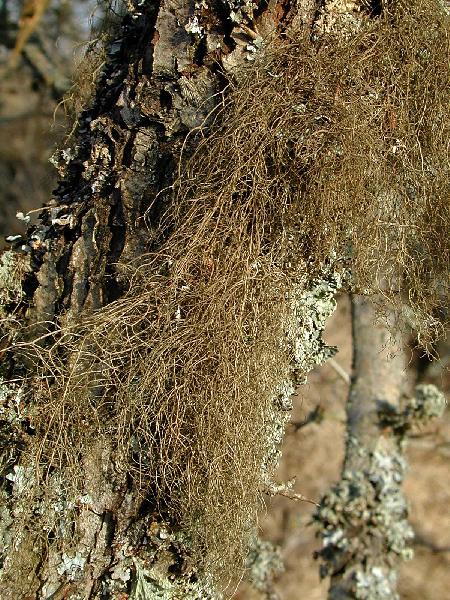
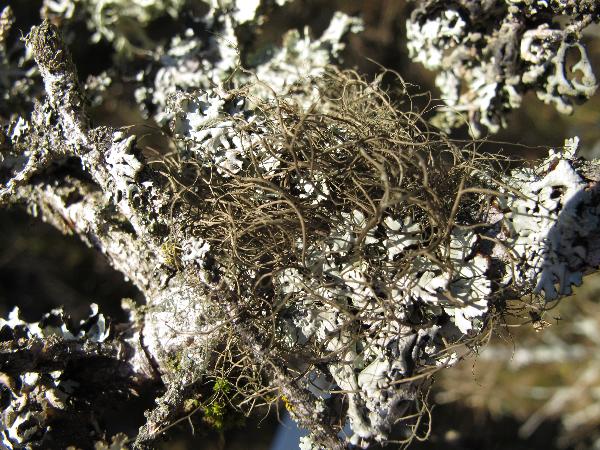
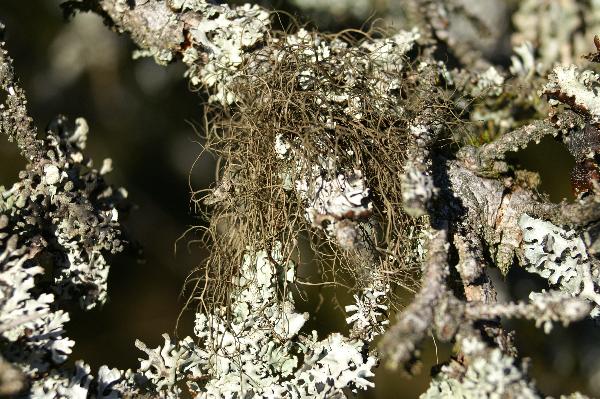
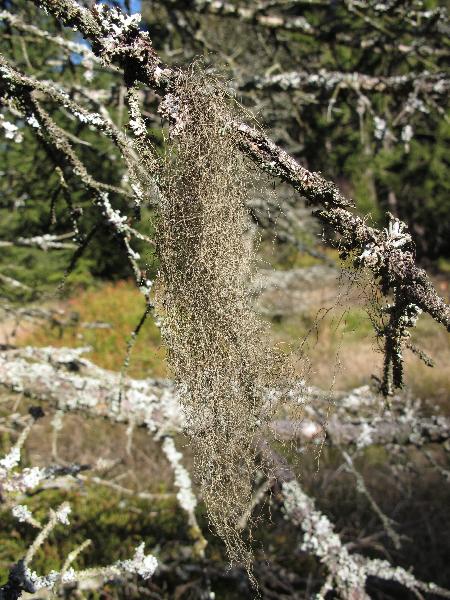
Description: Thallus fruticose-filamentous, very variable in shape and colour, pale grey-brown to brown-black, sometimes pruinose in basal parts, pendulous in epiphytic forms, prostrate in terricolous forms, to 30 cm long, isotomic dichotomously branched towards the base, but becoming anisotomic dichotomous towards the apices, the angles between dichotomies obtuse or acute. Main branches 0.1-0.3(-0.5) mm thick, sometimes much larger than the secondary ones and twisted-foveolate to channelled, sometimes not markedly different from the others, without spinules, with or without distinct pseudocyphellae. Soralia absent to common, usually tuberculate, sometimes fissural, whitish, with farinose soredia. Apothecia very rare, zeorine, with a brown disc and a paler margin, to 2 mm across. Asci 8-spored, Lecanora-type. Ascospores 1-celled, hyaline, subglobose to ellipsoid, 4-7 x 4-5 μm. Spot tests: cortex and medulla K- or K+ red, C- or C+ red, KC- or KC+ red, P-, P+ yellow or P+ red. Photobiont chlorococcoid. Chemistry: very variable, with no detectable or with one or a combination of major substances, including alectorialic, connorstictic, fumarprotocetraric, gyrophoric, norstictic, protocetraric, psoromic and possibly salazinic acids, atranorin, and chloroatranorin.
Growth form: Fruticose filamentous
Photobiont: green algae other than Trentepohlia
Reproductive strategy: mainly asexual, by soredia, or soredia-like structures (e.g. blastidia)
Most common in areas with a humid-warm climate (e.g. most of Tyrrenian Italy)
Commonnes-rarity: (info)
Alpine belt: absent
Subalpine belt: rather common
Montane belt: rather rare
Dry submediterranean belt: extremely rare
Humid submediterranean belt: extremely rare
Padanian area: absent
pH of the substrata:
1 2 3 4 5

Solar irradiation:
1 2 3 4 5
Aridity:
1 2 3 4 5
Eutrophication:
1 2 3 4 5
Poleotolerance:
0 1 2 3
Altitudinal distribution:
1 2 3 4 5 6
Rarity
absent
extremely rare
very rare
rare
rather rare
rather common
common
very common
extremely common
Loading data...
Occurrence data
Predictive map
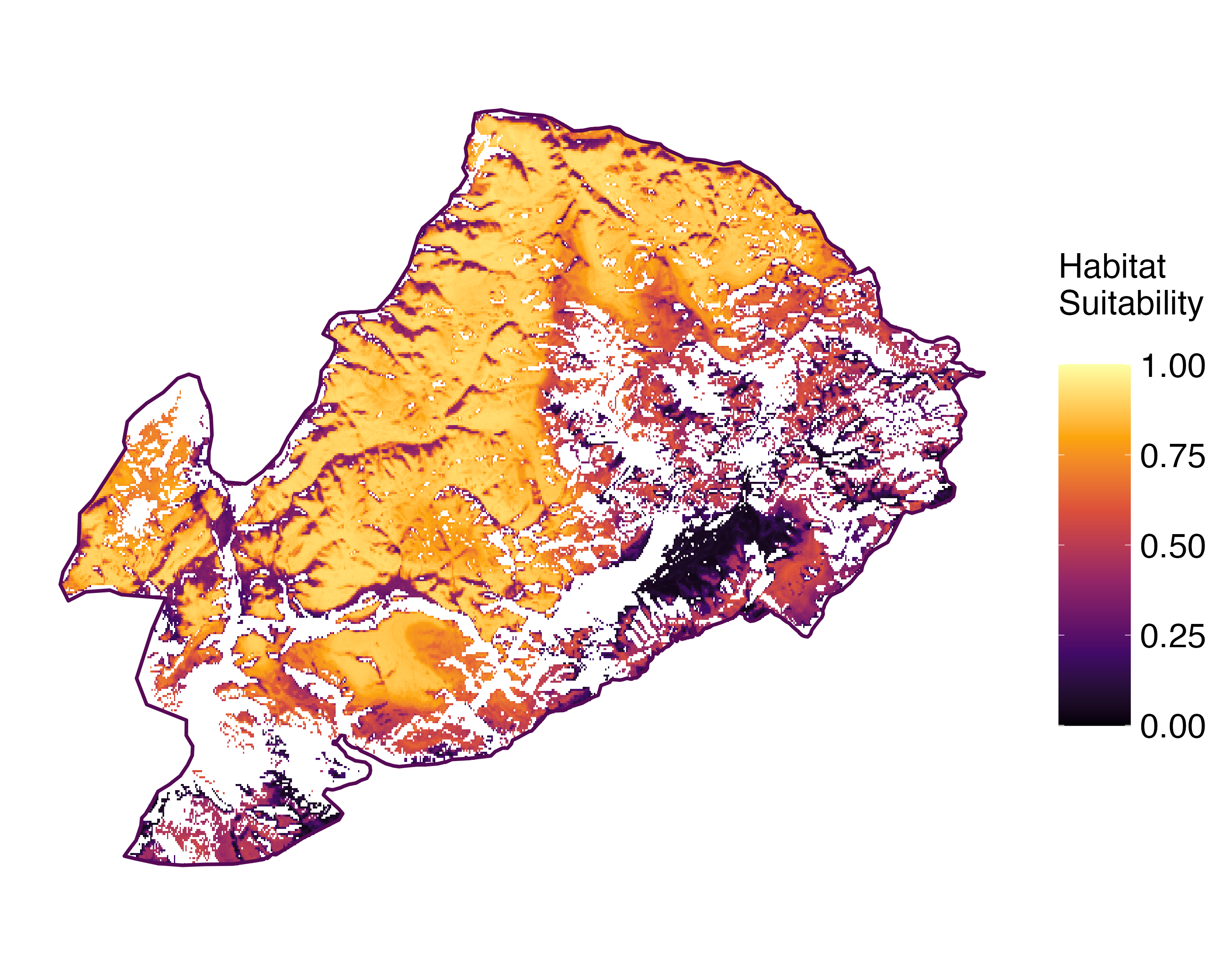 Current prediction (1981-2010)
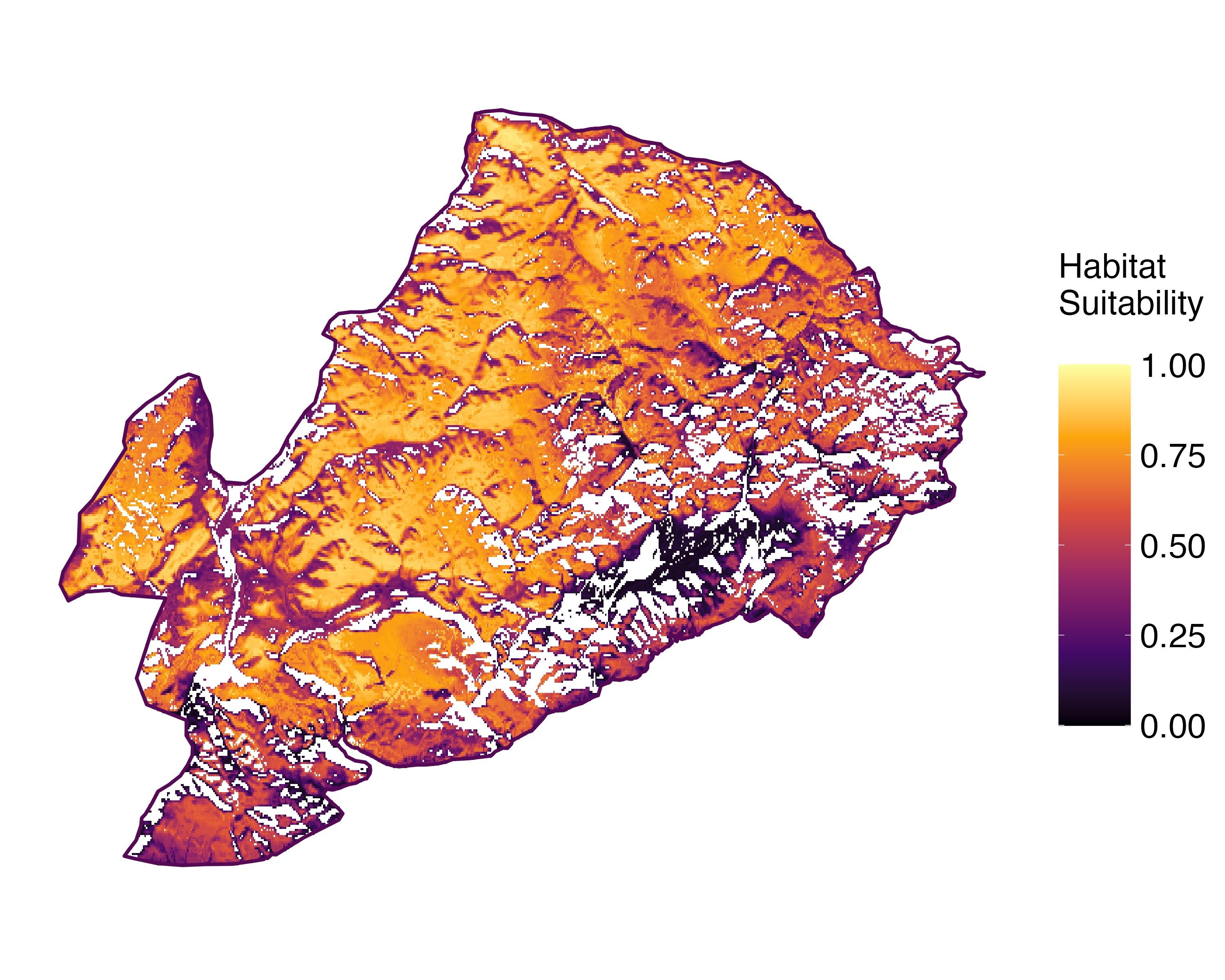 Future prediction (2071-2100) SSP 1-2.6
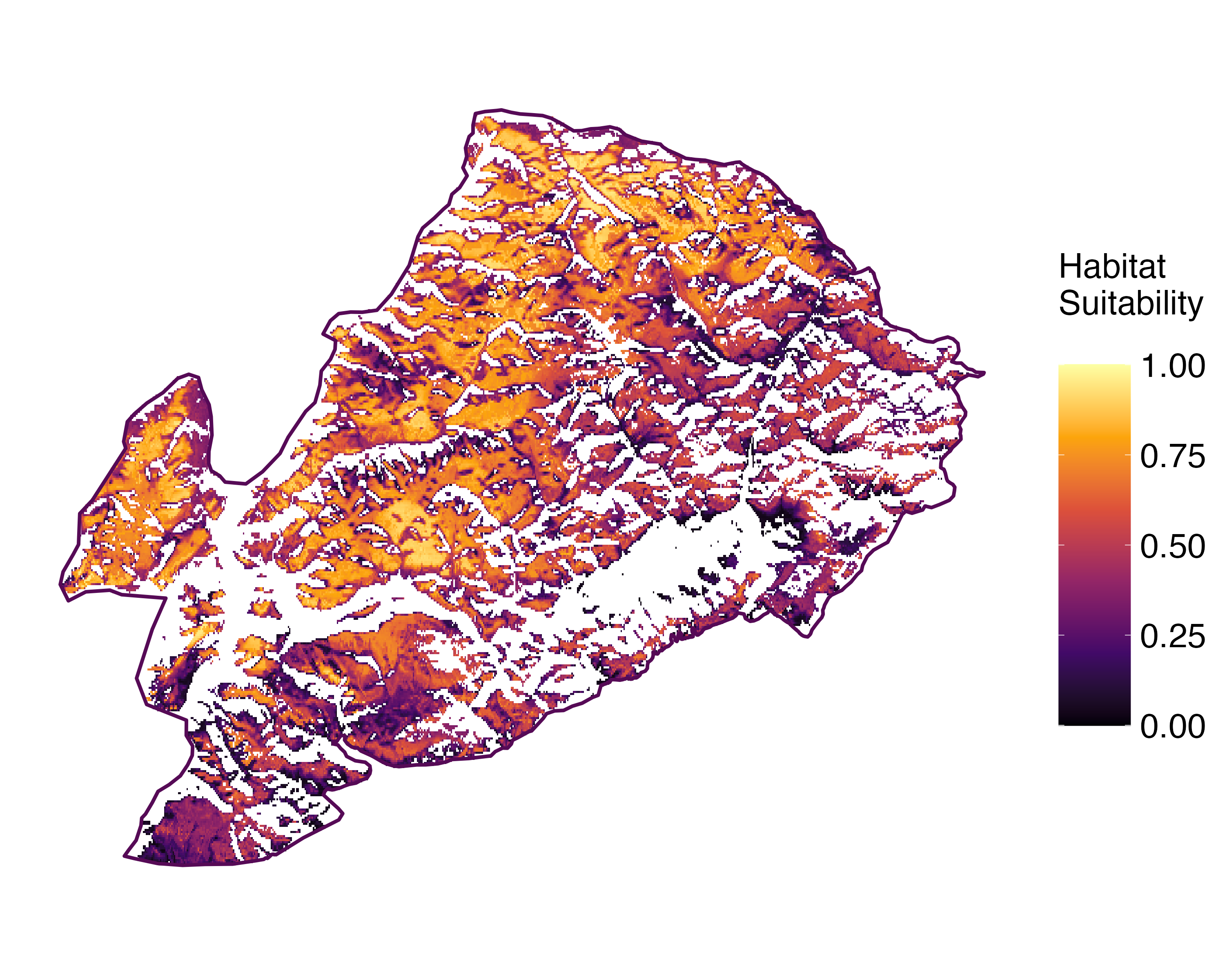 Future prediction (2071-2100) SSP 5-8.5Predictive maps according to Francesconi et al. 2025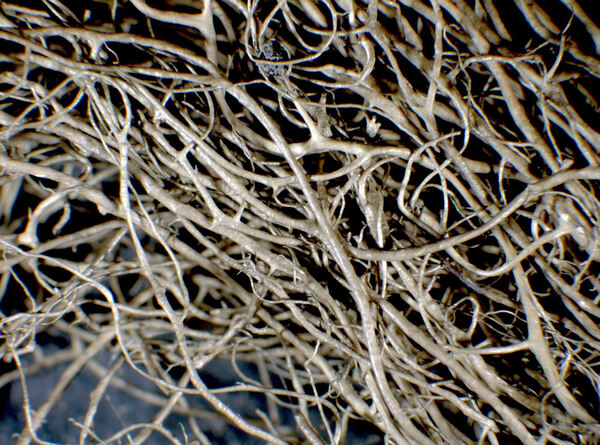
P.L. Nimis CC BY-SA 4.0
TSB 12998
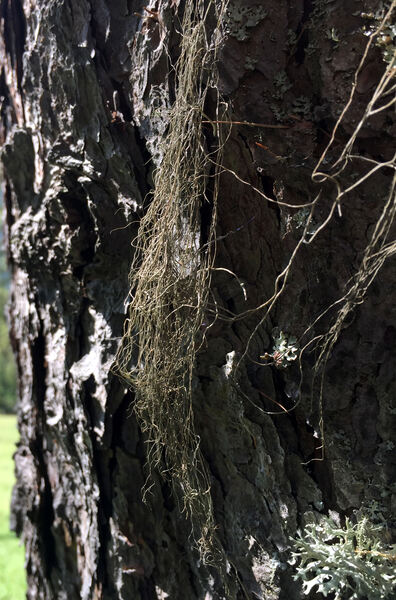
P.L. Nimis; Owner: Department of Life Sciences, University of Trieste
Italy, Friuli Venezia Giulia, Udine, Passo del Pura, Ampezzo Carnico, 1400 m
09.09.2016
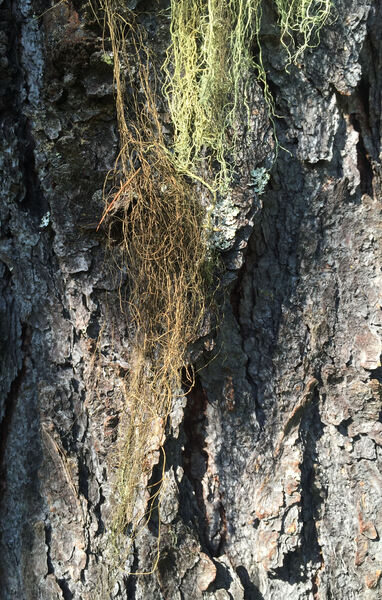
P.L. Nimis; Owner: Department of Life Sciences, University of Trieste
Italy, Friuli Venezia Giulia, Udine, Passo del Pura, Ampezzo Carnico, 1400 m
09.09.2016
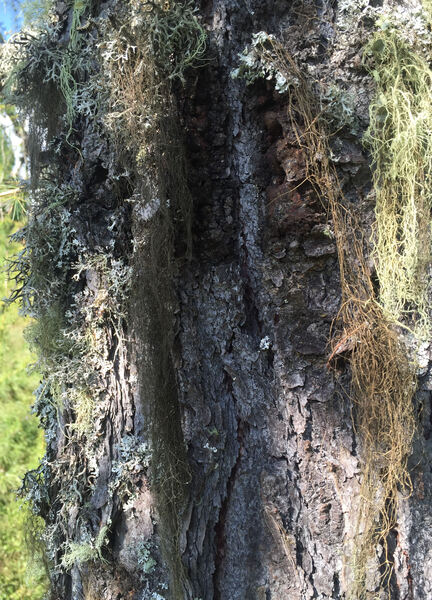
P.L. Nimis; Owner: Department of Life Sciences, University of Trieste
Italy, Friuli Venezia Giulia, Udine, Passo del Pura, Ampezzo Carnico, 1400 m
09.09.2016
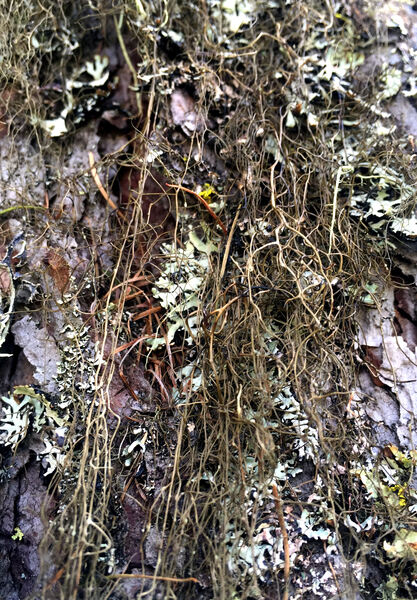
P.L. Nimis; Owner: Department of Life Sciences, University of Trieste
Italy, Friuli Venezia Giulia, Udine, Passo del Pura, Ampezzo Carnico, 1400 m
09.09.2016
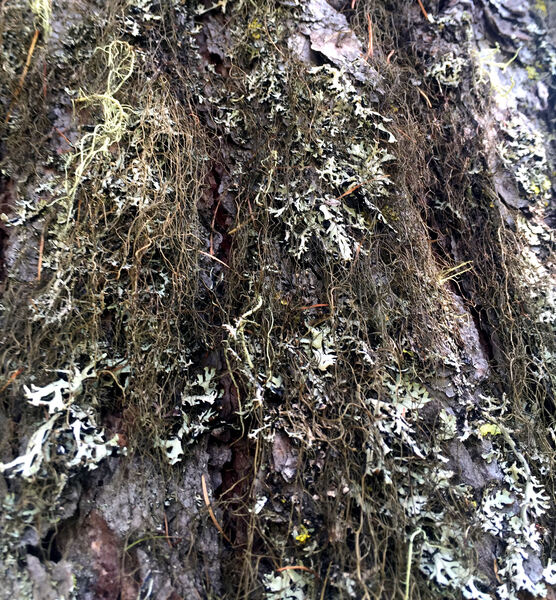
P.L. Nimis; Owner: Department of Life Sciences, University of Trieste
Italy, Friuli Venezia Giulia, Udine, Passo del Pura, Ampezzo Carnico, 1400 m
09.09.2016
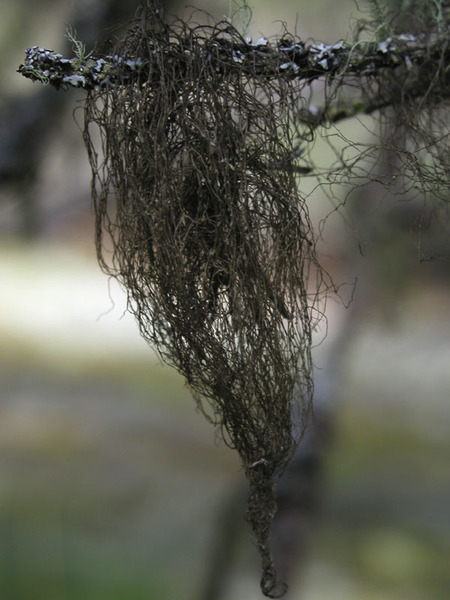
Andres Saag; Owner: University of Tartu
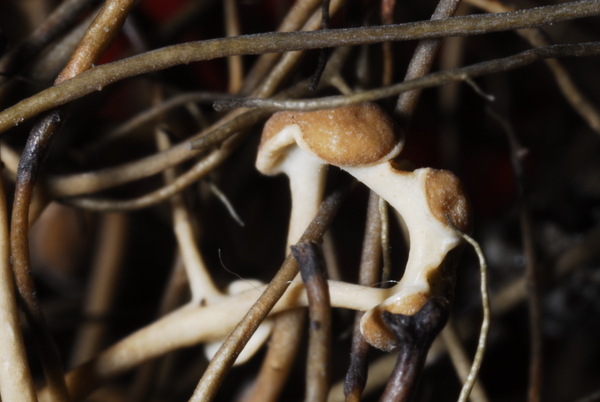
Domenico Puntillo - CC BY-SA 4.0
Italy, Calabria, Reggio Calabria, Aspromonte, Contrada Nardello, 1747 m on Abies.
19.08.2009
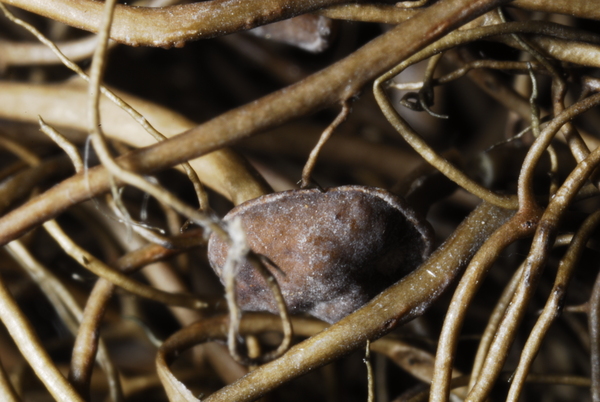
Domenico Puntillo - CC BY-SA 4.0
Italy, Calabria, Reggio Calabria, Aspromonte, Contrada Nardello, 1747 m on Abies.
19.08.2009
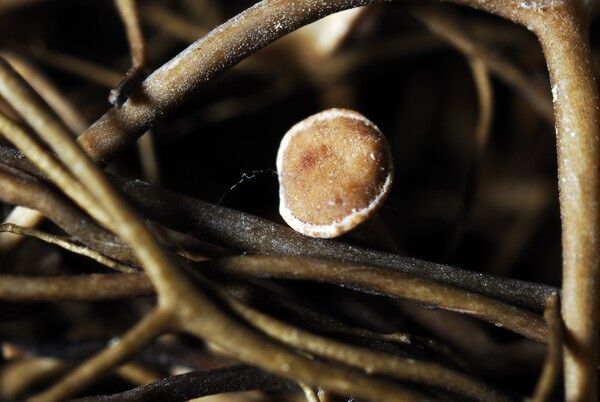
Domenico Puntillo - CC BY-SA 4.0
Italy, Calabria, Reggio Calabria, Aspromonte, Contrada Nardello, 1747 m on Abies.
19.08.2009
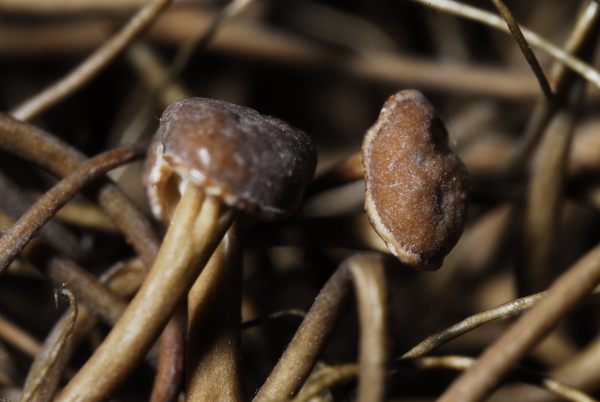
Domenico Puntillo - CC BY-SA 4.0
Italy, Calabria, Reggio Calabria, Aspromonte, Contrada Nardello, 1747 m on Abies.
19.08.2009
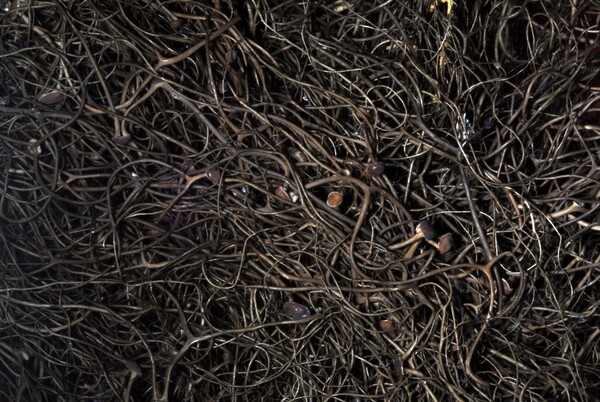
Domenico Puntillo - CC BY-SA 4.0
Italy, Calabria, Reggio Calabria, Aspromonte, Contrada Nardello, 1747 m on Abies.
19.08.2009
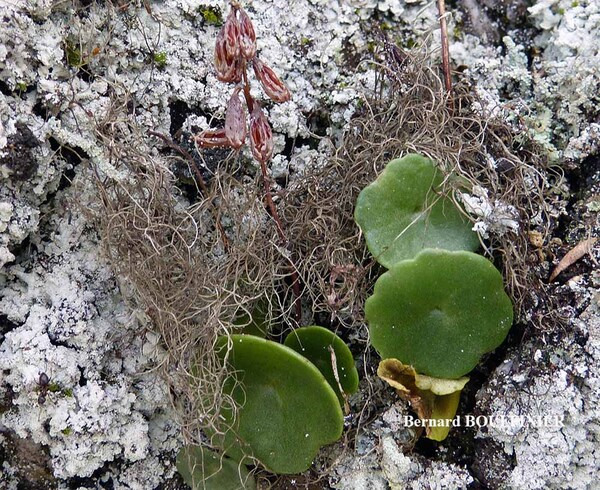
Michel David - Source: http://www.lichensmaritimes.org/index.php?task=fiche&lichen=547&lang=en
France, Plounéour-Ménez
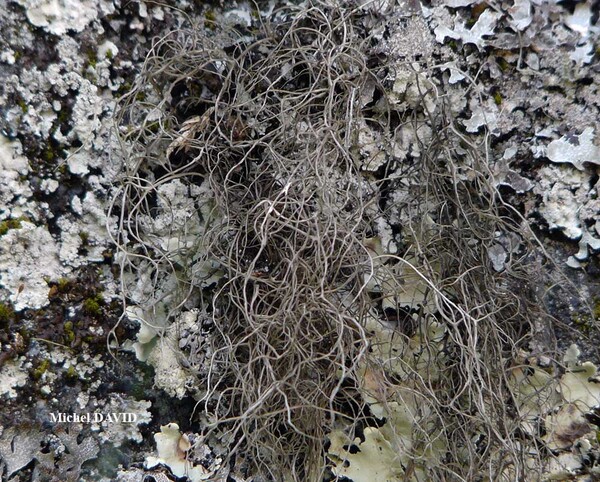
Michel David - Source: http://www.lichensmaritimes.org/index.php?task=fiche&lichen=547&lang=en
France, Plounéour-Ménez
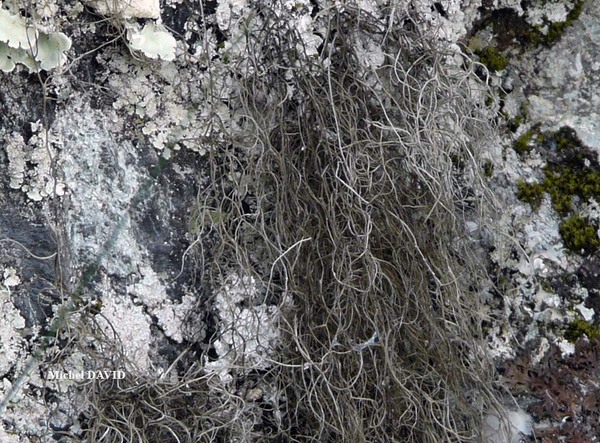
Michel David - Source: http://www.lichensmaritimes.org/index.php?task=fiche&lichen=547&lang=en
France, Plounéour-Ménez

Marta Gonzalez Garcia - Centro de Estudios Micologicos Asturianos
Spain, Alto de San Lorenzo (Teverga), 16-II-2023, sobre Fagus sylvatica.
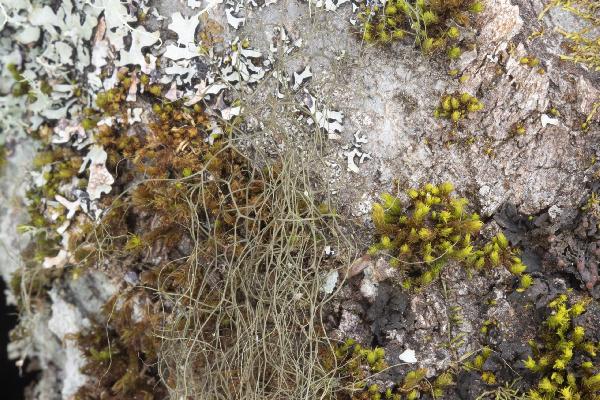
Marta Gonzalez Garcia - Centro de Estudios Micologicos Asturianos
Spain, Alto de San Lorenzo (Teverga), 16-II-2023, sobre Fagus sylvatica.
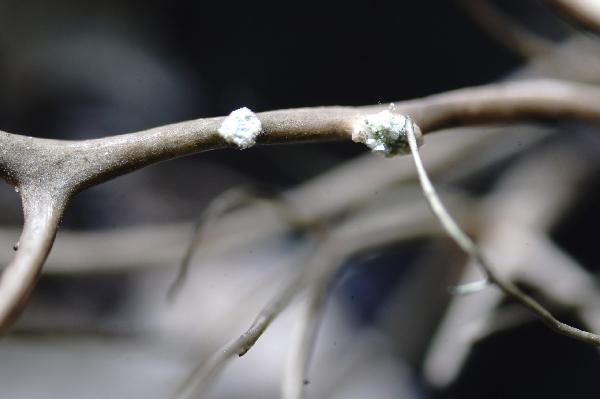
Marta Gonzalez Garcia - Centro de Estudios Micologicos Asturianos
Spain, Alto de San Lorenzo (Teverga), 16-II-2023, sobre Fagus sylvatica.
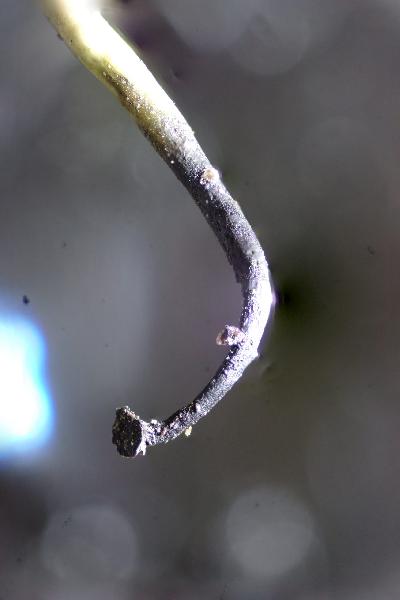
Marta Gonzalez Garcia - Centro de Estudios Micologicos Asturianos
Spain, Alto de San Lorenzo (Teverga), 16-II-2023, sobre Fagus sylvatica.
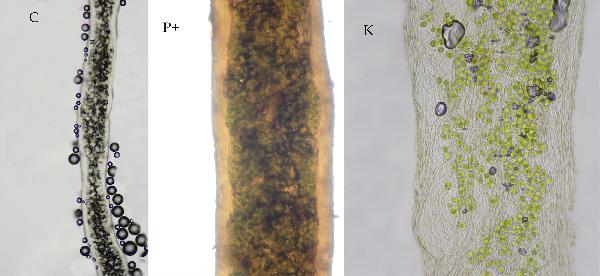
Marta Gonzalez Garcia - Centro de Estudios Micologicos Asturianos
Spain, Alto de San Lorenzo (Teverga), 16-II-2023, sobre Fagus sylvatica.
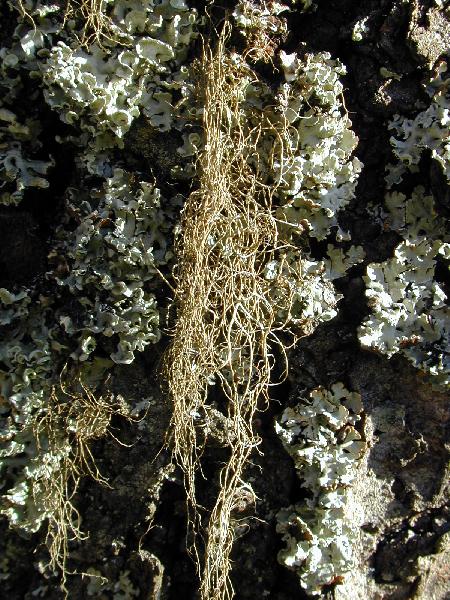
Wolfgang von Brackel - CC BY-4.0
Germany, Bavaria, Kalchreuth
Wolfgang von Brackel - CC BY-4.0
Germany, Bavaria, Grafenwöhr
Wolfgang von Brackel - CC BY-4.0
Germany, Bavaria, Tschirn
Wolfgang von Brackel - CC BY-4.0
Germany, Bavaria, Tschirn
Wolfgang von Brackel - CC BY-4.0
Germany, Bavaria, Tschirn
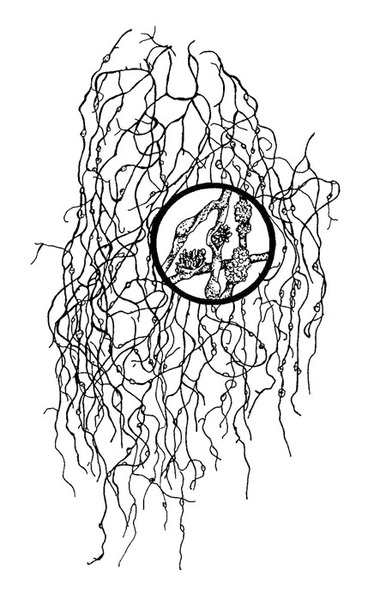
Triin Aimla; Owner: University of Tartu
Growth form: Fruticose filamentous
Photobiont: green algae other than Trentepohlia
Reproductive strategy: mainly asexual, by soredia, or soredia-like structures (e.g. blastidia)
Most common in areas with a humid-warm climate (e.g. most of Tyrrenian Italy)
Commonnes-rarity: (info)
Alpine belt: absent
Subalpine belt: rather common
Montane belt: rather rare
Dry submediterranean belt: extremely rare
Humid submediterranean belt: extremely rare
Padanian area: absent
pH of the substrata:
| 1 | 2 | 3 | 4 | 5 |
Solar irradiation:
| 1 | 2 | 3 | 4 | 5 |
Aridity:
| 1 | 2 | 3 | 4 | 5 |
Eutrophication:
| 1 | 2 | 3 | 4 | 5 |
Poleotolerance:
| 0 | 1 | 2 | 3 |
Altitudinal distribution:
| 1 | 2 | 3 | 4 | 5 | 6 |
Rarity
absent
extremely rare
very rare
rare
rather rare
rather common
common
very common
extremely common
Loading data...
Occurrence data
Predictive map
Current prediction (1981-2010)Future prediction (2071-2100) SSP 1-2.6Future prediction (2071-2100) SSP 5-8.5Predictive maps according to Francesconi et al. 2025
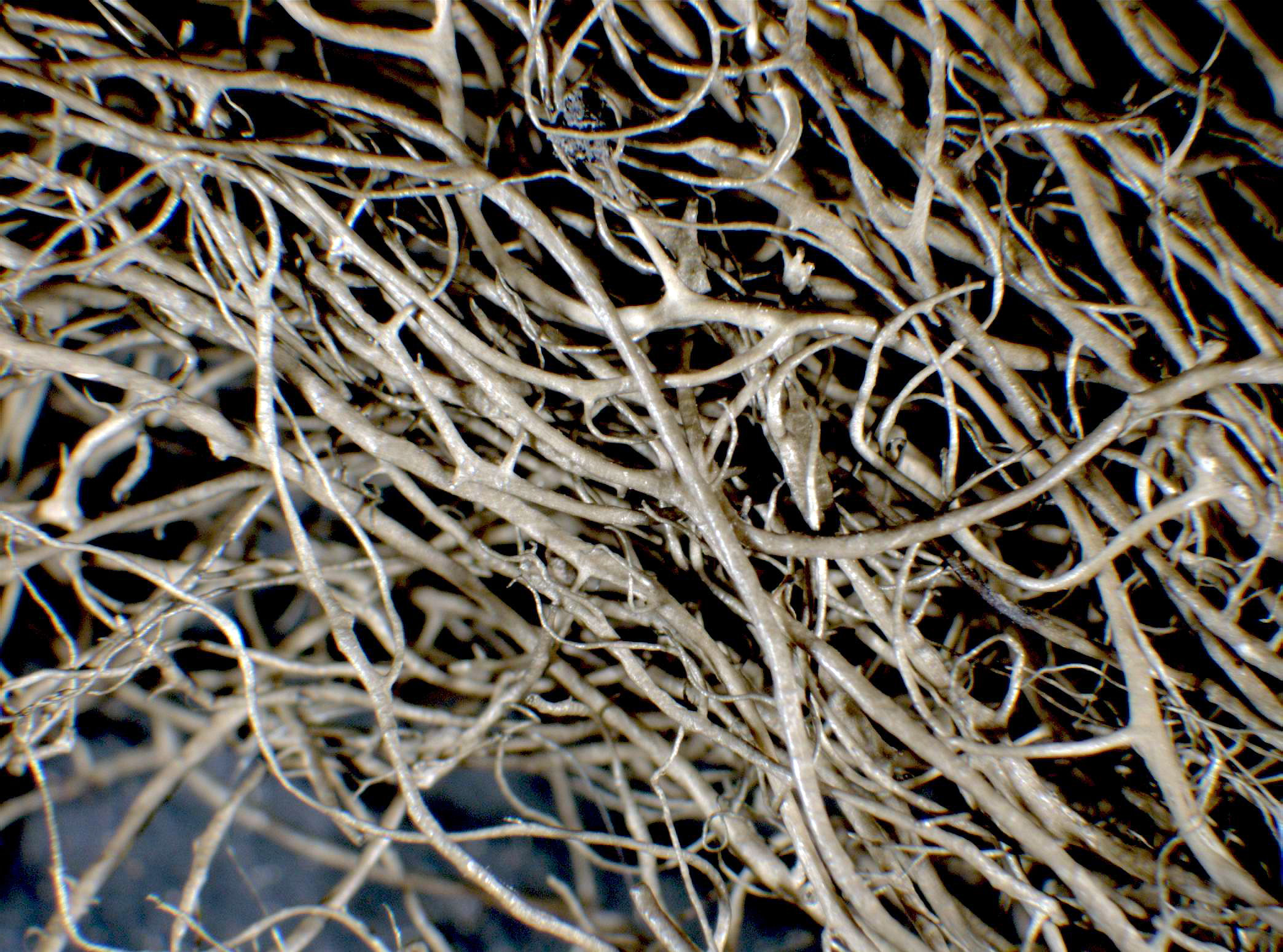
P.L. Nimis CC BY-SA 4.0
TSB 12998
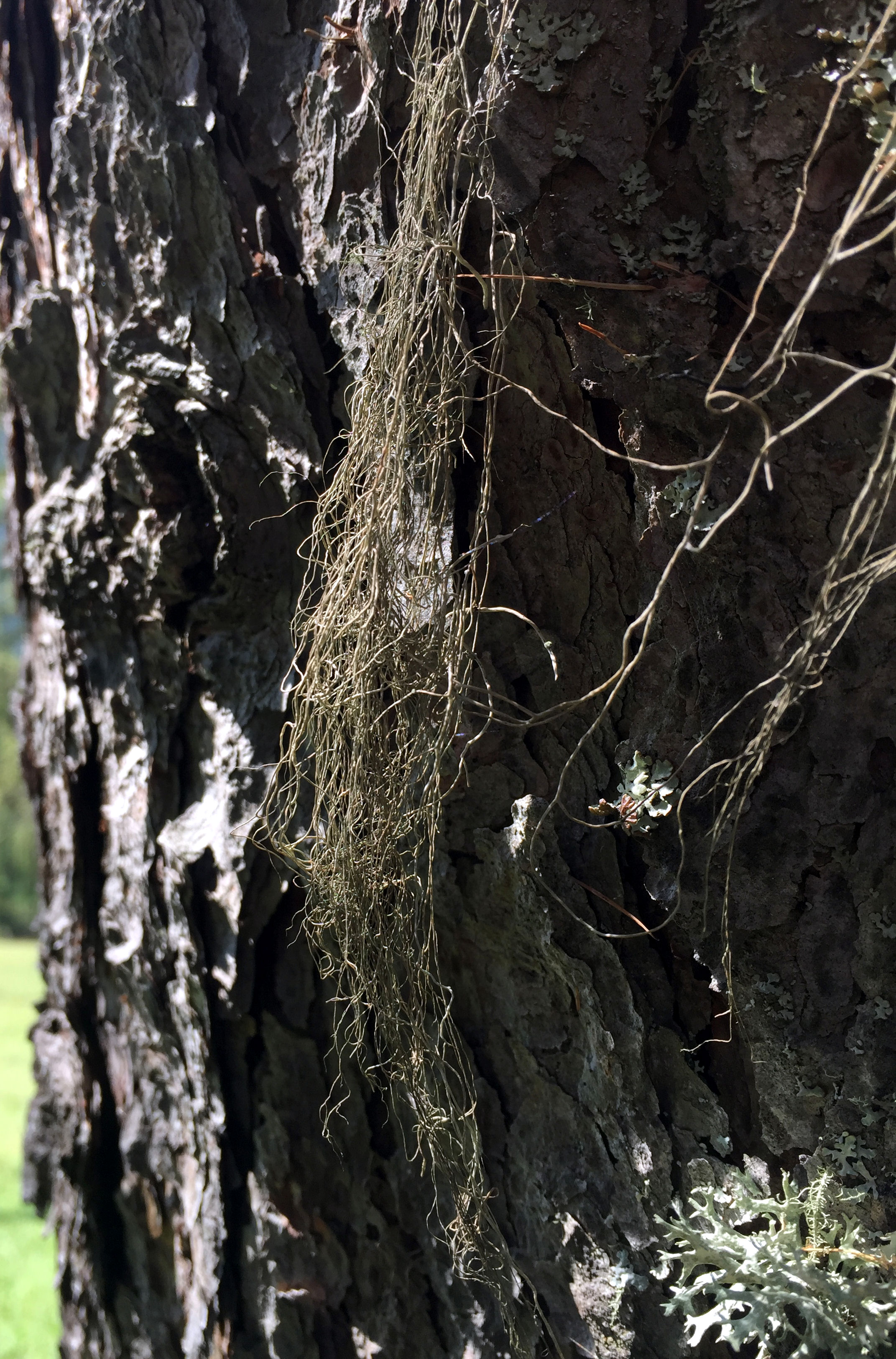
P.L. Nimis; Owner: Department of Life Sciences, University of Trieste
Italy, Friuli Venezia Giulia, Udine, Passo del Pura, Ampezzo Carnico, 1400 m
09.09.2016
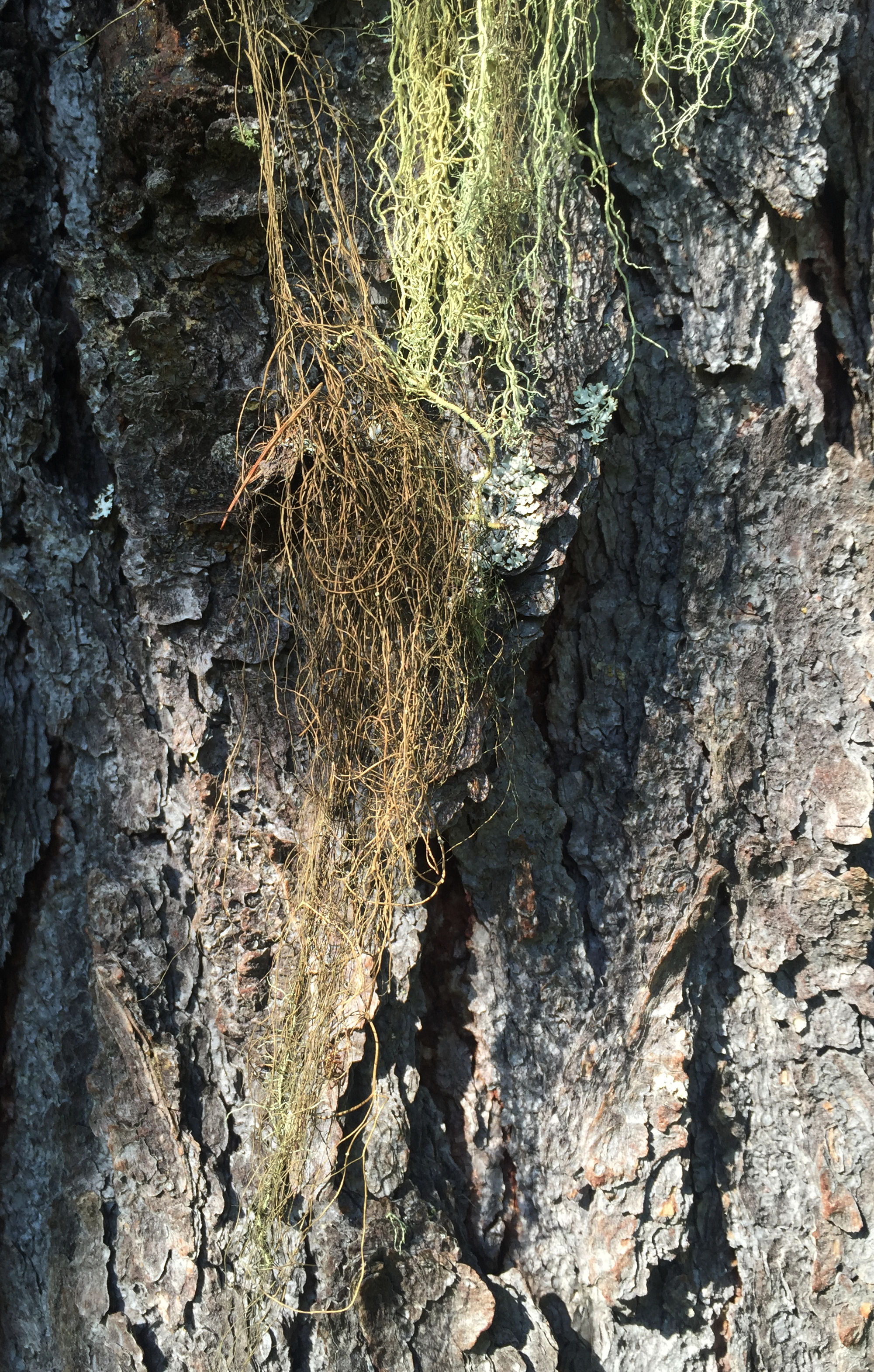
P.L. Nimis; Owner: Department of Life Sciences, University of Trieste
Italy, Friuli Venezia Giulia, Udine, Passo del Pura, Ampezzo Carnico, 1400 m
09.09.2016
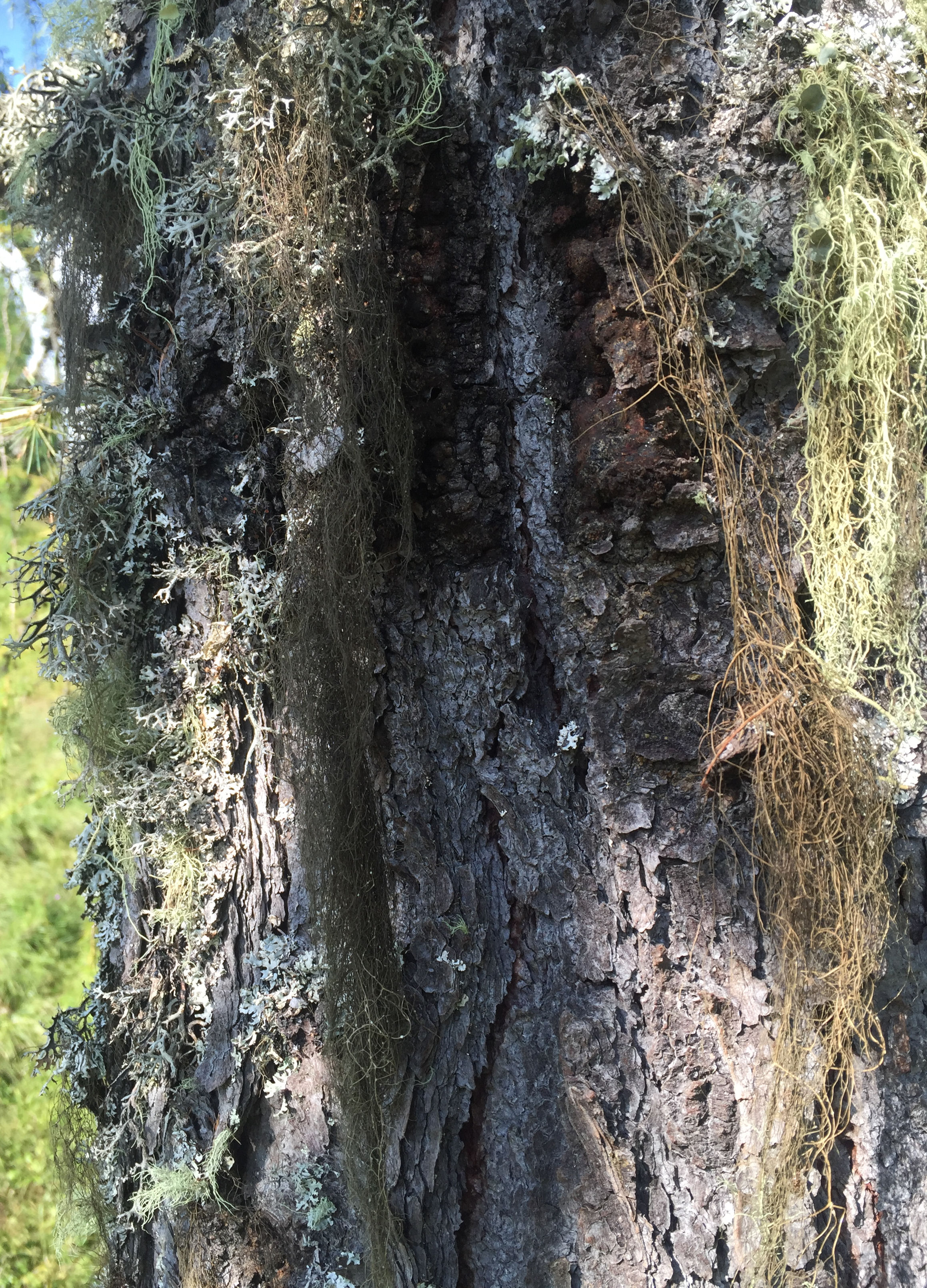
P.L. Nimis; Owner: Department of Life Sciences, University of Trieste
Italy, Friuli Venezia Giulia, Udine, Passo del Pura, Ampezzo Carnico, 1400 m
09.09.2016

P.L. Nimis; Owner: Department of Life Sciences, University of Trieste
Italy, Friuli Venezia Giulia, Udine, Passo del Pura, Ampezzo Carnico, 1400 m
09.09.2016
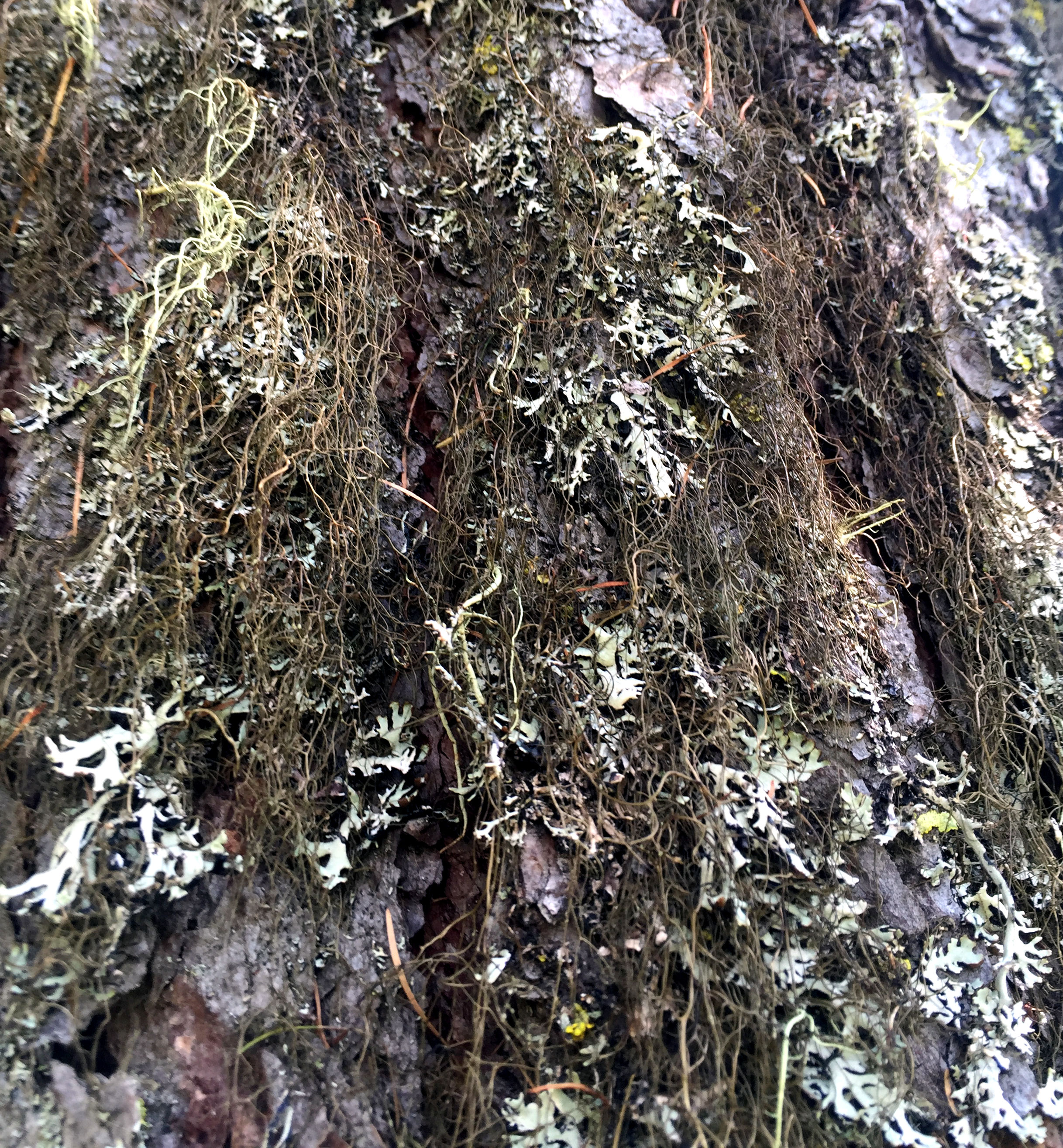
P.L. Nimis; Owner: Department of Life Sciences, University of Trieste
Italy, Friuli Venezia Giulia, Udine, Passo del Pura, Ampezzo Carnico, 1400 m
09.09.2016
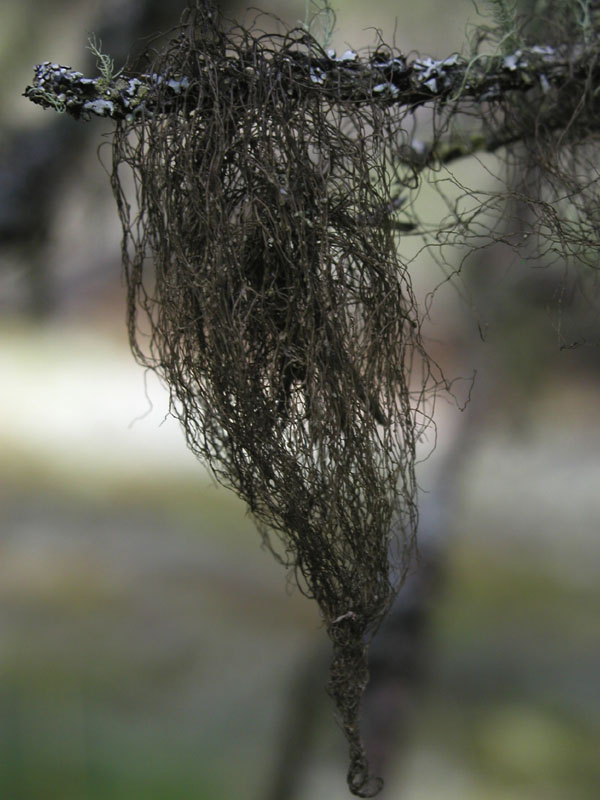
Andres Saag; Owner: University of Tartu
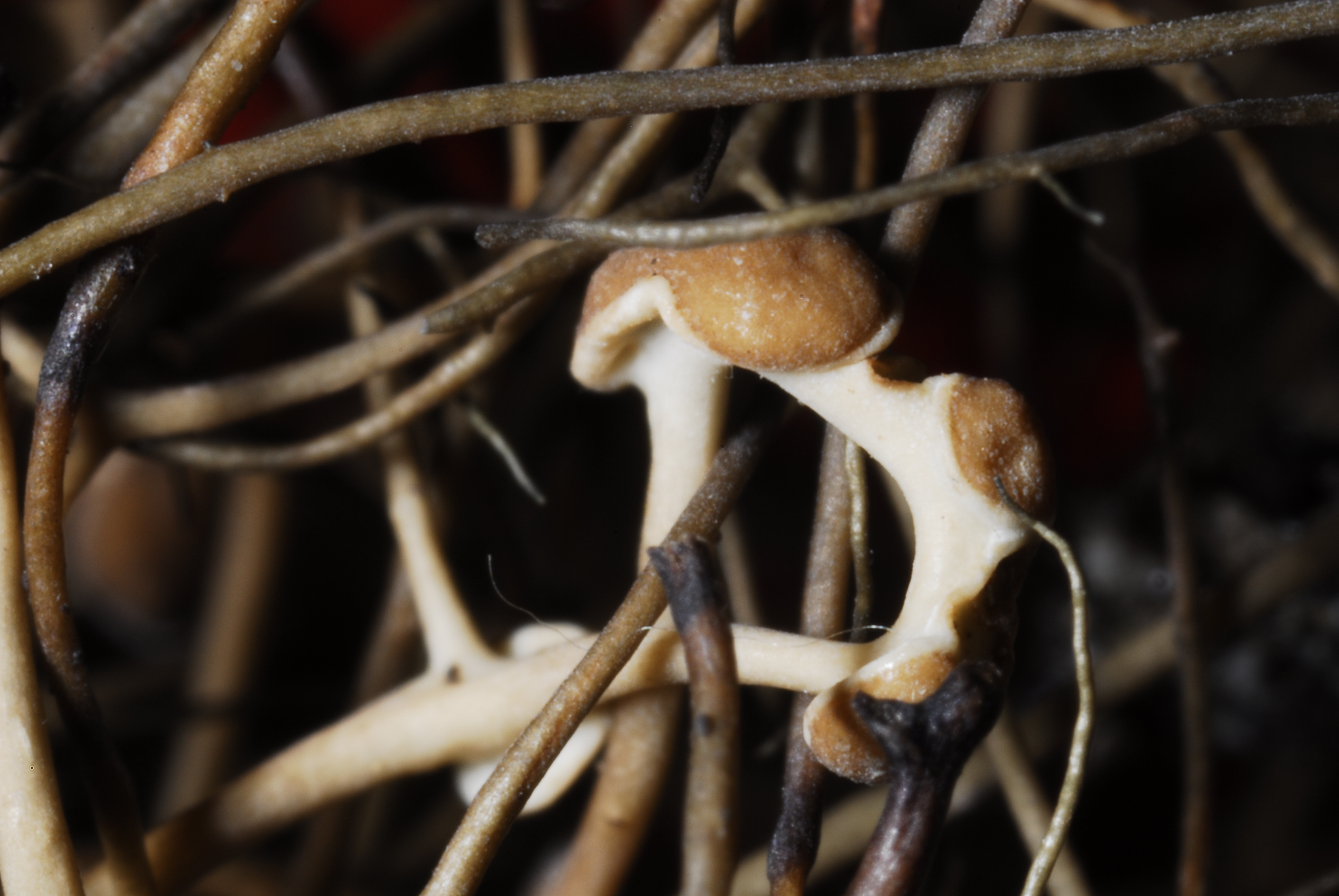
Domenico Puntillo - CC BY-SA 4.0
Italy, Calabria, Reggio Calabria, Aspromonte, Contrada Nardello, 1747 m on Abies.
19.08.2009
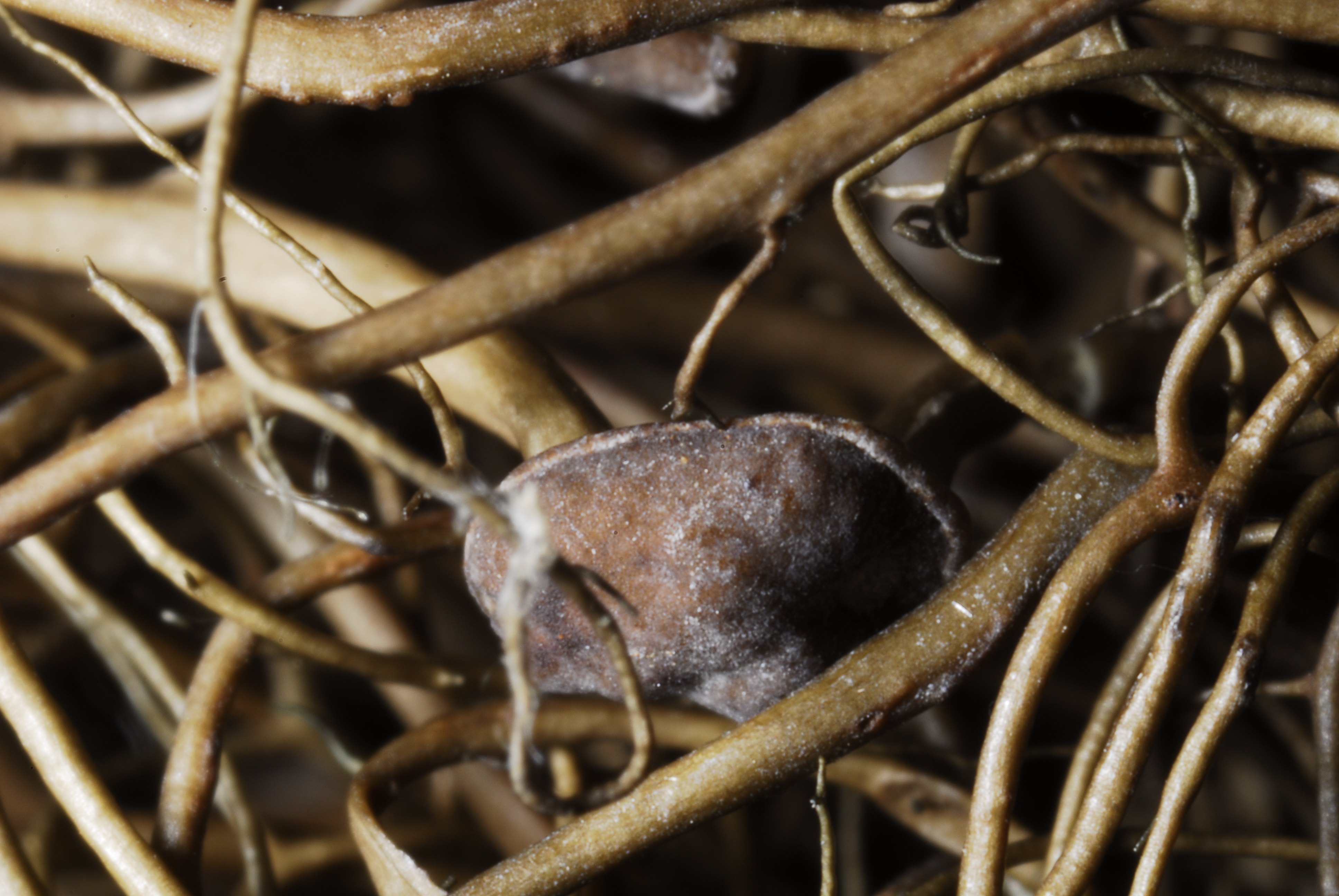
Domenico Puntillo - CC BY-SA 4.0
Italy, Calabria, Reggio Calabria, Aspromonte, Contrada Nardello, 1747 m on Abies.
19.08.2009
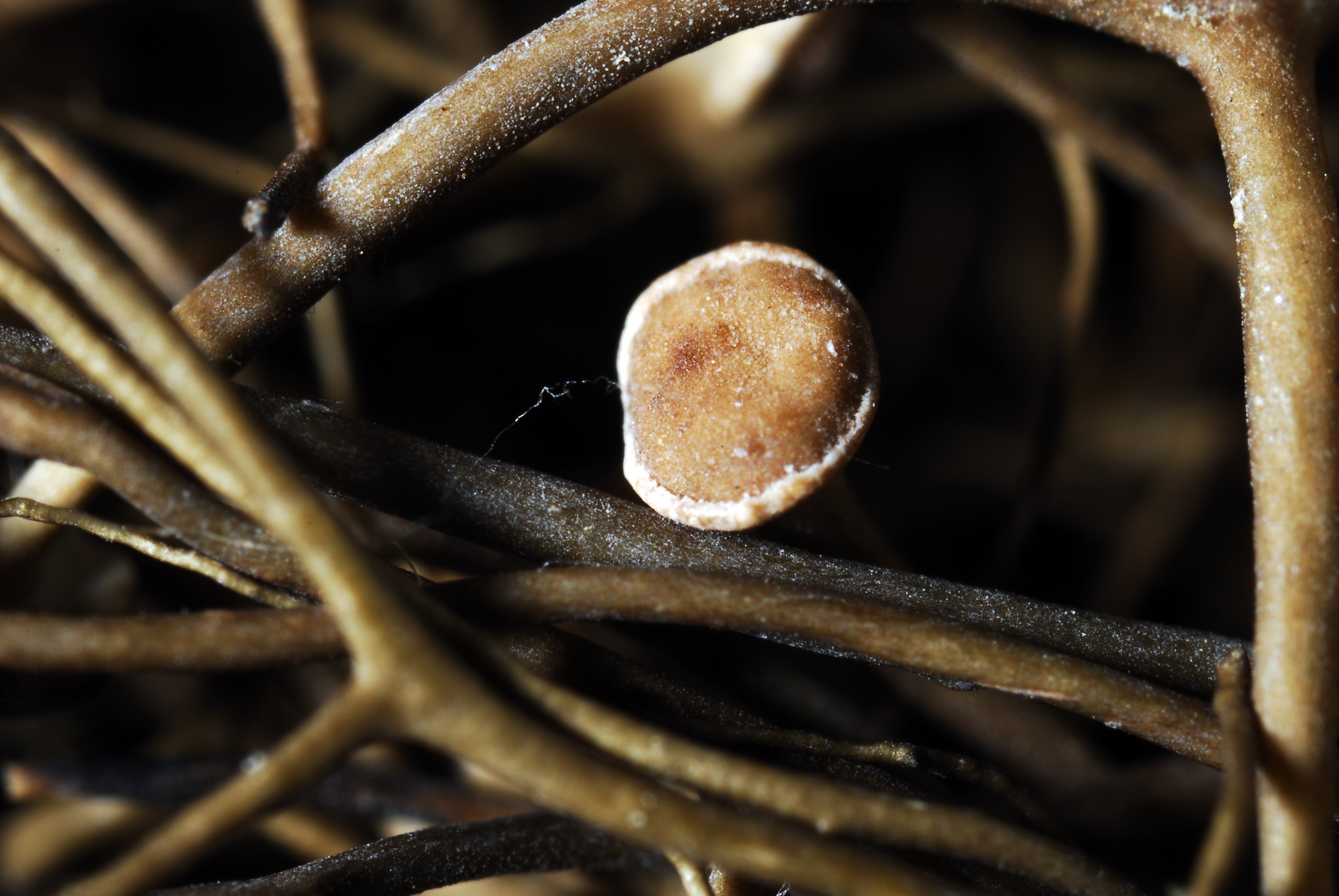
Domenico Puntillo - CC BY-SA 4.0
Italy, Calabria, Reggio Calabria, Aspromonte, Contrada Nardello, 1747 m on Abies.
19.08.2009
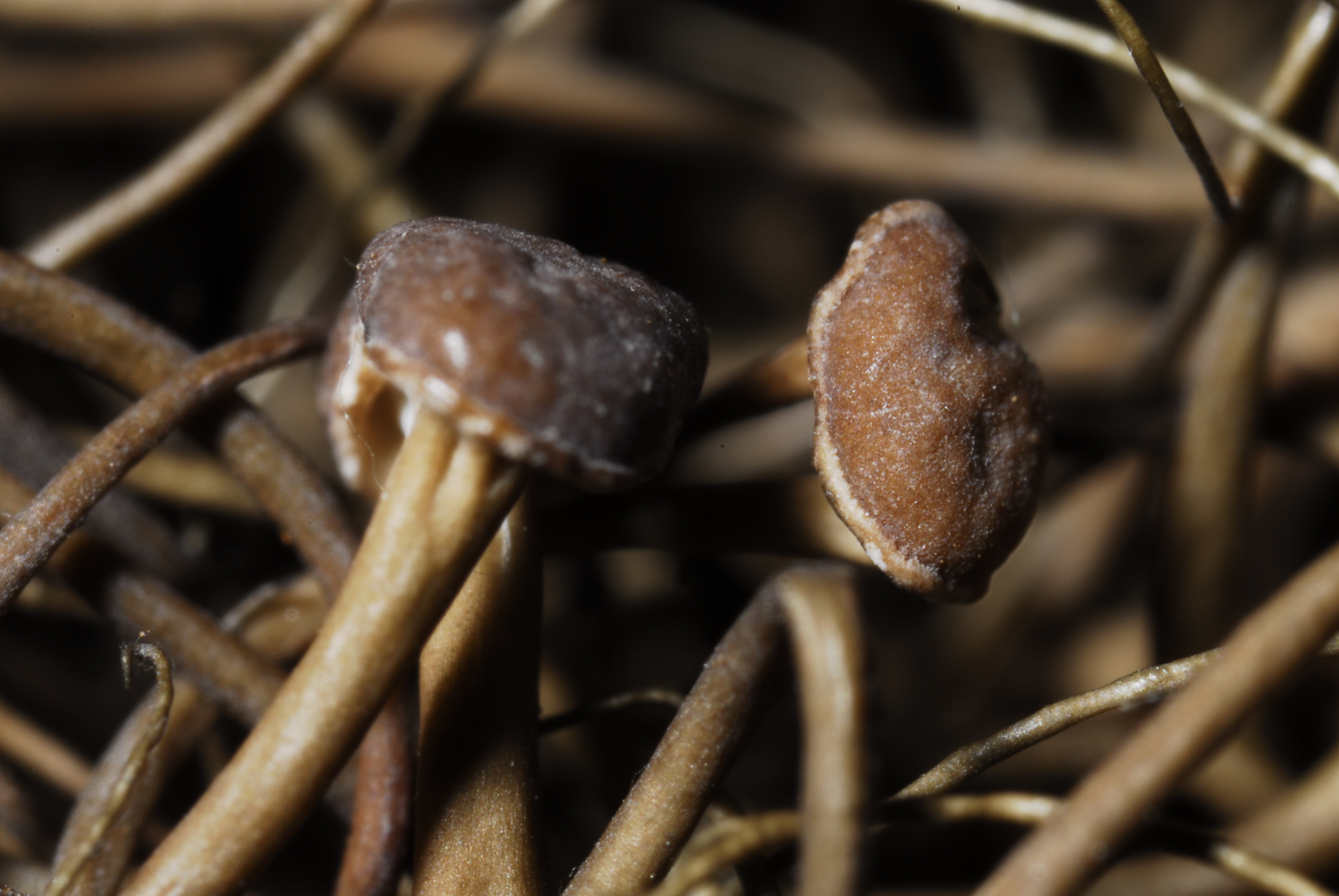
Domenico Puntillo - CC BY-SA 4.0
Italy, Calabria, Reggio Calabria, Aspromonte, Contrada Nardello, 1747 m on Abies.
19.08.2009
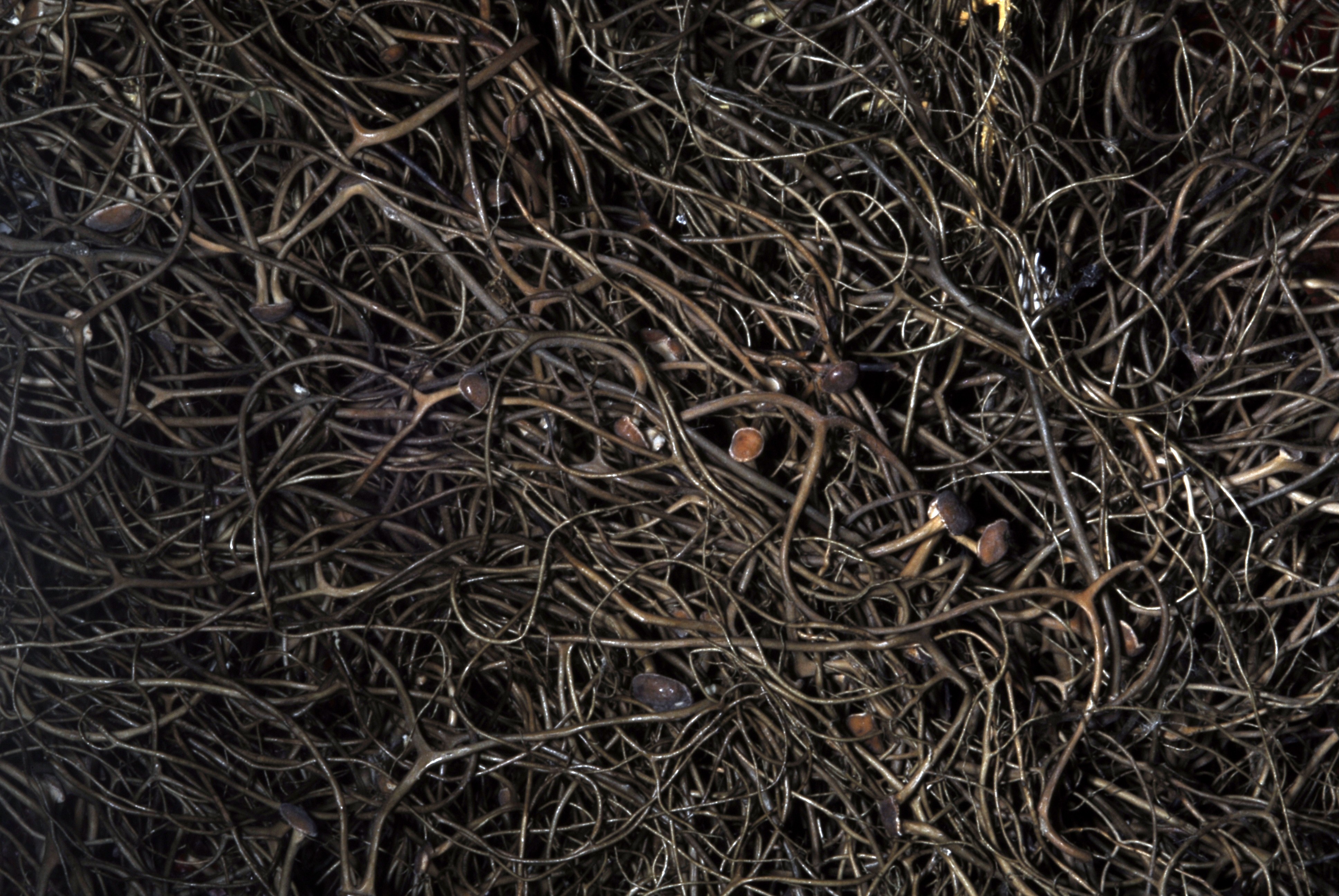
Domenico Puntillo - CC BY-SA 4.0
Italy, Calabria, Reggio Calabria, Aspromonte, Contrada Nardello, 1747 m on Abies.
19.08.2009
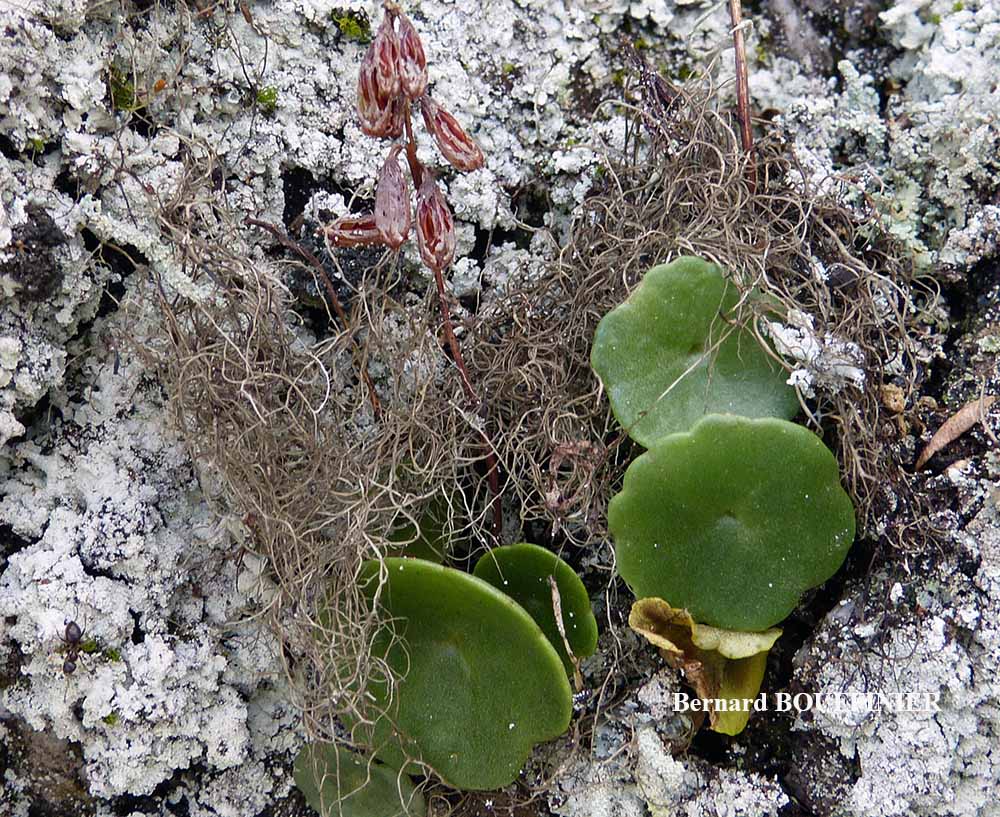
Michel David - Source: http://www.lichensmaritimes.org/index.php?task=fiche&lichen=547&lang=en
France, Plounéour-Ménez

Michel David - Source: http://www.lichensmaritimes.org/index.php?task=fiche&lichen=547&lang=en
France, Plounéour-Ménez
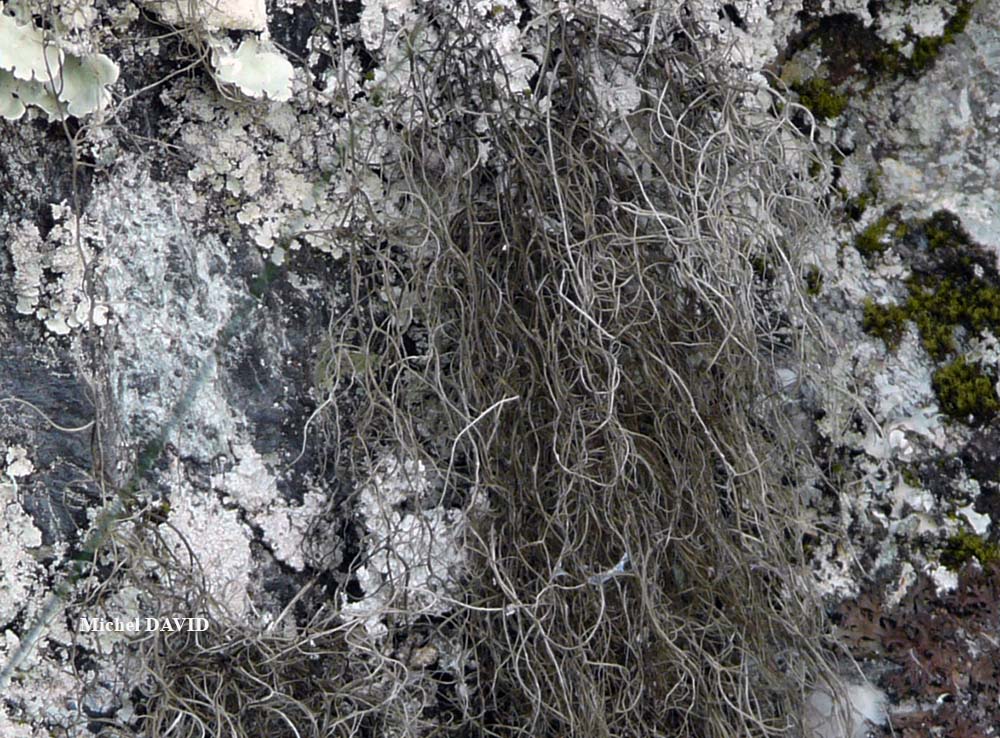
Michel David - Source: http://www.lichensmaritimes.org/index.php?task=fiche&lichen=547&lang=en
France, Plounéour-Ménez
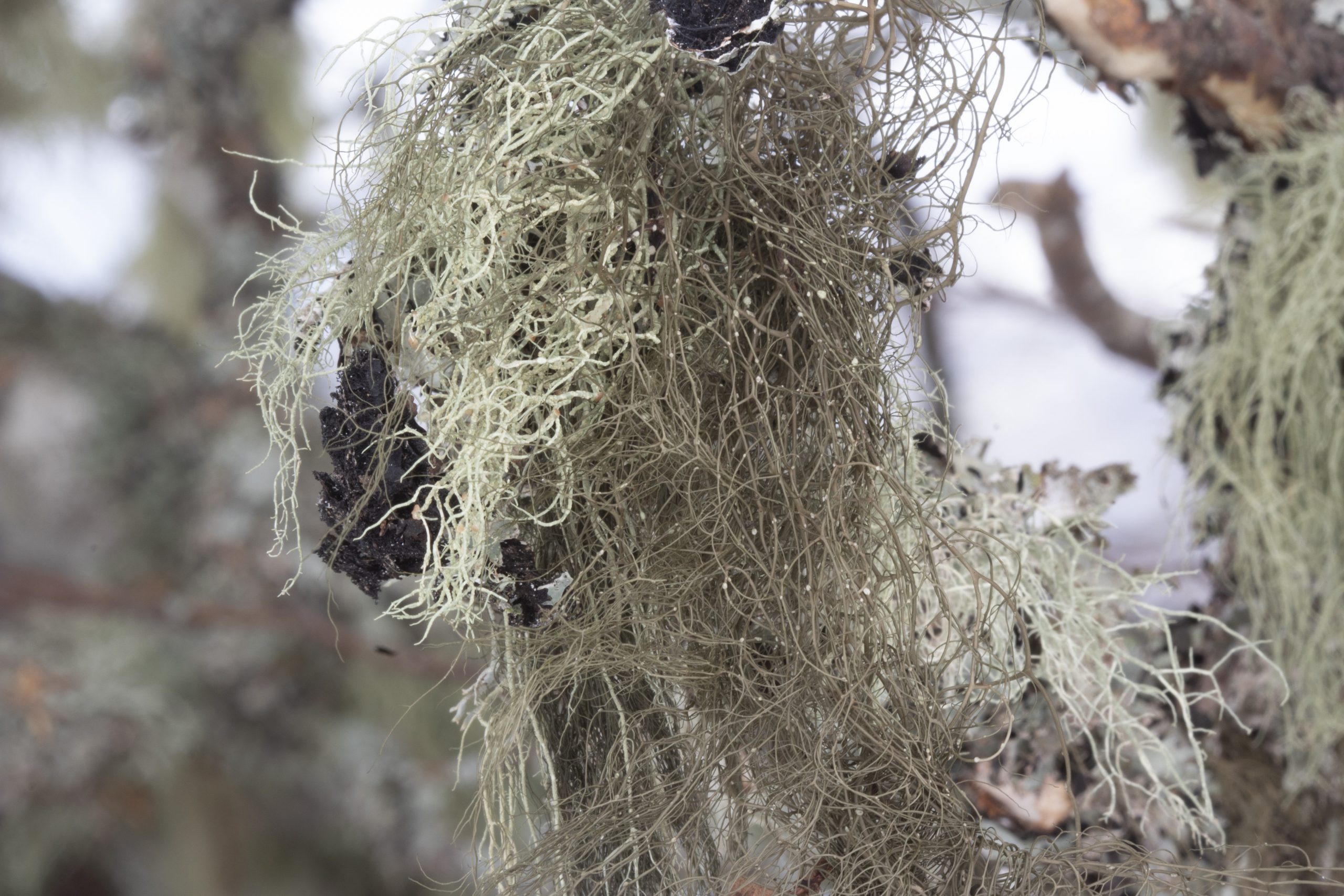
Marta Gonzalez Garcia - Centro de Estudios Micologicos Asturianos
Spain, Alto de San Lorenzo (Teverga), 16-II-2023, sobre Fagus sylvatica.

Marta Gonzalez Garcia - Centro de Estudios Micologicos Asturianos
Spain, Alto de San Lorenzo (Teverga), 16-II-2023, sobre Fagus sylvatica.

Marta Gonzalez Garcia - Centro de Estudios Micologicos Asturianos
Spain, Alto de San Lorenzo (Teverga), 16-II-2023, sobre Fagus sylvatica.

Marta Gonzalez Garcia - Centro de Estudios Micologicos Asturianos
Spain, Alto de San Lorenzo (Teverga), 16-II-2023, sobre Fagus sylvatica.

Marta Gonzalez Garcia - Centro de Estudios Micologicos Asturianos
Spain, Alto de San Lorenzo (Teverga), 16-II-2023, sobre Fagus sylvatica.

Wolfgang von Brackel - CC BY-4.0
Germany, Bavaria, Kalchreuth

Wolfgang von Brackel - CC BY-4.0
Germany, Bavaria, Grafenwöhr

Wolfgang von Brackel - CC BY-4.0
Germany, Bavaria, Tschirn

Wolfgang von Brackel - CC BY-4.0
Germany, Bavaria, Tschirn

Wolfgang von Brackel - CC BY-4.0
Germany, Bavaria, Tschirn