Buellia schaereri De Not.
Giorn. Bot. Ital., 2: 199, 1846.
Synonyms: Buellia destructans (Tobler) R. Sant.; Buellia nigritula (Nyl.) Mudd; Karschia destructans Tobler; Lecidea nigritula Nyl.
Description: Thallus crustose, often almost entirely hidden in the substrate, sometimes thinly episubstratic and rimose, appearing as a grey-white to olive-brown patch. Medulla poorly developed, I-. Apothecia lecideine (0.1-)0.2-0.3(-0.5) mm across, soon sessile, with a black, epruinose, at first flat then soon convex disc, and a thin, soon excluded proper margin. Proper exciple narrow, poorly differentiated, Aethalea-type, the inner hyphae hyaline, prosoplectenchymatous, the outer hyphae parallel and usually strongly brown-pigmented; epithecium brown, N-; hymenium colourless, 35-60 µm high, not inspersed with oil droplets; paraphyses simple to moderately branched, the apical cells swollen, with a brown cap; hypothecium dark reddish brown. Asci 8-spored, clavate to cylindrical-clavate, the apical dome K/I+ dark blue with a pale, conical-pointed apical cushion (axial mass), the wall I-, but the thin outer gel I+ blue, Bacidia-type. Ascospores 1-septate, soon brown, ellipsoid with obtuse ends, not constricted at septum, 6-10(-12) x 2.5-4(-4.5) µm, Buellia-type, thin-walled throughout, the wall not ornamented. Pycnidia often numerous, globose, unilocular. Conidia very short, oblong to ellipsoid, some of them almost globose, 1.5-3 x 0.5-1(-1.4) µm. Photobiont chlorococcoid. Spot tests: K-, C-, KC-, P-, UV-. Chemistry: without lichen substances.
Growth form: Crustose
Photobiont: green algae other than Trentepohlia
Reproductive strategy: mainly sexual
Commonnes-rarity: (info)
Alpine belt: absent
Subalpine belt: rather common
Montane belt: rather rare
Dry submediterranean belt: very rare
Humid submediterranean belt: very rare
Padanian area: absent
pH of the substrata:
1 2 3 4 5

Solar irradiation:
1 2 3 4 5
Aridity:
1 2 3 4 5
Eutrophication:
1 2 3 4 5
Poleotolerance:
0 1 2 3
Altitudinal distribution:
1 2 3 4 5 6
Rarity
absent
extremely rare
very rare
rare
rather rare
rather common
common
very common
extremely common
Loading data...
Occurrence data
Predictive map
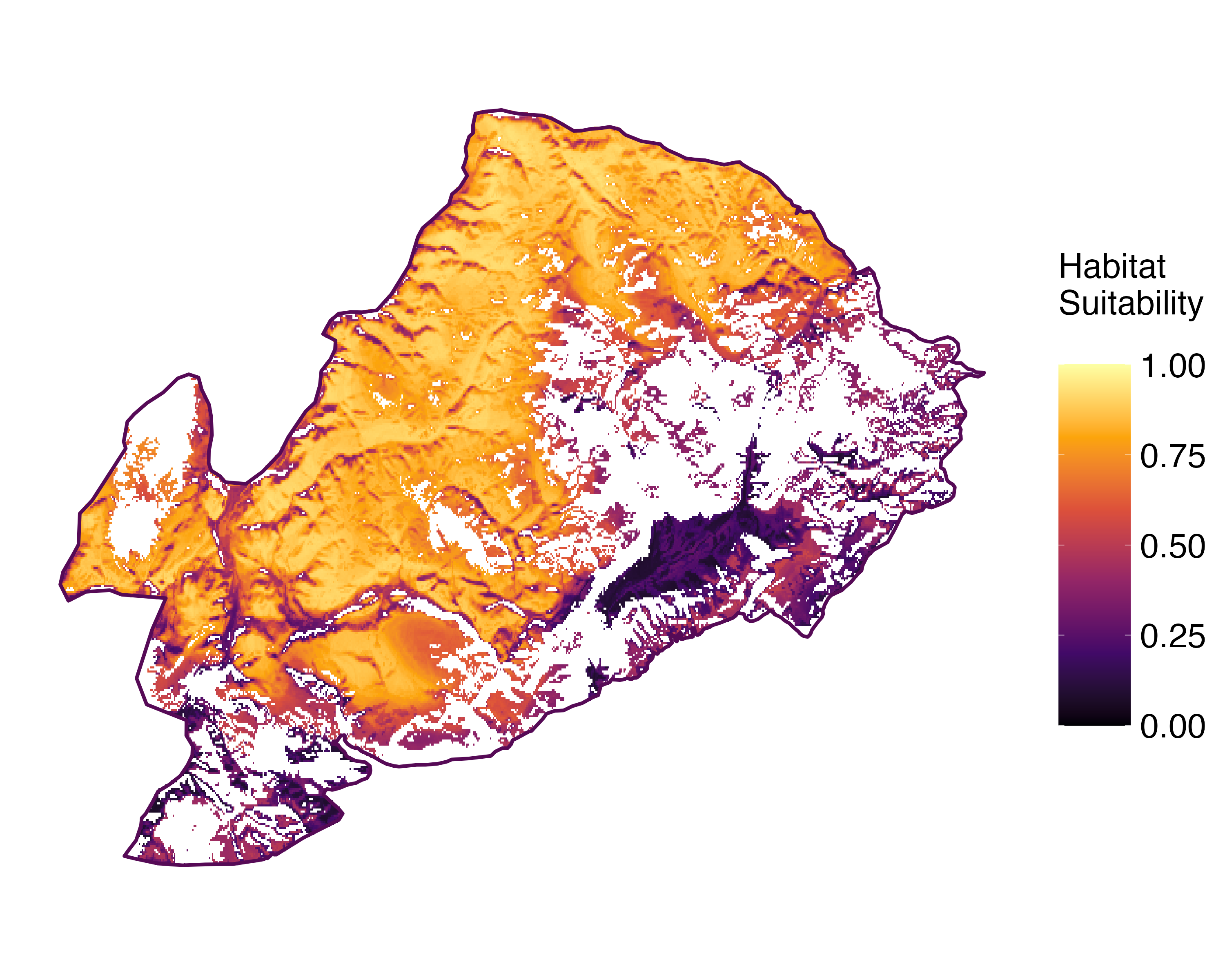 Current prediction (1981-2010)
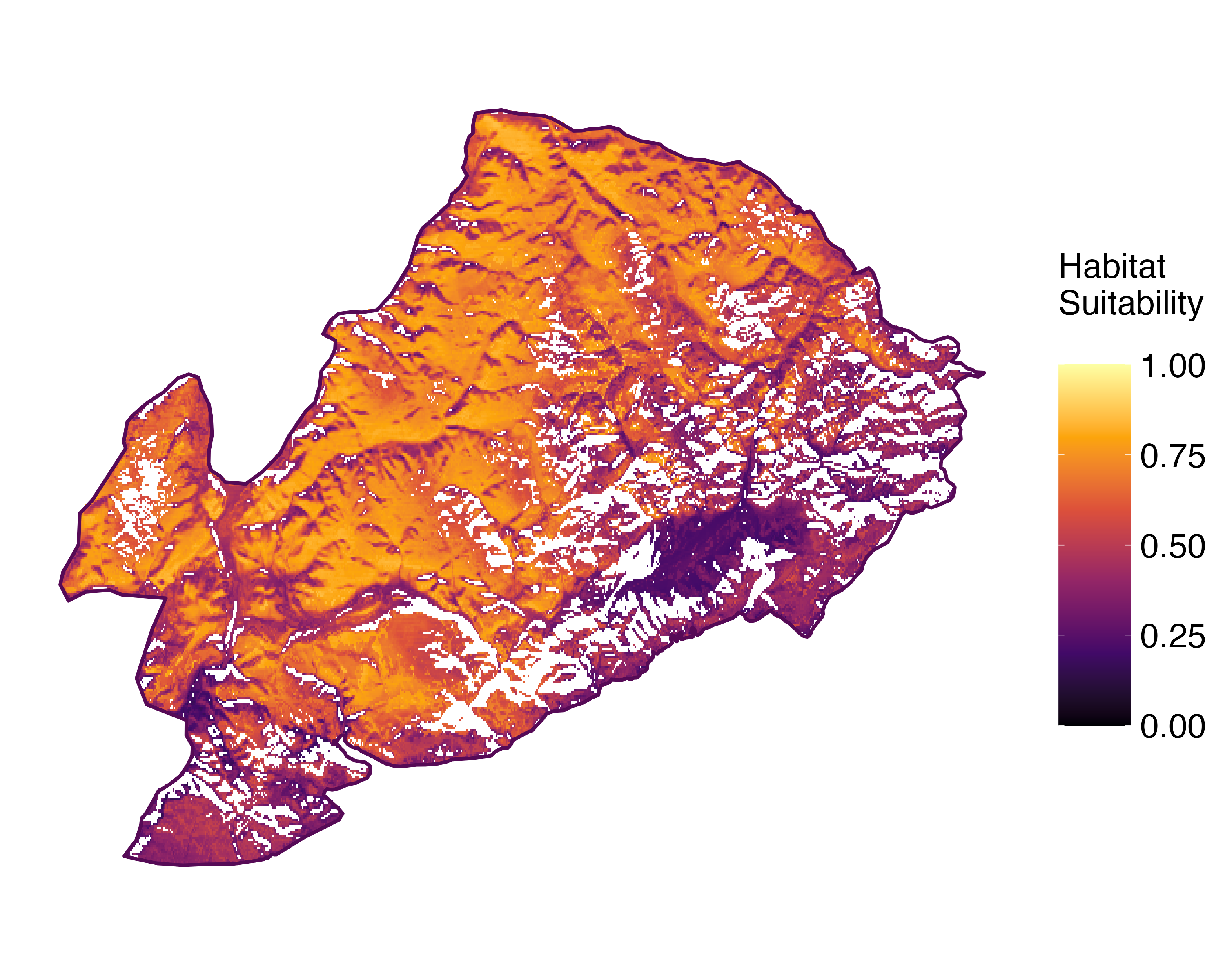 Future prediction (2071-2100) SSP 1-2.6
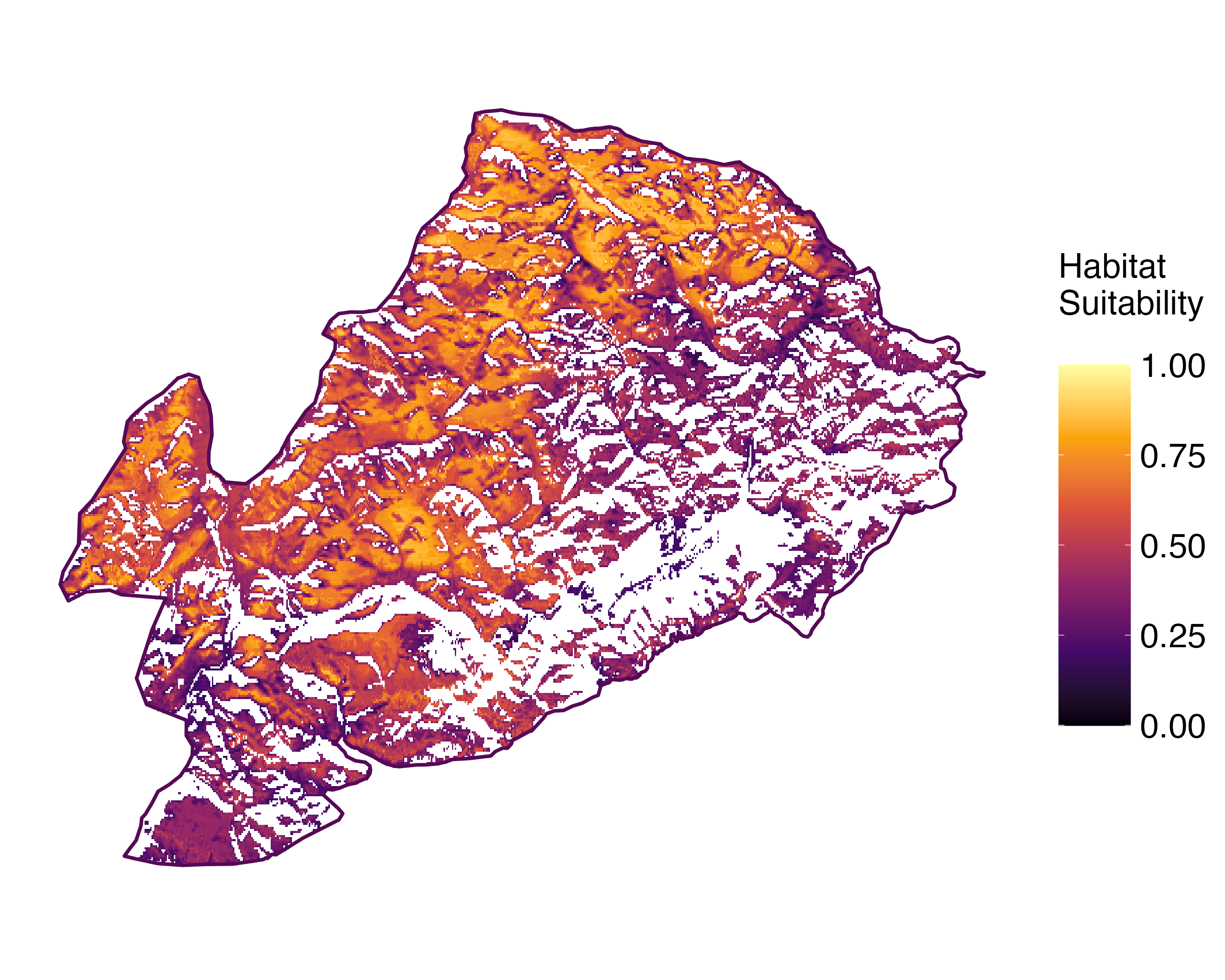 Future prediction (2071-2100) SSP 5-8.5Predictive maps according to Francesconi et al. 2025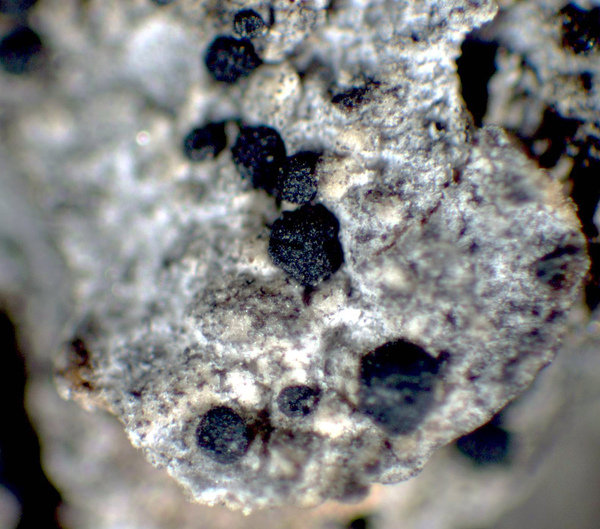
P.L. Nimis CC BY-SA 04
TSB 13376
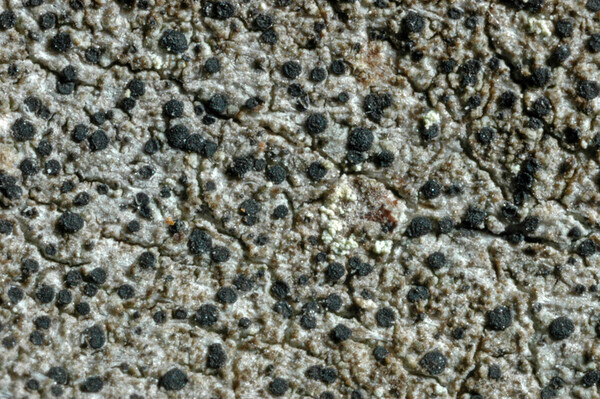
Leif Stridvall - Source: http://www.stridvall.se/la/galleries.php (Courtesy: Anita Stridvall)
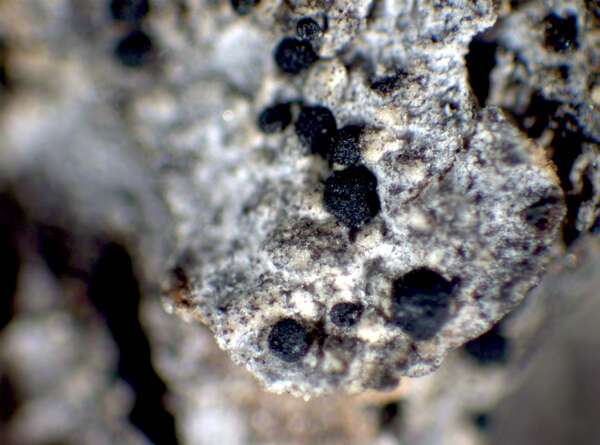
P.L. Nimis; Owner: Department of Life Sciences, University of Trieste
Herbarium: TSB (13376)
2001/11/22
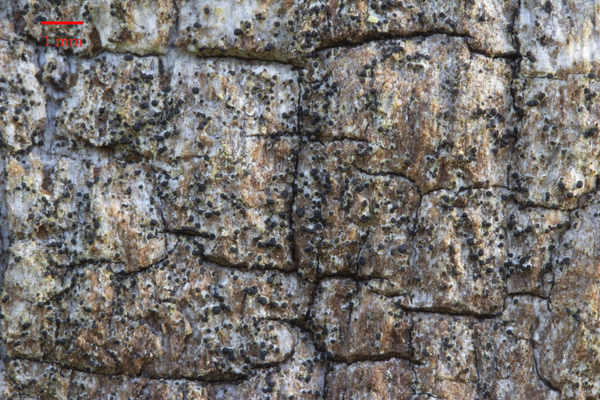
Marta González García
Spain, Asturias, Carballeda del Tragamón (Gijón), on Castanea
23.11.2022
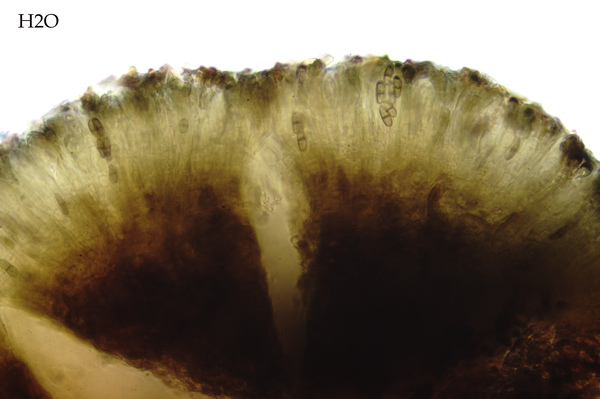
Marta González García
Spain, Asturias, Carballeda del Tragamón (Gijón), on Castanea
23.11.2022
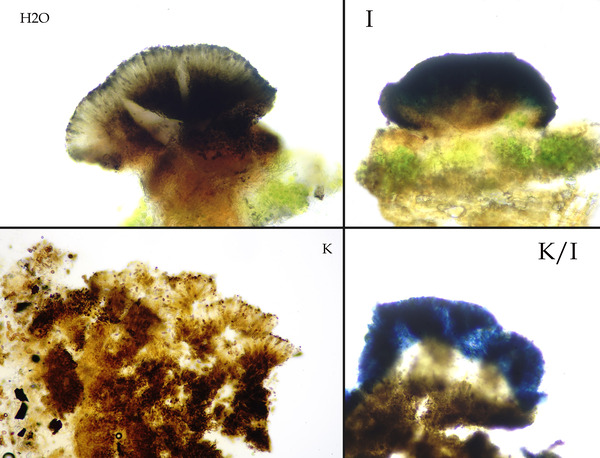
Marta González García
Spain, Asturias, Carballeda del Tragamón (Gijón), on Castanea
23.11.2022
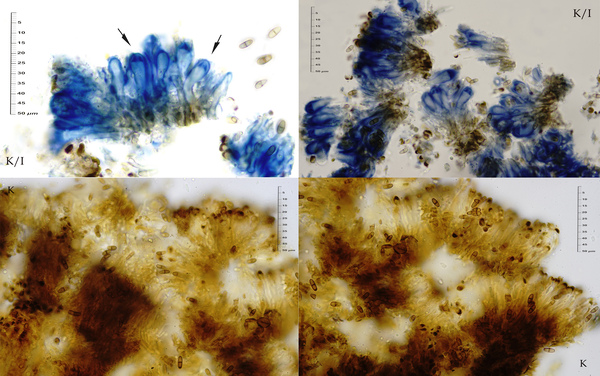
Marta González García
Spain, Asturias, Carballeda del Tragamón (Gijón), on Castanea
23.11.2022
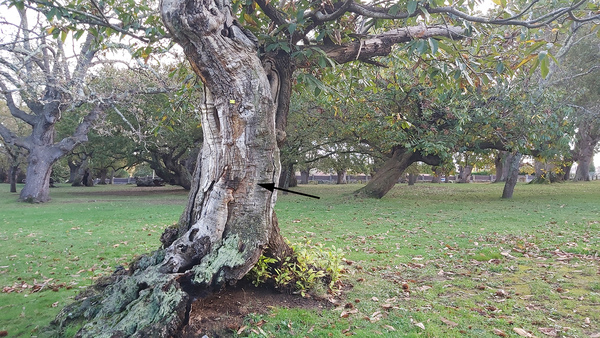
Marta González García
Spain, Asturias, Carballeda del Tragamón (Gijón), on Castanea
23.11.2022
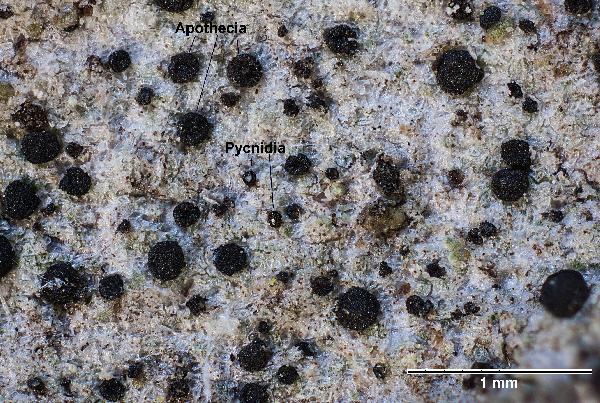
Ulrich Kirschbaum - CC BY 4.0
Mittelhessen, Germany, on Larix
Sierra de Buseco, (Tineo-Asturias), 4-III-2025, en rocas cuarcíticas, a 750 m de altitud.
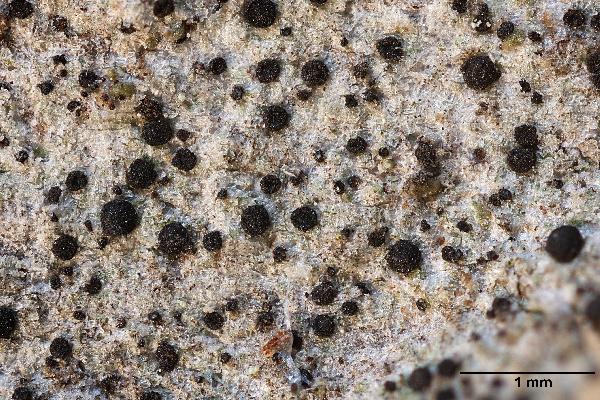
Ulrich Kirschbaum - CC BY 4.0
Mittelhessen, Germany, on Larix
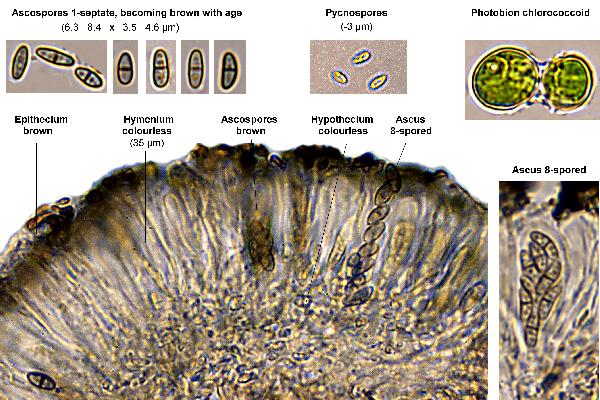
Ulrich Kirschbaum - CC BY 4.0
Mittelhessen, Germany, on Larix
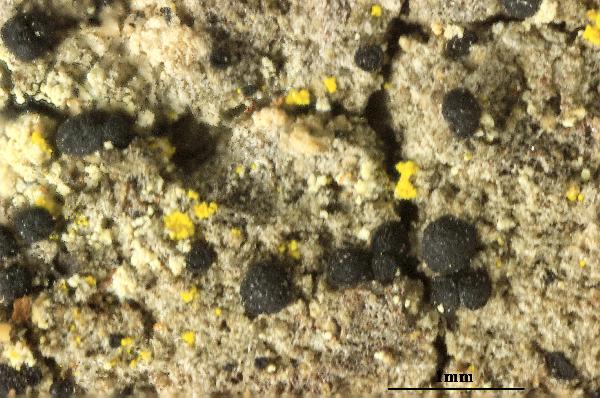
Felix Schumm - CC BY-SA 4.0
[VZ2024], Jugoslavia. Crna Gora (Montenegro): montes Durmitor,
toco Surduo dicto supra lacum Zminje jezero, 1600 m. Ad corticem
arboris (Abies). Leg. A. Vezda, 21.6.1984. EX A. VEZDA LICHENES
SELECTI EXSICCATI NR. 2024.
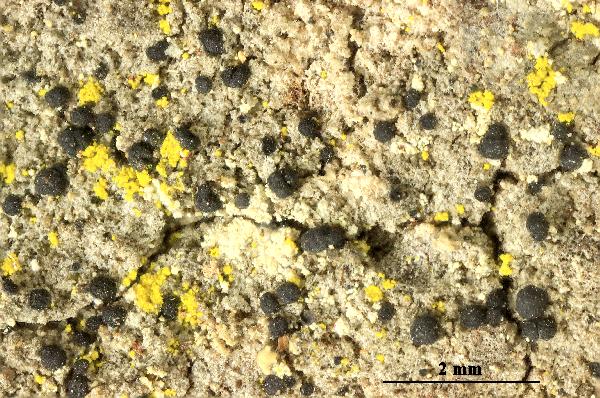
Felix Schumm - CC BY-SA 4.0
[VZ2024], Jugoslavia. Crna Gora (Montenegro): montes Durmitor,
toco Surduo dicto supra lacum Zminje jezero, 1600 m. Ad corticem
arboris (Abies). Leg. A. Vezda, 21.6.1984. EX A. VEZDA LICHENES
SELECTI EXSICCATI NR. 2024.
Growth form: Crustose
Photobiont: green algae other than Trentepohlia
Reproductive strategy: mainly sexual
Commonnes-rarity: (info)
Alpine belt: absent
Subalpine belt: rather common
Montane belt: rather rare
Dry submediterranean belt: very rare
Humid submediterranean belt: very rare
Padanian area: absent
pH of the substrata:
| 1 | 2 | 3 | 4 | 5 |
Solar irradiation:
| 1 | 2 | 3 | 4 | 5 |
Aridity:
| 1 | 2 | 3 | 4 | 5 |
Eutrophication:
| 1 | 2 | 3 | 4 | 5 |
Poleotolerance:
| 0 | 1 | 2 | 3 |
Altitudinal distribution:
| 1 | 2 | 3 | 4 | 5 | 6 |
Rarity
absent
extremely rare
very rare
rare
rather rare
rather common
common
very common
extremely common
Loading data...
Occurrence data
Predictive map
Current prediction (1981-2010)Future prediction (2071-2100) SSP 1-2.6Future prediction (2071-2100) SSP 5-8.5Predictive maps according to Francesconi et al. 2025
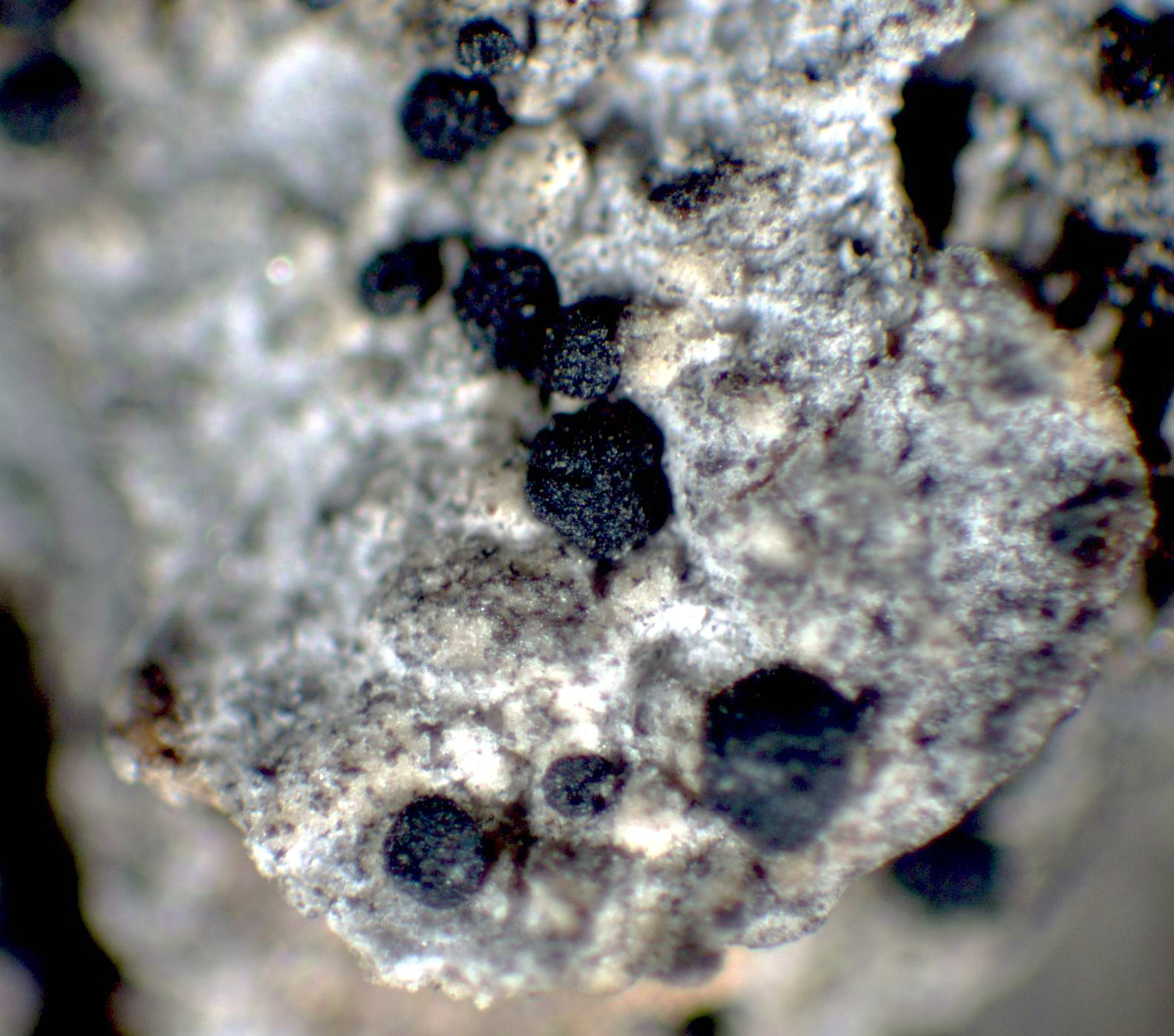
P.L. Nimis CC BY-SA 04
TSB 13376
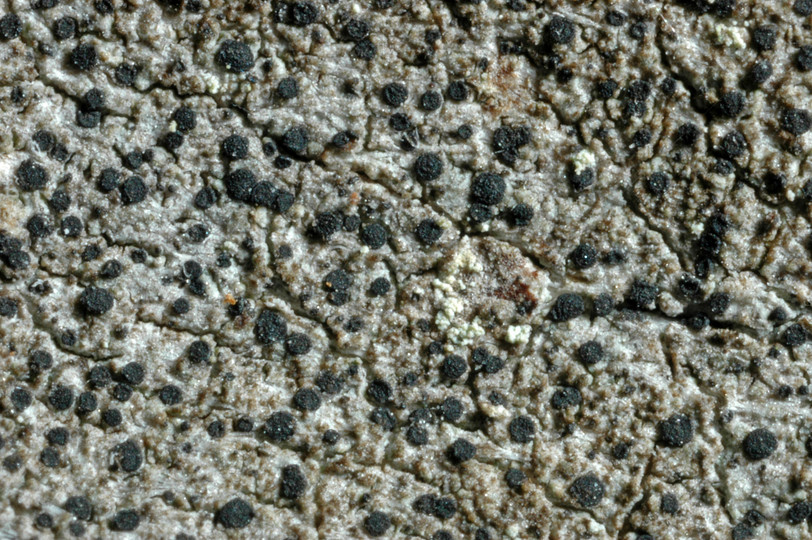
Leif Stridvall - Source: http://www.stridvall.se/la/galleries.php (Courtesy: Anita Stridvall)
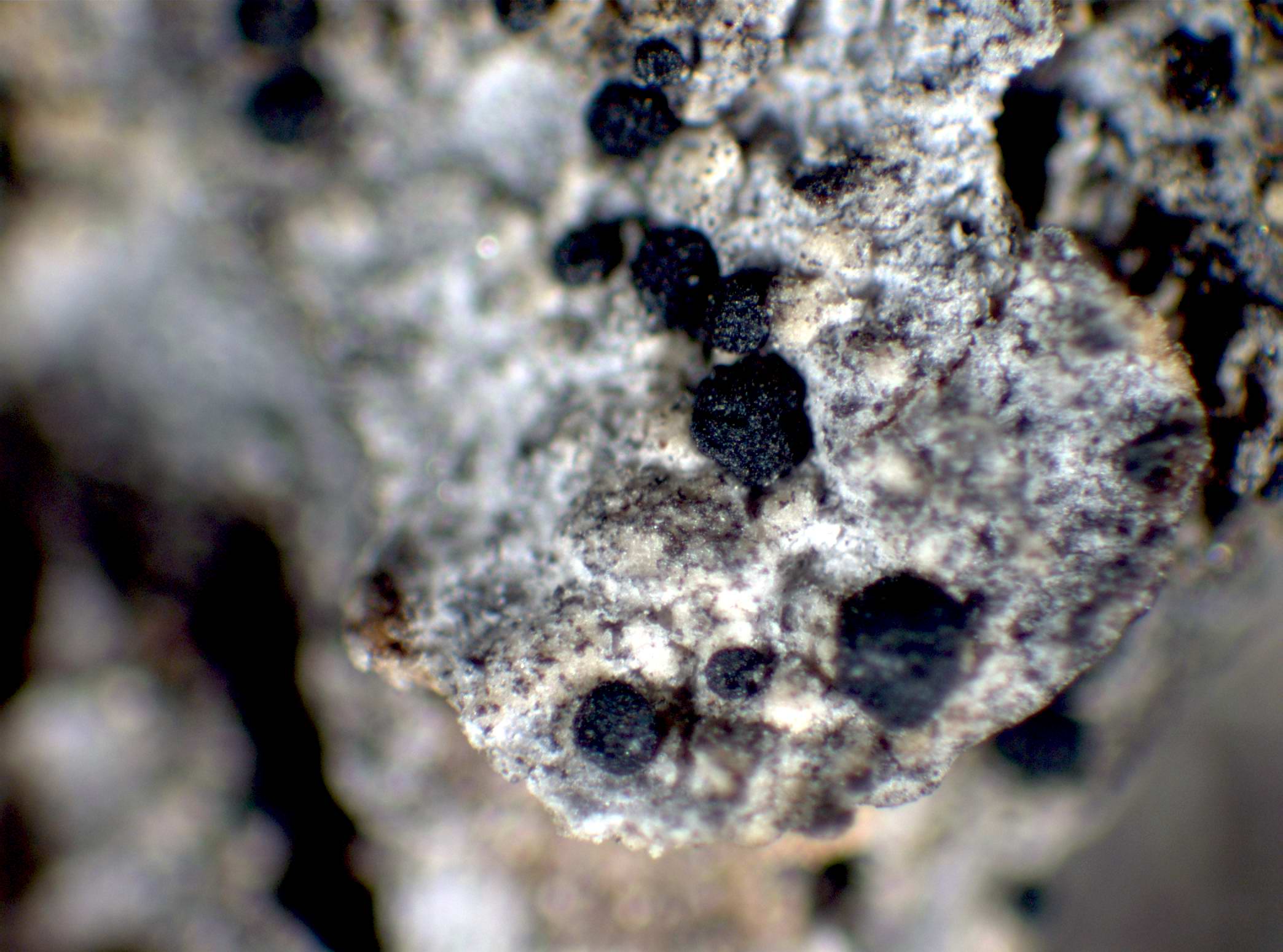
P.L. Nimis; Owner: Department of Life Sciences, University of Trieste
Herbarium: TSB (13376)
2001/11/22
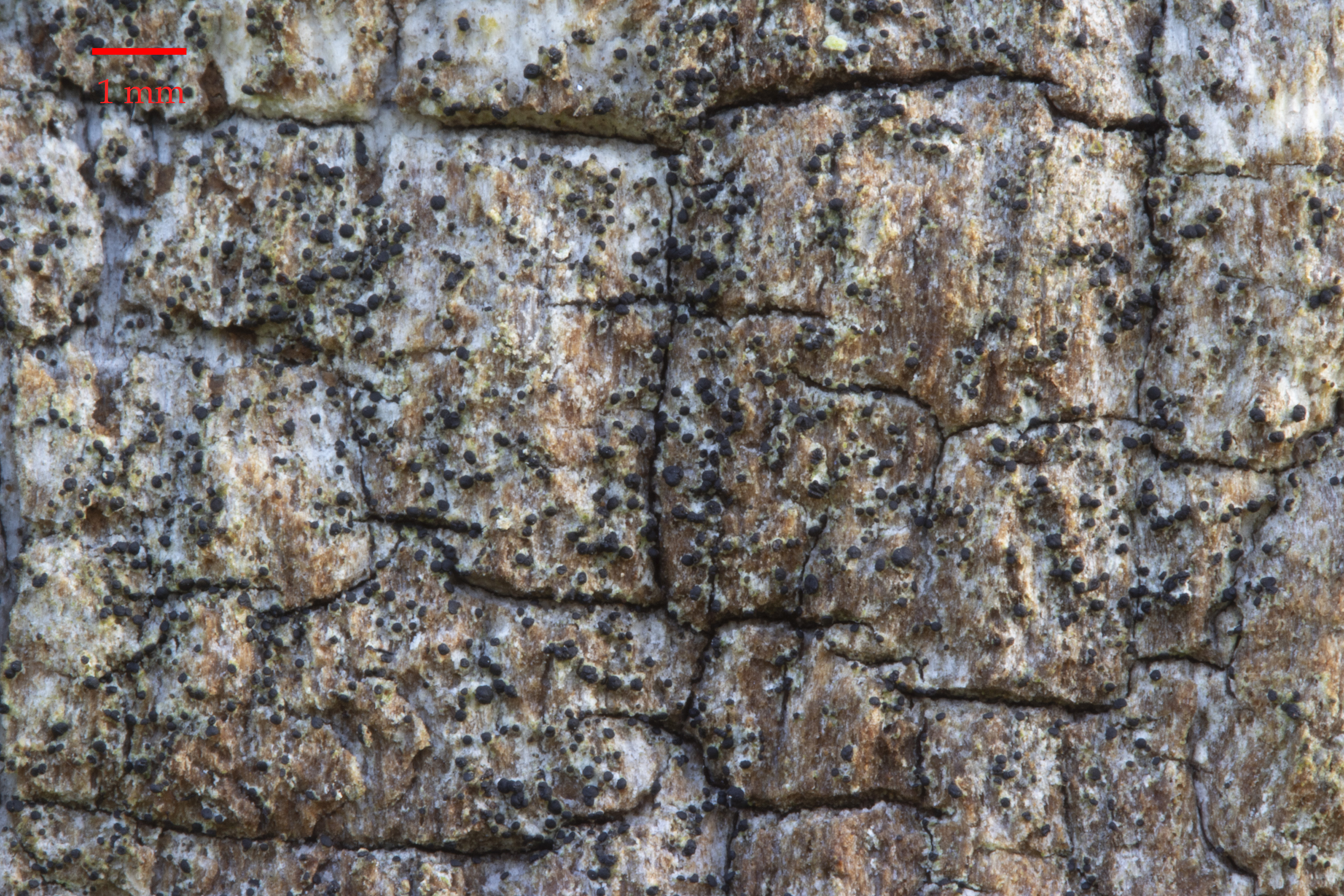
Marta González García
Spain, Asturias, Carballeda del Tragamón (Gijón), on Castanea
23.11.2022
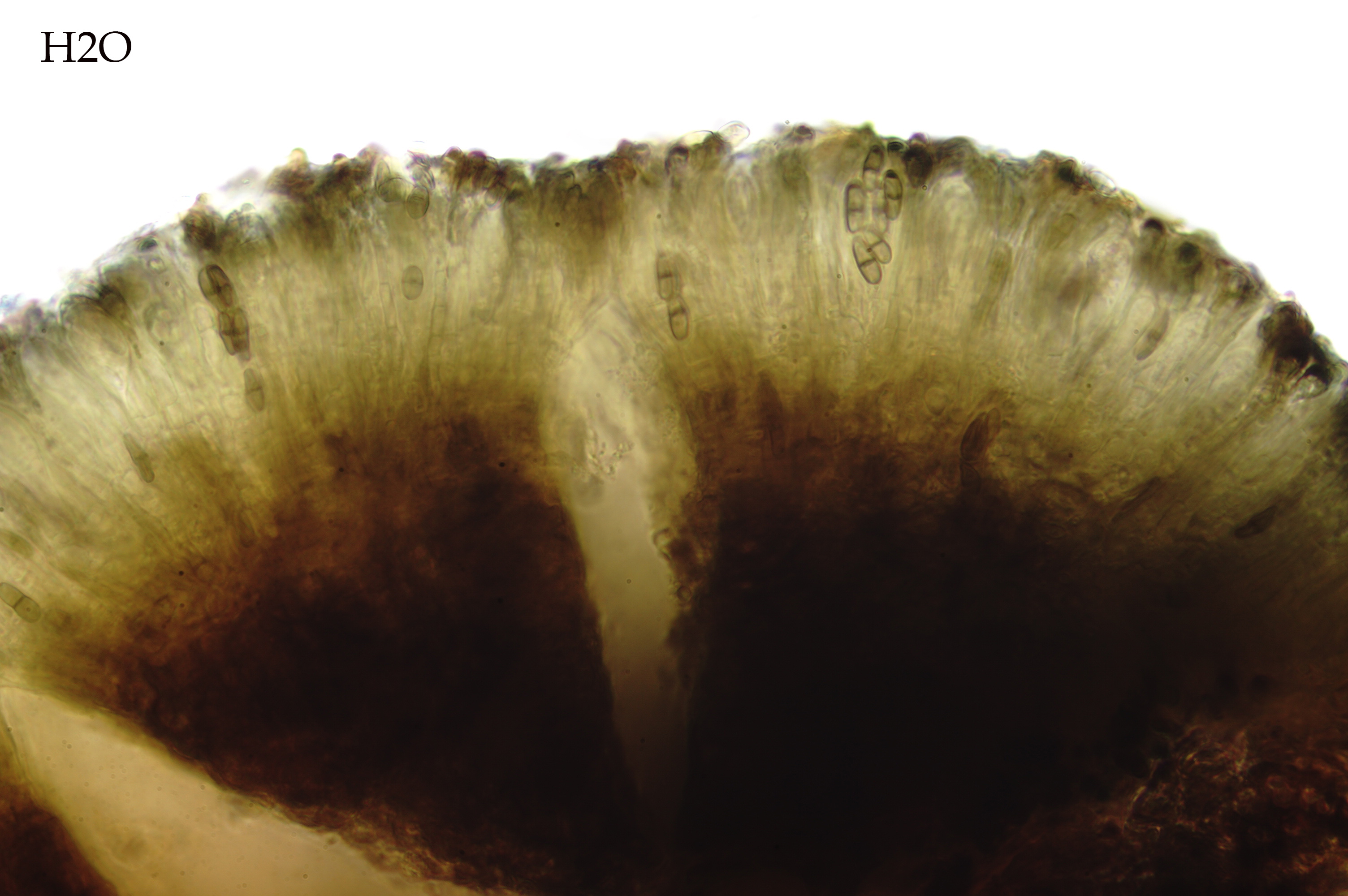
Marta González García
Spain, Asturias, Carballeda del Tragamón (Gijón), on Castanea
23.11.2022

Marta González García
Spain, Asturias, Carballeda del Tragamón (Gijón), on Castanea
23.11.2022
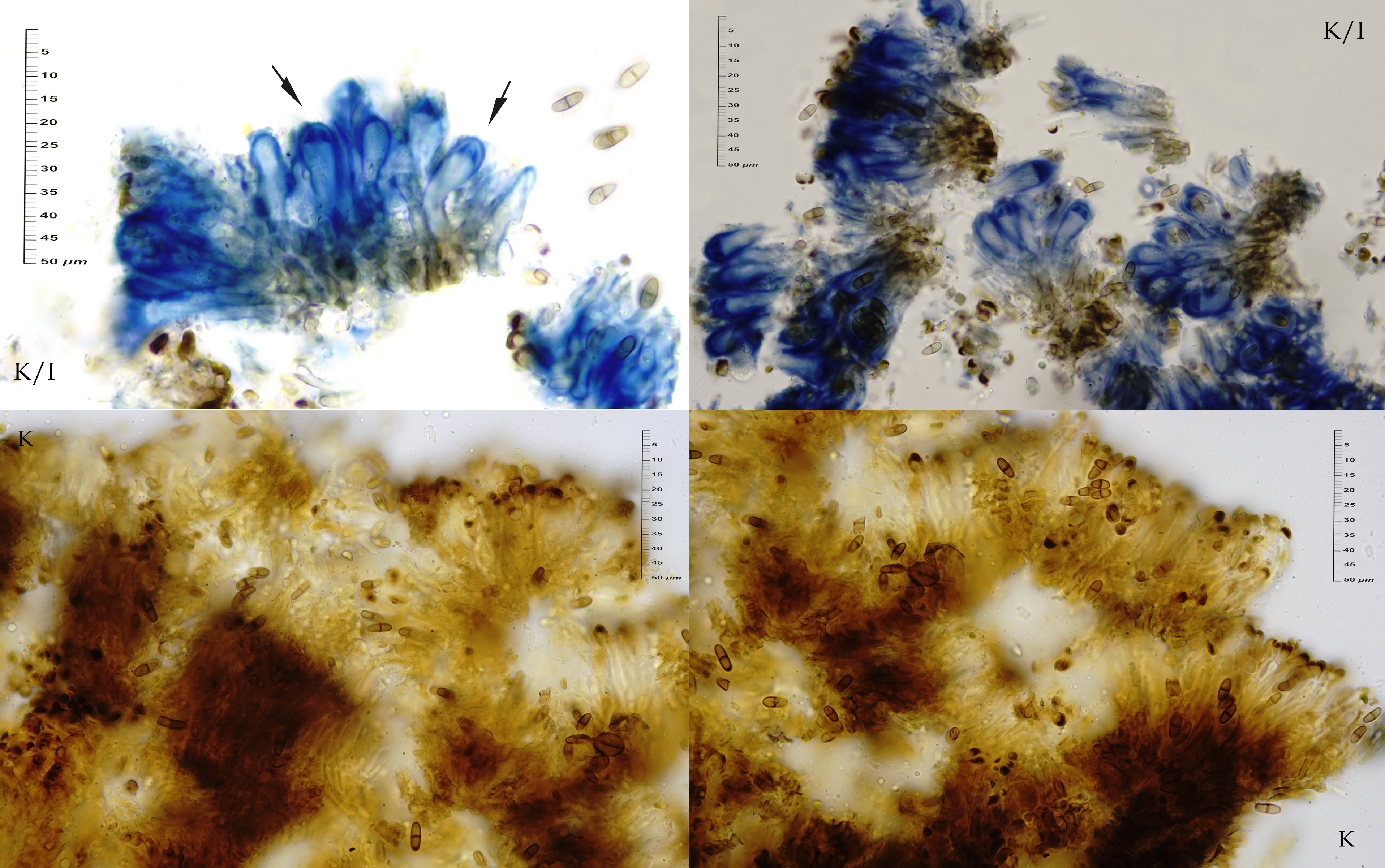
Marta González García
Spain, Asturias, Carballeda del Tragamón (Gijón), on Castanea
23.11.2022
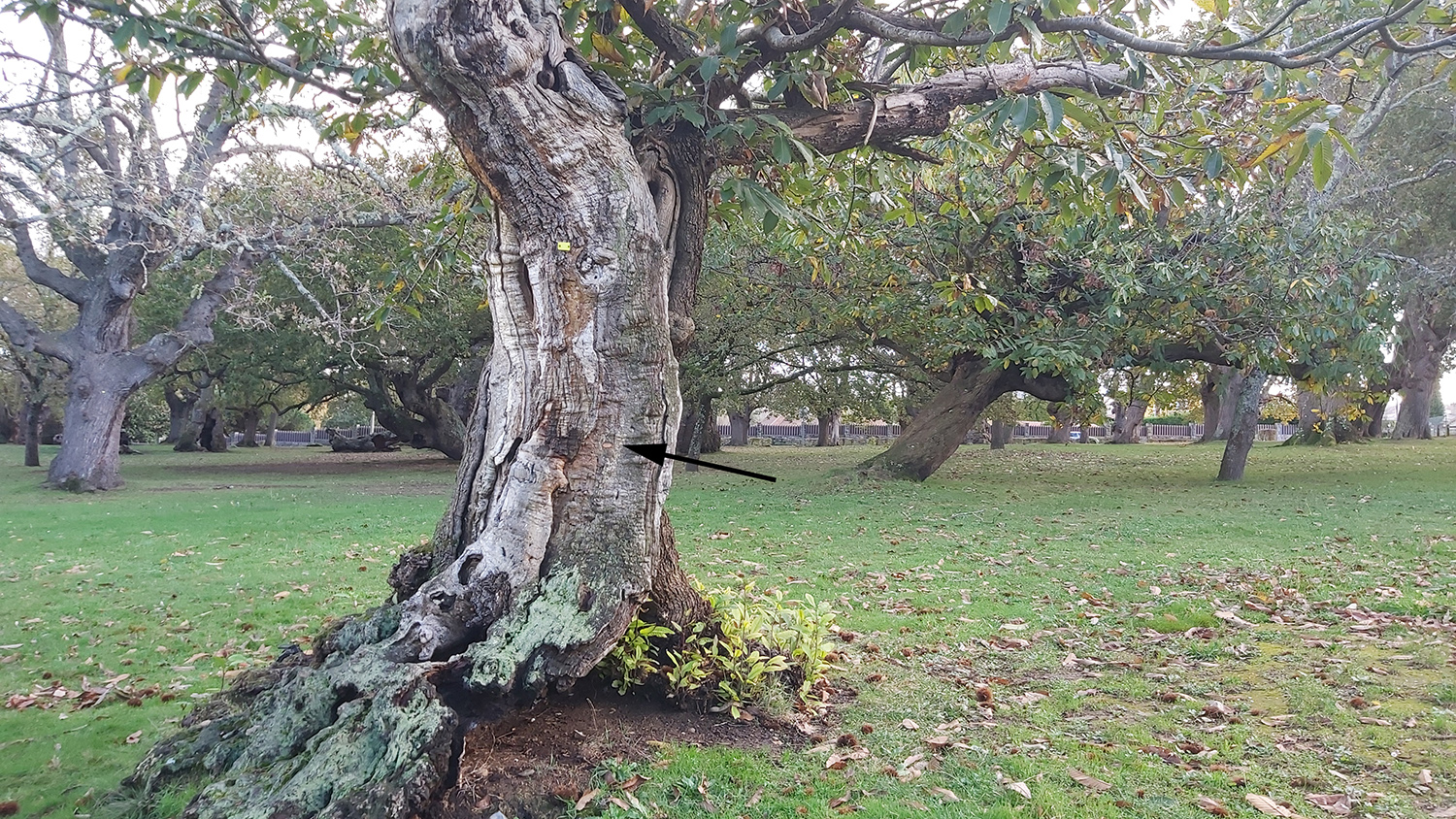
Marta González García
Spain, Asturias, Carballeda del Tragamón (Gijón), on Castanea
23.11.2022

Ulrich Kirschbaum - CC BY 4.0
Mittelhessen, Germany, on Larix
Sierra de Buseco, (Tineo-Asturias), 4-III-2025, en rocas cuarcíticas, a 750 m de altitud.

Ulrich Kirschbaum - CC BY 4.0
Mittelhessen, Germany, on Larix

Ulrich Kirschbaum - CC BY 4.0
Mittelhessen, Germany, on Larix

Felix Schumm - CC BY-SA 4.0
[VZ2024], Jugoslavia. Crna Gora (Montenegro): montes Durmitor, toco Surduo dicto supra lacum Zminje jezero, 1600 m. Ad corticem arboris (Abies). Leg. A. Vezda, 21.6.1984. EX A. VEZDA LICHENES SELECTI EXSICCATI NR. 2024.