Buellia uberior Anzi
Atti Soc. Ital. Sc. Nat. Milano, 9: 252, 1866.
Synonyms: Buellia atrocinerea (Anzi) Zahlbr.; Buellia contermina Arnold; Buellia lactea var. atrocinerea Anzi; Buellia malmei auct.; Buellia nitida Eitner
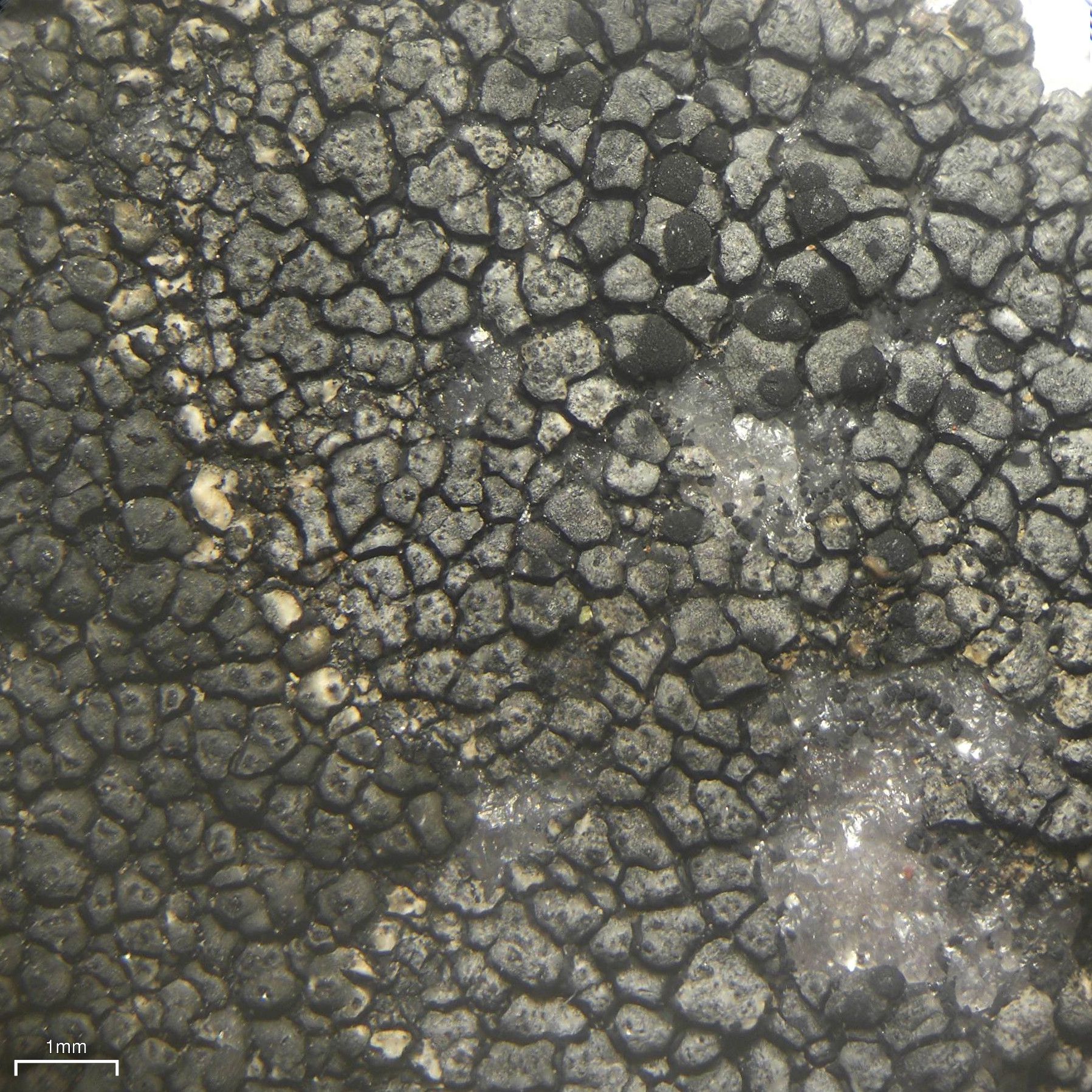
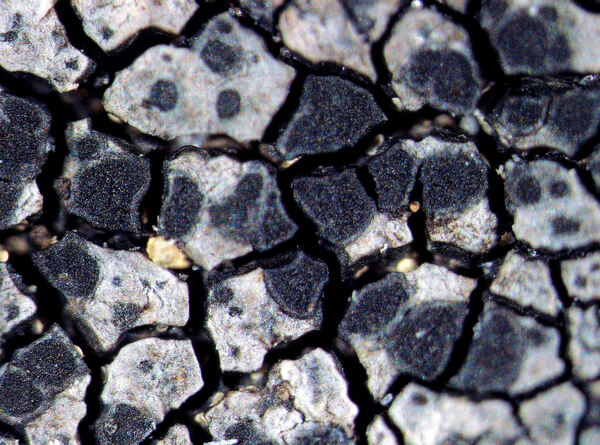
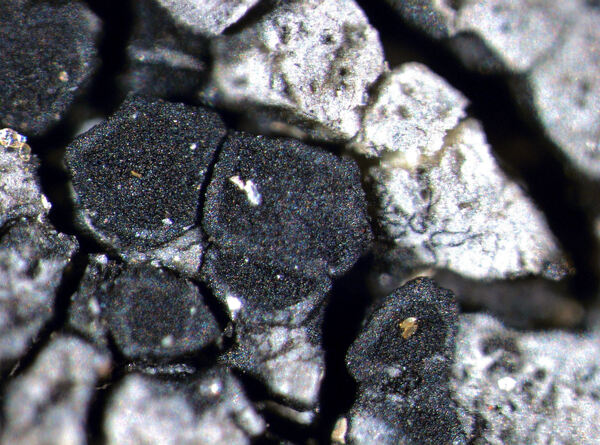
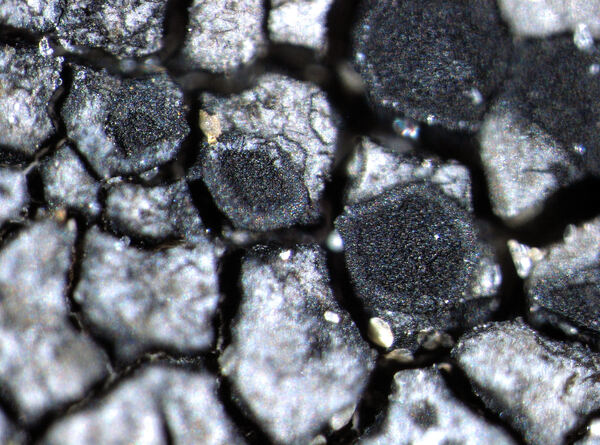
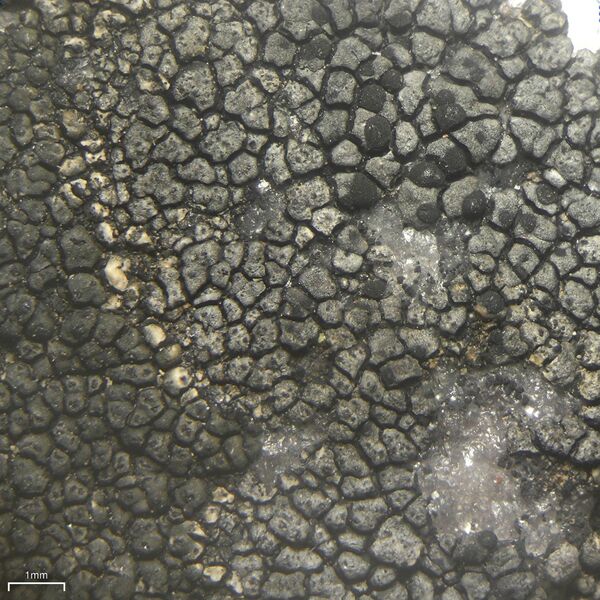
Description: Thallus crustose, episubstratic, often growing on the thalli of Schaereria fuscocinerea, pale to dark grey, shiny, areolate, the areoles 0.3-0.8 mm wide, forming 1-4(-5) cm wide patches, often delimited by a dark prothallus. Cortex of anticlinally arranged, cellular hyphae, the terminal cells swollen, with brown caps; medulla white, I+ blue. Apothecia black, cryptolecanorine to zeorine, 0.2-0.8(-1) mm across, immersed in the areoles, with a black, epruinose, mostly flat disc and an indistinct proper margin. Proper exciple thin, Aethalea-type, the inner hyphae hyaline, prosoplectenchymatous, the outer hyphae parallel and usually strongly brown- to olive-pigmented, N+ reddish; epithecium olive-green to olive-brown, N+ red; hymenium colourless, not inspersed with oil droplets, 42-70 µm high; hypothecium colourless to medium brown. Asci 8-spored, clavate to cylindrical-clavate, the apical dome K/I+ dark blue with a pale, conical-pointed apical cushion (axial mass), the wall I-, but the thin outer gel I+ blue, Bacidia-type. Ascospores 1-septate, constricted at septum, brown, broadly oblong, 8-12(-14) x 4.5-7 µm, Buellia-type, the wall >1.5 µm thick, with a striate ornamentation. Pycnidia black, immersed in the thallus. Conidia bacilliform, 3.5-5(-7) x 0.5-1 µm. Photobiont chlorococcoid. Spot tests: thallus K- or K+ yellow-orange, C+ red, KC+ red, P- or P+ faintly orange. Chemistry: gyrophoric acid (major), variable amounts of stictic acid.
Growth form: Crustose
Substrata: rocks
Photobiont: green algae other than Trentepohlia
Reproductive strategy: mainly sexual
paras Schaereria fuscocinerea
Commonnes-rarity: (info)
Alpine belt: rare
Subalpine belt: very rare
Montane belt: extremely rare
Dry submediterranean belt: absent
Humid submediterranean belt: absent
Padanian area: absent
pH of the substrata:
1 2 3 4 5

Solar irradiation:
1 2 3 4 5
Aridity:
1 2 3 4 5
Eutrophication:
1 2 3 4 5
Poleotolerance:
0 1 2 3
Altitudinal distribution:
1 2 3 4 5 6
Rarity
absent
extremely rare
very rare
rare
rather rare
rather common
common
very common
extremely common
Loading data...
Occurrence data
Predictive map
P.L. Nimis CC BY-SA 4.0
TSB 42098
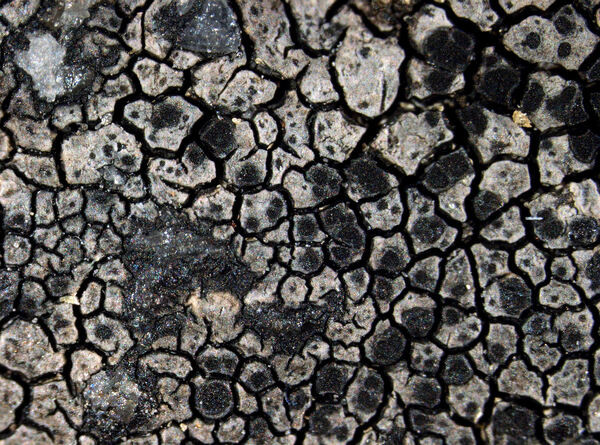
P.L. Nimis CC BY-SA 4.0
TSB 42098
P.L. Nimis CC BY-SA 4.0
TSB 42098
P.L. Nimis CC BY-SA 4.0
TSB 42098
Identifier
https://lichenpor...1536635131_lg.jpg
Growth form: Crustose
Substrata: rocks
Photobiont: green algae other than Trentepohlia
Reproductive strategy: mainly sexual
paras Schaereria fuscocinerea
Commonnes-rarity: (info)
Alpine belt: rare
Subalpine belt: very rare
Montane belt: extremely rare
Dry submediterranean belt: absent
Humid submediterranean belt: absent
Padanian area: absent
pH of the substrata:
| 1 | 2 | 3 | 4 | 5 |
Solar irradiation:
| 1 | 2 | 3 | 4 | 5 |
Aridity:
| 1 | 2 | 3 | 4 | 5 |
Eutrophication:
| 1 | 2 | 3 | 4 | 5 |
Poleotolerance:
| 0 | 1 | 2 | 3 |
Altitudinal distribution:
| 1 | 2 | 3 | 4 | 5 | 6 |
Rarity
absent
extremely rare
very rare
rare
rather rare
rather common
common
very common
extremely common
Loading data...
Occurrence data
Predictive map
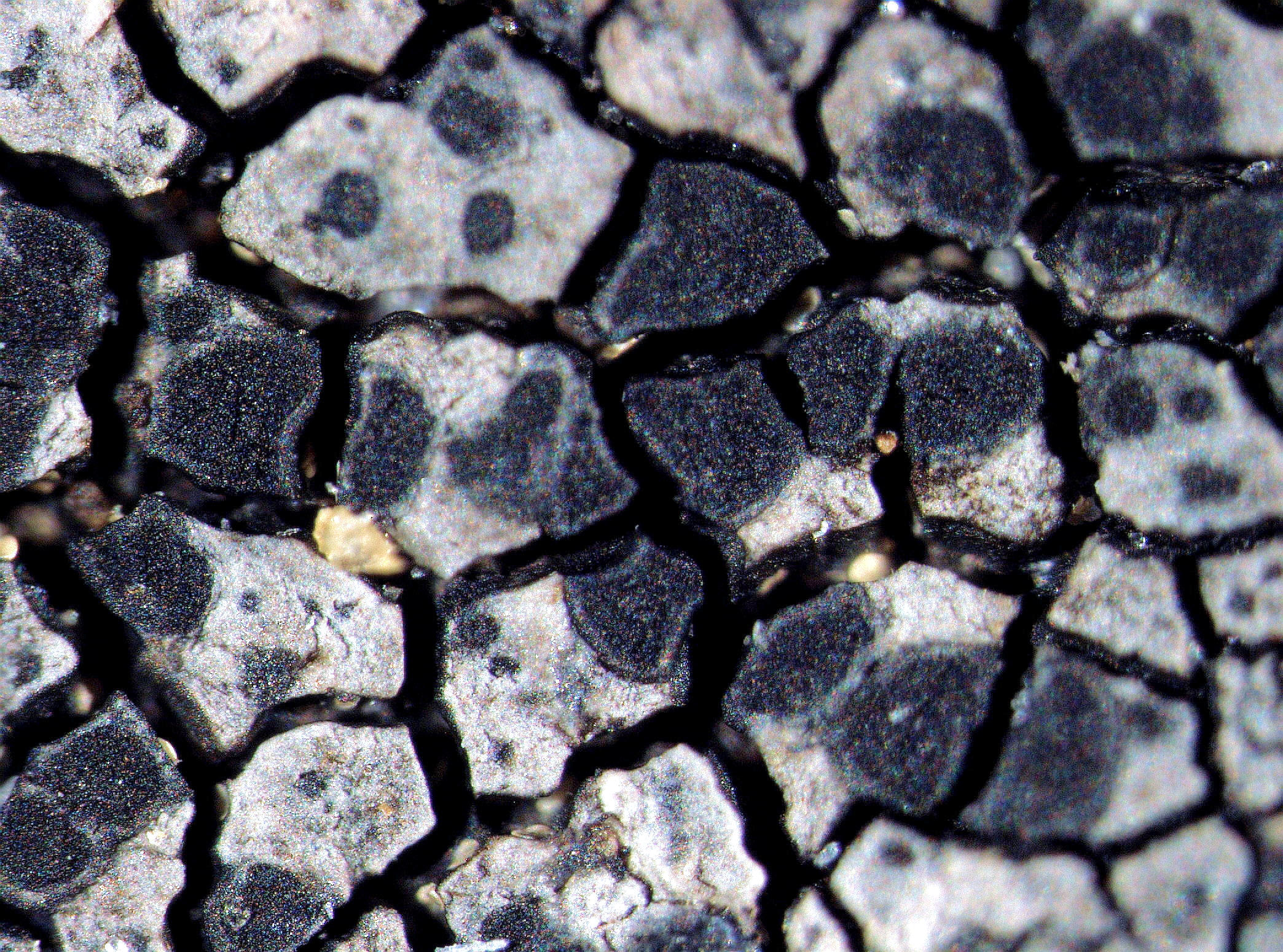
P.L. Nimis CC BY-SA 4.0
TSB 42098
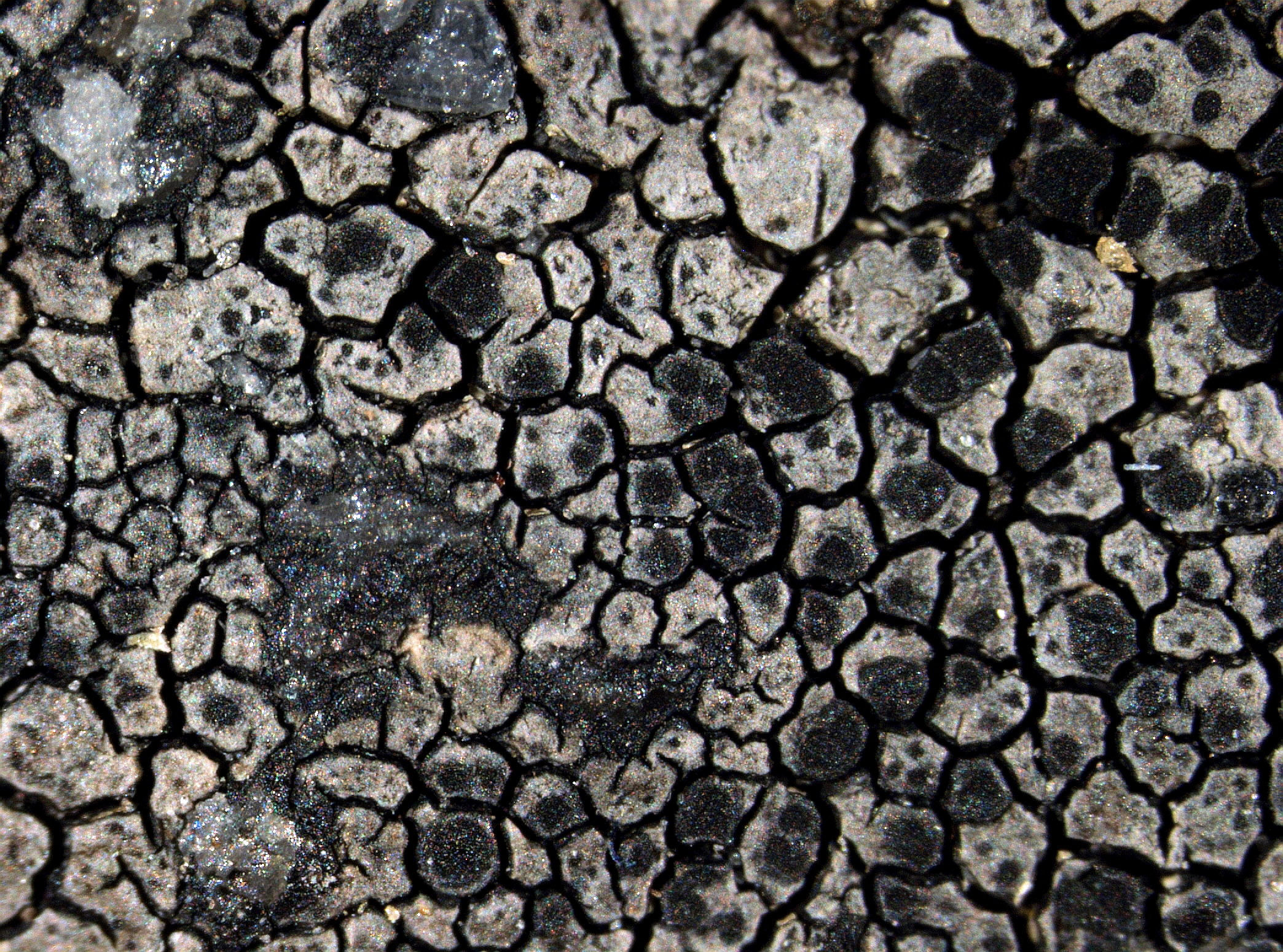
P.L. Nimis CC BY-SA 4.0
TSB 42098
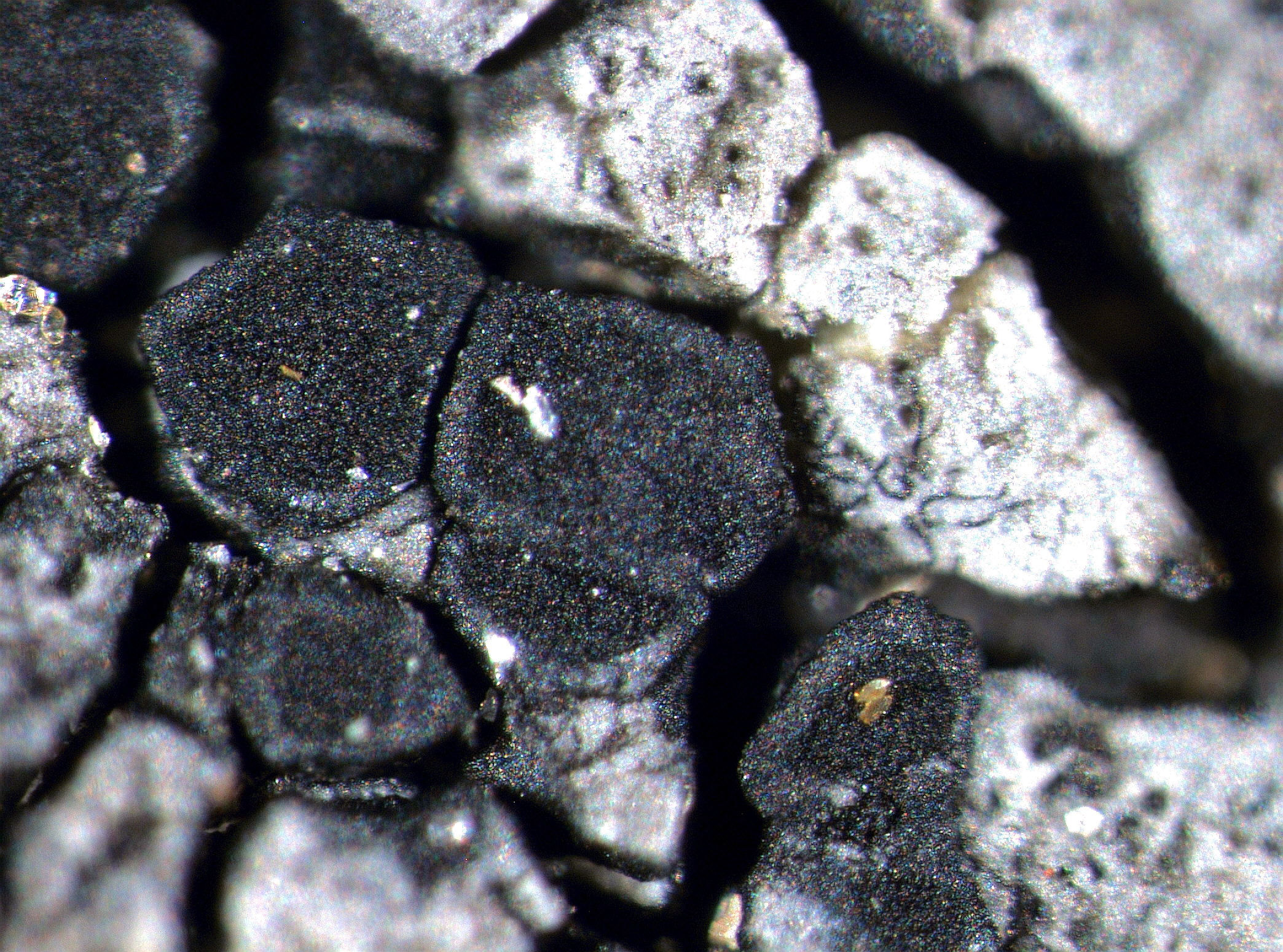
P.L. Nimis CC BY-SA 4.0
TSB 42098
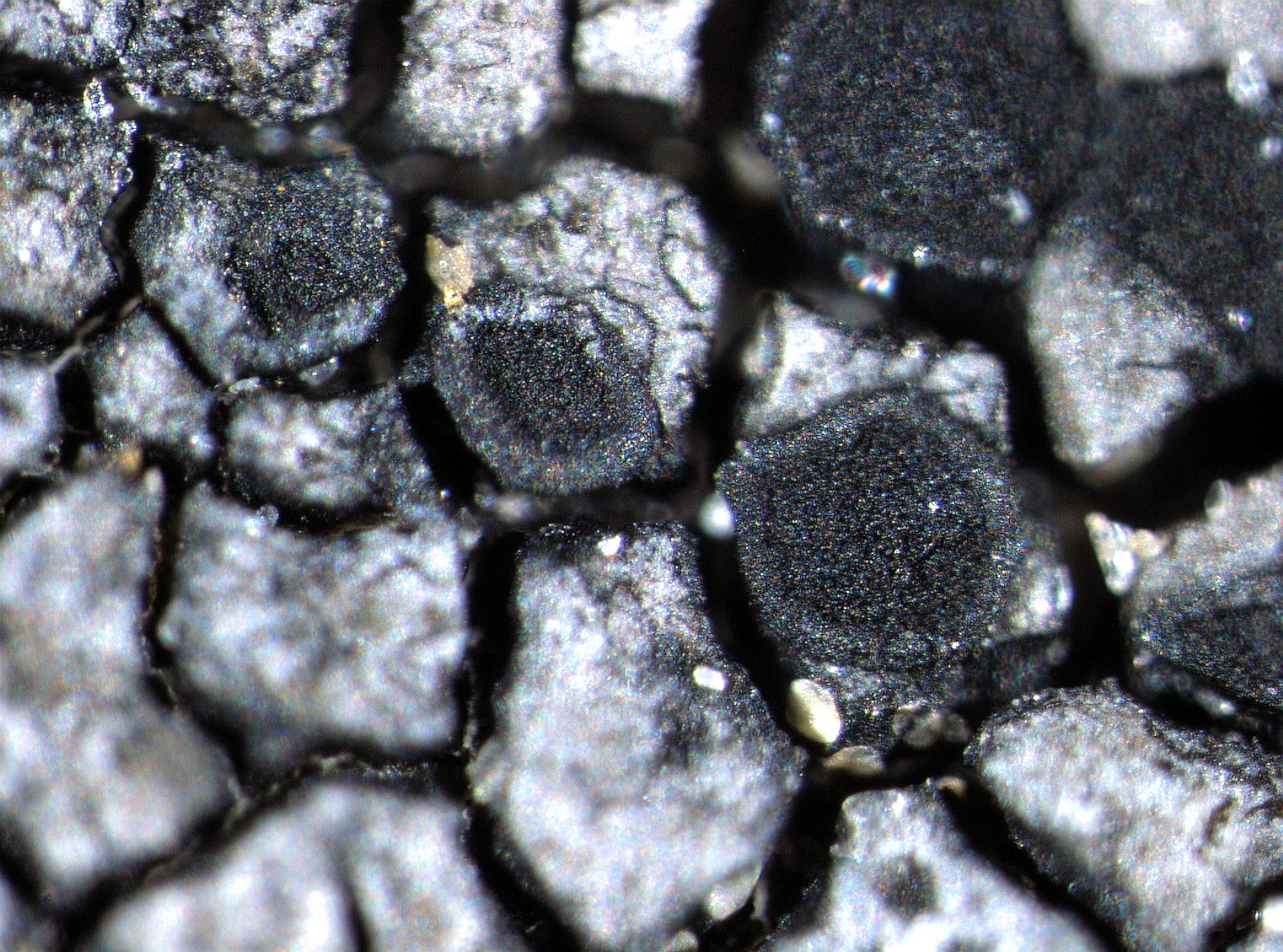
P.L. Nimis CC BY-SA 4.0
TSB 42098