Calogaya bryochrysion (Poelt) Vondrák
in Vondrák & al., Lichenologist, 48: 177, 2016. Basionym: Caloplaca bryochrysion Poelt - Feddes Rep., 58: 175, 1955.
Synonyms:
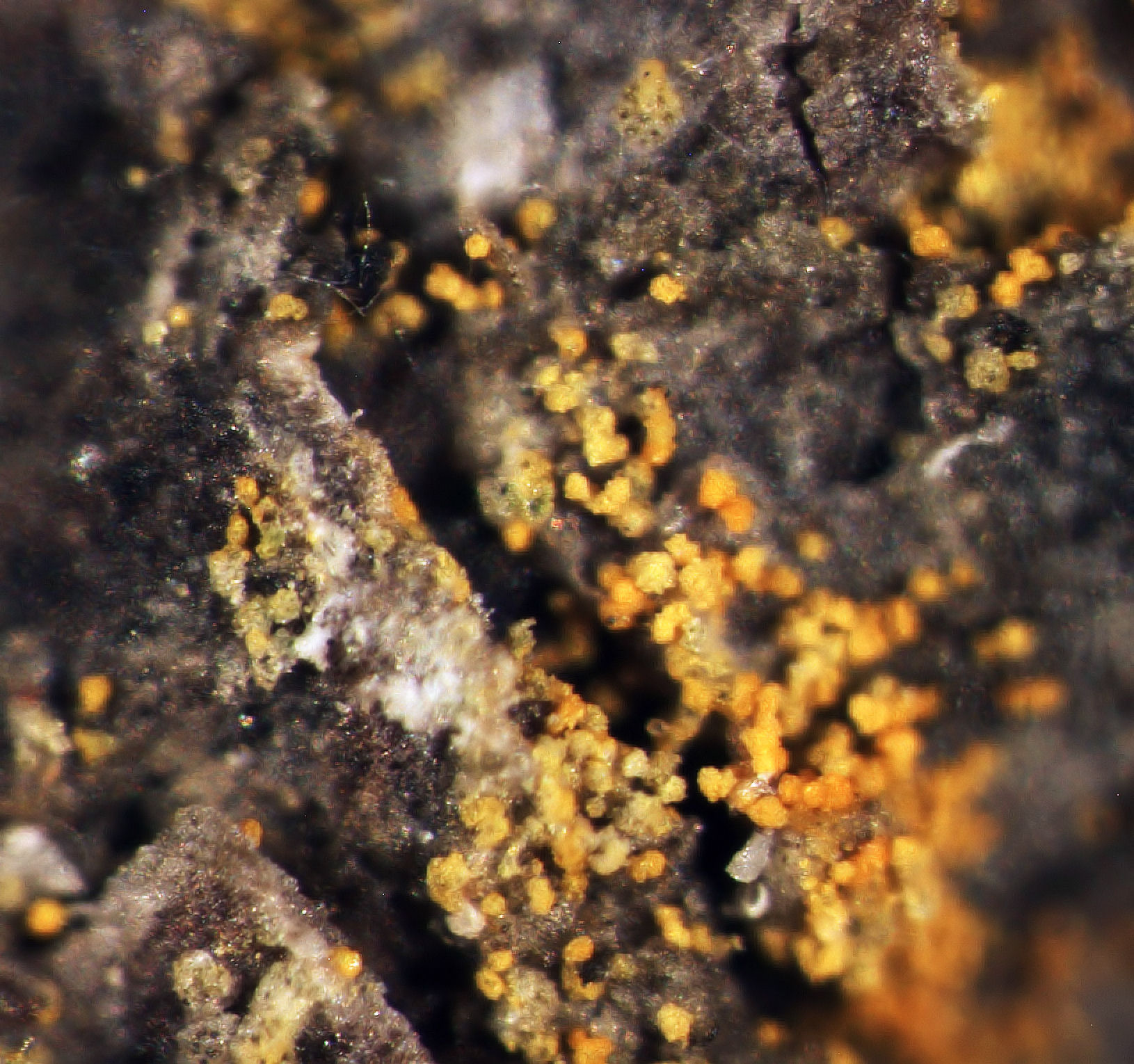
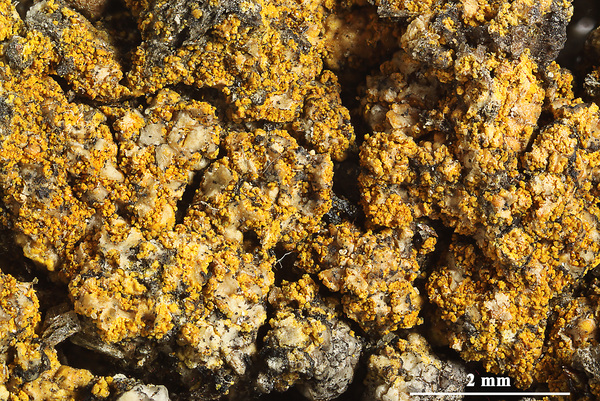
Description: Thallus crustose, of scattered or contiguous, circular to irregular, weakly to strongly convex, 0.1-0.5(-0.8) mm wide, 0.1-0.2 mm thick areoles, yellow, yellowish orange to orange, forming small irregular patches, sorediate. Soralia at first punctiform to small-crateriform and laminal, yellow to orange, later becoming convex and covering most of the thallus; soredia granular, 20-35 μm in diam. Apothecia usually absent, or sparse and scattered, 0.3-0.6(-1) mm across, sessile, slightly to strongly constricted at base, more or less zeorine with a concave to strongly convex, yellowish orange to orange, smooth, epruinose disc, and an inconspicuous, often excluded thalline margin; proper margin raised or level with disc, slightly paler, smooth. Epithecium yellow to yellowish orange, K+ purple-red; hymenium colourless, 55-80 μm thick; paraphyses not gelatinized, simple to branched, the terminal cells swollen, up to 5 μm wide, often with oil-droplets; hypothecium colourless, with oil-droplets. Asci (6-)8-spored, clavate, functionally unitunicate, apically thickened with a broad internal beak, the inner part of apex and external cap I+ blue, Teloschistes-type. Ascospores 2-celled, polarilocular, hyaline, broadly ellipsoid, (7-)8-12(-18) x (4-)5.5-8(-9) μm, the equatorial thickening (“septum”) 2-3.5 μm. Photobiont chlorococcoid. Spot tests: thallus and apothecia K+ dark purple-red, C-, KC-, P-. Chemistry: thallus and apothecia with emodin, fallacinal, parietin, parietinic acid, and teloschistin.
Growth form: Crustose
Photobiont: green algae other than Trentepohlia
Reproductive strategy: mainly asexual, by soredia, or soredia-like structures (e.g. blastidia)
Commonnes-rarity: (info)
Alpine belt: rare
Subalpine belt: very rare
Montane belt: absent
Dry submediterranean belt: absent
Humid submediterranean belt: absent
Padanian area: absent
pH of the substrata:
1 2 3 4 5

Solar irradiation:
1 2 3 4 5
Aridity:
1 2 3 4 5
Eutrophication:
1 2 3 4 5
Poleotolerance:
0 1 2 3
Altitudinal distribution:
1 2 3 4 5 6
Rarity
absent
extremely rare
very rare
rare
rather rare
rather common
common
very common
extremely common
Loading data...
Occurrence data
Predictive map
Felix Schumm - CC BY-SA 4.0
[BR5030040676335], Austria, Tirol, Ötztal, Ober-Gurgel, Zirbelwald and Spitzkögele, in alpina heathland, 2000-2100 m. Leg. A. Aptroot (14072), 14-17.1984, det. A. Aptroot, 1986.
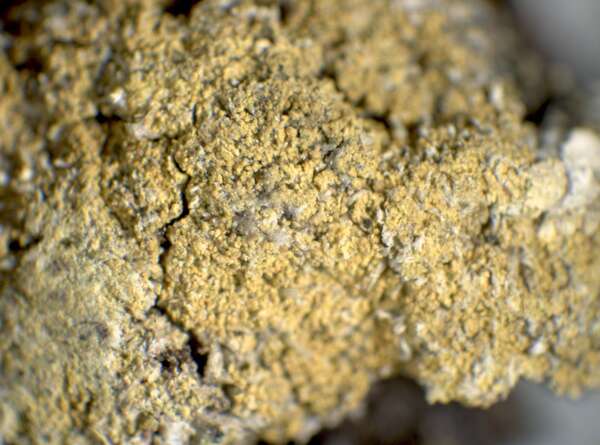
P.L. Nimis; Owner: Department of Life Sciences, University of Trieste
Herbarium: TSB (8703)
2001/12/18
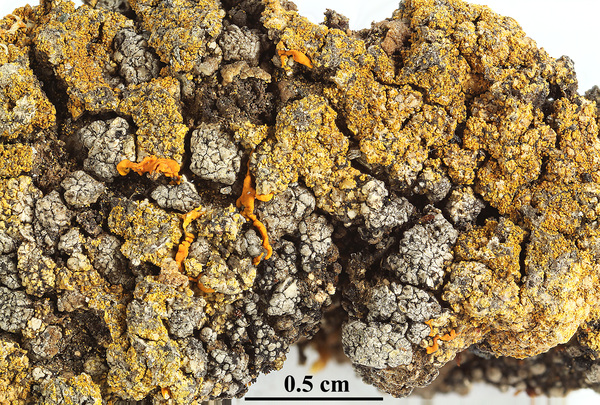
Felix Schumm - CC BY-SA 4.0
[BR5030040676335], Austria, Tirol, Ötztal, Ober-Gurgel, Zirbelwald and Spitzkögele, in alpina heathland, 2000-2100 m. Leg. A. Aptroot (14072), 14-17.1984, det. A. Aptroot, 1986.
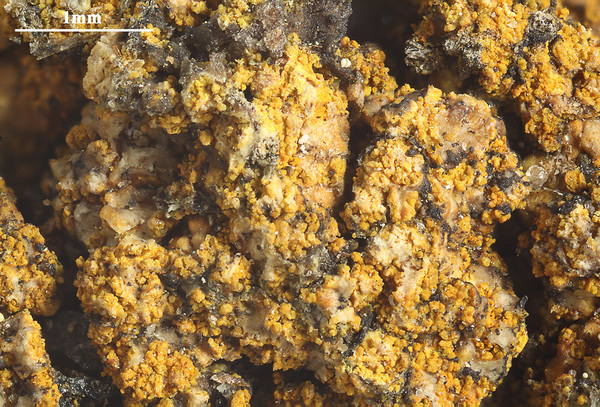
Felix Schumm - CC BY-SA 4.0
[BR5030040676335], Austria, Tirol, Ötztal, Ober-Gurgel, Zirbelwald and Spitzkögele, in alpina heathland, 2000-2100 m. Leg. A. Aptroot (14072), 14-17.1984, det. A. Aptroot, 1986.
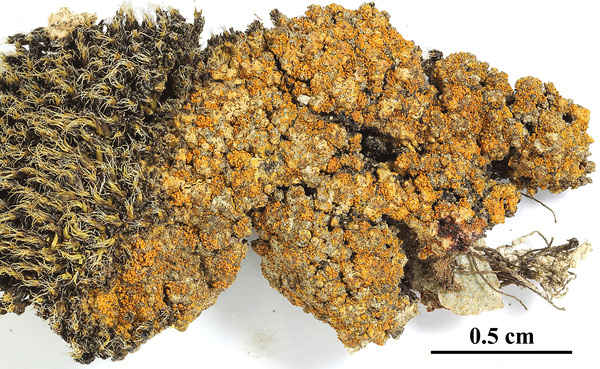
Felix Schumm; Owner: Felix Schumm - CC BY-SA 4.0
[B 60 0068097], Spain, prov. Gerona, Pyrenean mountains, Nuria, 15 km E of Puigcerda, c 1 km NE of the Monastery, weakly calcareous rocks in alpine meadow on NW-facing slope, in fissure in steep rockface, 2300 m. Leg. H. Sipman (No.8156), 7.09.1976, det. N. Ernste, 1977
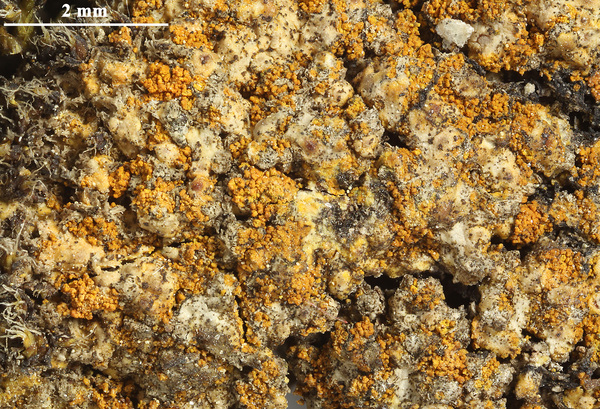
Felix Schumm; Owner: Felix Schumm - CC BY-SA 4.0
[B 60 0068097], Spain, prov. Gerona, Pyrenean mountains, Nuria, 15 km E of Puigcerda, c 1 km NE of the Monastery, weakly calcareous rocks in alpine meadow on NW-facing slope, in fissure in steep rockface, 2300 m. Leg. H. Sipman (No.8156), 7.09.1976, det. N. Ernste, 1977
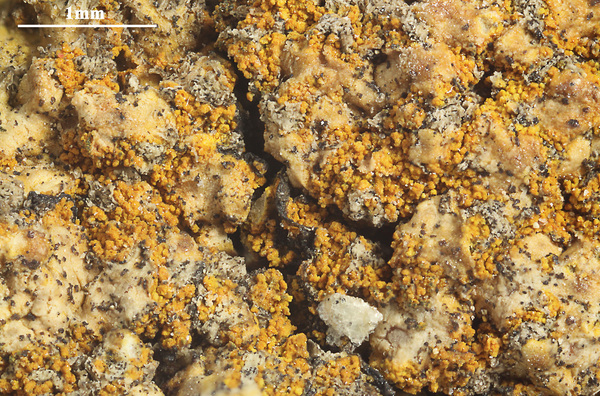
Felix Schumm; Owner: Felix Schumm - CC BY-SA 4.0
[B 60 0068097], Spain, prov. Gerona, Pyrenean mountains, Nuria, 15 km E of Puigcerda, c 1 km NE of the Monastery, weakly calcareous rocks in alpine meadow on NW-facing slope, in fissure in steep rockface, 2300 m. Leg. H. Sipman (No.8156), 7.09.1976, det. N. Ernste, 1977
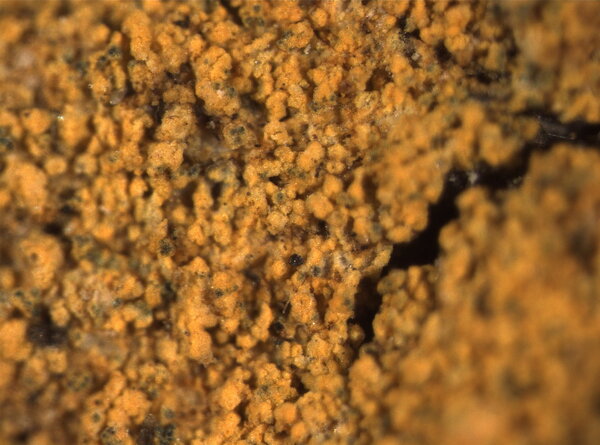
P.L. Nimis CC BY-SA 04
TSB 37151
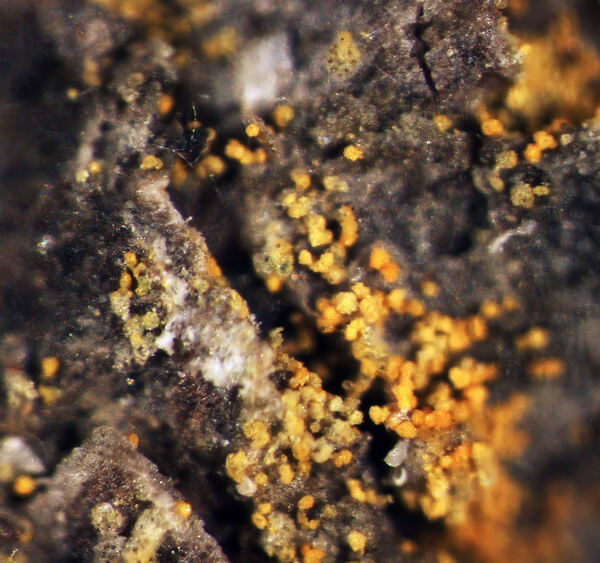
P.L. Nimis CC BY-SA 04
TSB 37152
Growth form: Crustose
Photobiont: green algae other than Trentepohlia
Reproductive strategy: mainly asexual, by soredia, or soredia-like structures (e.g. blastidia)
Commonnes-rarity: (info)
Alpine belt: rare
Subalpine belt: very rare
Montane belt: absent
Dry submediterranean belt: absent
Humid submediterranean belt: absent
Padanian area: absent
pH of the substrata:
| 1 | 2 | 3 | 4 | 5 |
Solar irradiation:
| 1 | 2 | 3 | 4 | 5 |
Aridity:
| 1 | 2 | 3 | 4 | 5 |
Eutrophication:
| 1 | 2 | 3 | 4 | 5 |
Poleotolerance:
| 0 | 1 | 2 | 3 |
Altitudinal distribution:
| 1 | 2 | 3 | 4 | 5 | 6 |
Rarity
absent
extremely rare
very rare
rare
rather rare
rather common
common
very common
extremely common
Loading data...
Occurrence data
Predictive map
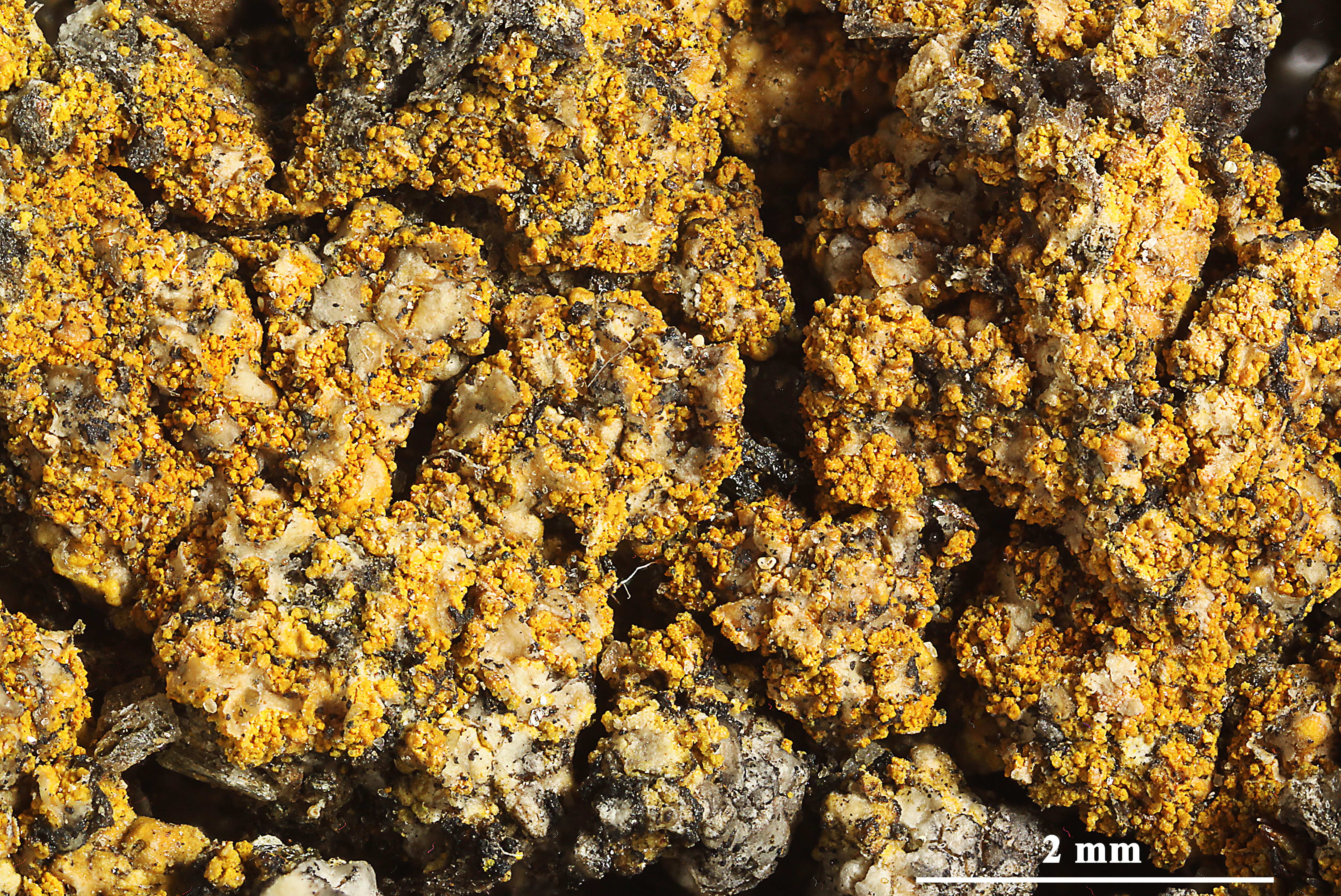
Felix Schumm - CC BY-SA 4.0
[BR5030040676335], Austria, Tirol, Ötztal, Ober-Gurgel, Zirbelwald and Spitzkögele, in alpina heathland, 2000-2100 m. Leg. A. Aptroot (14072), 14-17.1984, det. A. Aptroot, 1986.
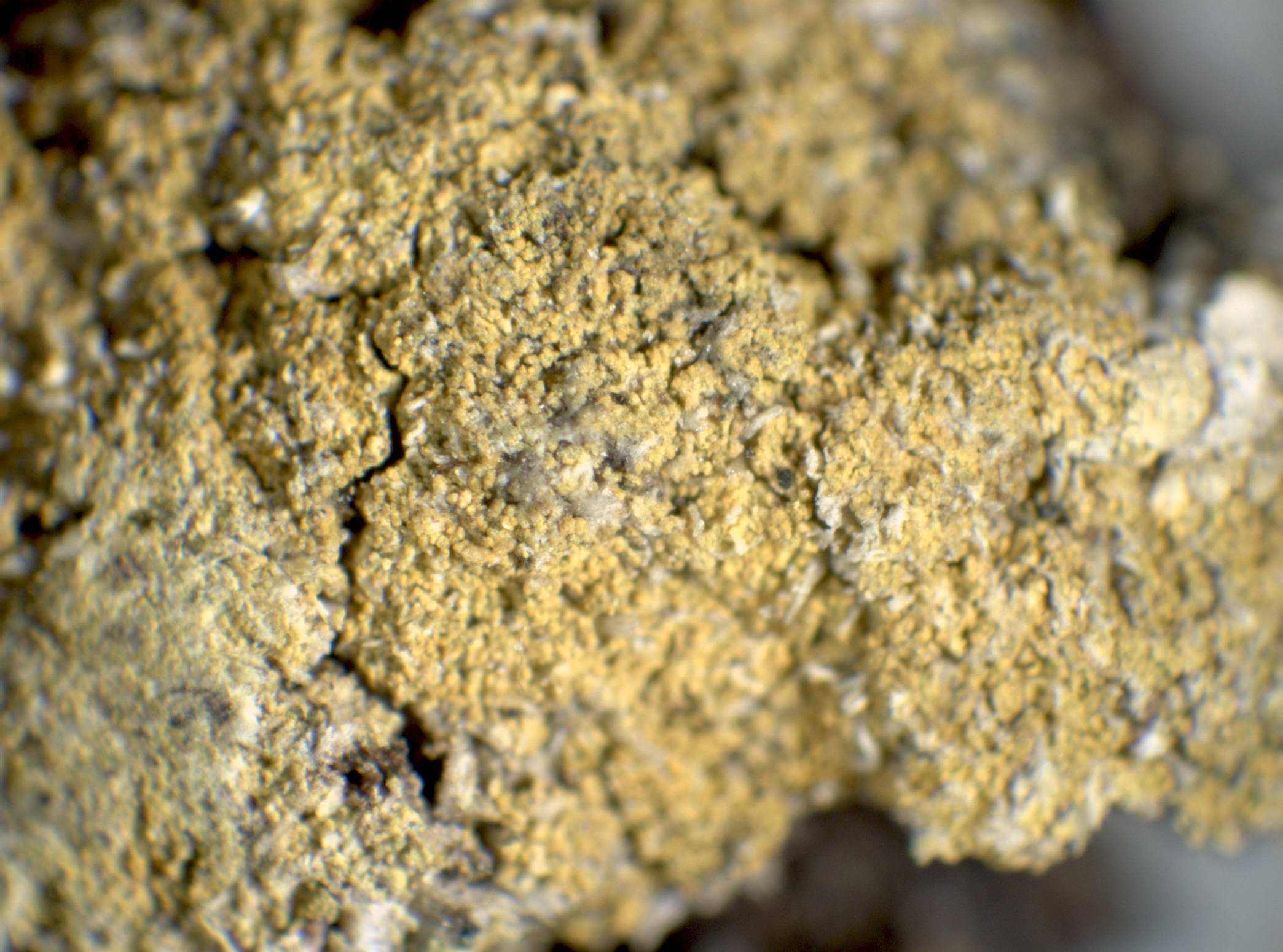
P.L. Nimis; Owner: Department of Life Sciences, University of Trieste
Herbarium: TSB (8703)
2001/12/18
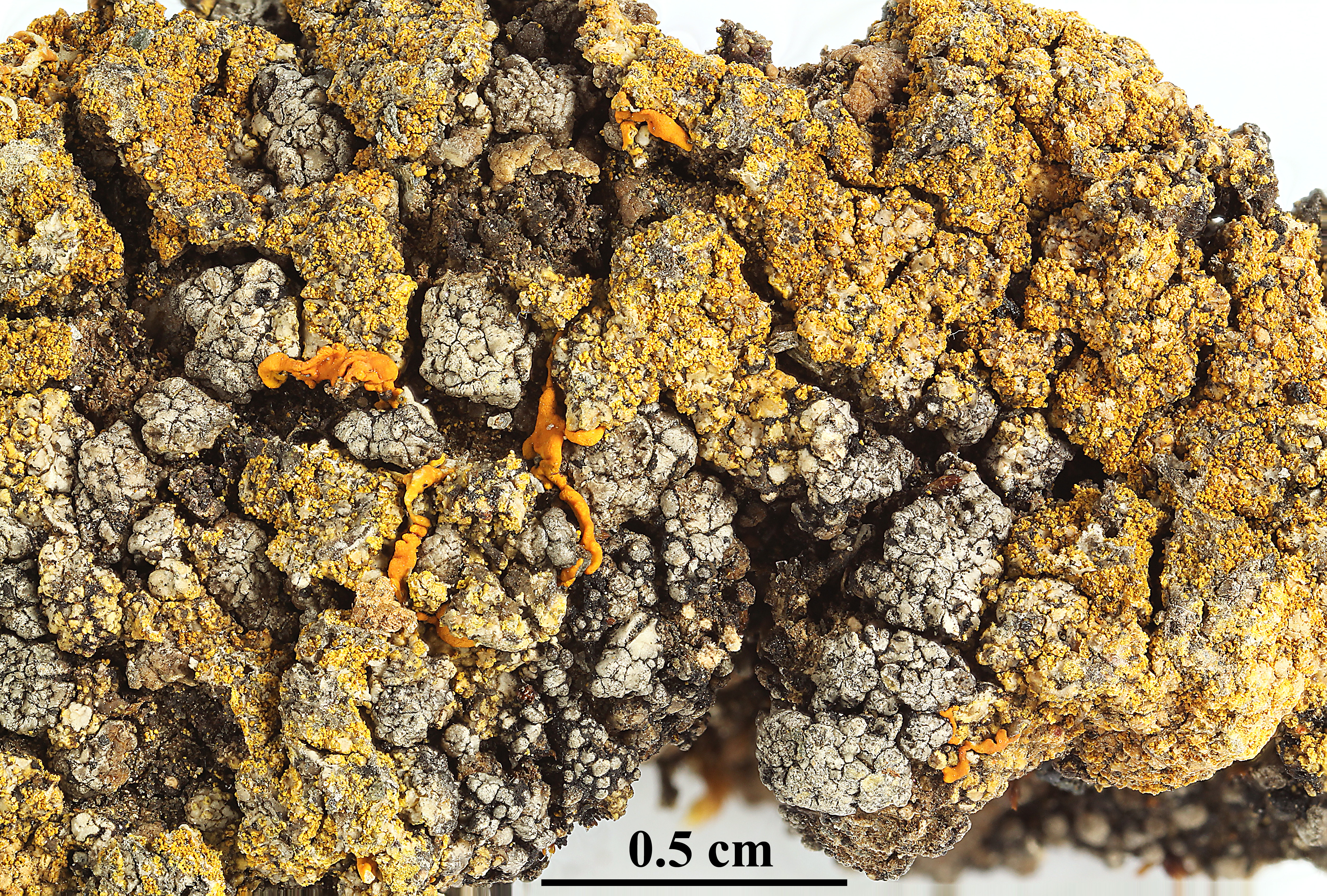
Felix Schumm - CC BY-SA 4.0
[BR5030040676335], Austria, Tirol, Ötztal, Ober-Gurgel, Zirbelwald and Spitzkögele, in alpina heathland, 2000-2100 m. Leg. A. Aptroot (14072), 14-17.1984, det. A. Aptroot, 1986.
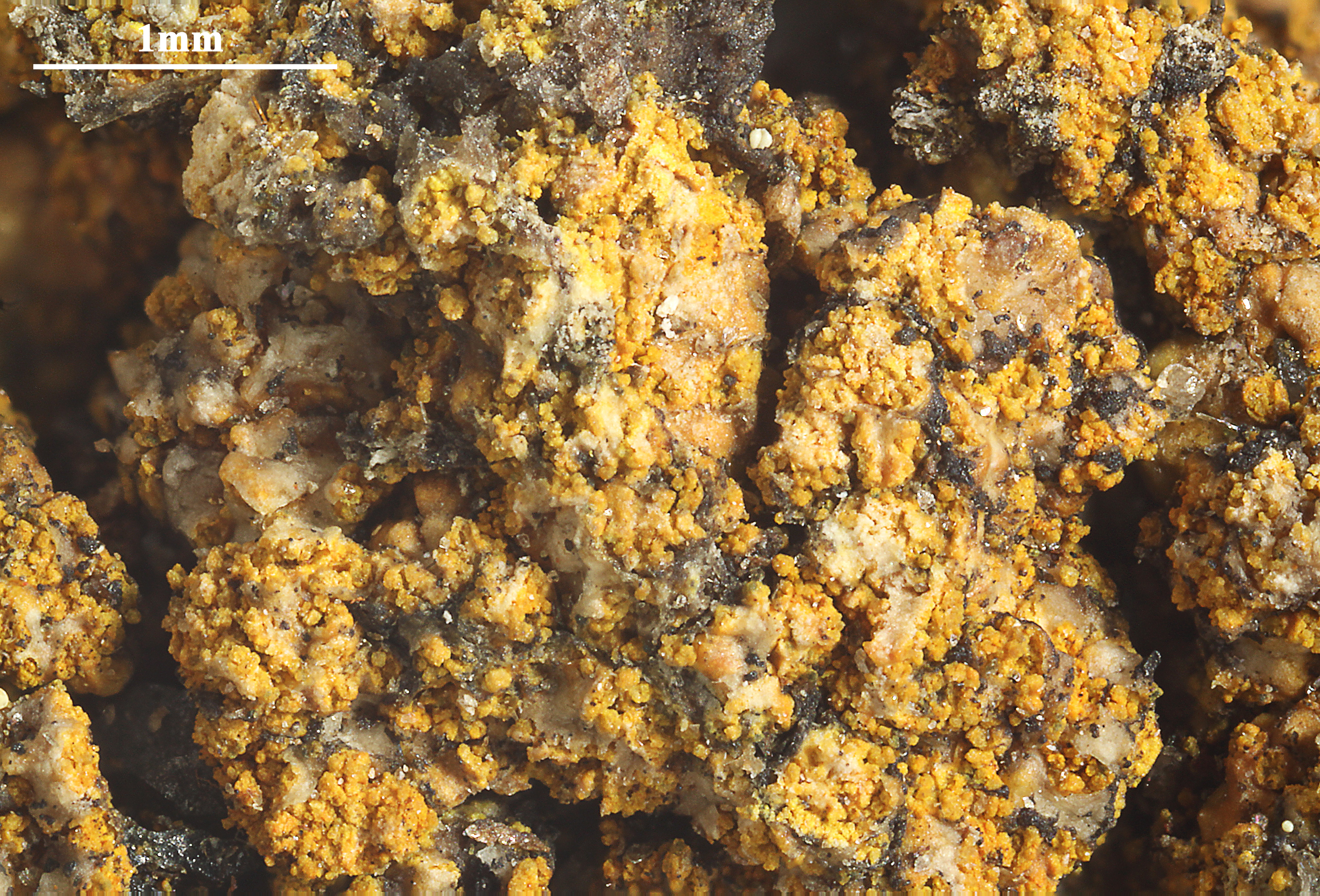
Felix Schumm - CC BY-SA 4.0
[BR5030040676335], Austria, Tirol, Ötztal, Ober-Gurgel, Zirbelwald and Spitzkögele, in alpina heathland, 2000-2100 m. Leg. A. Aptroot (14072), 14-17.1984, det. A. Aptroot, 1986.
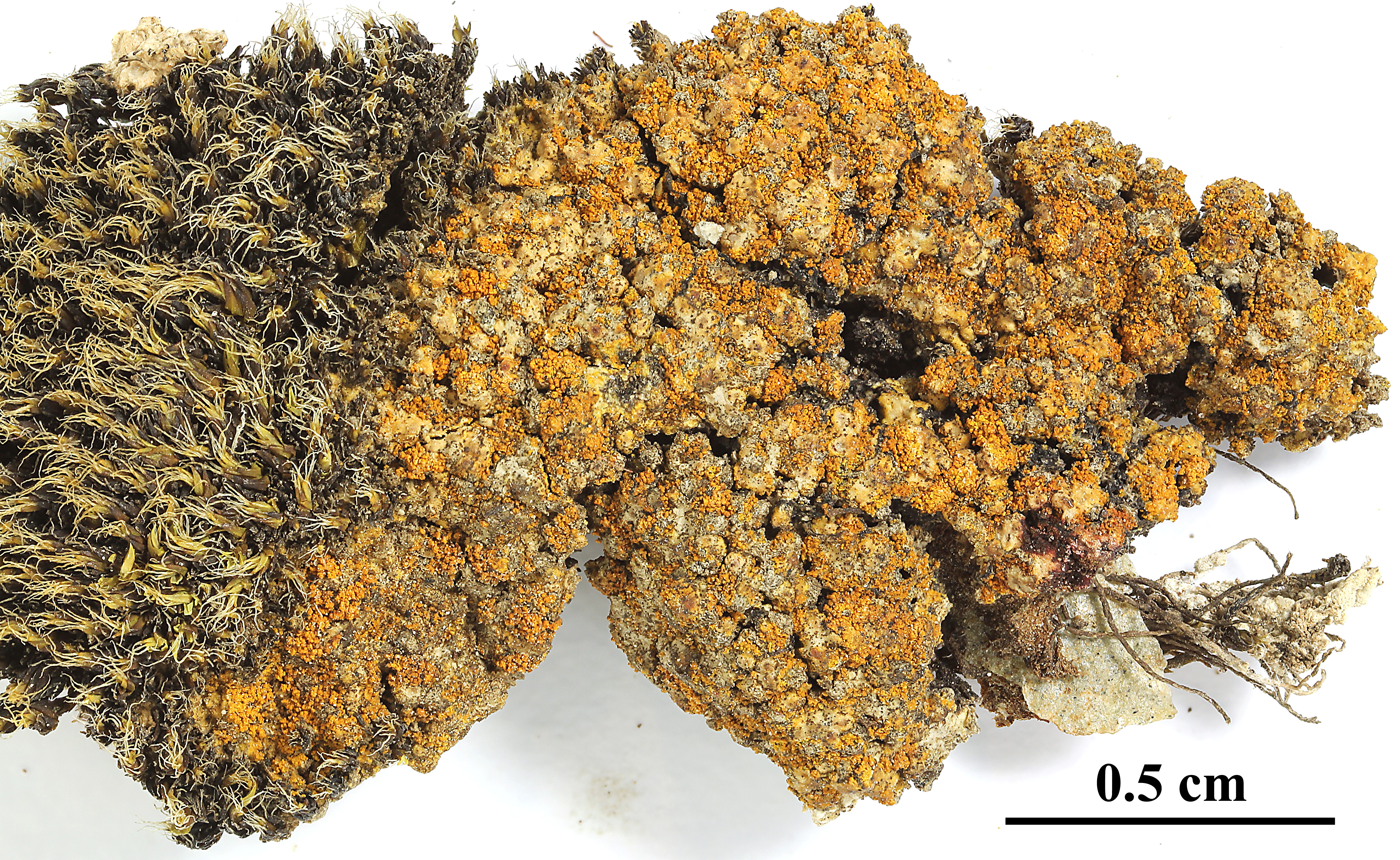
Felix Schumm; Owner: Felix Schumm - CC BY-SA 4.0
[B 60 0068097], Spain, prov. Gerona, Pyrenean mountains, Nuria, 15 km E of Puigcerda, c 1 km NE of the Monastery, weakly calcareous rocks in alpine meadow on NW-facing slope, in fissure in steep rockface, 2300 m. Leg. H. Sipman (No.8156), 7.09.1976, det. N. Ernste, 1977
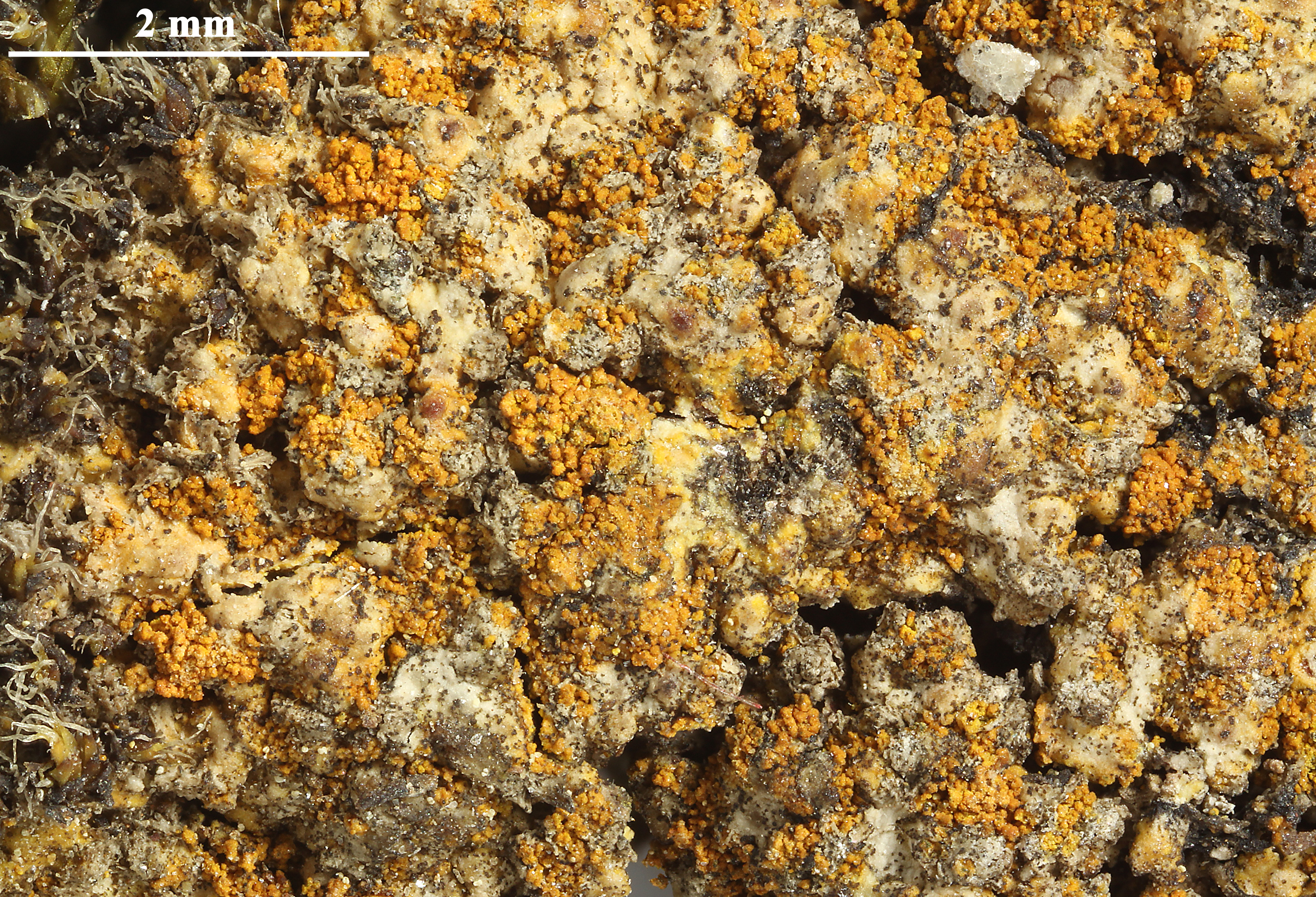
Felix Schumm; Owner: Felix Schumm - CC BY-SA 4.0
[B 60 0068097], Spain, prov. Gerona, Pyrenean mountains, Nuria, 15 km E of Puigcerda, c 1 km NE of the Monastery, weakly calcareous rocks in alpine meadow on NW-facing slope, in fissure in steep rockface, 2300 m. Leg. H. Sipman (No.8156), 7.09.1976, det. N. Ernste, 1977

Felix Schumm; Owner: Felix Schumm - CC BY-SA 4.0
[B 60 0068097], Spain, prov. Gerona, Pyrenean mountains, Nuria, 15 km E of Puigcerda, c 1 km NE of the Monastery, weakly calcareous rocks in alpine meadow on NW-facing slope, in fissure in steep rockface, 2300 m. Leg. H. Sipman (No.8156), 7.09.1976, det. N. Ernste, 1977
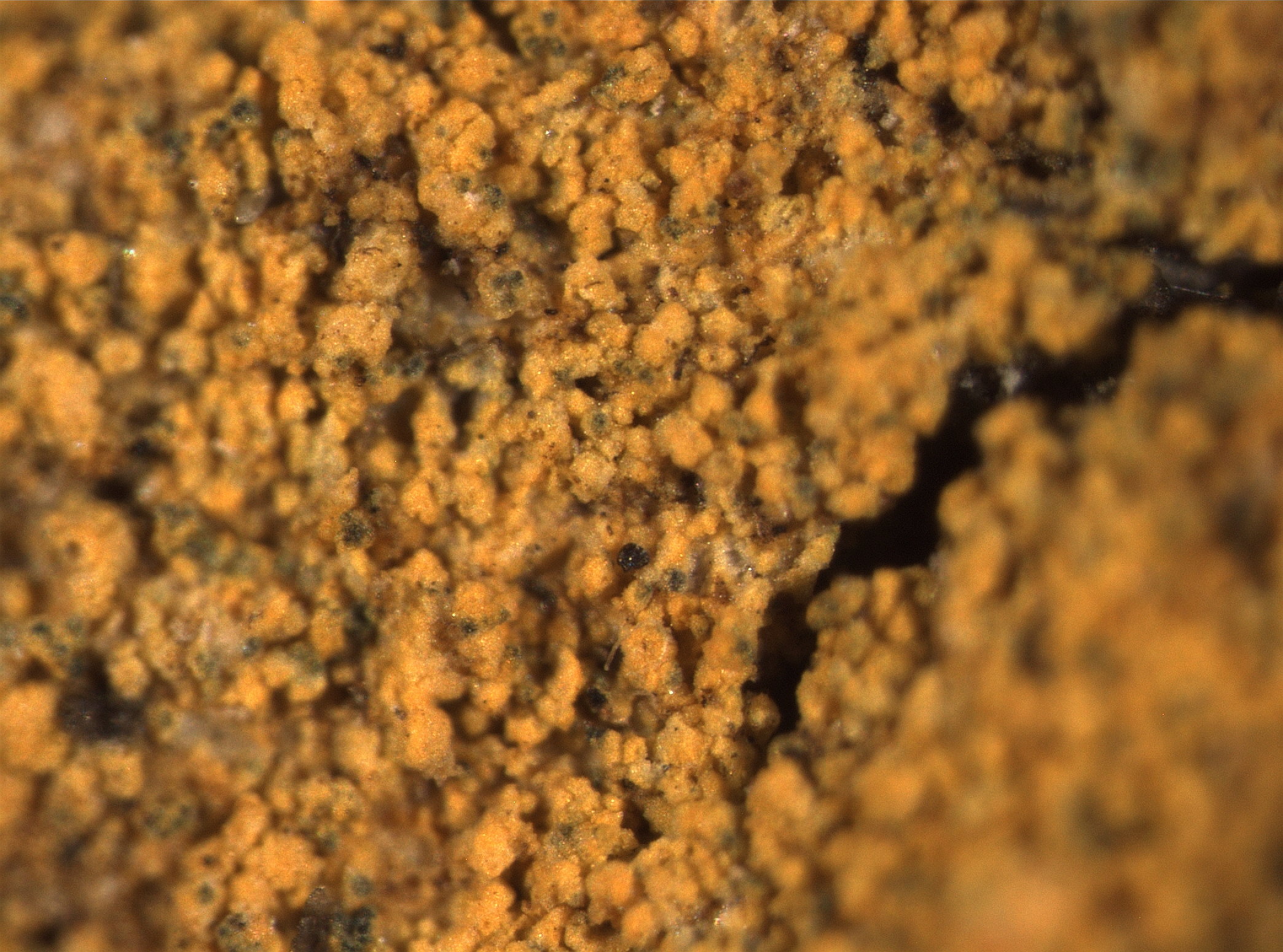
P.L. Nimis CC BY-SA 04
TSB 37151