Catillaria erysiboides (Nyl.) Th. Fr.
Lichenogr. Scand., 2: 572, 1874. Basionym: Lecidea erysiboides Nyl. - Not. Sällsk. Fauna Fl. Fenn., 4: 232, 1859.
Synonyms: Biatorina erysiboides (Nyl.) Arnold
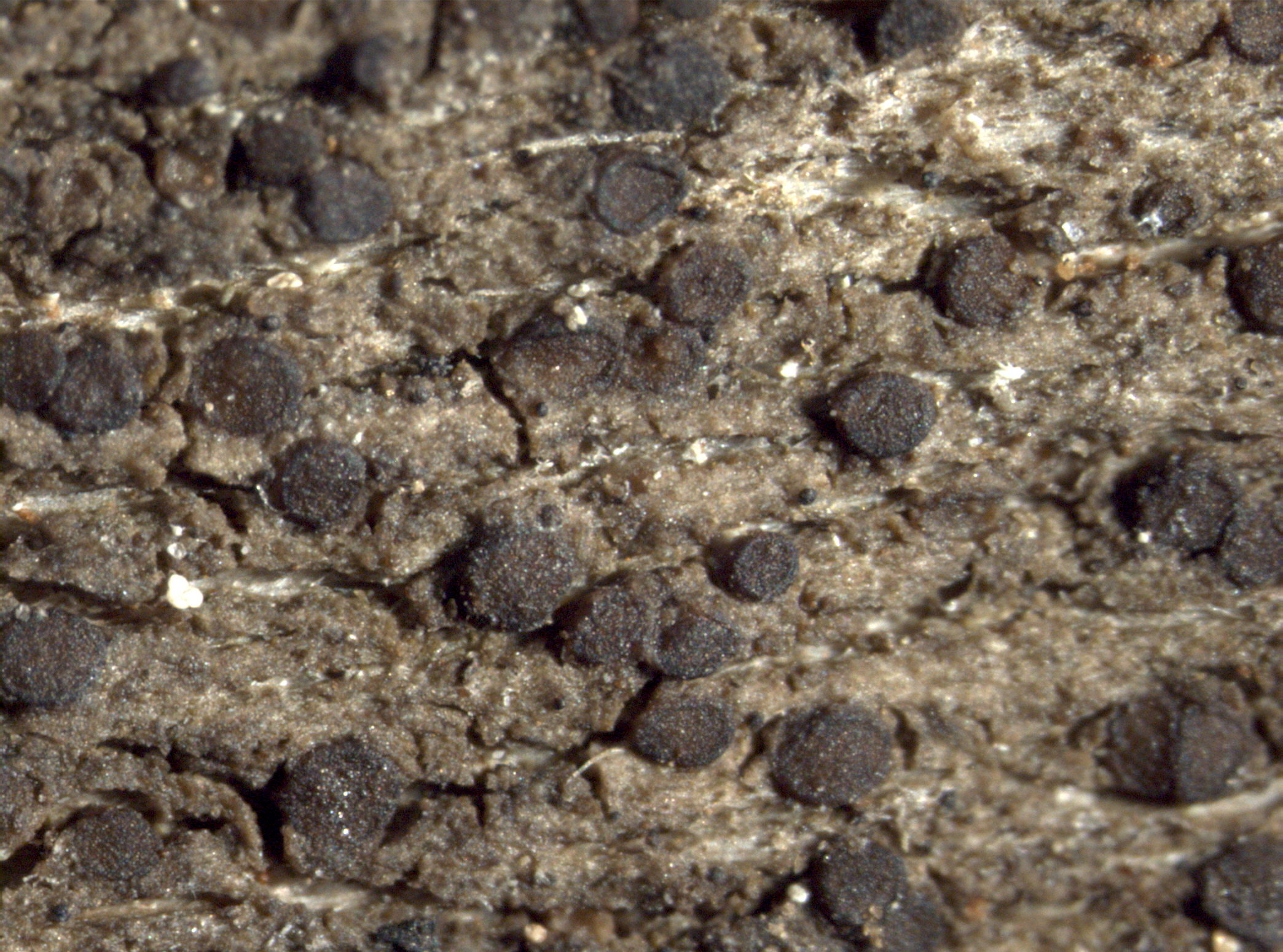
Description: Thallus crustose, greenish or grey-green, minutely granulose, very thin and often indistinct. Apothecia lecideine, 0.2-0.4 mm across, round to sometimes confluent and irregular in outline, yellowish-brown, red-brown to finally sometimes brown-black, with a concave to finally strongly convex disc and an initially raised, but soon excluded proper margin. Proper exciple pale yellow to dark brown in outer part, more or less colourless in inner part, 40-60(-70) μm thick at base, K-; epithecium pale brown; hymenium colourless, (35-)40-60 μm high, I+ blue; paraphyses not coherent, more or less branched in upper part; hypothecium pale yellow, K-. Asci 8-spored, clavate, with an amyloid, slightly broadening tube-structure, approaching the Psora-type. Ascospores 1-septate, with unequal cells, hyaline, ellipsoid (6-)8-13(-15) x (3-)4-5(-6) μm. Photobiont chlorococcoid. Spot tests: thallus and apothecia K-, C-, KC-, P-, UV-. Chemistry: without lichen substances.
Growth form: Crustose
Substrata: lignum
Photobiont: green algae other than Trentepohlia
Reproductive strategy: mainly sexual
Commonnes-rarity: (info)
Alpine belt: absent
Subalpine belt: very rare
Montane belt: rare
Dry submediterranean belt: very rare
Humid submediterranean belt: very rare
Padanian area: absent
pH of the substrata:
1 2 3 4 5

Solar irradiation:
1 2 3 4 5
Aridity:
1 2 3 4 5
Eutrophication:
1 2 3 4 5
Poleotolerance:
0 1 2 3
Altitudinal distribution:
1 2 3 4 5 6
Rarity
absent
extremely rare
very rare
rare
rather rare
rather common
common
very common
extremely common
Loading data...
Occurrence data
Predictive map
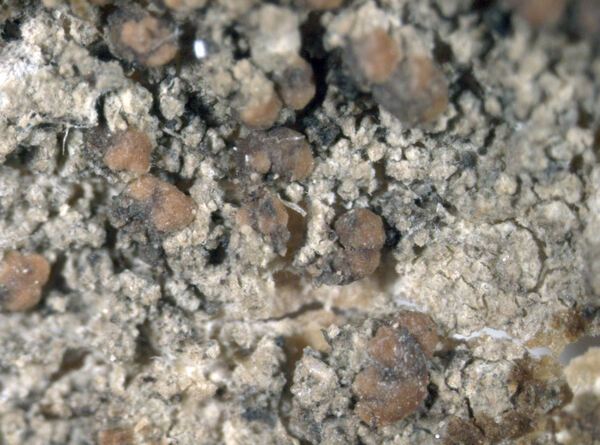
E. Pittao CC BY-SA 4.0
TSB 13636
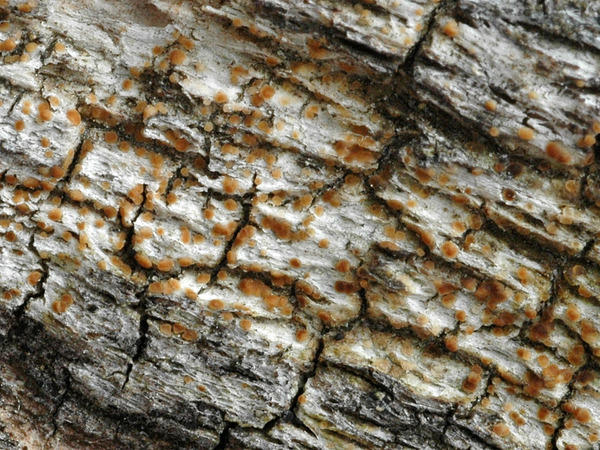
Leif Stridvall - Source: http://www.stridvall.se/lichens/gallery/
Courtesy: Anita Stridvall
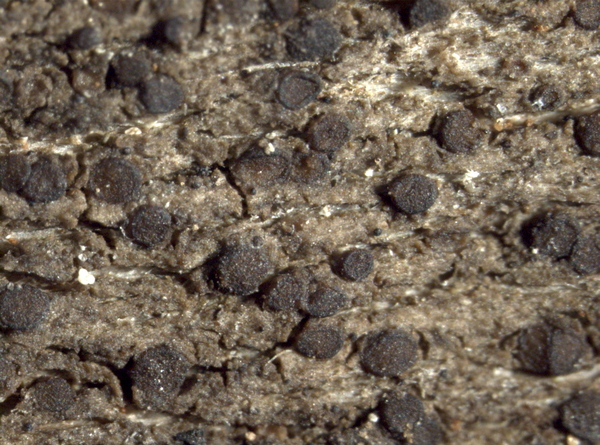
Elena Pittao; Owner: Department of Life Sciences, University of Trieste
TSB 24672)
Growth form: Crustose
Substrata: lignum
Photobiont: green algae other than Trentepohlia
Reproductive strategy: mainly sexual
Commonnes-rarity: (info)
Alpine belt: absent
Subalpine belt: very rare
Montane belt: rare
Dry submediterranean belt: very rare
Humid submediterranean belt: very rare
Padanian area: absent
pH of the substrata:
| 1 | 2 | 3 | 4 | 5 |
Solar irradiation:
| 1 | 2 | 3 | 4 | 5 |
Aridity:
| 1 | 2 | 3 | 4 | 5 |
Eutrophication:
| 1 | 2 | 3 | 4 | 5 |
Poleotolerance:
| 0 | 1 | 2 | 3 |
Altitudinal distribution:
| 1 | 2 | 3 | 4 | 5 | 6 |
Rarity
absent
extremely rare
very rare
rare
rather rare
rather common
common
very common
extremely common
Loading data...
Occurrence data
Predictive map
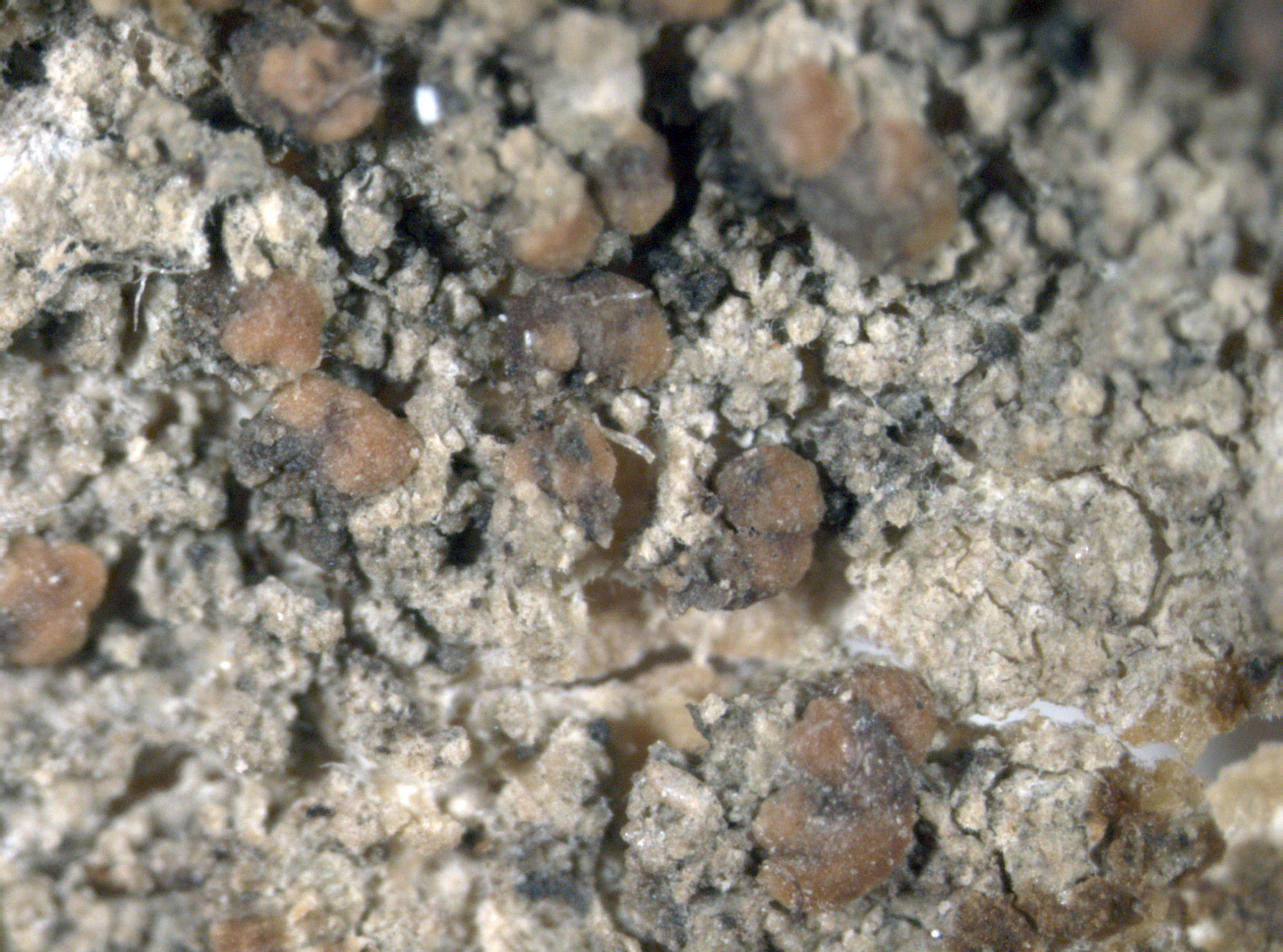
E. Pittao CC BY-SA 4.0
TSB 13636
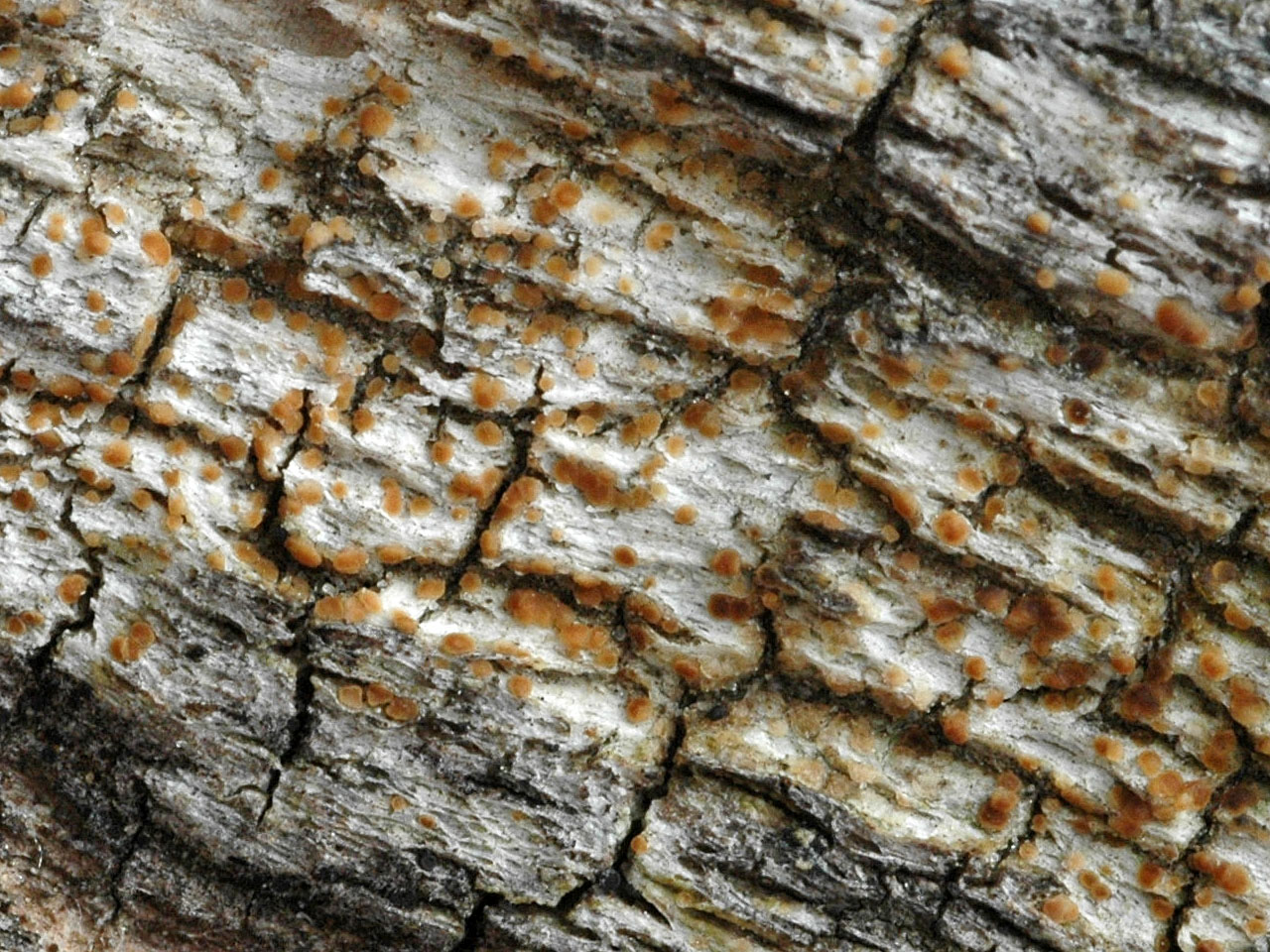
Leif Stridvall - Source: http://www.stridvall.se/lichens/gallery/
Courtesy: Anita Stridvall