Chaenotheca phaeocephala (Turner) Th. Fr.
N. Acta Reg. Soc. Sci. Upsal., ser. 3, 3: 251, 1860. Basionym: Lichen phaeocephalus Turner - Trans. Linn. Soc. London, 8: 281, 1807.
Synonyms: Calicium phaeocephalum (Turner) Fr.; Calicium saepiculare Ach.; Chaenotheca chlorella auct. p.p.; Chaenotheca phaeocephala var. subhispidula Nádv.; Cyphelium phaeocephalum (Turner) Körb.
Description: Thallus crustose, episubstratic and usually well-evident, granulose-verrucose to minutely squamulose, dark grey, olivaceous brown or greenish brown. Apothecia stalked, pin-like, 0.5-1.2 mm high. Stalk stout, 0.06-0.1 mm thick, pale to dark brown, epruinose or sometimes faintly yellowish-pruinose in upper part, of periclinally arranged, medium brown hyphae, the outer part hyaline, 7-16 µm thick, of strongly gelatinized hyphae. Capitulum 0.1-0.3 mm across, broadly obconical to lenticular, deep purple brown, yellowish pruinose in lower part and/or along the margin, the mazaedium well-developed, brown. Exciple well-developed, of largely periclinally arranged, sparingly branched, brown hyphae; hypothecium medium brown, broadly obconical, with a flat to slightly convex upper surface. Asci cylindrical to narrowly clavate, distinctly stalked, formed singly from branched ascogenous hyphae, dissolving early, with 1(-2)-seriately arranged spores. Ascospores 1-celled, brown, globose, 6-7 µm wide, the wall with irregular cracks delimiting polygonal areas. Photobiont chlorococcoid, with globose cells. Spot tests: thallus K-, C-, KC-, P-. Chemistry: thallus without lichen substances; yellow pruina consisting of vulpinic acid.
Growth form: Crustose
Photobiont: green algae other than Trentepohlia
Reproductive strategy: mainly sexual
In underhangs rarely wetted by rain
Commonnes-rarity: (info)
Alpine belt: absent
Subalpine belt: absent
Montane belt: very rare
Dry submediterranean belt: rare
Humid submediterranean belt: rare
Padanian area: absent
pH of the substrata:
1 2 3 4 5

Solar irradiation:
1 2 3 4 5
Aridity:
1 2 3 4 5
Eutrophication:
1 2 3 4 5
Poleotolerance:
0 1 2 3
Altitudinal distribution:
1 2 3 4 5 6
Rarity
absent
extremely rare
very rare
rare
rather rare
rather common
common
very common
extremely common
Loading data...
Occurrence data
Predictive map
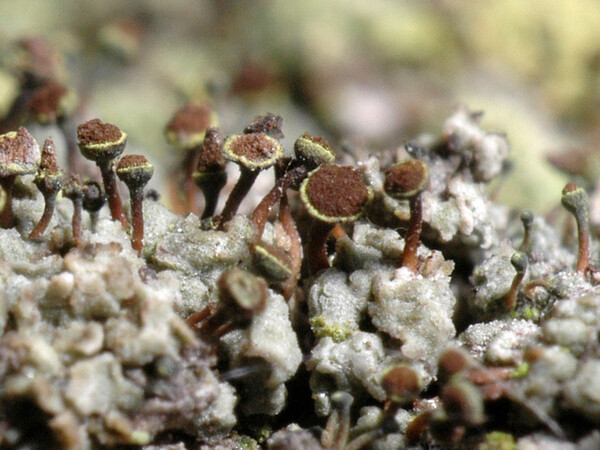
Leif Stridvall - Source: http://www.stridvall.se/la/galleries.php (Courtesy: Anita Stridvall)
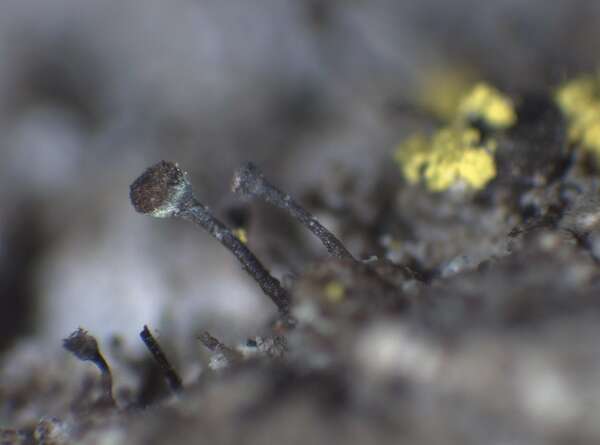
P.L. Nimis; Owner: Department of Life Sciences, University of Trieste
Herbarium: TSB (26957)
2003/03/10
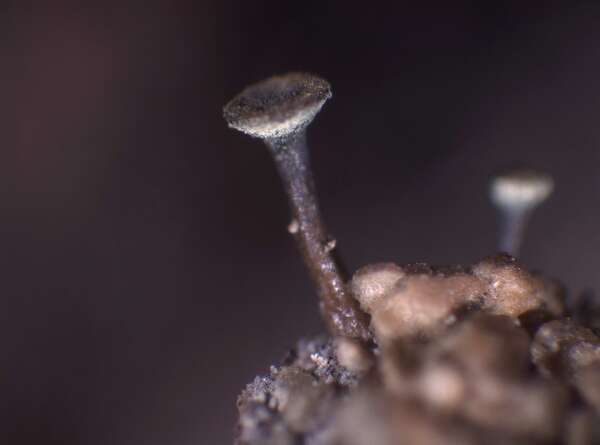
P.L. Nimis; Owner: Department of Life Sciences, University of Trieste
Herbarium: TSB (30823)
2003/03/10
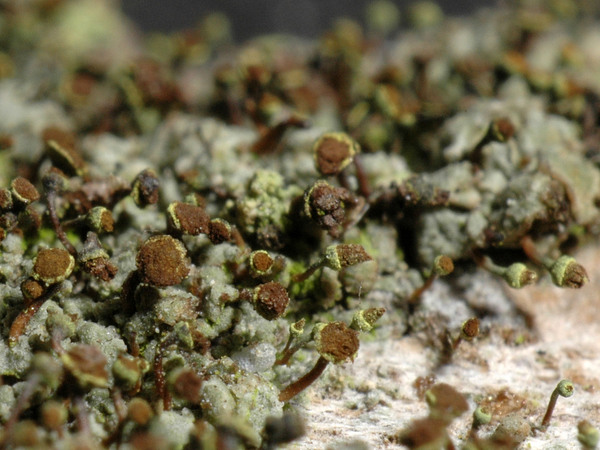
Leif Stridvall - Source: http://www.stridvall.se/lichens/gallery/
Courtesy: Anita Stridvall
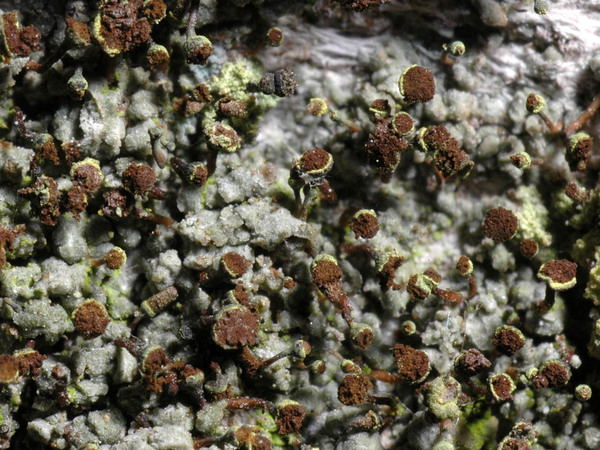
Leif Stridvall - Source: http://www.stridvall.se/lichens/gallery/
Courtesy: Anita Stridvall
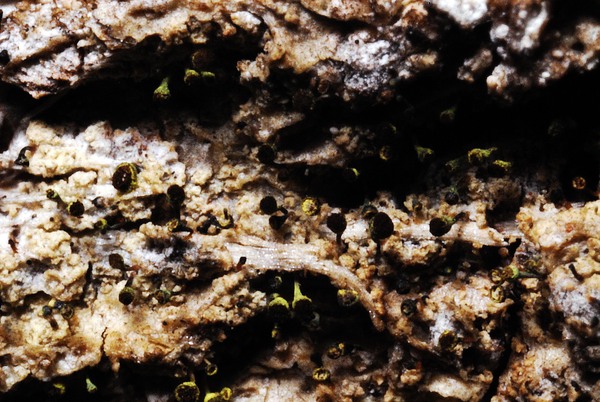
Domeico Puntillo CC BY-SA 4.0
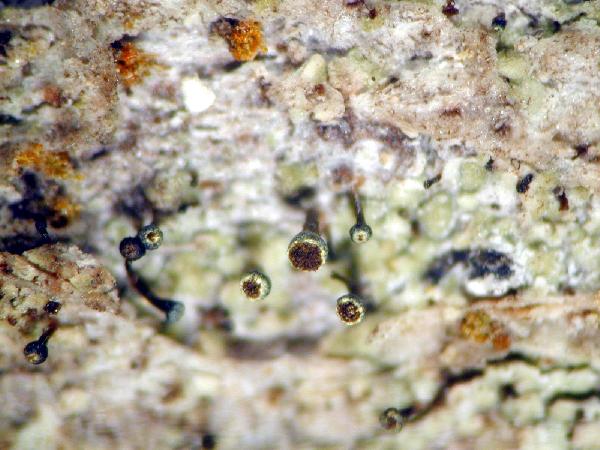
Wolfgang von Brackel - CC BY-4.0
Germany, Bavaria, Hohenfels
Growth form: Crustose
Photobiont: green algae other than Trentepohlia
Reproductive strategy: mainly sexual
In underhangs rarely wetted by rain
Commonnes-rarity: (info)
Alpine belt: absent
Subalpine belt: absent
Montane belt: very rare
Dry submediterranean belt: rare
Humid submediterranean belt: rare
Padanian area: absent
pH of the substrata:
| 1 | 2 | 3 | 4 | 5 |
Solar irradiation:
| 1 | 2 | 3 | 4 | 5 |
Aridity:
| 1 | 2 | 3 | 4 | 5 |
Eutrophication:
| 1 | 2 | 3 | 4 | 5 |
Poleotolerance:
| 0 | 1 | 2 | 3 |
Altitudinal distribution:
| 1 | 2 | 3 | 4 | 5 | 6 |
Rarity
absent
extremely rare
very rare
rare
rather rare
rather common
common
very common
extremely common
Loading data...
Occurrence data
Predictive map
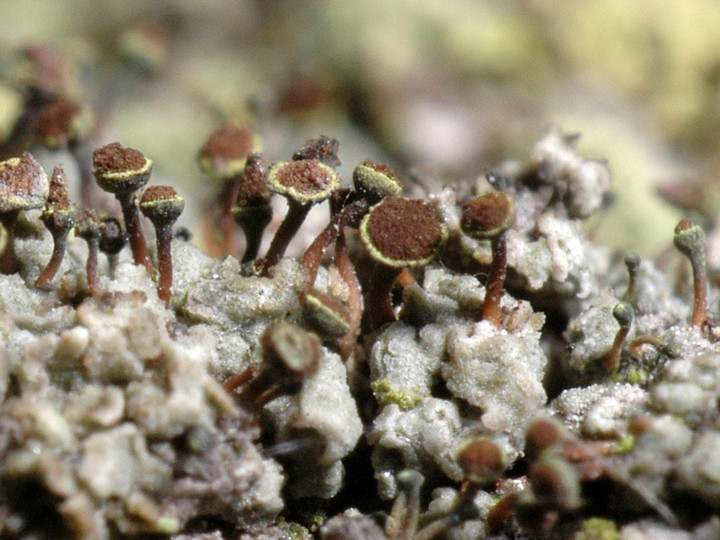
Leif Stridvall - Source: http://www.stridvall.se/la/galleries.php (Courtesy: Anita Stridvall)

P.L. Nimis; Owner: Department of Life Sciences, University of Trieste
Herbarium: TSB (26957)
2003/03/10
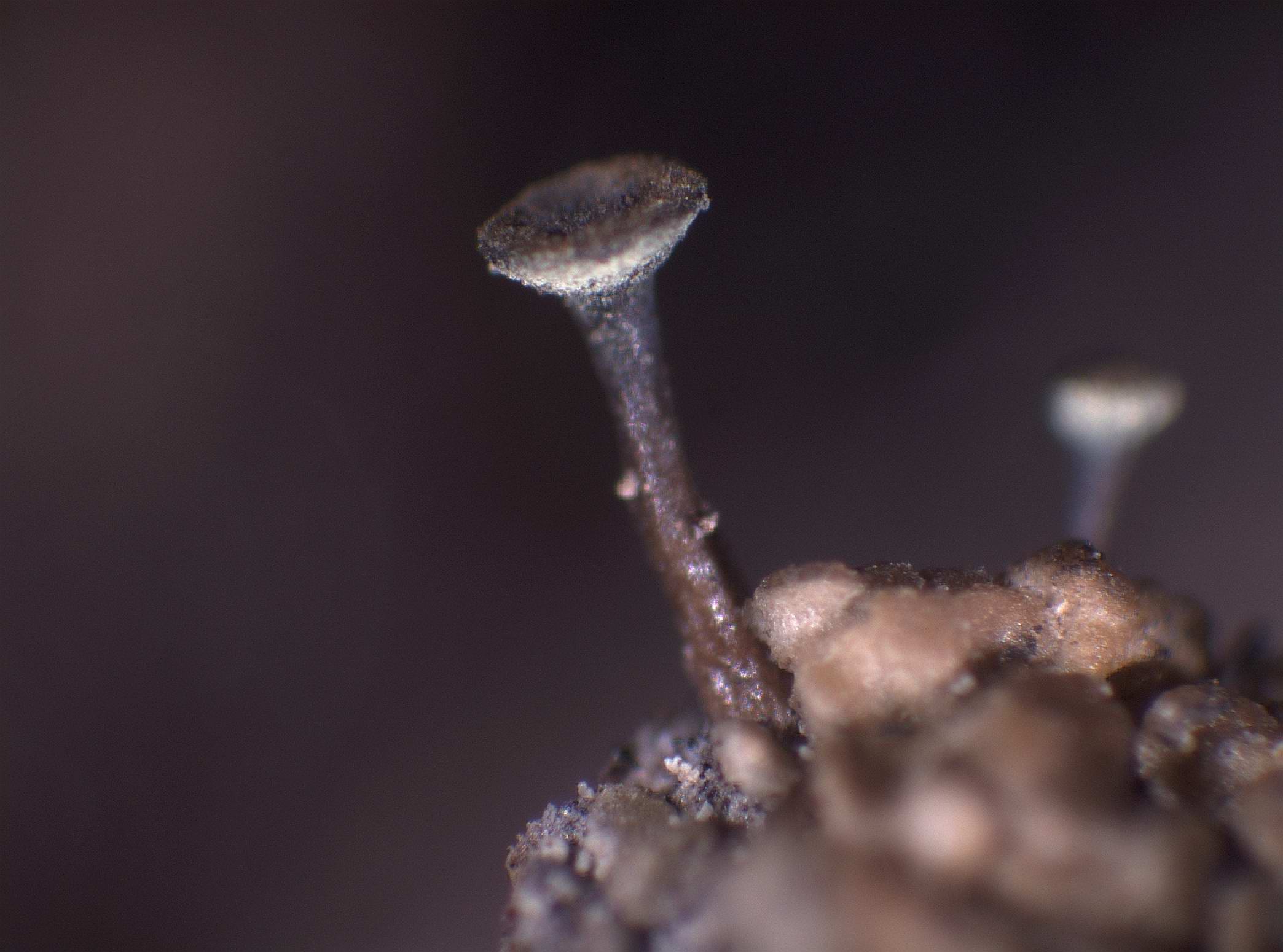
P.L. Nimis; Owner: Department of Life Sciences, University of Trieste
Herbarium: TSB (30823)
2003/03/10
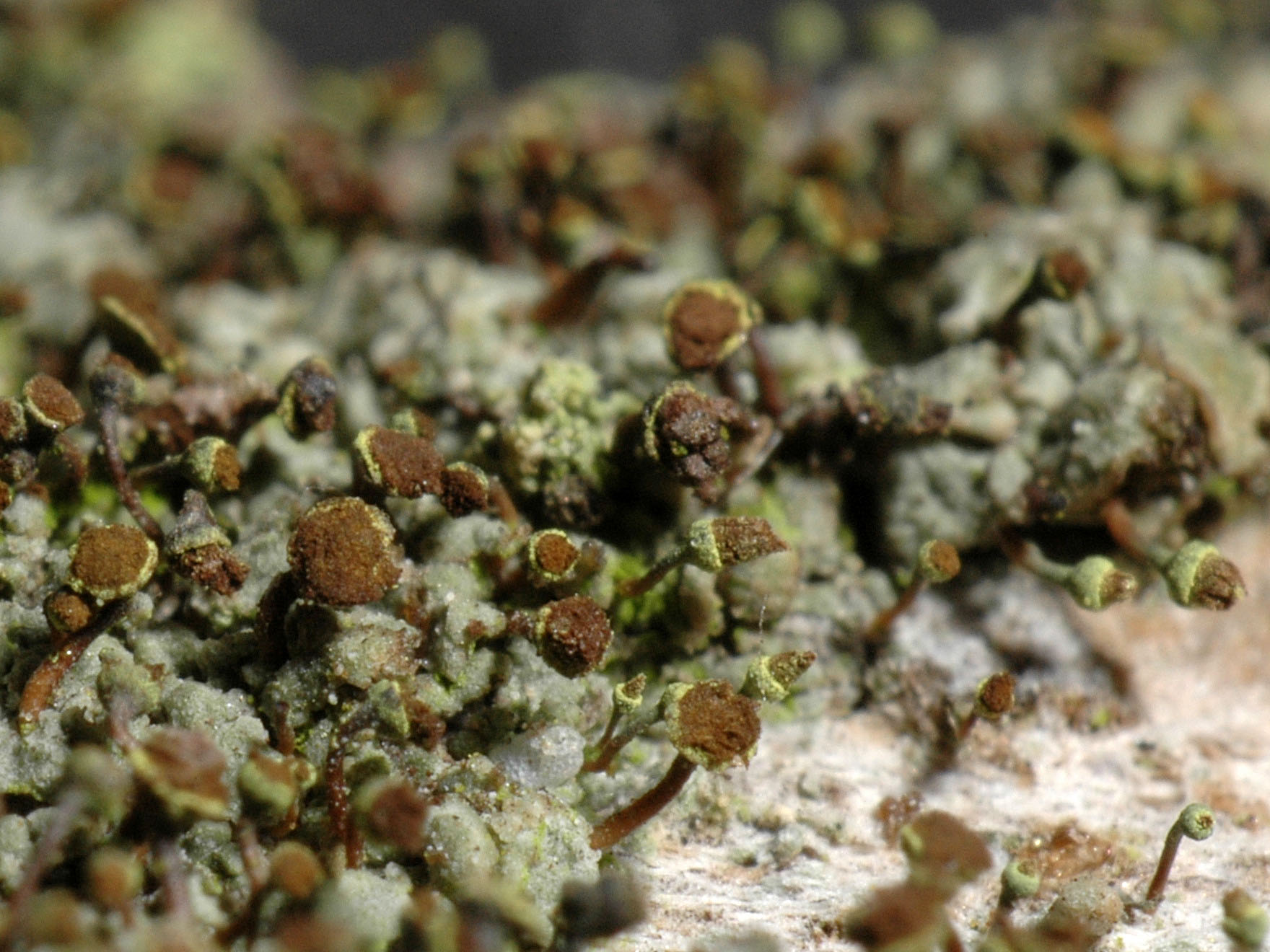
Leif Stridvall - Source: http://www.stridvall.se/lichens/gallery/
Courtesy: Anita Stridvall

Leif Stridvall - Source: http://www.stridvall.se/lichens/gallery/
Courtesy: Anita Stridvall
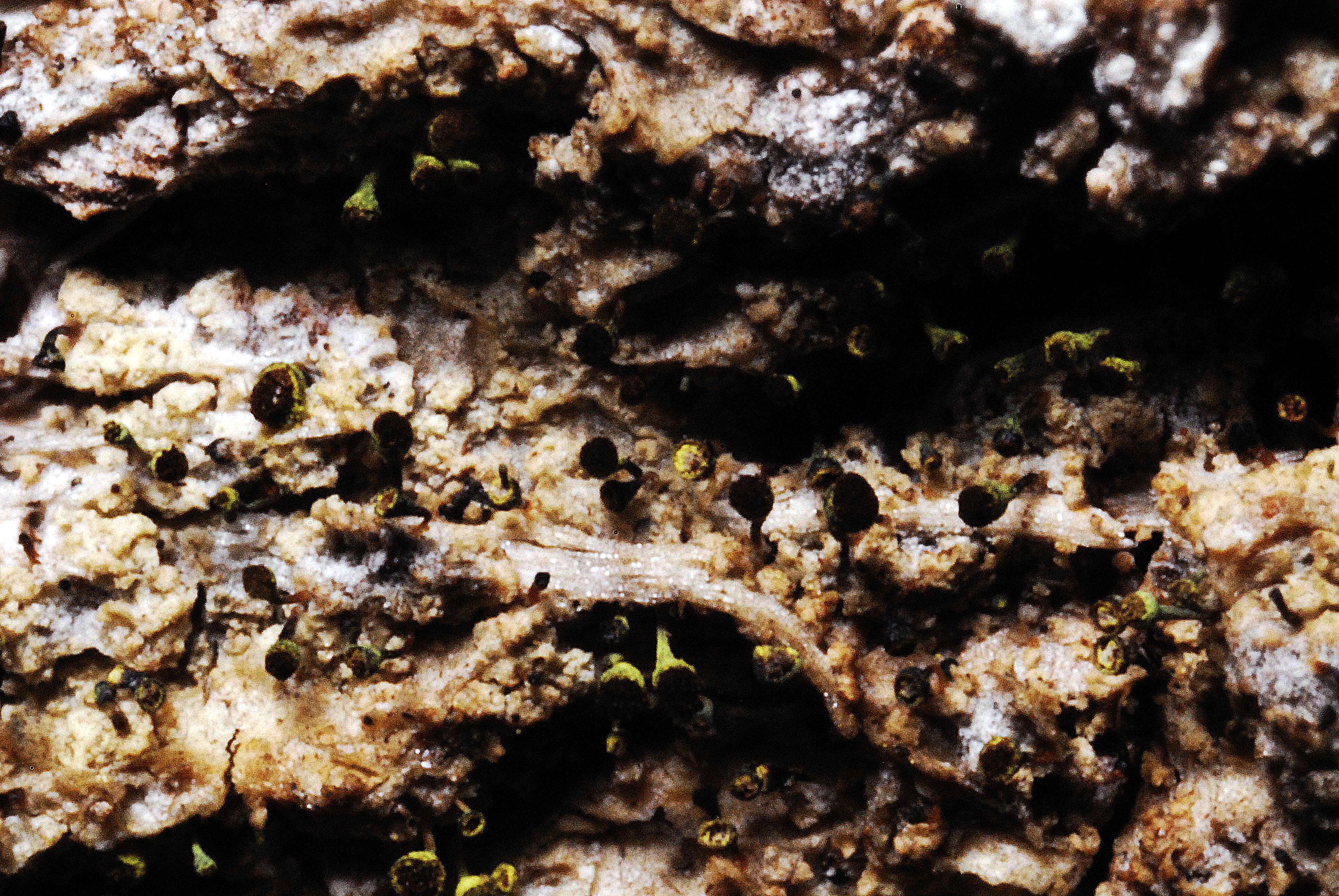
Domeico Puntillo CC BY-SA 4.0