Gyalecta truncigena (Ach.) Hepp
Flecht. Eur.: nr. 27, 1853. Basionym: Gyalecta wahlenbergiana var. truncigena Ach. - Lichenogr. Univ.: 152, 1810.
Synonyms: Gyalecta abstrusa (Wallr.) A. Massal.
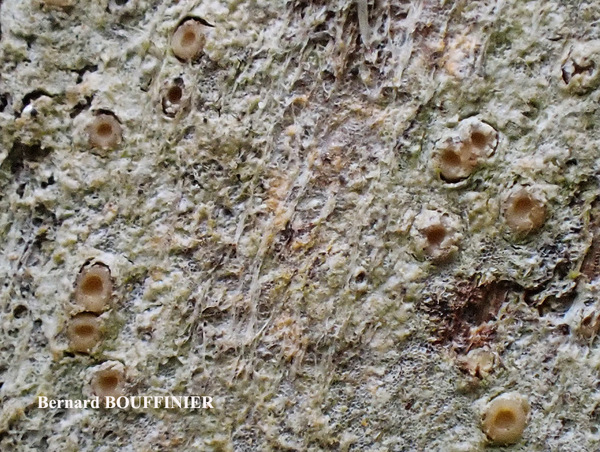
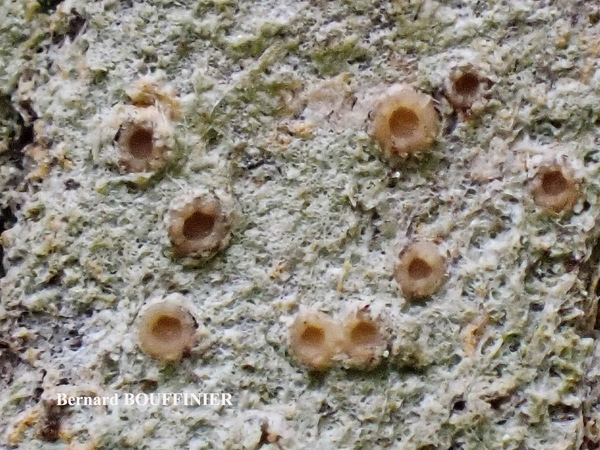
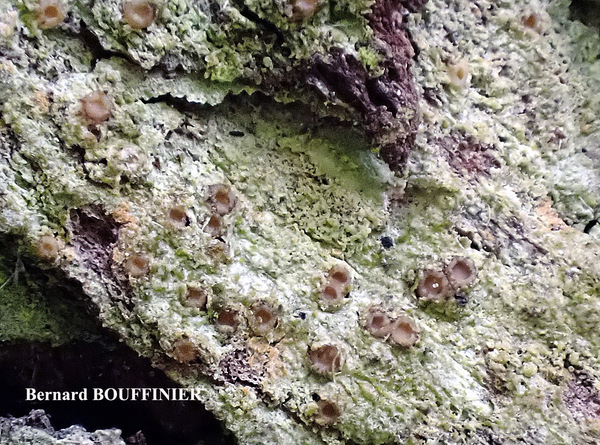
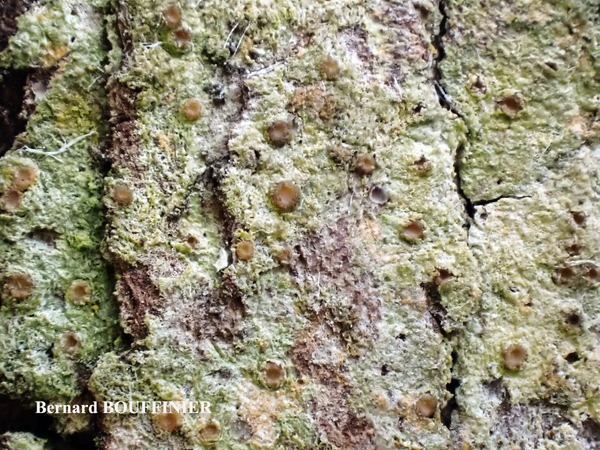
Description: Thallus crustose, inconspicuous, thin, pale green or grey, without a distinct prothallus. Apothecia scattered to aggregated, usually immersed, later sometimes becoming sessile, 0.2-0.5(-0.7) mm across, with a pale yellow-brown to pale orange or finally dark brown, deeply concave, waxy disc and a smooth to radially cracked, cream-coloured, brownish or yellowish pink proper margin which is sometimes covered by a thalline layer at the base. Proper exciple thick, colourless or pale brown in outer part; epithecium hardly differentiated from the hymenium; hymenium colourless, 90-115 µm high; paraphyses slightly longer than the asci, septate, capitate, the apical cells up to 3-4 µm wide; hypothecium colourless to pale yellow. Asci 8-spored, cylindrical to elongate-clavate, thin-walled, lacking an apical apparatus or tholus, the wall K/I+ blue. Ascospores muriform (with 6-12 cells visible in optical view) with (4-)5-7(-9) transverse septa and 1-2 longitudinal septa, most septa perpendicular to each other, hyaline, fusiform, without conical tips, 17-28(-31) x 7-9(-10) µm. Photobiont trentepohlioid. Spot tests: K-, C-, KC-, P-, UV-. Chemistry: without lichen substances.
Growth form: Crustose
Substrata: bark
Photobiont: Trentepohlia
Reproductive strategy: mainly sexual
Most common in areas with a humid-warm climate (e.g. most of Tyrrenian Italy)
Commonnes-rarity: (info)
Alpine belt: absent
Subalpine belt: absent
Montane belt: extremely rare
Dry submediterranean belt: extremely rare
Humid submediterranean belt: rare
Padanian area: absent
pH of the substrata:
1 2 3 4 5

Solar irradiation:
1 2 3 4 5
Aridity:
1 2 3 4 5
Eutrophication:
1 2 3 4 5
Poleotolerance:
0 1 2 3
Altitudinal distribution:
1 2 3 4 5 6
Rarity
absent
extremely rare
very rare
rare
rather rare
rather common
common
very common
extremely common
Loading data...
Occurrence data
Predictive map
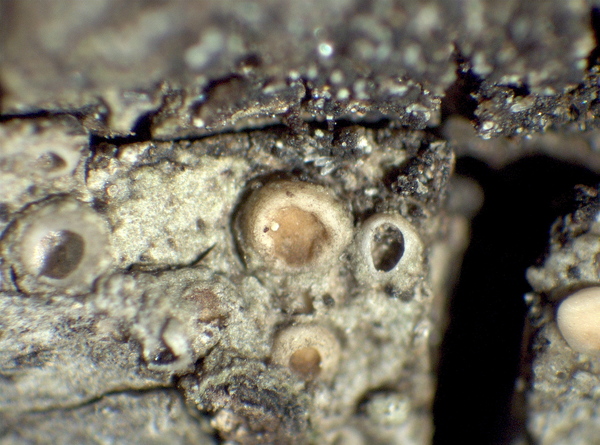
P.L.Nimis
Herbarium: TSB (38246)
2008.02.25
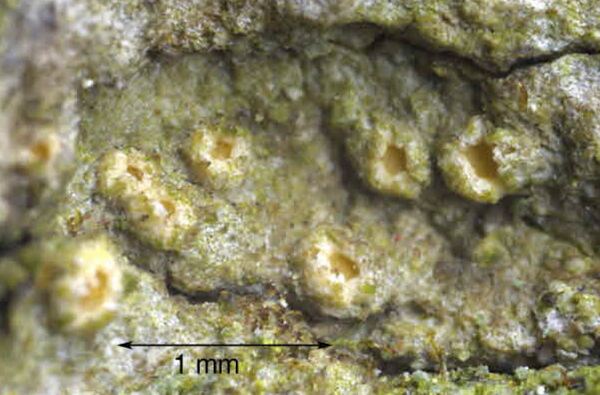
Felix Schumm – CC BY-SA 4.0
[12544], Germany, Baden-Württemberg, Kreis Göppingen, Albrand, Bad Überkingen, auf dem Pfad zum Kahlenstein, 48°35.892'N, 9°48.493'E, 675 m, auf Esche beim Höhleneingang des Kahlensteins, Schumm, 02.07.2006
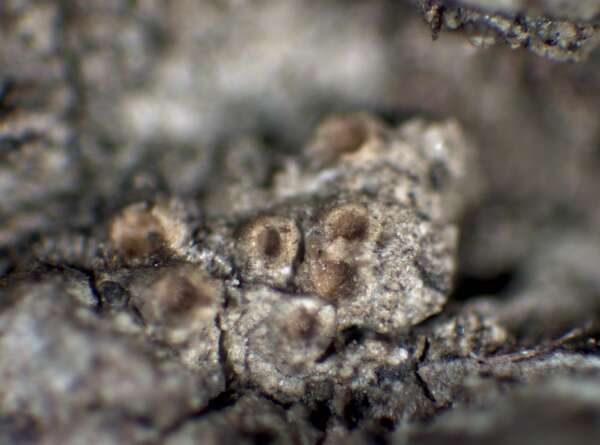
P.L. Nimis; Owner: Department of Life Sciences, University of Trieste
Herbarium: TSB (11909)
2001/11/24
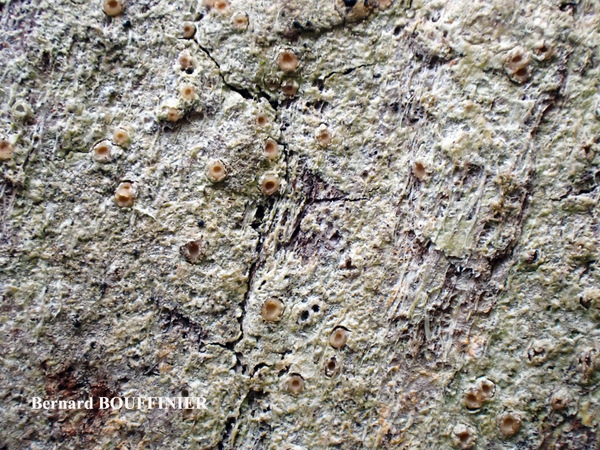
Bernard Bouffinier - Source: http://www.lichensmaritimes.org/index.php?task=fiche&lichen=1321&lang=en
France, Lesteven
Bernard Bouffinier - Source: http://www.lichensmaritimes.org/index.php?task=fiche&lichen=1321&lang=en
France, Lesteven
Bernard Bouffinier - Source: http://www.lichensmaritimes.org/index.php?task=fiche&lichen=1321&lang=en
France, Lesteven
Bernard Bouffinier - Source: http://www.lichensmaritimes.org/index.php?task=fiche&lichen=1321&lang=en
France, Lesteven
Bernard Bouffinier - Source: http://www.lichensmaritimes.org/index.php?task=fiche&lichen=1321&lang=en
France, Lesteven
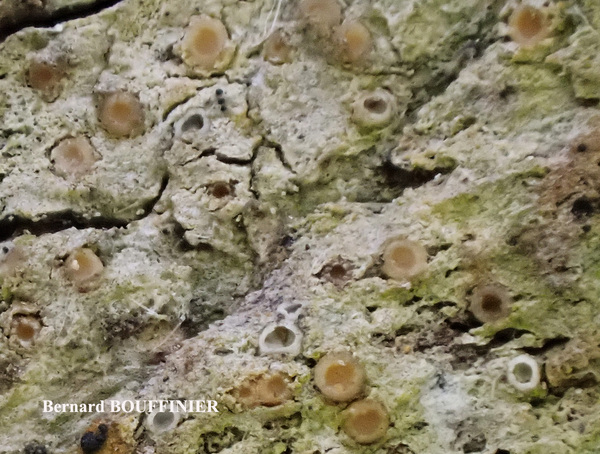
Bernard Bouffinier - Source: http://www.lichensmaritimes.org/index.php?task=fiche&lichen=1321&lang=en
France, Lesteven
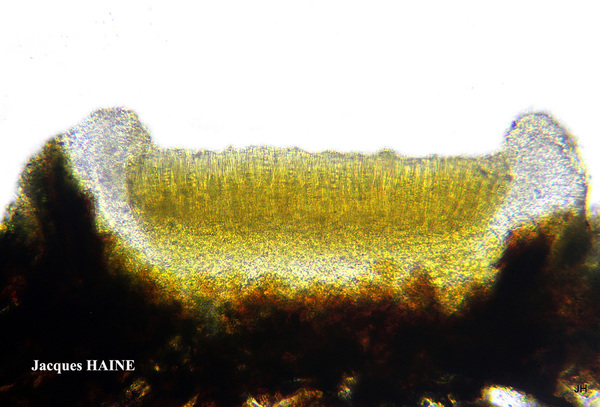
Jacques Haine - Source: http://www.lichensmaritimes.org/index.php?task=fiche&lichen=1321&lang=en
France, Lesteven
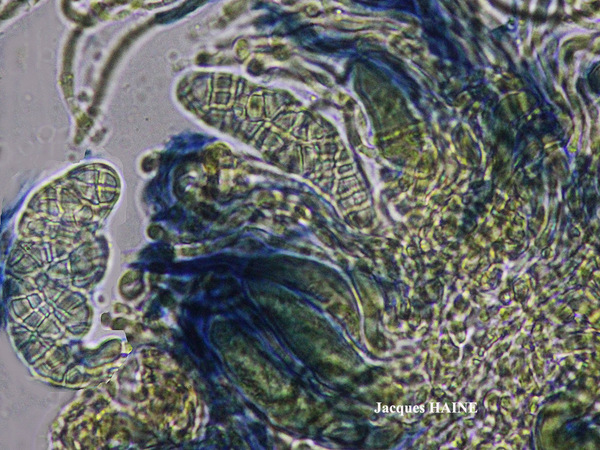
Jacques Haine - Source: http://www.lichensmaritimes.org/index.php?task=fiche&lichen=1321&lang=en
France, Lesteven
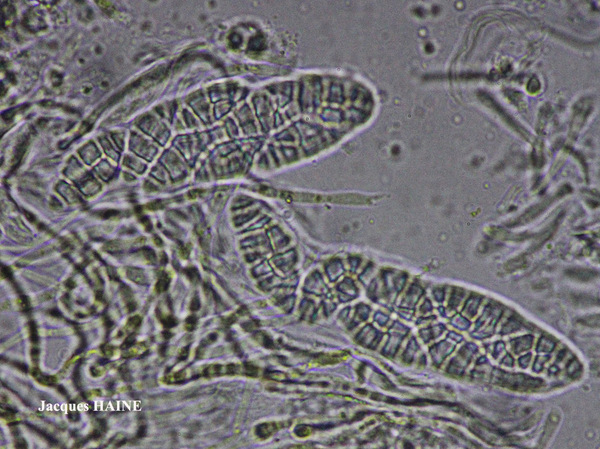
Jacques Haine - Source: http://www.lichensmaritimes.org/index.php?task=fiche&lichen=1321&lang=en
France, Lesteven
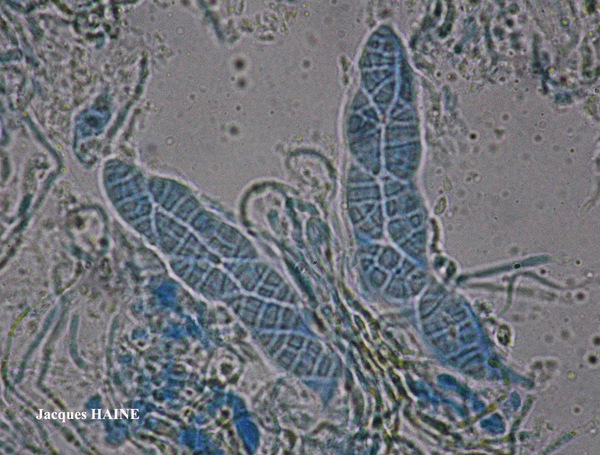
Jacques Haine - Source: http://www.lichensmaritimes.org/index.php?task=fiche&lichen=1321&lang=en
France, Lesteven
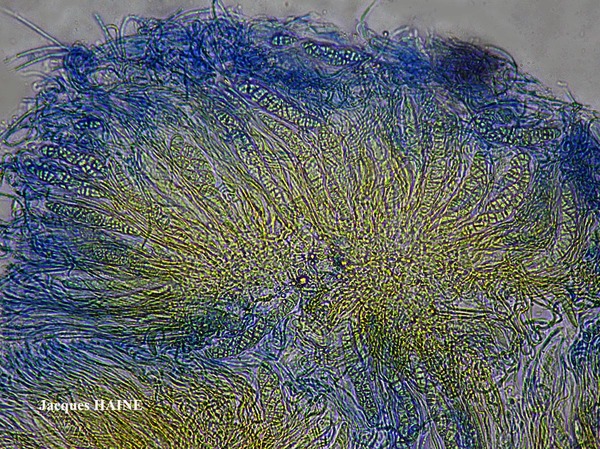
Jacques Haine - Source: http://www.lichensmaritimes.org/index.php?task=fiche&lichen=1321&lang=en
France, Lesteven
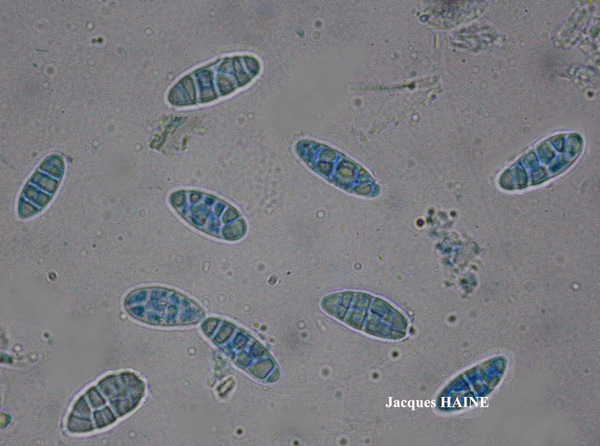
Jacques Haine - Source: http://www.lichensmaritimes.org/index.php?task=fiche&lichen=1321&lang=en
France, Lesteven
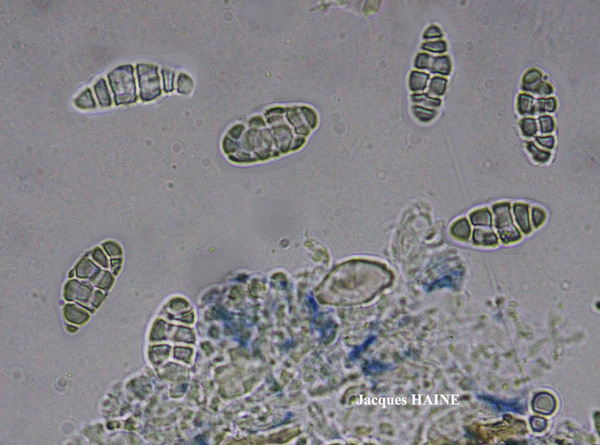
Jacques Haine - Source: http://www.lichensmaritimes.org/index.php?task=fiche&lichen=1321&lang=en
France, Lesteven
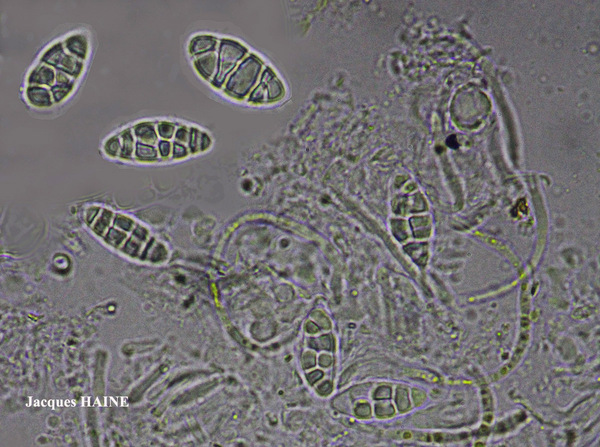
Jacques Haine - Source: http://www.lichensmaritimes.org/index.php?task=fiche&lichen=1321&lang=en
France, Lesteven
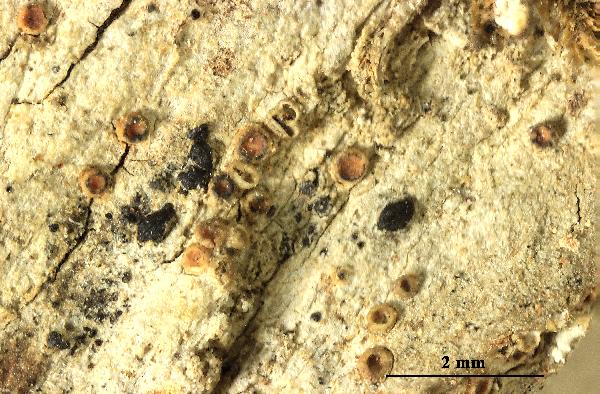
Felix Schumm - CC BY 4.0
[VZ1510],URSS. Caucasus, Georgia: Colchis, distr. Sotchi, in declivibus
supra pagum Novyi Afon,150 m. Ad corticem Quercus tibericae
Stev. Leg. V. Vašák et A. Vezda, 10.6.1977. EX A. VEZDA LICHENES
SELECTI EXSICCATI NR. 1510.
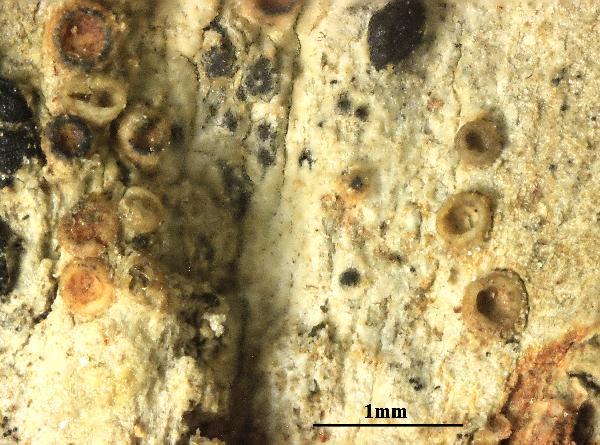
Felix Schumm - CC BY 4.0
[VZ1510],URSS. Caucasus, Georgia: Colchis, distr. Sotchi, in declivibus
supra pagum Novyi Afon,150 m. Ad corticem Quercus tibericae
Stev. Leg. V. Vašák et A. Vezda, 10.6.1977. EX A. VEZDA LICHENES
SELECTI EXSICCATI NR. 1510.
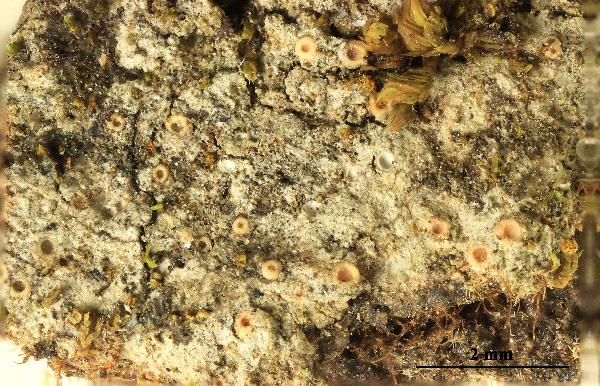
Felix Schumm - CC BY 4.0
[VZ1922], Graecia. Thessalia, in ripa fluminis Pinios prope Kalabaka,
220 m. Ad truncum Platani orientalis. Leg. A. Vezda, 26.7.1983. EX A.
VEZDA LICHENES SELECTI EXSICCATI NR. 1922.
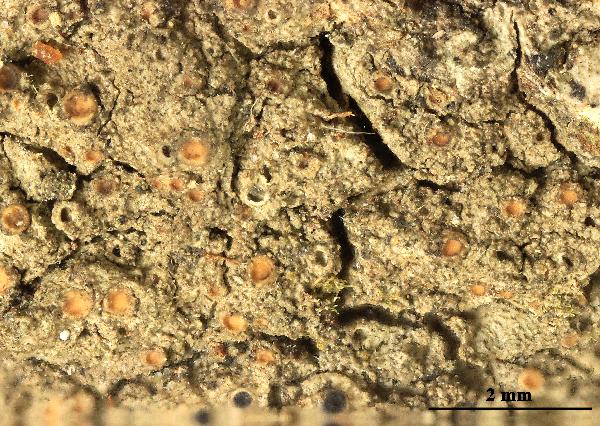
Felix Schumm - CC BY 4.0
[VZ2314], Italia. Calabria. Prov. Catanzaro, prope ostium fluminis
Neto in mare, 1 m. Ad corticem arboris (Ulmus minor). Leg. D. Puntillo,
8.11.1988. EX A. VEZDA LICHENES SELECTI EXSICCATI NR. 2314.
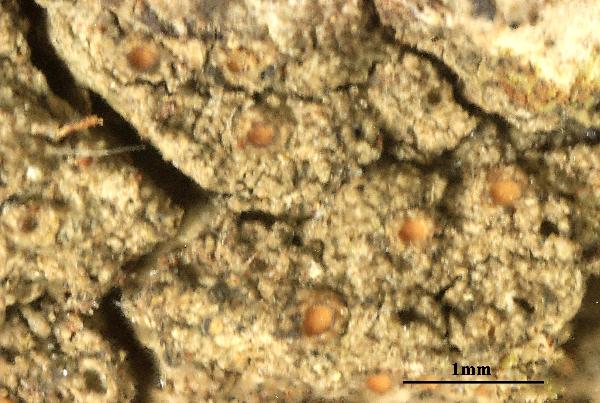
Felix Schumm - CC BY 4.0
[VZ2314], Italia. Calabria. Prov. Catanzaro, prope ostium fluminis
Neto in mare, 1 m. Ad corticem arboris (Ulmus minor). Leg. D. Puntillo,
8.11.1988. EX A. VEZDA LICHENES SELECTI EXSICCATI NR. 2314.
Growth form: Crustose
Substrata: bark
Photobiont: Trentepohlia
Reproductive strategy: mainly sexual
Most common in areas with a humid-warm climate (e.g. most of Tyrrenian Italy)
Commonnes-rarity: (info)
Alpine belt: absent
Subalpine belt: absent
Montane belt: extremely rare
Dry submediterranean belt: extremely rare
Humid submediterranean belt: rare
Padanian area: absent
pH of the substrata:
| 1 | 2 | 3 | 4 | 5 |
Solar irradiation:
| 1 | 2 | 3 | 4 | 5 |
Aridity:
| 1 | 2 | 3 | 4 | 5 |
Eutrophication:
| 1 | 2 | 3 | 4 | 5 |
Poleotolerance:
| 0 | 1 | 2 | 3 |
Altitudinal distribution:
| 1 | 2 | 3 | 4 | 5 | 6 |
Rarity
absent
extremely rare
very rare
rare
rather rare
rather common
common
very common
extremely common
Loading data...
Occurrence data
Predictive map
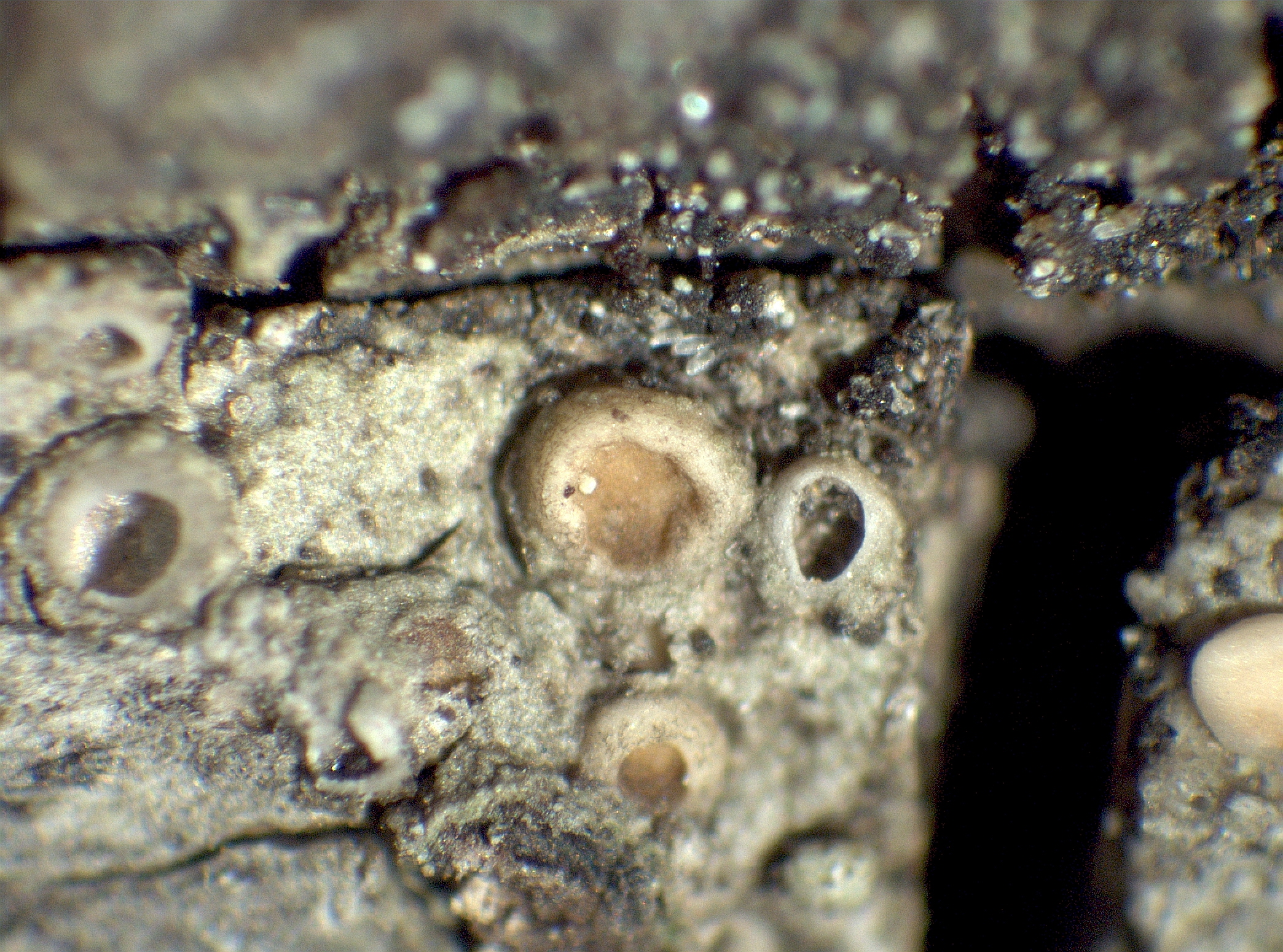
P.L.Nimis
Herbarium: TSB (38246)
2008.02.25
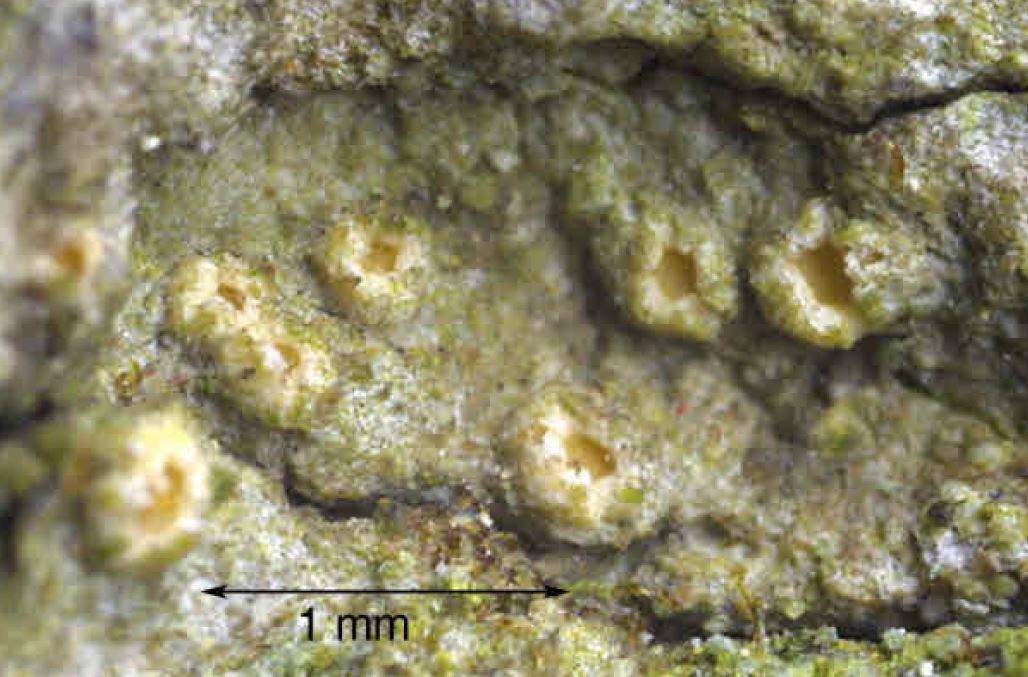
Felix Schumm – CC BY-SA 4.0
[12544], Germany, Baden-Württemberg, Kreis Göppingen, Albrand, Bad Überkingen, auf dem Pfad zum Kahlenstein, 48°35.892'N, 9°48.493'E, 675 m, auf Esche beim Höhleneingang des Kahlensteins, Schumm, 02.07.2006
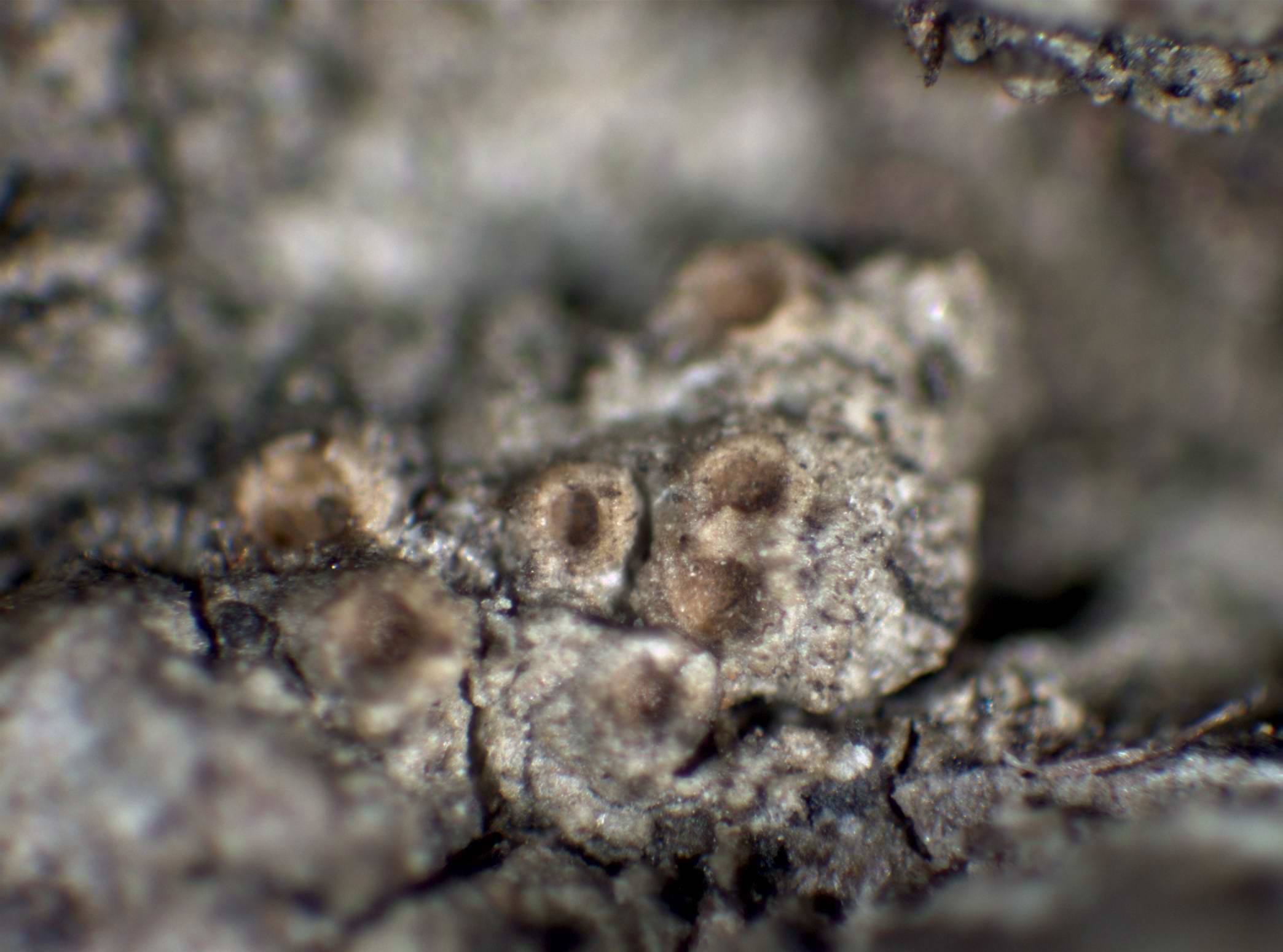
P.L. Nimis; Owner: Department of Life Sciences, University of Trieste
Herbarium: TSB (11909)
2001/11/24
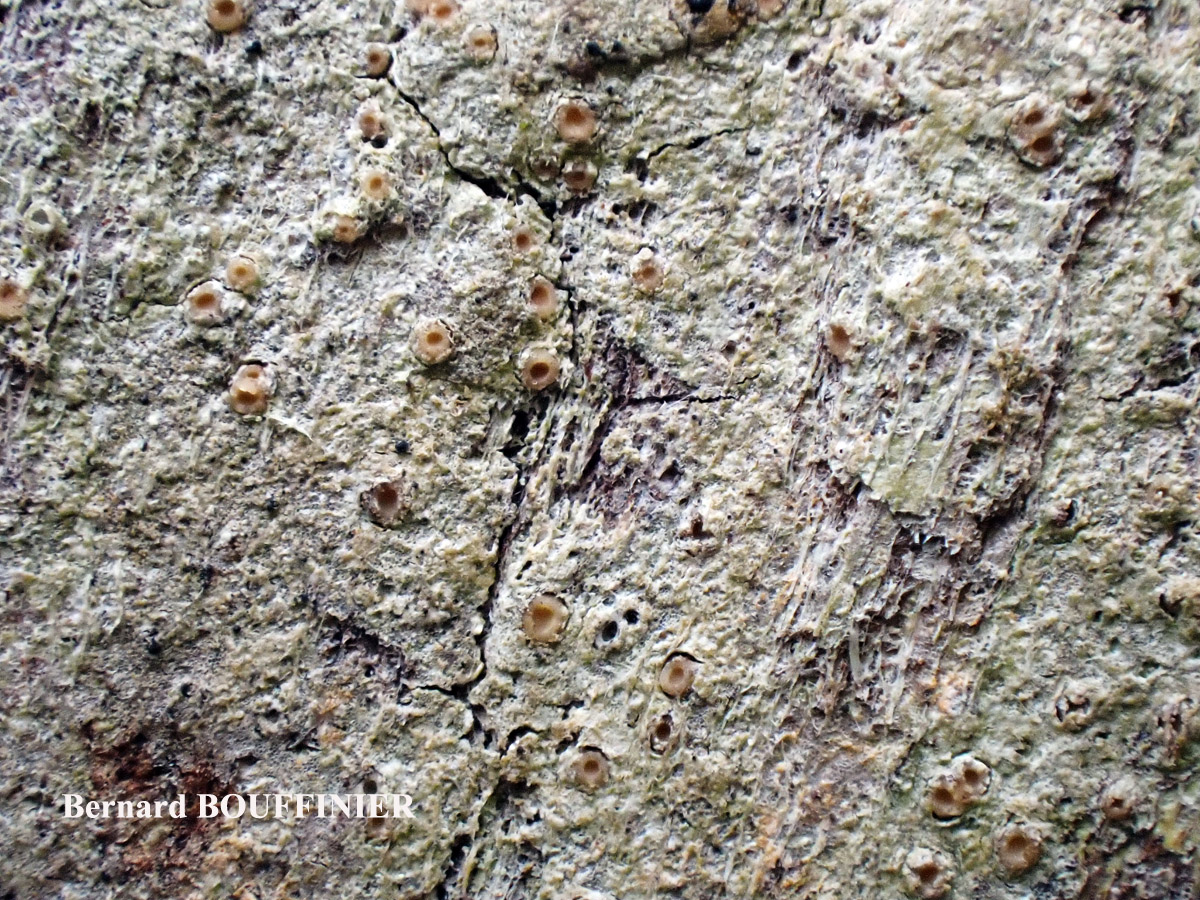
Bernard Bouffinier - Source: http://www.lichensmaritimes.org/index.php?task=fiche&lichen=1321&lang=en
France, Lesteven
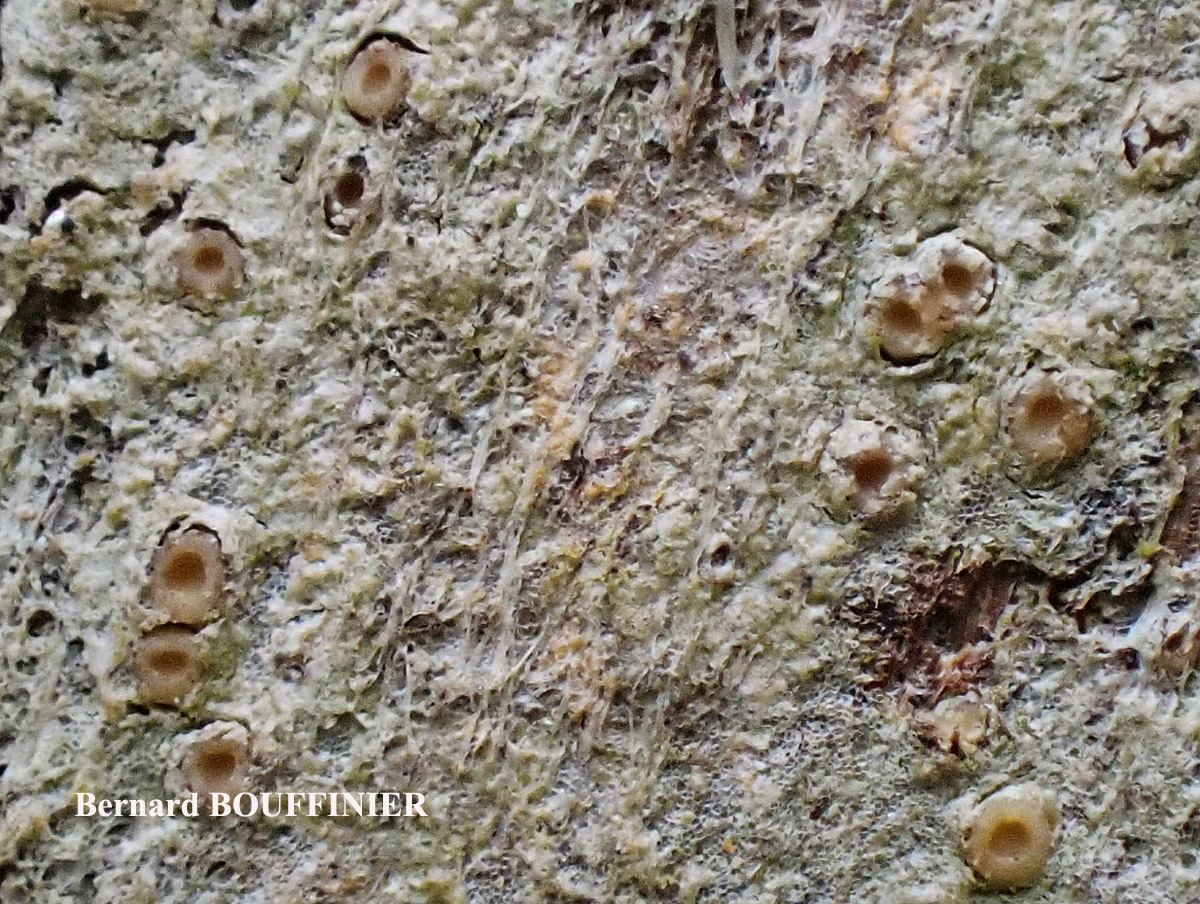
Bernard Bouffinier - Source: http://www.lichensmaritimes.org/index.php?task=fiche&lichen=1321&lang=en
France, Lesteven
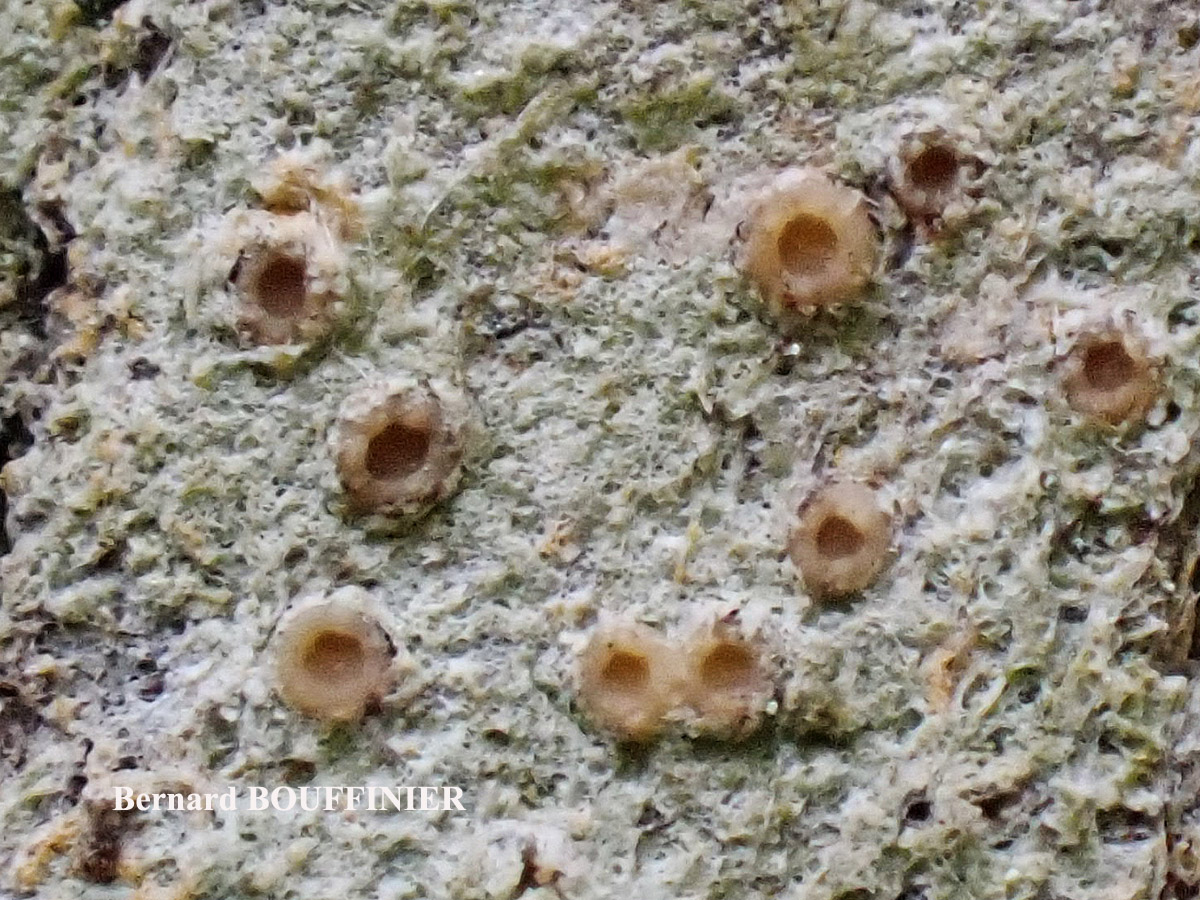
Bernard Bouffinier - Source: http://www.lichensmaritimes.org/index.php?task=fiche&lichen=1321&lang=en
France, Lesteven
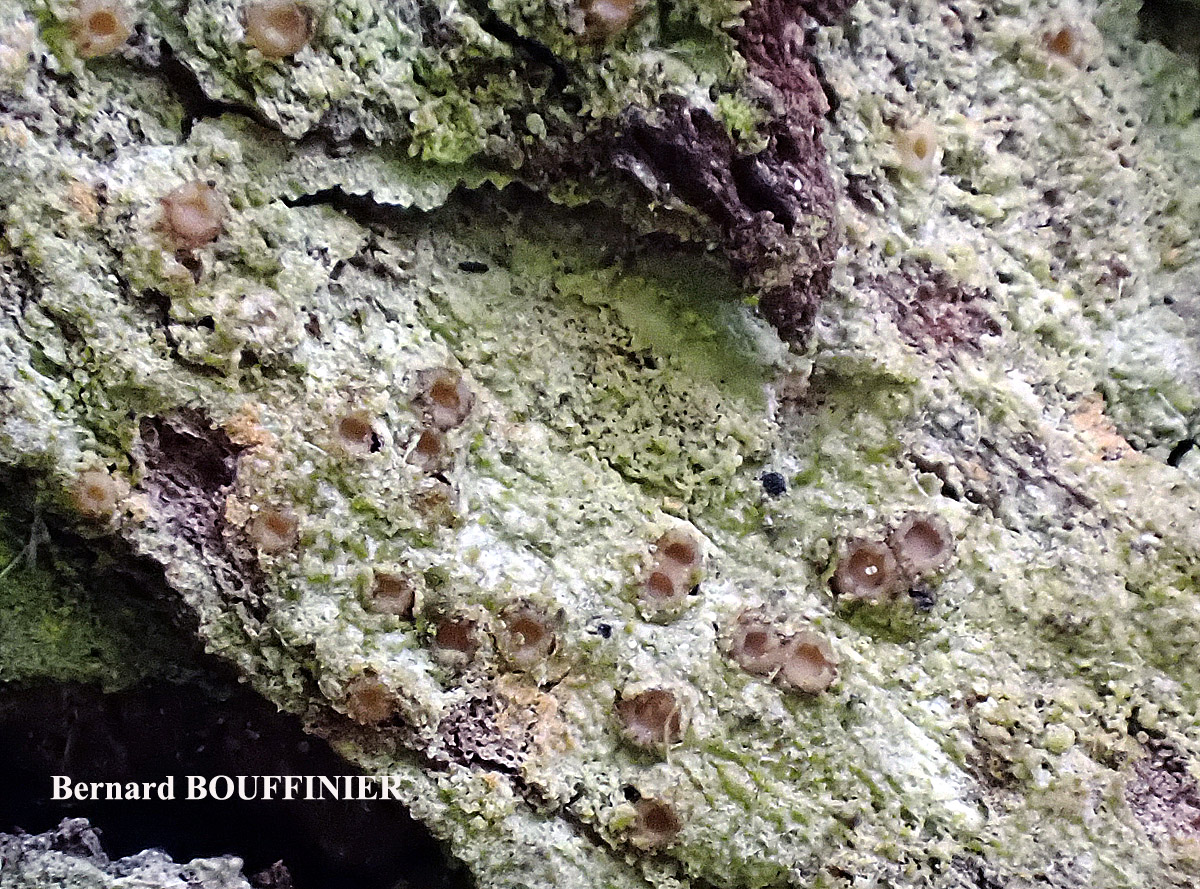
Bernard Bouffinier - Source: http://www.lichensmaritimes.org/index.php?task=fiche&lichen=1321&lang=en
France, Lesteven
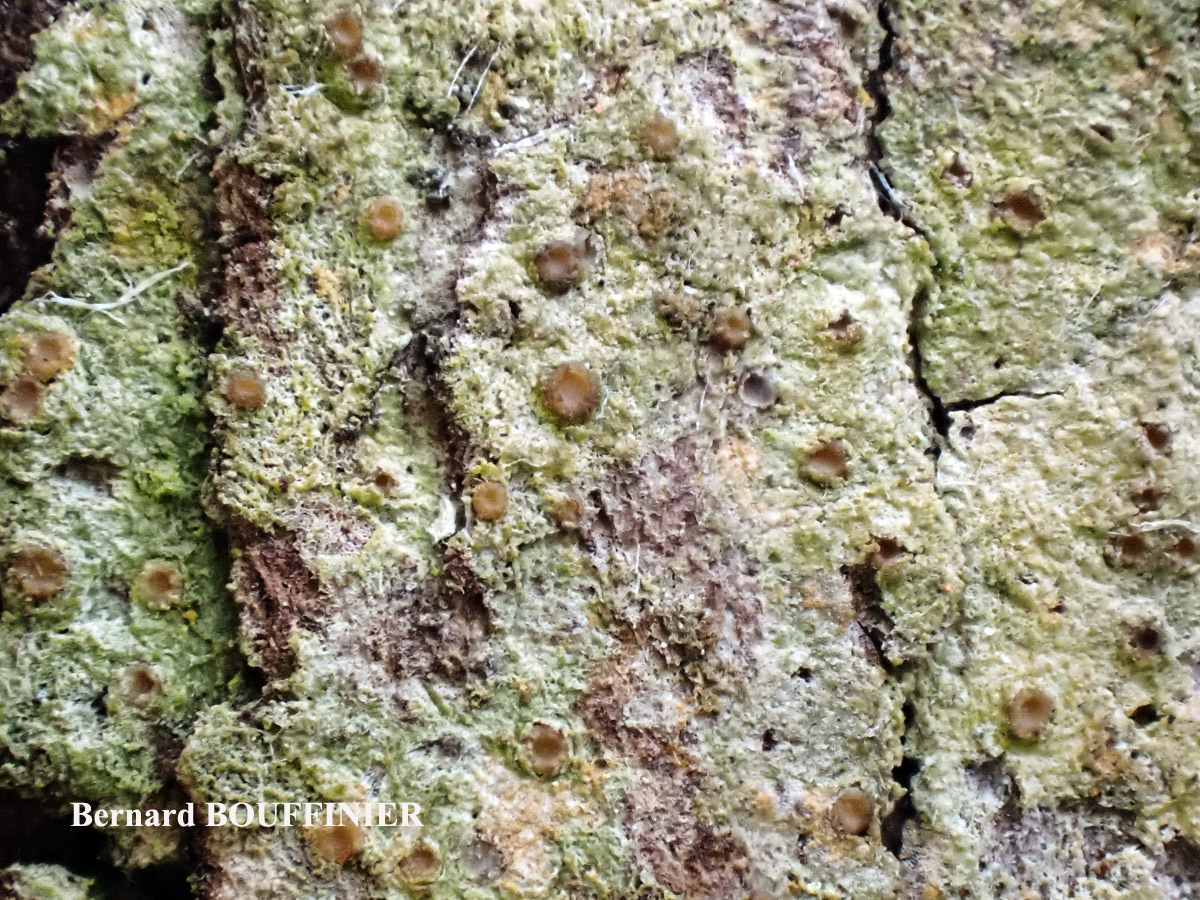
Bernard Bouffinier - Source: http://www.lichensmaritimes.org/index.php?task=fiche&lichen=1321&lang=en
France, Lesteven
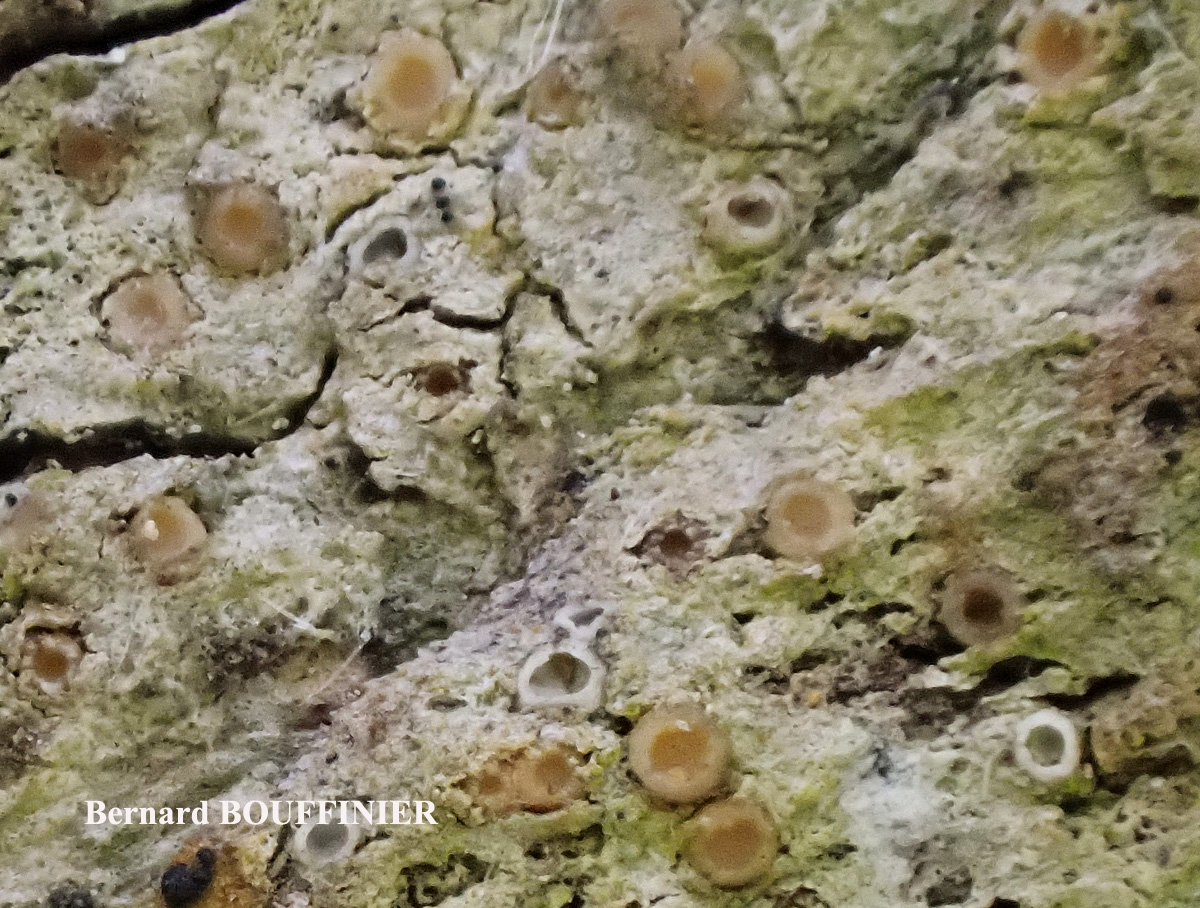
Bernard Bouffinier - Source: http://www.lichensmaritimes.org/index.php?task=fiche&lichen=1321&lang=en
France, Lesteven
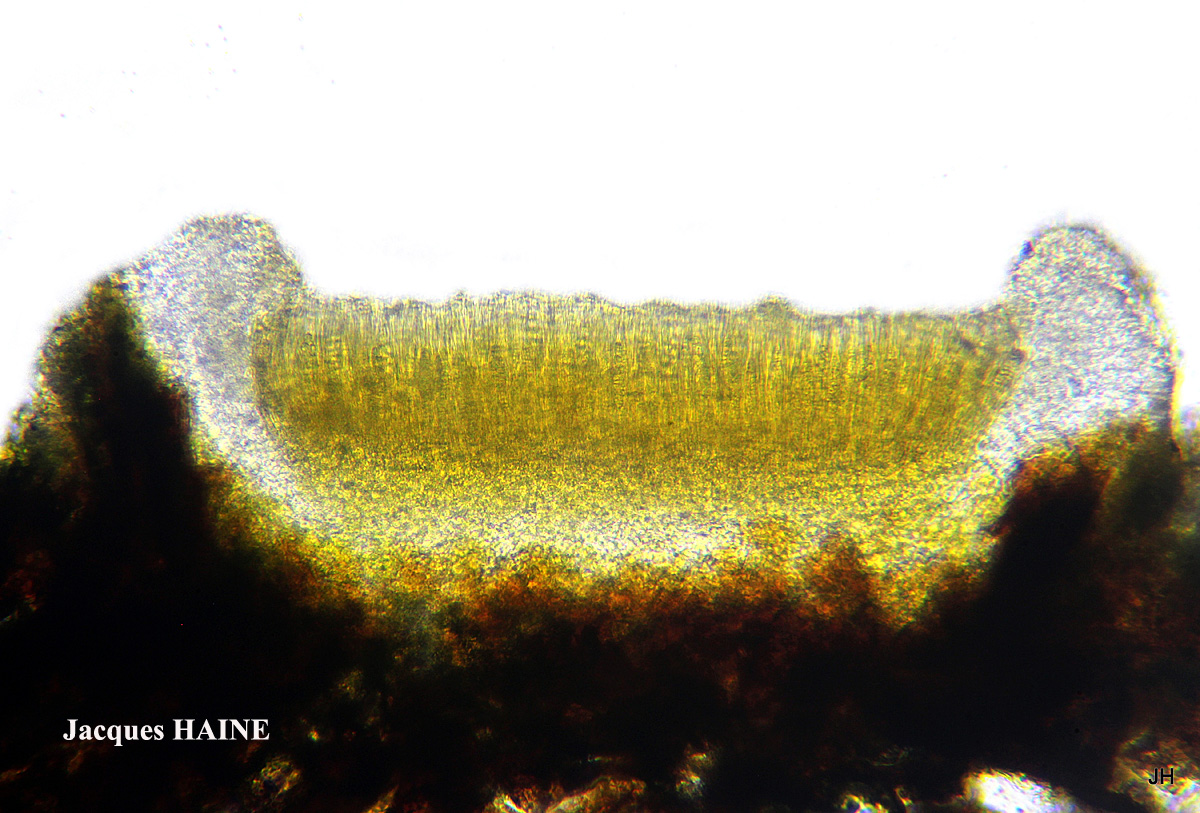
Jacques Haine - Source: http://www.lichensmaritimes.org/index.php?task=fiche&lichen=1321&lang=en
France, Lesteven
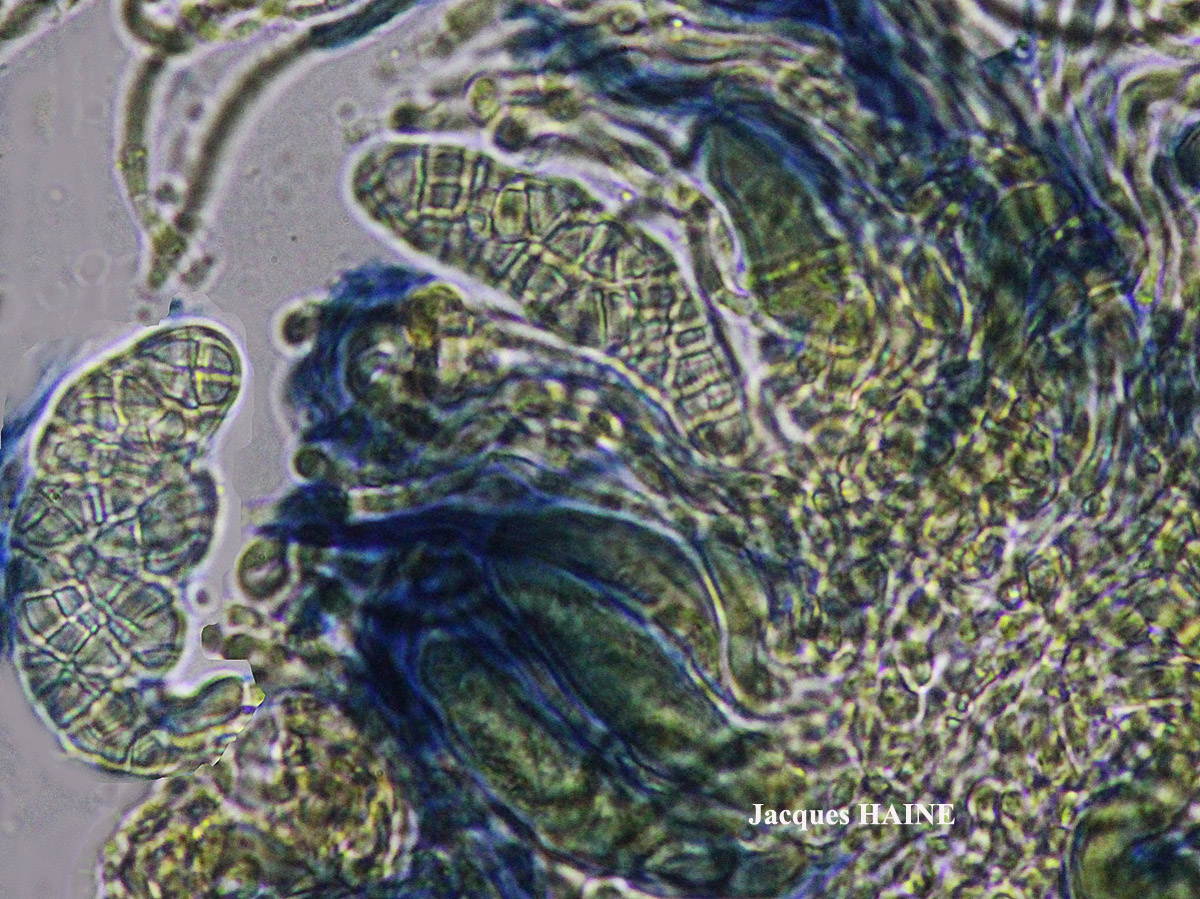
Jacques Haine - Source: http://www.lichensmaritimes.org/index.php?task=fiche&lichen=1321&lang=en
France, Lesteven
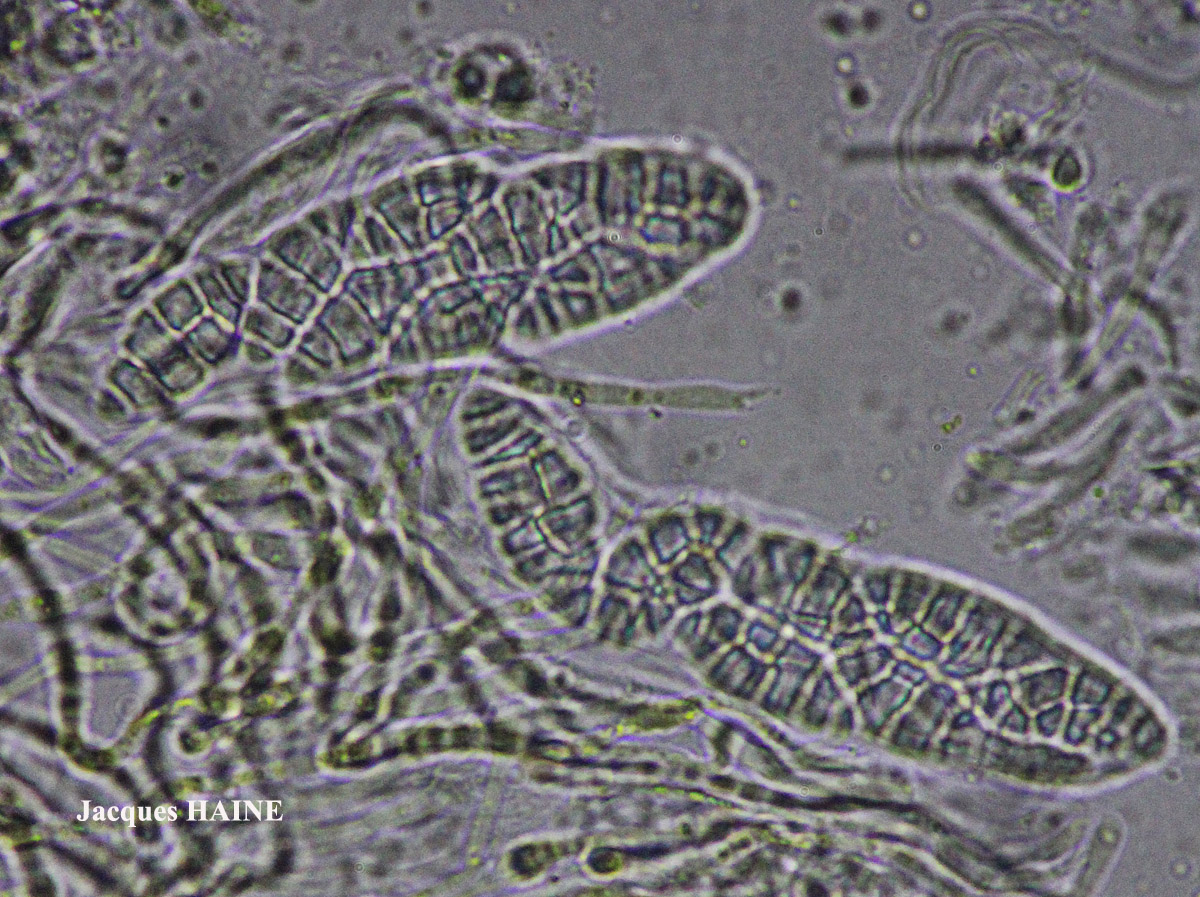
Jacques Haine - Source: http://www.lichensmaritimes.org/index.php?task=fiche&lichen=1321&lang=en
France, Lesteven
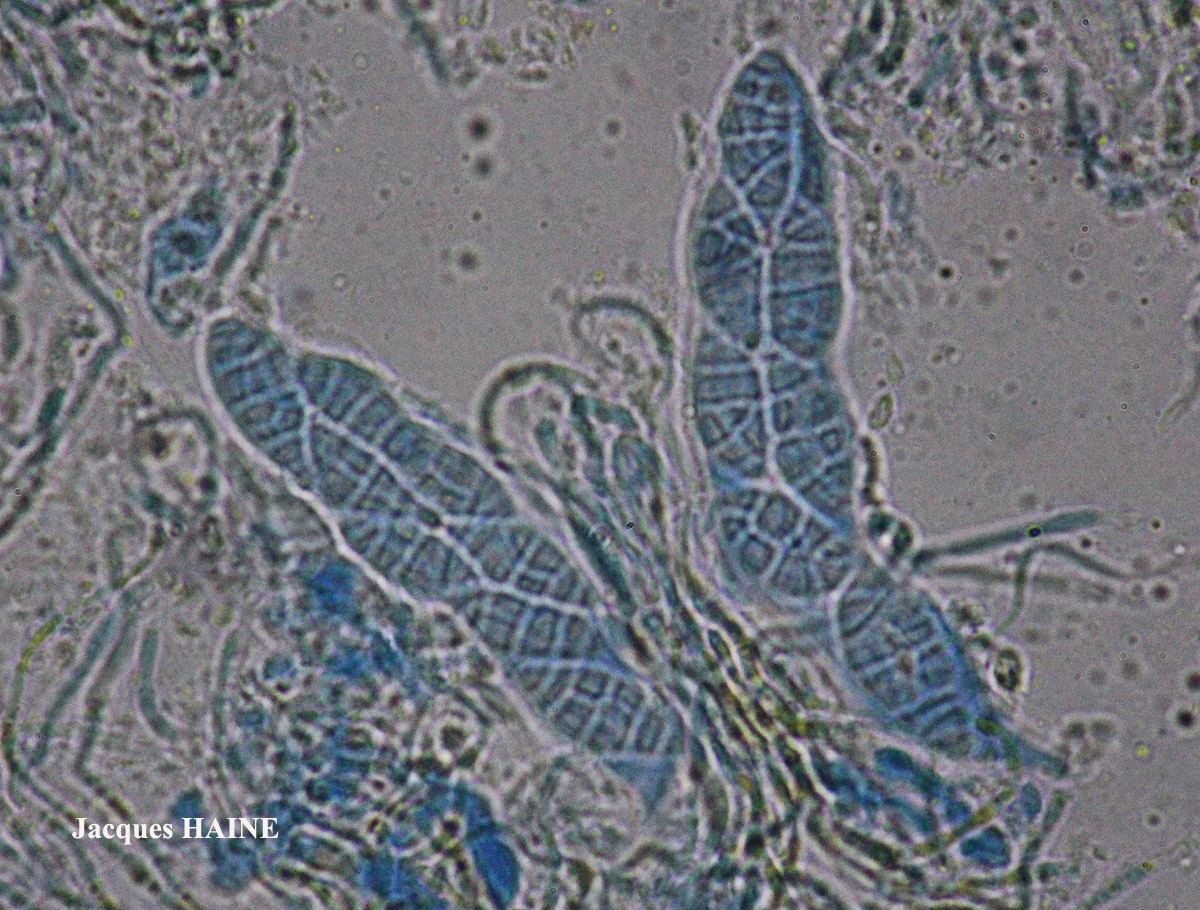
Jacques Haine - Source: http://www.lichensmaritimes.org/index.php?task=fiche&lichen=1321&lang=en
France, Lesteven
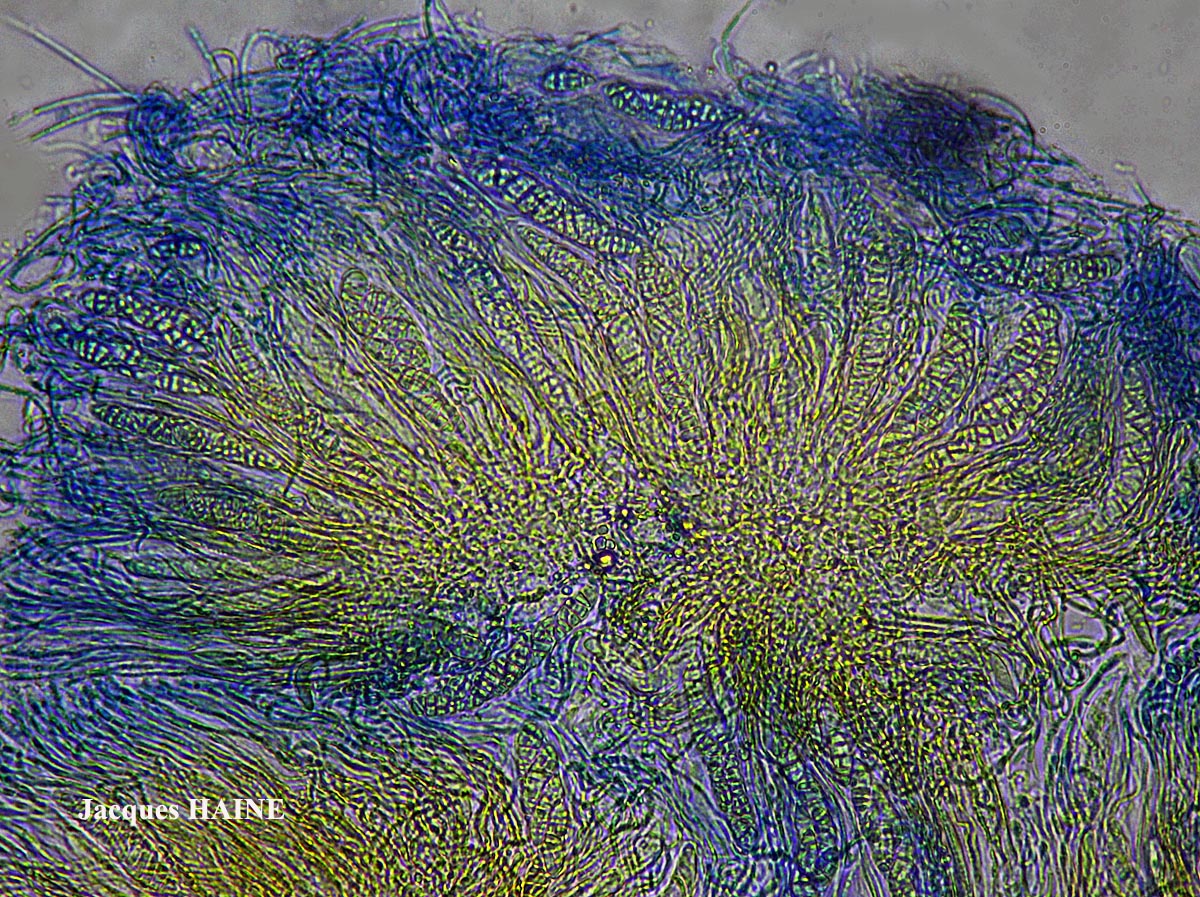
Jacques Haine - Source: http://www.lichensmaritimes.org/index.php?task=fiche&lichen=1321&lang=en
France, Lesteven
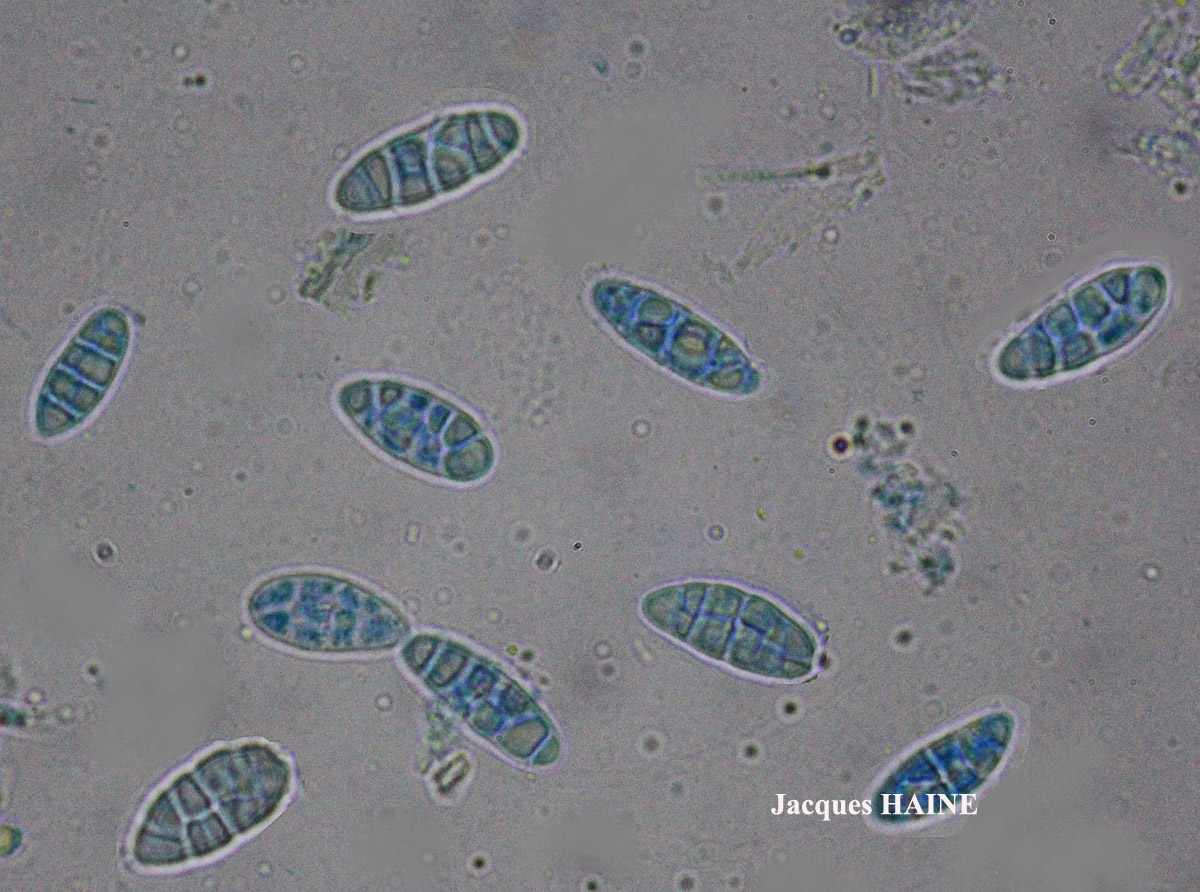
Jacques Haine - Source: http://www.lichensmaritimes.org/index.php?task=fiche&lichen=1321&lang=en
France, Lesteven
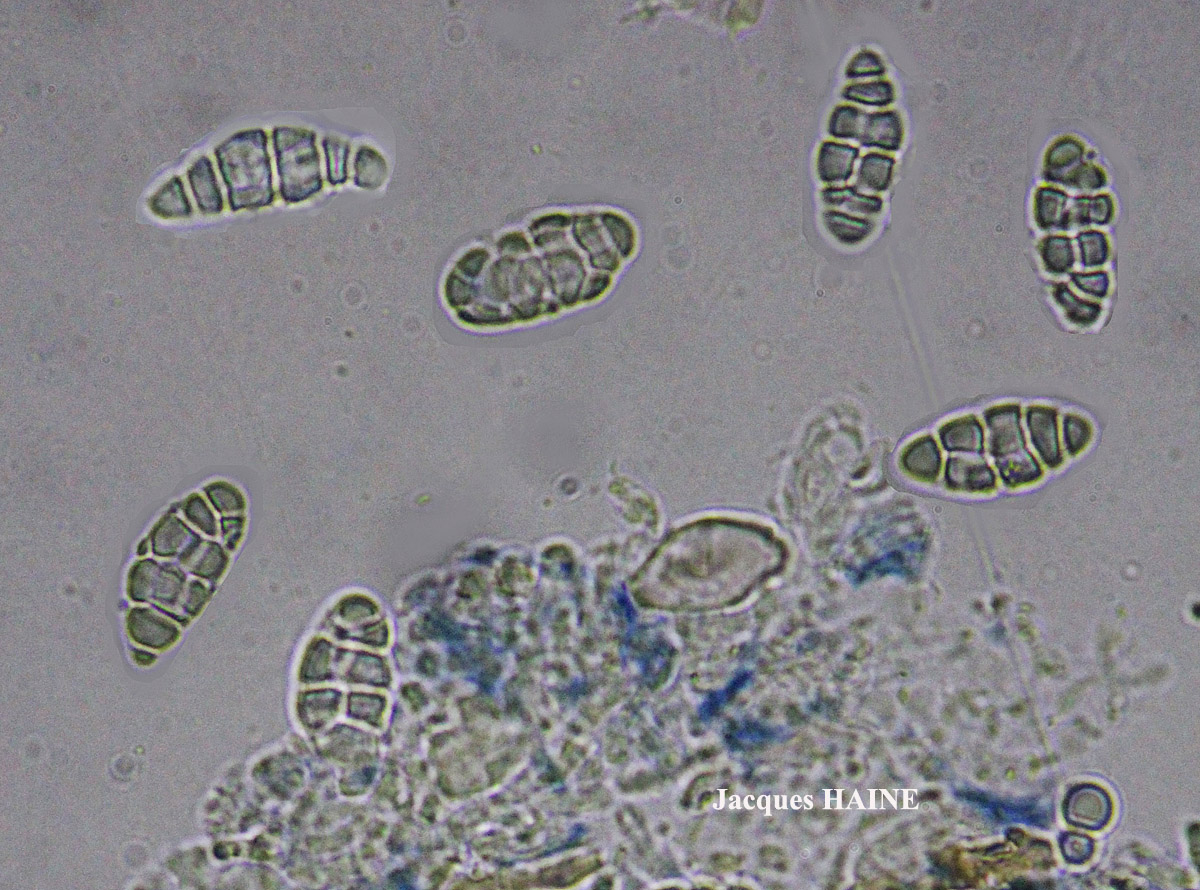
Jacques Haine - Source: http://www.lichensmaritimes.org/index.php?task=fiche&lichen=1321&lang=en
France, Lesteven
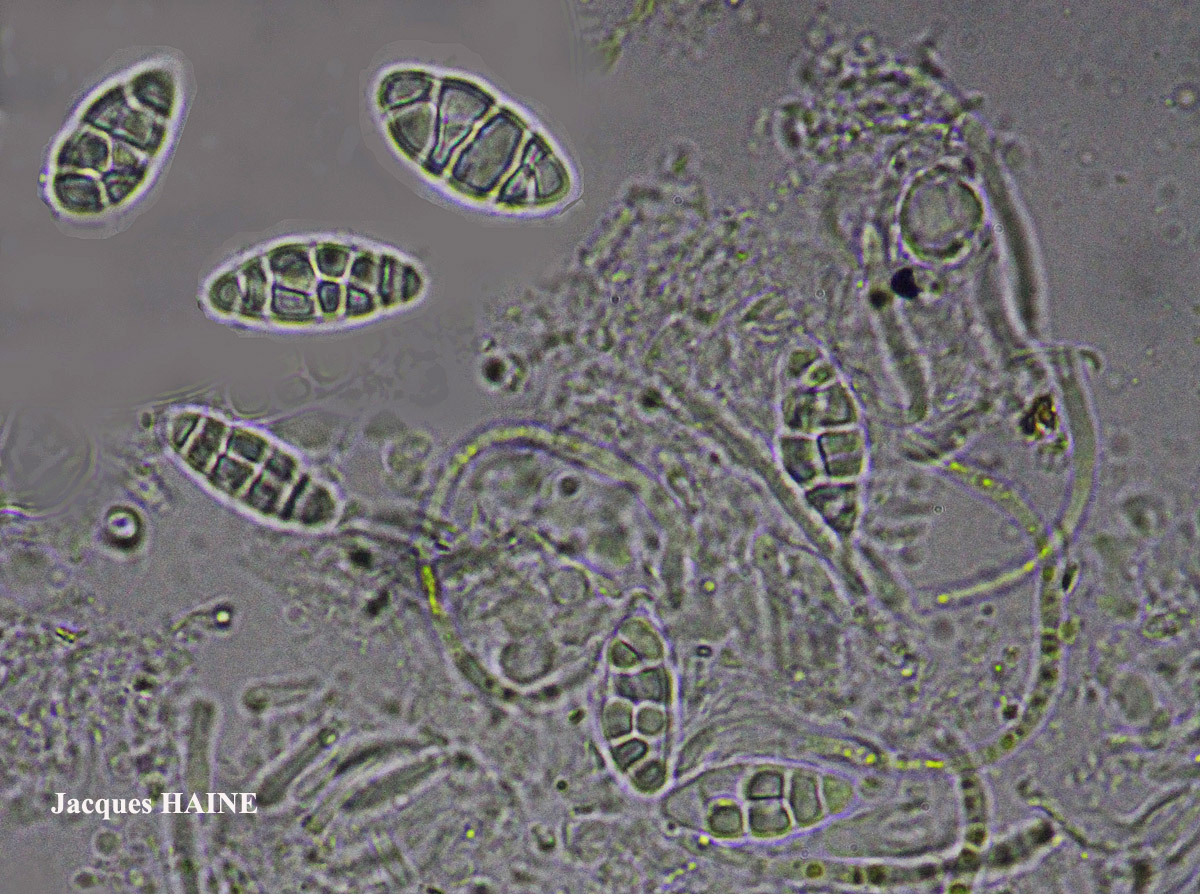
Jacques Haine - Source: http://www.lichensmaritimes.org/index.php?task=fiche&lichen=1321&lang=en
France, Lesteven

Felix Schumm - CC BY 4.0
[VZ1510],URSS. Caucasus, Georgia: Colchis, distr. Sotchi, in declivibus supra pagum Novyi Afon,150 m. Ad corticem Quercus tibericae Stev. Leg. V. Vašák et A. Vezda, 10.6.1977. EX A. VEZDA LICHENES SELECTI EXSICCATI NR. 1510.

Felix Schumm - CC BY 4.0
[VZ1510],URSS. Caucasus, Georgia: Colchis, distr. Sotchi, in declivibus supra pagum Novyi Afon,150 m. Ad corticem Quercus tibericae Stev. Leg. V. Vašák et A. Vezda, 10.6.1977. EX A. VEZDA LICHENES SELECTI EXSICCATI NR. 1510.

Felix Schumm - CC BY 4.0
[VZ1922], Graecia. Thessalia, in ripa fluminis Pinios prope Kalabaka, 220 m. Ad truncum Platani orientalis. Leg. A. Vezda, 26.7.1983. EX A. VEZDA LICHENES SELECTI EXSICCATI NR. 1922.

Felix Schumm - CC BY 4.0
[VZ2314], Italia. Calabria. Prov. Catanzaro, prope ostium fluminis Neto in mare, 1 m. Ad corticem arboris (Ulmus minor). Leg. D. Puntillo, 8.11.1988. EX A. VEZDA LICHENES SELECTI EXSICCATI NR. 2314.