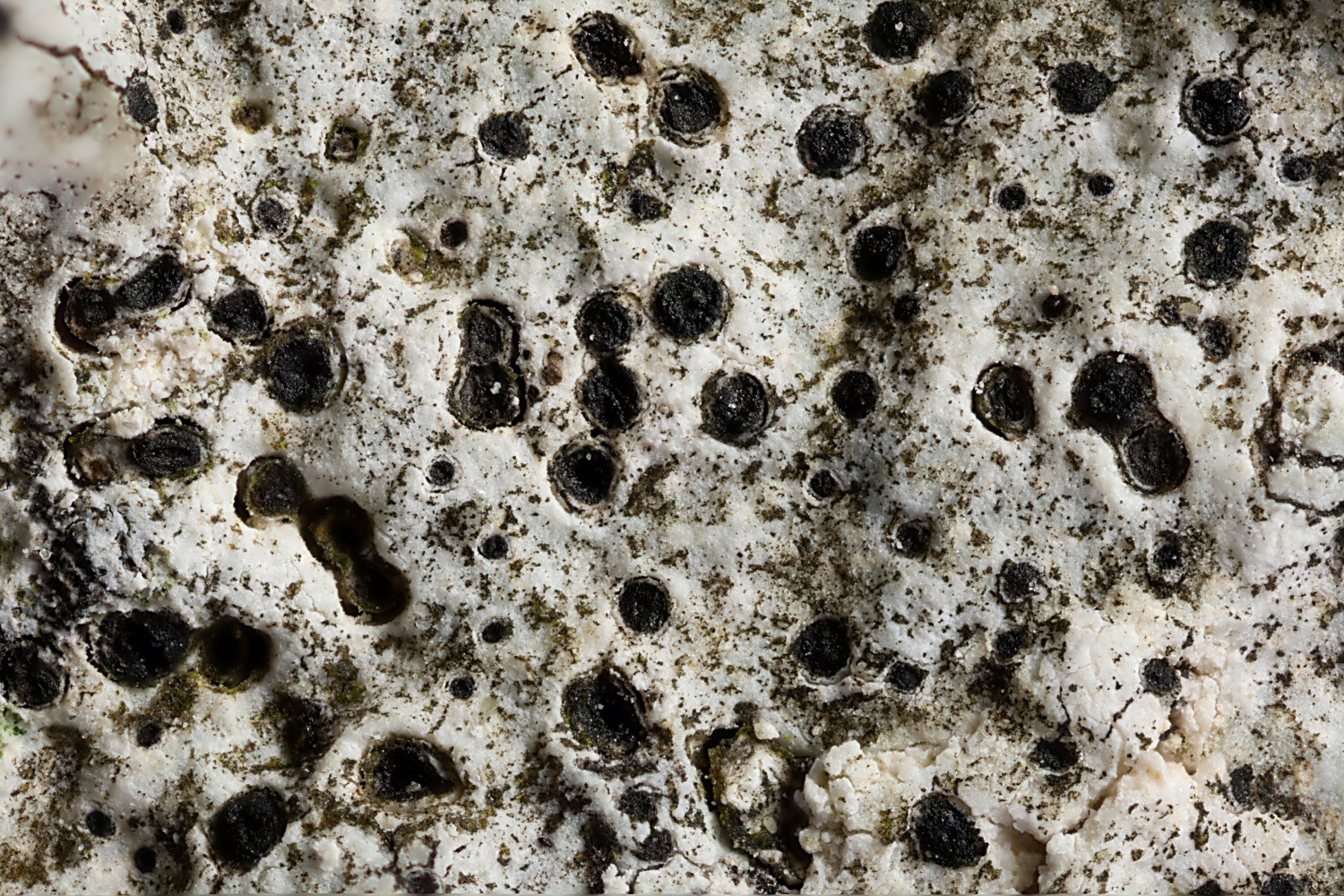
Verrucaria foveolata (Flörke) A. Massal.
Ric. Auton. Lich. Crost.: 346, 1852. Basionym: Verrucaria schraderi var. foveolata Flörke - Deutsch. Lich., 2: 6, 1815.
Synonyms: Amphoridium foveolatum (Flörke) A. Massal.; Verrucaria dolomitica auct. non (A. Massal.) Kremp.; Verrucaria latzeliana Servít
Description: Thallus crustose, seemingly endosubstratic but sometimes appearing very thinly episubstratic at high magnification, grey-brown, pale brown to reddish brown, without a distinct prothallus. Perithecia black, (0.11-)0.25-0.35(-0.5) mm across, at least half-immersed in the rock, sometimes projecting with the upper part, leaving deep pits in the rock when they fall off, the ostiolar region flat or depressed, covered with a thin thalline layer at base. Involucrellum absent or very poorly developed around the ostiole, 40-60 μm thick; exciple globose or slightly pear-shaped, 0.2-0.45 mm across, the wall (20-)25-43(-60) μm thick, homogeneously thin or slightly thicker near the ostiole, brown to black throughout; hamathecium of branched periphysoids measuring (30-)40-65 x 1-2(-3) μm, interascal filaments absent; hymenial gel hemiamyloid, I+ red (I+ blue at very low concentrations of I), K/I+ blue. Asci 8-spored, clavate, I-, fissitunicate, the wall thickened above, with an ocular chamber, dehiscent by extrusion of an endotunica to form a delicate rostrum, Verrucaria-type, 78-102 x 27-39 mm. Ascospores 1-celled, hyaline, broadly ellipsoid, (24-)25-34(-37) x (10.5-)12-15(-18) μm, with a 1-1.5 μm thick gelatinous perispore. Photobiont chlorococcoid. Spot tests: K-, C-, KC-, P-, UV-. Chemistry: without lichen substances.
Growth form: Crustose endolithic
Substrata: rocks
Photobiont: green algae other than Trentepohlia
Reproductive strategy: mainly sexual
Pioneer species
Poorly known taxon in need of further study
Commonnes-rarity: (info)
Alpine belt: rather rare
Subalpine belt: rather common
Montane belt: rather rare
Dry submediterranean belt: rather rare
Humid submediterranean belt: rare
Padanian area: absent
pH of the substrata:
1 2 3 4 5

Solar irradiation:
1 2 3 4 5
Aridity:
1 2 3 4 5
Eutrophication:
1 2 3 4 5
Poleotolerance:
0 1 2 3
Altitudinal distribution:
1 2 3 4 5 6
Rarity
absent
extremely rare
very rare
rare
rather rare
rather common
common
very common
extremely common
Loading data...
Occurrence data
Predictive map
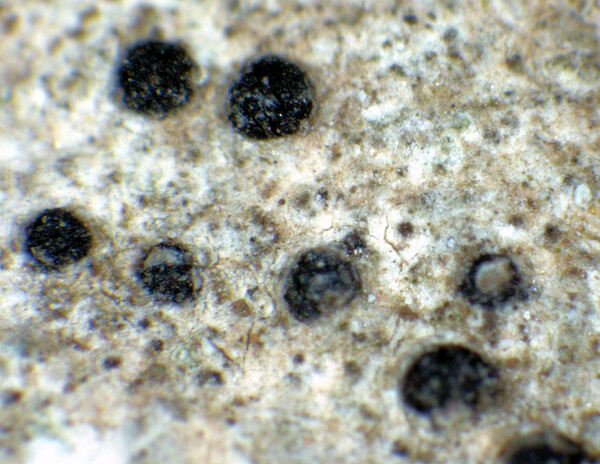
P.L. Nimis CC BY-SA 4.0
TSB 24545
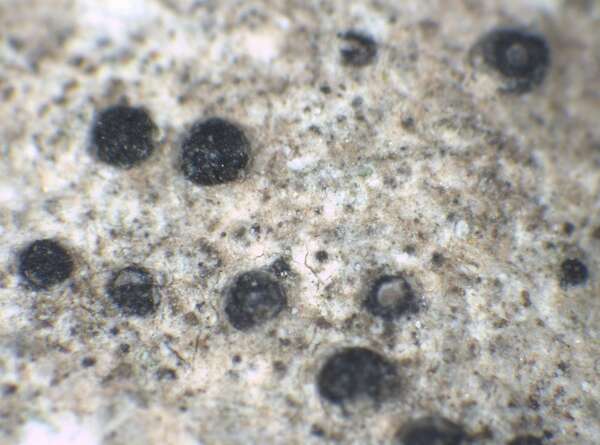
P.L. Nimis; Owner: Department of Life Sciences, University of Trieste
Herbarium: TSB (24545)
2003/03/17
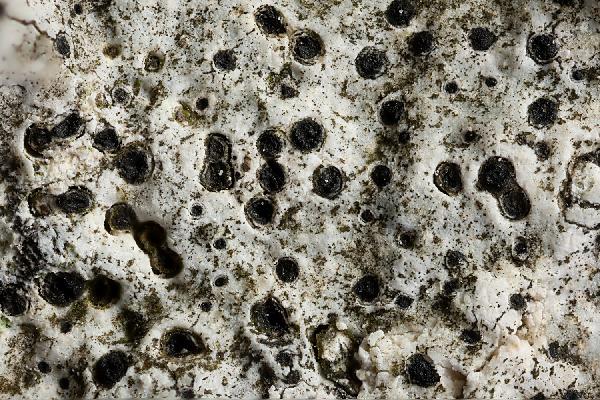
Ulrich Kirschbaum CC BY-SA 4.0 – Source: https://www.thm.de/lse/ulrich-kirschbaum/flechtenbilder
Germany; Hesse: Rhön Mountains.
Growth form: Crustose endolithic
Substrata: rocks
Photobiont: green algae other than Trentepohlia
Reproductive strategy: mainly sexual
Pioneer species
Poorly known taxon in need of further study
Commonnes-rarity: (info)
Alpine belt: rather rare
Subalpine belt: rather common
Montane belt: rather rare
Dry submediterranean belt: rather rare
Humid submediterranean belt: rare
Padanian area: absent
pH of the substrata:
| 1 | 2 | 3 | 4 | 5 |
Solar irradiation:
| 1 | 2 | 3 | 4 | 5 |
Aridity:
| 1 | 2 | 3 | 4 | 5 |
Eutrophication:
| 1 | 2 | 3 | 4 | 5 |
Poleotolerance:
| 0 | 1 | 2 | 3 |
Altitudinal distribution:
| 1 | 2 | 3 | 4 | 5 | 6 |
Rarity
absent
extremely rare
very rare
rare
rather rare
rather common
common
very common
extremely common
Loading data...
Occurrence data
Predictive map
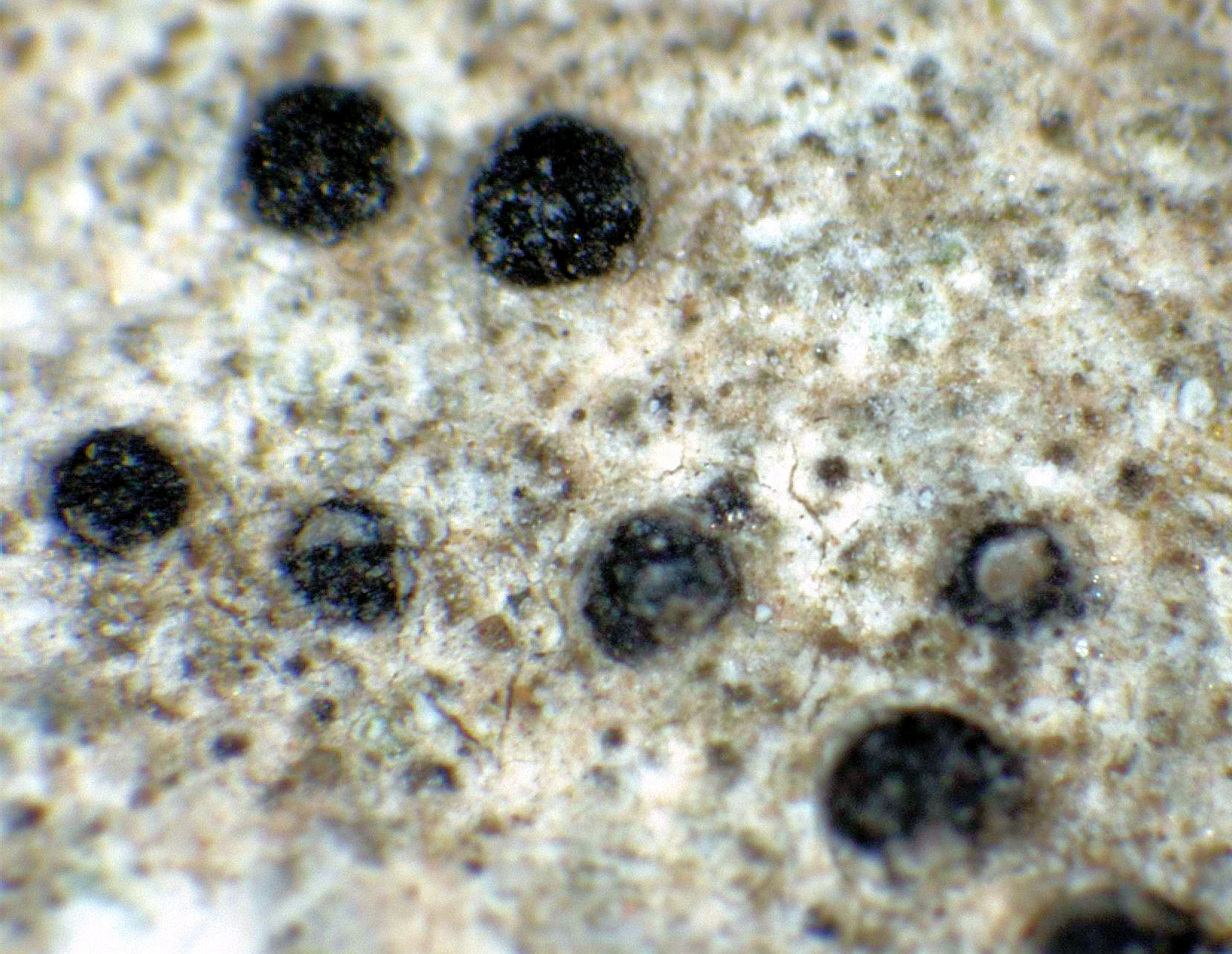
P.L. Nimis CC BY-SA 4.0
TSB 24545
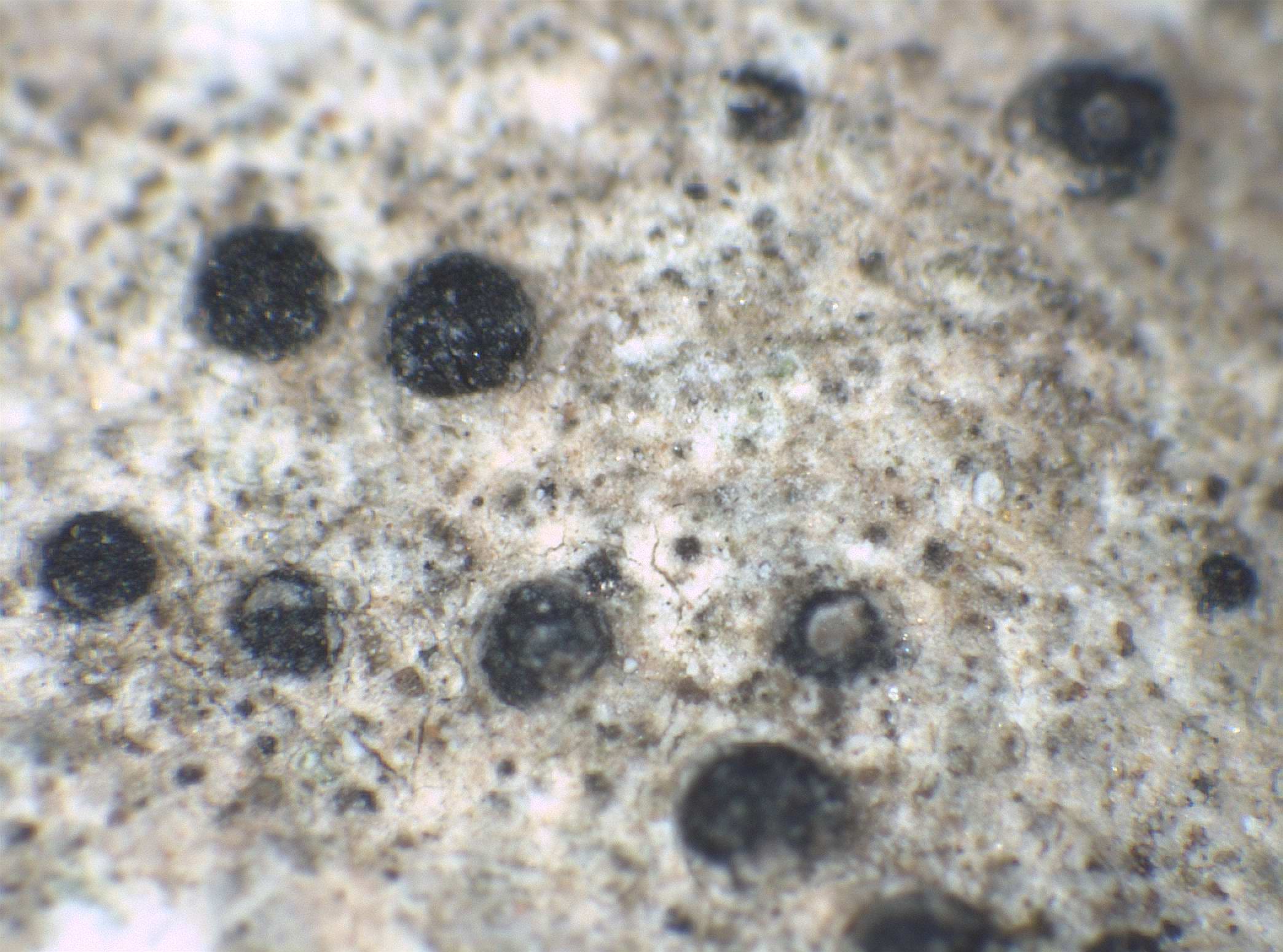
P.L. Nimis; Owner: Department of Life Sciences, University of Trieste
Herbarium: TSB (24545)
2003/03/17