Xanthosyne varians subsp. exigua (Chaub.) Brodo, López de Silanes, Lendemer, R.C. Harris & McMullin
in Brodo & al., Bryologist, 127, 2: 202, 2024). Basionym: Lecidea exigua Chaub. - in Saint-Amans, Fl. Agen.: 478, 1821.
Synonyms: Biatora decandollei Hepp; Biatora exigua (Chaub.) Fr.; Biatora geographica A. Massal.; Lecidea decandollei (Hepp) Jatta; Traponora varians (Ach.) J. Kalb & Kalb
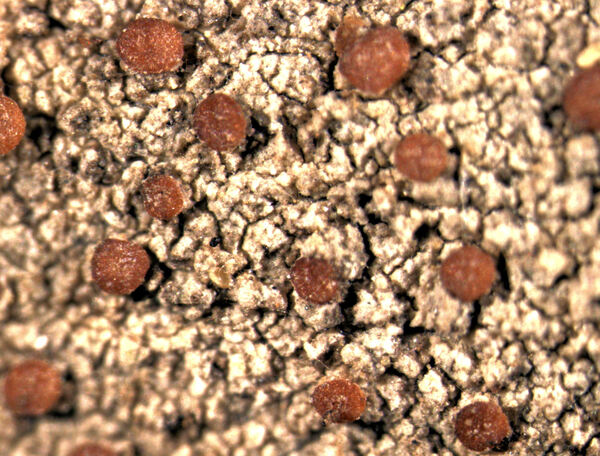
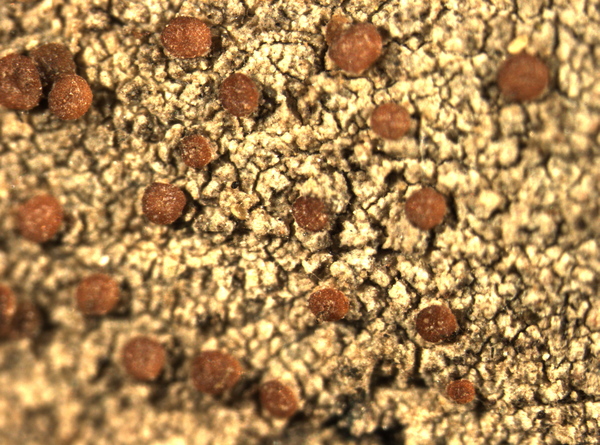
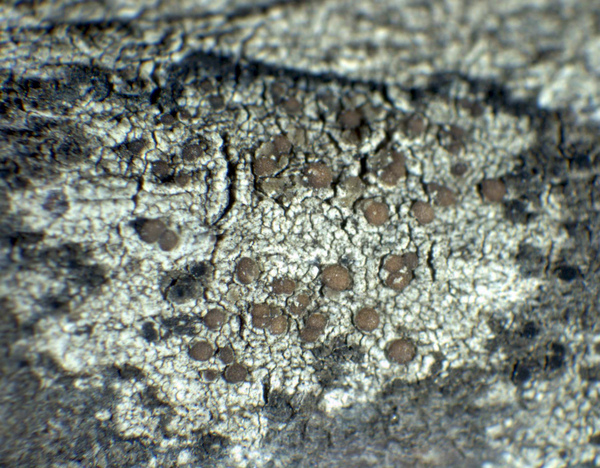
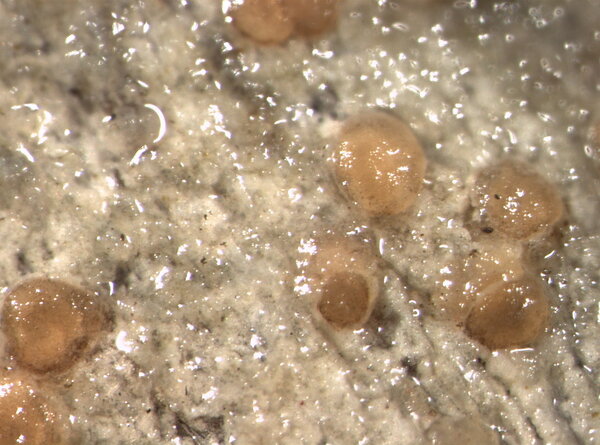
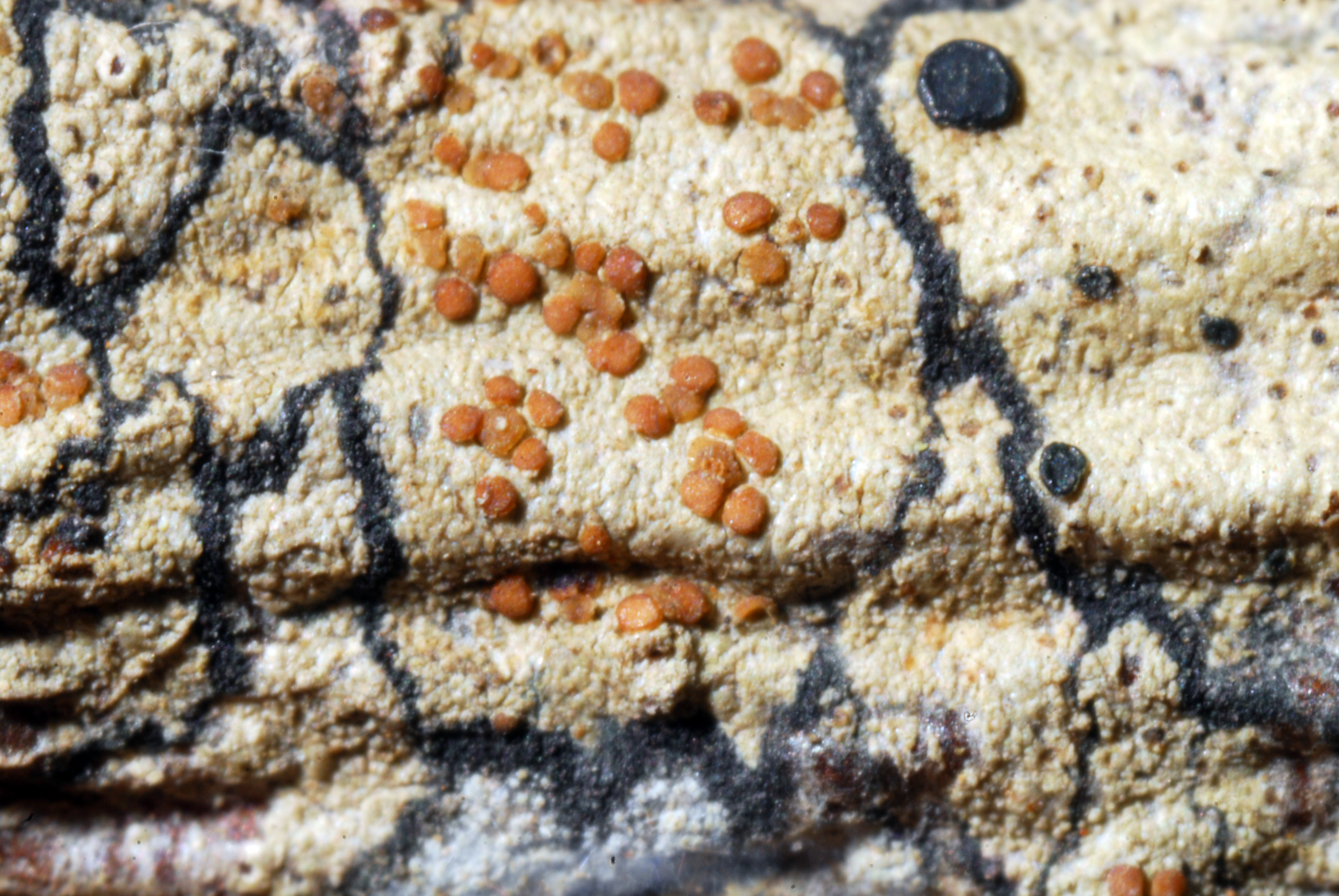
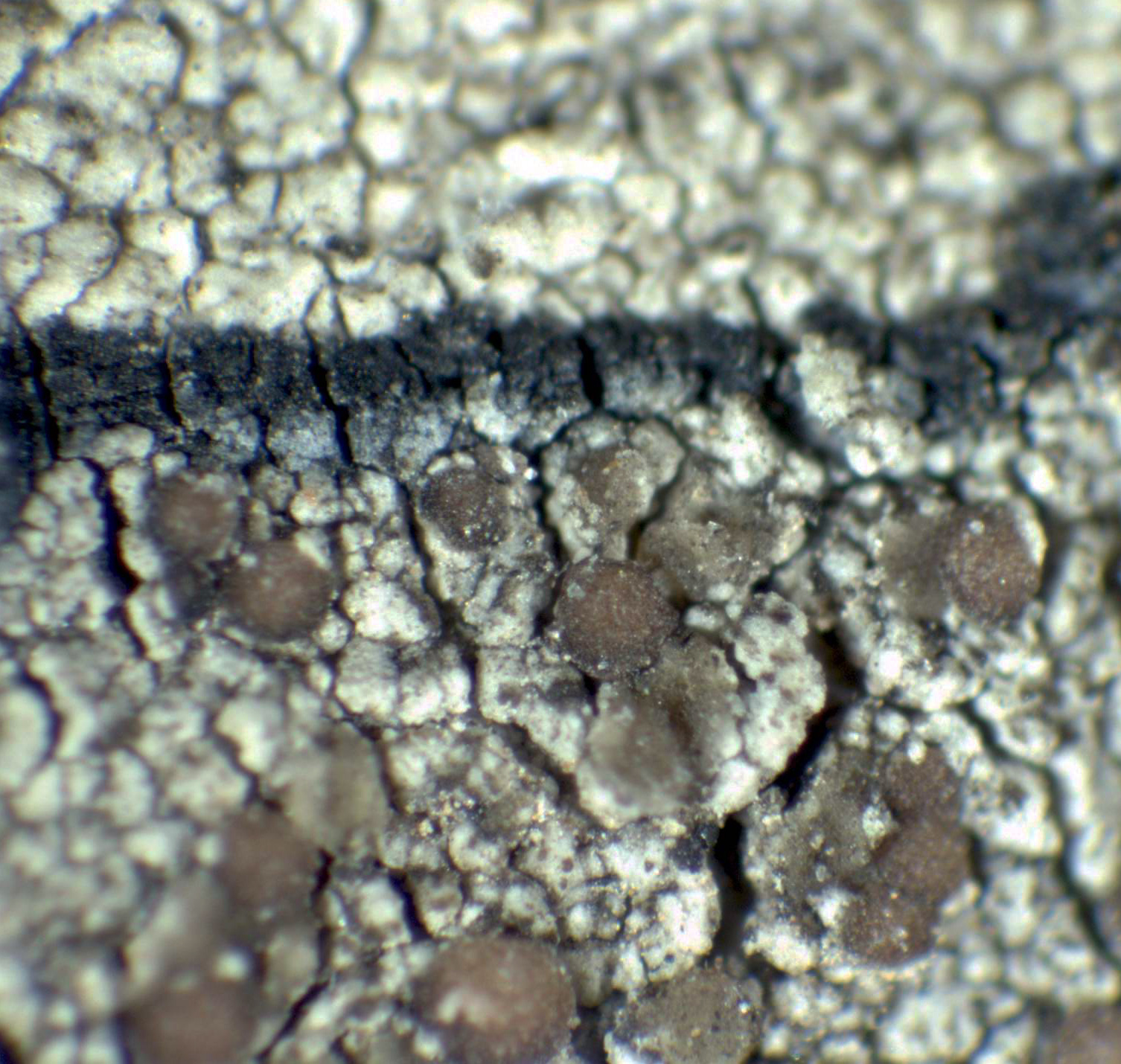
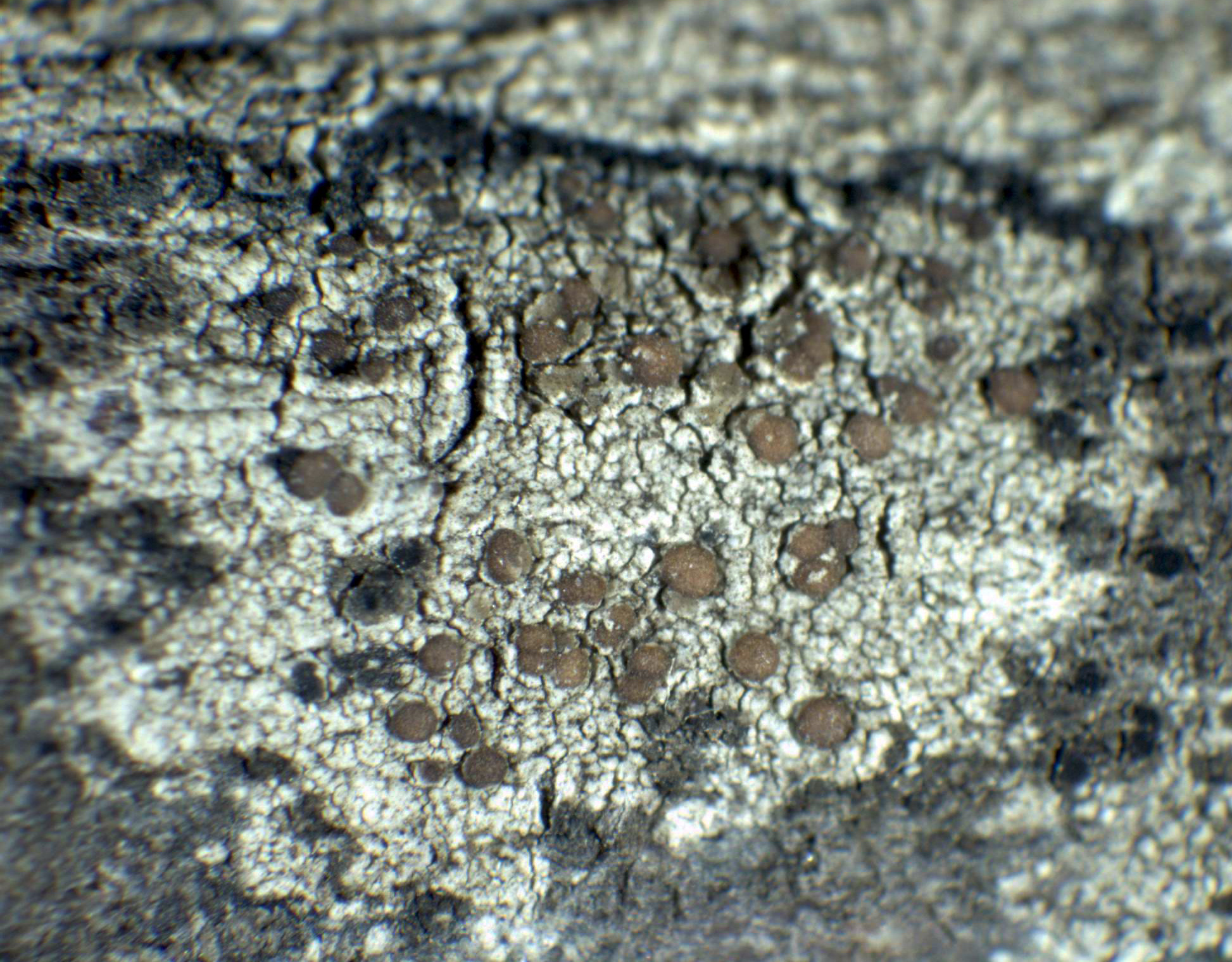
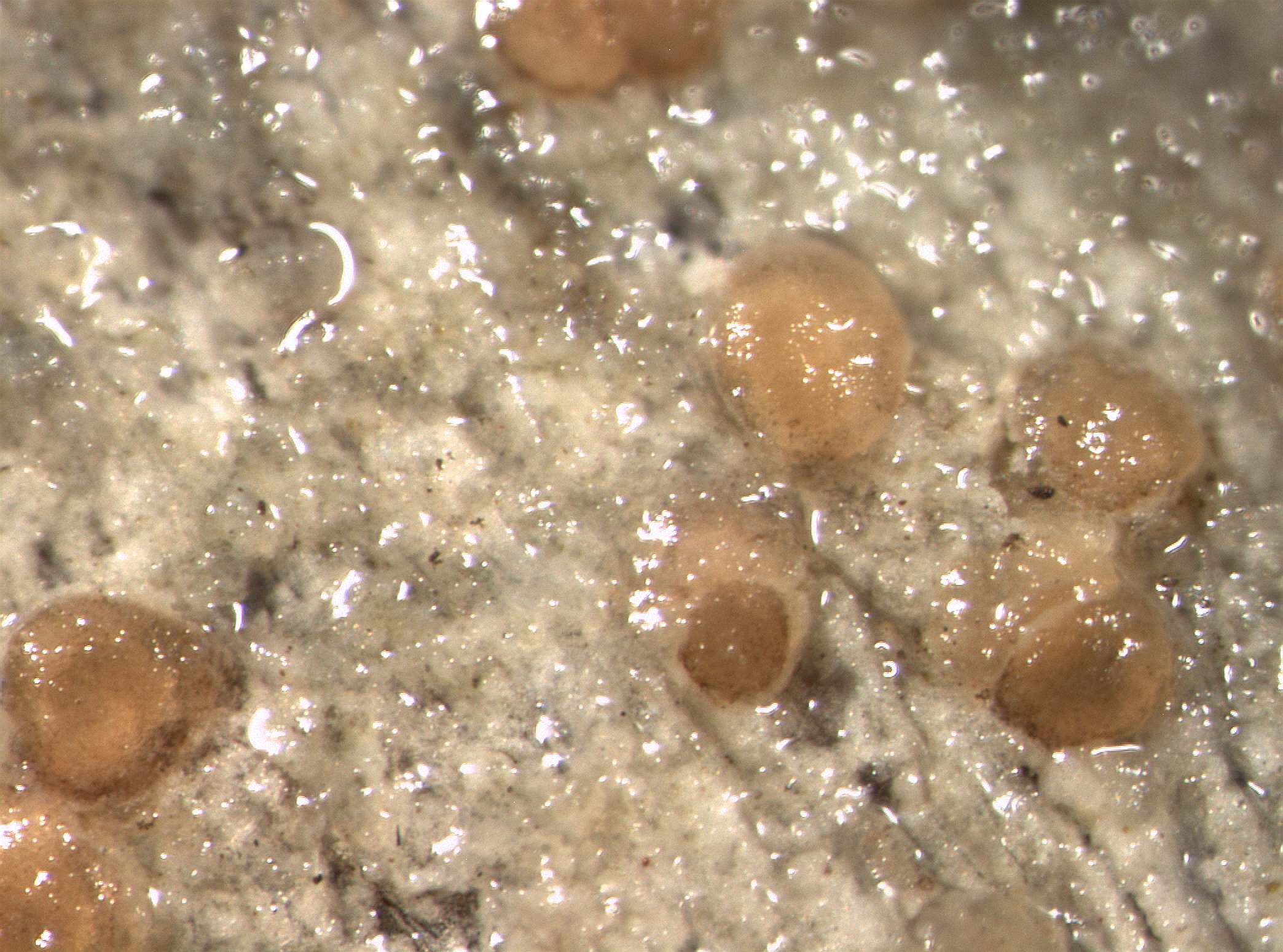
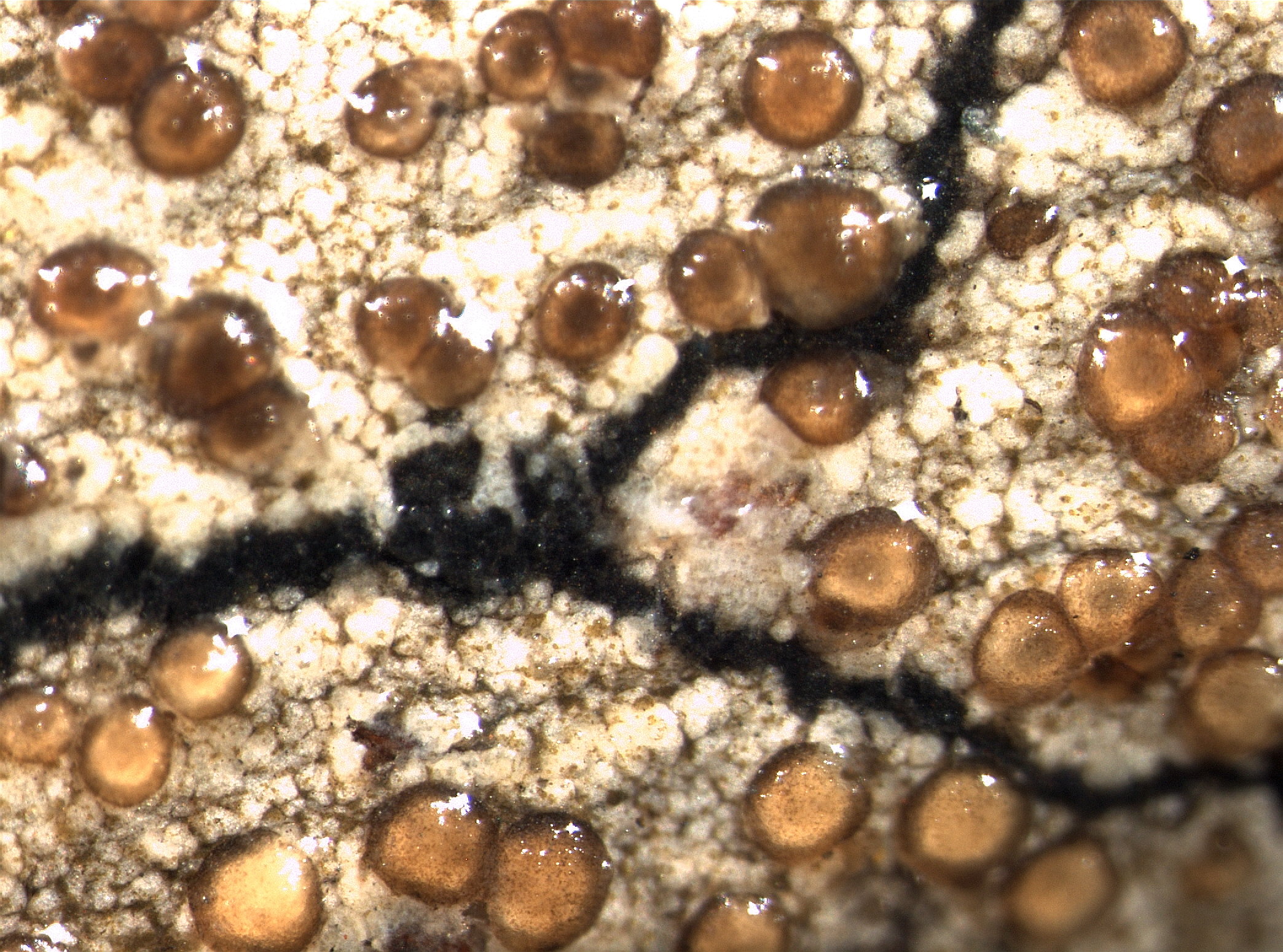
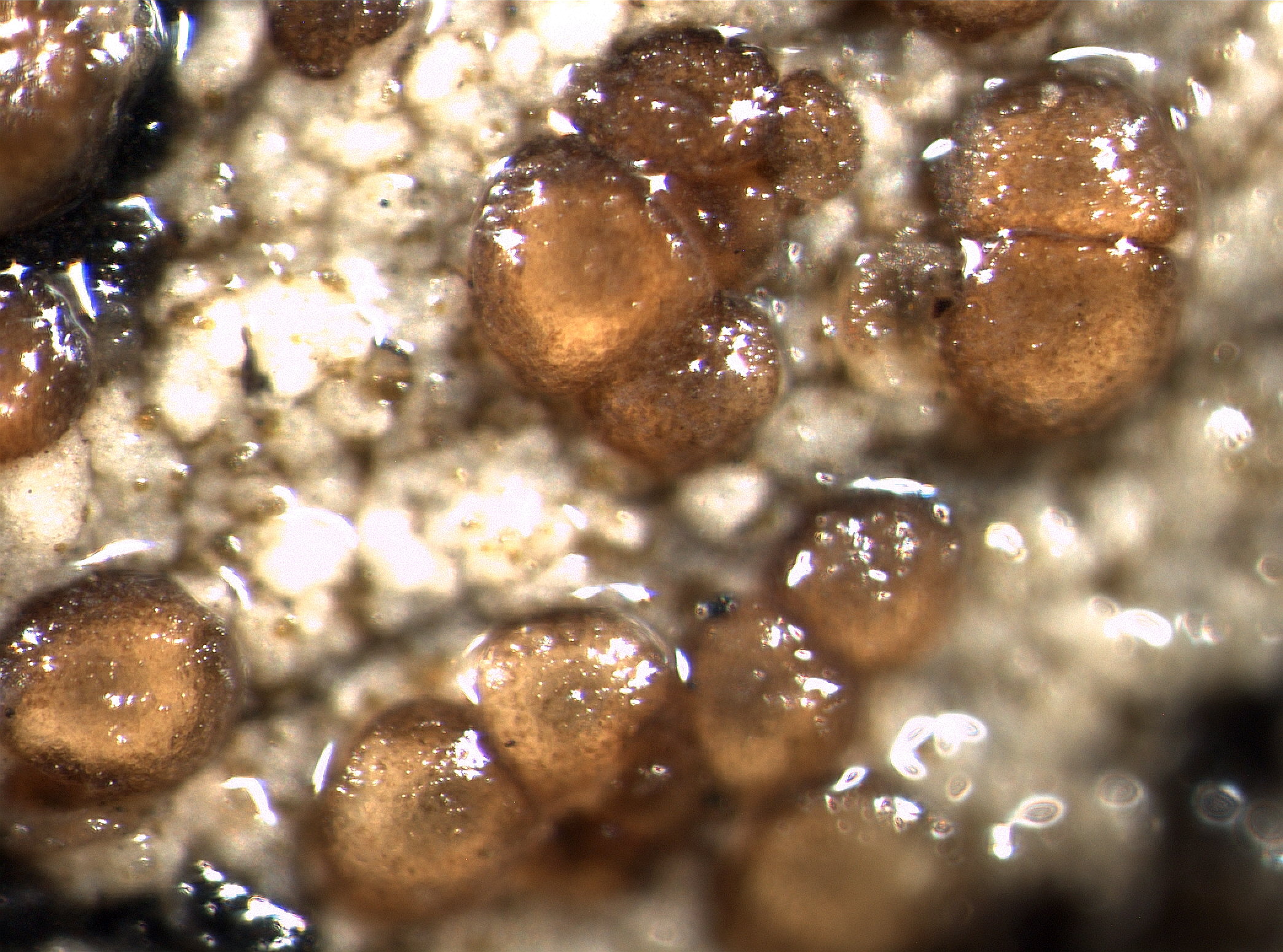
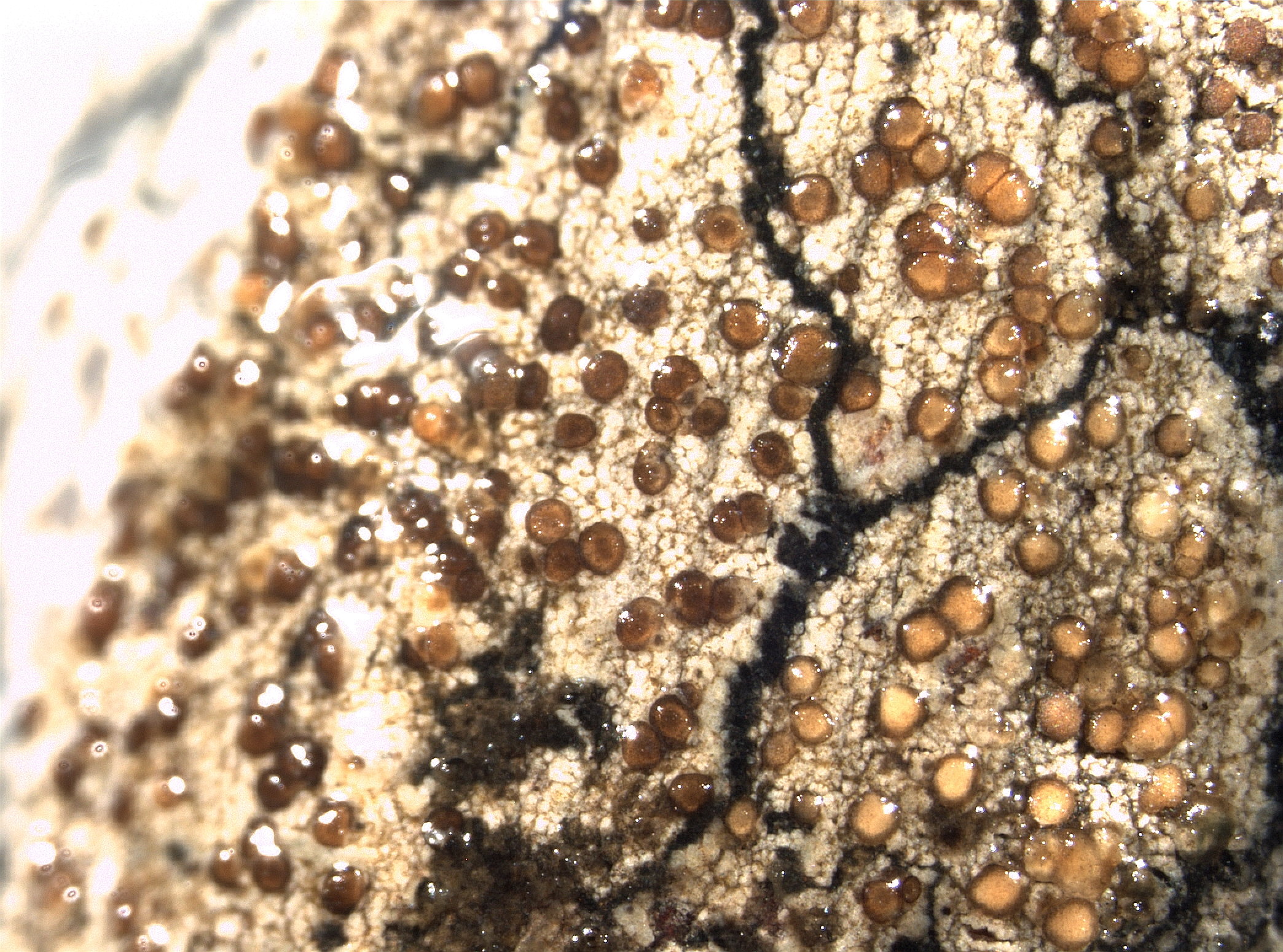
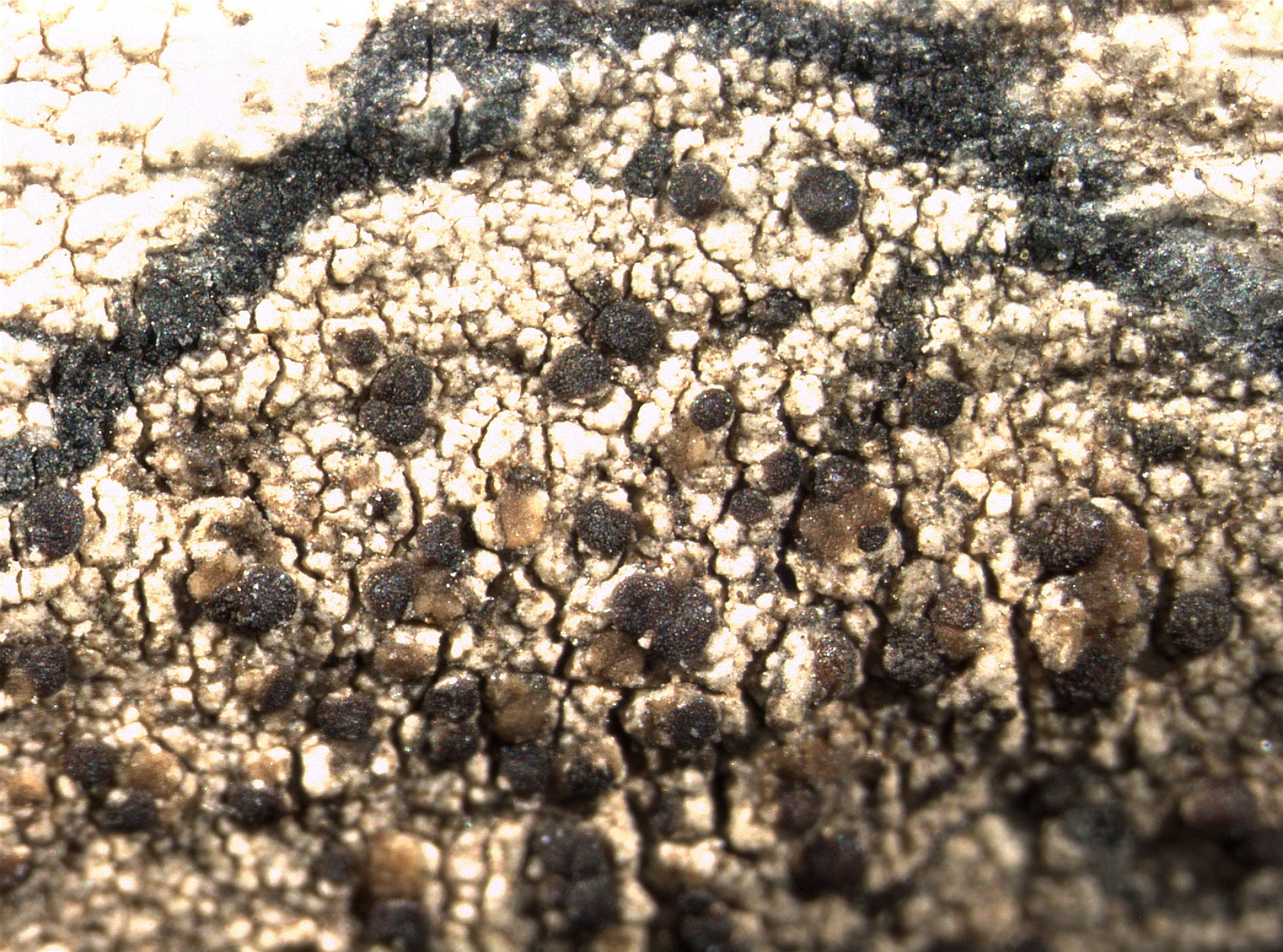
Description: Thallus crustose, thinly episubstratic, whitish, pale yellow or greenish grey, smooth to areolate or finely verrucose, delimited by a dark prothallus. Apothecia lecideine, rounded to deformed by mutual compression, 0.15-0.5 mm across, isolated or aggregated into small clusters, orange-brown, pale yellowish brown or reddish brown, sometimes pruinose when young and blackening when old, with a flat to slightly convex disc and a thin, finally excluded proper margin. Proper exciple two-parted, the inner part and the outer rim consisting of non-gelatinized, prosoplectenchymous hyphae, the lower outer portion of consisting of gelatinized, anticlinally arranged, branched hyphae, usually pale brown, lacking green pigments, ochre to reddish brown at the outer edge, colourless to pale yellow within, 15-30 µm wide laterally, expanding to 50(-65) µm towards the base; epithecium pale yellow-red-brown, with many crystals dissolving in K, 5-10 µm high; hymenium colourless, 40-70 µm high, I+ blue; paraphyses coherent in water, easily made free in K, simple or sparingly branched and anastomosing in upper part, 0.7-1.2 µm thick at mid-level, at kleast some of them with capitate, up to 4(-5) µm wide apical cells; hypothecium colourless, 20-30 µm high. Asci 8-spored, narrowly clavate, thick-walled, with an I+ blue tholus containing a lighter blue, broadly rounded axial body, Lecidella-type. Ascospores 1-celled, hyaline, ellipsoid, (7-)8-11(-15) x (3-)4-6(-7) µm. Photobiont chlorococcoid. Spot tests: thallus K+ yellow, C- or C+ weakly orange-yellow, KC+ pale orange, P-, UV-. Chemistry: atranorin, thiophanic acid, confusa-unknown, arthothelin.
Growth form: Crustose
Substrata: bark
Photobiont: green algae other than Trentepohlia
Reproductive strategy: mainly sexual
Most common in areas with a humid-warm climate (e.g. most of Tyrrenian Italy)
Commonnes-rarity: (info)
Alpine belt: absent
Subalpine belt: absent
Montane belt: absent
Dry submediterranean belt: extremely rare
Humid submediterranean belt: very rare
Padanian area: absent
pH of the substrata:
1 2 3 4 5

Solar irradiation:
1 2 3 4 5
Aridity:
1 2 3 4 5
Eutrophication:
1 2 3 4 5
Poleotolerance:
0 1 2 3
Altitudinal distribution:
1 2 3 4 5 6
Rarity
absent
extremely rare
very rare
rare
rather rare
rather common
common
very common
extremely common
Loading data...
Occurrence data
Predictive map
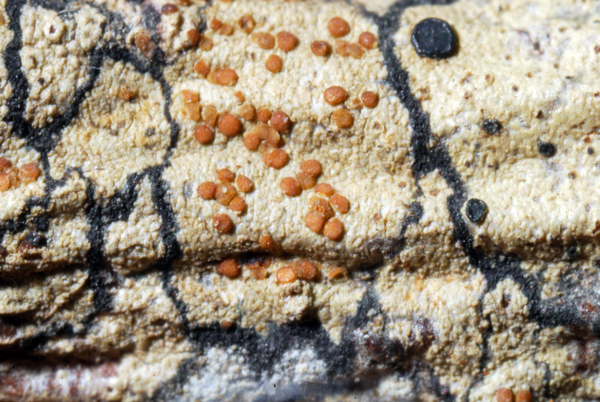
Domenico Puntillo; Owner: Domenico Puntillo
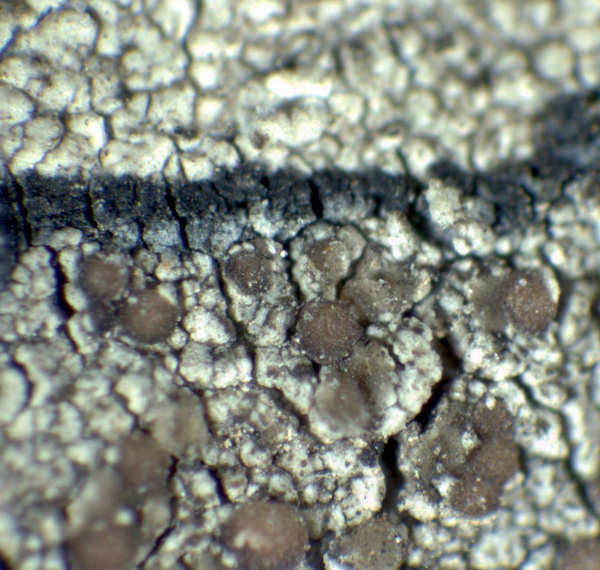
P.L. Nimis CC BY-SA 04
TSB 23287
P.L. Nimis CC BY-SA 4.0
TSB 9400
Pier Luigi Nimis - CC BY-SA 4.0
Herbarium: TSB 9400
P.L. Nimis CC BY-SA 04
TSB 23287
Pier Luigi Nimis - CC BY-SA 4.0
TSB 23287
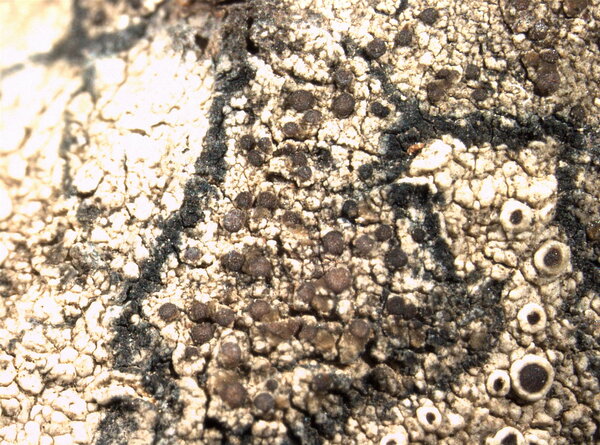
Pier Luigi Nimis - CC BY-SA 4.0
TSB 23287
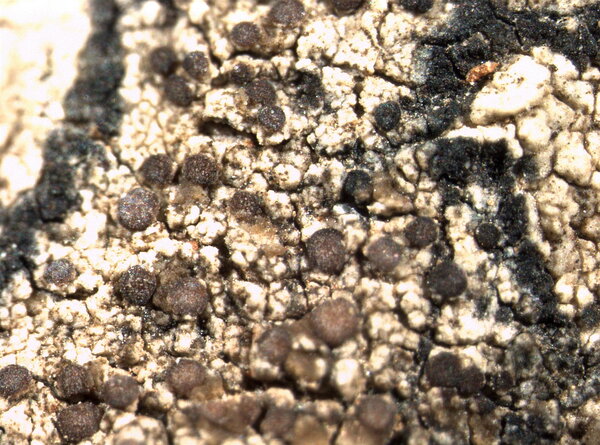
Pier Luigi Nimis - CC BY-SA 4.0
TSB 23287
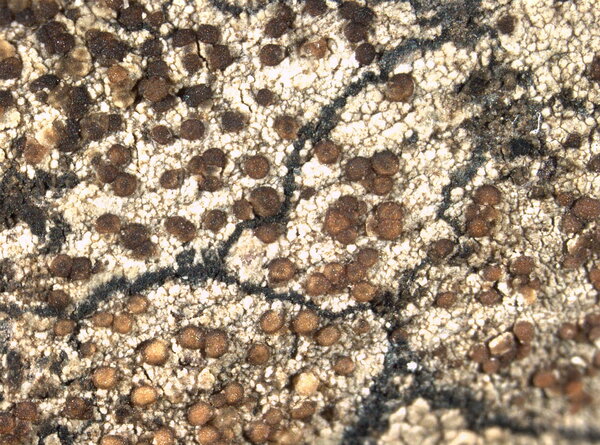
Pier Luigi Nimis - CC BY-SA 4.0
TSB 23287
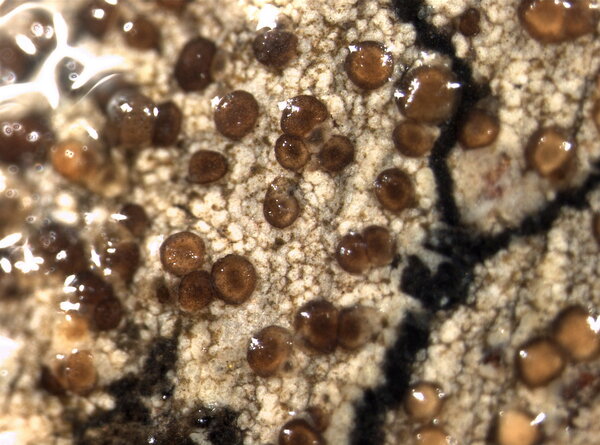
Pier Luigi Nimis - CC BY-SA 4.0
TSB 23287
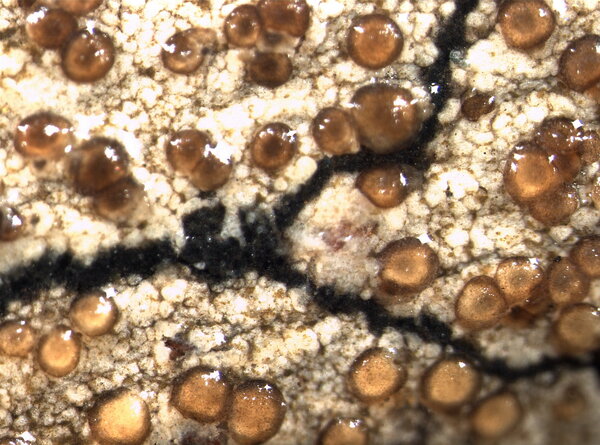
Pier Luigi Nimis - CC BY-SA 4.0
TSB 23287
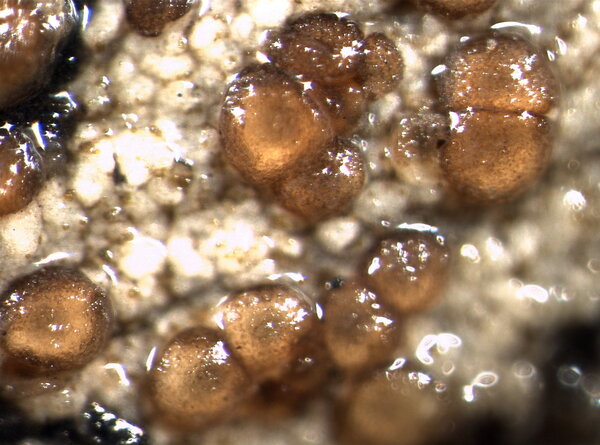
Pier Luigi Nimis - CC BY-SA 4.0
TSB 23287
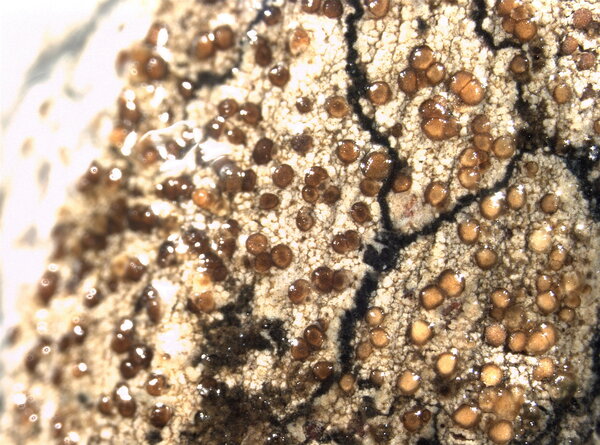
Pier Luigi Nimis - CC BY-SA 4.0
TSB 23287
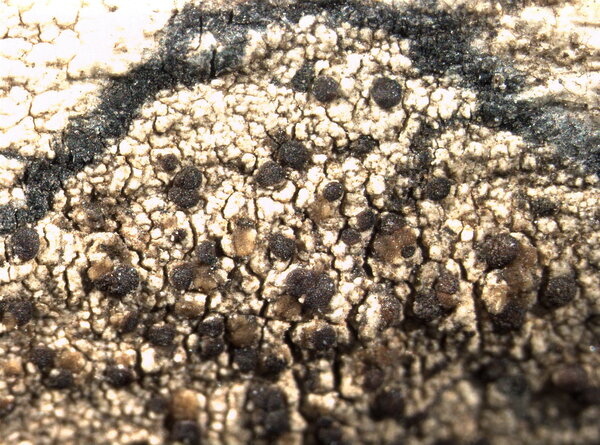
Pier Luigi Nimis - CC BY-SA 4.0
TSB 23287
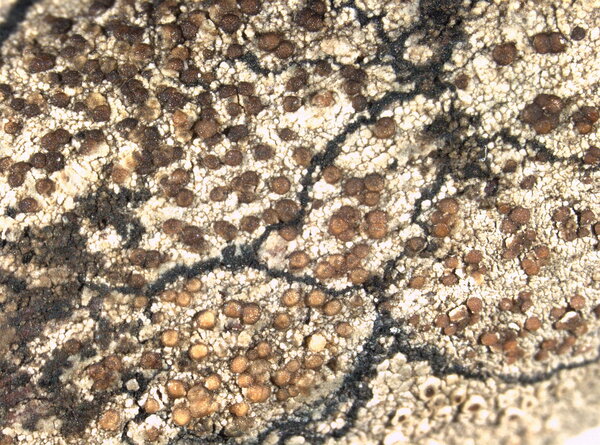
Pier Luigi Nimis - CC BY-SA 4.0
TSB 23287
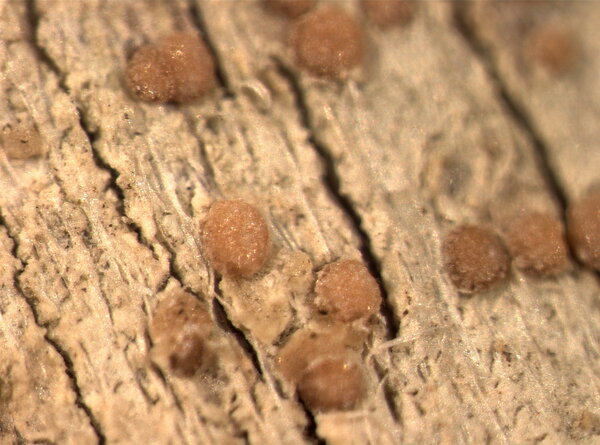
Pier Luigi Nimis - CC BY-SA 4.0
TSB 39008
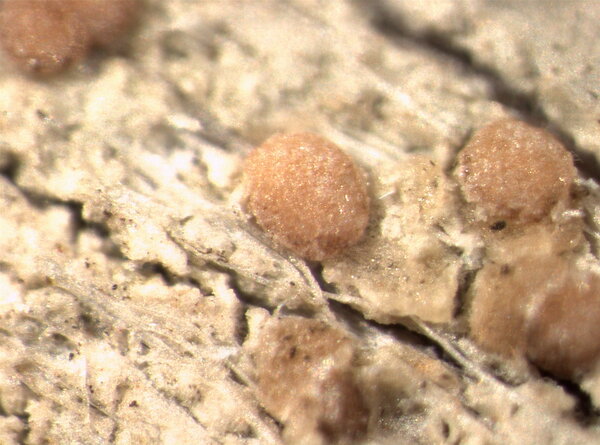
Pier Luigi Nimis - CC BY-SA 4.0
TSB 39008
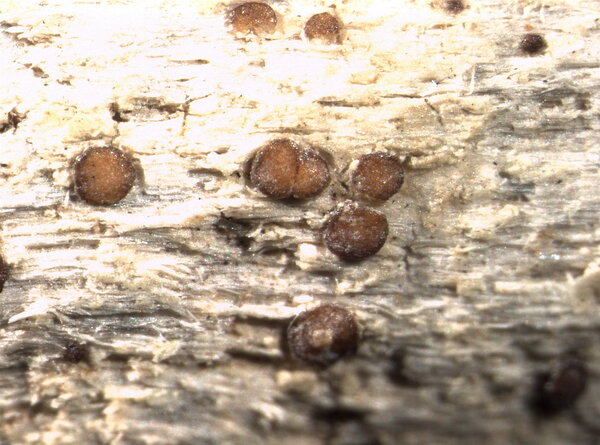
Pier Luigi Nimis - CC BY-SA 4.0
TSB 39008
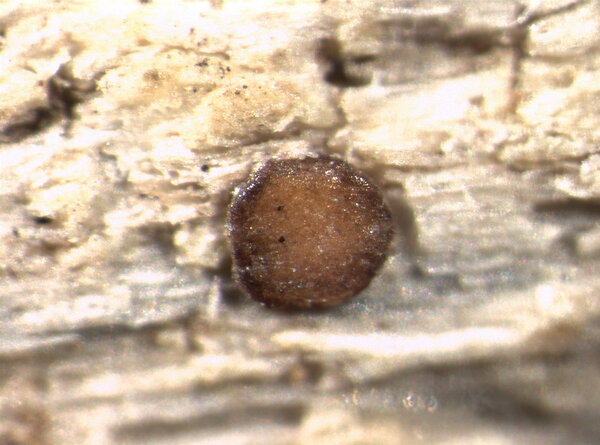
Pier Luigi Nimis - CC BY-SA 4.0
TSB 39008
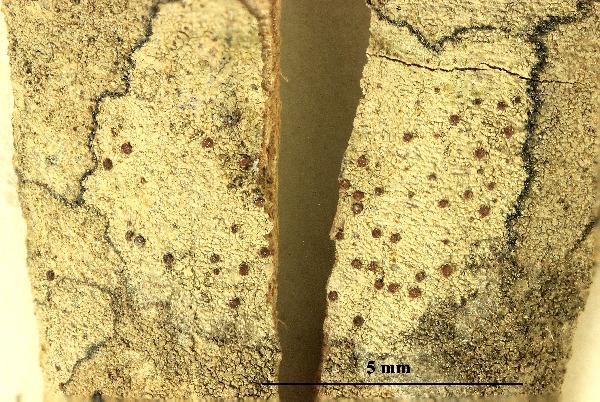
Felix Schumm - CC BY 4.0
[VZ1608],USA. Lousiana. East Baton Rouge Paroecia: Baton Rouge,
Baird Drive, 30°22'45'' sept., 91°07'30'' occid. Ad corticem Carpini
carolinianae. Leg. S. C. Tucker (no. 15932). EX A. VEZDA LICHENES
SELECTI EXSICCATI NR. 1608
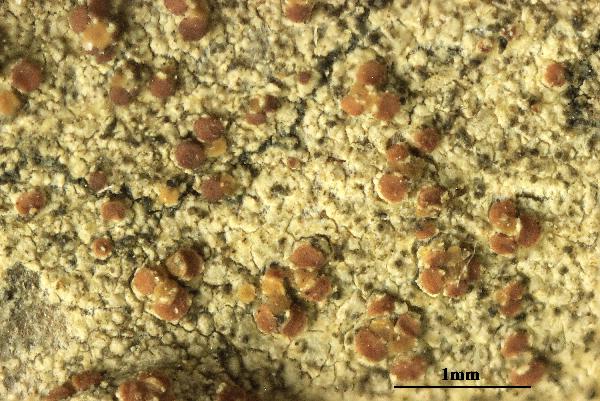
Felix Schumm - CC BY 4.0
[VZ1636], URSS. Transcaucasus, Colchis. Distr. Suchum, in valle
angusta rivi supra pagum Mercheuli, 50 m. Ad corticem Alni barbatae.
Leg. A. Vezda, 14.7.1977. EX A. VEZDA LICHENES SELECTI EXSICCATI
NR. 1636.
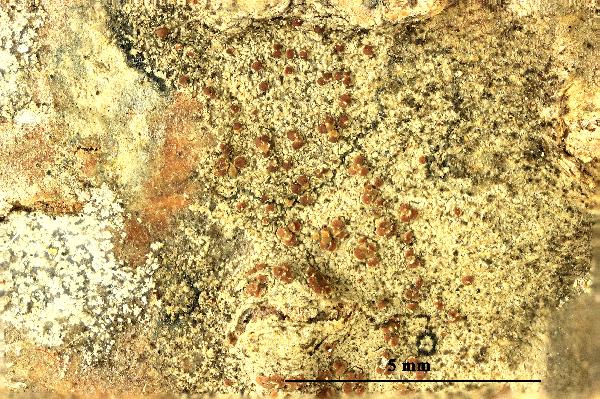
Felix Schumm - CC BY 4.0
[VZ1636], URSS. Transcaucasus, Colchis. Distr. Suchum, in valle
angusta rivi supra pagum Mercheuli, 50 m. Ad corticem Alni barbatae.
Leg. A. Vezda, 14.7.1977. EX A. VEZDA LICHENES SELECTI EXSICCATI
NR. 1636.
Growth form: Crustose
Substrata: bark
Photobiont: green algae other than Trentepohlia
Reproductive strategy: mainly sexual
Most common in areas with a humid-warm climate (e.g. most of Tyrrenian Italy)
Commonnes-rarity: (info)
Alpine belt: absent
Subalpine belt: absent
Montane belt: absent
Dry submediterranean belt: extremely rare
Humid submediterranean belt: very rare
Padanian area: absent
pH of the substrata:
| 1 | 2 | 3 | 4 | 5 |
Solar irradiation:
| 1 | 2 | 3 | 4 | 5 |
Aridity:
| 1 | 2 | 3 | 4 | 5 |
Eutrophication:
| 1 | 2 | 3 | 4 | 5 |
Poleotolerance:
| 0 | 1 | 2 | 3 |
Altitudinal distribution:
| 1 | 2 | 3 | 4 | 5 | 6 |
Rarity
absent
extremely rare
very rare
rare
rather rare
rather common
common
very common
extremely common
Loading data...
Occurrence data
Predictive map
Domenico Puntillo; Owner: Domenico Puntillo
P.L. Nimis CC BY-SA 04
TSB 23287

P.L. Nimis CC BY-SA 4.0
TSB 9400

Pier Luigi Nimis - CC BY-SA 4.0
Herbarium: TSB 9400
P.L. Nimis CC BY-SA 04
TSB 23287
Pier Luigi Nimis - CC BY-SA 4.0
TSB 23287
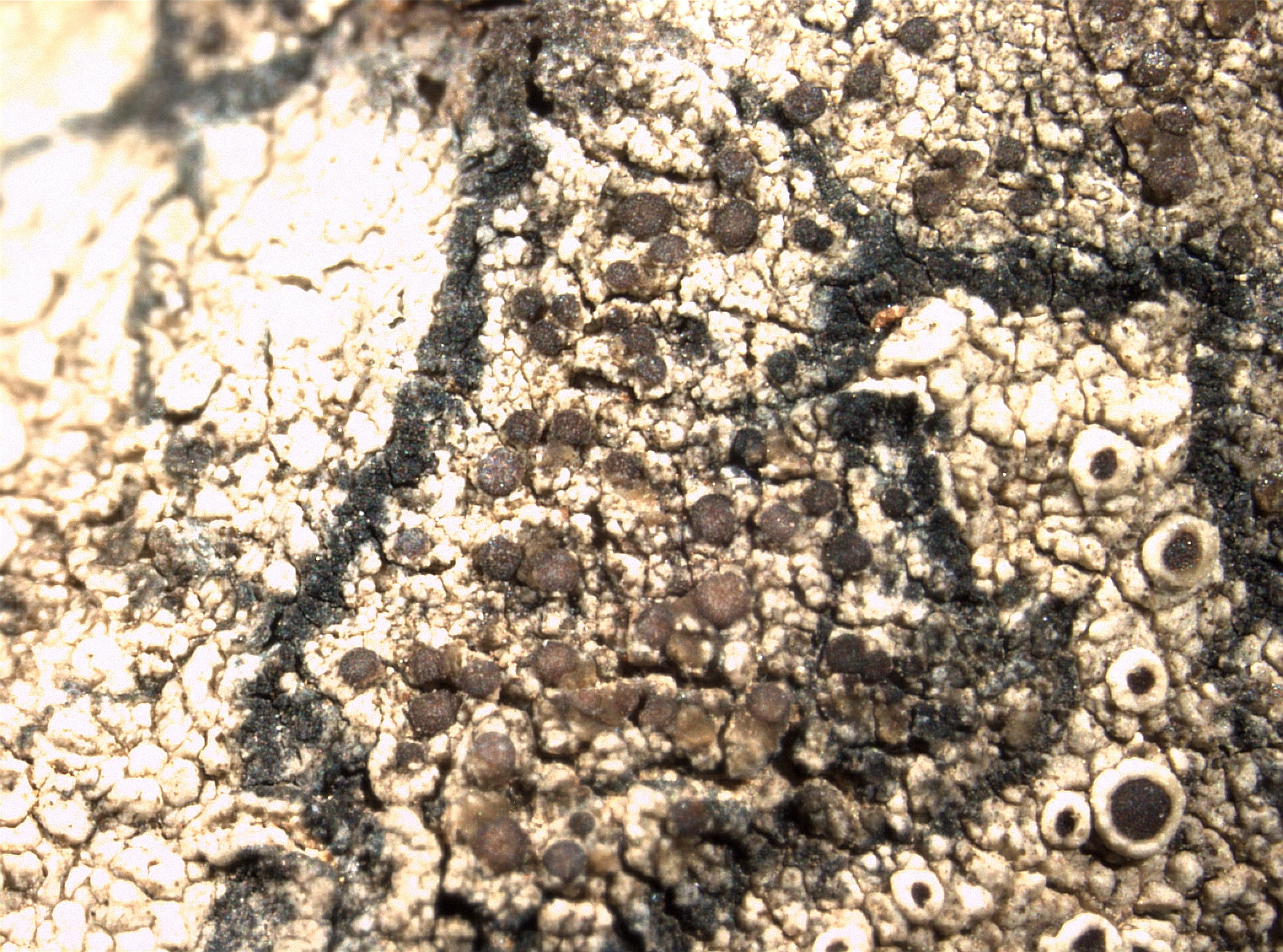
Pier Luigi Nimis - CC BY-SA 4.0
TSB 23287
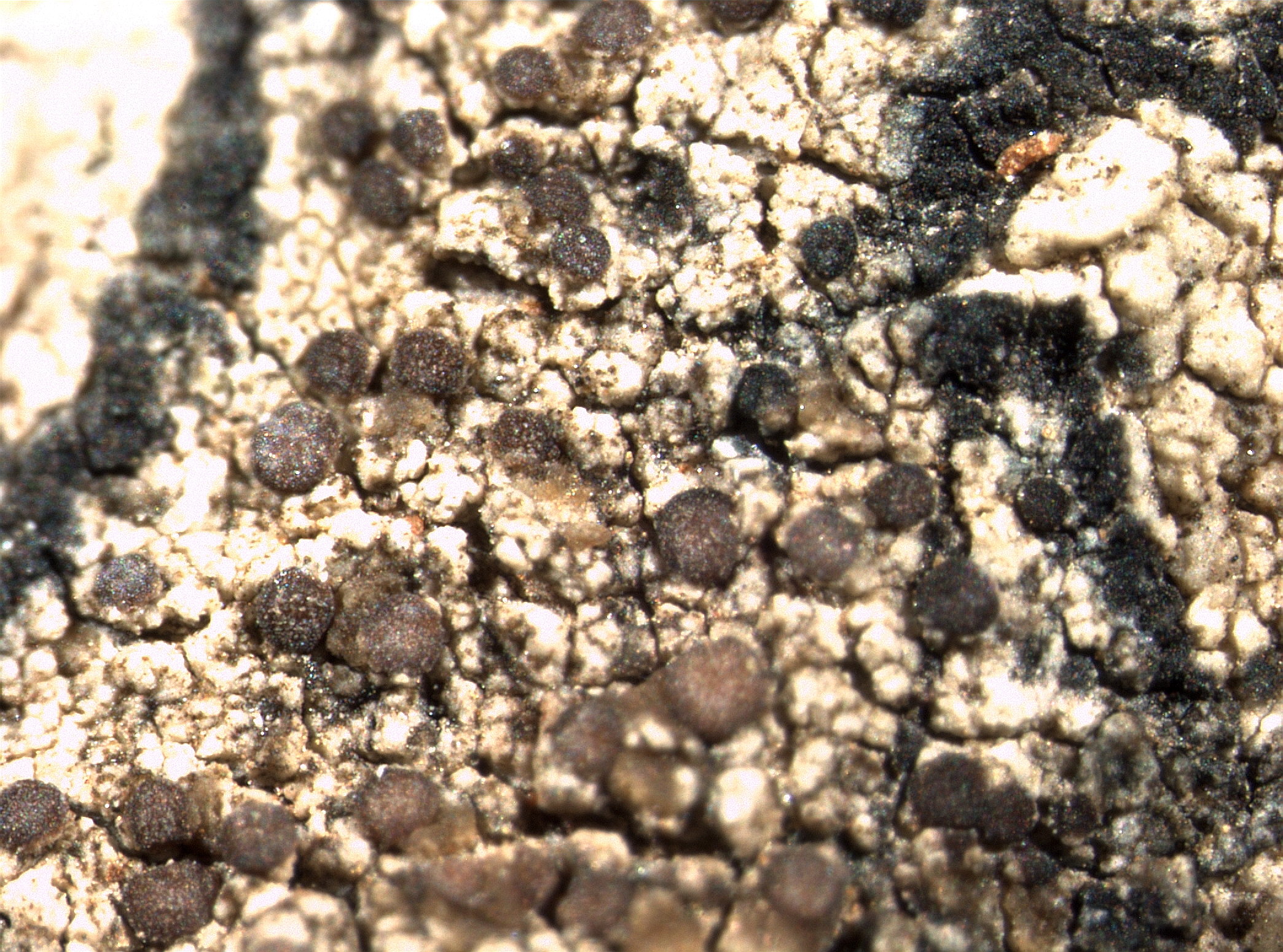
Pier Luigi Nimis - CC BY-SA 4.0
TSB 23287
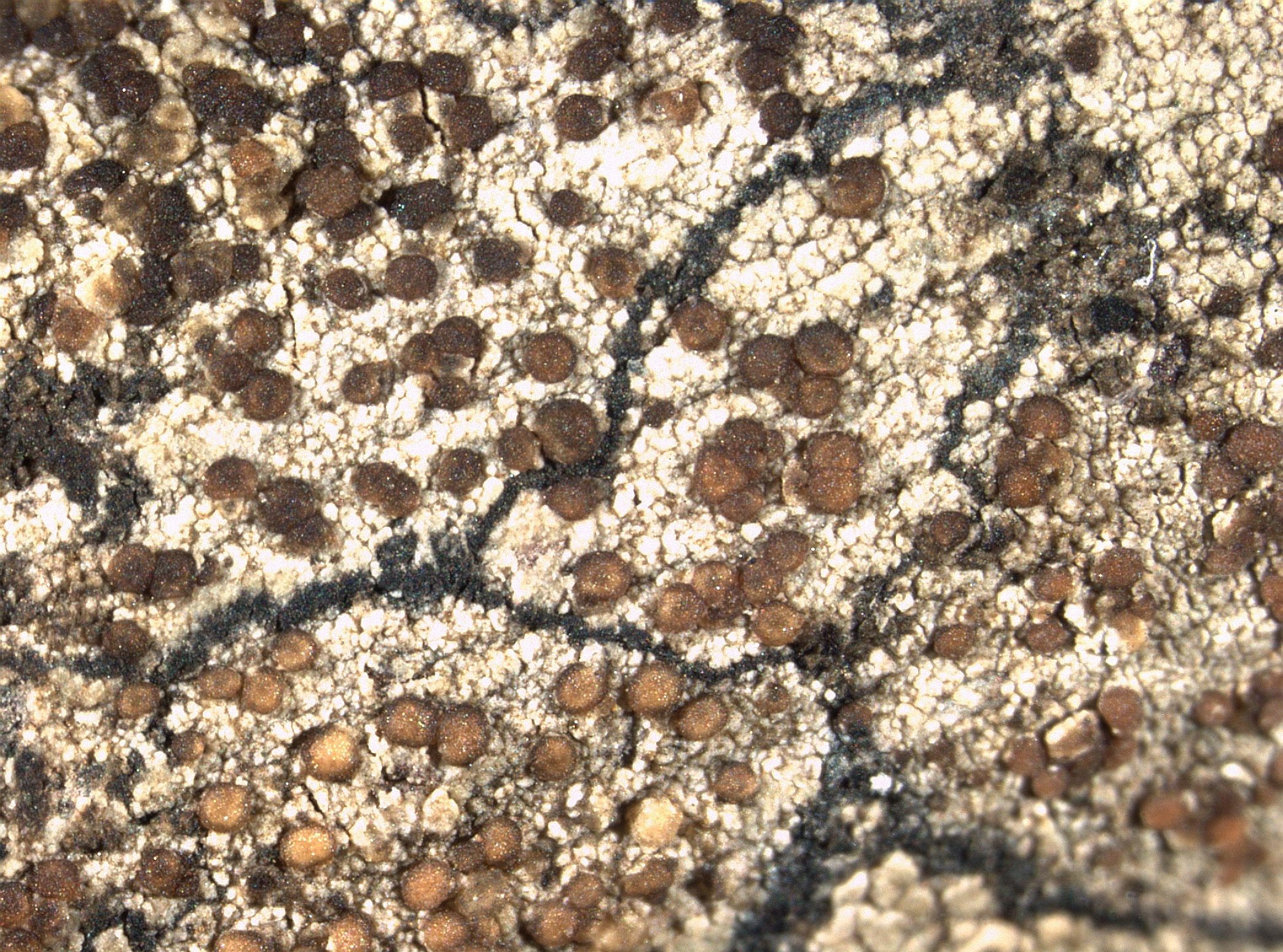
Pier Luigi Nimis - CC BY-SA 4.0
TSB 23287
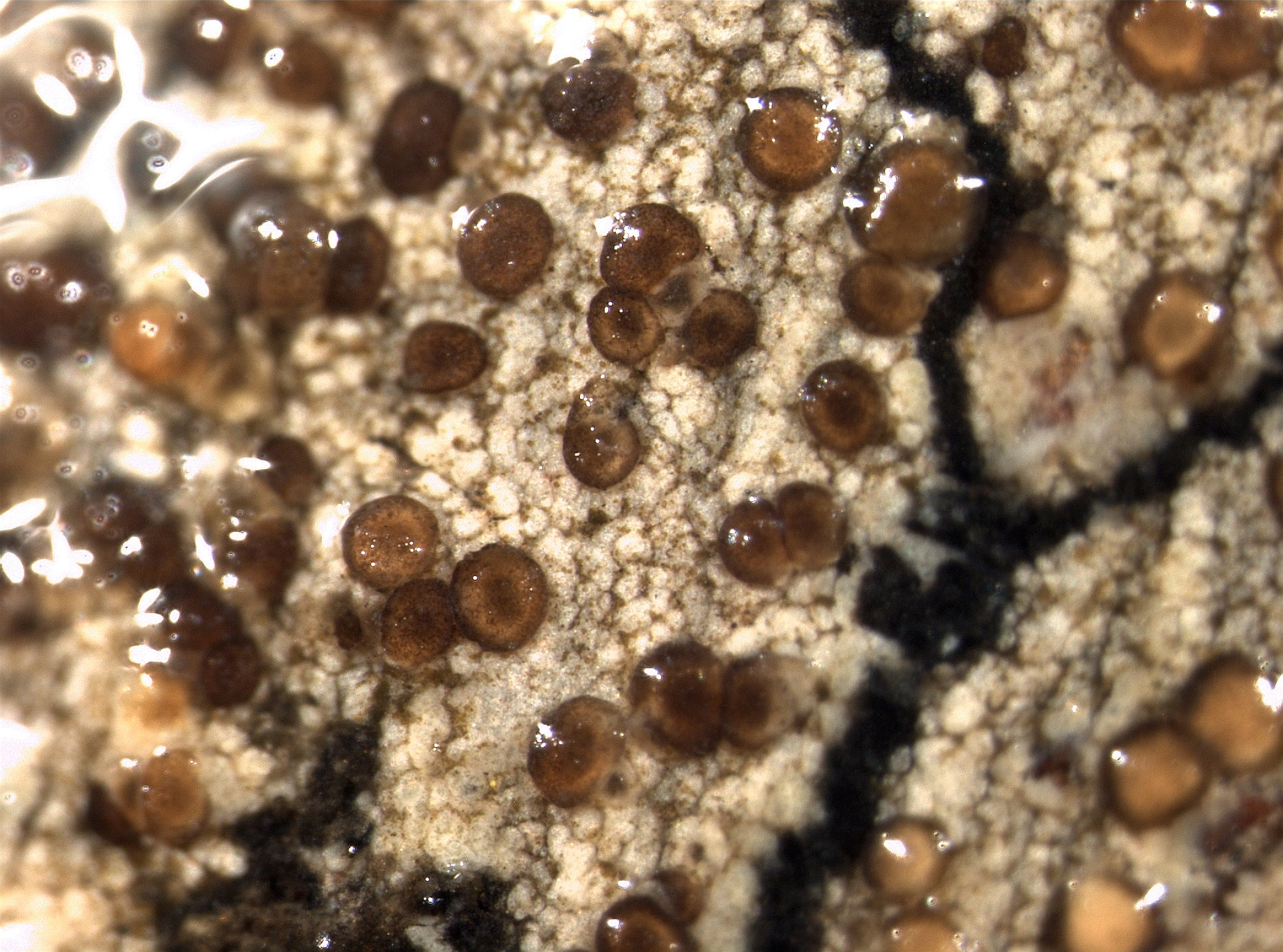
Pier Luigi Nimis - CC BY-SA 4.0
TSB 23287
Pier Luigi Nimis - CC BY-SA 4.0
TSB 23287
Pier Luigi Nimis - CC BY-SA 4.0
TSB 23287
Pier Luigi Nimis - CC BY-SA 4.0
TSB 23287
Pier Luigi Nimis - CC BY-SA 4.0
TSB 23287
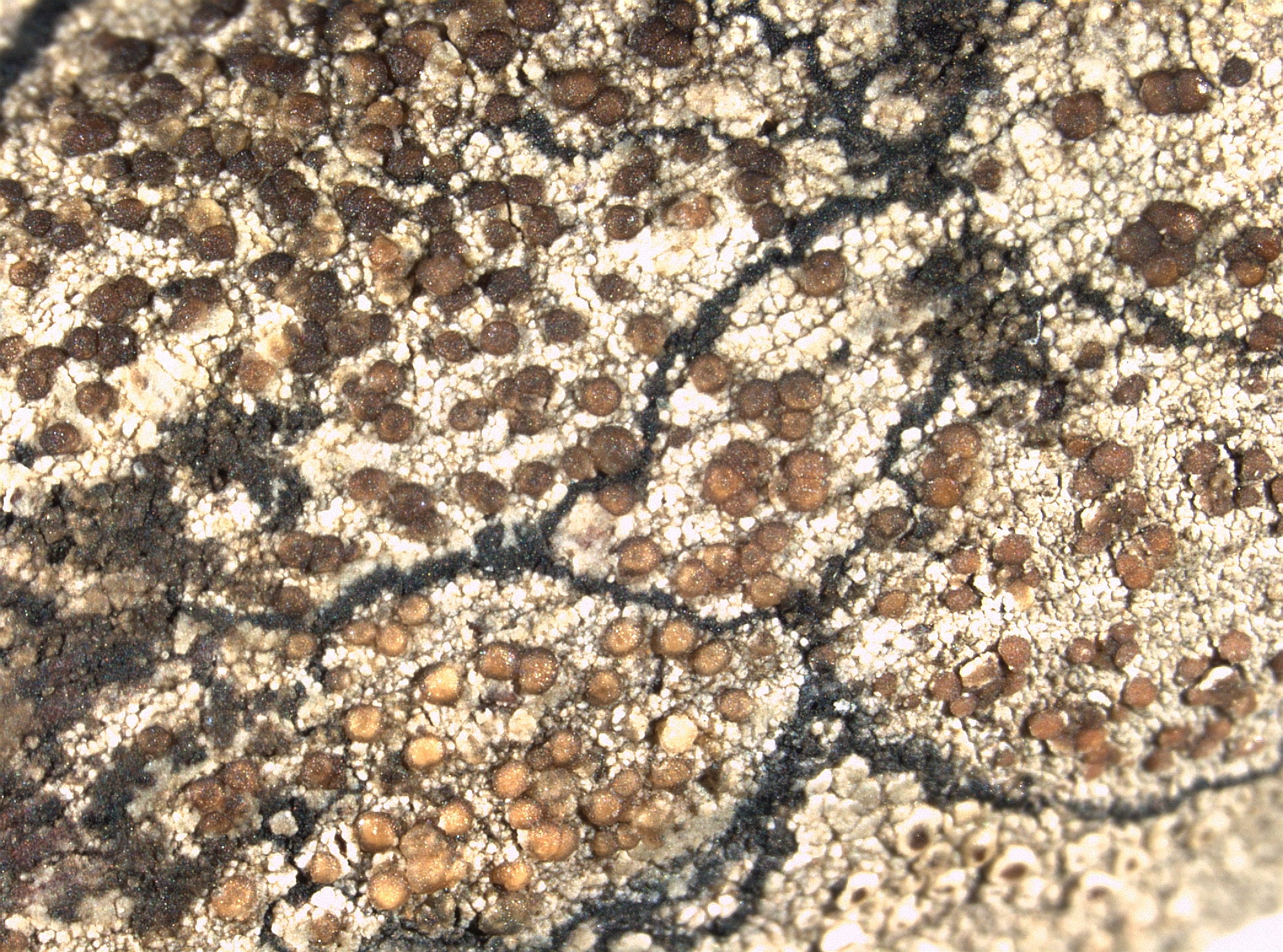
Pier Luigi Nimis - CC BY-SA 4.0
TSB 23287
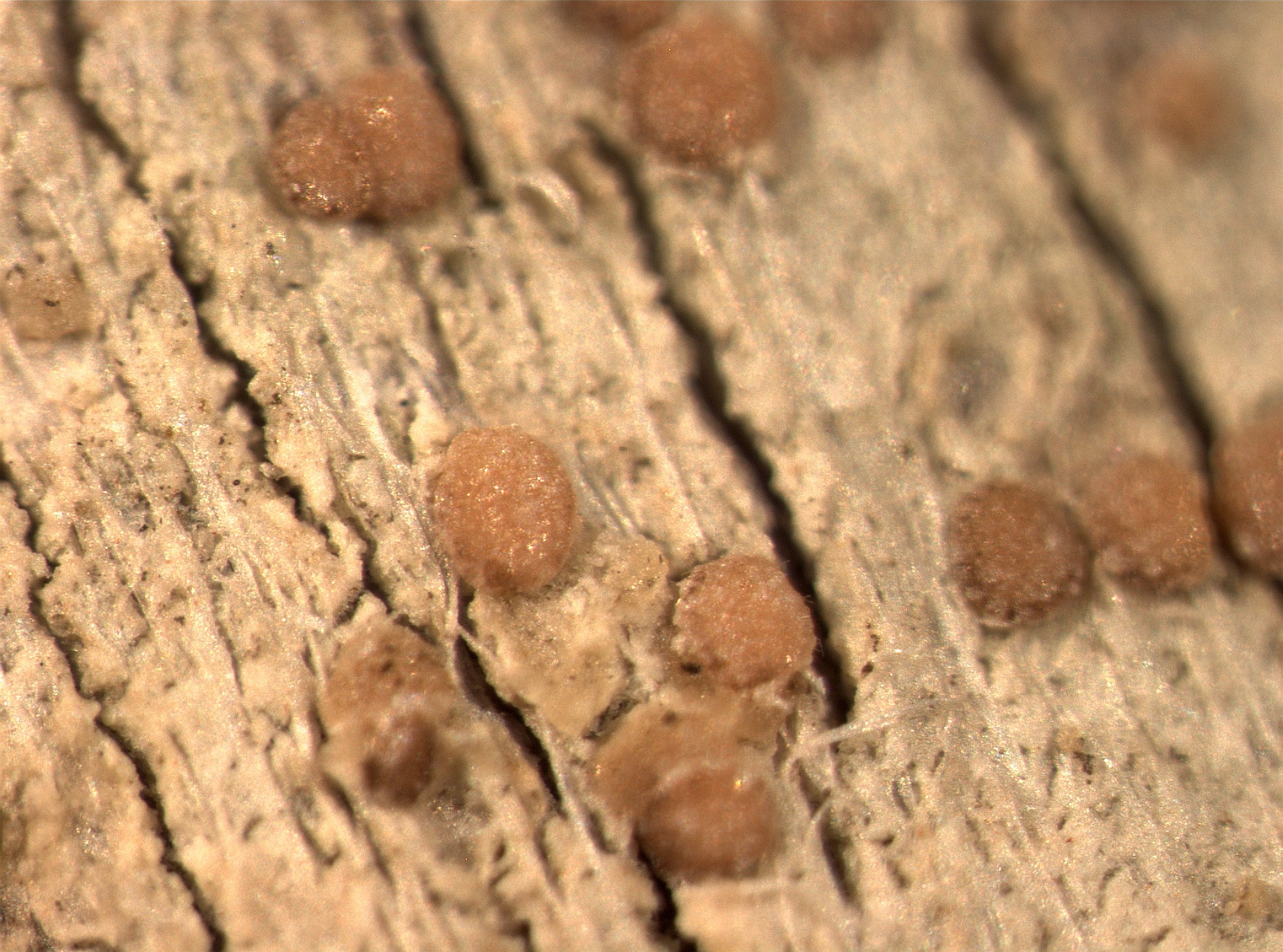
Pier Luigi Nimis - CC BY-SA 4.0
TSB 39008
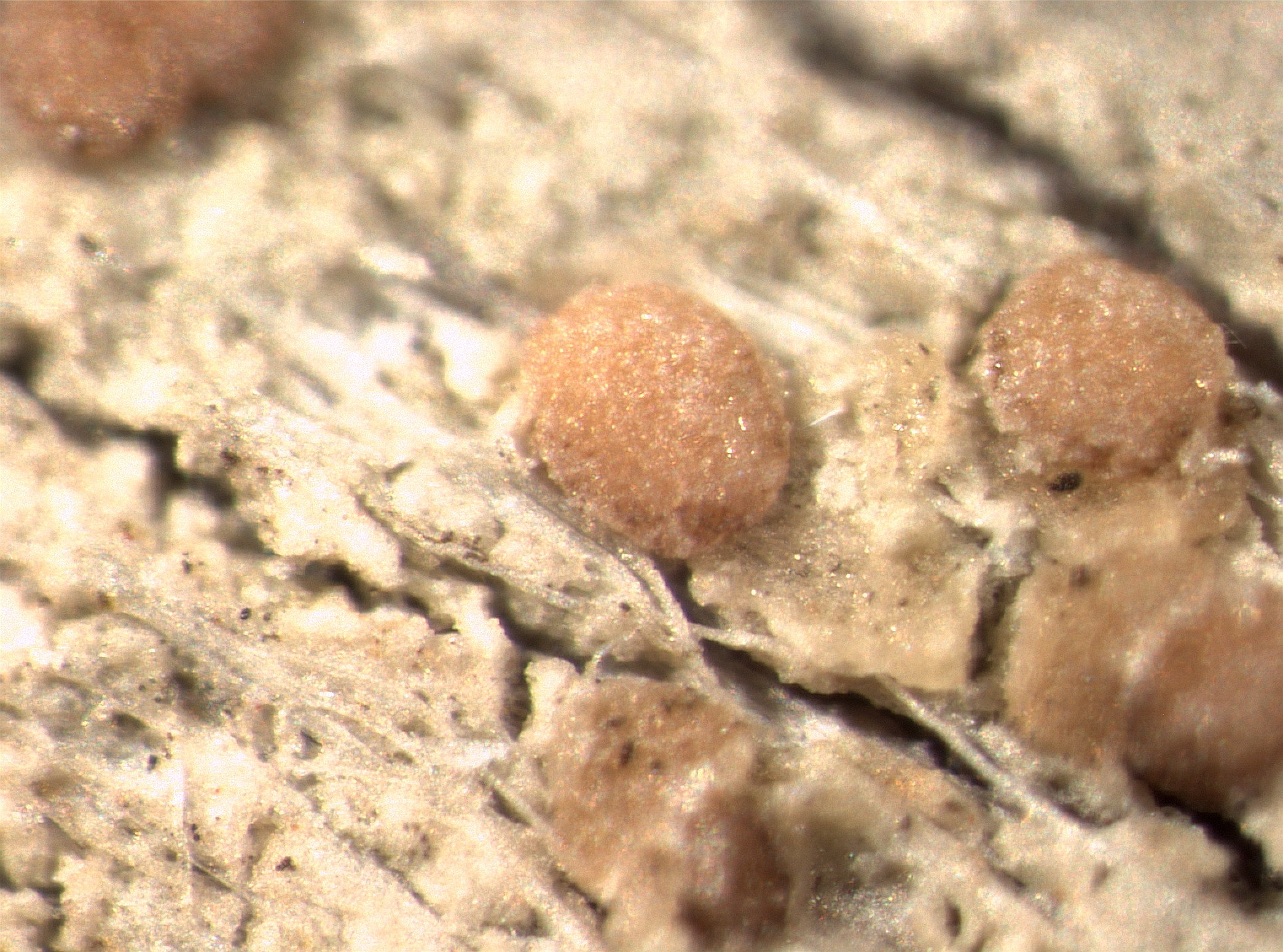
Pier Luigi Nimis - CC BY-SA 4.0
TSB 39008
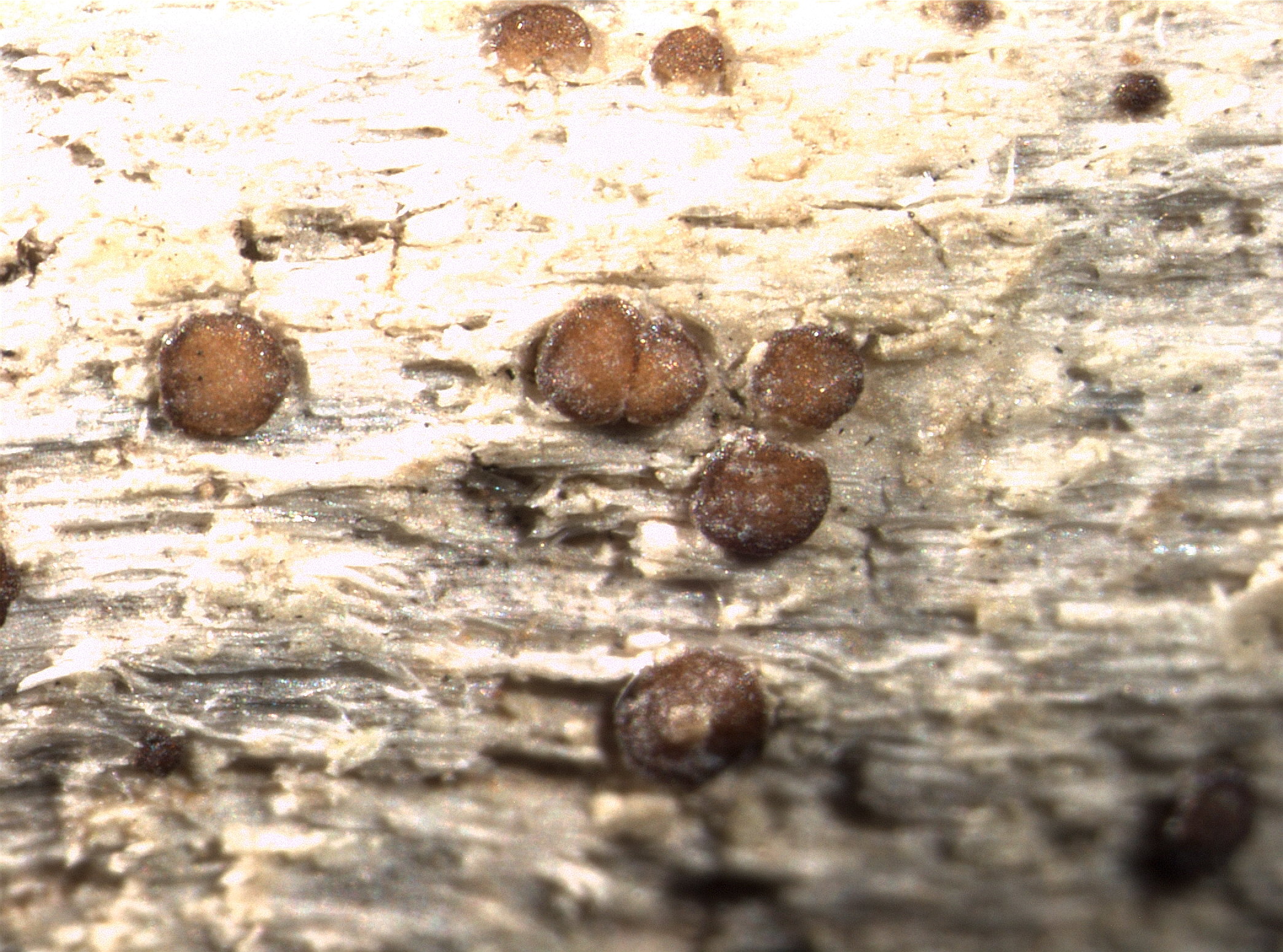
Pier Luigi Nimis - CC BY-SA 4.0
TSB 39008
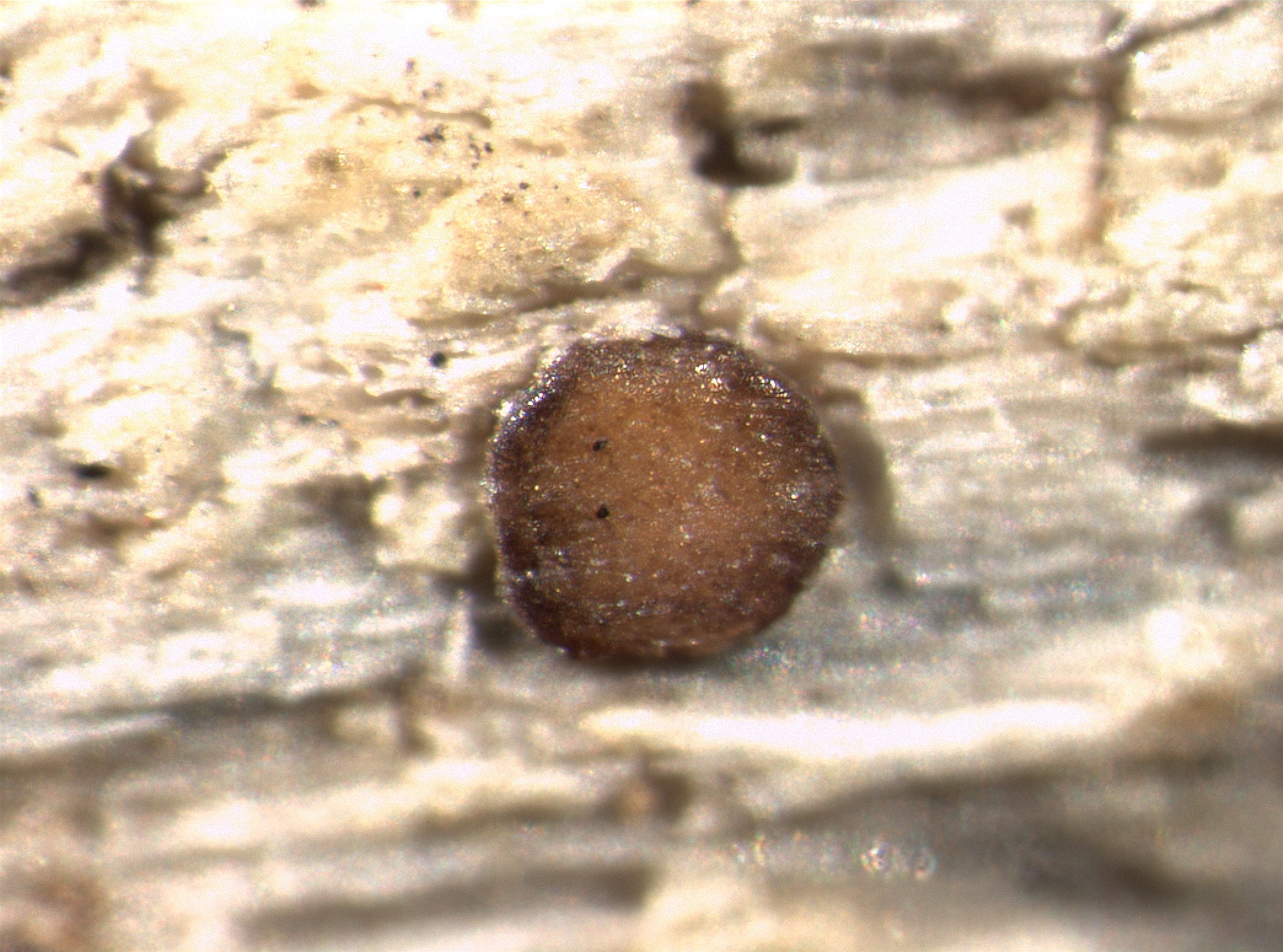
Pier Luigi Nimis - CC BY-SA 4.0
TSB 39008

Felix Schumm - CC BY 4.0
[VZ1608],USA. Lousiana. East Baton Rouge Paroecia: Baton Rouge, Baird Drive, 30°22'45'' sept., 91°07'30'' occid. Ad corticem Carpini carolinianae. Leg. S. C. Tucker (no. 15932). EX A. VEZDA LICHENES SELECTI EXSICCATI NR. 1608

Felix Schumm - CC BY 4.0
[VZ1636], URSS. Transcaucasus, Colchis. Distr. Suchum, in valle angusta rivi supra pagum Mercheuli, 50 m. Ad corticem Alni barbatae. Leg. A. Vezda, 14.7.1977. EX A. VEZDA LICHENES SELECTI EXSICCATI NR. 1636.