
Bryobilimbia fissuriseda (Poelt) Timdal, Marthinsen & Rui
in Marthinsen & al., Biodiversity Data Journal, 7: 133, 2019. Basionym: Lecidea fissuriseda Poelt - Mitt. bot. Staatss. München, 4: 181, 1961.
Synonyms: Lecidea fissuriseda Poelt; Mycobilimbia fissuriseda (Poelt) Poelt & Hafellner
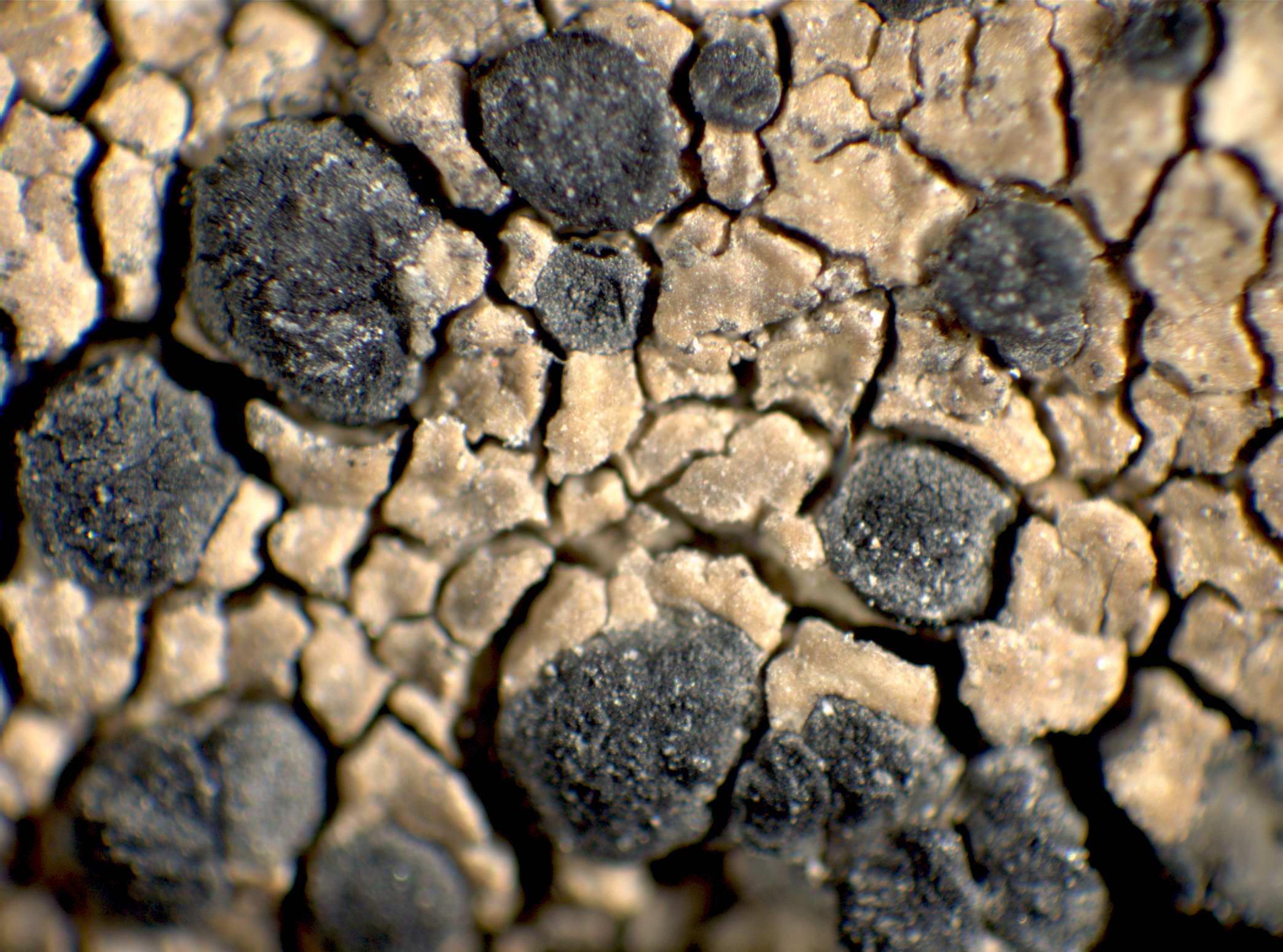
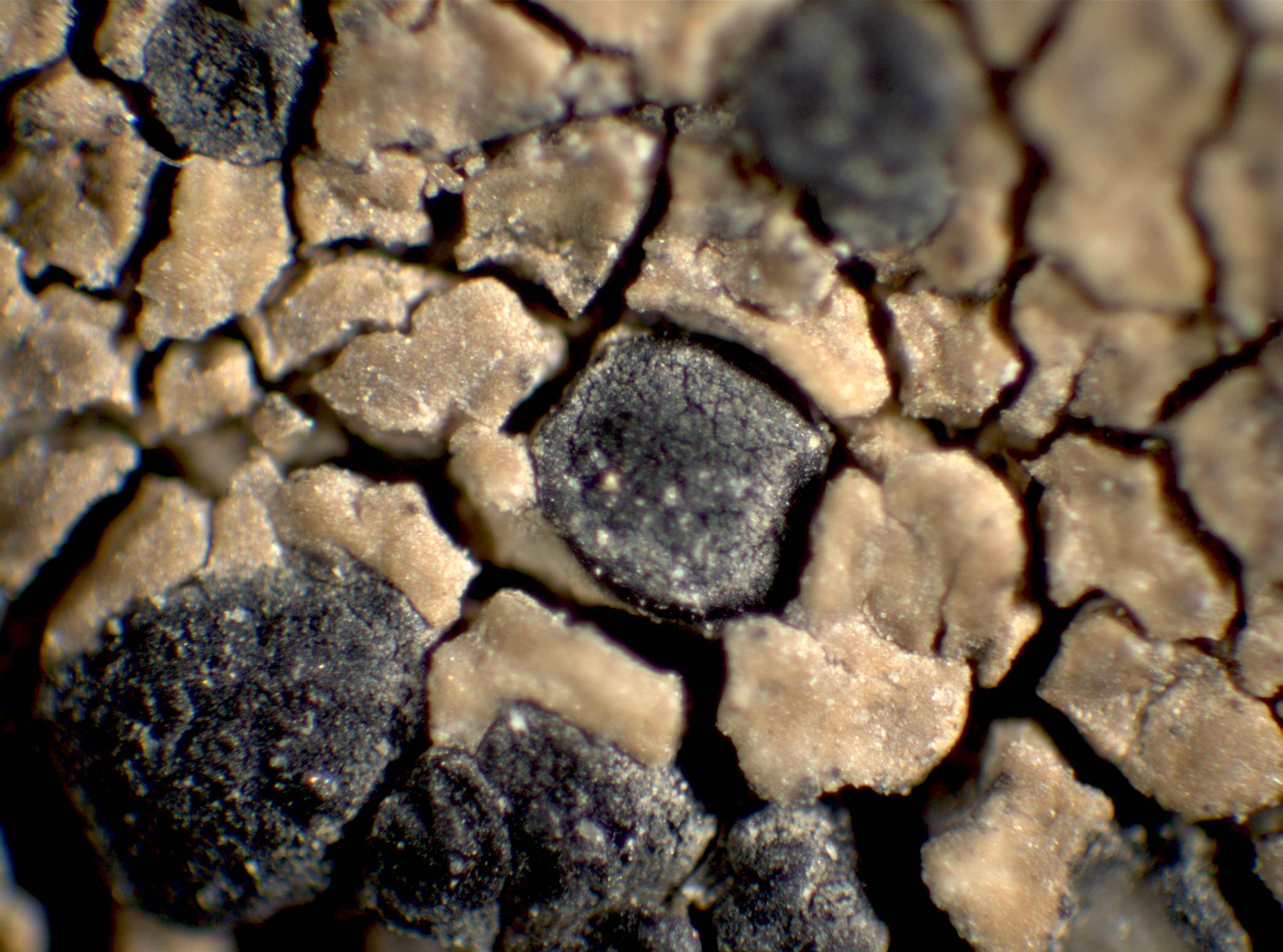
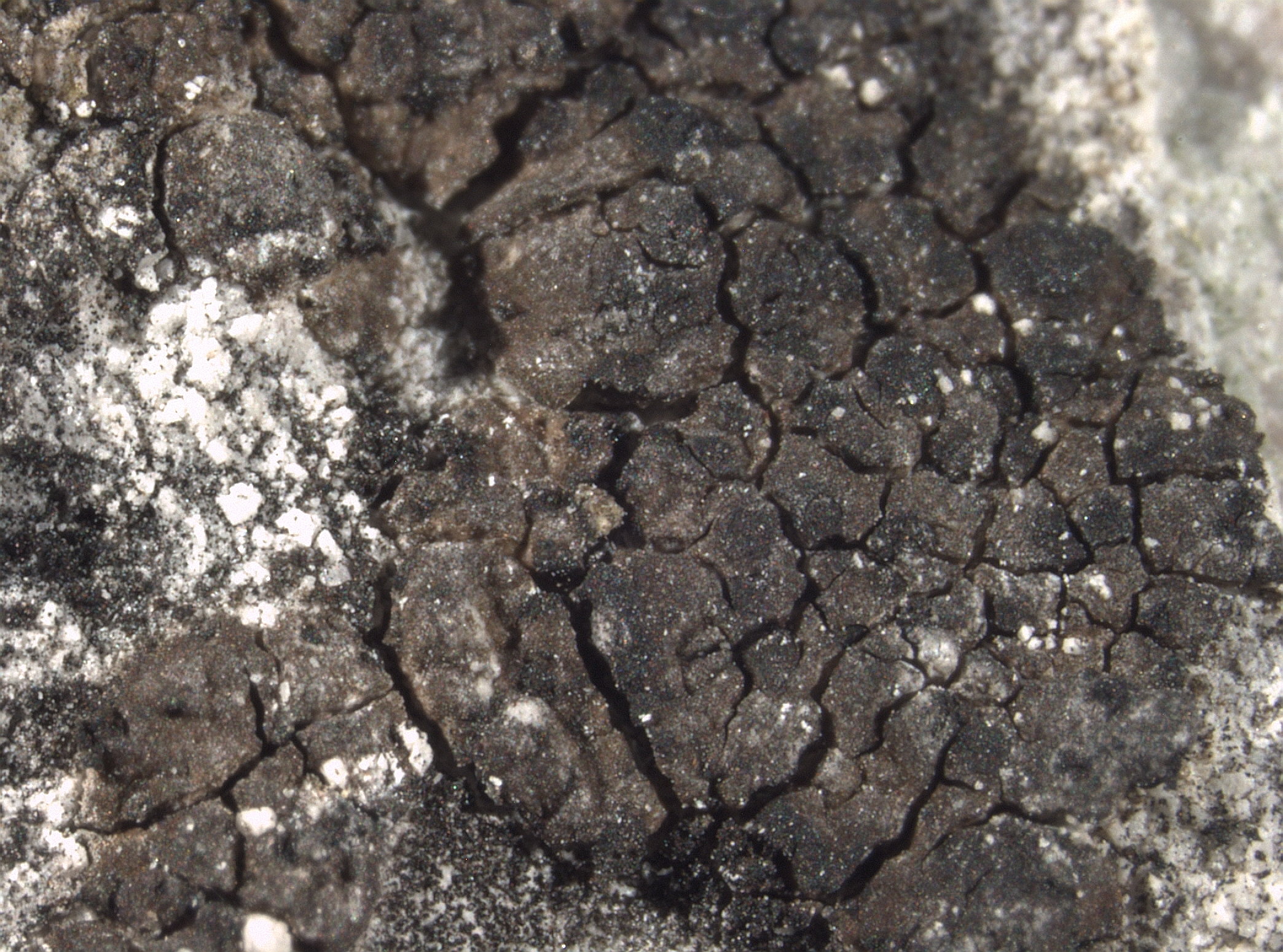
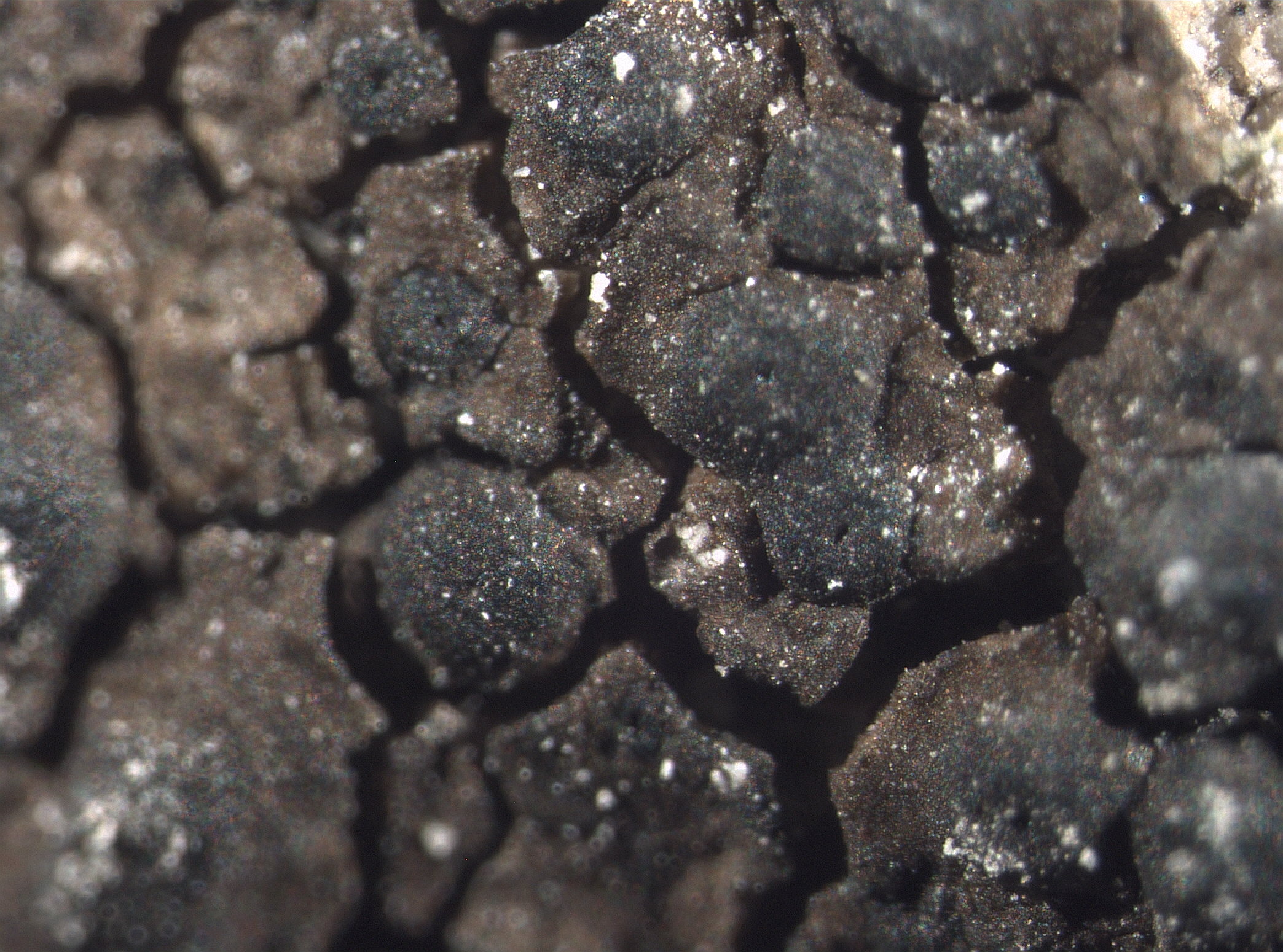
Description: Thallus minutely squamulose, episubstratic, growing in very fine cracks of calciferous rocks. Squamules adpressed, scattered, 1-5 mm wide, finally deeply lobed, c. 500 μm thick, smooth, epruinose, pale to medium brown, paler at the usually raised margins, the lower surface dirty white to pale brown, attached by bundles of rhizines. Cortex overlain by a epinecral layer; medulla white, I-. Apothecia almost always present, lecideine, reddish brown to almost black, often crowded, sessile, 0.5-1.5 mm across, at first with a flat disc and a prominent margin, finally convex and often immarginate, epruinose. Proper exciple and hypothecium thick, medium to dark brown, of conglutinated hyphae; epithecium brown; hymenium colourless, c. 60-80 μm high; paraphyses coherent, 2-2.5 μm thick, slightly swollen and brown at apex; hypothecium and lower part of hymenium with blue-black granules reacting K+ green. Asci 8-spored, clavate, with a I+ blue tholus and an internal, darker I+ tubular structure, the external gel I+ faintly blue, Porpidia-type. Ascospores 1-celled to sometimes finally 1-septate, hyaline, ellipsoid to narrowly ellipsoid, (9-)10-15.5(-18) x 4-5 μm. Photobiont chlorococcoid. Spot tests; cortex and medulla K-, C-, KC-, P-, UV-. Chemistry: thallus apparently without lichen substances.
Growth form: Crustose
Substrata: rocks
Photobiont: green algae other than Trentepohlia
Reproductive strategy: mainly sexual
Commonnes-rarity: (info)
Alpine belt: rare
Subalpine belt: very rare
Montane belt: absent
Dry submediterranean belt: absent
Humid submediterranean belt: absent
Padanian area: absent
pH of the substrata:
1 2 3 4 5

Solar irradiation:
1 2 3 4 5
Aridity:
1 2 3 4 5
Eutrophication:
1 2 3 4 5
Poleotolerance:
0 1 2 3
Altitudinal distribution:
1 2 3 4 5 6
Rarity
absent
extremely rare
very rare
rare
rather rare
rather common
common
very common
extremely common
Loading data...
Occurrence data
Predictive map

P.L. Nimis CC BY-SA 4.0
TSB 33088

P.L. Nimis; Owner: Department of Life Sciences, University of Trieste
Herbarium: TSB (33088)
2001/12/10

P.L. Nimis; Owner: Department of Life Sciences, University of Trieste
Herbarium: TSB (33088)
2001/12/10

P.L. Nimis CC BY-SA 4.0
TSB 37859

P.L. Nimis CC BY-SA 4.0
TSB 37859
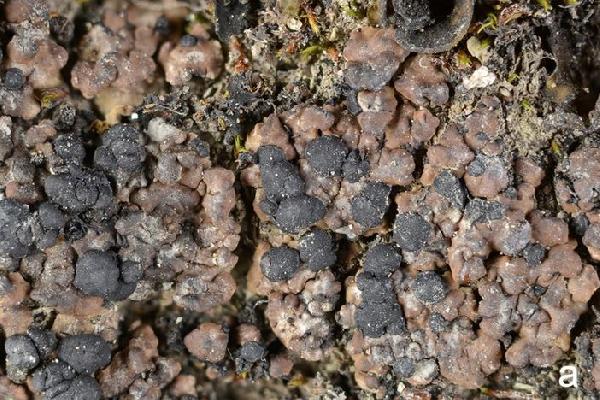
Source: Evankow, A.M., Yin, A., Zulfiqar, R. et al. Psora mediterranea (Lecanorales, Psoraceae), a new lichen species from Europe, including a new concept for P. himalayana and a revised key to the European species. Mycol Progress 24, 26 (2025). https://doi.org/10.1007/s11557-025-02045-8 - CC BY 4.0
Norway
Norway, O-L-11605, Photo: E. Timdal
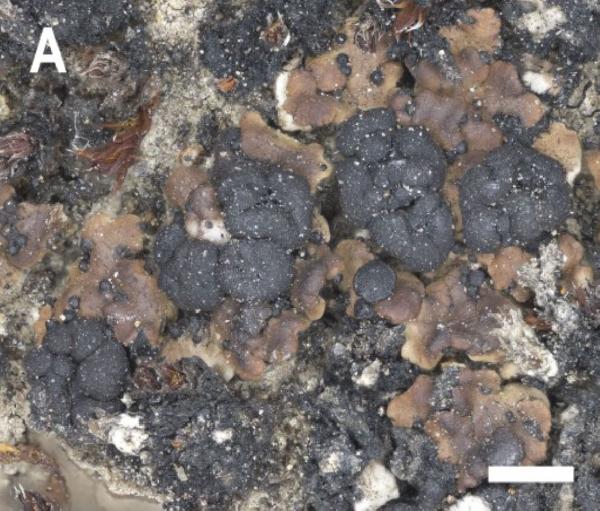
Source: Zhurbenko, M. P. & Timdal, E. 2025. Bryobilimbia fissuriseda new to Asia. Graphis Scripta 37 (2): 7–9. Oslo. ISSN 2002-4495. - CC BY-4.0
LE F-355142b Scale: 1 mm
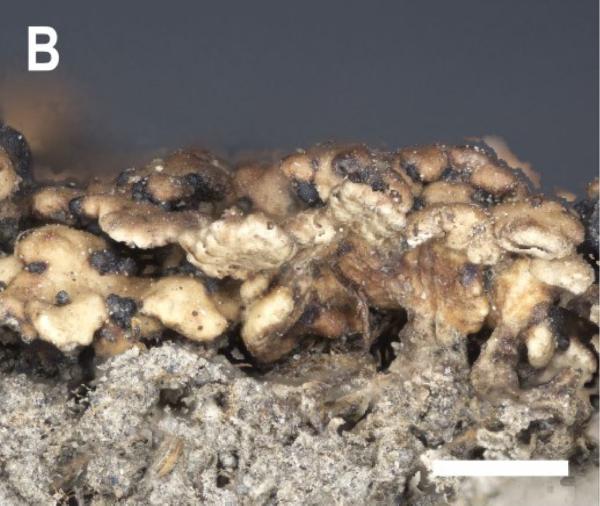
Source: Zhurbenko, M. P. & Timdal, E. 2025. Bryobilimbia fissuriseda new to Asia. Graphis Scripta 37 (2): 7–9. Oslo. ISSN 2002-4495. - CC BY-4.0
LE F-355142b Scale: 1 mm
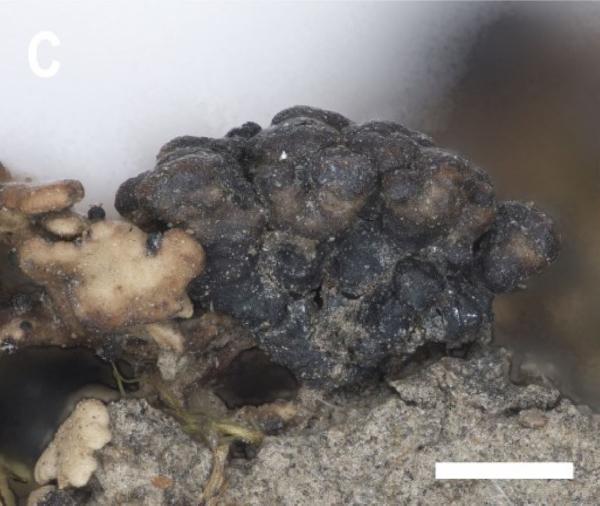
Source: Zhurbenko, M. P. & Timdal, E. 2025. Bryobilimbia fissuriseda new to Asia. Graphis Scripta 37 (2): 7–9. Oslo. ISSN 2002-4495. - CC BY-4.0
LE F-355142b Scale: 1 mm
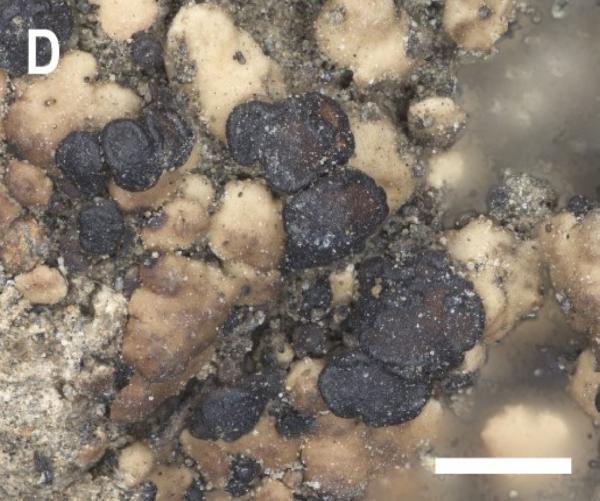
Source: Zhurbenko, M. P. & Timdal, E. 2025. Bryobilimbia fissuriseda new to Asia. Graphis Scripta 37 (2): 7–9. Oslo. ISSN 2002-4495. - CC BY-4.0
LE F-355142b Scale: 1 mm
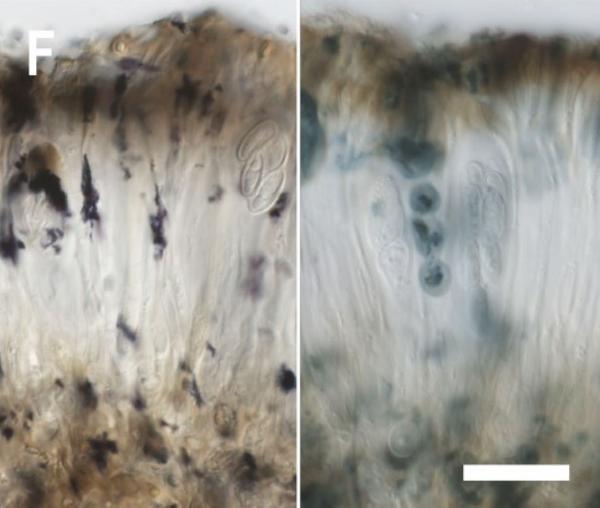
Source: Zhurbenko, M. P. & Timdal, E. 2025. Bryobilimbia fissuriseda new to Asia. Graphis Scripta 37 (2): 7–9. Oslo. ISSN 2002-4495. - CC BY-4.0
LE F-355142b epihymenuim and hymenium in cross
section, in water (left) and K (right). Note the colour change of the blotchy/coralloid inclusions/granules from
dark purple to dull blue or dark blue in K Scale: 20 μm.
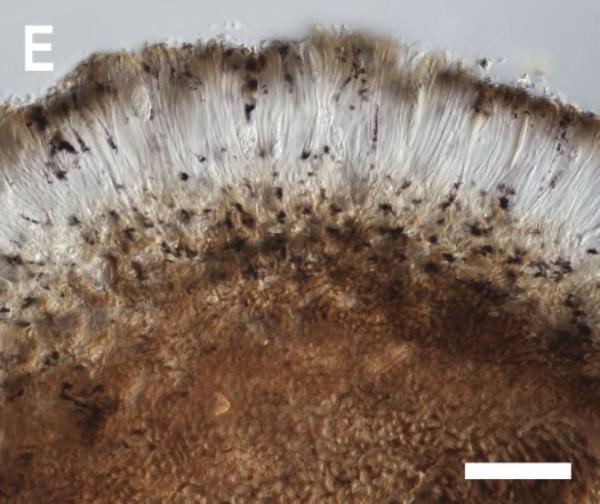
Source: Zhurbenko, M. P. & Timdal, E. 2025. Bryobilimbia fissuriseda new to Asia. Graphis Scripta 37 (2): 7–9. Oslo. ISSN 2002-4495. - CC BY-4.0
LE F-355142b epihymenium, hymenium, and hypothecium in cross section, in water Scale: 50 μm.
Growth form: Crustose
Substrata: rocks
Photobiont: green algae other than Trentepohlia
Reproductive strategy: mainly sexual
Commonnes-rarity: (info)
Alpine belt: rare
Subalpine belt: very rare
Montane belt: absent
Dry submediterranean belt: absent
Humid submediterranean belt: absent
Padanian area: absent
pH of the substrata:
| 1 | 2 | 3 | 4 | 5 |
Solar irradiation:
| 1 | 2 | 3 | 4 | 5 |
Aridity:
| 1 | 2 | 3 | 4 | 5 |
Eutrophication:
| 1 | 2 | 3 | 4 | 5 |
Poleotolerance:
| 0 | 1 | 2 | 3 |
Altitudinal distribution:
| 1 | 2 | 3 | 4 | 5 | 6 |
Rarity
absent
extremely rare
very rare
rare
rather rare
rather common
common
very common
extremely common
Loading data...
Occurrence data
Predictive map
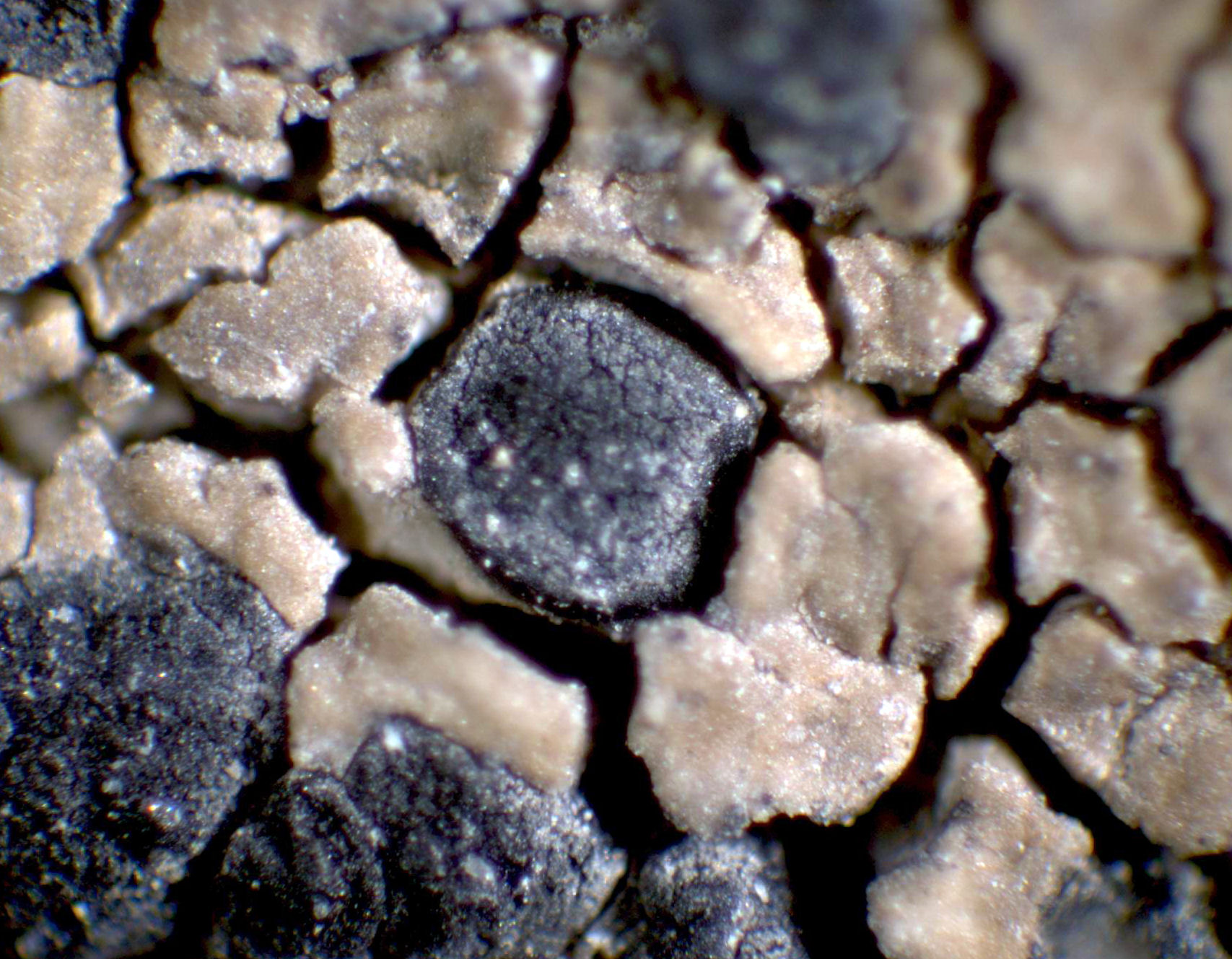
P.L. Nimis CC BY-SA 4.0
TSB 33088
P.L. Nimis; Owner: Department of Life Sciences, University of Trieste
Herbarium: TSB (33088)
2001/12/10
P.L. Nimis; Owner: Department of Life Sciences, University of Trieste
Herbarium: TSB (33088)
2001/12/10
P.L. Nimis CC BY-SA 4.0
TSB 37859
P.L. Nimis CC BY-SA 4.0
TSB 37859

Source: Evankow, A.M., Yin, A., Zulfiqar, R. et al. Psora mediterranea (Lecanorales, Psoraceae), a new lichen species from Europe, including a new concept for P. himalayana and a revised key to the European species. Mycol Progress 24, 26 (2025). https://doi.org/10.1007/s11557-025-02045-8 - CC BY 4.0
Norway
Norway, O-L-11605, Photo: E. Timdal

Source: Zhurbenko, M. P. & Timdal, E. 2025. Bryobilimbia fissuriseda new to Asia. Graphis Scripta 37 (2): 7–9. Oslo. ISSN 2002-4495. - CC BY-4.0
LE F-355142b Scale: 1 mm

Source: Zhurbenko, M. P. & Timdal, E. 2025. Bryobilimbia fissuriseda new to Asia. Graphis Scripta 37 (2): 7–9. Oslo. ISSN 2002-4495. - CC BY-4.0
LE F-355142b Scale: 1 mm

Source: Zhurbenko, M. P. & Timdal, E. 2025. Bryobilimbia fissuriseda new to Asia. Graphis Scripta 37 (2): 7–9. Oslo. ISSN 2002-4495. - CC BY-4.0
LE F-355142b Scale: 1 mm
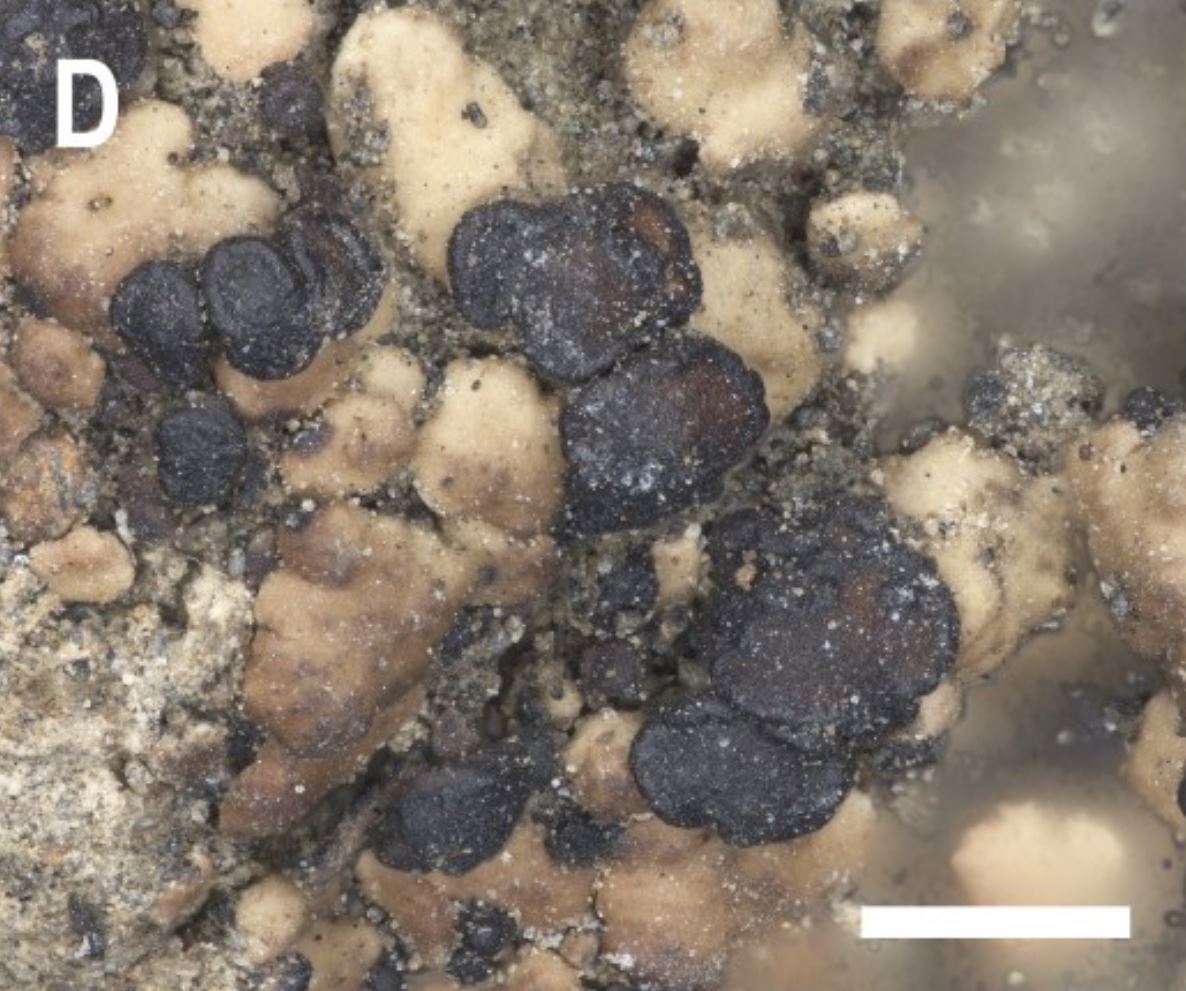
Source: Zhurbenko, M. P. & Timdal, E. 2025. Bryobilimbia fissuriseda new to Asia. Graphis Scripta 37 (2): 7–9. Oslo. ISSN 2002-4495. - CC BY-4.0
LE F-355142b Scale: 1 mm

Source: Zhurbenko, M. P. & Timdal, E. 2025. Bryobilimbia fissuriseda new to Asia. Graphis Scripta 37 (2): 7–9. Oslo. ISSN 2002-4495. - CC BY-4.0
LE F-355142b epihymenuim and hymenium in cross section, in water (left) and K (right). Note the colour change of the blotchy/coralloid inclusions/granules from dark purple to dull blue or dark blue in K Scale: 20 μm.








