Synalissina botryosa (A. Massal.) M. Schultz & M. Prieto
in Prieto & al., Studies in Mycology, 109: 630, 2024.. Basionym: Arnoldia botryosa A. Massal. - Miscell. Lichenol.: 20, 1856.
Synonyms: Lempholemma botryosum (A. Massal.) Zahlbr.; Omphalaria botryosa (A. Massal.) Nyl.; Physma botryosum (A. Massal.) Zahlbr.; Plectopsora botryosa (A. Massal.) A. Massal.
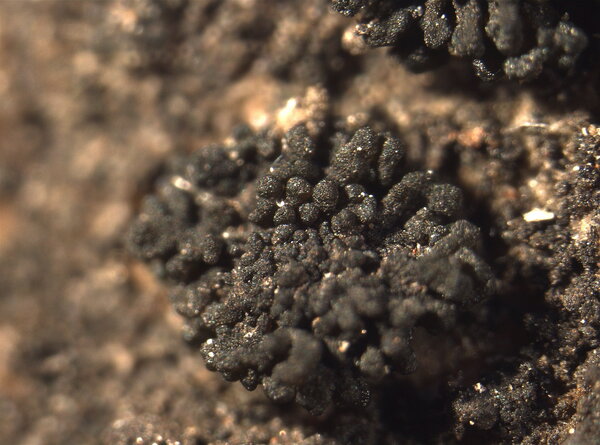
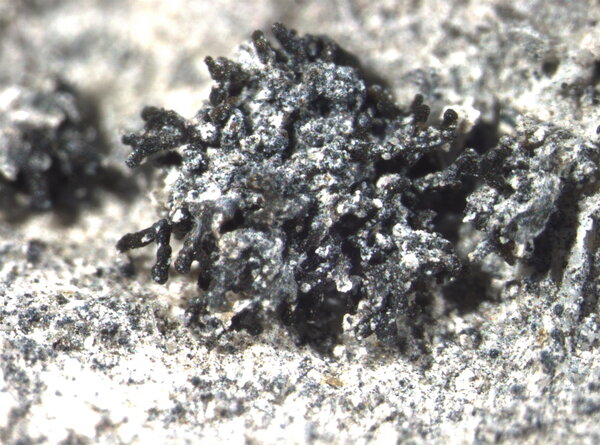
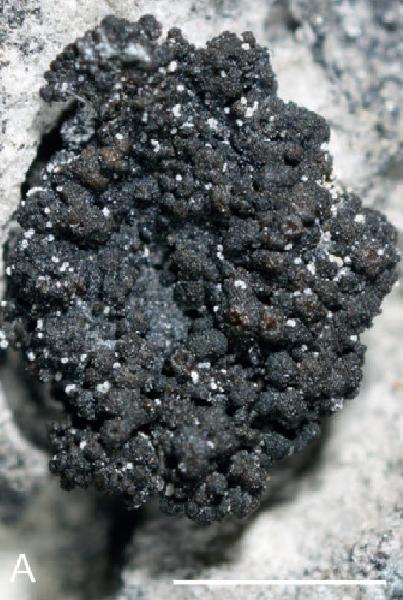
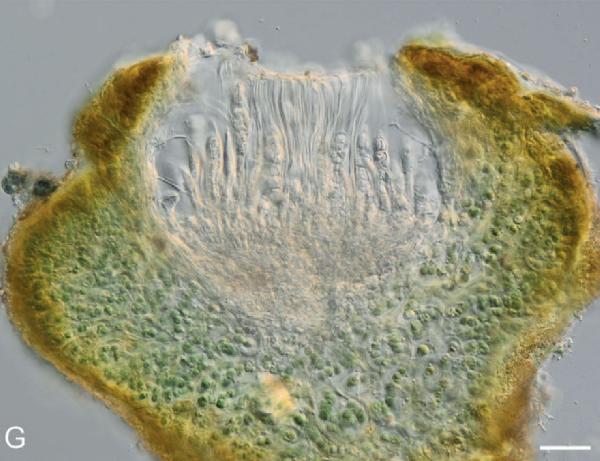
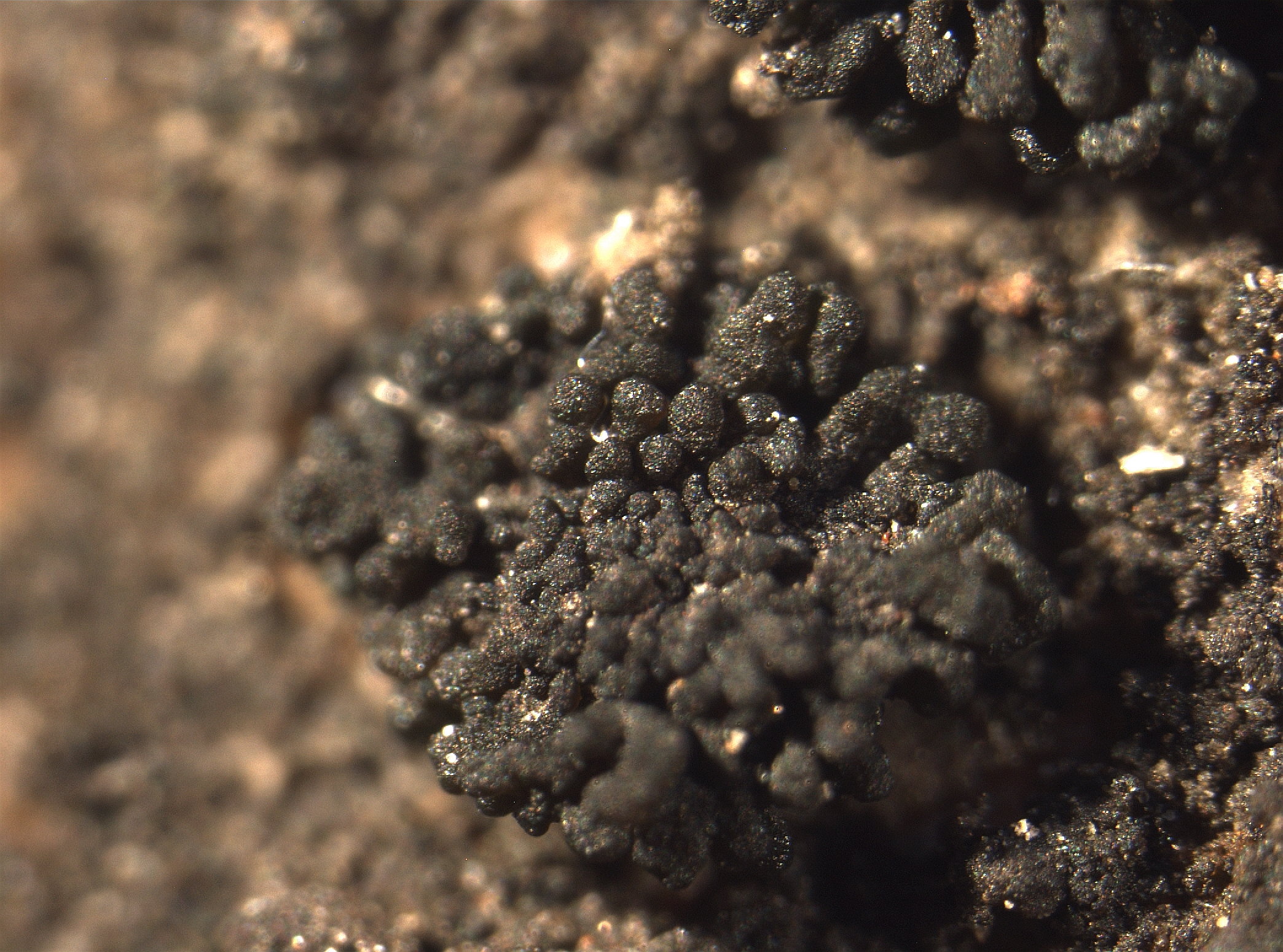
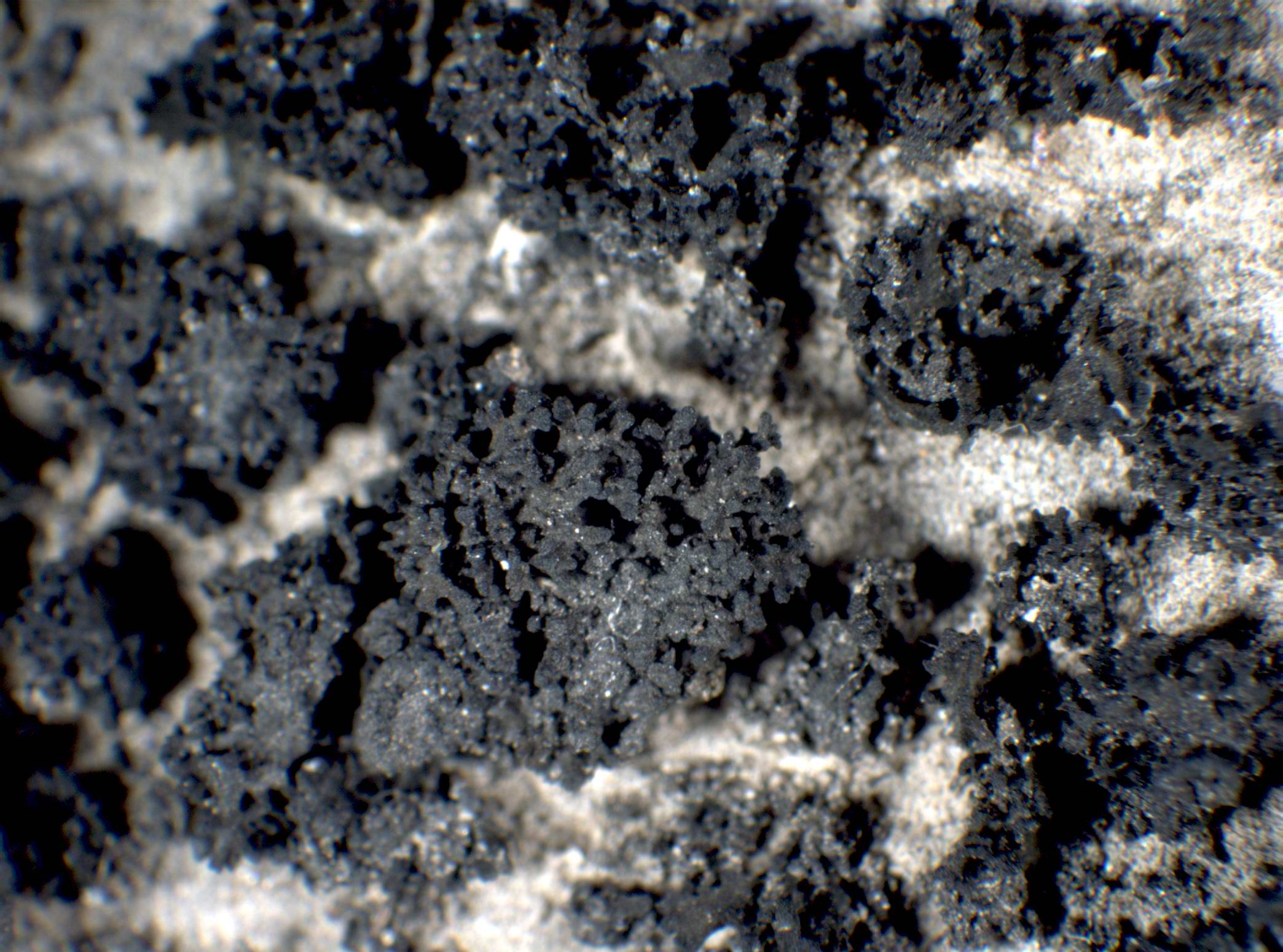
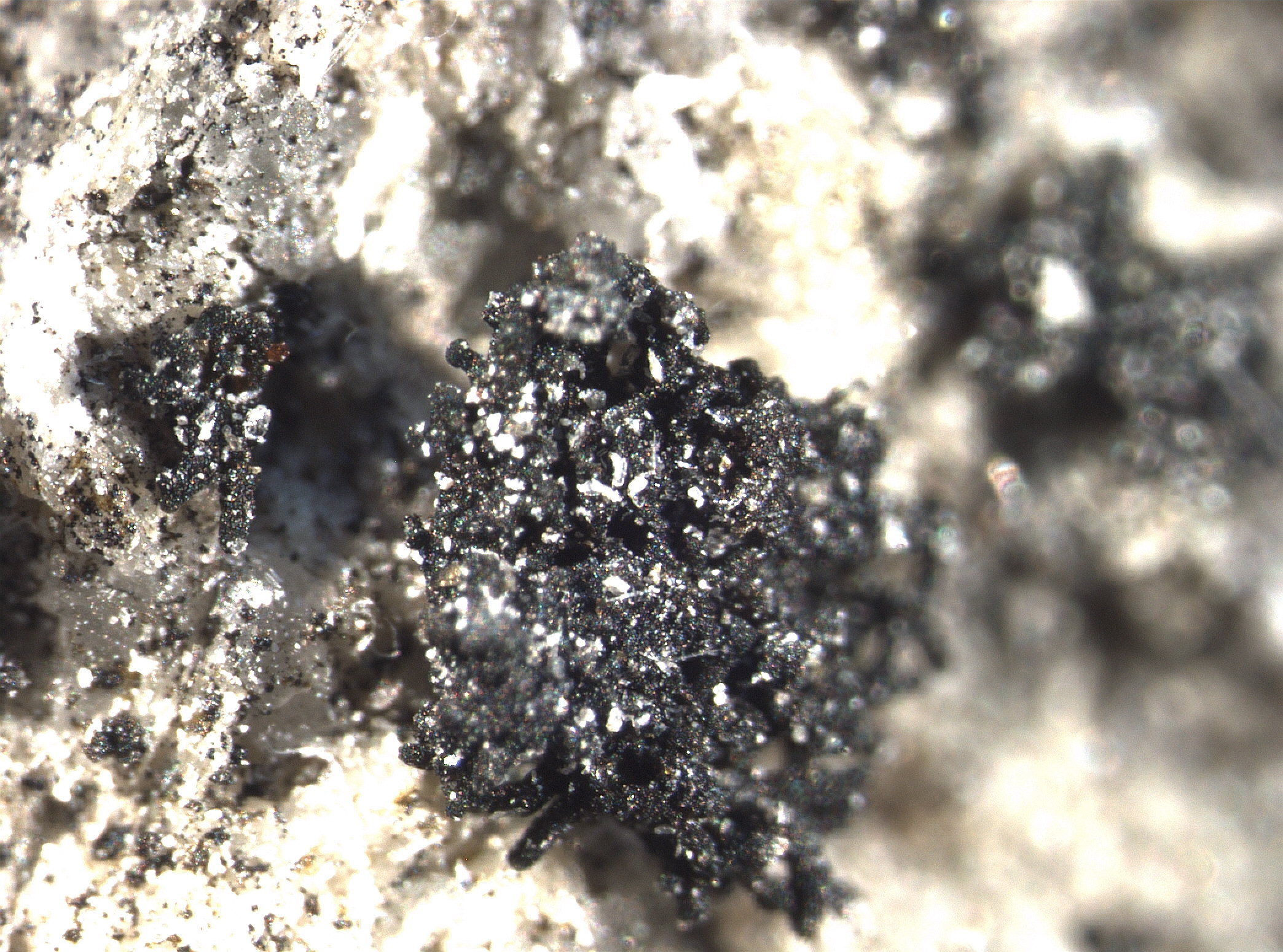
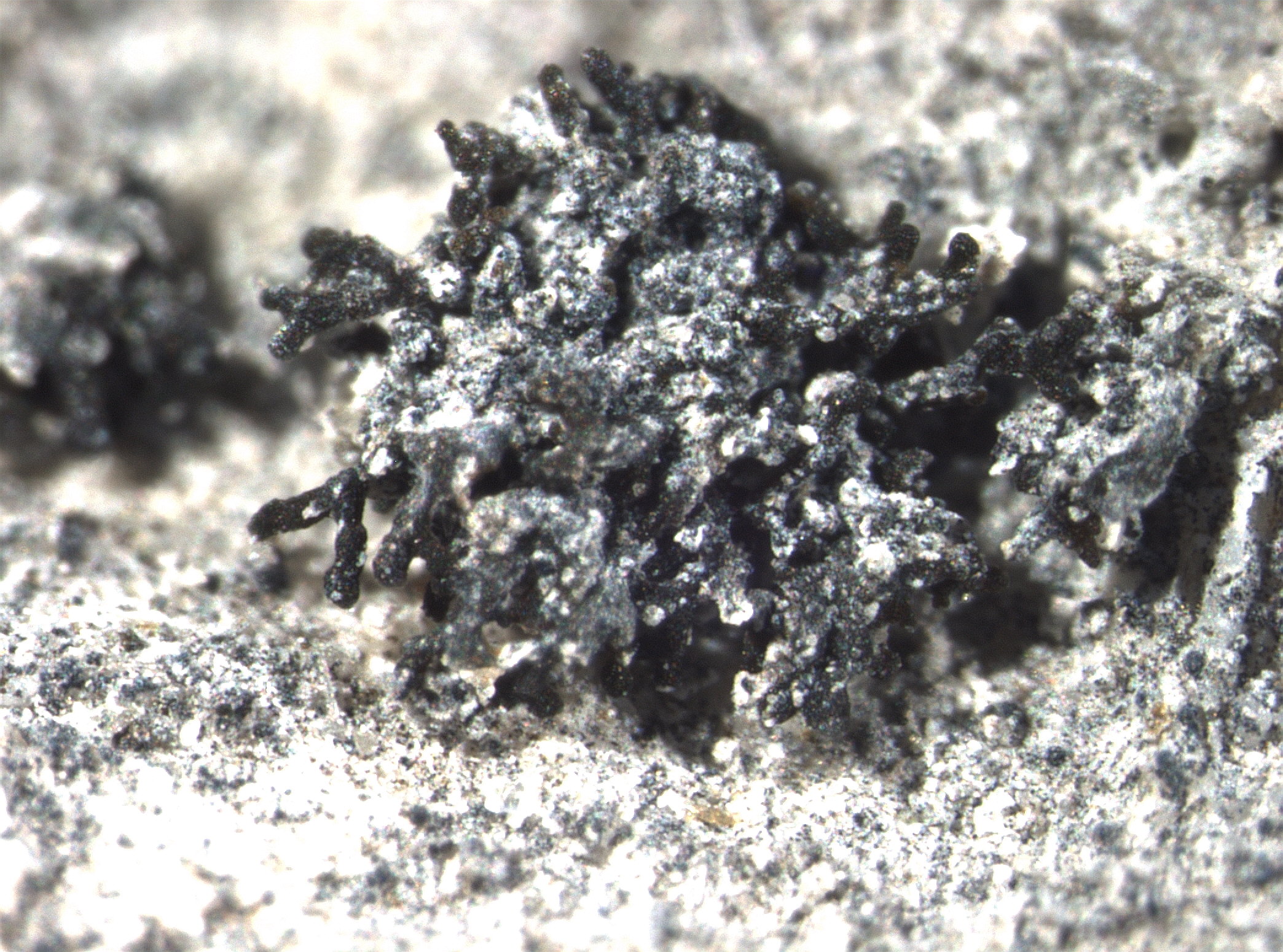
Description: Thallus minutely subsquamulose to subcrustose, homoiomerous, gelatinous when wet, dark olivaceous brown to black, of isolated or aggregated, button-like areoles/squamules densely covered in small, entangled cylindrical lobules, often forming 1-2(-3) mm wide, umbilicate, sometimes marginally lobulate, convex cushions. Lobules up to 0.4 mm long, 0.15-0.2 mm wide, minutely longitudinally striate, with globose hormocystangia at the slightly swollen tips. Apothecia very rare, laminal, globose in section, half-immersed, hemiangiocarpic, developing from ascogones arising in a spheroid tangle of generative hyphae, with a pore-like disc, a thick thalline margin and a pale, thin proper margin. Proper exciple of parallel hyphae; epithecium brownish; hymenium and hypothecium colourless, the hymenial gel I+ reddish brown, K/I+ blue; paraphyses coherent, mostly simple, the apical cells not thickened. Asci 8-spored, broadly clavate, thin-walled, with a distinct amyloid outer cap, but no apical dome, Peccania-type. Ascospores 1-celled, hyaline, ellipsoid, 7-9 x 5-7 μm. Photobiont cyanobacterial (Nostoc), the individual cells 4-5 µm wide, arranged in short chains. Spot tests: all negative. Chemistry: without lichen substances.
Growth form: Crustose
Substrata: rocks
Photobiont: cyanobacteria, filamentous (e.g. Nostoc, Scytonema)
Reproductive strategy: mainly sexual
On otherwise dry surfaces with short periods of water seepage after rain
Commonnes-rarity: (info)
Alpine belt: absent
Subalpine belt: extremely rare
Montane belt: rare
Dry submediterranean belt: extremely rare
Humid submediterranean belt: absent
Padanian area: absent
pH of the substrata:
1 2 3 4 5

Solar irradiation:
1 2 3 4 5
Aridity:
1 2 3 4 5
Eutrophication:
1 2 3 4 5
Poleotolerance:
0 1 2 3
Altitudinal distribution:
1 2 3 4 5 6
Rarity
absent
extremely rare
very rare
rare
rather rare
rather common
common
very common
extremely common
Loading data...
Occurrence data
Predictive map
Pier Luigi Nimis - CC BY-SA 4.0
TSB 26671
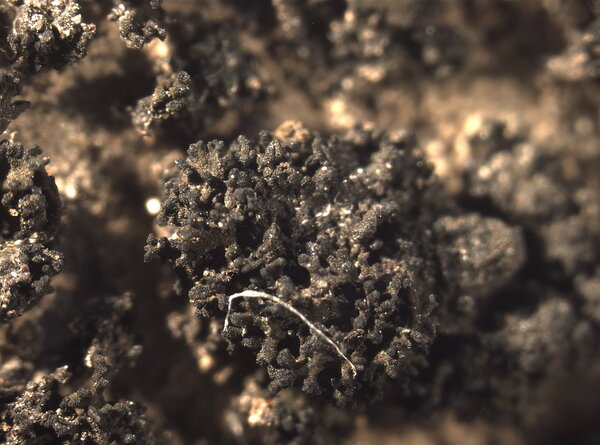
Pier Luigi Nimis - CC BY-SA 4.0
TSB 26671
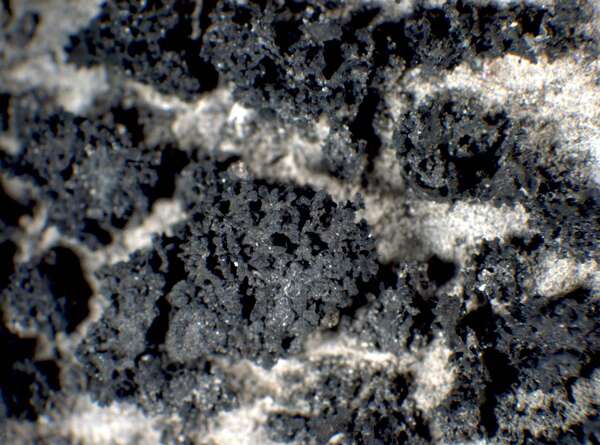
P.L. Nimis; Owner: Department of Life Sciences, University of Trieste
Herbarium: TSB (26671)
2001/11/26
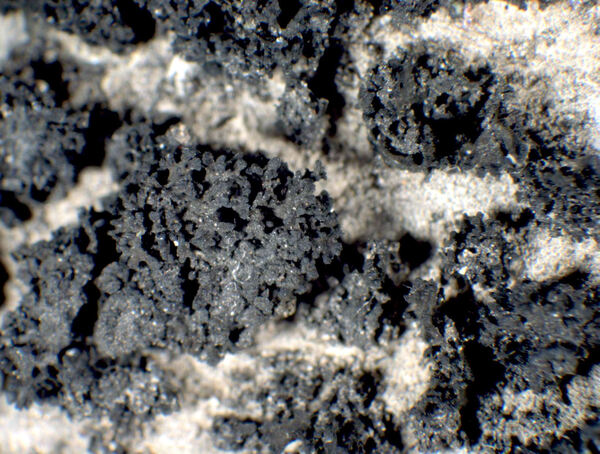
P.L. Nimis CC BY-SA 4.0
TSB 26671
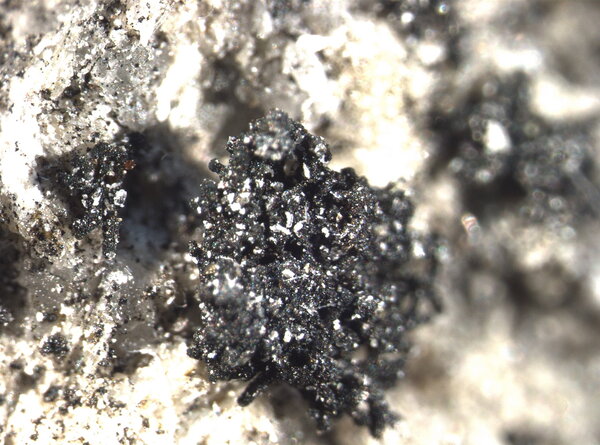
Pier Luigi Nimis - CC BY-SA 4.0
Finland
H 9215938
Pier Luigi Nimis - CC BY-SA 4.0
Finland
H 9215938
Source: Prieto M., Wedin M., Schultz M. 2024. Phylogeny, evolution and a re-classification of the Lichinomycetes. Studies in Mycology, 109: 595-655. - CC BY-NC-ND
Synalissina botryosa, thallus button like with some emptied hormocystangia (Schultz 05517a). Scale bar: 1 mm
Source: Prieto M., Wedin M., Schultz M. 2024. Phylogeny, evolution and a re-classification of the Lichinomycetes. Studies in Mycology, 109: 595-655. - CC BY-NC-ND
Synalissina
botryosa, apothecium in lobe tip with thick thalline margin and rudimentary proper exciple (Schultz 08406a). Scale bar: 25 µm
Growth form: Crustose
Substrata: rocks
Photobiont: cyanobacteria, filamentous (e.g. Nostoc, Scytonema)
Reproductive strategy: mainly sexual
On otherwise dry surfaces with short periods of water seepage after rain
Commonnes-rarity: (info)
Alpine belt: absent
Subalpine belt: extremely rare
Montane belt: rare
Dry submediterranean belt: extremely rare
Humid submediterranean belt: absent
Padanian area: absent
pH of the substrata:
| 1 | 2 | 3 | 4 | 5 |
Solar irradiation:
| 1 | 2 | 3 | 4 | 5 |
Aridity:
| 1 | 2 | 3 | 4 | 5 |
Eutrophication:
| 1 | 2 | 3 | 4 | 5 |
Poleotolerance:
| 0 | 1 | 2 | 3 |
Altitudinal distribution:
| 1 | 2 | 3 | 4 | 5 | 6 |
Rarity
absent
extremely rare
very rare
rare
rather rare
rather common
common
very common
extremely common
Loading data...
Occurrence data
Predictive map
Pier Luigi Nimis - CC BY-SA 4.0
TSB 26671

Pier Luigi Nimis - CC BY-SA 4.0
TSB 26671
P.L. Nimis; Owner: Department of Life Sciences, University of Trieste
Herbarium: TSB (26671)
2001/11/26

P.L. Nimis CC BY-SA 4.0
TSB 26671
Pier Luigi Nimis - CC BY-SA 4.0
Finland
H 9215938
Pier Luigi Nimis - CC BY-SA 4.0
Finland
H 9215938

Source: Prieto M., Wedin M., Schultz M. 2024. Phylogeny, evolution and a re-classification of the Lichinomycetes. Studies in Mycology, 109: 595-655. - CC BY-NC-ND
Synalissina botryosa, thallus button like with some emptied hormocystangia (Schultz 05517a). Scale bar: 1 mm