Lepraria alpina (B. de Lesd.) Tretiach & Baruffo
in Baruffo & al., Nova Hedwigia, 83: 390, 2006. Basionym: Crocynia alpina B. de Lesd. - Bull. Soc. Bot. France, 61: 85, 1914.
Synonyms: Crocynia antarctica Hue; Crocynia caerulescens Hue; Crocynia candidissima Hue; Crocynia minima Hue; Lepraria angardiana Øvstedal; Lepraria cacuminum (A. Massal.) Loht.; Leproloma angardianum (Øvstedal) J.R. Laundon; Leproloma cacuminum (A. Massal.) J.R. Laundon
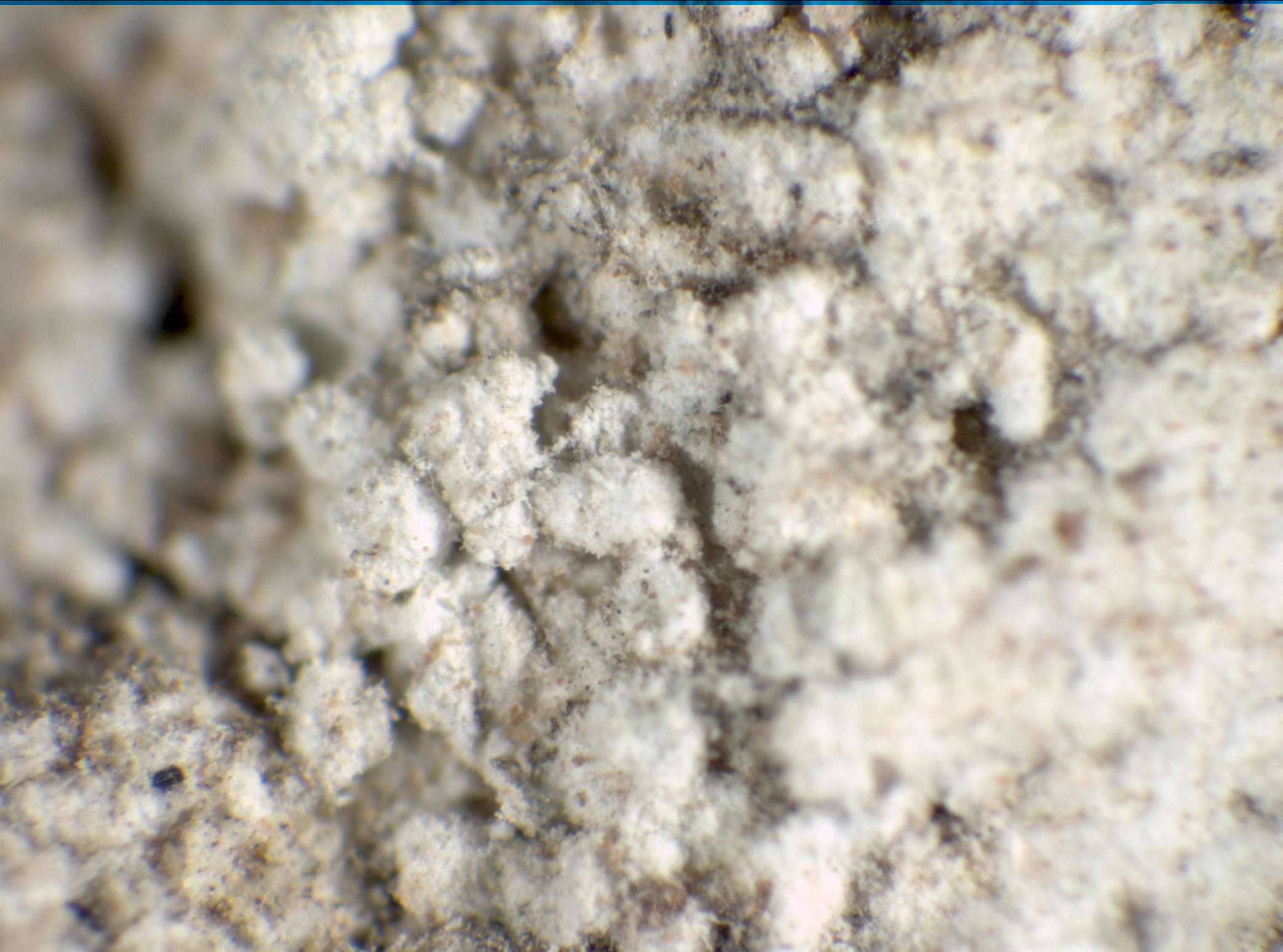
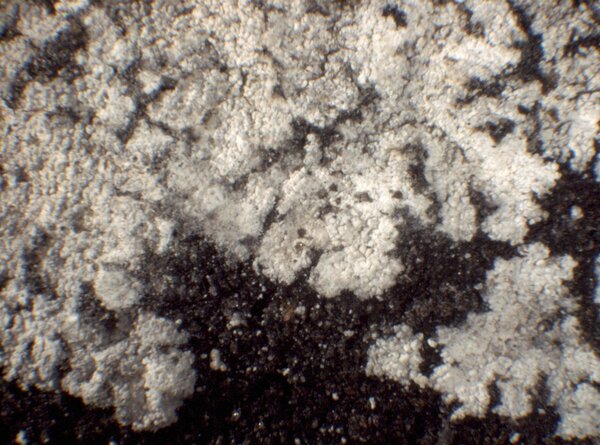
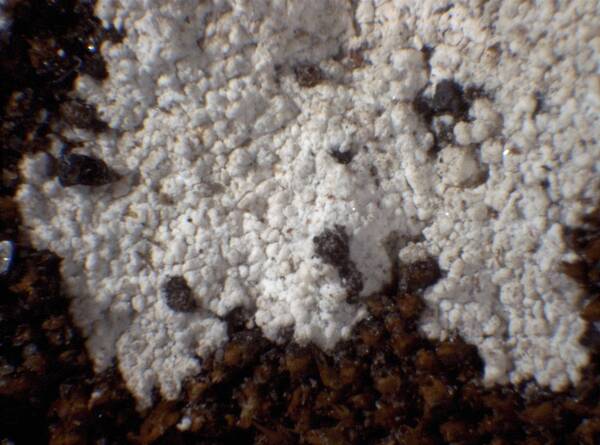
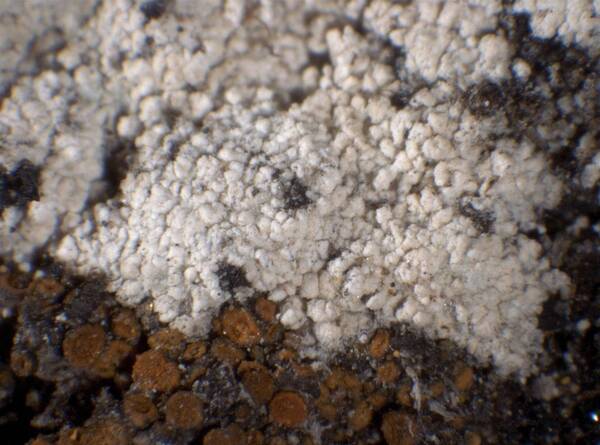
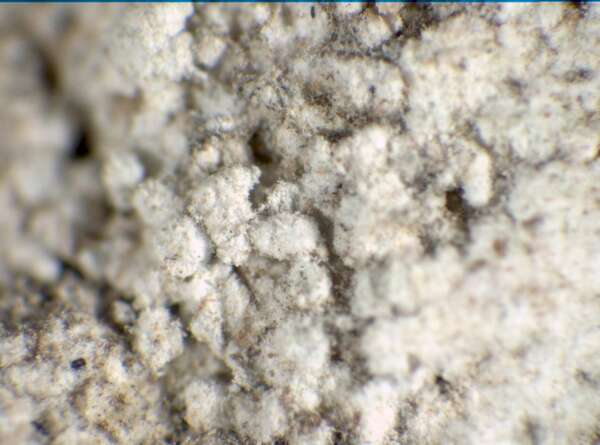
Description: Thallus crustose to subleprose, whitish to whitish grey, up to 0.7 mm thick, entirely consisting in a mass of granules, usually well-delimited, sometimes indistinctly sublobate at margin, forming up to 10 cm wide patches (usually less). The thallus starts developing as isolated, dispersed granules that form piles or aggregations (best visible along the margins, where the dispersion of the young granules is most readily observed), which eventually overlap and become confluent, giving the false appearance of a continuous thallus in older areas. Granules rather firmly attached, coarse, 80-150 μm in diam., sometimes gathered into 200-300 μm wide aggregates, with a well-developed pseudocortex, the surface appearing compact, rarely with very short projecting hyphae; Medulla white and cottony, rather thin (0.3-0.5 mm), often partially exposed. Photobiont chlorococcoid. Spot tests: K- or K+ yellow, C-, KC-, P- or P+ faintly yellow, UV-. Chemistry: atranorin, porphyrilic acid and a fatty acid (roccellic/angardianic or rarely rangiformic acid); very rarely fatty acids and/or atranorin can be absent.
Growth form: Leprose
Photobiont: green algae other than Trentepohlia
Reproductive strategy: mainly asexual, by soredia, or soredia-like structures (e.g. blastidia)
Commonnes-rarity: (info)
Alpine belt: common
Subalpine belt: rather common
Montane belt: absent
Dry submediterranean belt: absent
Humid submediterranean belt: absent
Padanian area: absent
pH of the substrata:
1 2 3 4 5

Solar irradiation:
1 2 3 4 5
Aridity:
1 2 3 4 5
Eutrophication:
1 2 3 4 5
Poleotolerance:
0 1 2 3
Altitudinal distribution:
1 2 3 4 5 6
Rarity
absent
extremely rare
very rare
rare
rather rare
rather common
common
very common
extremely common
Loading data...
Occurrence data
Predictive map
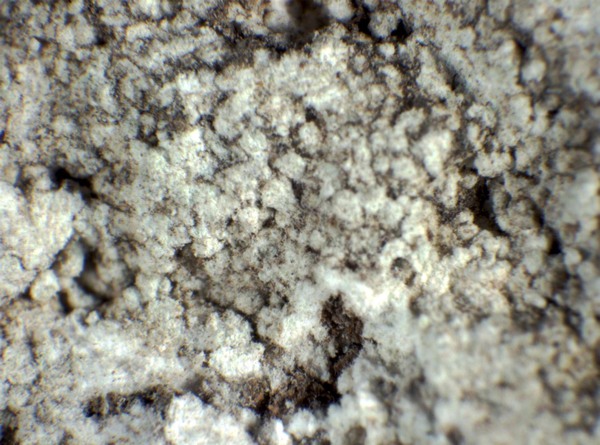
P.L. Nimis CC BY-SA 04
TSB 32749
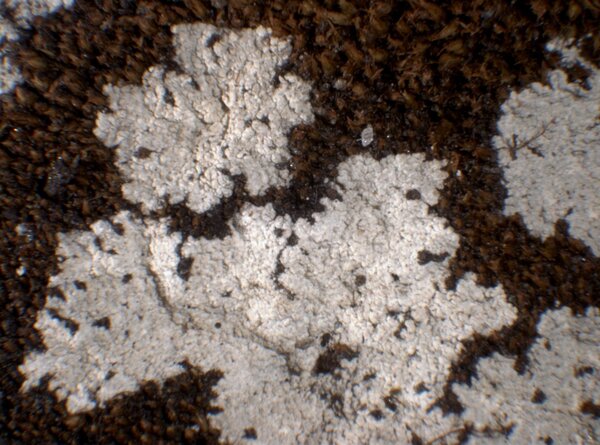
Miris Castello - CC BY-SA 4.0; Owner: Department of Life Sciences - University of Trieste
Antarctica, Terra Nova Bay.
Herbarium: TSB - Antarctic Herbarium
Miris Castello - CC BY-SA 4.0; Owner: Department of Life Sciences - University of Trieste
Antarctica, Terra Nova Bay.
Herbarium: TSB - Antarctic Herbarium
Miris Castello - CC BY-SA 4.0; Owner: Department of Life Sciences - University of Trieste
Antarctica, Terra Nova Bay.
Herbarium: TSB - Antarctic Herbarium
Miris Castello - CC BY-SA 4.0; Owner: Department of Life Sciences - University of Trieste
Antarctica, Terra Nova Bay.
Herbarium: TSB - Antarctic Herbarium
P.L. Nimis; Owner: Department of Life Sciences, University of Trieste
Herbarium: TSB (32749)
2001/12/13
Growth form: Leprose
Photobiont: green algae other than Trentepohlia
Reproductive strategy: mainly asexual, by soredia, or soredia-like structures (e.g. blastidia)
Commonnes-rarity: (info)
Alpine belt: common
Subalpine belt: rather common
Montane belt: absent
Dry submediterranean belt: absent
Humid submediterranean belt: absent
Padanian area: absent
pH of the substrata:
| 1 | 2 | 3 | 4 | 5 |
Solar irradiation:
| 1 | 2 | 3 | 4 | 5 |
Aridity:
| 1 | 2 | 3 | 4 | 5 |
Eutrophication:
| 1 | 2 | 3 | 4 | 5 |
Poleotolerance:
| 0 | 1 | 2 | 3 |
Altitudinal distribution:
| 1 | 2 | 3 | 4 | 5 | 6 |
Rarity
absent
extremely rare
very rare
rare
rather rare
rather common
common
very common
extremely common
Loading data...
Occurrence data
Predictive map
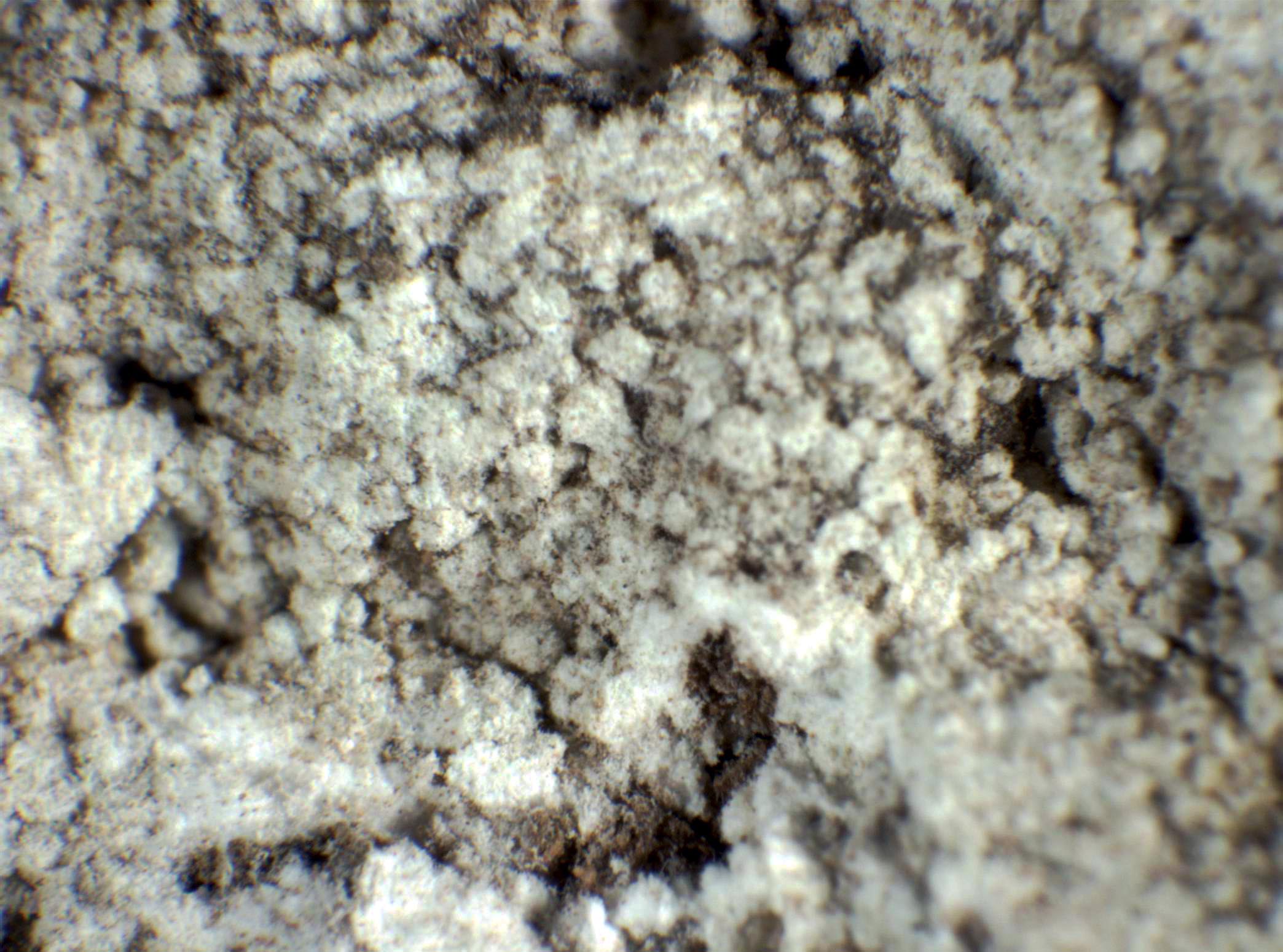
P.L. Nimis CC BY-SA 04
TSB 32749
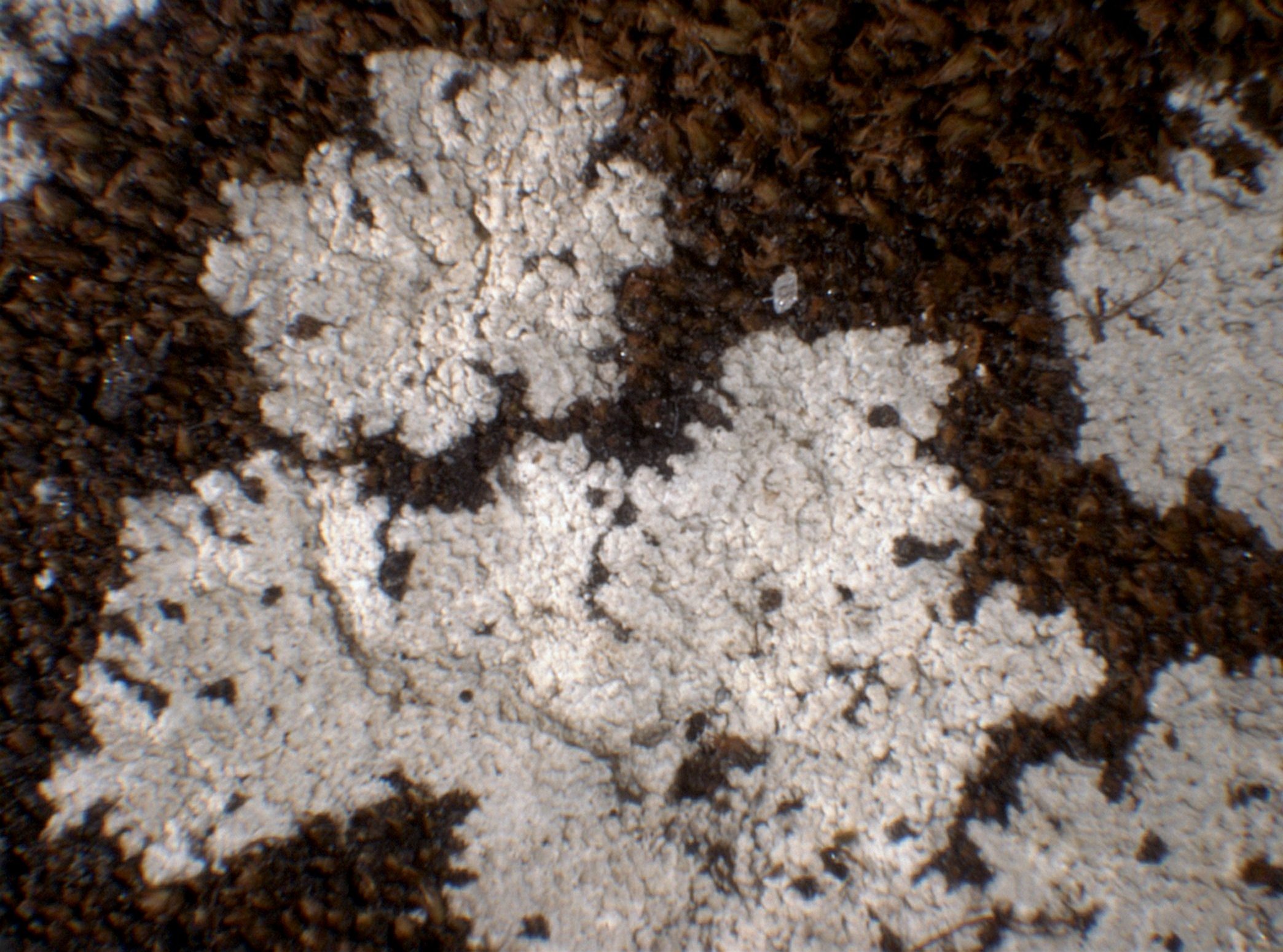
Miris Castello - CC BY-SA 4.0; Owner: Department of Life Sciences - University of Trieste
Antarctica, Terra Nova Bay.
Herbarium: TSB - Antarctic Herbarium
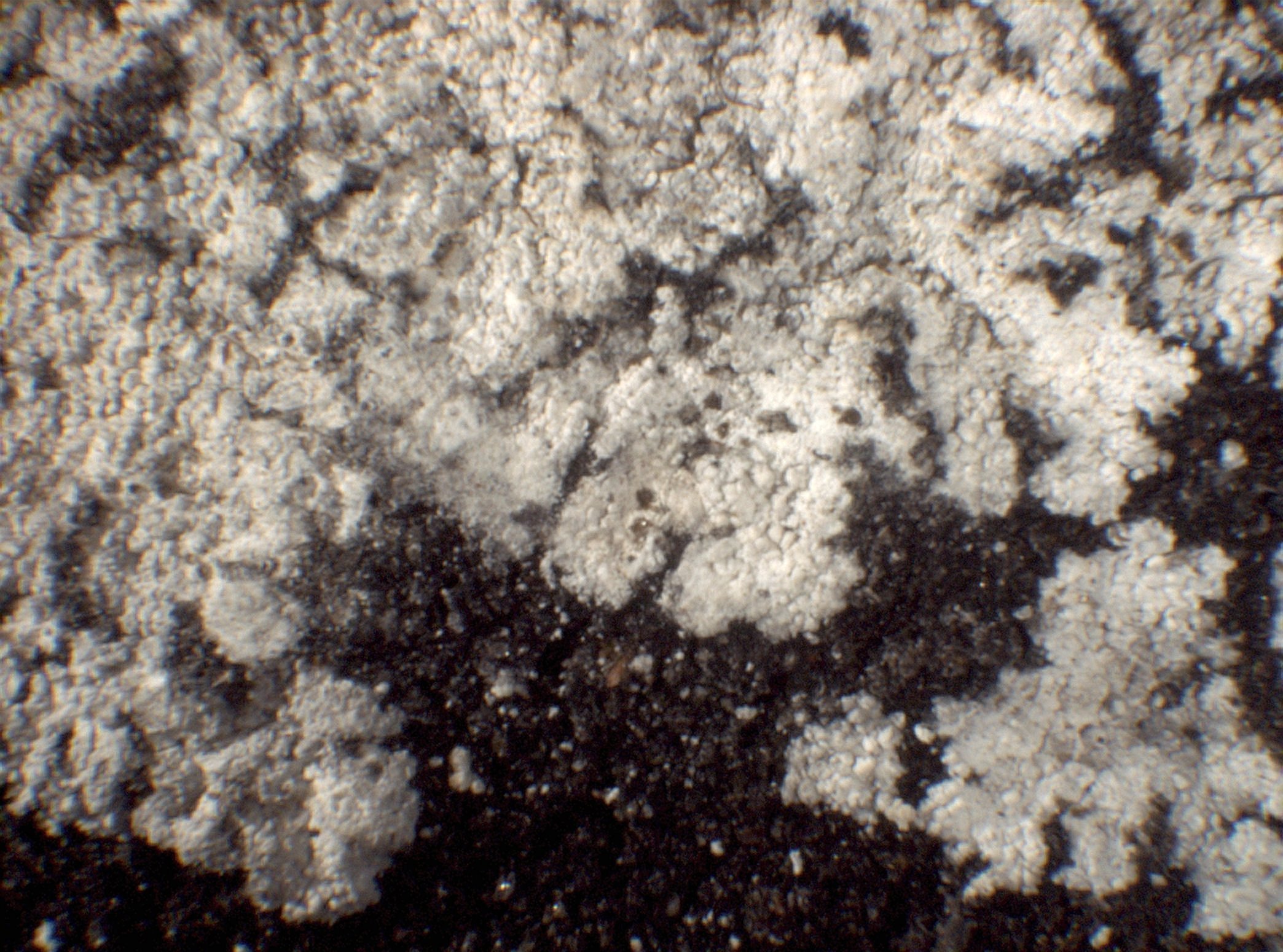
Miris Castello - CC BY-SA 4.0; Owner: Department of Life Sciences - University of Trieste
Antarctica, Terra Nova Bay.
Herbarium: TSB - Antarctic Herbarium
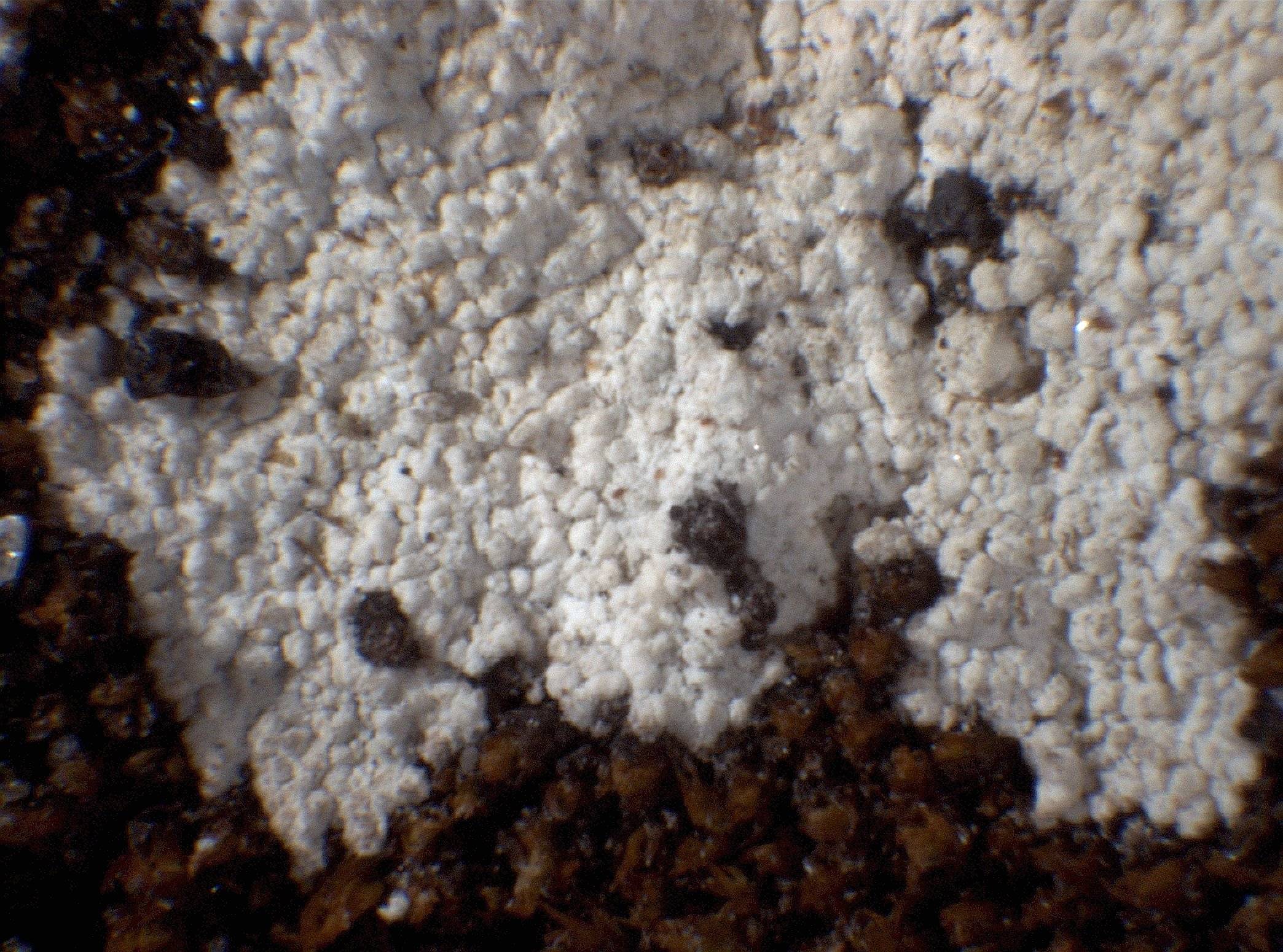
Miris Castello - CC BY-SA 4.0; Owner: Department of Life Sciences - University of Trieste
Antarctica, Terra Nova Bay.
Herbarium: TSB - Antarctic Herbarium
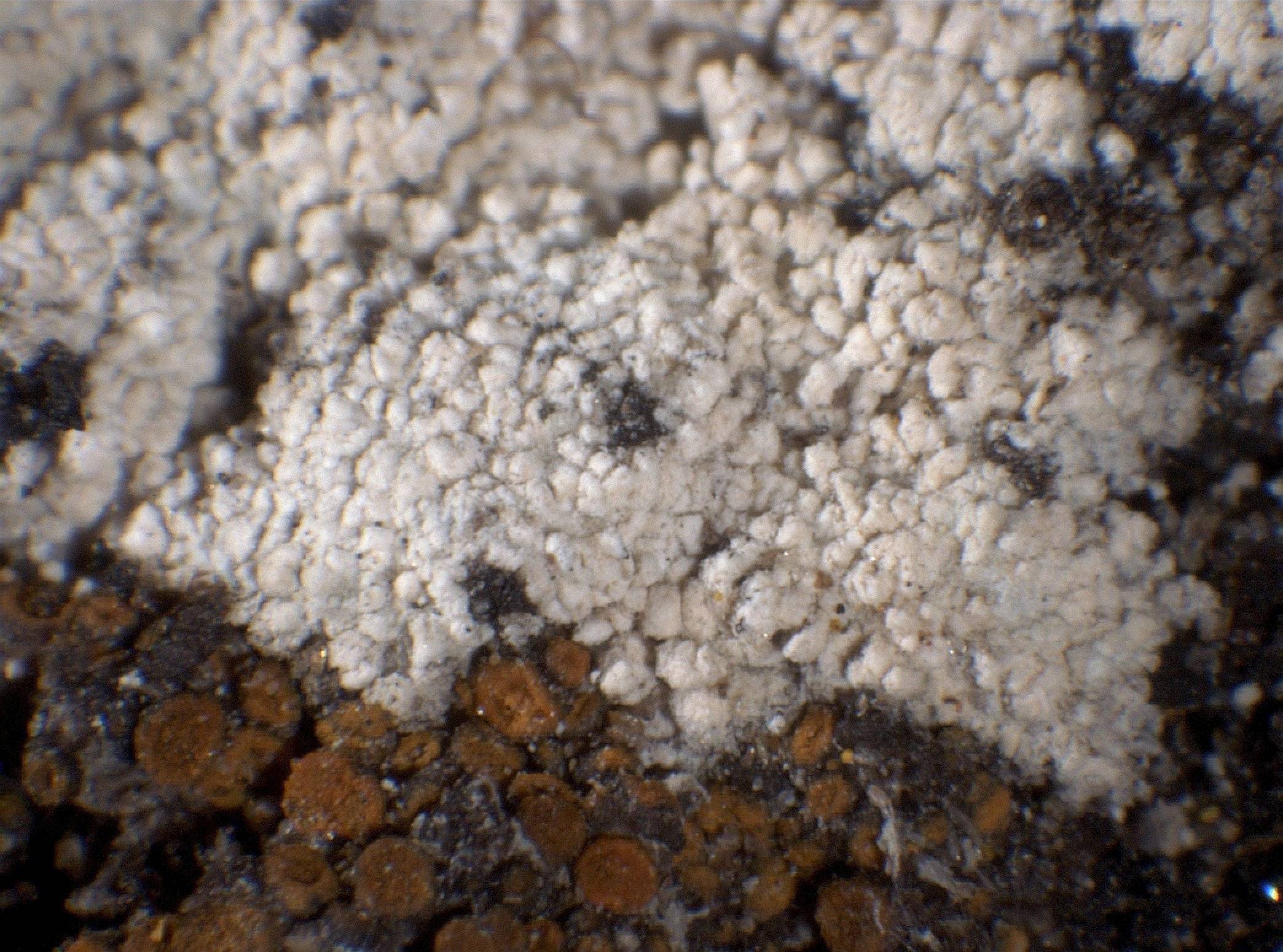
Miris Castello - CC BY-SA 4.0; Owner: Department of Life Sciences - University of Trieste
Antarctica, Terra Nova Bay.
Herbarium: TSB - Antarctic Herbarium