Lepraria crassissima (Hue) Lettau
Feddes Rep., 61: 125, 1958. Basionym: Crocynia crassissima Hue - Bull. Soc. Bot. France, 71: 393, 1924.
Synonyms:
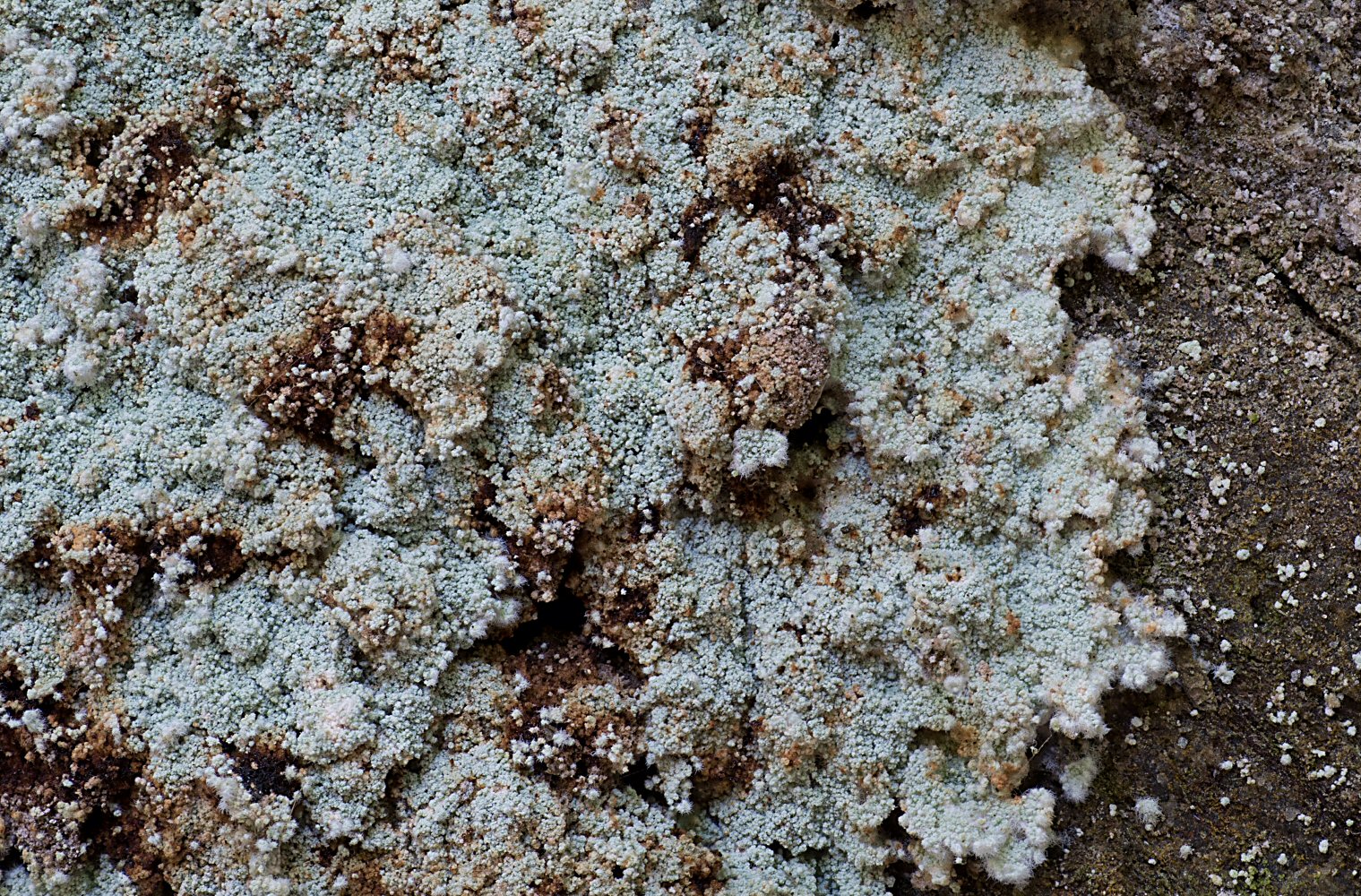
Description: Thallus leprose, consisting in a thick and soft, uneven-folded mass of soredia-like granules, bluish white to pale blue-grey, usually well-delimited, the margin sometimes indistinctly lobed, but without raised edges. Granules mostly coarse, up to 60-120 μm in diam., with a loose surface but without projecting hyphae. Medulla very thin, poorly evident. Lower surfaces folded, white to yellowish brown, easily detached from the substrate. Photobiont chlorococcoid. Spot tests: K-, C+ red, KC- or KC+ red, P-, UV+ bright bluish white. Chemistry: divaricatic acid, nordivaricatic acid (major, rarely trace), zeorin (major to minor).
Growth form: Leprose
Photobiont: green algae other than Trentepohlia
Reproductive strategy: mainly asexual, by soredia, or soredia-like structures (e.g. blastidia)
Commonnes-rarity: (info)
Alpine belt: absent
Subalpine belt: absent
Montane belt: very rare
Dry submediterranean belt: extremely rare
Humid submediterranean belt: extremely rare
Padanian area: absent
pH of the substrata:
1 2 3 4 5

Solar irradiation:
1 2 3 4 5
Aridity:
1 2 3 4 5
Eutrophication:
1 2 3 4 5
Poleotolerance:
0 1 2 3
Altitudinal distribution:
1 2 3 4 5 6
Rarity
absent
extremely rare
very rare
rare
rather rare
rather common
common
very common
extremely common
Loading data...
Occurrence data
Predictive map
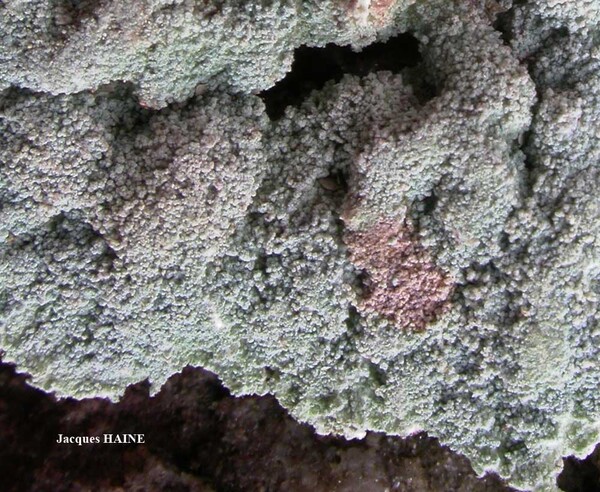
Jacques Haine - Source: http://www.lichensmaritimes.org/index.php?task=fiche&lichen=599&lang=en
France, Ardennes
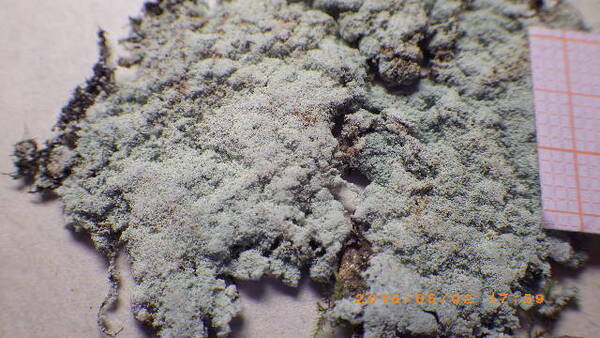
Tor Tønsberg, University Museum of Bergen CC BY NC
Herbarium: Holotype
Source: http://v3.boldsystems.org/index.php/Taxbrowser_Taxonpage?taxid=783022/Arthonia_byssacea_l2.jpg
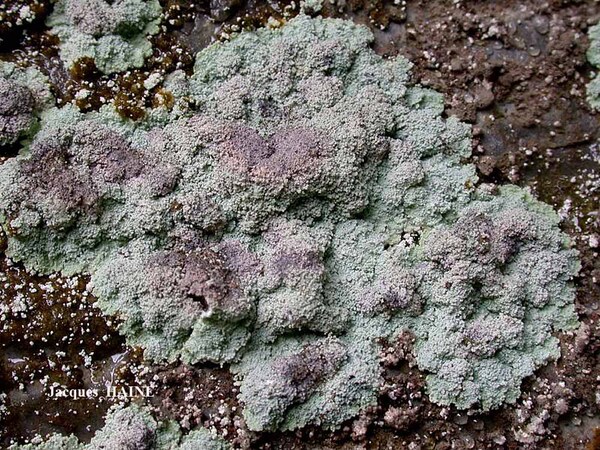
Jacques Haine - Source: http://www.lichensmaritimes.org/index.php?task=fiche&lichen=599&lang=en
France, Ardennes
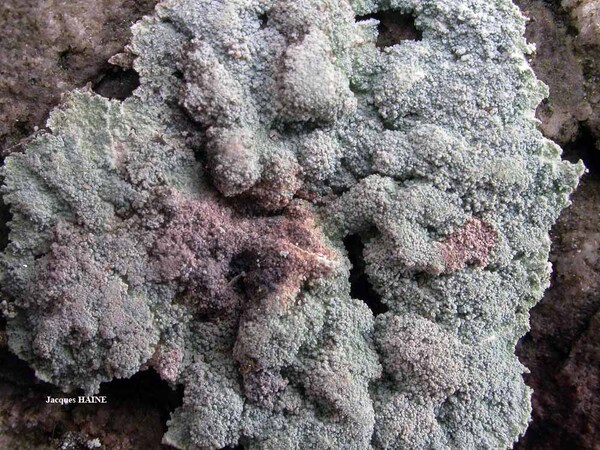
Jacques Haine - Source: http://www.lichensmaritimes.org/index.php?task=fiche&lichen=599&lang=en
France, Ardennes
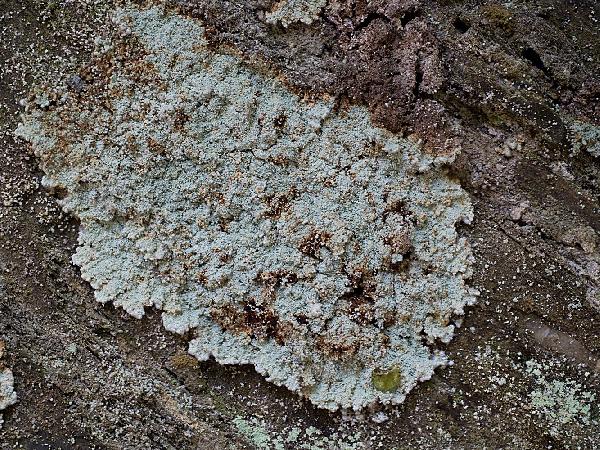
Ulrich Kirschbaum CC BY-SA 4.0 - Source: https://www.thm.de/lse/ulrich-kirschbaum/flechtenbilder
Central Europe; Germany; Hesse: Taunus mountains (Wispertal).
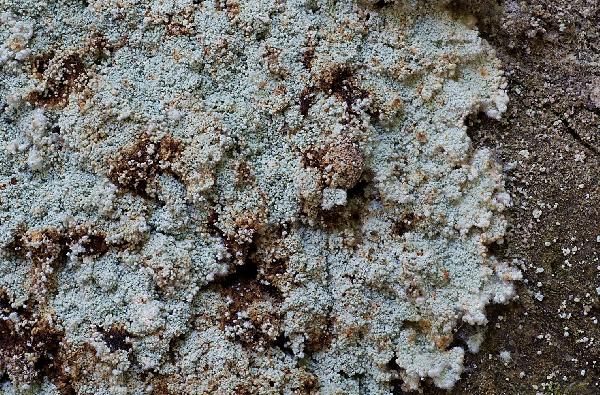
Ulrich Kirschbaum CC BY-SA 4.0 - Source: https://www.thm.de/lse/ulrich-kirschbaum/flechtenbilder
Central Europe; Germany; Hesse: Taunus mountains (Wispertal).
Growth form: Leprose
Photobiont: green algae other than Trentepohlia
Reproductive strategy: mainly asexual, by soredia, or soredia-like structures (e.g. blastidia)
Commonnes-rarity: (info)
Alpine belt: absent
Subalpine belt: absent
Montane belt: very rare
Dry submediterranean belt: extremely rare
Humid submediterranean belt: extremely rare
Padanian area: absent
pH of the substrata:
| 1 | 2 | 3 | 4 | 5 |
Solar irradiation:
| 1 | 2 | 3 | 4 | 5 |
Aridity:
| 1 | 2 | 3 | 4 | 5 |
Eutrophication:
| 1 | 2 | 3 | 4 | 5 |
Poleotolerance:
| 0 | 1 | 2 | 3 |
Altitudinal distribution:
| 1 | 2 | 3 | 4 | 5 | 6 |
Rarity
absent
extremely rare
very rare
rare
rather rare
rather common
common
very common
extremely common
Loading data...
Occurrence data
Predictive map
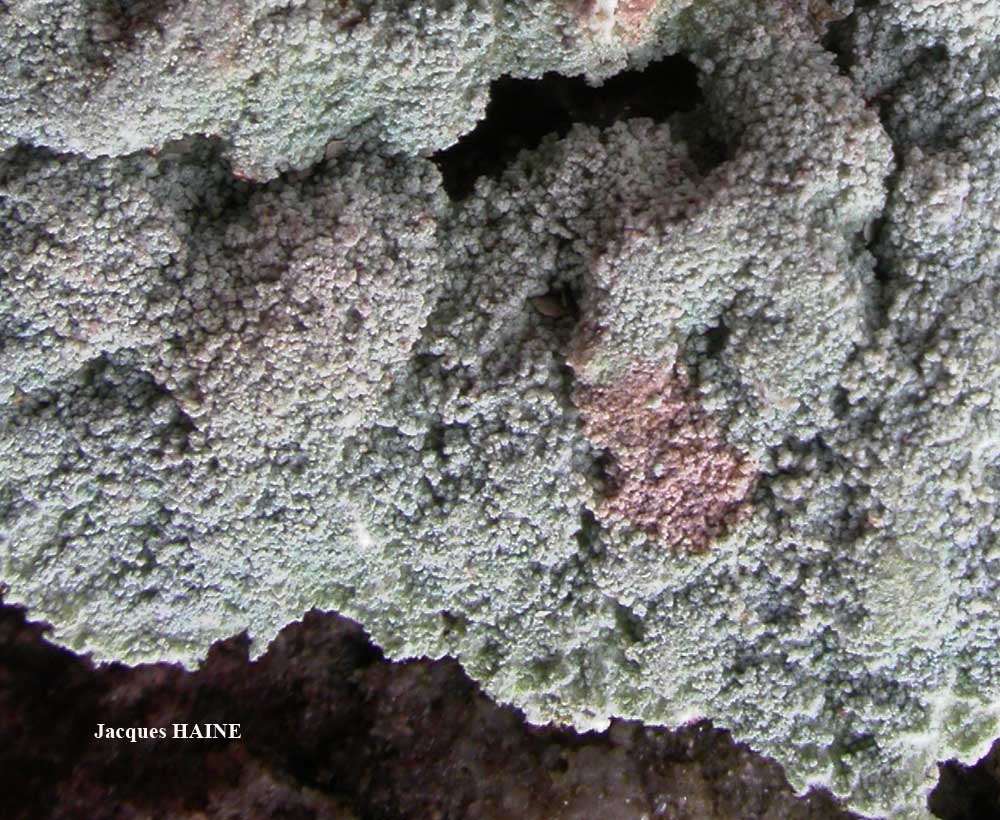
Jacques Haine - Source: http://www.lichensmaritimes.org/index.php?task=fiche&lichen=599&lang=en
France, Ardennes
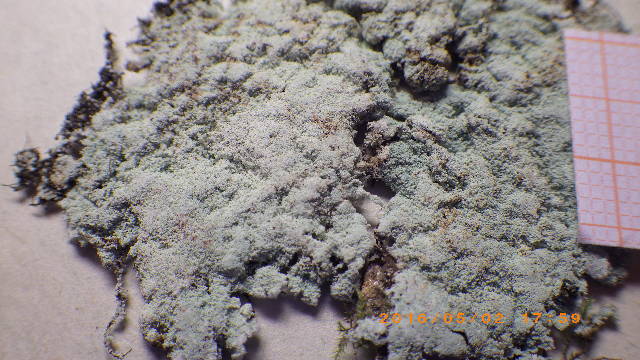
Tor Tønsberg, University Museum of Bergen CC BY NC
Herbarium: Holotype
Source: http://v3.boldsystems.org/index.php/Taxbrowser_Taxonpage?taxid=783022/Arthonia_byssacea_l2.jpg
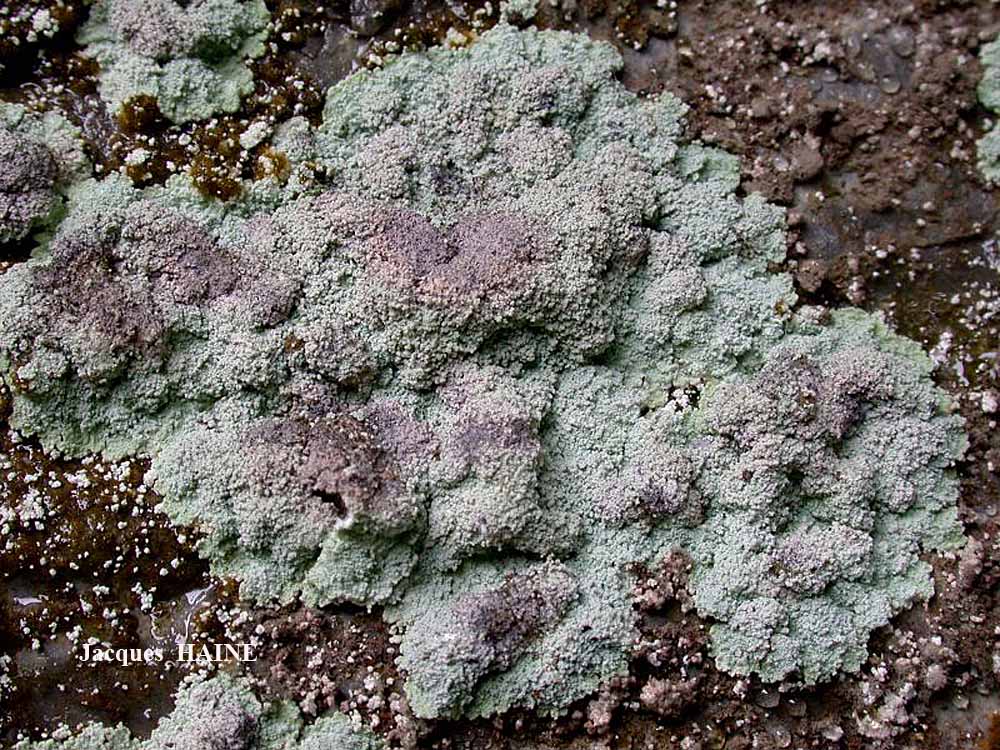
Jacques Haine - Source: http://www.lichensmaritimes.org/index.php?task=fiche&lichen=599&lang=en
France, Ardennes
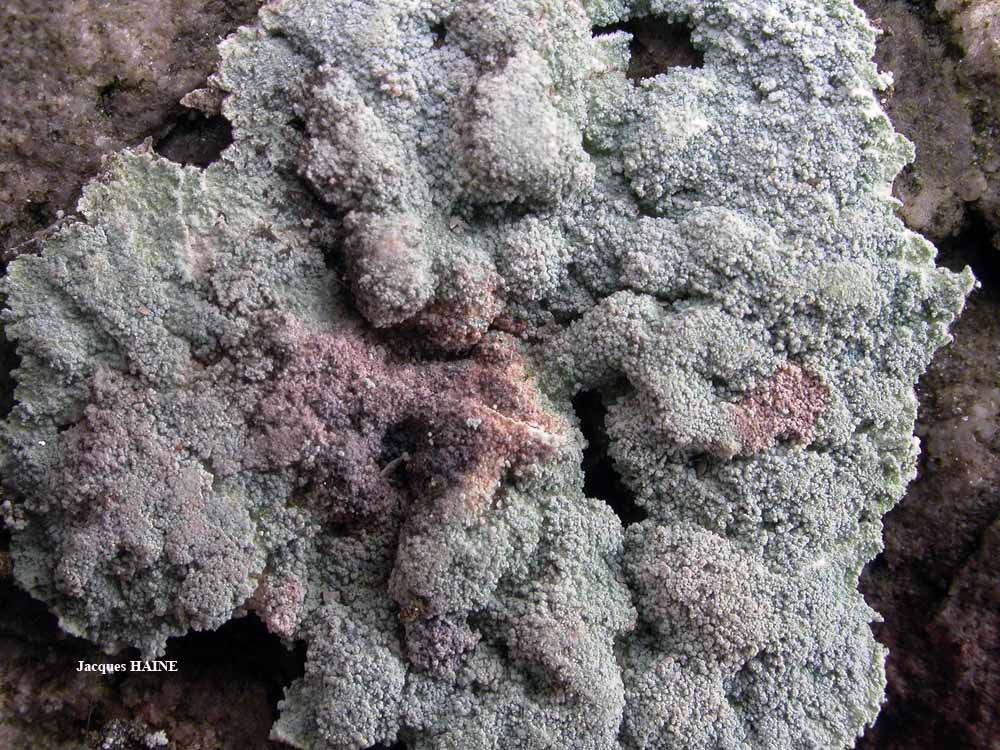
Jacques Haine - Source: http://www.lichensmaritimes.org/index.php?task=fiche&lichen=599&lang=en
France, Ardennes
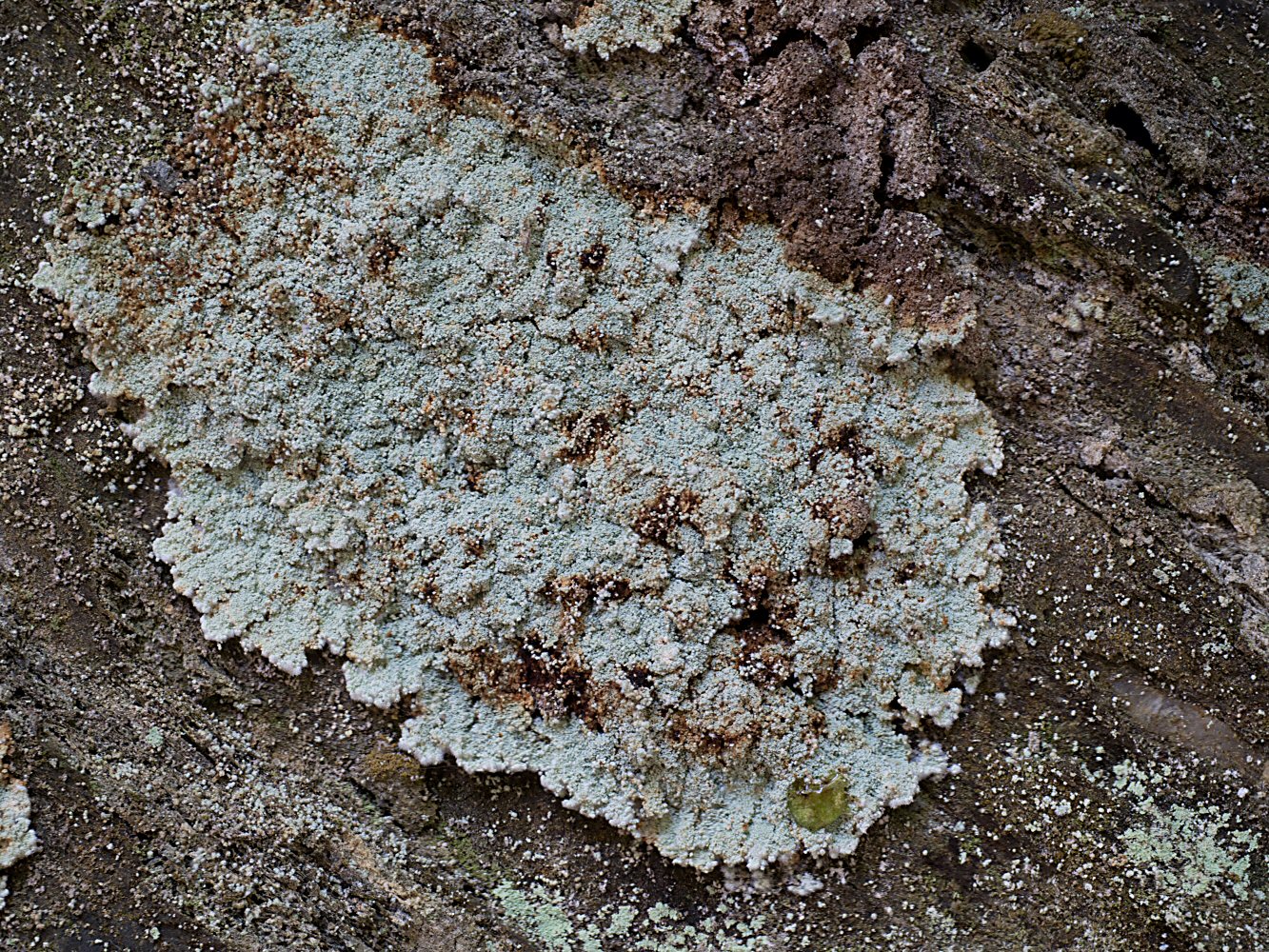
Ulrich Kirschbaum CC BY-SA 4.0 - Source: https://www.thm.de/lse/ulrich-kirschbaum/flechtenbilder
Central Europe; Germany; Hesse: Taunus mountains (Wispertal).