Rinodina archaea (Ach.) Arnold
Flora, 64: 195, 1881. Basionym: Parmelia sophodes var. archaea Ach. - Meth. Lich: 156, 1803.
Synonyms: Diploicia trevisanii (Hepp) A. Massal. non auct.; Lecanora archaea (Ach.) Harm.; Lecanora sophodes var. laevigata Ach.; Rinodina archaea f. aggregata H. Magn.; Rinodina archaea f. paupera H. Magn.; Rinodina exigua var. lecideoides (Nyl.) Arnold; Rinodina laevigata (Ach.) Malme; Rinodina lecideoides (Nyl.) Mig.; Rinodina lecideoides var. cinerea H. Magn.; Rinodina subobscura H. Magn.; Rinodina trevisanii (Hepp) Körb. non auct.
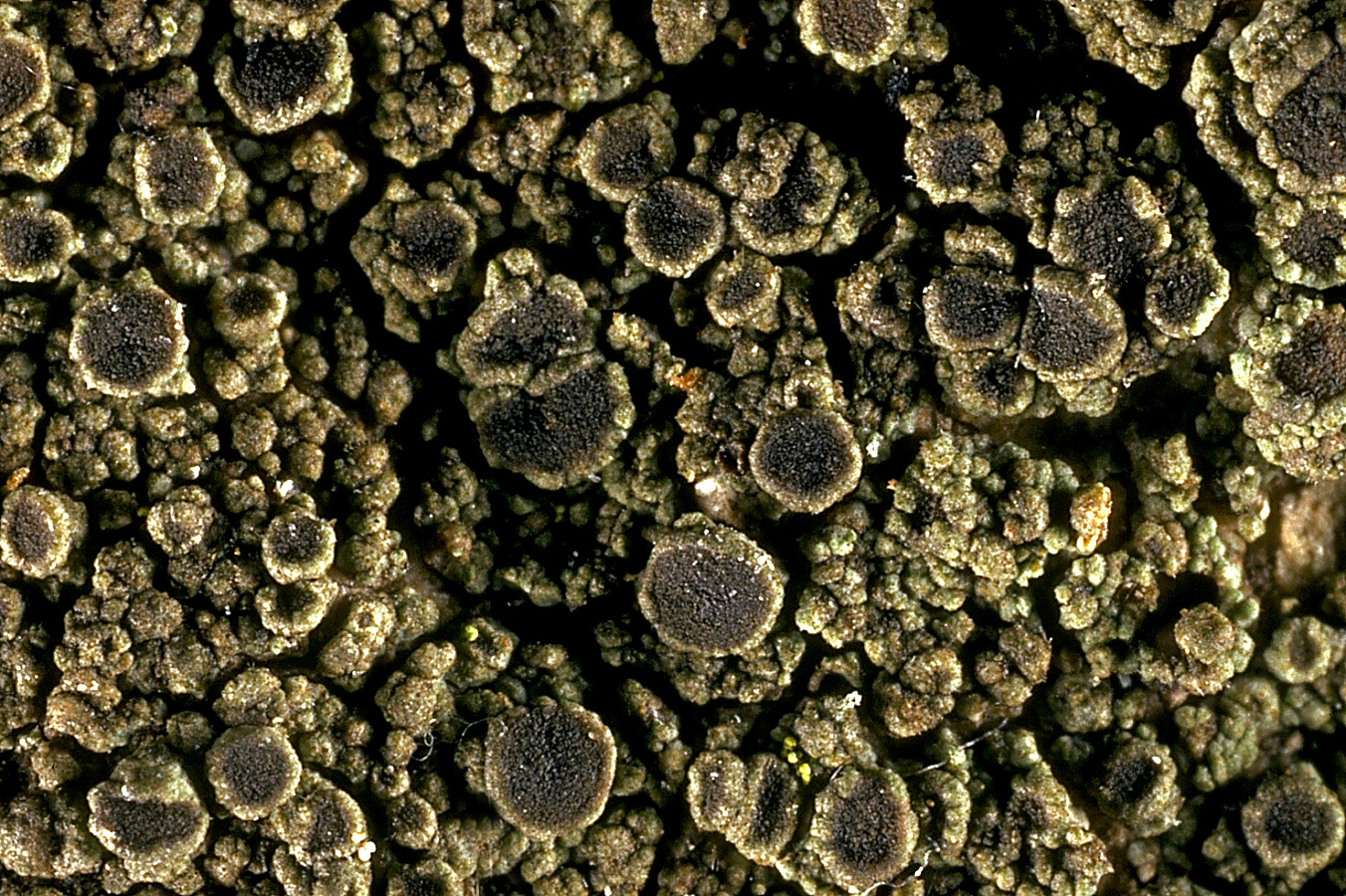
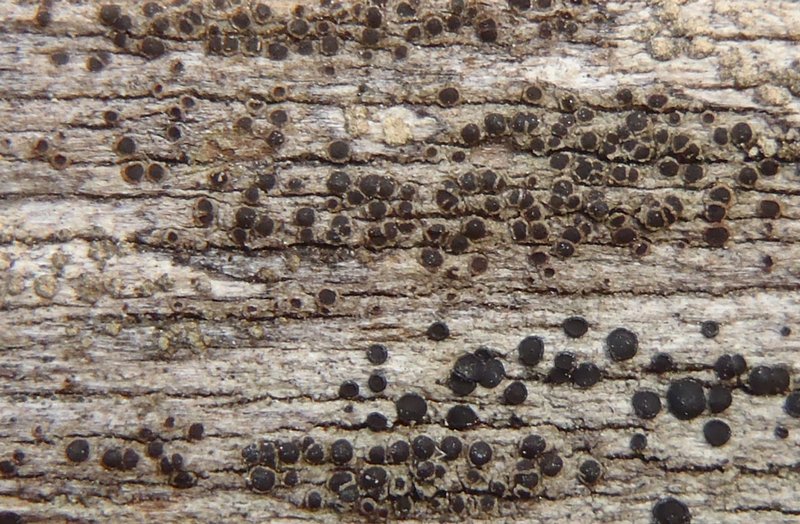
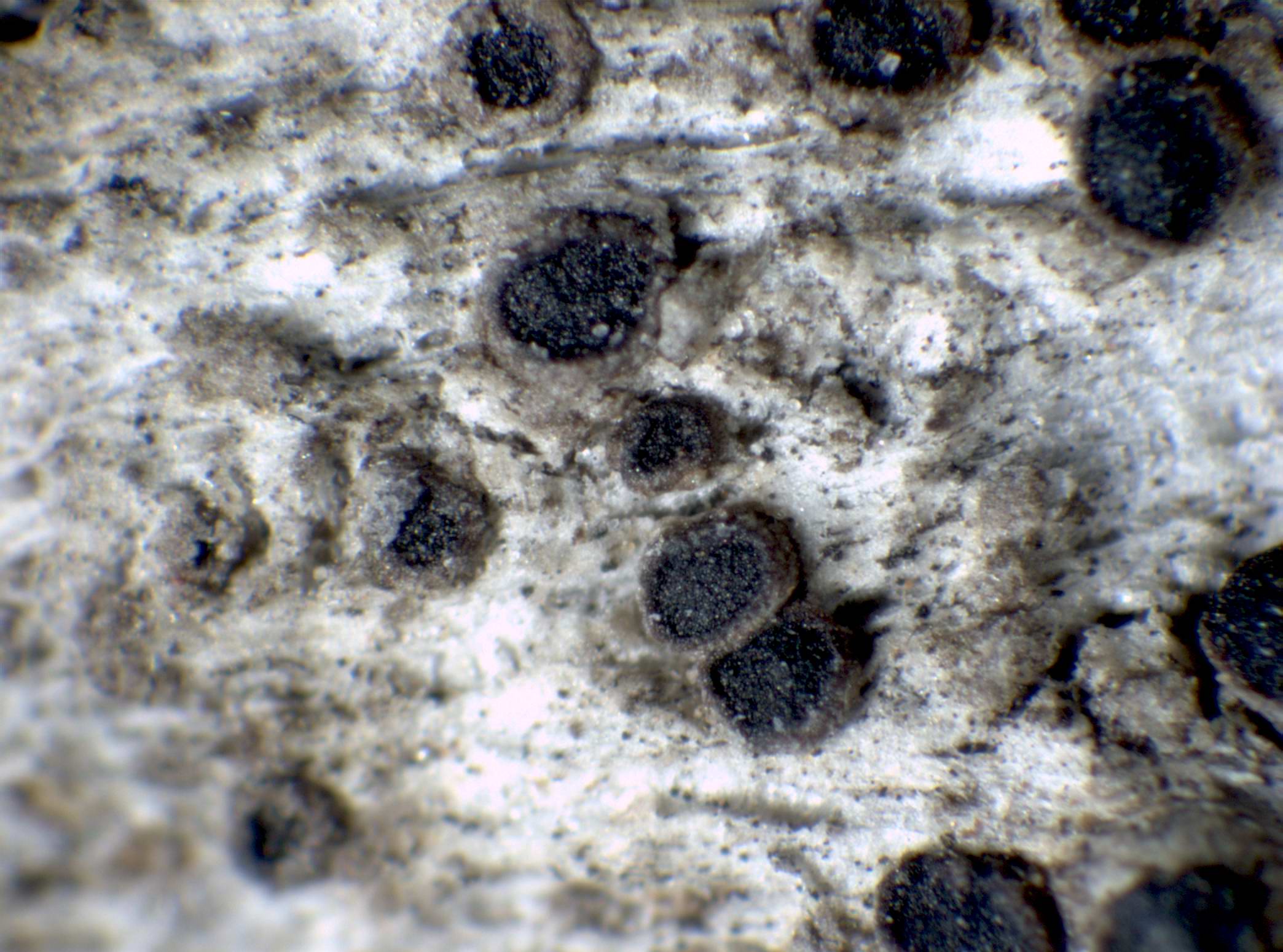
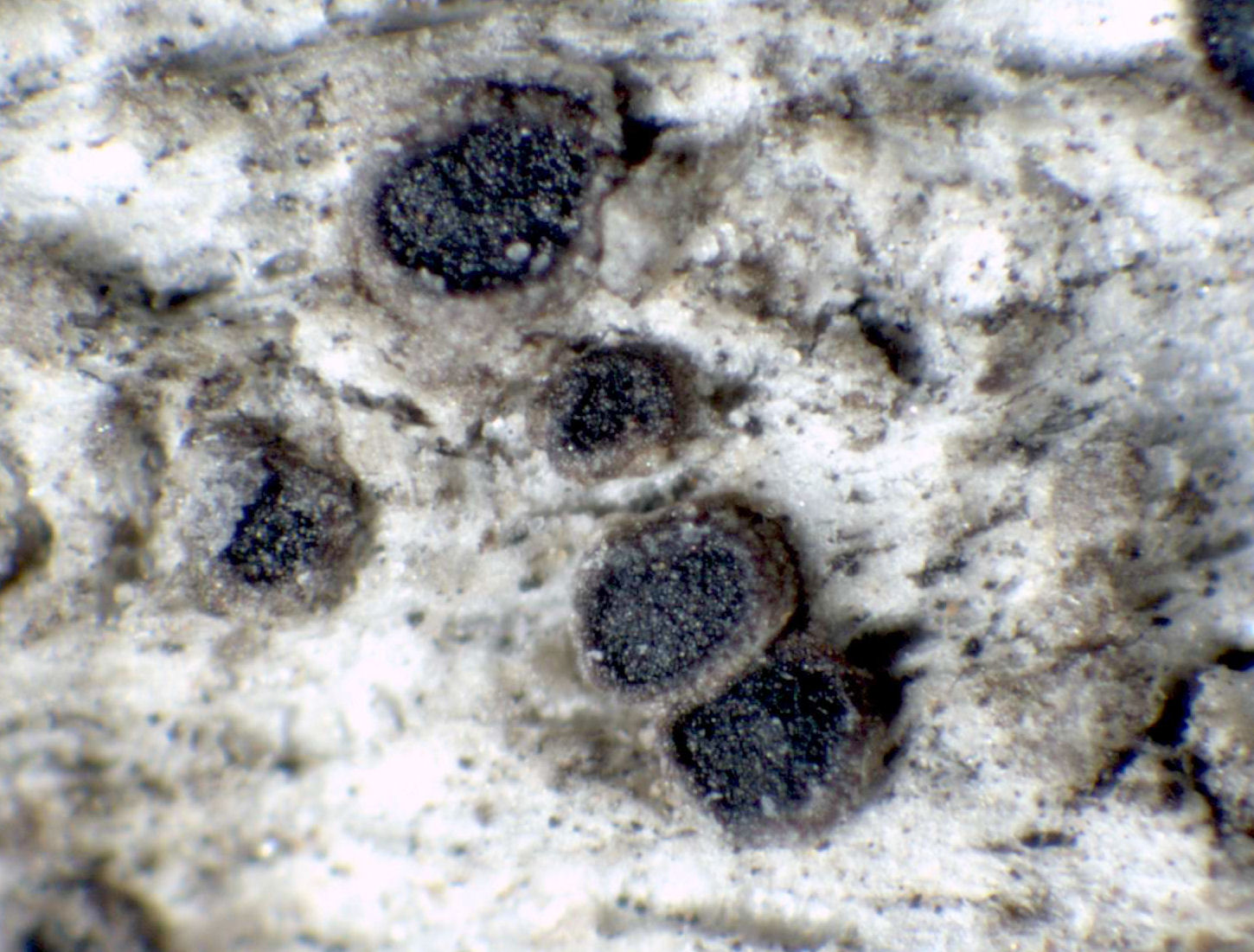
Description: Thallus crustose, episubstratic, rather thick, whitish to pale grey, dull, without a distinct prothallus, rimose or areolate, the areoles 0.15-0.4 mm wide, flat to minutely verrucose. Apothecia lecanorine, subimmersed to broadly attached, abundant, often contiguous and angular by mutual compression, 0.3-0.7(-0.9) mm across, with a dark reddish brown to brown-black, flat to rarely convex disc, an up to 0.1 mm thick, entire, persistent thalline margin and often a thin parathecial ring. Thalline exciple corticate, 40-80 µm wide laterally, (30-)40-100 µm wide at base, the cortex paraplectenchymatous, 5-10 µm wide, I- or I+ blue; proper exciple 5-20 µm wide, weakly pigmented, expanding to 10-40 µm in upper part; epithecium red-brown, K-; hymenium colourless, 50-60(-100) µm high, not inspersed with oil droplets; paraphyses 1.5-2.5 µm thick at mid-level, often conglutinate, the apical cells up to 3.5-5(-7) µm wide, lightly pigmented; hypothecium colourless, (30-)40-80 µm high. Asci 8-spored, cylindrical-clavate, the K/I+ blue tholus penetrated by a faintly amyloid apical cushion with parallel or diverging flanks, the wall K/I-, surrounded by a K/I+ blue outer layer, Lecanora-type. Ascospores 1-septate, pigmented, ellipsoid, (15.5-)19-20(-23.5) x (7.5-)9-10(-11) µm, Physconia-type, the wall minutely warted, the torus always well-developed, with an ontogeny of type A (apical wall thickening after septum formation). Photobiont chlorococcoid. Spot tests: cortex and medulla K-, C-, KC-, P-, UV-. Chemistry: zeorin and an unidentified substance (traces).
Growth form: Crustose
Photobiont: green algae other than Trentepohlia
Reproductive strategy: mainly sexual
Commonnes-rarity: (info)
Alpine belt: absent
Subalpine belt: extremely rare
Montane belt: rare
Dry submediterranean belt: very rare
Humid submediterranean belt: very rare
Padanian area: absent
pH of the substrata:
1 2 3 4 5

Solar irradiation:
1 2 3 4 5
Aridity:
1 2 3 4 5
Eutrophication:
1 2 3 4 5
Poleotolerance:
0 1 2 3
Altitudinal distribution:
1 2 3 4 5 6
Rarity
absent
extremely rare
very rare
rare
rather rare
rather common
common
very common
extremely common
Loading data...
Occurrence data
Predictive map
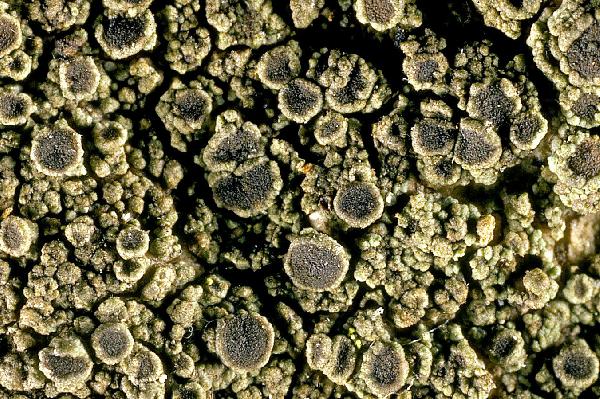
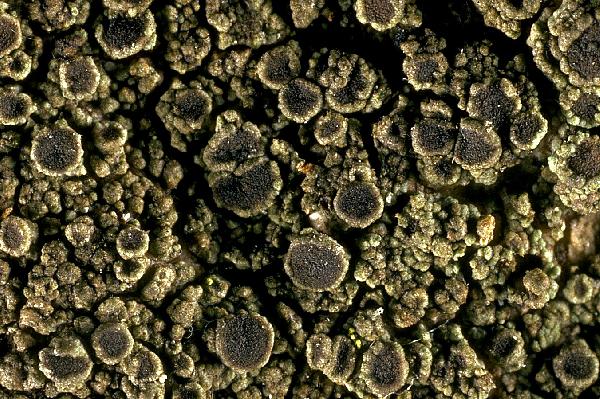
Ulrich Kirschbaum - CC BY-SA 4.0
Central Europe; Switzerland: Alps. on Fraxinus excelsior
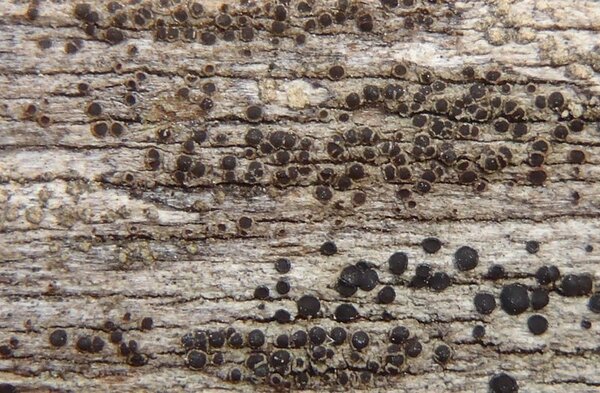
Curtis Randall Björk – CC BY-SA 4.0
British Columbia, Thompson Plateau, near Kamloops Date: October, 2006 Photographed from specimen, (Björk 13322, UBC), on conifer log in dry, open forest
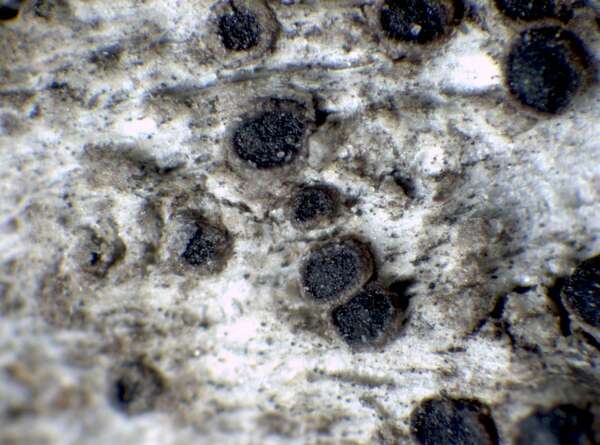
P.L. Nimis; Owner: Department of Life Sciences, University of Trieste
Herbarium: TSB (13462)
2001/11/29
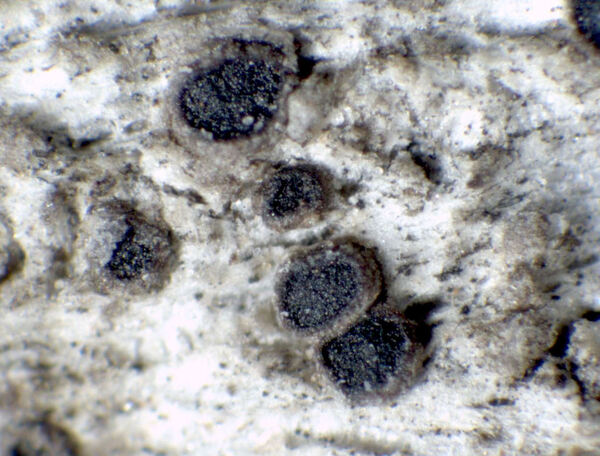
P.L. Nimis CC BY-SA 4.0
TSB 13462
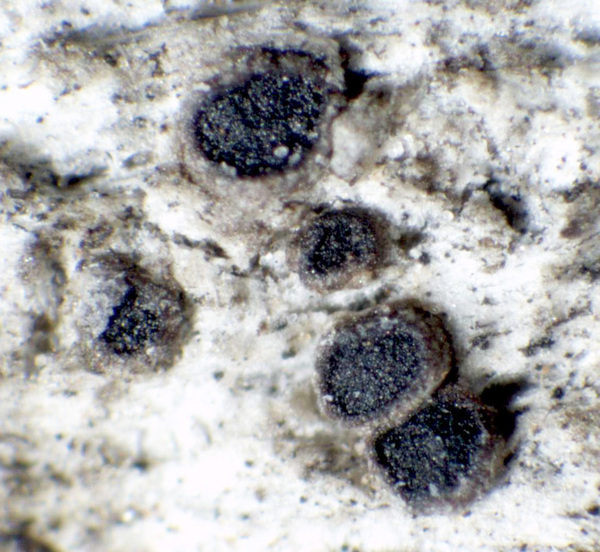
P.L. Nimis CC BY-SA 04
TSB 13462
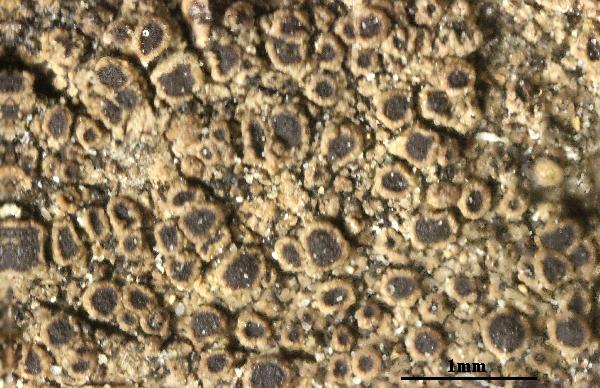
Felix Schumm - CC BY 4.0
[VZ1272], Suecia. Värmland, Nor. Ufterud, 100 m. Ad corticem Quercus.
Leg. S. W. Sundell (no. 8912), 3.3.1973. EX A. VEZDA LICHENES
SELECTI EXSICCATI NR. 1272.
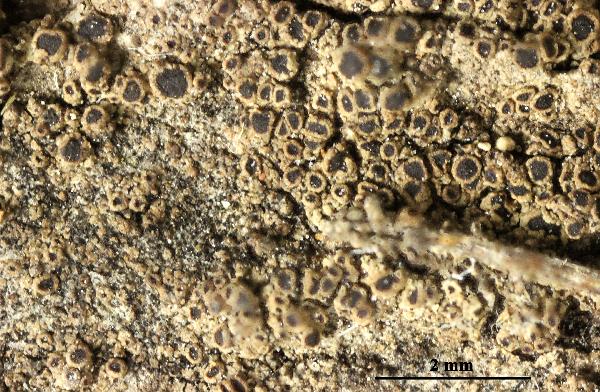
Felix Schumm - CC BY 4.0
[VZ1272], Suecia. Värmland, Nor. Ufterud, 100 m. Ad corticem Quercus.
Leg. S. W. Sundell (no. 8912), 3.3.1973. EX A. VEZDA LICHENES
SELECTI EXSICCATI NR. 1272.
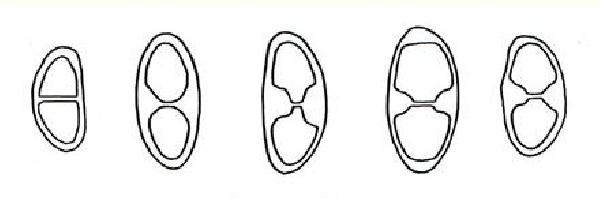
Source: Giralt M. (2001) Bibliotheca lichenologica 79: 1-160.
Growth form: Crustose
Photobiont: green algae other than Trentepohlia
Reproductive strategy: mainly sexual
Commonnes-rarity: (info)
Alpine belt: absent
Subalpine belt: extremely rare
Montane belt: rare
Dry submediterranean belt: very rare
Humid submediterranean belt: very rare
Padanian area: absent
pH of the substrata:
| 1 | 2 | 3 | 4 | 5 |
Solar irradiation:
| 1 | 2 | 3 | 4 | 5 |
Aridity:
| 1 | 2 | 3 | 4 | 5 |
Eutrophication:
| 1 | 2 | 3 | 4 | 5 |
Poleotolerance:
| 0 | 1 | 2 | 3 |
Altitudinal distribution:
| 1 | 2 | 3 | 4 | 5 | 6 |
Rarity
absent
extremely rare
very rare
rare
rather rare
rather common
common
very common
extremely common
Loading data...
Occurrence data
Predictive map
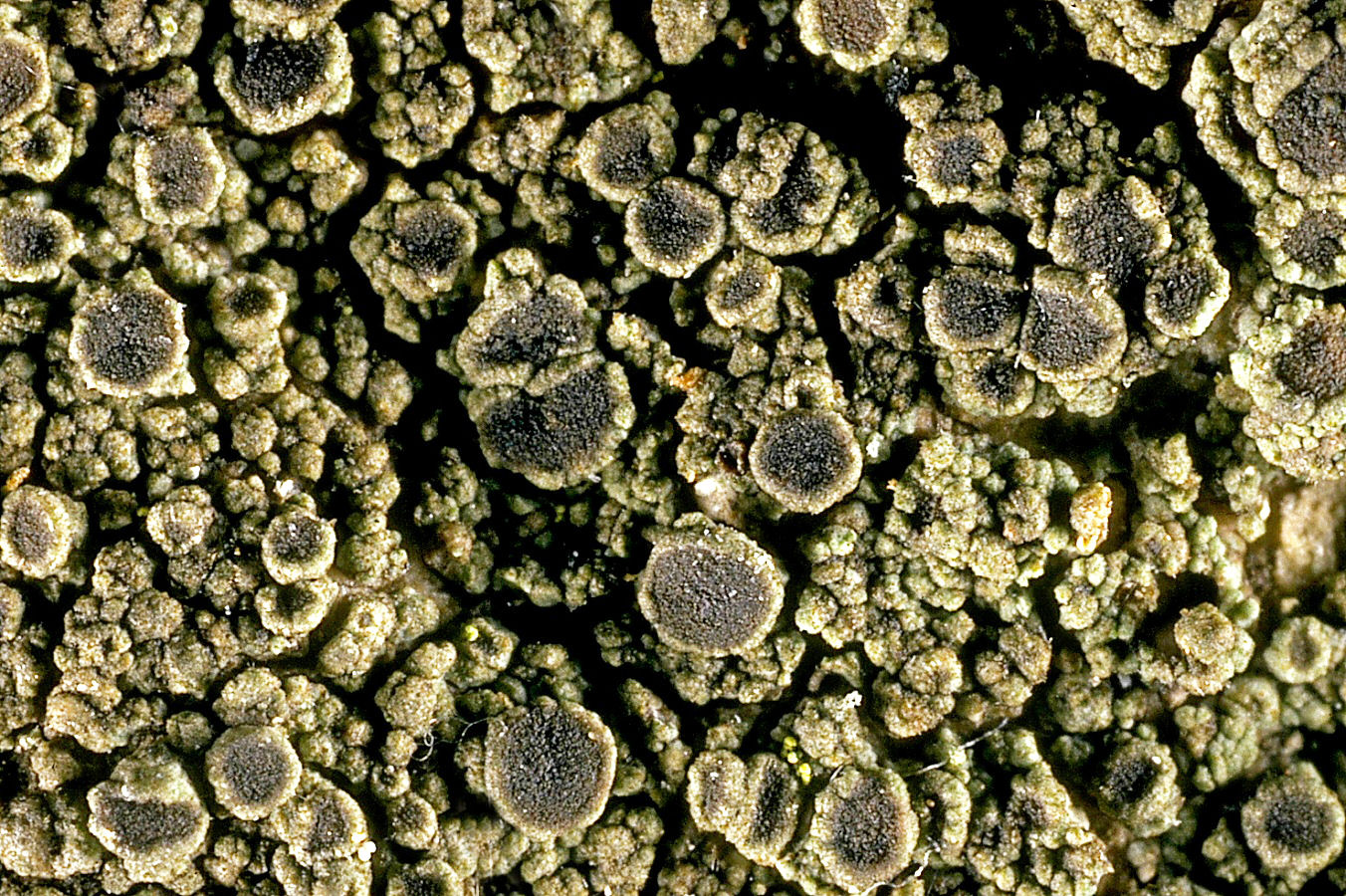
Ulrich Kirschbaum - CC BY-SA 4.0
Central Europe; Switzerland: Alps. on Fraxinus excelsior
Curtis Randall Björk – CC BY-SA 4.0
British Columbia, Thompson Plateau, near Kamloops Date: October, 2006 Photographed from specimen, (Björk 13322, UBC), on conifer log in dry, open forest
P.L. Nimis; Owner: Department of Life Sciences, University of Trieste
Herbarium: TSB (13462)
2001/11/29
P.L. Nimis CC BY-SA 4.0
TSB 13462
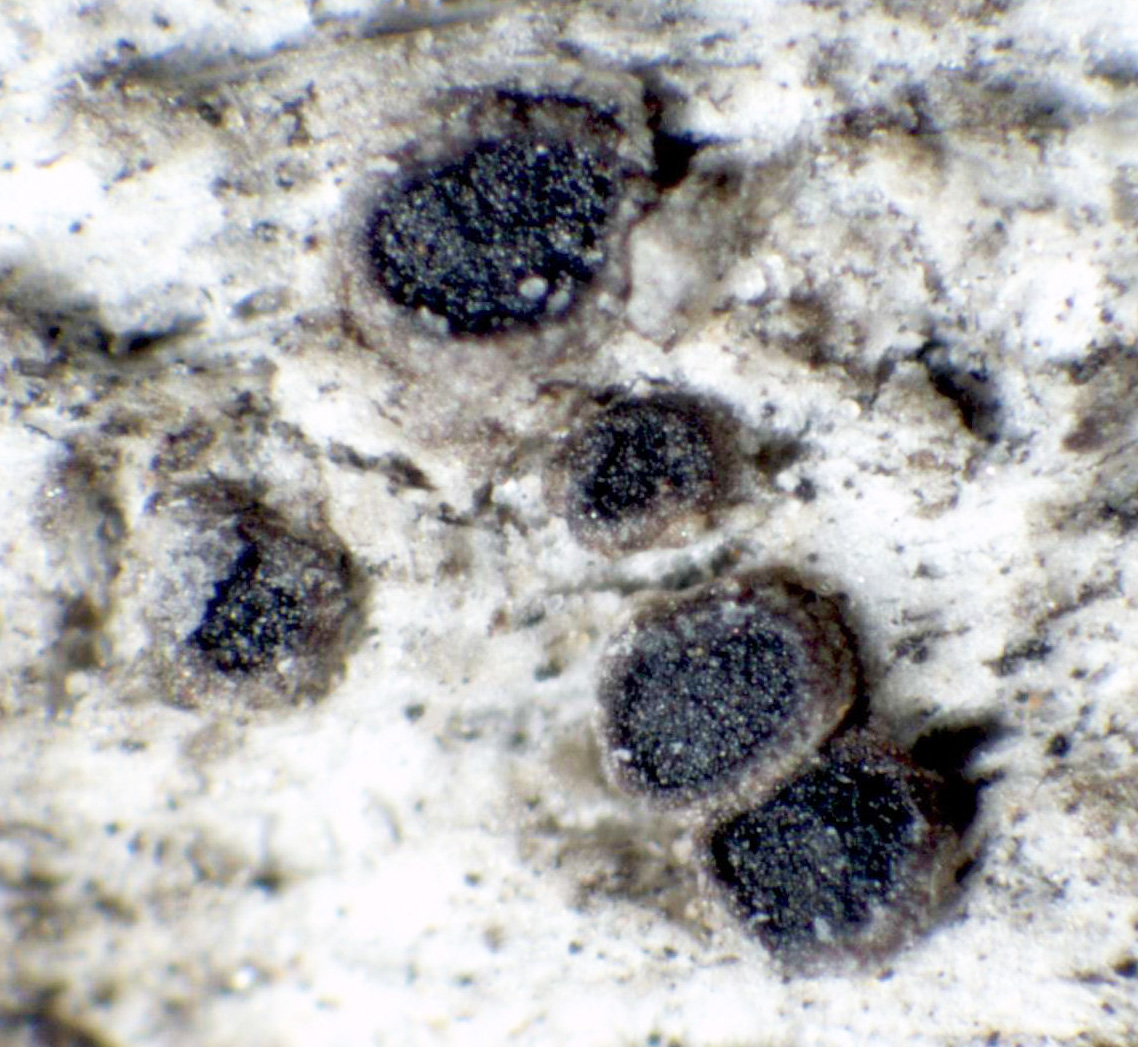
P.L. Nimis CC BY-SA 04
TSB 13462

Felix Schumm - CC BY 4.0
[VZ1272], Suecia. Värmland, Nor. Ufterud, 100 m. Ad corticem Quercus. Leg. S. W. Sundell (no. 8912), 3.3.1973. EX A. VEZDA LICHENES SELECTI EXSICCATI NR. 1272.

Felix Schumm - CC BY 4.0
[VZ1272], Suecia. Värmland, Nor. Ufterud, 100 m. Ad corticem Quercus. Leg. S. W. Sundell (no. 8912), 3.3.1973. EX A. VEZDA LICHENES SELECTI EXSICCATI NR. 1272.