Rinodina calcarea (Arnold) Arnold
Verh. zool.-bot. Ges. Wien, 29: 362, 1879. Basionym: Rinodina caesiella var. calcarea Arnold - Flora, 43: 69, 1860.
Synonyms: Lecanora confragosa var. glebulosa Harm.; Rinodina calcarea var. ampsagana (Stizenb.) Zahlbr.; Rinodina calcarea var. melanocarpa J. Steiner; Rinodina calcarea var. nummulitica Flagey; Rinodina confragosa var. glebulosa (Harm.) Zahlbr.
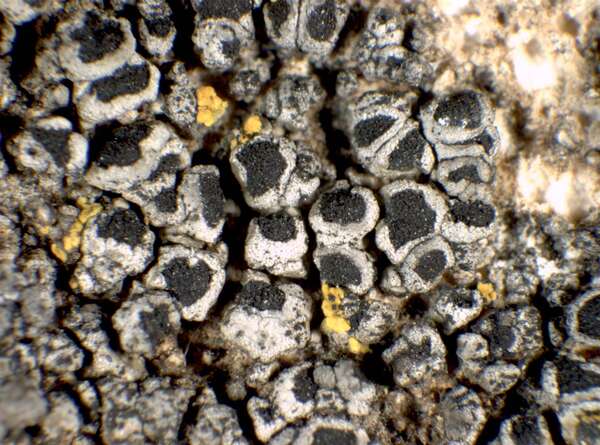
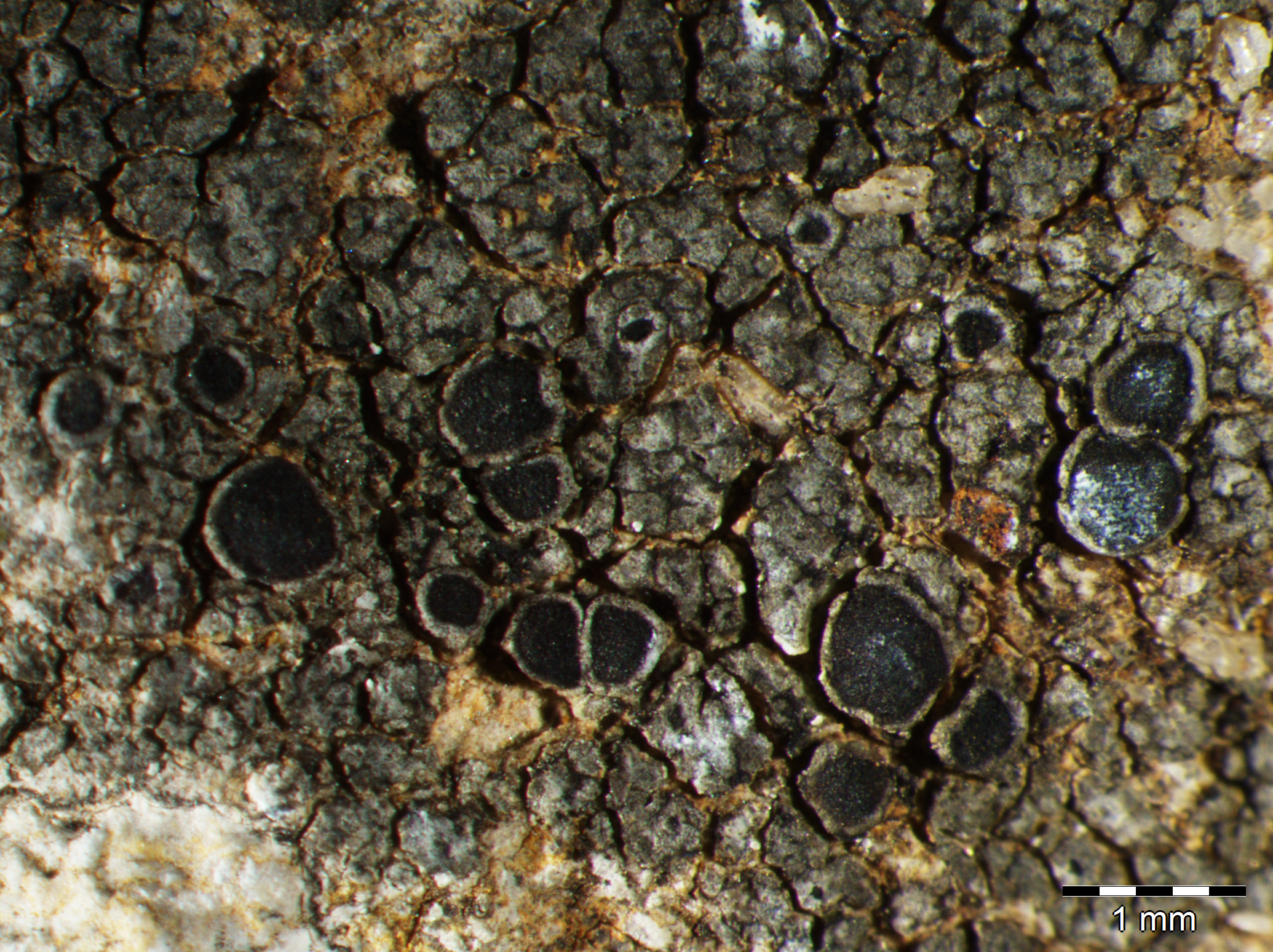
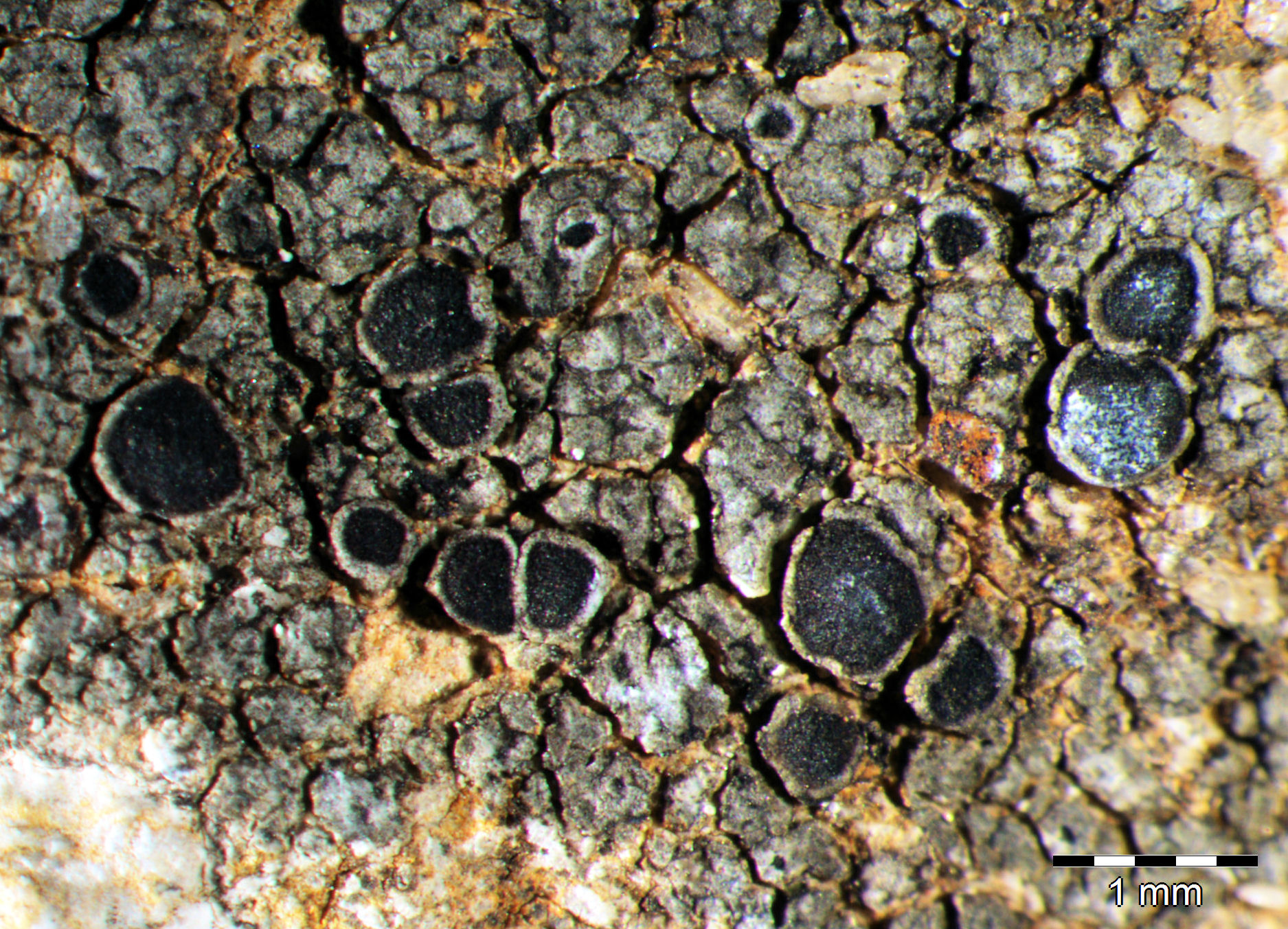
Description: Thallus crustose, episubstratic, thick, continuous to rimose or areolate, whitish grey to pale brown, often with a pruinose appearance, the areoles smooth to granulose-verrucose, flat to convex. Apothecia lecanorine, 0.5-0.8(-1) mm across, adnate to sessile, with a dark brown to black, flat to weakly convex disc and a thick, smooth to slightly warted, persistent thalline margin. Epithecium reddish brown, 10-20 µm high, K-; hymenium colourless, 90-120(-130) μm high, not inspersed with oil droplets; paraphyses 1.5-2.5 µm thick at mid-level, the apical cells swollen, 4-7 µm wide, with a dark cap; hypothecium colourless, without oil droplets, up to 200 µm high. Asci 8-spored, clavate, the K/I+ blue tholus penetrated by a faintly amyloid apical cushion with parallel or diverging flanks, the wall K/I-, surrounded by a K/I+ blue outer layer, Lecanora-type. Ascospores 1-septate, pigmented, ellipsoid, (16-)20-26 x 10-16 μm, Tunicata-type i.e. with a thick outer wall, and lumina thus appearing double-walled, the torus absent, with ontogeny intermediate between types A and B. Photobiont chlorococcoid. Spot tests: K-, C-, KC-, P-, UV-. Chemistry: without lichen substances.
Growth form: Crustose
Substrata: rocks
Photobiont: green algae other than Trentepohlia
Reproductive strategy: mainly sexual
Commonnes-rarity: (info)
Alpine belt: absent
Subalpine belt: rare
Montane belt: rather rare
Dry submediterranean belt: rather common
Humid submediterranean belt: rather common
Padanian area: absent
pH of the substrata:
1 2 3 4 5

Solar irradiation:
1 2 3 4 5
Aridity:
1 2 3 4 5
Eutrophication:
1 2 3 4 5
Poleotolerance:
0 1 2 3
Altitudinal distribution:
1 2 3 4 5 6
Rarity
absent
extremely rare
very rare
rare
rather rare
rather common
common
very common
extremely common
Loading data...
Occurrence data
Predictive map
P.L. Nimis; Owner: Department of Life Sciences, University of Trieste
Herbarium: TSB (26925)
2001/12/11
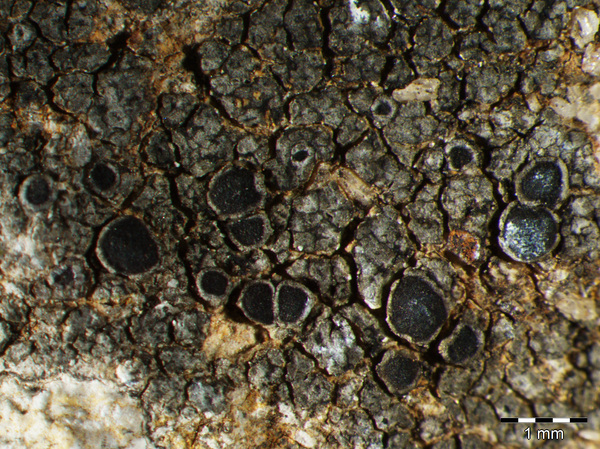
Harrie Sipman - Source: https://archive.bgbm.org/sipman/Zschackia/AegeanLichens/Rinodina.htm
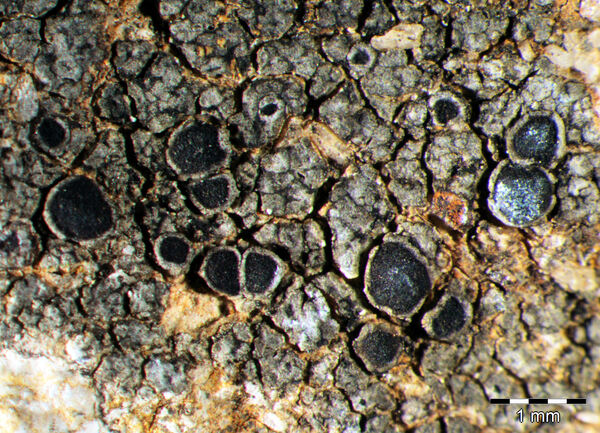
Harrie Sipman - Source: https://archive.bgbm.org/sipman/Zschackia/AegeanLichens/Rinodina.htm
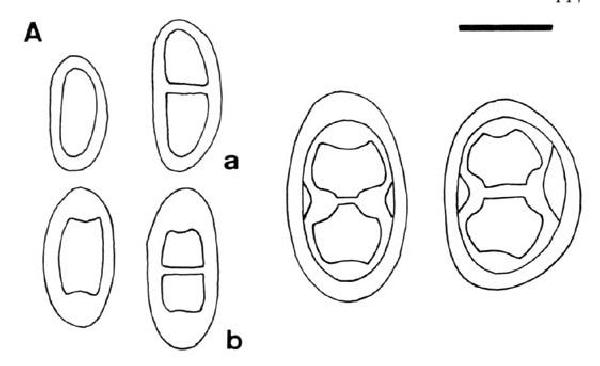
Source: Giralt M., Boom P.P.G. van den, & Matzer M. (1997) Mycotaxon 61: 103-151
Growth form: Crustose
Substrata: rocks
Photobiont: green algae other than Trentepohlia
Reproductive strategy: mainly sexual
Commonnes-rarity: (info)
Alpine belt: absent
Subalpine belt: rare
Montane belt: rather rare
Dry submediterranean belt: rather common
Humid submediterranean belt: rather common
Padanian area: absent
pH of the substrata:
| 1 | 2 | 3 | 4 | 5 |
Solar irradiation:
| 1 | 2 | 3 | 4 | 5 |
Aridity:
| 1 | 2 | 3 | 4 | 5 |
Eutrophication:
| 1 | 2 | 3 | 4 | 5 |
Poleotolerance:
| 0 | 1 | 2 | 3 |
Altitudinal distribution:
| 1 | 2 | 3 | 4 | 5 | 6 |
Rarity
absent
extremely rare
very rare
rare
rather rare
rather common
common
very common
extremely common
Loading data...
Occurrence data
Predictive map
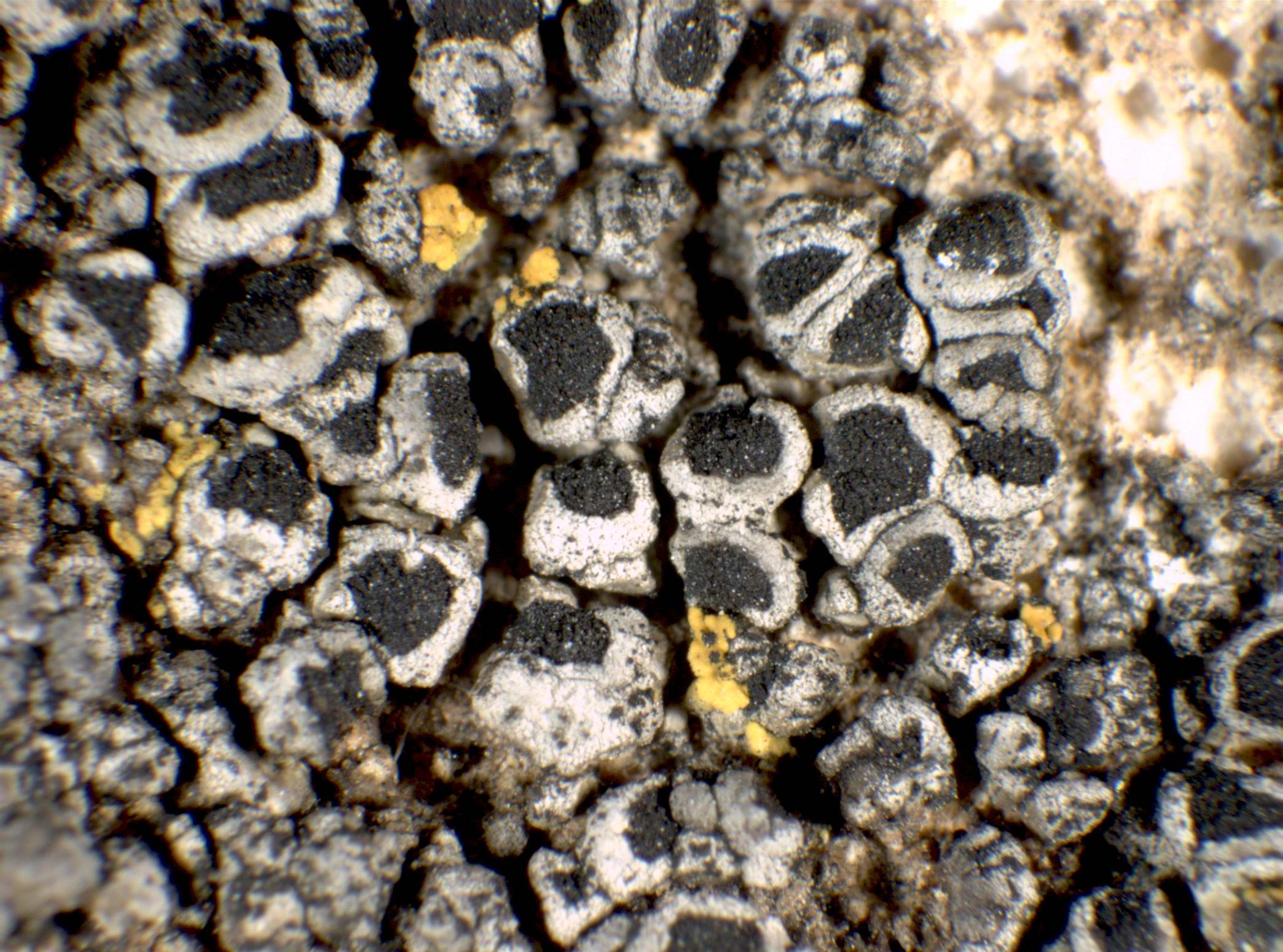
P.L. Nimis; Owner: Department of Life Sciences, University of Trieste
Herbarium: TSB (26925)
2001/12/11
Harrie Sipman - Source: https://archive.bgbm.org/sipman/Zschackia/AegeanLichens/Rinodina.htm
Harrie Sipman - Source: https://archive.bgbm.org/sipman/Zschackia/AegeanLichens/Rinodina.htm