Thelidium incavatum Mudd
Nyl. ex Mudd, Man. Brit. Lich.: 295, 1861.
Synonyms: Amphoridium umbrosum A. Massal.; Amphoroblastia calcivora (Nyl.) Servít; Amphoroblastia incavata (Mudd) Servít; Polyblastia incavata (Mudd) Croz.; Thelidium umbrosum (A. Massal.) A. Massal. non Arnold; Verrucaria cryptarum var. asperata Garov.
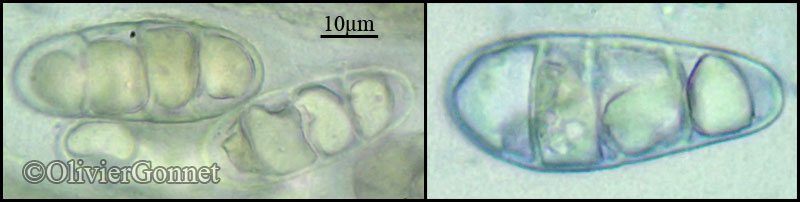
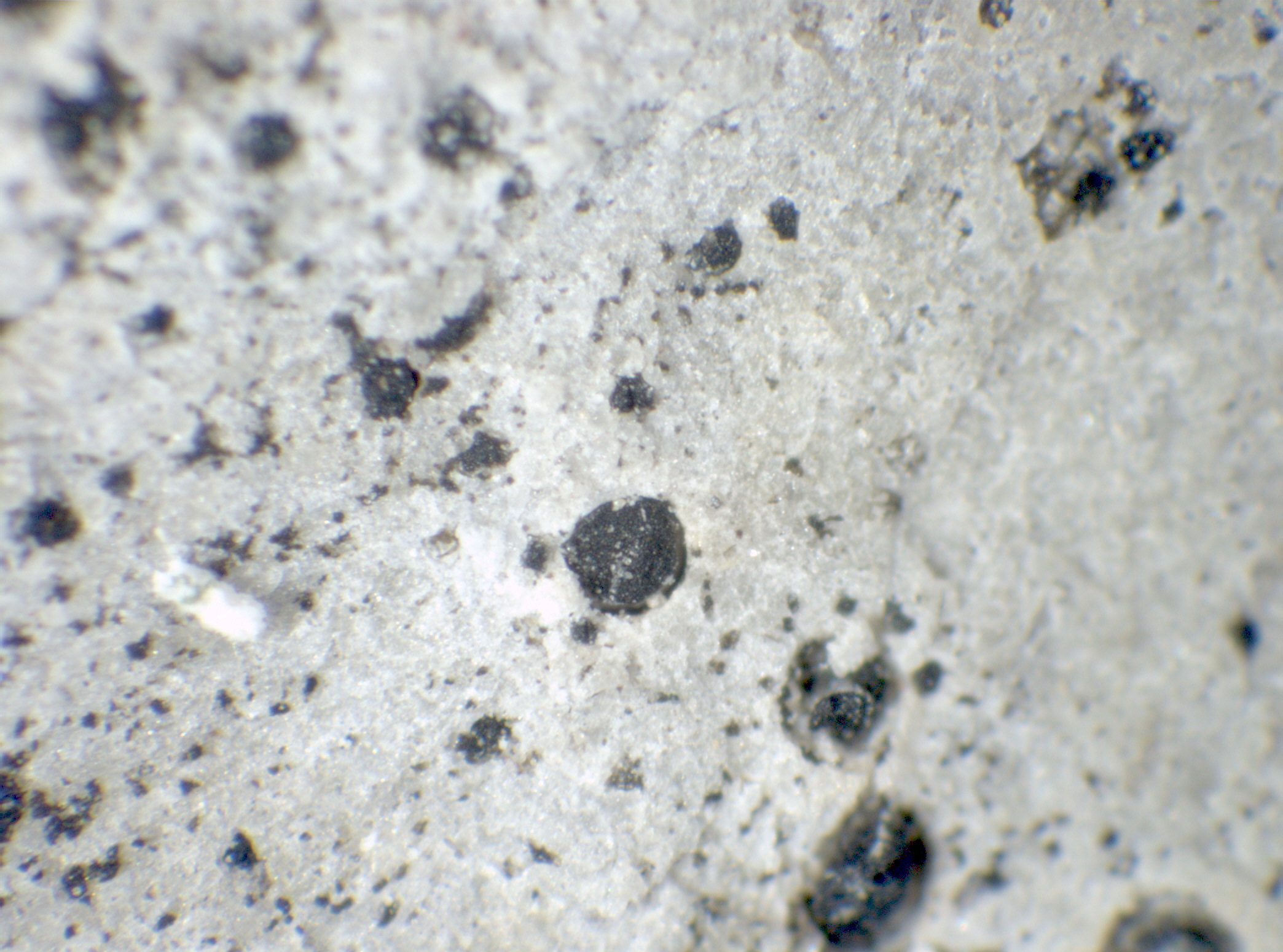
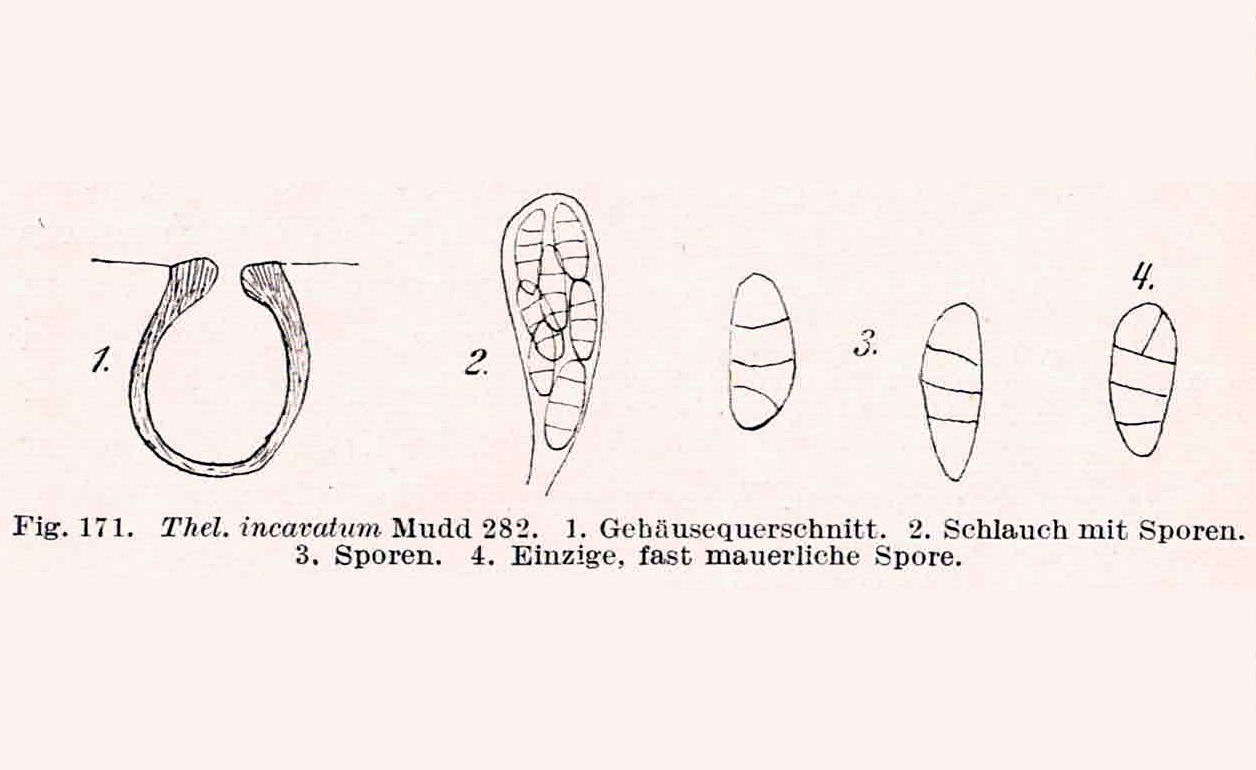
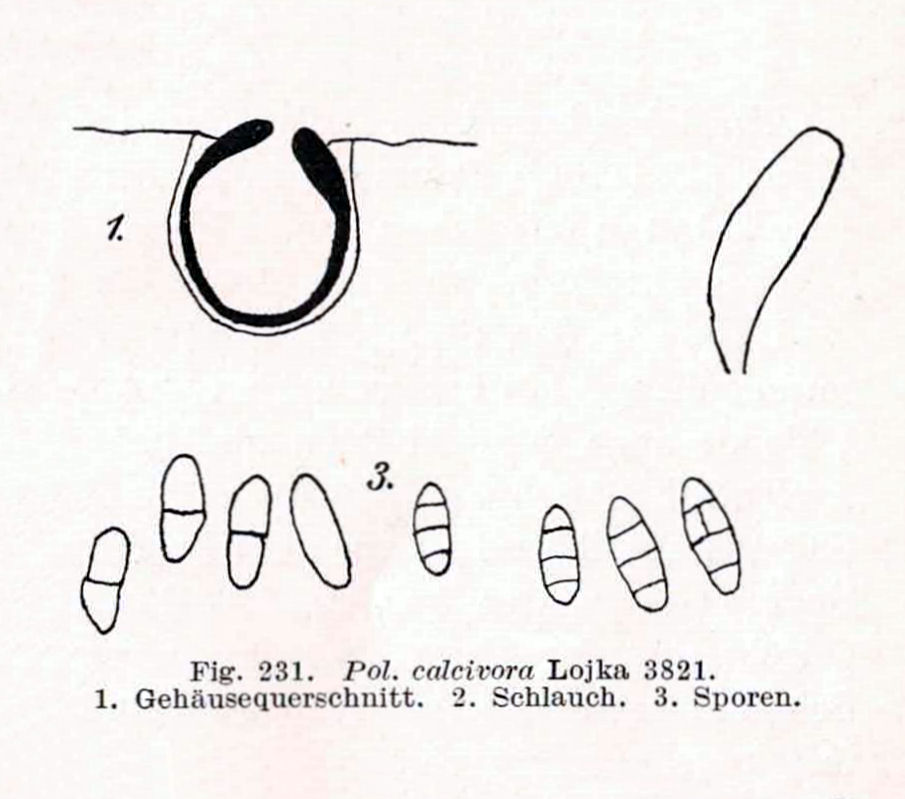
Description: Thallus crustose, endosubstratic to hemiendosubstratic, up to 0.1-0.15 mm thick, whitish, dirty cream-coloured or pale grey, continuous or finely cracked, sometimes poorly evident. Perithecia black, often pear-shaped, 0.2-0.5(-0.6) mm across, immersed in the rock, with the upper part slightly projecting, often separated from the rock by a fine fissure, leaving deep pits when they fall out. Involucrellum absent or poorly developed, apical, 30-60(-90)μm thick; exciple dark brown to black throughout, 15-25 μm thick, (170-)260-520(-660) μm across; hamathecium of periphyses and periphysoids measuring c. 40-50 x 1.5-2 μm, interascal filaments absent; hymenial gel I+ red (I+ blue at very low concentrations of I), K/I+ blue. Asci 8-spored, ellipsoid to clavate, I-, fissitunicate, the wall thickened above, with an ocular chamber, dehiscent by extrusion of a delicate rostrum. Ascospores 3(-5)-septate, rarely submuriform with 1(-2) longitudinal septa, hyaline, narrowly ellipsoid, (25-)32-46(-60) x (9-)12-16(-20) μm. Photobiont chlorococcoid. Spot tests: K-, C-, KC-, P-, UV-. Chemistry: without lichen substances.
Growth form: Crustose
Substrata: rocks
Photobiont: green algae other than Trentepohlia
Reproductive strategy: mainly sexual
Commonnes-rarity: (info)
Alpine belt: rather common
Subalpine belt: rather rare
Montane belt: extremely rare
Dry submediterranean belt: absent
Humid submediterranean belt: absent
Padanian area: absent
pH of the substrata:
1 2 3 4 5

Solar irradiation:
1 2 3 4 5
Aridity:
1 2 3 4 5
Eutrophication:
1 2 3 4 5
Poleotolerance:
0 1 2 3
Altitudinal distribution:
1 2 3 4 5 6
Rarity
absent
extremely rare
very rare
rare
rather rare
rather common
common
very common
extremely common
Loading data...
Occurrence data
Predictive map
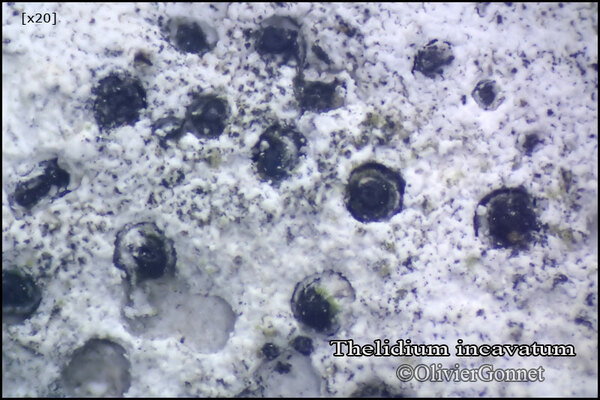
Courtesy Danièle et Olivier Gonnet - Source: https://www.afl-lichenologie.fr/Photos_AFL/Photos_AFL_T/Textes_T2/Thelidium_incavatum.htm
France, 25/8/2016 - Crête du Mont d'Or, alt. 1450 m - Doubs
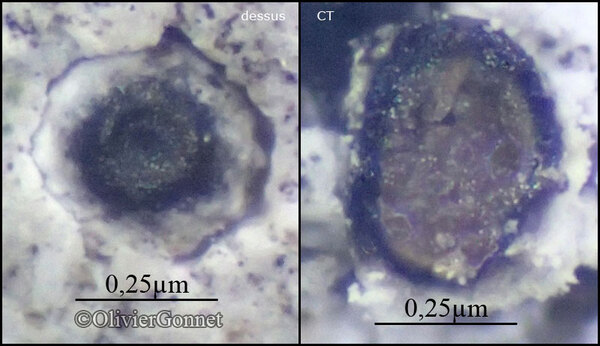
Courtesy Danièle et Olivier Gonnet - Source: https://www.afl-lichenologie.fr/Photos_AFL/Photos_AFL_T/Textes_T2/Thelidium_incavatum.htm
France, 25/8/2016 - Crête du Mont d'Or, alt. 1450 m - Doubs
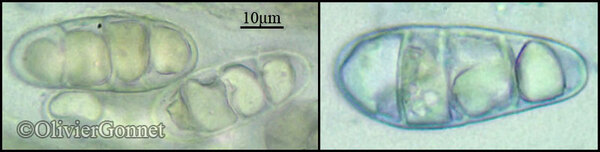
Courtesy Danièle et Olivier Gonnet - Source: https://www.afl-lichenologie.fr/Photos_AFL/Photos_AFL_T/Textes_T2/Thelidium_incavatum.htm
France, 25/8/2016 - Crête du Mont d'Or, alt. 1450 m - Doubs
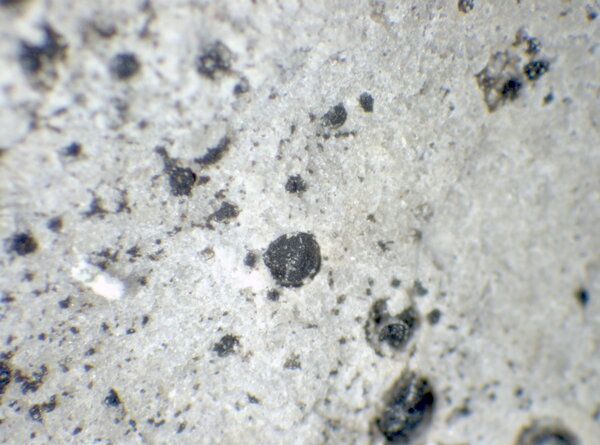
P.L. Nimis; Owner: Department of Life Sciences, University of Trieste
Herbarium: TSB (34785)
2002/02/02
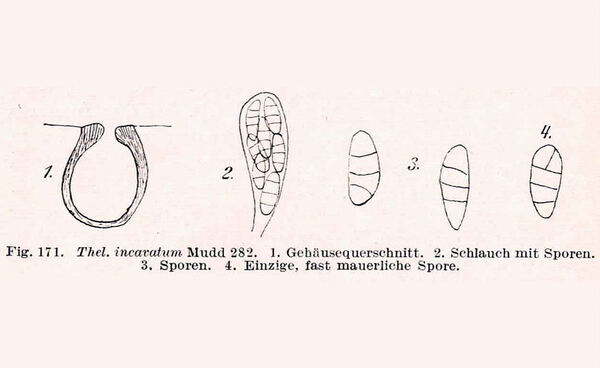
Source: Zschacke, H. (1934) Epigloeaceae, Verrucariaceae und Dermatocarpaceae. In: Dr. L. Rabenhorst‘s Kryptogamen-Flora, Band 9, Abt. 1, Teil 1. Akademische Verlagsgesellschaft, Leipzig, 695 pp. - Public Domain
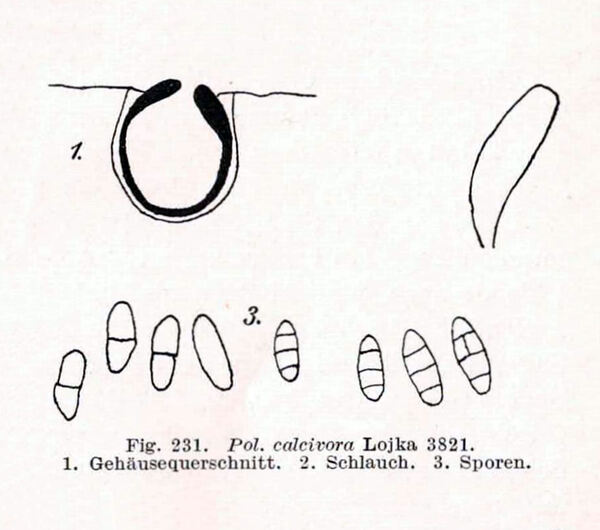
Source: Zschacke, H. (1934) Epigloeaceae, Verrucariaceae und Dermatocarpaceae. In: Dr. L. Rabenhorst‘s Kryptogamen-Flora, Band 9, Abt. 1, Teil 1. Akademische Verlagsgesellschaft, Leipzig, 695 pp. - Public Domain
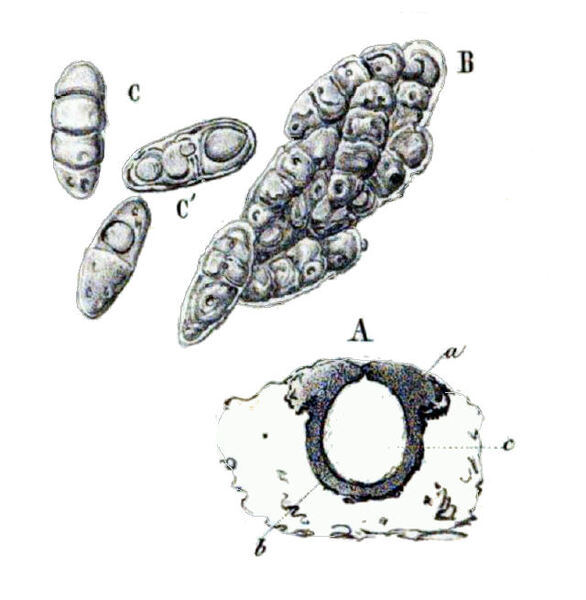
G. Gibelli, in S. Garovaglio, 1865 Tentamen Dispositionis Methodicae Lichenum In Longobardia Nascentium. Mediolanum
as Verrucaria cryptarum var. asperata Garov.
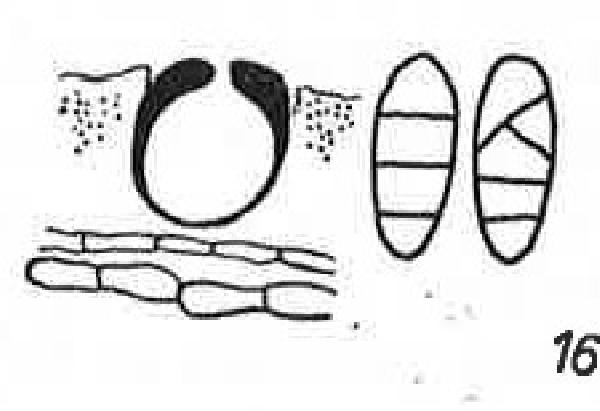
Source: Servít M. 1954a. Lichenes familiae Verrucariacearum. Prag, 249 pp.
as Amphoroblastia calcivora
Growth form: Crustose
Substrata: rocks
Photobiont: green algae other than Trentepohlia
Reproductive strategy: mainly sexual
Commonnes-rarity: (info)
Alpine belt: rather common
Subalpine belt: rather rare
Montane belt: extremely rare
Dry submediterranean belt: absent
Humid submediterranean belt: absent
Padanian area: absent
pH of the substrata:
| 1 | 2 | 3 | 4 | 5 |
Solar irradiation:
| 1 | 2 | 3 | 4 | 5 |
Aridity:
| 1 | 2 | 3 | 4 | 5 |
Eutrophication:
| 1 | 2 | 3 | 4 | 5 |
Poleotolerance:
| 0 | 1 | 2 | 3 |
Altitudinal distribution:
| 1 | 2 | 3 | 4 | 5 | 6 |
Rarity
absent
extremely rare
very rare
rare
rather rare
rather common
common
very common
extremely common
Loading data...
Occurrence data
Predictive map
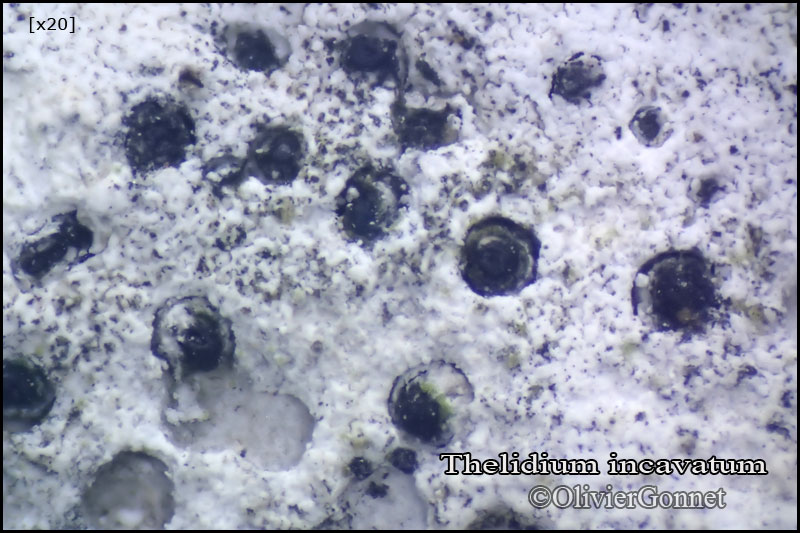
Courtesy Danièle et Olivier Gonnet - Source: https://www.afl-lichenologie.fr/Photos_AFL/Photos_AFL_T/Textes_T2/Thelidium_incavatum.htm
France, 25/8/2016 - Crête du Mont d'Or, alt. 1450 m - Doubs
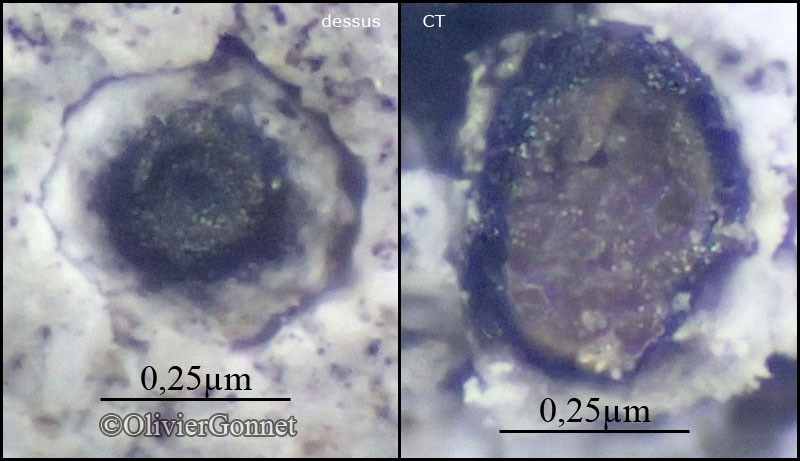
Courtesy Danièle et Olivier Gonnet - Source: https://www.afl-lichenologie.fr/Photos_AFL/Photos_AFL_T/Textes_T2/Thelidium_incavatum.htm
France, 25/8/2016 - Crête du Mont d'Or, alt. 1450 m - Doubs
Courtesy Danièle et Olivier Gonnet - Source: https://www.afl-lichenologie.fr/Photos_AFL/Photos_AFL_T/Textes_T2/Thelidium_incavatum.htm
France, 25/8/2016 - Crête du Mont d'Or, alt. 1450 m - Doubs
P.L. Nimis; Owner: Department of Life Sciences, University of Trieste
Herbarium: TSB (34785)
2002/02/02
Source: Zschacke, H. (1934) Epigloeaceae, Verrucariaceae und Dermatocarpaceae. In: Dr. L. Rabenhorst‘s Kryptogamen-Flora, Band 9, Abt. 1, Teil 1. Akademische Verlagsgesellschaft, Leipzig, 695 pp. - Public Domain
Source: Zschacke, H. (1934) Epigloeaceae, Verrucariaceae und Dermatocarpaceae. In: Dr. L. Rabenhorst‘s Kryptogamen-Flora, Band 9, Abt. 1, Teil 1. Akademische Verlagsgesellschaft, Leipzig, 695 pp. - Public Domain
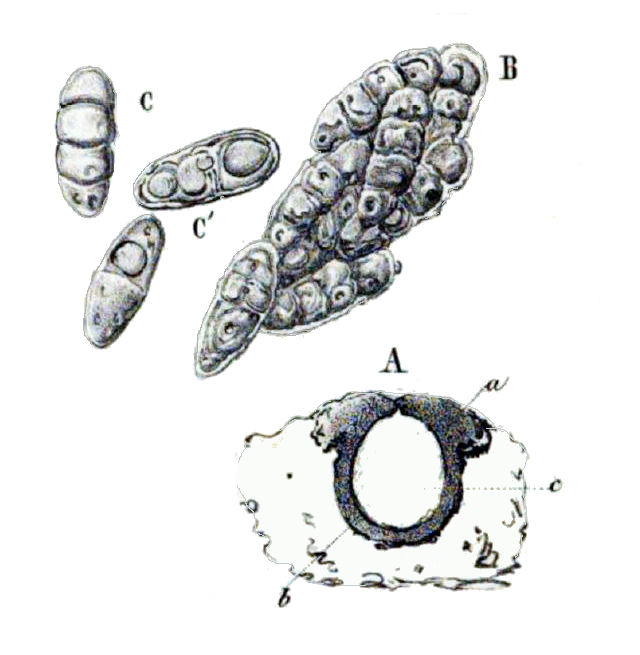
G. Gibelli, in S. Garovaglio, 1865 Tentamen Dispositionis Methodicae Lichenum In Longobardia Nascentium. Mediolanum
as Verrucaria cryptarum var. asperata Garov.