Cladonia turgida Hoffm.
Deutschl. Fl., 2: 124, 1796.
Synonyms:
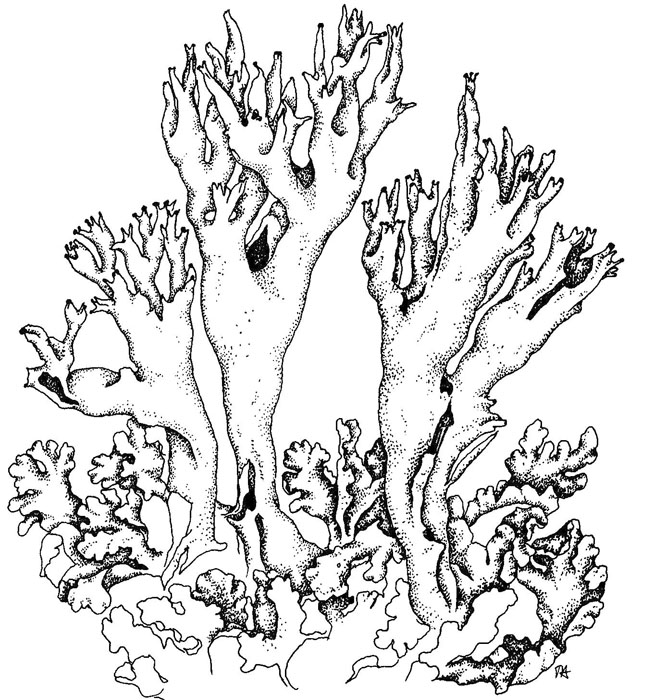
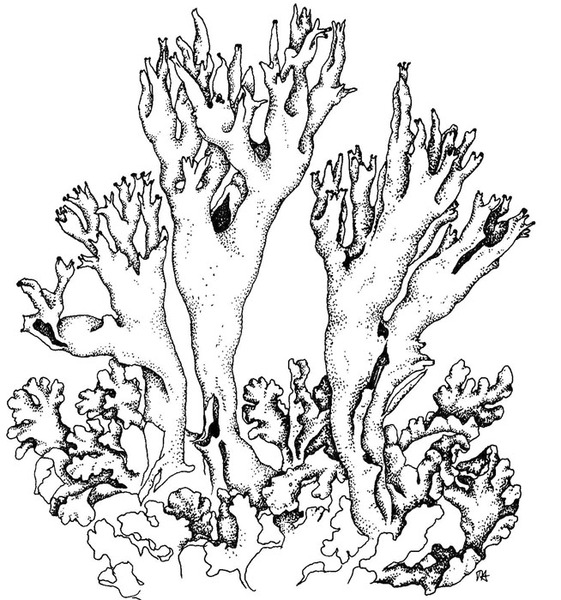
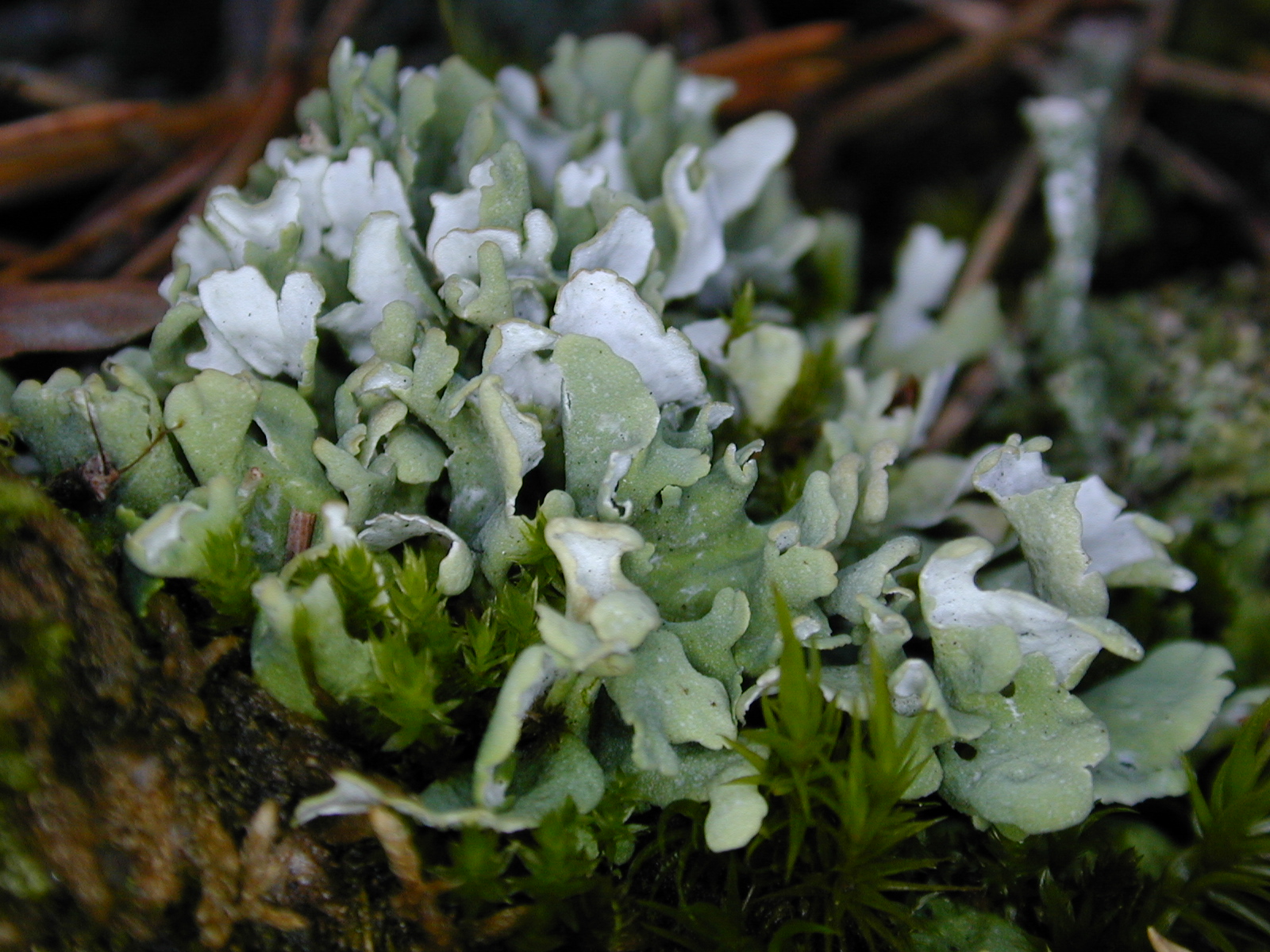
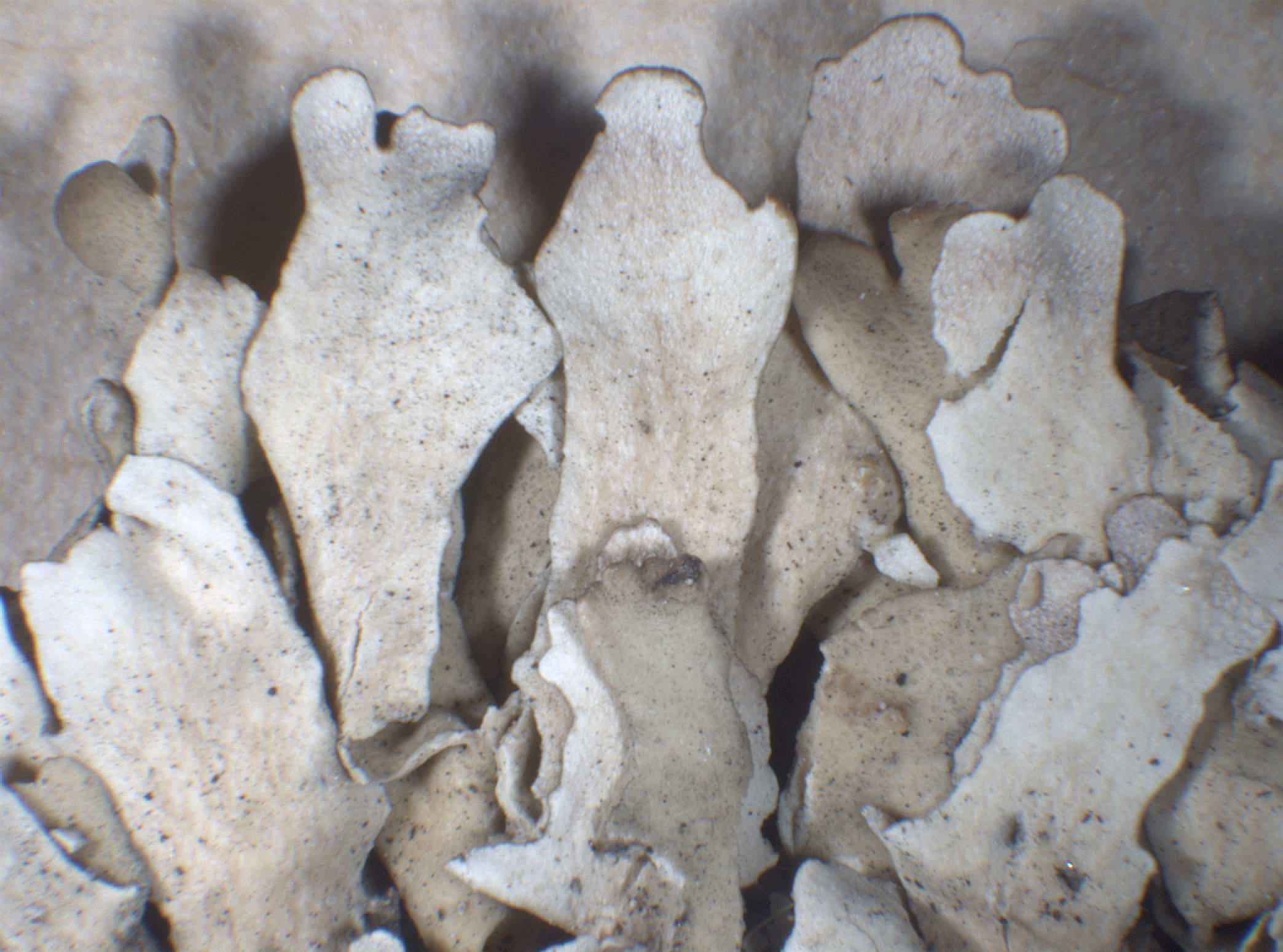
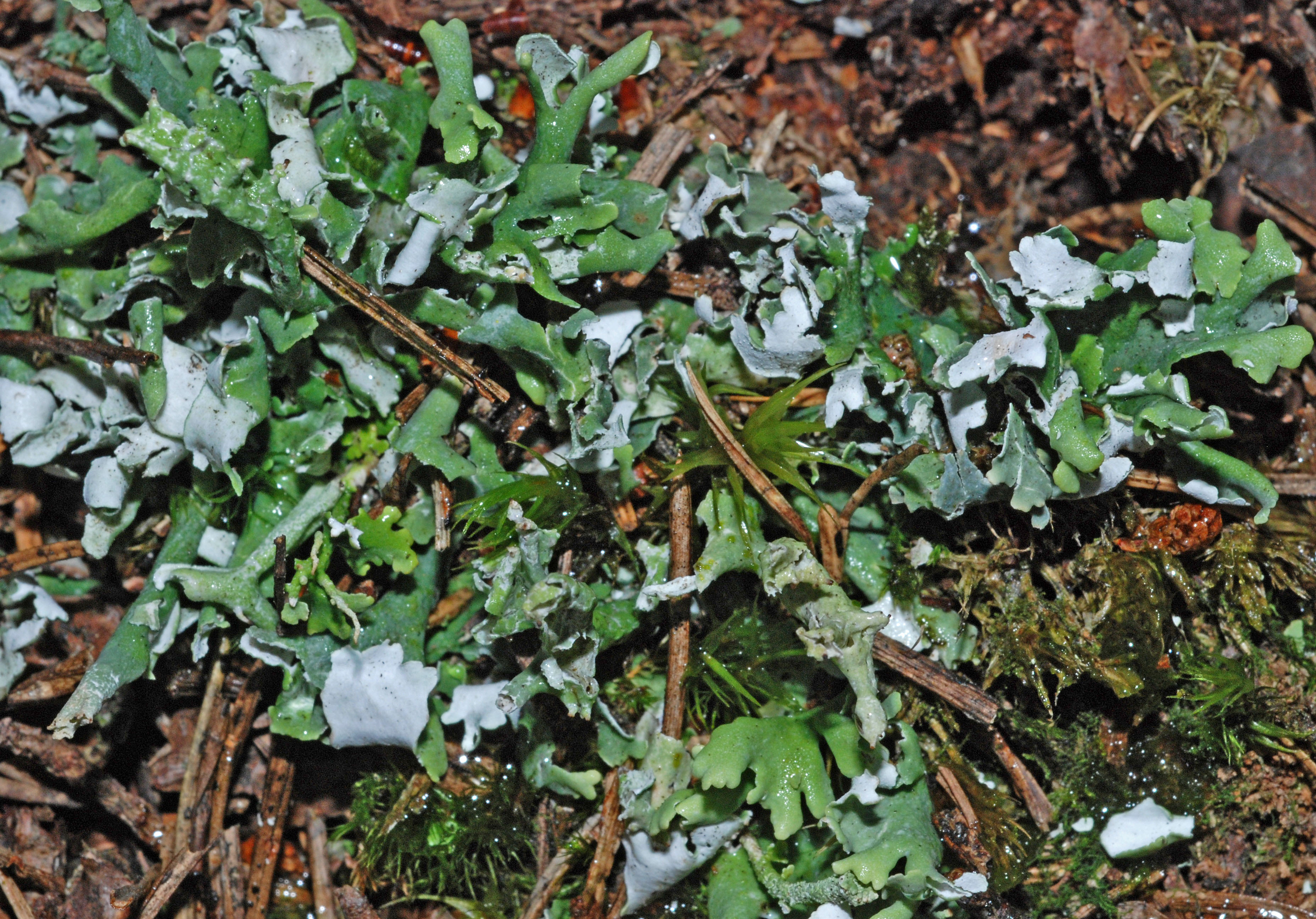
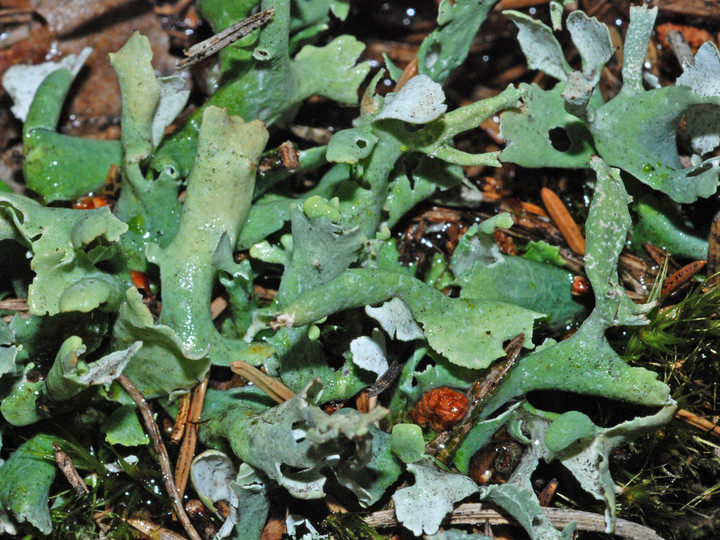
Description: Primary thallus squamulose, usually persistent, the squamules large, 0.5-2.5 cm long, 2-7 mm wide, coarse, with broad and rounded divisions, grey-green to glaucous green above, white beneath, often darkened but not melanotic at base. Podetia robust, hollow inside, greyish-green, somehow glaucescent, 0.5-7 cm tall, 2-3(-5) mm thick, simple to irregularly branched, the terminal branches usually subulate, cupless or with irregular cups, esorediate, with a smooth to areolate cortex, the areoles separated by white lines and cracks, also inside the cups. Apothecia rare, brown, convex, often clustered. Asci 8-spored, clavate, thickened at apex, with a K/I+ blue tholus and a K/I+ strongly blue outer gelatinous sheath, Cladonia-type. Ascospores 1-celled, hyaline, ellipsoid. Pycnidia common both on basal squamules and on tips of podetia, sessile, with a colourless jelly. Conidia hyaline, curved. Photobiont chlorococcoid. Spot tests: K+ yellow sometimes slowly turning brown (rarely K-), C-, KC-, P+ red (rarely P-), UV-. Chemistry: atranorin (rarely scarce or absent) and fumarprotocetraric acid (almost always present).
Growth form: Fruticose
Substrata: soil, terricolous mosses, and plant debris
Photobiont: green algae other than Trentepohlia
Reproductive strategy: mainly sexual
Commonnes-rarity: (info)
Alpine belt: absent
Subalpine belt: extremely rare
Montane belt: absent
Dry submediterranean belt: absent
Humid submediterranean belt: absent
Padanian area: absent
pH of the substrata:
1 2 3 4 5

Solar irradiation:
1 2 3 4 5
Aridity:
1 2 3 4 5
Eutrophication:
1 2 3 4 5
Poleotolerance:
0 1 2 3
Altitudinal distribution:
1 2 3 4 5 6
Rarity
absent
extremely rare
very rare
rare
rather rare
rather common
common
very common
extremely common
Loading data...
Occurrence data
Predictive map
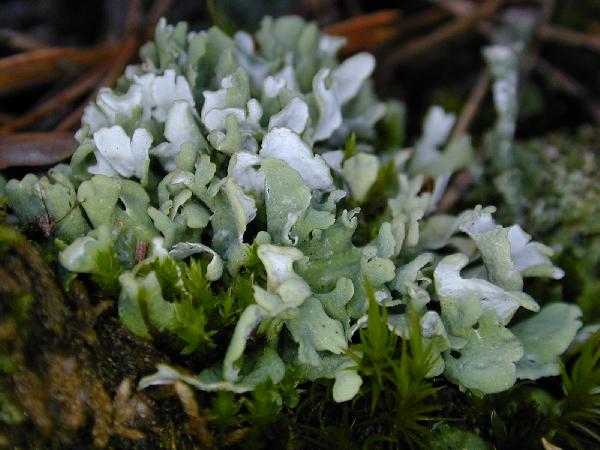
Wolfgang von Brackel - CC BY-4.0
Germany, Bavaria, Erbendorf
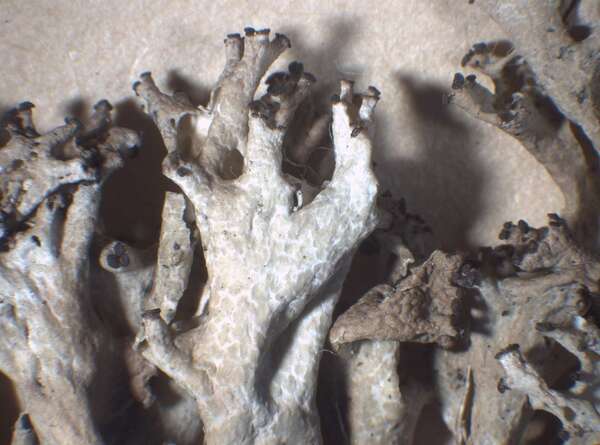
P.L. Nimis; Owner: Department of Life Sciences, University of Trieste
Herbarium: TSB (28288)
2003/02/15
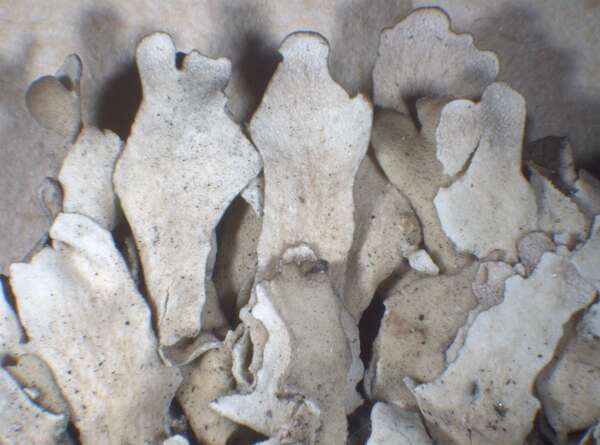
P.L. Nimis; Owner: Department of Life Sciences, University of Trieste
Herbarium: TSB (28288)
2003/02/15
primary thallus
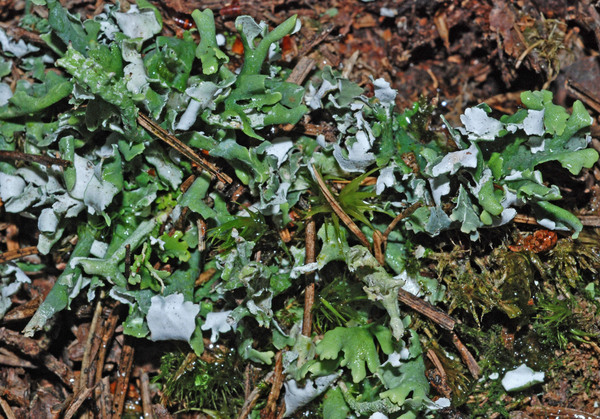
Leif Stridvall
Courtesy: Anita Stridvall -Source: http://www.stridvall.se/lichens/gallery/
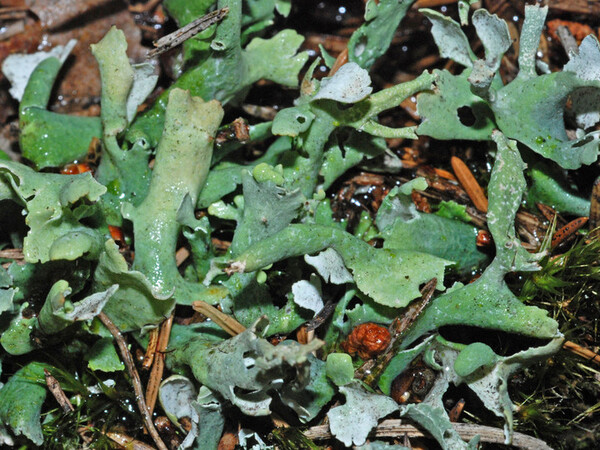
Leif Stridvall - Source: http://www.stridvall.se/la/galleries.php
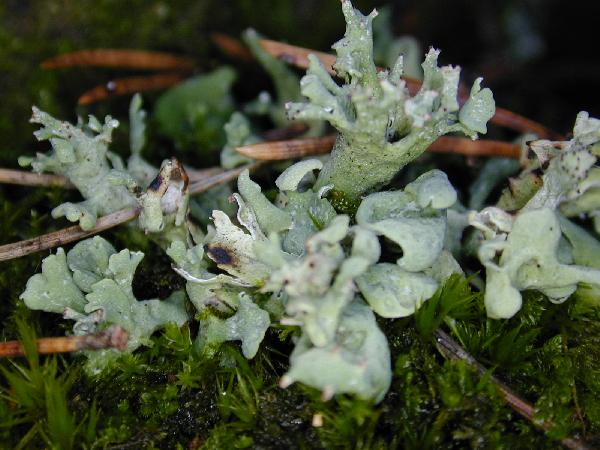
Wolfgang von Brackel - CC BY-4.0
Germany, Bavaria, Erbendorf
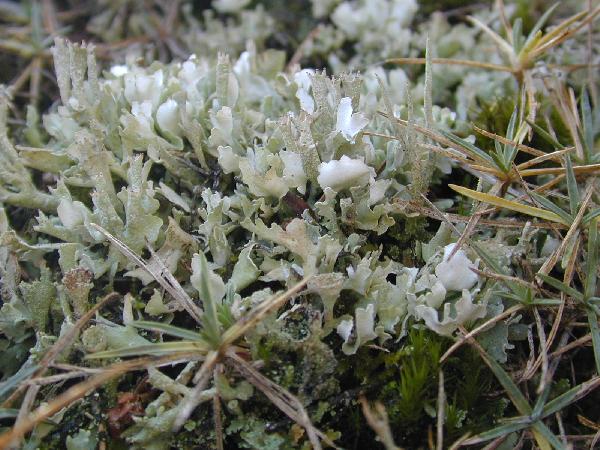
Wolfgang von Brackel - CC BY-4.0
Germany, Bavaria, Wojaleite
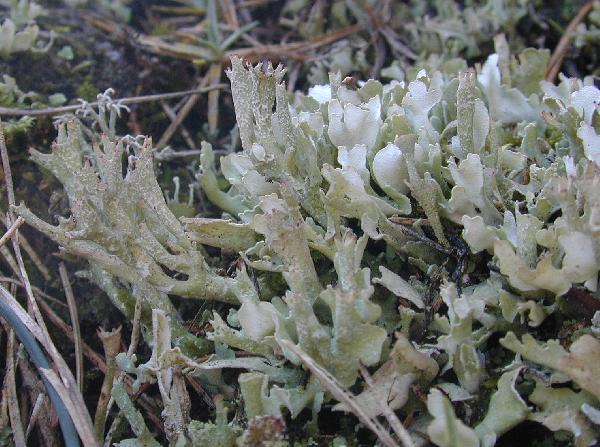
Wolfgang von Brackel - CC BY-4.0
Germany, Bavaria, Wojaleite
Triin Aimla; Owner: University of Tartu
Growth form: Fruticose
Substrata: soil, terricolous mosses, and plant debris
Photobiont: green algae other than Trentepohlia
Reproductive strategy: mainly sexual
Commonnes-rarity: (info)
Alpine belt: absent
Subalpine belt: extremely rare
Montane belt: absent
Dry submediterranean belt: absent
Humid submediterranean belt: absent
Padanian area: absent
pH of the substrata:
| 1 | 2 | 3 | 4 | 5 |
Solar irradiation:
| 1 | 2 | 3 | 4 | 5 |
Aridity:
| 1 | 2 | 3 | 4 | 5 |
Eutrophication:
| 1 | 2 | 3 | 4 | 5 |
Poleotolerance:
| 0 | 1 | 2 | 3 |
Altitudinal distribution:
| 1 | 2 | 3 | 4 | 5 | 6 |
Rarity
absent
extremely rare
very rare
rare
rather rare
rather common
common
very common
extremely common
Loading data...
Occurrence data
Predictive map
Wolfgang von Brackel - CC BY-4.0
Germany, Bavaria, Erbendorf

P.L. Nimis; Owner: Department of Life Sciences, University of Trieste
Herbarium: TSB (28288)
2003/02/15
P.L. Nimis; Owner: Department of Life Sciences, University of Trieste
Herbarium: TSB (28288)
2003/02/15
primary thallus
Leif Stridvall
Courtesy: Anita Stridvall -Source: http://www.stridvall.se/lichens/gallery/
Leif Stridvall - Source: http://www.stridvall.se/la/galleries.php

Wolfgang von Brackel - CC BY-4.0
Germany, Bavaria, Erbendorf

Wolfgang von Brackel - CC BY-4.0
Germany, Bavaria, Wojaleite

Wolfgang von Brackel - CC BY-4.0
Germany, Bavaria, Wojaleite