Cliostomum corrugatum (Ach.) Fr.
Lichenogr. Eur. Ref.: 455, 1831. Basionym: Lecidea corrugata Ach. - Syn. Meth. Lich.: 18, 1814.
Synonyms: Biatora ehrhartiana (Ach.) W. Mann; Biatorina ehrhartiana (Ach.) Mudd; Biatorina graniformis (K.G. Hagen) A.L. Sm.; Catillaria ehrhartiana (Ach.) Th. Fr.; Catillaria graniformis (K.G. Hagen) Vain.; Cliostomum graniforme (K.G. Hagen) Coppins; Lecidea ehrhartiana (Ach.) Ach.; Rhytisma corrugatum (Ach.) Fr.
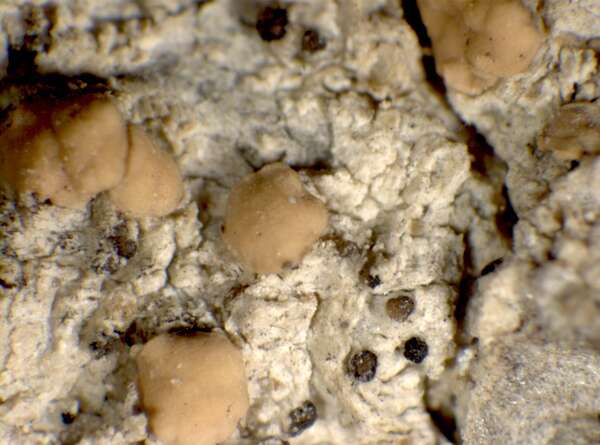
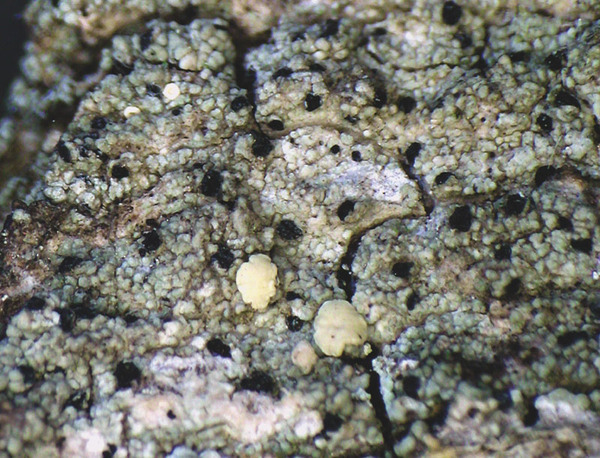
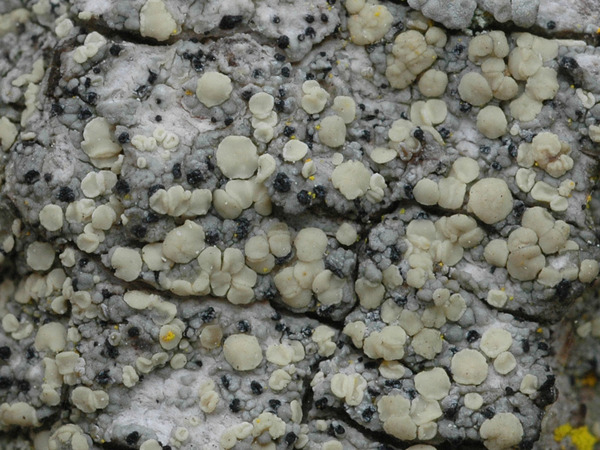
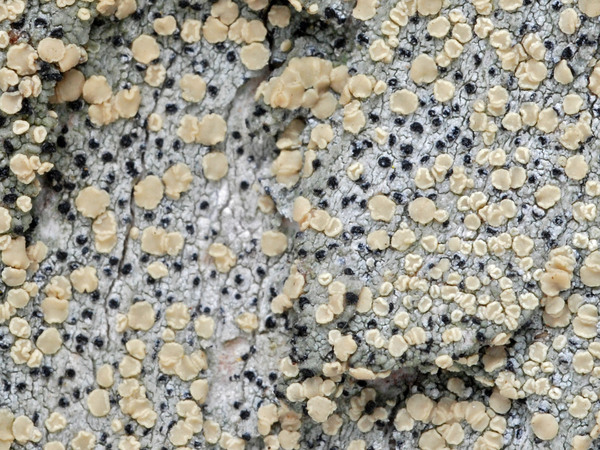
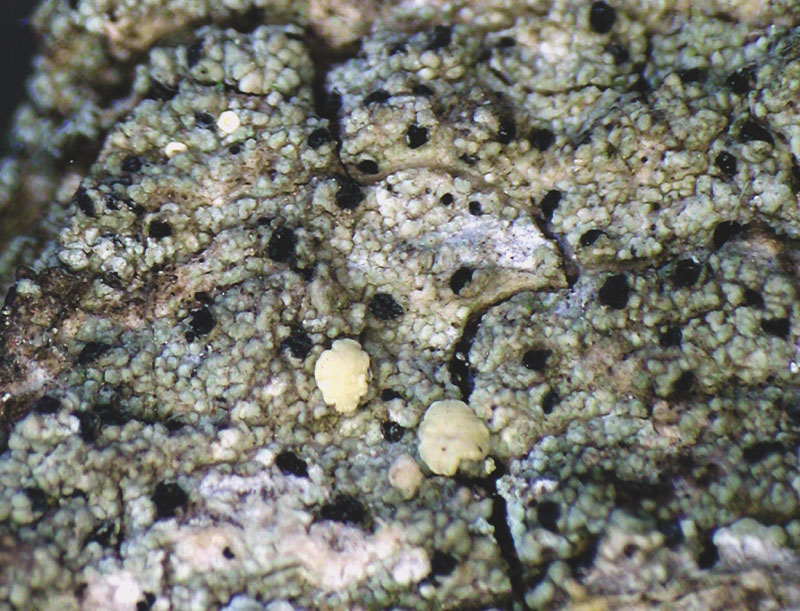
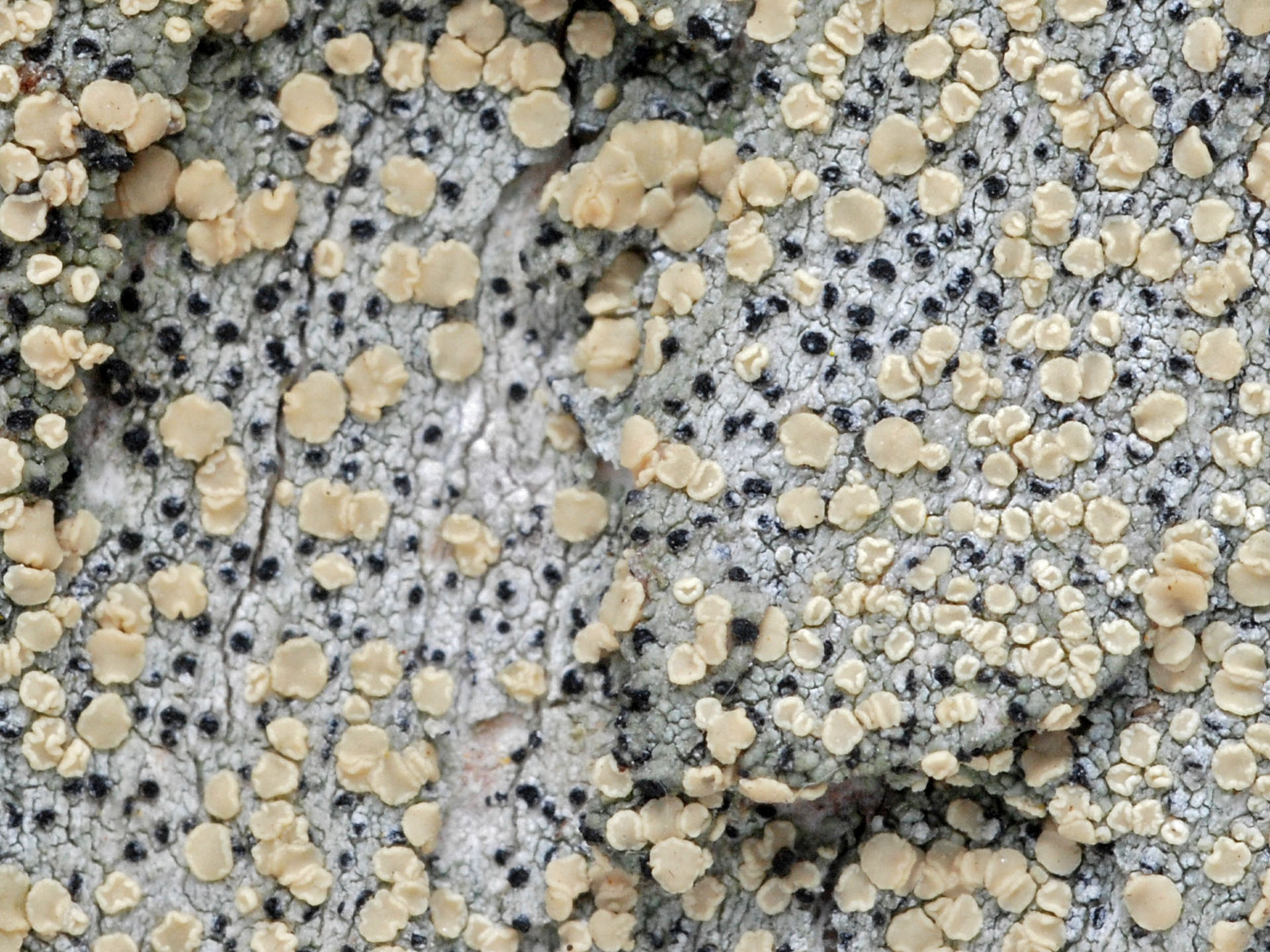
Description: Thallus crustose, episubstratic, thick, continuous, areolate or coarsely warted, pale grey to yellowish grey, often with an oily shine, turning ochraceous in the herbarium. Apothecia rare, lecideine to biatorine, 0.4-1 mm across, with a concave to slightly convex, pale yellow to pale pinkish yellow, thinly pruinose disc and a thin, finally often excluded proper margin. Proper exciple of radially arranged hyphae, faintly purplish and often K+ violet in outer part, colourless and densely granular within, the granules soluble in K; epithecium colourless or pale yellow, often with granules; hymenium colourless, I+ blue; paraphyses mostly simple, with more or less clavate apices; hypothecium colourless. Asci 8-spored, cylindrical-clavate, the tholus with a conical, blunt, sometimes indistinct ocular chamber and a distinctly conical axial body, the remainder of tholus I+ dark blue, darkest around the axial body. Ascospores 1-septate. hyaline, narrowly ellipsoid, straight or slightly curved, 10-13 x 2-2.5 µm. Pycnidia abundant, projecting, fairly large, 0.2-0.6 mm across, black but often paler around the ostiole, rugose, widely gaping, irregularly shaped, becoming multilocular, the wall with a brown, K+ purplish pigment. Conidia ovoid to short-cylindrical, 2-4 x c. 1 µm. Spot tests: thallus K+ yellow, C-, KC-, P-. Chemistry: thallus with atranorin and caperatic acid, apothecia with usnic acid.
Growth form: Crustose
Photobiont: green algae other than Trentepohlia
Most common in areas with a humid-warm climate (e.g. most of Tyrrenian Italy)
Commonnes-rarity: (info)
Alpine belt: absent
Subalpine belt: absent
Montane belt: extremely rare
Dry submediterranean belt: absent
Humid submediterranean belt: extremely rare
Padanian area: absent
pH of the substrata:
1 2 3 4 5

Solar irradiation:
1 2 3 4 5
Aridity:
1 2 3 4 5
Eutrophication:
1 2 3 4 5
Poleotolerance:
0 1 2 3
Altitudinal distribution:
1 2 3 4 5 6
Rarity
absent
extremely rare
very rare
rare
rather rare
rather common
common
very common
extremely common
Loading data...
Occurrence data
Predictive map
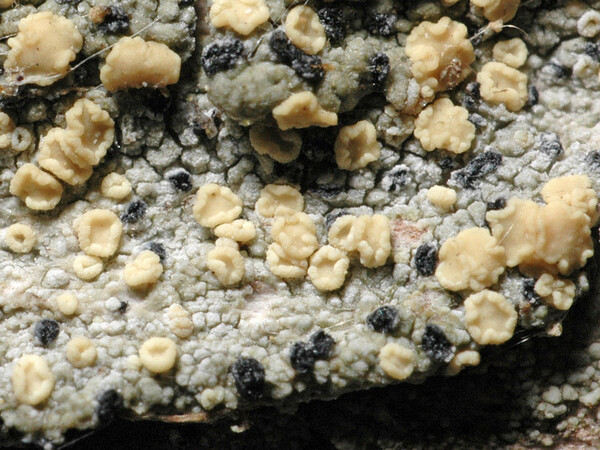
Leif Stridvall - Source: http://www.stridvall.se/la/galleries.php (Courtesy: Anita Stridvall)
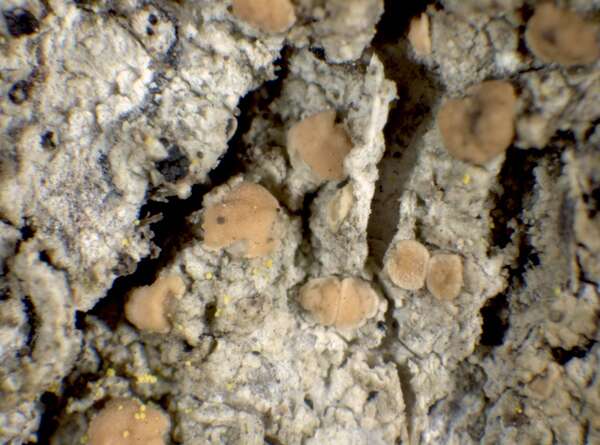
P.L. Nimis; Owner: Department of Life Sciences, University of Trieste
Herbarium: TSB (26680)
2001/12/04
P.L. Nimis; Owner: Department of Life Sciences, University of Trieste
Herbarium: TSB (8254)
2001/11/23
apothecia and black pycnidia
Andres Saag; Owner: University of Tartu
Leif Stridvall - Source: http://www.stridvall.se/lichens/gallery/
Courtesy: Anita Stridvall
Leif Stridvall - Source: http://www.stridvall.se/lichens/gallery/
Courtesy: Anita Stridvall
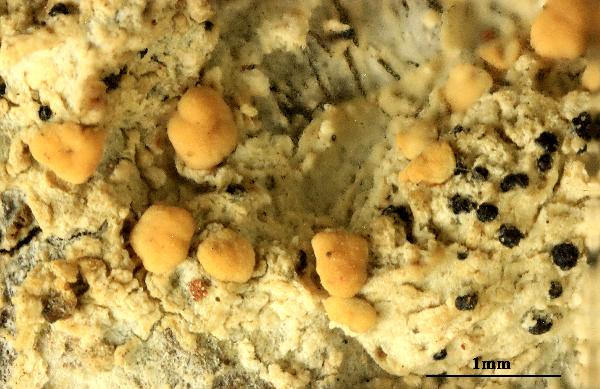
Felix Schumm - CC BY 4.0
[VZ2016], Jugoslavia. Crna Gora (Montenegro): Montes Dormitor, in
pede montis Medved loco Brojišt dicto, supra lacum Crno jezero, 1750
m. Ad corticem arborum (Abies). Leg, A. Vezda, 20.8.1984. EX A.
VEZDA LICHENES SELECTI EXSICCATI NR. 2016. As Catillaria graniformis
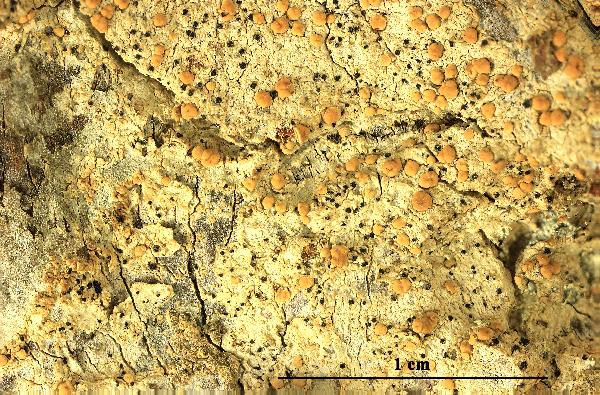
Felix Schumm - CC BY 4.0
[VZ2016], Jugoslavia. Crna Gora (Montenegro): Montes Dormitor, in
pede montis Medved loco Brojišt dicto, supra lacum Crno jezero, 1750
m. Ad corticem arborum (Abies). Leg, A. Vezda, 20.8.1984. EX A.
VEZDA LICHENES SELECTI EXSICCATI NR. 2016. As Catillaria graniformis
Growth form: Crustose
Photobiont: green algae other than Trentepohlia
Most common in areas with a humid-warm climate (e.g. most of Tyrrenian Italy)
Commonnes-rarity: (info)
Alpine belt: absent
Subalpine belt: absent
Montane belt: extremely rare
Dry submediterranean belt: absent
Humid submediterranean belt: extremely rare
Padanian area: absent
pH of the substrata:
| 1 | 2 | 3 | 4 | 5 |
Solar irradiation:
| 1 | 2 | 3 | 4 | 5 |
Aridity:
| 1 | 2 | 3 | 4 | 5 |
Eutrophication:
| 1 | 2 | 3 | 4 | 5 |
Poleotolerance:
| 0 | 1 | 2 | 3 |
Altitudinal distribution:
| 1 | 2 | 3 | 4 | 5 | 6 |
Rarity
absent
extremely rare
very rare
rare
rather rare
rather common
common
very common
extremely common
Loading data...
Occurrence data
Predictive map
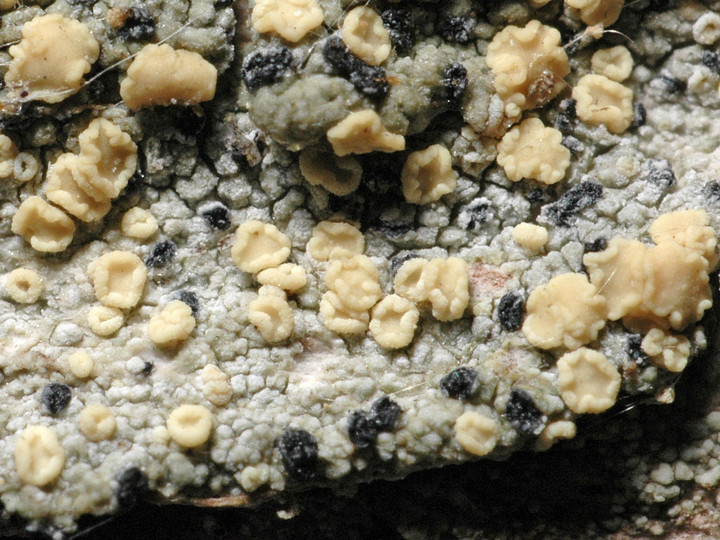
Leif Stridvall - Source: http://www.stridvall.se/la/galleries.php (Courtesy: Anita Stridvall)
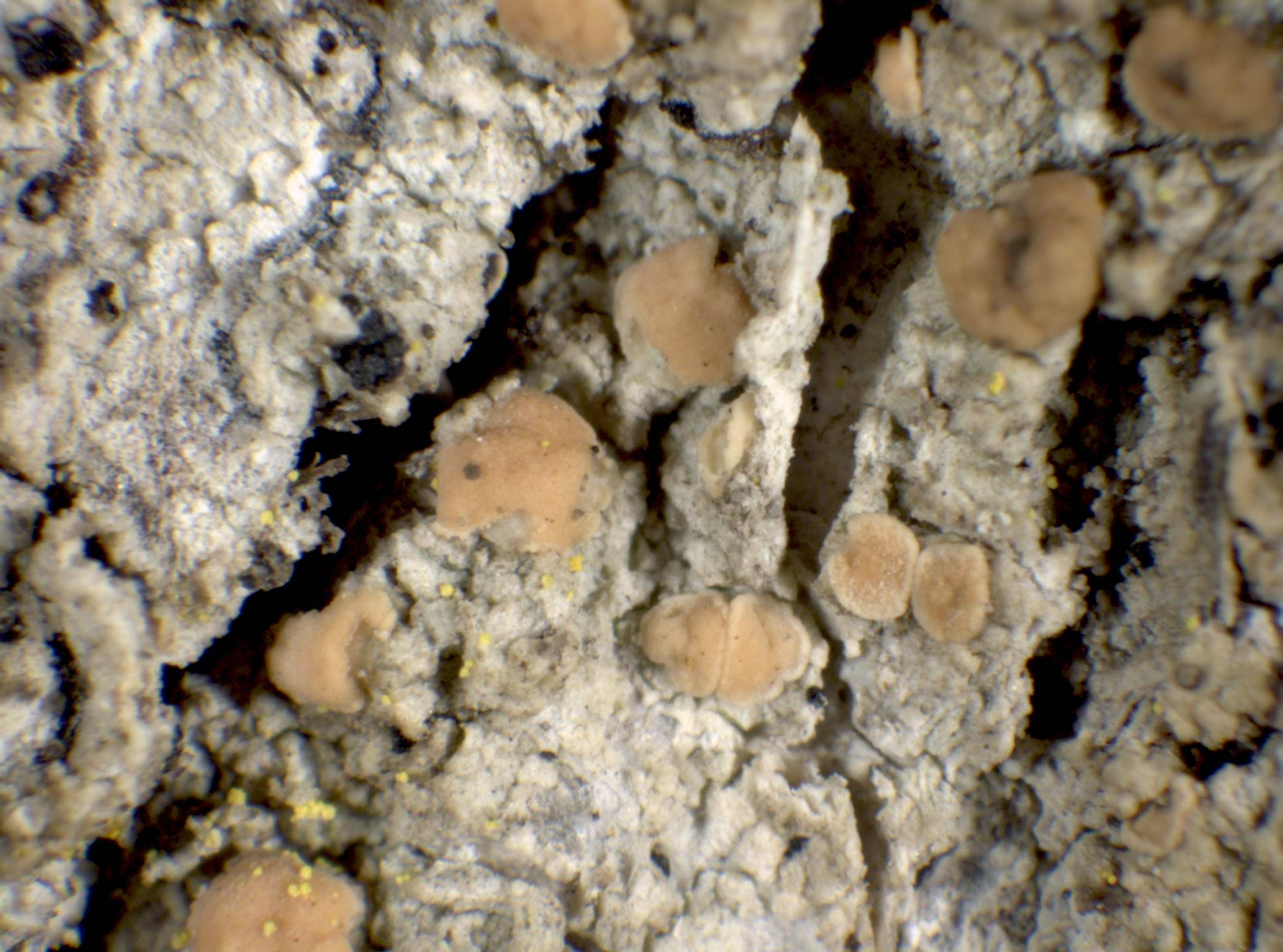
P.L. Nimis; Owner: Department of Life Sciences, University of Trieste
Herbarium: TSB (26680)
2001/12/04

P.L. Nimis; Owner: Department of Life Sciences, University of Trieste
Herbarium: TSB (8254)
2001/11/23
apothecia and black pycnidia
Andres Saag; Owner: University of Tartu

Leif Stridvall - Source: http://www.stridvall.se/lichens/gallery/
Courtesy: Anita Stridvall
Leif Stridvall - Source: http://www.stridvall.se/lichens/gallery/
Courtesy: Anita Stridvall

Felix Schumm - CC BY 4.0
[VZ2016], Jugoslavia. Crna Gora (Montenegro): Montes Dormitor, in pede montis Medved loco Brojišt dicto, supra lacum Crno jezero, 1750 m. Ad corticem arborum (Abies). Leg, A. Vezda, 20.8.1984. EX A. VEZDA LICHENES SELECTI EXSICCATI NR. 2016. As Catillaria graniformis