Dermatocarpon arnoldianum Degel.
Nytt Mag. Naturvid., 75: 157, 1934.
Synonyms:
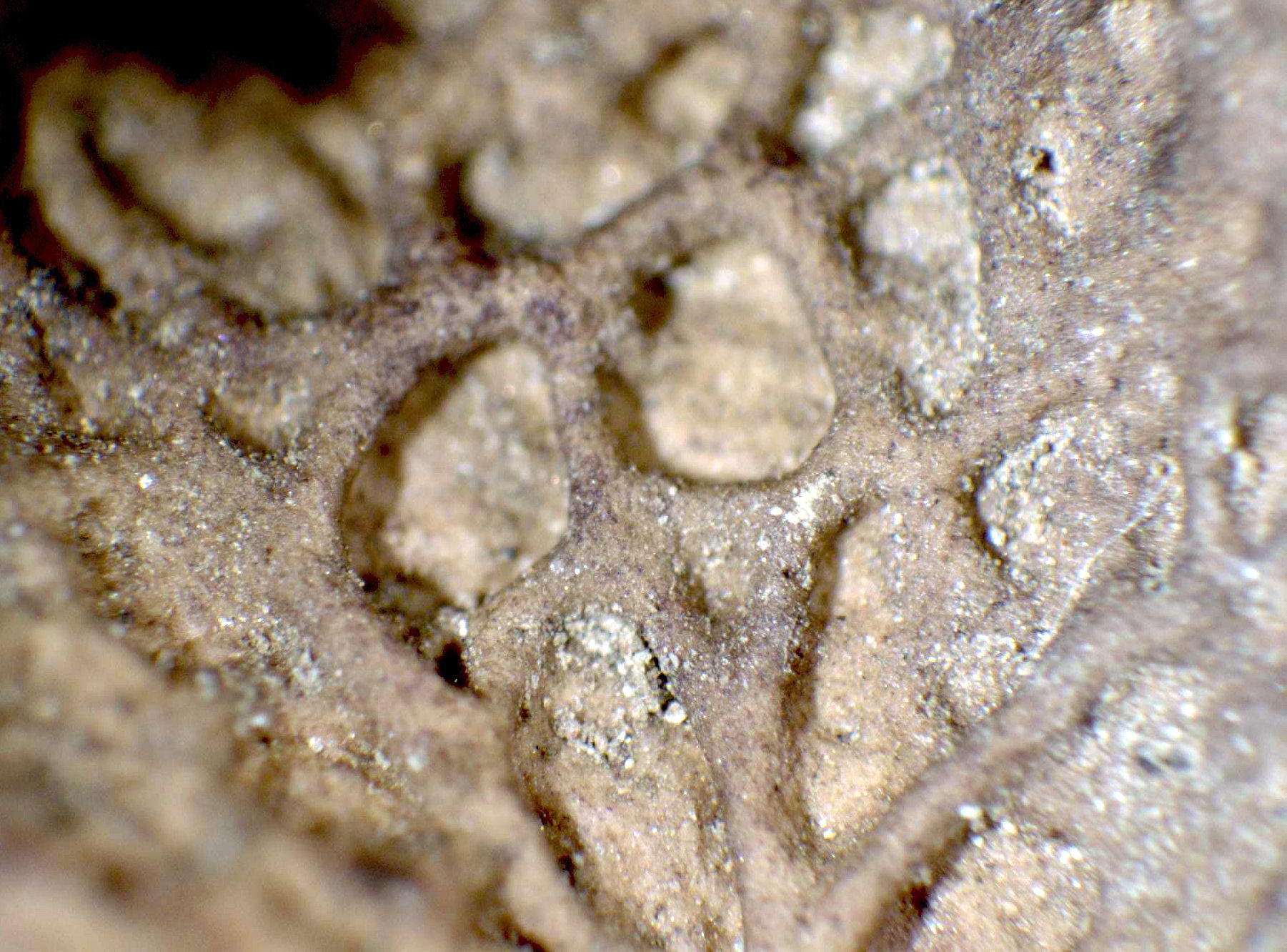
Description: Thallus foliose-umbilicate, heteromerous, dorsiventral, attached by a central holdfast, usually monophyllous, rigid when dry, 1-5 cm broad, 0.4-0.7 mm thick, growing amphibious in cold freshwaters. Upper surface smooth or slightly rippled, grey to (rarely) grey-brown when dry, greenish when wet, pruinose or epruinose; lower surface bright red-brown to yellowish, smooth to ridged but not veined, erhizinate. Upper cortex 90-260 µm thick, pseudoparenchymatous, of anticlinally arranged hyphae, often with a brown pigment near the surface, overlain by an epinecral layer of air-filled hyphae; lower cortex c. of the same thickness, of anticlinally arranged hyphae; medulla white, I- or I+ reddish brown. Perithecia numerous, immersed in the thallus and scattered over almost the whole upper surface (appearing as black dots), without involucrellum. Exciple colourless except in the brown uppermost part; hamathecium of periphyses and periphysoids, interascal filaments absent; hymenial gel hemiamyloid. Asci 8-spored, clavate, I-, fissitunicate, the wall thickened above, with an ocular chamber, dehiscent by extrusion of an endotunica to form a delicate rostrum, Verrucaria-type. Ascospores 1-celled, hyaline, elongate-ellipsoid, (9-)13-17 x 4-7 µm. Pycnidia rare, black, immersed, multi-chambered. Conidia short-bacilliform, 4-5 x c. 1 µm. Photobiont chlorococcoid. Spot tests: cortex and medulla K-, C-, KC-, P-, UV-. Chemistry: without lichen substances.
Growth form: Foliose, umbilicate
Substrata: rocks
Photobiont: green algae other than Trentepohlia
Reproductive strategy: mainly sexual
Periodically submerged (e.g. in creeks)
Poorly known taxon in need of further study
Commonnes-rarity: (info)
Alpine belt: rare
Subalpine belt: rather rare
Montane belt: extremely rare
Dry submediterranean belt: absent
Humid submediterranean belt: absent
Padanian area: absent
pH of the substrata:
1 2 3 4 5

Solar irradiation:
1 2 3 4 5
Aridity:
1 2 3 4 5
Eutrophication:
1 2 3 4 5
Poleotolerance:
0 1 2 3
Altitudinal distribution:
1 2 3 4 5 6
Rarity
absent
extremely rare
very rare
rare
rather rare
rather common
common
very common
extremely common
Loading data...
Occurrence data
Predictive map
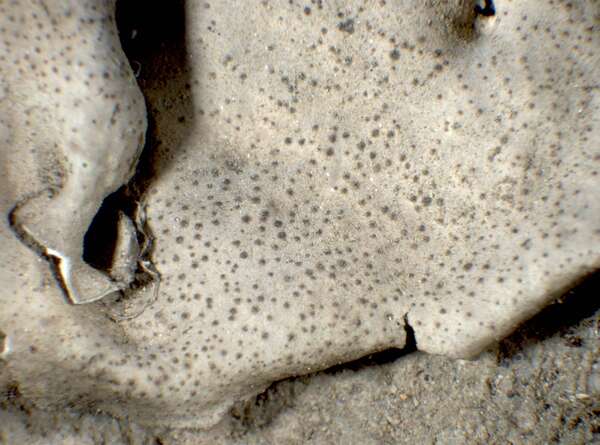
P.L. Nimis; Owner: Department of Life Sciences, University of Trieste
Herbarium: TSB (34391)
2002/01/15
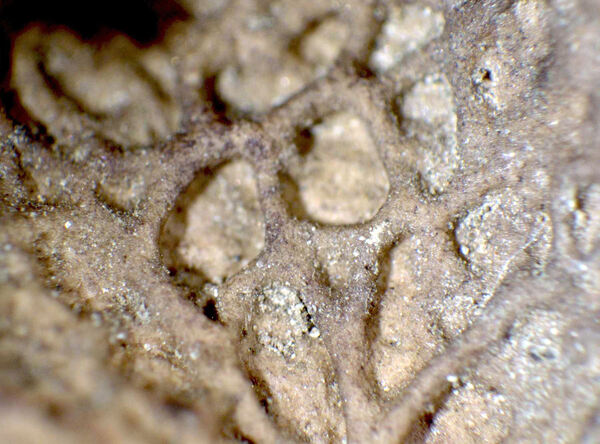
P.L. Nimis CC BY-SA 4.0.
TSB 34466
Growth form: Foliose, umbilicate
Substrata: rocks
Photobiont: green algae other than Trentepohlia
Reproductive strategy: mainly sexual
Periodically submerged (e.g. in creeks)
Poorly known taxon in need of further study
Commonnes-rarity: (info)
Alpine belt: rare
Subalpine belt: rather rare
Montane belt: extremely rare
Dry submediterranean belt: absent
Humid submediterranean belt: absent
Padanian area: absent
pH of the substrata:
| 1 | 2 | 3 | 4 | 5 |
Solar irradiation:
| 1 | 2 | 3 | 4 | 5 |
Aridity:
| 1 | 2 | 3 | 4 | 5 |
Eutrophication:
| 1 | 2 | 3 | 4 | 5 |
Poleotolerance:
| 0 | 1 | 2 | 3 |
Altitudinal distribution:
| 1 | 2 | 3 | 4 | 5 | 6 |
Rarity
absent
extremely rare
very rare
rare
rather rare
rather common
common
very common
extremely common
Loading data...
Occurrence data
Predictive map
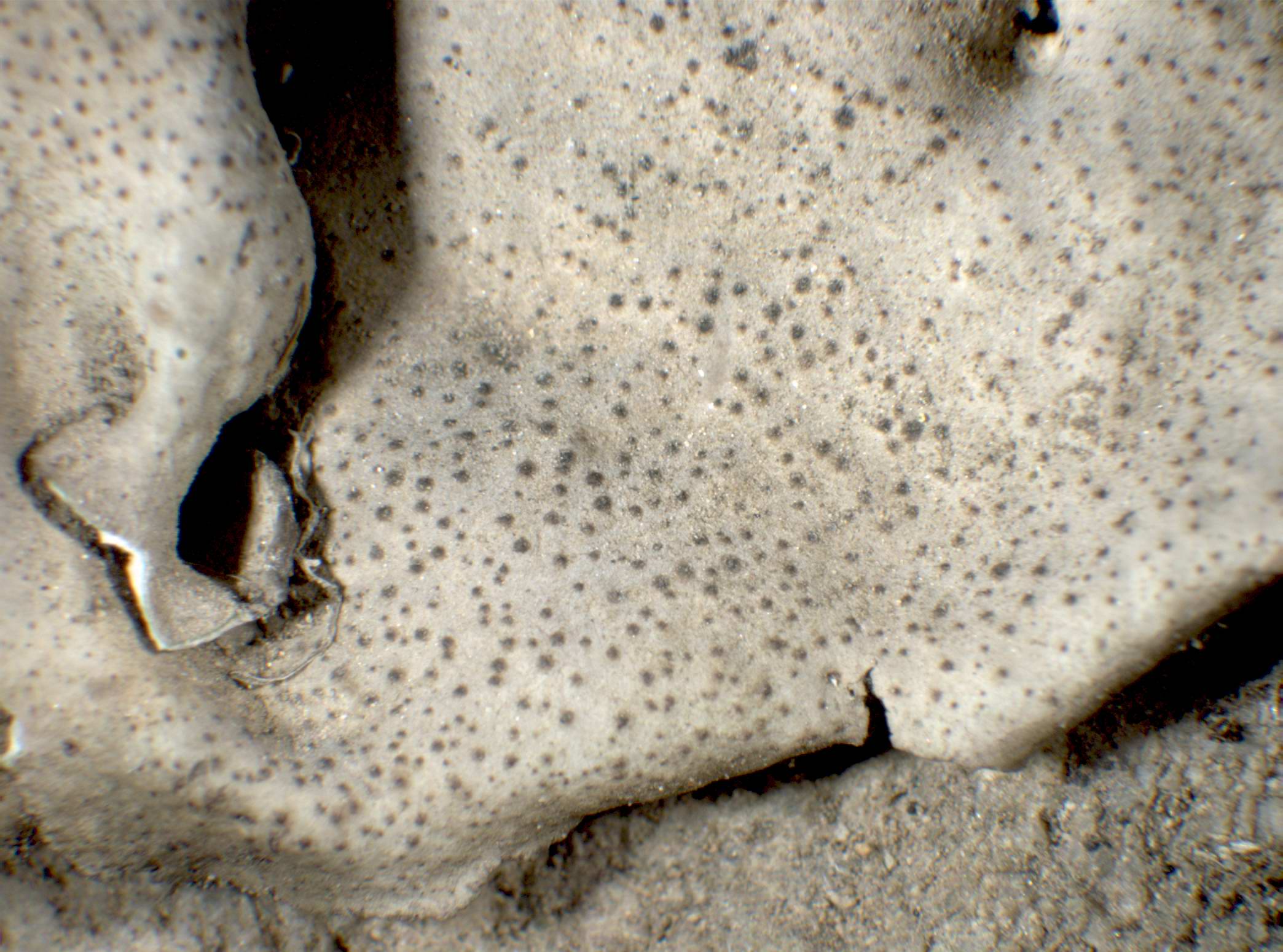
P.L. Nimis; Owner: Department of Life Sciences, University of Trieste
Herbarium: TSB (34391)
2002/01/15