Eopyrenula leucoplaca (Wallr.) R.C. Harris
Michigan Bot., 12: 19, 1973. Basionym: Verrucaria leucoplaca Wallr. - Fl. Crypt. Germ., 3: 299, 1831.
Synonyms: Arthopyrenia farrea auct. non (Ach.) H. Olivier; Leptosphaeria leucoplaca (Wallr.) Vain.; Porina chiomela (Norman) Zahlbr.; Pyrenula alba A. Massal.; Pyrenula alni A. Massal.; Pyrenula farrea auct. non (Ach.) Branth & Rostr.; Pyrenula leucoplaca (Wallr.) Körb.; Pyrenula quercus A. Massal.; Pyrenula schaereri A. Massal.; Spermatodium leucoplacum (Wallr.) Trevis.
Description: Thallus crustose, immersed in the bark, smooth, continuous, white to pale grey, sometimes somehow shiny. Perithecia 0.2-0.35 mm across, black to dark brown, somehow shiny but sometimes appearing dull due to remains of bark cover, at first immersed, then projecting, hemispherical or often somewhat flattened at the top. Involucrellum dark brown, cloely clasping the centrum and hardly distinguishable from the exciple; exciple black in upper part, colourless at base, 60-90 µm thick; hamathecium of numerous, mostly simple, persistent paraphysoids; hymenial gel hemiamyloid. Asci 8-spored, subcylindrical, without apical ring-structure and without a distinct ocular chamber, the wall K/I+ blue, especially in lower part. Ascospores 3-5(-7)-septate, not or only slightly constricted at septa, with lenticular loculi, brown, thin-walled, (13-)18-26(-32) x (4-)6-10(-12) µm, the two apical cells paler than the others, the central cell larger and darker. Pycnidia black, immersed, resembling the perithecia. Macroconidia brown, (0-)1-septate, ellipsoid to pyriform, 6.5-9.5 x 3-4 µm, with a pale septum; microconidia hyaline, thread-like, 6-10 x 0.5-0.7 µm. Photobiont trentepohlioid. Spot tests: K-, C-, KC-, P-, UV-. Chemistry: without lichen substances.
Growth form: Crustose
Substrata: bark
Photobiont: Trentepohlia
Reproductive strategy: mainly sexual
Most common in areas with a humid-warm climate (e.g. most of Tyrrenian Italy)
Commonnes-rarity: (info)
Alpine belt: absent
Subalpine belt: extremely rare
Montane belt: very rare
Dry submediterranean belt: extremely rare
Humid submediterranean belt: extremely rare
Padanian area: absent
pH of the substrata:
1 2 3 4 5

Solar irradiation:
1 2 3 4 5
Aridity:
1 2 3 4 5
Eutrophication:
1 2 3 4 5
Poleotolerance:
0 1 2 3
Altitudinal distribution:
1 2 3 4 5 6
Rarity
absent
extremely rare
very rare
rare
rather rare
rather common
common
very common
extremely common
Loading data...
Occurrence data
Predictive map
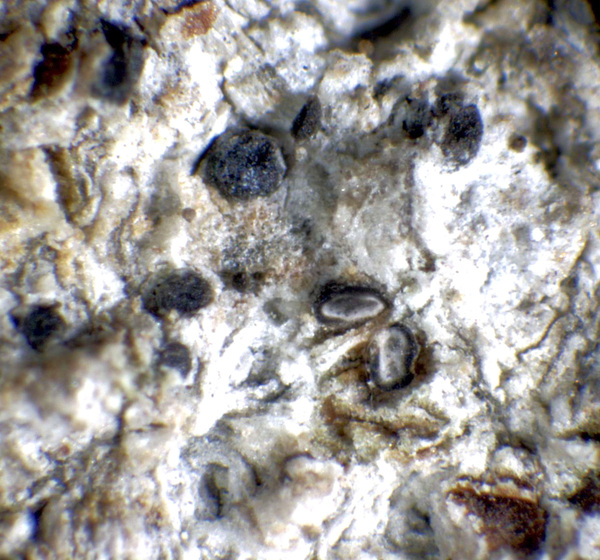
P.L. Nimis CC BY-SA 04
TSB 22900
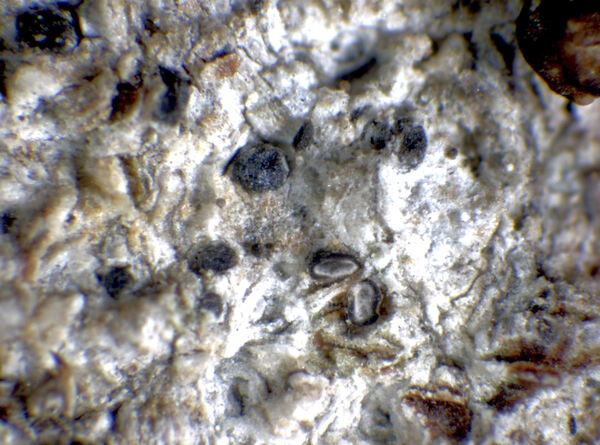
P.L. Nimis CC BY-SA 4.0
TSB 22900
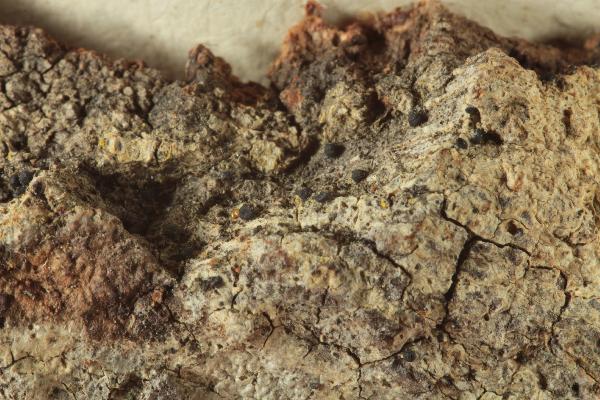
Collezione lichenologica Abramo Massalongo del Museo di Storia Naturale G. Ligabue di Venezia - Autori: Seggi, Linda; Trabucco, Raffaella Proprietà: Fondazione Musei Civici di Venezia - CC BY-NC
Italy, Veneto, in horto Micheli Vallis S. Eusebio in Euganeis
as Pyrenula quercus A. Massal.

Source: Harris R.C. (1973) The corticolous pyrenolichens of the Great Lakes region. Michigan Bot. 12: 3-68.
ascospores

Source: Harris R.C. (1973) The corticolous pyrenolichens of the Great Lakes region. Michigan Bot. 12: 3-68.
macroconidia
Growth form: Crustose
Substrata: bark
Photobiont: Trentepohlia
Reproductive strategy: mainly sexual
Most common in areas with a humid-warm climate (e.g. most of Tyrrenian Italy)
Commonnes-rarity: (info)
Alpine belt: absent
Subalpine belt: extremely rare
Montane belt: very rare
Dry submediterranean belt: extremely rare
Humid submediterranean belt: extremely rare
Padanian area: absent
pH of the substrata:
| 1 | 2 | 3 | 4 | 5 |
Solar irradiation:
| 1 | 2 | 3 | 4 | 5 |
Aridity:
| 1 | 2 | 3 | 4 | 5 |
Eutrophication:
| 1 | 2 | 3 | 4 | 5 |
Poleotolerance:
| 0 | 1 | 2 | 3 |
Altitudinal distribution:
| 1 | 2 | 3 | 4 | 5 | 6 |
Rarity
absent
extremely rare
very rare
rare
rather rare
rather common
common
very common
extremely common
Loading data...
Occurrence data
Predictive map
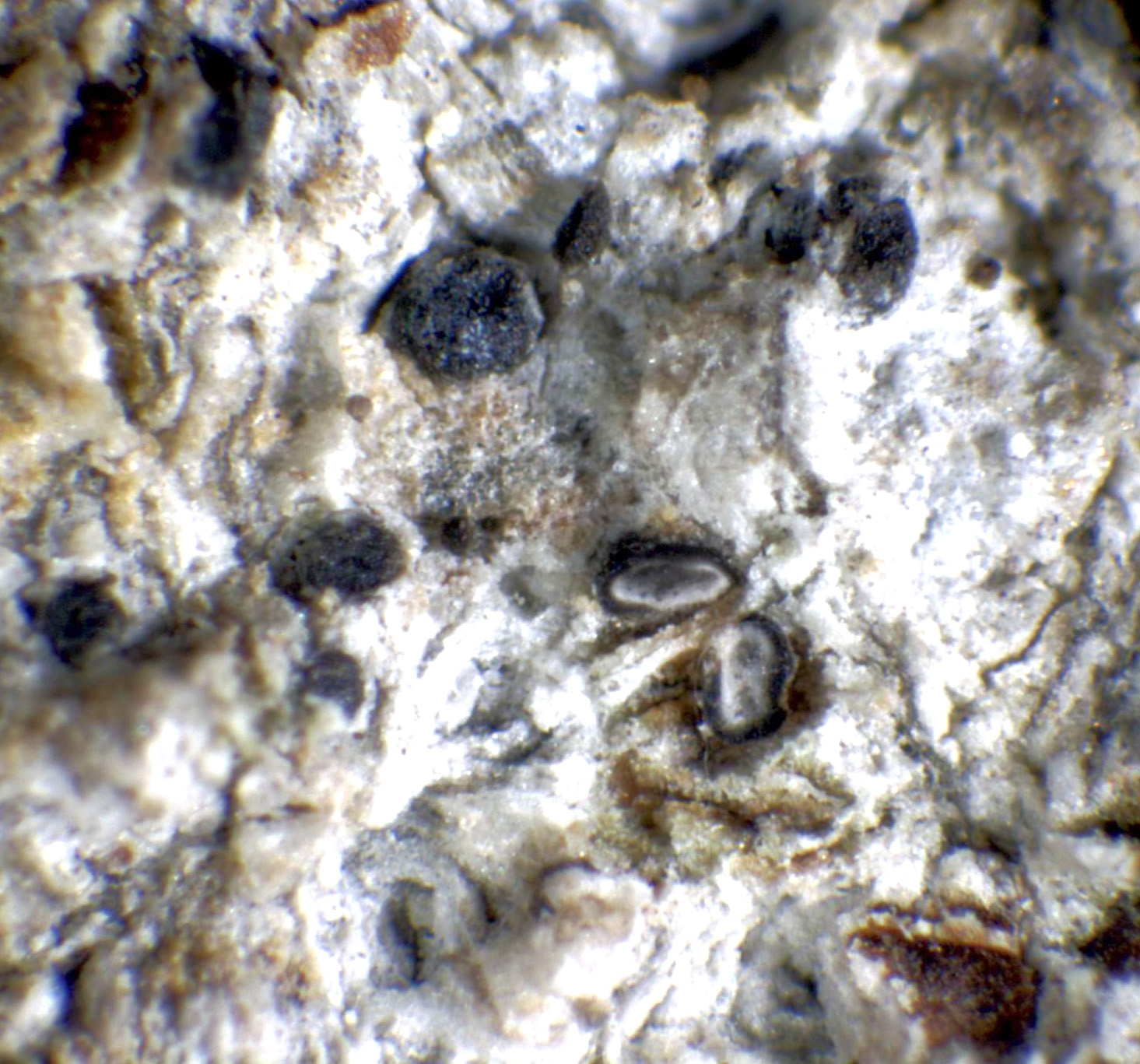
P.L. Nimis CC BY-SA 04
TSB 22900

P.L. Nimis CC BY-SA 4.0
TSB 22900

Collezione lichenologica Abramo Massalongo del Museo di Storia Naturale G. Ligabue di Venezia - Autori: Seggi, Linda; Trabucco, Raffaella Proprietà: Fondazione Musei Civici di Venezia - CC BY-NC
Italy, Veneto, in horto Micheli Vallis S. Eusebio in Euganeis
as Pyrenula quercus A. Massal.
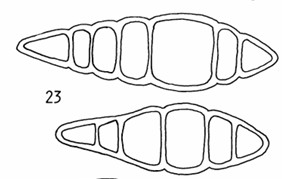
Source: Harris R.C. (1973) The corticolous pyrenolichens of the Great Lakes region. Michigan Bot. 12: 3-68.
ascospores