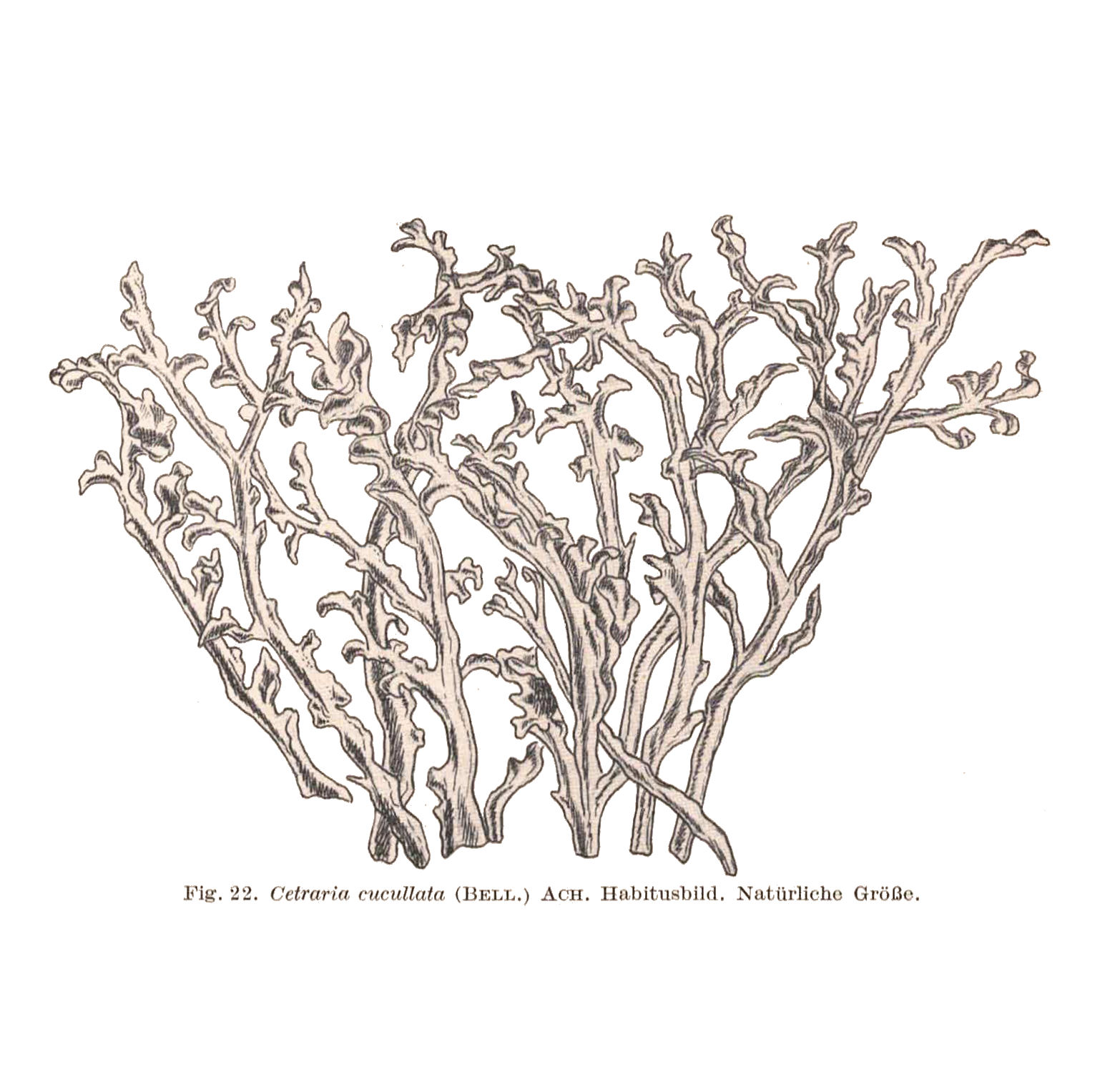
Nephromopsis cucullata (Bellardi) Divakar, A. Crespo & Lumbsch
in Divakar & al., Fungal Diversity, 84: 112, 2017. Basionym: Lichen cucullatus Bellardi - Osserv. Bot.: 54, 1788.
Synonyms: Allocetraria cucullata (Bellardi) Randlane & Saag; Cetraria cucullata (Bellardi) Ach.; Flavocetraria cucullata (Bellardi) Kärnefelt & A. Thell
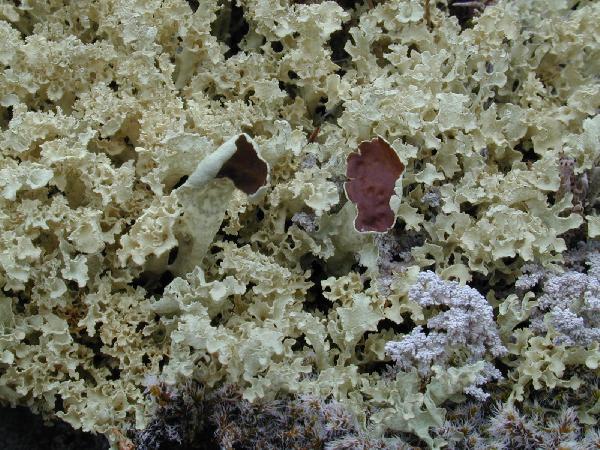
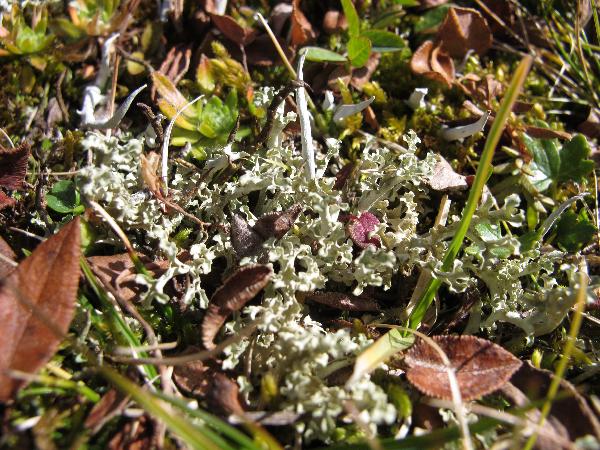
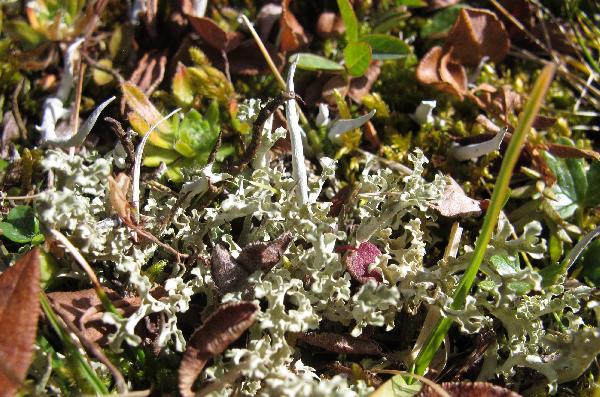
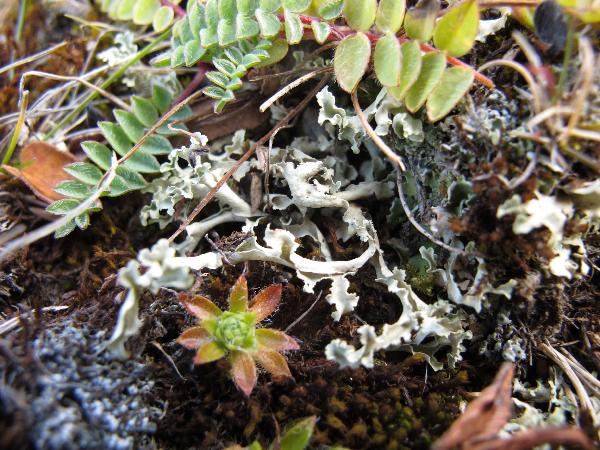
Description: Thallus fruticose, once or twice dichotomously branched, cream-coloured, smooth and glossy, deep red-purple to violet at the necrotic base, loosely attached, sometimes forming compact mats. Lobes flattened, smooth, canaliculate to subtubular, erect to ascending, 2-4(-8) cm tall, to 5(-10) mm wide, often white-maculate on upper surface, the margins with black, short-spinulose pycnidia; lower surface corticate, with narrow, marginal, whitish pseudocyphellae. Cortex thin, paraplectenchymatous in upper part; medulla white, rather lax. Apothecia extremely rare, zeorine, submarginal at lobe-ends, with a brown disc. Epithecium brownish; hymenium and hypothecium colourless. Asci 8-spored, narrowly clavate, with a small axial body and a distinct, K/I+ blue ring-structure in the rather large tholus, approaching the Lecanora-type. Ascospores 1-celled, hyaline, ellipsoid, 5-10 x 3-5.5 µm. Pycnidia black, immersed in marginal projections. Conidia swollen at both ends, c. 6 x 1 µm. Photobiont chlorococcoid. Spot tests: cortex K-, C-, KC+ yellowish, P-: medulla K-, C-, KC-, P-; reddish basal parts K+ red. Chemistry: cortex with usnic acid; medulla with lichesterinic and protolichesterinic acids; basal necrotic parts with anthraquinones.
Growth form: Fruticose
Substrata: soil, terricolous mosses, and plant debris
Photobiont: green algae other than Trentepohlia
Reproductive strategy: mainly asexual, by thallus fragmentation
Commonnes-rarity: (info)
Alpine belt: common
Subalpine belt: very rare
Montane belt: absent
Dry submediterranean belt: absent
Humid submediterranean belt: absent
Padanian area: absent
pH of the substrata:
1 2 3 4 5

Solar irradiation:
1 2 3 4 5
Aridity:
1 2 3 4 5
Eutrophication:
1 2 3 4 5
Poleotolerance:
0 1 2 3
Altitudinal distribution:
1 2 3 4 5 6
Rarity
absent
extremely rare
very rare
rare
rather rare
rather common
common
very common
extremely common
Loading data...
Occurrence data
Predictive map
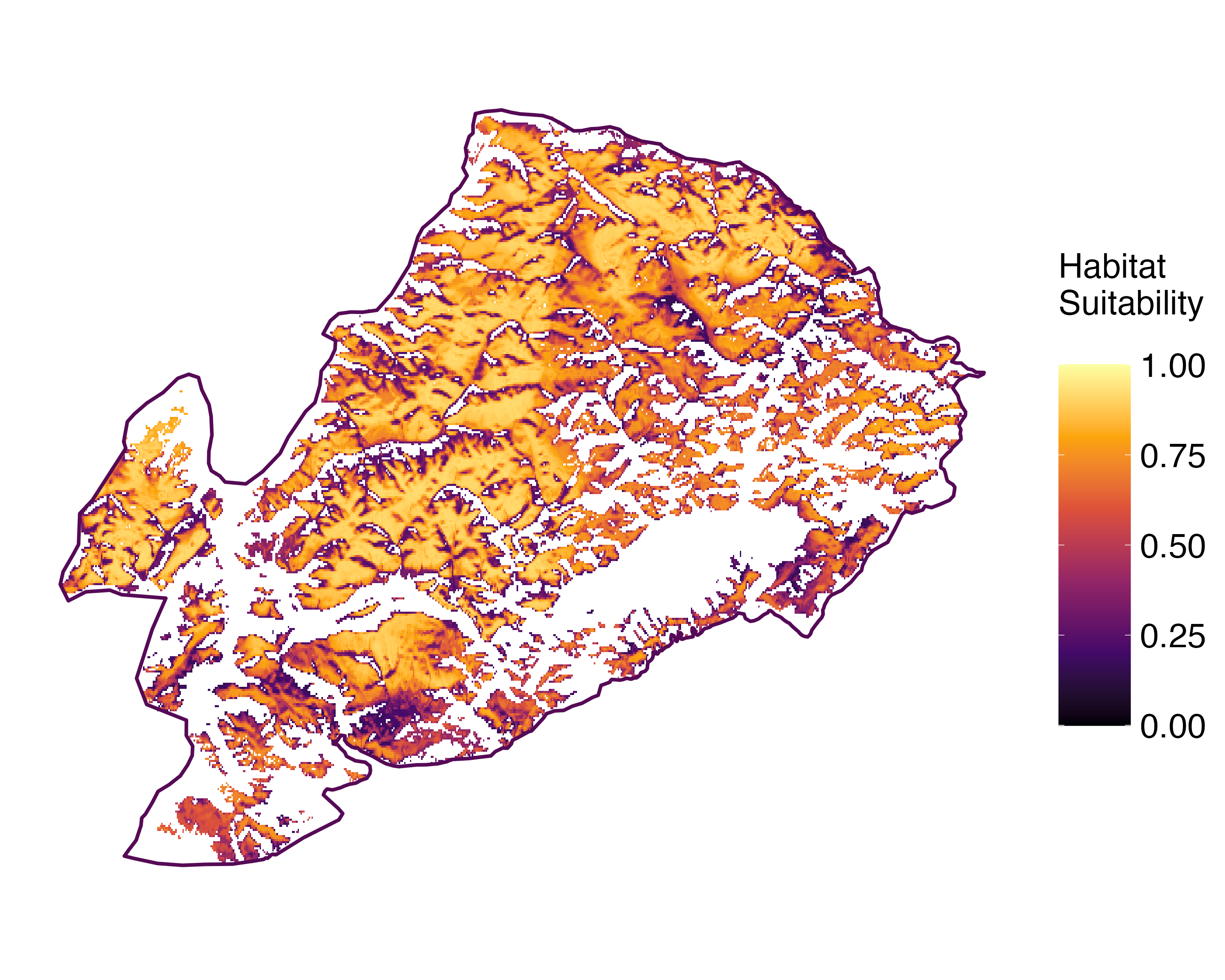 Current prediction (1981-2010)
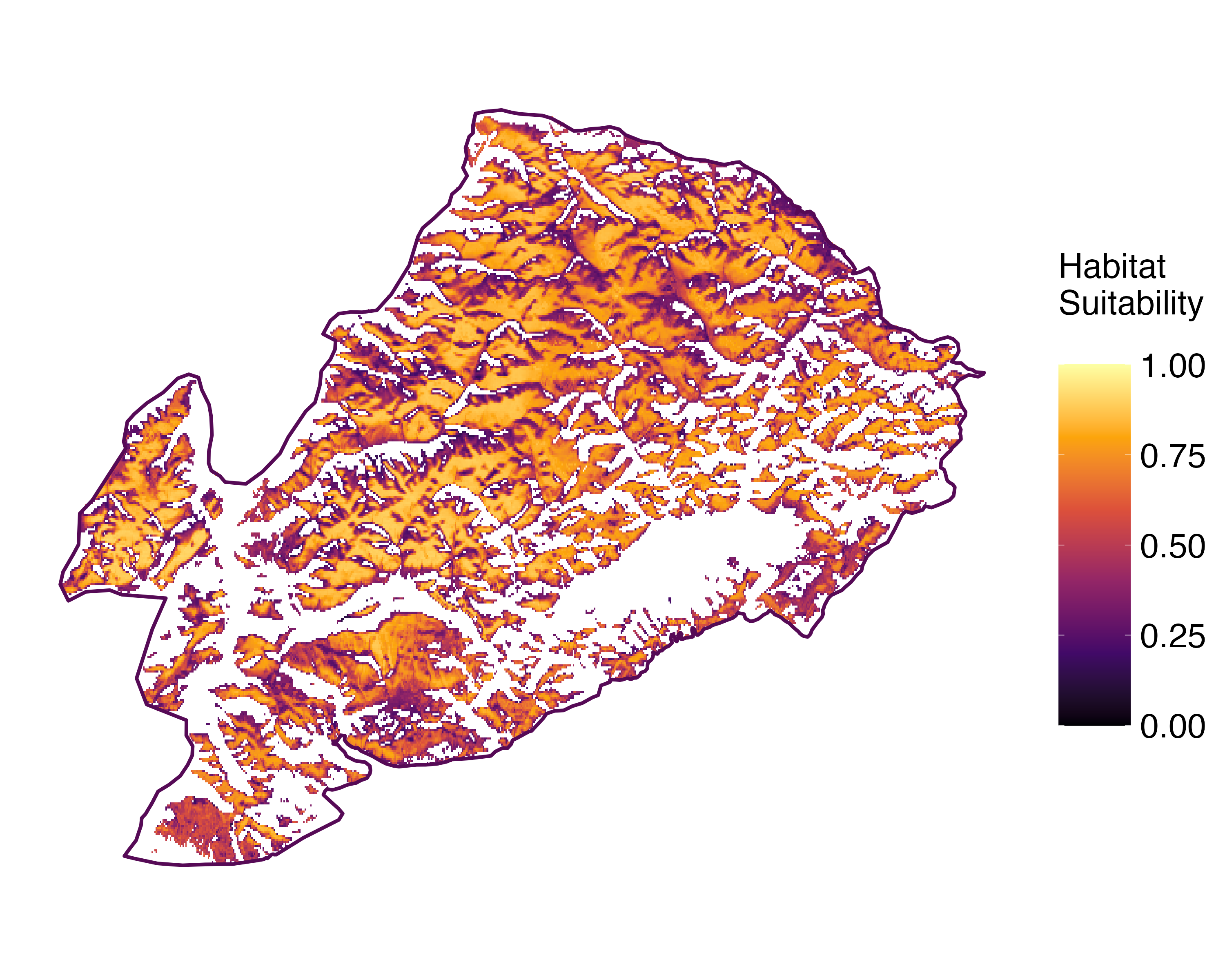 Future prediction (2071-2100) SSP 1-2.6
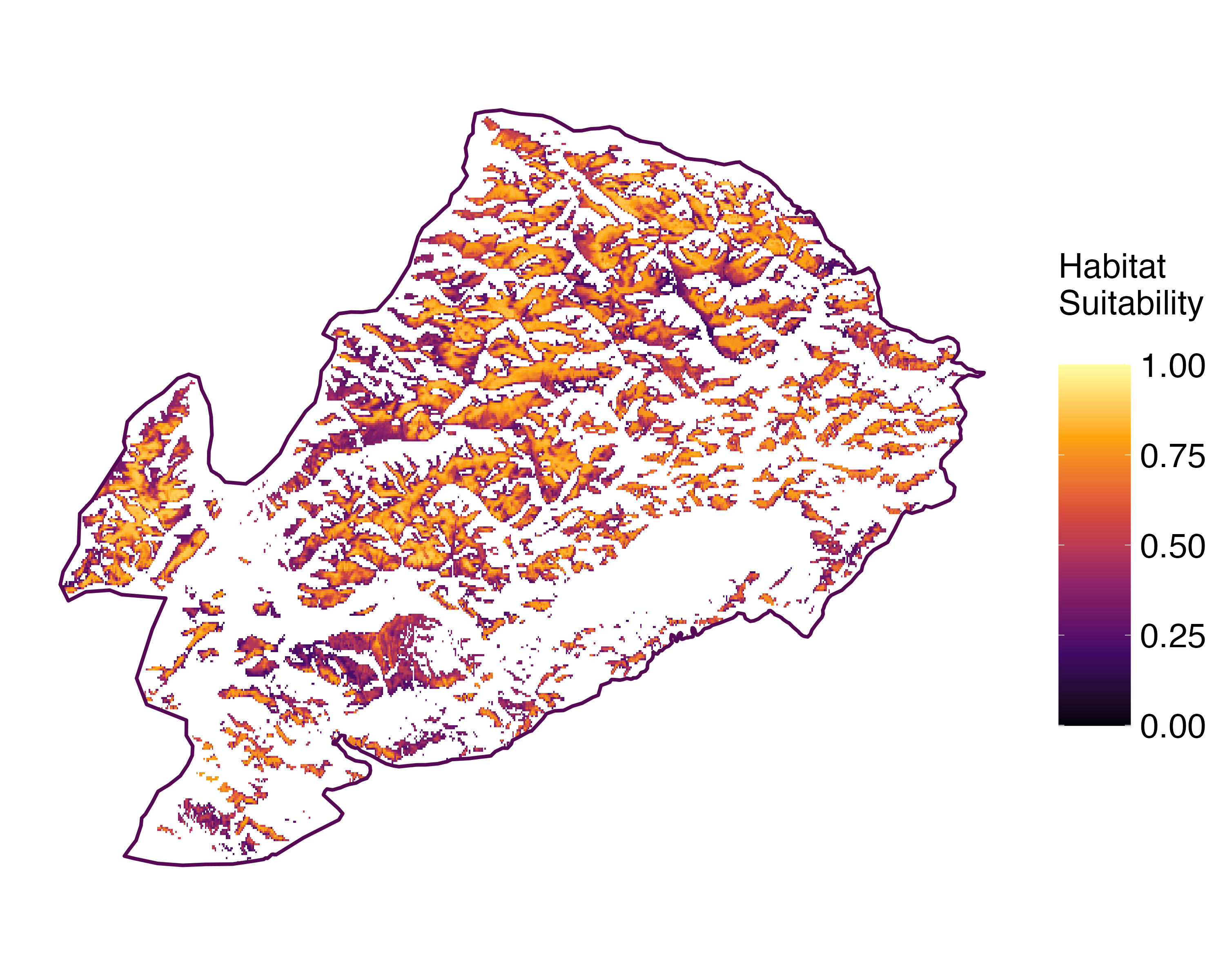 Future prediction (2071-2100) SSP 5-8.5Predictive maps according to Francesconi et al. 2025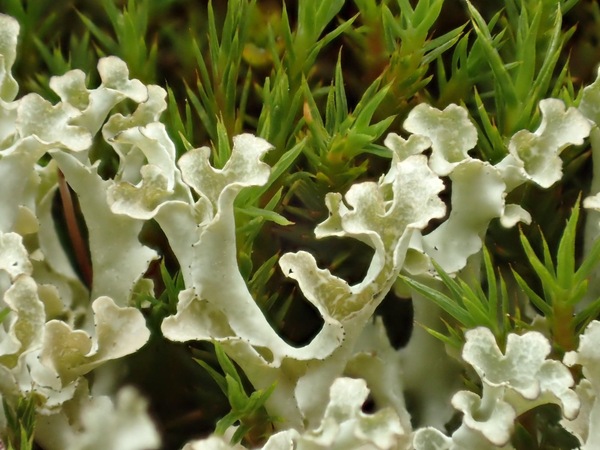
Mark Rahill
Mt. Washington, New Hampshire -USA
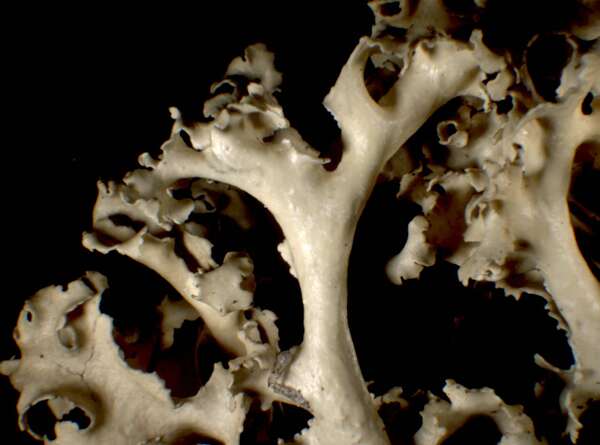
P.L. Nimis; Owner: Department of Life Sciences, University of Trieste
Herbarium: TSB (8712)
2001/12/05
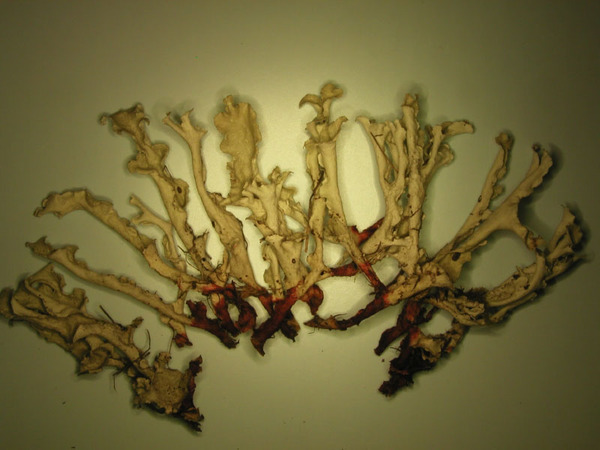
Andres Saag; Owner: University of Tartu
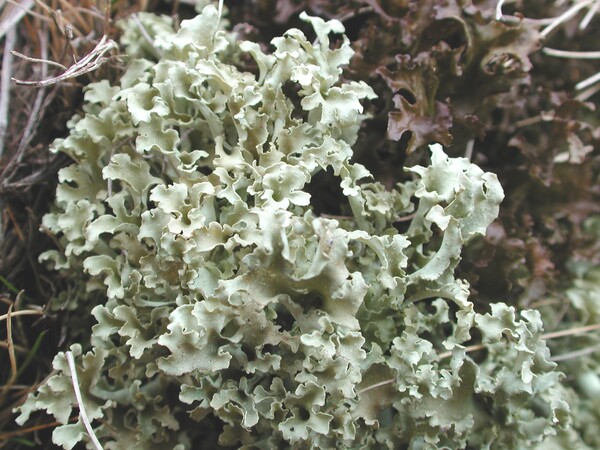
Juri Nascimbene - CC BY-SA 4.0; Owner: ITALIC - Dyades Project - Dept. of Life Sciences, University of Trieste
Italy, Trentino-Alto Adige, Trento, Monte Bondone
2014
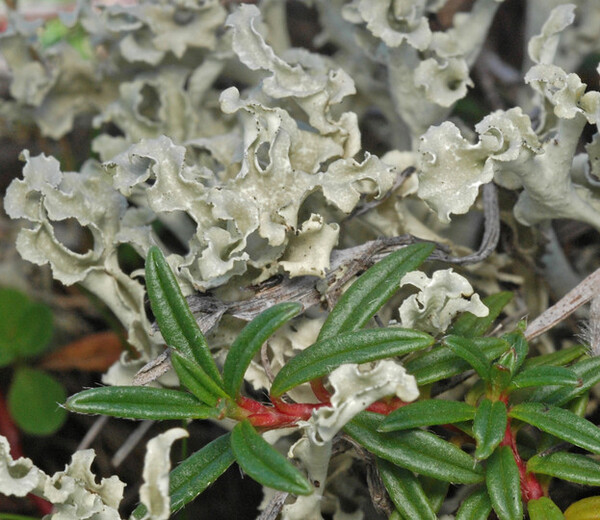
Leif Stridvall
Courtesy: Anita Stridvall
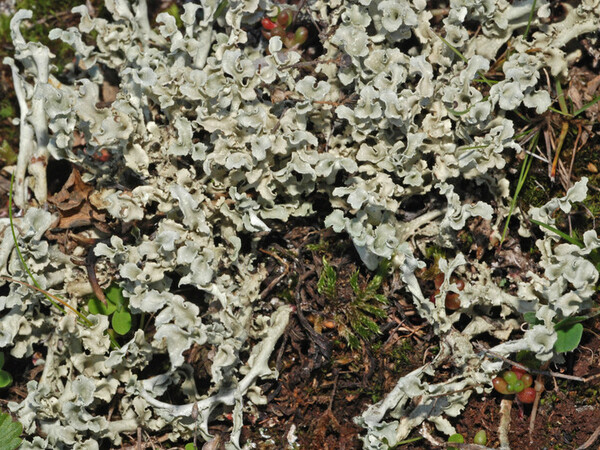
Leif Stridvall
Courtesy: Anita Stridvall
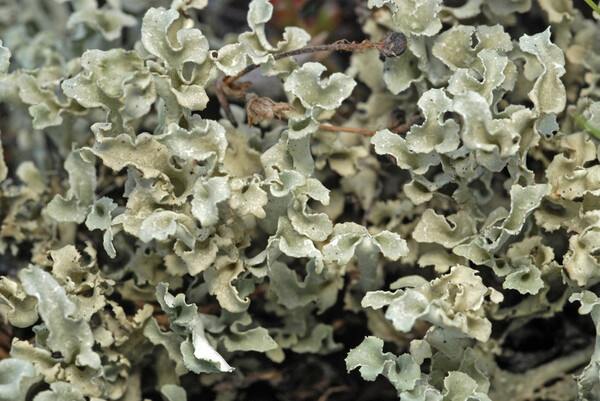
Leif Stridvall
Courtesy: Anita Stridvall
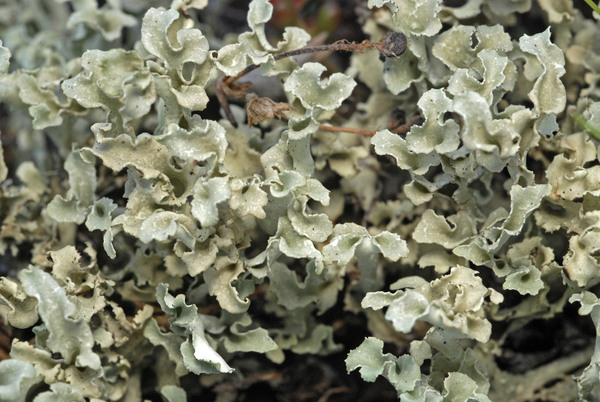
Leif Stridvall - Source: http://www.stridvall.se/la/galleries.php
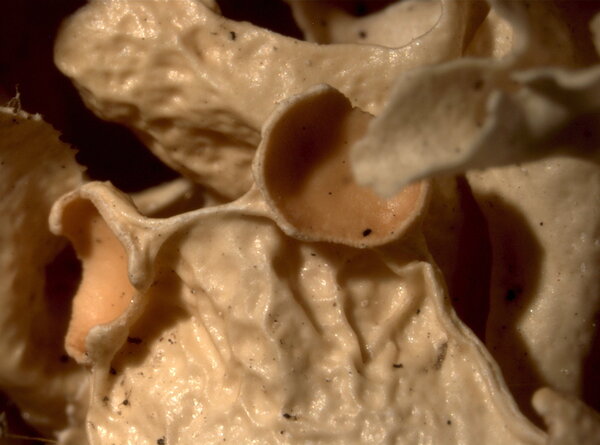
P.L. Nimis CC BY-SA 4.0
TSB 44065
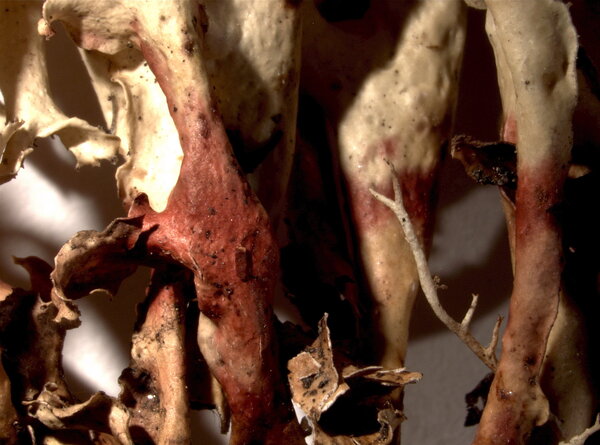
P.L. Nimis CC BY-SA 4.0
TSB 44065
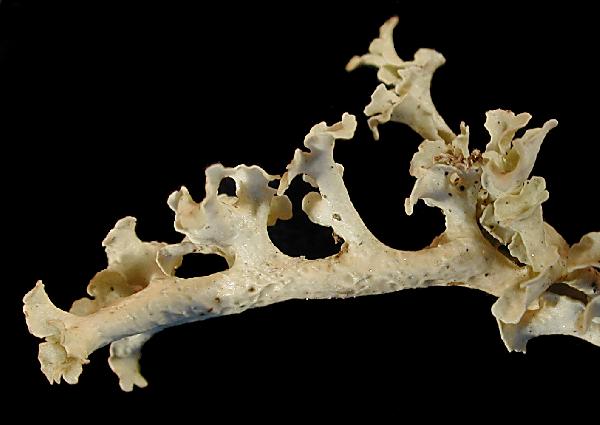
Ulrich Kirschbaum CC BY-SA 4.0 - Source: https://www.thm.de/lse/ulrich-kirschbaum/flechtenbilder
Sweden: Dalarna.
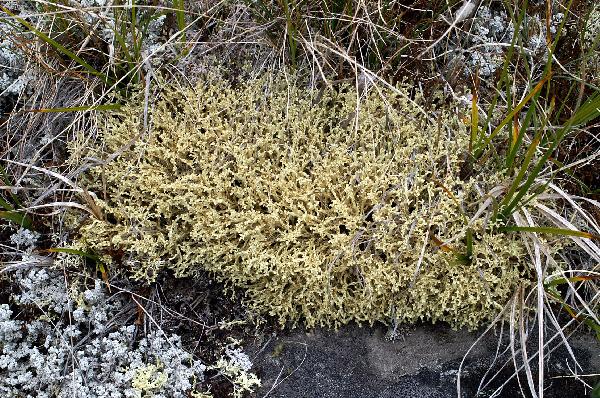
Wolfgang von Brackel - CC BY-4.0
Greenland, Blomsterdalen
Wolfgang von Brackel - CC BY-4.0
Greenland, Blomsterdalen
Wolfgang von Brackel - CC BY-4.0
Germany, Bavaria, Frauenalp
Wolfgang von Brackel - CC BY-4.0
Germany, Bavaria, Frauenalp
Wolfgang von Brackel - CC BY-4.0
Germany, Bavaria, Frauenalp
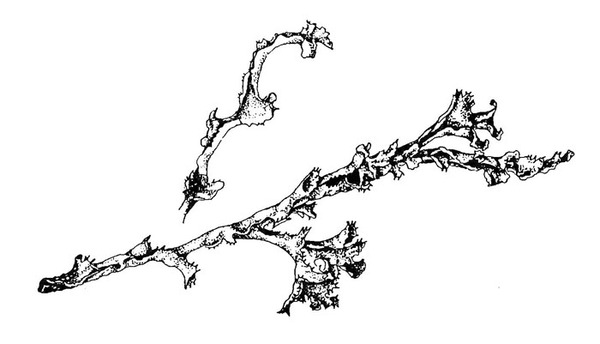
Triin Aimla; Owner: University of Tartu
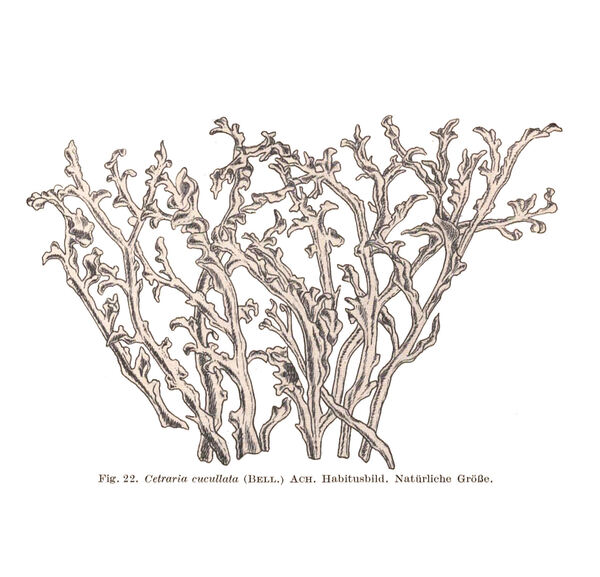
Hillmann J. 1936. Parmeliaceae. In: Rabenhorst’s Kryptogamen-Flora von Deutschland, Österreich und der Schweiz. 2nd, IX, Die Flechten, Abt. 5, 3. Borntraeger\Leipzig, pp. 1-309.
Growth form: Fruticose
Substrata: soil, terricolous mosses, and plant debris
Photobiont: green algae other than Trentepohlia
Reproductive strategy: mainly asexual, by thallus fragmentation
Commonnes-rarity: (info)
Alpine belt: common
Subalpine belt: very rare
Montane belt: absent
Dry submediterranean belt: absent
Humid submediterranean belt: absent
Padanian area: absent
pH of the substrata:
| 1 | 2 | 3 | 4 | 5 |
Solar irradiation:
| 1 | 2 | 3 | 4 | 5 |
Aridity:
| 1 | 2 | 3 | 4 | 5 |
Eutrophication:
| 1 | 2 | 3 | 4 | 5 |
Poleotolerance:
| 0 | 1 | 2 | 3 |
Altitudinal distribution:
| 1 | 2 | 3 | 4 | 5 | 6 |
Rarity
absent
extremely rare
very rare
rare
rather rare
rather common
common
very common
extremely common
Loading data...
Occurrence data
Predictive map
Current prediction (1981-2010)Future prediction (2071-2100) SSP 1-2.6Future prediction (2071-2100) SSP 5-8.5Predictive maps according to Francesconi et al. 2025
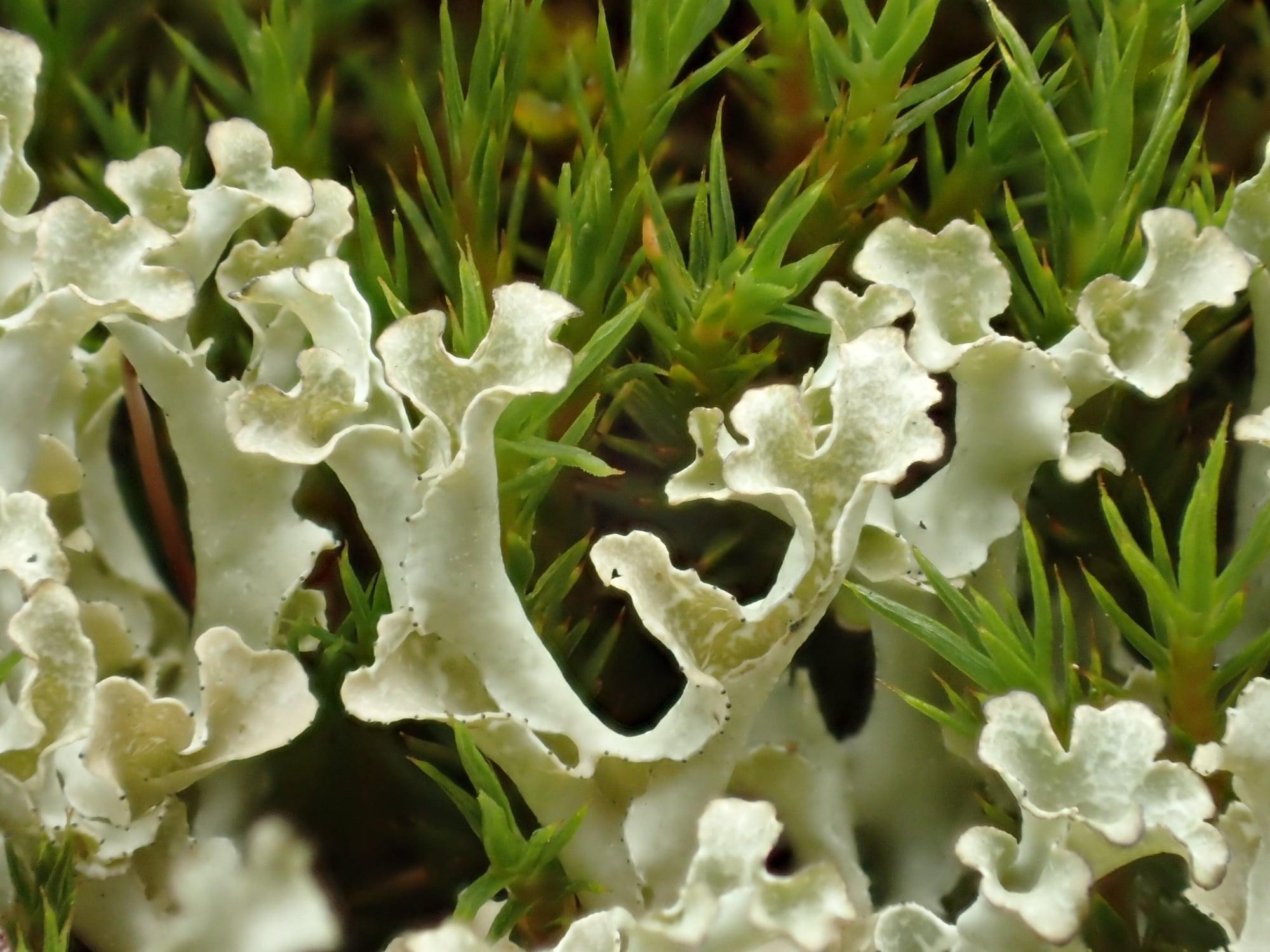
Mark Rahill
Mt. Washington, New Hampshire -USA
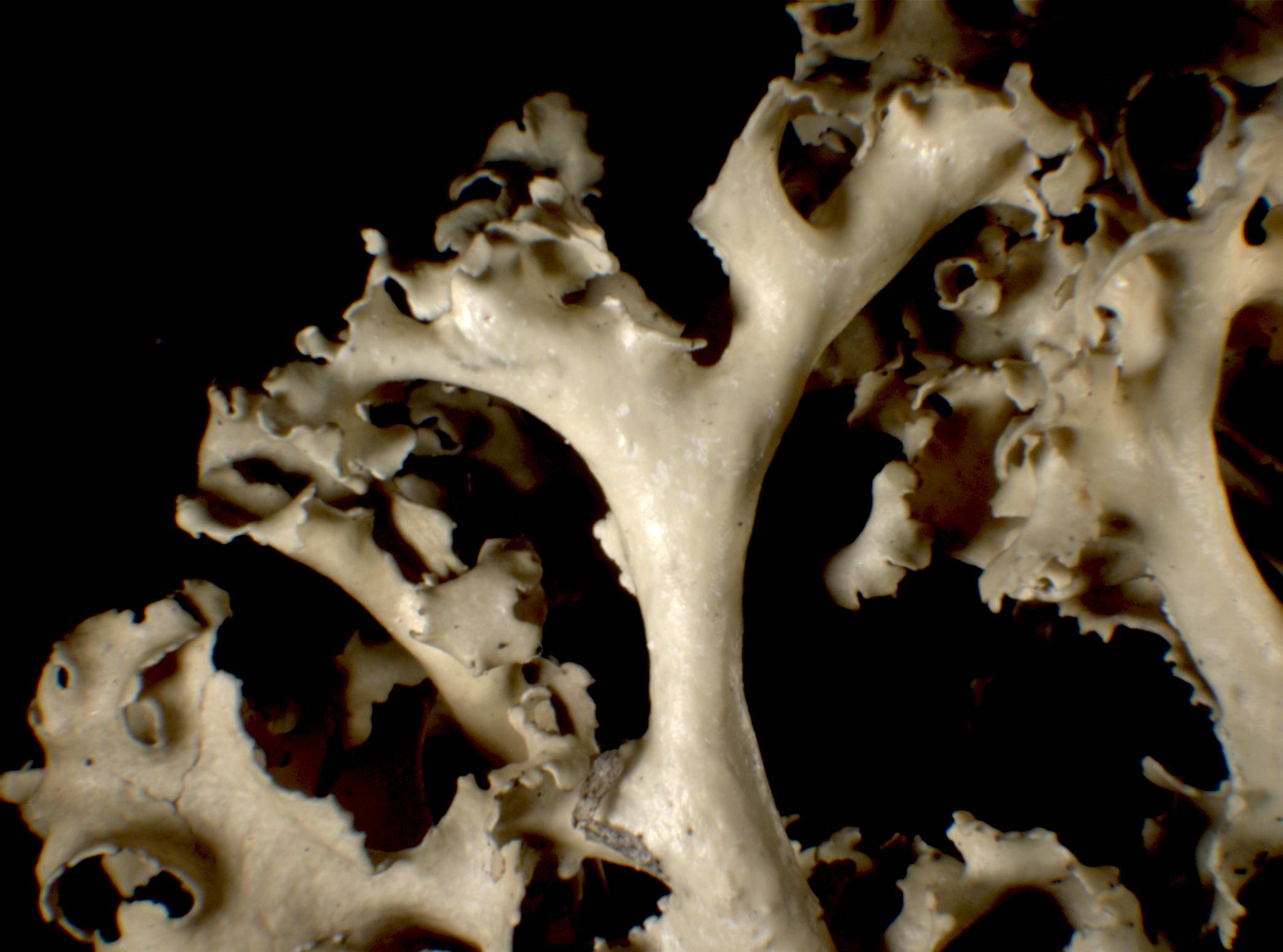
P.L. Nimis; Owner: Department of Life Sciences, University of Trieste
Herbarium: TSB (8712)
2001/12/05
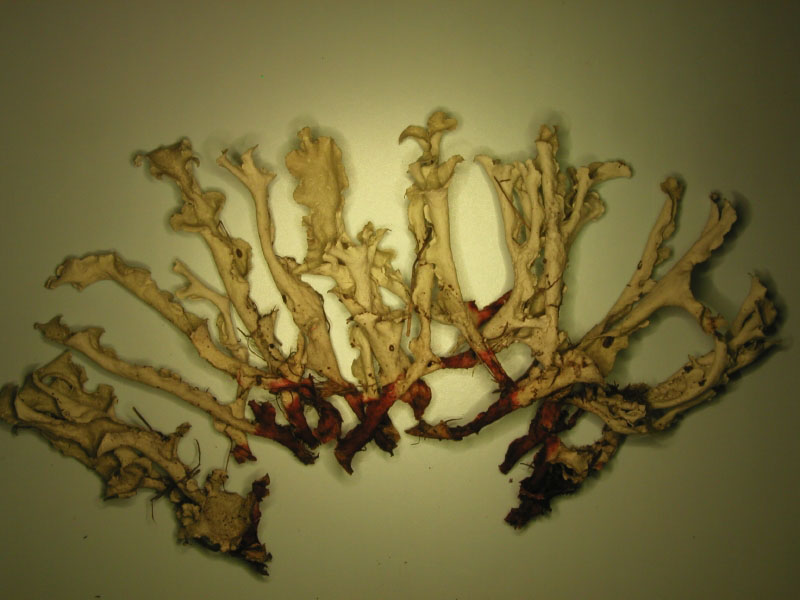
Andres Saag; Owner: University of Tartu

Juri Nascimbene - CC BY-SA 4.0; Owner: ITALIC - Dyades Project - Dept. of Life Sciences, University of Trieste
Italy, Trentino-Alto Adige, Trento, Monte Bondone
2014

Leif Stridvall
Courtesy: Anita Stridvall
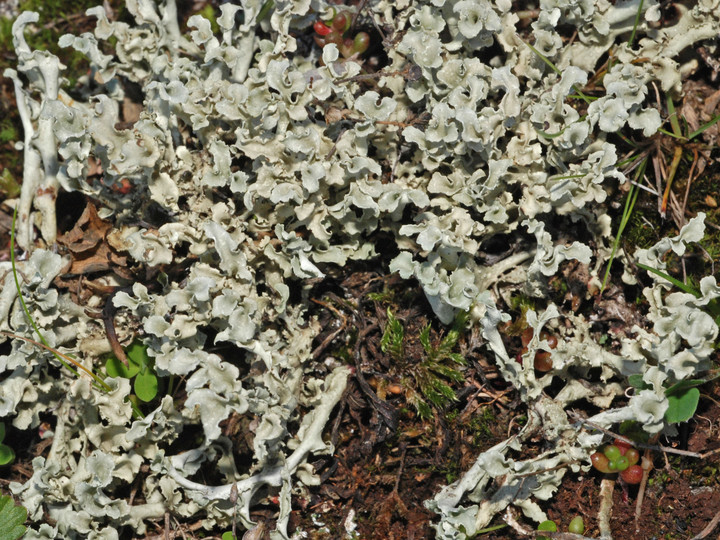
Leif Stridvall
Courtesy: Anita Stridvall
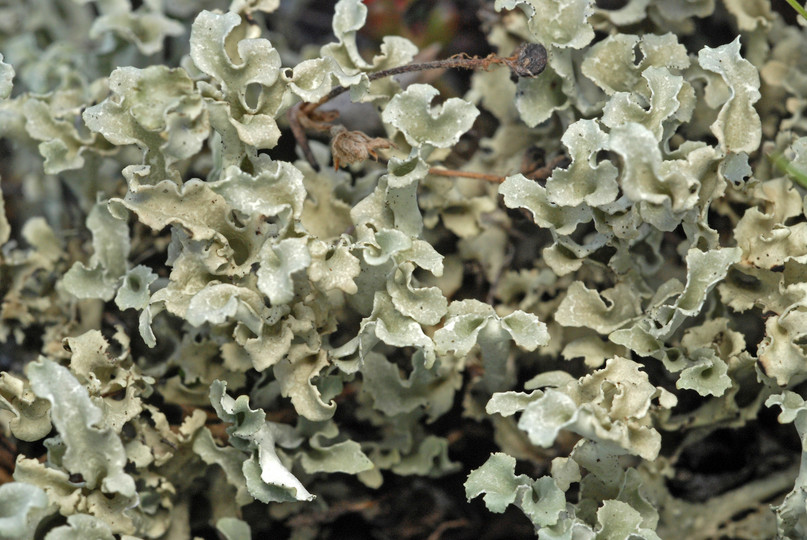
Leif Stridvall
Courtesy: Anita Stridvall
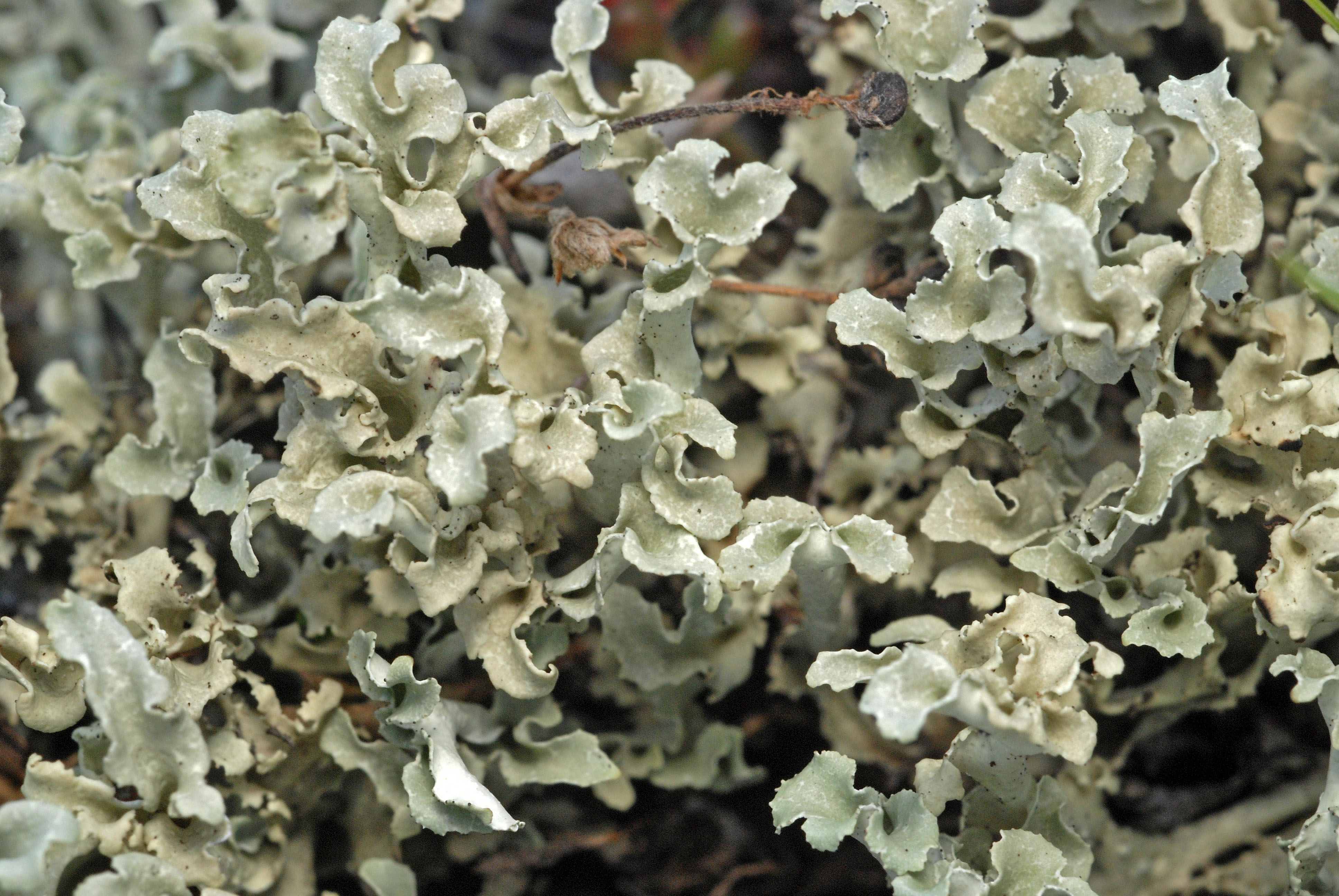
Leif Stridvall - Source: http://www.stridvall.se/la/galleries.php
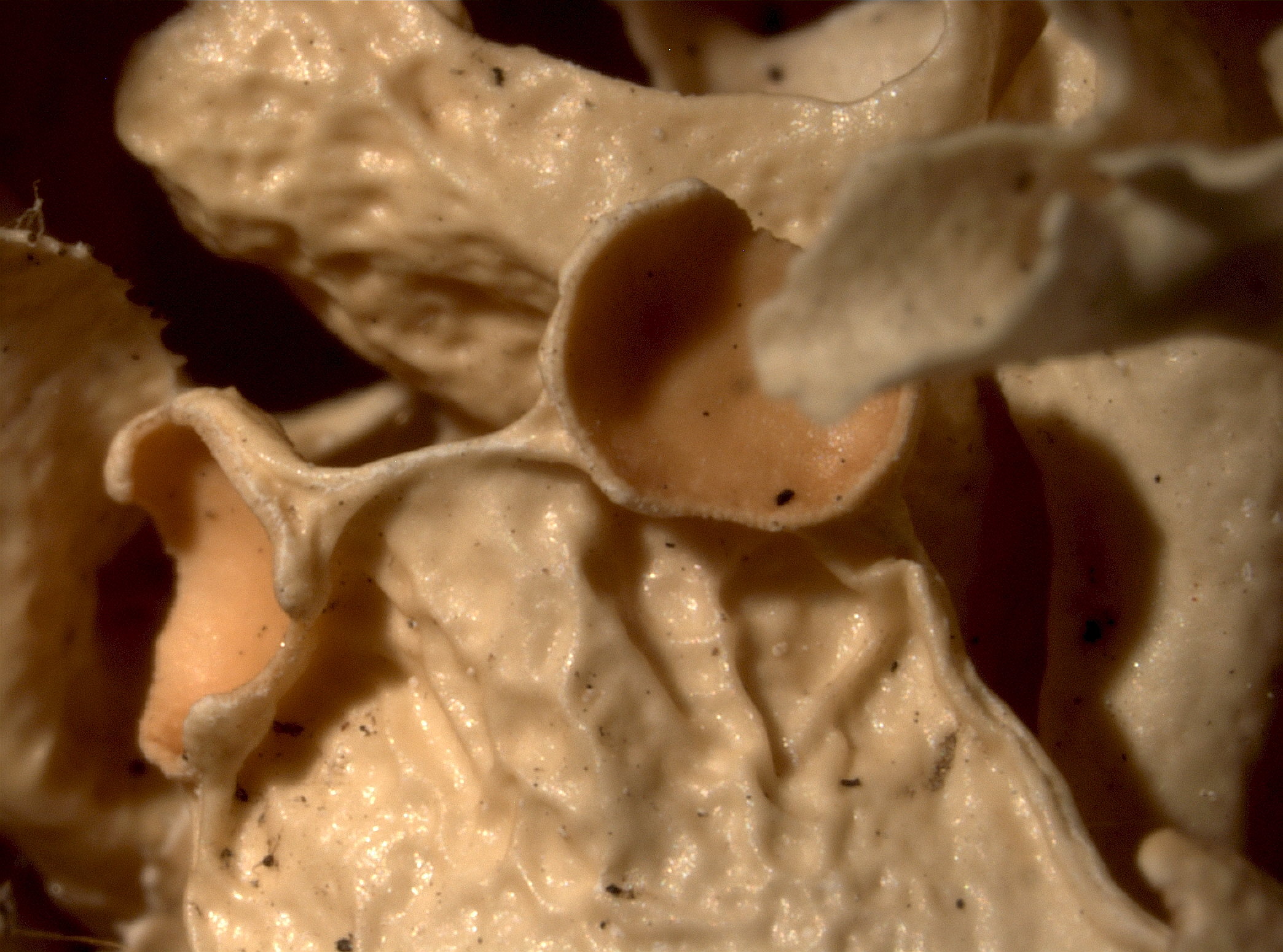
P.L. Nimis CC BY-SA 4.0
TSB 44065

P.L. Nimis CC BY-SA 4.0
TSB 44065

Ulrich Kirschbaum CC BY-SA 4.0 - Source: https://www.thm.de/lse/ulrich-kirschbaum/flechtenbilder
Sweden: Dalarna.

Wolfgang von Brackel - CC BY-4.0
Greenland, Blomsterdalen

Wolfgang von Brackel - CC BY-4.0
Greenland, Blomsterdalen

Wolfgang von Brackel - CC BY-4.0
Germany, Bavaria, Frauenalp

Wolfgang von Brackel - CC BY-4.0
Germany, Bavaria, Frauenalp

Wolfgang von Brackel - CC BY-4.0
Germany, Bavaria, Frauenalp
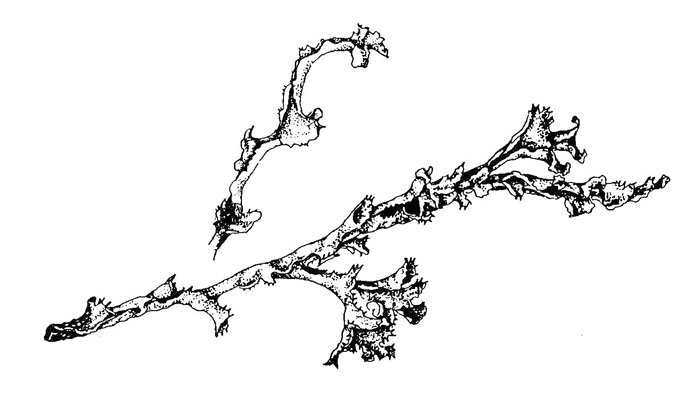
Triin Aimla; Owner: University of Tartu